

Pricing and availability
We compare 600+ stores and found this item at 4 stores. Prices updated .
Store
Reviews
Price




Average Price: $1,589
High-end/Boutique
$150
$501+
Price Tier
Budget
Standard
High-end
Price History
Based on price data from 2 merchants for "Yamaha Tio1608-D 16 Channel Dante Input Interface". Prices shown reflect NEW condition. Tracking began Apr 2, 2026.
* Product prices and availability are updated by Equipboard every 24hrs and are subject to change. Equipboard may receive compensation for purchases made at participating retailers linked on this site. This compensation does not affect what products or prices are displayed, or the order of prices listed. For more information, please refer to our affiliate disclosure.
Description
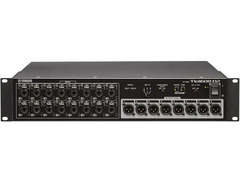
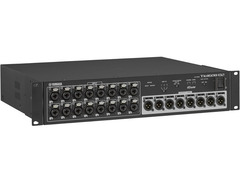
In the world of digital audio interfaces, the Yamaha Tio1608-D 16 Channel Dante Input Interface emerges as a powerhouse designed to elevate your studio recording setup. With its Dante network protocol, this interface offers remarkable scalability and flexibility, making it an ideal choice for both burgeoning home studios and bustling professional environments. The heart of the Tio1608-D is its 16 analog inputs, each equipped with Yamaha's acclaimed D-Pre microphone preamps that deliver pristine sound quality, alongside eight analog outputs for seamless audio routing.
Whether you're working with Yamaha's DM3-, TF-, CL-, or QL-series mixers, the Tio1608-D ensures smooth integration through its Quick Config Mode and automatic digital-stage compensation, adapting effortlessly to your workflow. These features are complemented by the interface's recallable preamps, allowing you to save and retrieve your preferred settings with ease, thereby enhancing your creative process.
Designed with 96kHz converters, the Yamaha Tio1608-D guarantees low-latency performance that keeps your recordings crisp and accurate. The intuitive Auto Setup feature further streamlines your setup process, so you can focus more on creating and less on configuring. If you're seeking a reliable, flexible, and high-quality audio interface, the Yamaha Tio1608-D is a top contender that delivers on all fronts.
Key Features:
- 16 analog inputs with Yamaha D-Pre microphone preamps
- 8 analog outputs for versatile audio routing
- Dante network protocol for enhanced scalability and flexibility
- Quick Config Mode for seamless integration with DM3- and TF-series mixers
- Automatic digital-stage compensation for CL- and QL-series mixers
- Recallable preamps for easy setting retrieval
- 96kHz converters with low-latency operation
- Time-saving Auto Setup feature
Product specs
| Type | Digital Stage Box |
| Compatibility | Yamaha TF Mixers with Dante Cards |
| Channels | 16 x 8 |
| Inputs - Mic Preamps | 16 x XLR-1/4" combo (mic/line) |
| Outputs - Main | 8 x XLR |
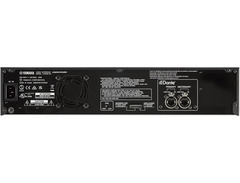
| Data I/O | 2 x EtherCon (primary, secondary) |
| Computer Connectivity | Ethernet (Dante) |
| Rackmountable | Yes |
| Power Source | Standard IEC AC cable |
| Height | 3.5" |
| Depth | 14.37" |
| Width | 18.87" |
| Weight | 12.6 lbs. |
FAQs
-
Is the Yamaha Tio1608-D compatible with any mixer other than Yamaha TF series?
-
The Yamaha Tio1608-D is specifically designed to work seamlessly with Yamaha TF mixers equipped with Dante cards. Compatibility with other mixer brands or models may not be guaranteed.
-
How does the Yamaha Tio1608-D connect to a computer or network?
-
The Yamaha Tio1608-D connects via Ethernet using Dante protocol, allowing for high-quality audio networking and seamless integration within a Dante-enabled system.
-
Can the Yamaha Tio1608-D be used as a standalone audio interface?
-
The Yamaha Tio1608-D is primarily a digital stage box meant to expand input and output capabilities when used with compatible mixers, rather than serving as a standalone audio interface.
-
What type of inputs and outputs does the Yamaha Tio1608-D offer?
-
The Yamaha Tio1608-D features 16 XLR-1/4" combo inputs for mic/line signals and 8 XLR outputs, providing versatile connectivity options for various audio sources.
-
Is the Yamaha Tio1608-D rackmountable for easy integration into studio setups?
-
Yes, the Yamaha Tio1608-D is rackmountable, making it convenient to integrate into studio or live sound setups where space and organization are important.
Videos

Yamaha Pro Audio
Connecting the TIO1608-D Dante IO Rack - Yamaha TF QuickTips ep7
Connecting the TIO1608-D Dante IO Rack - Yamaha TF QuickTips ep7
Yamaha Pro Audio
Yamaha TF Series: How to use Tio1608D I/O Racks with Yamaha TF consoles

Yamaha Global
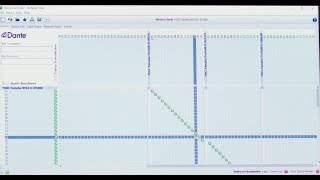
Patching Inputs to Dante – Yamaha TF QuickTips ep44
Yamaha Pro Audio
How to Connect a Yamaha DM3 Dante to a Tio1608-D Dante Stage Box

Drew Brashler
How to connect Tio1608 to TF Yamaha Digital Console

Sir Mix a Lots Tuts
Reviews
PROS
-
Integrates seamlessly with multiple Dante systems for versatile audio routing
-
Offers stable performance with no dropped audio, even at 5ms latency
-
Provides 16 Yamaha console mic pres and 8 line outs for extensive I/O
-
Redundancy capabilities ensure reliable and uninterrupted operation
-
Durable build designed to withstand rigorous use
-
Cost-effective solution for expanding Dante system I/O
CONS
-
Initial setup can be tricky without direct mixer connection
-
Control app feels outdated and not user-friendly
-
Requires disconnecting from Dante for dip switch adjustments
Owner Insights
We analyzed real musician discussions from forums and Reddit to find what players love, question, and tweak about Yamaha Tio1608-D 16 Channel Dante Input Interface.
Setup and maintenance
-
Retaining Dante settings may require a longer power cycle; turning Tio boxes on first and then consoles can help maintain configurations.
Source -
Faulty Cat6 cables with shorts or bad termination were identified as a root cause for connection issues, highlighting the importance of verifying cable quality.
Source -
To reset Yamaha Tio1608 to factory settings, engage DIP switch 3, power cycle, then revert the switch after a few minutes to improve network connectivity.
Source -
Incorrect cable splitting can cause phase issues; using dedicated stereo output methods helps maintain correct signal integrity.
Source
Software and compatibility
-
Renaming devices in Dante Controller should retain default prefixes like 'y001' to avoid recognition issues during restarts.
Source -
Avoid autoconfig mode on consoles and Tio boxes to prevent patching issues when setting manual patches in Dante Controller.
Source -
R-Remote software must be running on the network for the Yamaha Tio1608 to function properly, especially when integrating with non-Yamaha consoles like Soundcraft.
Source -
Ensuring both the Yamaha Tio1608 and the console are set to the same sample rate in the Dante Controller is crucial for successful integration.
Source -
The TF5 offers fixed output order on Dante, necessitating careful planning in routing stereo mixes to the Tio1608-D.
Source
Features and functionality
-
DIP switch 3 should be up to prevent Tio from resetting on reboot, contradicting the need to flip DIP switch 7 to save configurations.
Source -
Using a spare NIC connected to the Dante network on a server can facilitate seamless Tio1608 boot connectivity when R-Remote is required.
Source -
The TF5 has 20 auxes, with Auxes 9-20 always configured in stereo, which is crucial for routing stereo IEM feeds correctly.
Source -
Dante only transmits mono channels, requiring two outputs for a stereo mix, which may complicate IEM setups.
Source
Based on 0 Reviews and 0 Ratings
More Yamaha Audio Interfaces


$260.09 - $359.99


$159.99 - $224.99
in Audio Interfaces Rank


-m.webp?v=1784804580)
$749.99
in Audio Interfaces Rank


$59.57 - $239.00
in Audio Interfaces Rank


$79.00 - $299.99
in Audio Interfaces Rank


$360.00 - $799.00
in Audio Interfaces Rank


$239.00 - $495.00
in Audio Interfaces Rank


$84.00
in Audio Interfaces Rank


$49.00 - $149.99
in Audio Interfaces Rank
.jpg?v=1784763257)


$749.00 - $999.00
in Audio Interfaces Rank

.png?v=1784921366)


$799.00 - $1,299.00
in Audio Interfaces Rank


$1,000.00
in Audio Interfaces Rank


$239.00 - $799.00
in Audio Interfaces Rank


$85.00 - $391.13
in Audio Interfaces Rank


$118.00 - $189.99
in Audio Interfaces Rank


$190.00 - $872.49
in Audio Interfaces Rank


$689.00 - $899.00
in Audio Interfaces Rank


$224.99
in Audio Interfaces Rank


$1,468.00 - $1,999.00
in Audio Interfaces Rank

.jpeg?v=1784891088)

$83.73 - $299.99
in Audio Interfaces Rank


$866.00 - $1,199.00
in Audio Interfaces Rank

.jpg?v=1784480765)
Accessories & Related Items


Artist usage


Community setups


Similar


Gear Guides






.webp)
Most Popular Audio Interfaces
Most Popular Brands
-
Added to Equipboard on by
 equipboard
GearIQ 4934
-


