

Pricing and availability
We compare 600+ stores and found this item at 2 stores. Prices updated .
Store
Reviews
Price




Average Price: $175
Standard/Professional
$100
$301+
Price Tier
Budget
Standard
High-end
* Product prices and availability are updated by Equipboard every 24hrs and are subject to change. Equipboard may receive compensation for purchases made at participating retailers linked on this site. This compensation does not affect what products or prices are displayed, or the order of prices listed. For more information, please refer to our affiliate disclosure.
Description
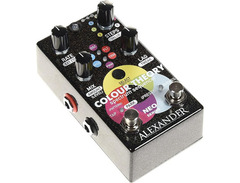
Dive into a world where color meets sound with the Alexander Pedals Colour Theory Spectrum Sequencer. This unique pedal invites musicians to blend the artistry of eight-step sequencing found in synthesizers with a custom effects engine, delivering everything from tremolo and pitch shifting to synthy octave vibes and oscillation. Crafted around a powerful 32-bit micro-controller, it not only enhances your sonic palette but also provides seamless integration with MIDI and expression controls. Whether you’re experimenting in your bedroom or performing on stage, the Colour Theory is your gateway to uncharted sonic territories.
Key Features:
- Eight-step sequencer for intricate sound sculpting
- Custom effects engine offering a range of sounds including tremolo, pitch shifting, and more
- Built around a 32-bit micro-controller for superior sound processing
- MIDI and expression pedal functionality for expanded control options
- Presets that push your music into experimental realms
Product specs
| Brand | Alexander Pedals |
| Model | Colour Theory Spectrum Sequencer |
| Finish | Graphic |
| Year | 2010s |
| Made In | United States |
FAQs
-
What type of effects can the Alexander Pedals Colour Theory Spectrum Sequencer produce?
-
The Colour Theory Spectrum Sequencer can generate harmonizer and octave effects with a unique sequencing capability, allowing for dynamic and evolving soundscapes.
-
Is the Colour Theory Spectrum Sequencer compatible with bass guitars?
-
Yes, the Colour Theory Spectrum Sequencer works well with both electric guitars and bass guitars, offering versatile tonal possibilities.
-
What power supply does the Colour Theory Spectrum Sequencer require?
-
The Colour Theory Spectrum Sequencer requires a standard 9V DC power supply for operation, similar to most guitar pedals.
-
How does the Colour Theory Spectrum Sequencer differ from other harmonizer pedals?
-
Unlike typical harmonizer pedals, the Colour Theory Spectrum Sequencer features a built-in sequencer, allowing for rhythmic and pattern-based modulation of harmonies and octaves.
-
Can the Colour Theory Spectrum Sequencer be used for live performances?
-
Yes, the Colour Theory Spectrum Sequencer is designed for both studio and live performance use, offering a range of programmable sequences and presets for dynamic sound changes on stage.
Videos

Mike Hermans
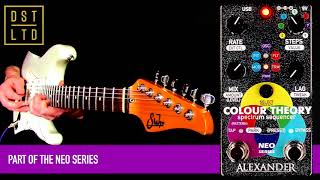
Alexander Pedals Colour Theory
Alexander Pedals Colour Theory
Mike Hermans
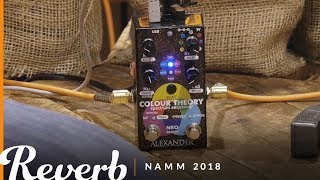
Alexander Pedals Colour Theory Spectrum Sequencer | Winter NAMM 2018

Reverb
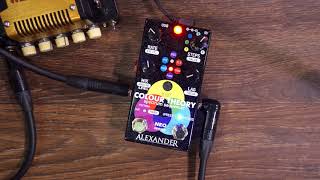
Alexander pedals - Color Theory Spectrum Sequencer (NAMM 2018 Pedal Demo Marathon)

Eric Merrow
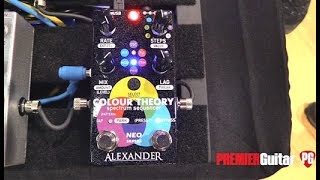
NAMM '18 - Alexander Pedals Colour Theory Demo

Premier Guitar
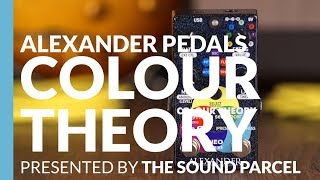
Alexander Pedals Colour Theory

The Sound Parcel
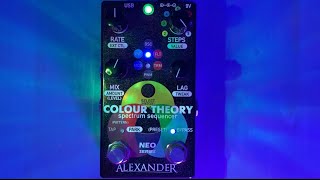
Alexander Pedals Colour Theory Spectrum Sequencer

The Erratic Pedal Adventures
Reviews
PROS
-
Offers unique, adventurous sounds for experimental music
-
Features include synth fuzz, pitch shifting, delay, and tremolo
-
User-friendly "park" mode for normal pedal playability
-
Step sequencer mode for switching effects in a playable pattern
-
Can produce wild/glitchy arpeggiator sounds
CONS
-
Requires considerable time to coax usable sounds from it
-
Deep controls necessitate regular consultation of the user manual
-
Some sounds may not fit conventional musical contexts
-
Learning curve for step sequencer mode
-
Firmware updates necessary for optimal performance
Owner Insights
We analyzed real musician discussions from forums and Reddit to find what players love, question, and tweak about Alexander Pedals Colour Theory Spectrum Sequencer.
Software and compatibility
Other
-
The FV-1 chip's octave up sound is less favored by some, sparking interest in future FXcore chip models.
Source
Comparisons
-
The pedal is simpler to understand than Alexander's Marshmallow and Superball models, easing the learning curve for new users.
Source
Features and functionality
-
Cycling through the six modes is straightforward, with an effective LED indicator for mode selection clarity.
Source -
The left footswitch halts the sequencer and accesses secondary knob functions, marked in white, improving hands-on control.
Source -
The Colour Theory can save up to 16 presets via MIDI, adding significant flexibility for performance setups.
Source -
The pedal consolidates 12 functions into 4 knobs, each with secondary and tertiary functions, requiring two-handed operation for adjustments.
Source -
The pedal lacks a mode to disable the sequencer for standard effect use, limiting versatility.
Source -
Tap tempo is unconventional; it only synchronizes changes between rates, not the delay rate itself, complicating live use.
Source -
Presets improve usability; users create diverse effects like random tremolo, delay feedback, and unique chorus sounds.
Source
Build quality
-
The pedal's knobs and switches are solid and have a high-end feel, enhancing the overall tactile experience.
Source
User experience
-
The pedal is perceived as powerful yet challenging, with a steep learning curve that may deter some users from immediate experimentation.
Source -
Secondary controls are more intuitive in park or pattern mode, reducing the need for memorization.
Source -
Owners highlight a steep learning curve, especially for achieving consistent octave effects; firmware updates are recommended for shorter sequences.
Source
Critic Reviews
Based on 0 Reviews and 0 Ratings
Genre Usage
Based on how artists on Equipboard use this gear, it is most commonly found in the following genres.
More Alexander Pedals Harmonizer & Octave Effects Pedals


$129.00 - $239.99


-m.webp?v=1783004193)


-m.webp?v=1783177044)
$185.05 - $319.99


-m.webp?v=1783204479)
$139.00 - $239.99


$147.00


-m.webp?v=1783204582)
$182.50 - $230.40


$185.05 - $319.99


$309.00 - $400.00


-m.webp?v=1783205099)
$233.00 - $449.99


$160.00 - $197.80

-m.webp?v=1783204356)
$199.00 - $244.90


$147.15 - $175.00


$407.00 - $499.00


$79.00 - $119.00


$139.00 - $249.99


$182.57 - $319.99

$229.00


-m.webp?v=1783090911)
$219.00


$78.54


$73.63 - $133.99


-m.webp?v=1783177104)
$209.00 - $271.20


-m.webp?v=1783177322)


$179.95 - $241.00


$133.75 - $164.99


-m.webp?v=1783204592)
$144.00 - $169.99


$114.50 - $164.99


$129.00 - $144.00


-m.webp?v=1783177010)
$439.00 - $557.00


$165.83


$214.95

$150.00


$67.00 - $147.00


$133.00 - $229.99


$299.00 - $339.00


Artist usage


Community setups


Similar


Gear Guides



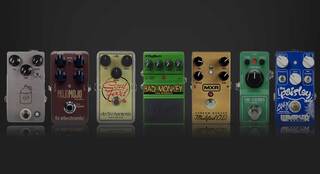


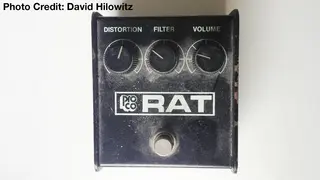

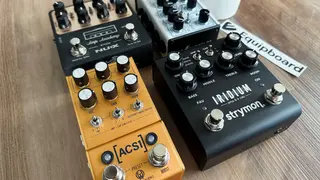
Most Popular Harmonizer & Octave Effects Pedals
Most Popular Brands
-
Added to Equipboard on by
 rye_ryan
Gear IQ 457
-


