

Pricing and availability
We compare 600+ stores and found this item at 2 stores. Prices updated .
Store
Reviews
Price




Average Price: $204
Standard/Professional
$100
$301+
Price Tier
Budget
Standard
High-end
* Product prices and availability are updated by Equipboard every 24hrs and are subject to change. Equipboard may receive compensation for purchases made at participating retailers linked on this site. This compensation does not affect what products or prices are displayed, or the order of prices listed. For more information, please refer to our affiliate disclosure.
Description
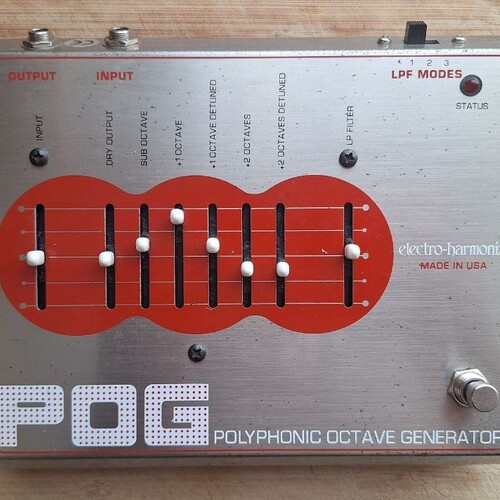
Discover the world of tonal possibilities with the Electro-Harmonix POG Polyphonic Octave Generator. This pedal is the forefather of the POG family, setting the standards for harmonic octave generation. It offers you the ability to add up to two octaves above or one octave below your original signal and blend them to create your unique sound. The separate volume control for each voice allows for meticulous tonal shaping while the additional lowpass filter with switchable resonance provides further control over your output. Dive into the realm of sonic exploration with the original POG.
Key Features:
- Adds up to two octaves above or one octave below the original signal
- Separate volume control for each voice for precise tonal shaping
- Lowpass filter with switchable resonance for augmented tone control
- Created by renowned brand Electro-Harmonix, the pioneer in harmonic octave generation
- The original pedal that set the standard for the POG series
- Power: C+ 18V
Product specs
| Brand | Electro-Harmonix |
| Model | POG Polyphonic Octave Generator |
| Finish | Metal |
| Year | 2005 - 2009 |
| Categories | Octave and Pitch-Shifting Pedals |
FAQs
-
What makes the Electro-Harmonix POG Polyphonic Octave Generator unique?
-
The Electro-Harmonix POG Polyphonic Octave Generator is renowned for its ability to create rich, layered sounds by generating multiple octaves simultaneously. It features lightning-fast tracking and perfect polyphony, allowing guitarists to produce everything from 12-string guitar effects to organ-like tones.
-
Does the Electro-Harmonix POG work well with bass guitars?
-
Yes, the Electro-Harmonix POG is designed to work effectively with both guitar and bass. It accurately tracks notes across a wide frequency range, making it a versatile tool for bassists seeking to add depth and texture to their sound.
-
What power supply does the Electro-Harmonix POG require?
-
The Electro-Harmonix POG requires a 9V DC power supply with a center-negative plug. It is recommended to use the Electro-Harmonix 9.6DC-200 power adapter for optimal performance.
-
Can the Electro-Harmonix POG be used for live performances?
-
Absolutely, the Electro-Harmonix POG is well-suited for live performances. Its robust build and reliable tracking ensure consistent performance, while its ability to create complex, multi-layered sounds makes it a favorite for live musicians.
-
How does the Electro-Harmonix POG differ from the POG2?
-
The POG2 offers more extensive control options, including attack, LP filter, and detune sliders, allowing for more detailed sound shaping compared to the original POG. The POG2 also includes preset saving capabilities, which the original POG does not.
Videos

ProGuitarShopDemos
Electro Harmonix POG
Electro Harmonix POG
ProGuitarShopDemos
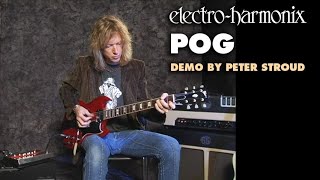
Electro-Harmonix POG Polyphonic Octave Generator Pedal (Demo by Peter Stroud)

EHX
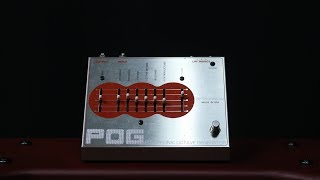
Electro-Harmonix POG Polyphonic Octave Generator Classic Chassis

So I Found This Pedal
Reviews
PROS
-
Adds definition to fuzz with sub and octave up options
-
Superior tracking compared to modern units
-
Diverse sound capabilities: from 12 string to synth tones
-
More headroom than Micro POG at full volume
-
Replicates organ sounds effectively for cover bands
-
Versatile across instruments: guitar, bass, violin
-
Sturdy build, survives drops
-
Easy to switch presets during performances
-
Enhances electric violin with unique sounds
-
Works well with other pedals for enhanced tones
CONS
-
Sliders are delicate and prone to breaking
-
Large footprint on pedalboard
-
Tone suck when used in bypass mode
-
Lacks examples for settings, hindering experimentation
Owner Insights
We analyzed real musician discussions from forums and Reddit to find what players love, question, and tweak about Electro-Harmonix POG Polyphonic Octave Generator.
Features and functionality
-
The POG2's Attack slider is praised for its ability to swell clean signals subtly, outperforming even EHX's own Attack-Decay in user satisfaction.
Source -
The POG3 offers MIDI functionality, allowing use as a synthesizer module via a keyboard and MIDI input, creating stereo sound without an audio input.
Source -
The POG3 features a continuous Q control and detune slider, enhancing voicing options beyond its predecessors.
Source
Use cases and applications
-
On bass, the POG2 can enhance simple lines by swelling in an octave up and adding character, especially useful in three-piece bands for sound fullness.
Source -
A setup involving a delay pedal before the POG2 allows octaves to swirl like a shimmer reverb with controlled octaves and low pass filter, avoiding harshness.
Source
Comparisons
-
The POG2 is noted for its organ-like octave stops, ideal for ambient sounds, contrasting with the Whammy DT's focus on different pitch shifting combinations.
Source -
Compared to the POG2, the POG3 introduces three filter types and expression control over filter cutoff, making it more versatile but also more complex.
Source
User experience
-
Some users found the POG2 to become an expensive novelty, using only a couple of presets despite its versatility, leading to eventual trade-offs for other gear.
Source -
Some users report a glitch with the +0 octave sound in focus mode, resolved by calibrating the expression pedal, indicating potential setup issues.
Source
Software and compatibility
-
The pedal's OLED screen presents too many live screens for some users, suggesting a learning curve with its joystick and encoder knob interface.
Source
Setup and maintenance
-
Users report significant digital noise with the POG3, even when using high-quality power supplies like the Cioks DC10.
Source
5.0 out of 5
Based on 2 Reviews and 25 Ratings

1552
Versatile sound between hammond and twelve-string guitar
I use this with the TS-808 to get a very nice sound, something between a hammond and crunch twelve strings guitar

Artist usage
Add artist

According to an EHX article about Frusciante, he uses the Pog live and in the studio.


At 4:05 in the video, the camera points towards the floor, revealing John's pedalboard, including the EHX POG. He also mentions that he used the POG to get the organ sound in "In Repair".


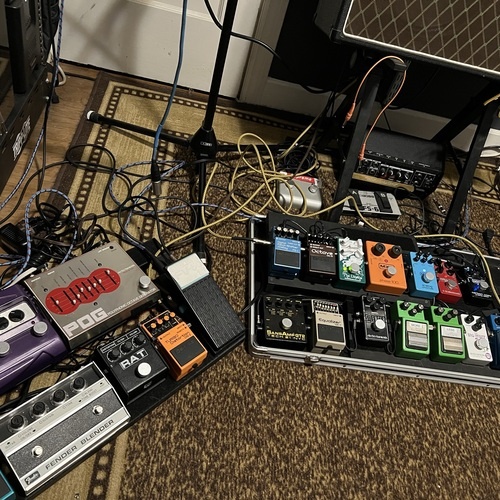
Visible in this ca. 2005 photo of White’s pedalboard featured on Kit Rae’s Big Muff Pi page. It was first used on “Blue Orchid”, as specified in this September 9, 2010 Guitar Player interview.
Kit Rae’s Big Muff Pi Page - Big Muff Users and Their Pedal Boards
Shown above, left to right: Jack White's large pedal boards, circa 2005, with a red Big Muff (rehoused by Analog Man).
Guitar Player
Sometimes, I use a POG pedal. I think I was the first person to record with one on the White Stripes song “Blue Orchid.” Electro-Harmonix sent me one as a present when we were recording Get Behind Me Satan. “Blue Orchid” came out two weeks after the session, so it had to be the first song to feature the POG. I use it to add the first and second octaves below, and one octave above the root note. It’s four of the same note simultaneously. It’s just so heavy. The riff is actually pretty simple, but it’s all about the one. It’s a funk-based idea.

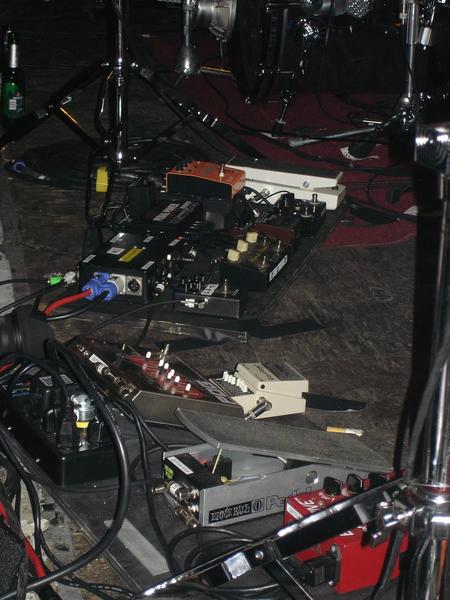
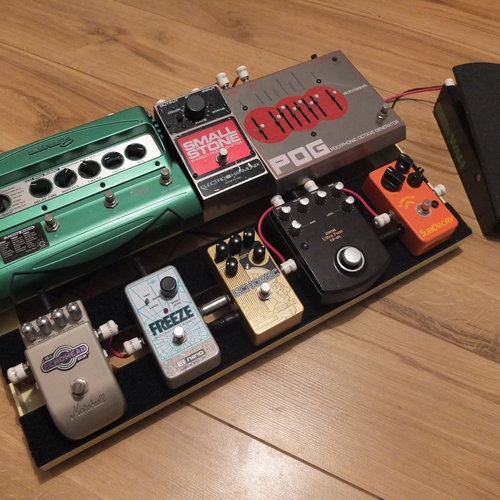
The original POG can be seen on Josh's board for QotSA in this picture.


The Electro-Harmonix POG can be seen in this photos of Alex Turner's pedalboard. In this particular photo, here are the settings on his POG:
- DRY OUTPUT is nearly all the way up
- SUB OCTAVE is about 20% up
- +1 OCTAVE is about 30% up
- +1 OCTAVE DETUNED, +2 OCTAVE, and +2 OCTAVE DETUNED are all the way down
- LOW PASS FILTER is nearly all the way up


In this image we can see Flea with a POG Polyphonic Octave Generator.

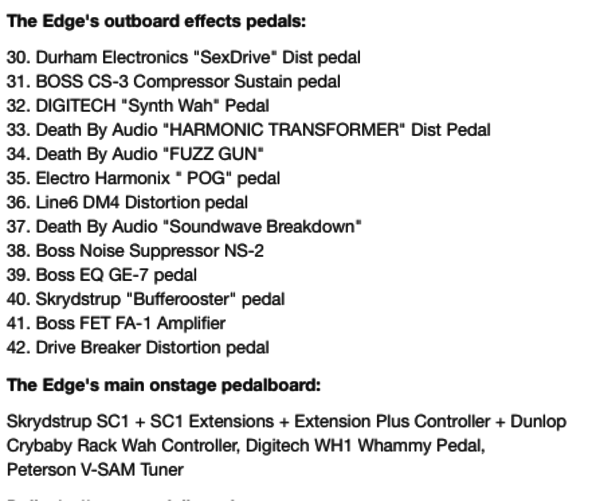
In this interview with MusicRadar, The Edge's tech, Dallas Schoo, details The Edge's setup during the 360 tour. The POG is one of his "outboard effects.

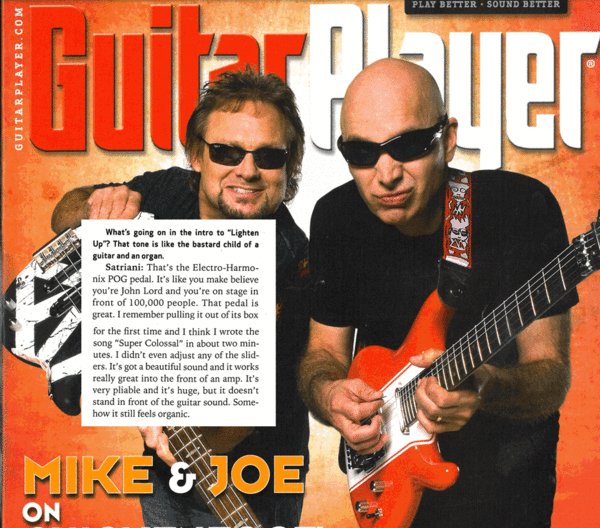
In this Guitar Player excerpt, Satriani explained how he used the Electro Harmonix POG pedal for the intro for "Lighten Up".




At 2:05 in this interview with Synyster Gates' guitar tech, Za, he talks about his use of the POG.
"In his rack here, we have a nice POG, and it's rad."


"This POG has been hot rodded to a pedal to create a low pass and you're able to roll it in. So when he hits it it's almost like a volume pedal but it acts also like a filter. So it's very textured and he's able to do a lot of cool things with that. It's used in everything and anything. Sometimes on 'Livin' On The Edge' he'll use it. He also uses it for 'Legendary Child', the new single that they're playing. He'll use it in places he's never used it before all the time. That's what he does. He likes to have fun, which I like too," says Joe Perry's guitar tech.

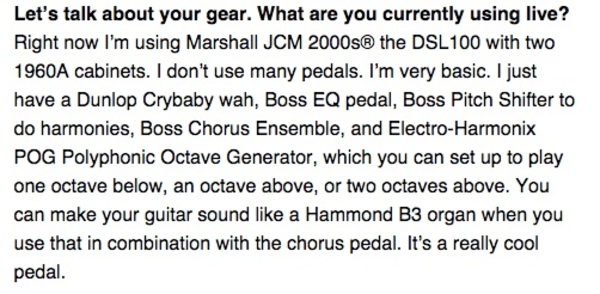
"...and Electro-Harmonix POG Polyphonic Octave Generator, which you can set up to play one octave below, an octave above, or two octaves above." - Ray Toro
Album Usage
The Electro-Harmonix POG Polyphonic Octave Generator has been featured on the following albums:

Fortunate One (feat. Chris Robinson)
Joe Perry & Chris Robinson & Joe Perry (2023)

New York in the Rain (Xiu Xiu Remix)
Xiu Xiu (2020)

Legendary Child
Aerosmith (2012)

Treats
Sleigh Bells (2010)
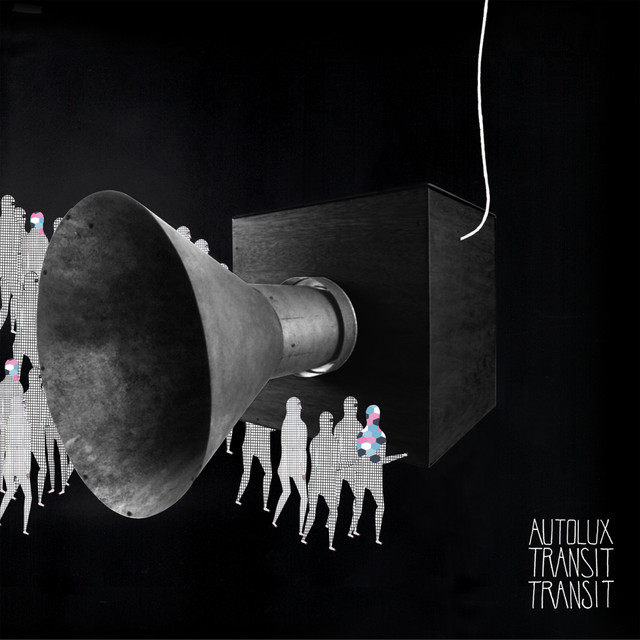
Transit Transit
Autolux (2010)

Grinderman
Grinderman (2007)
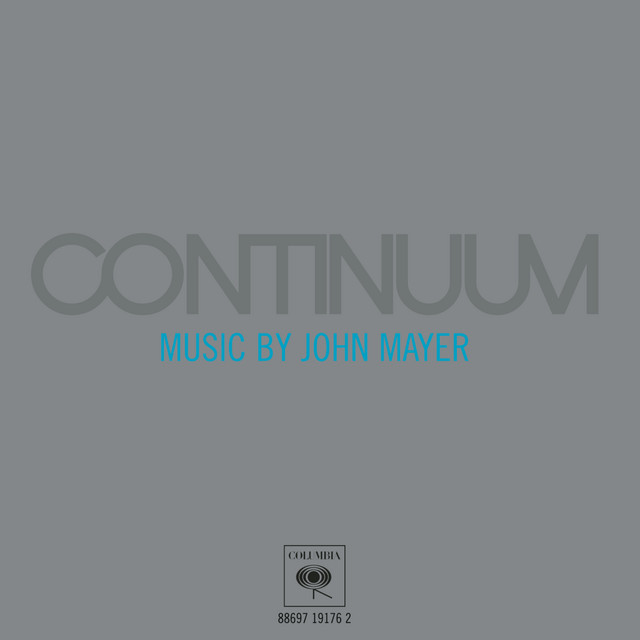
Continuum
John Mayer (2006)
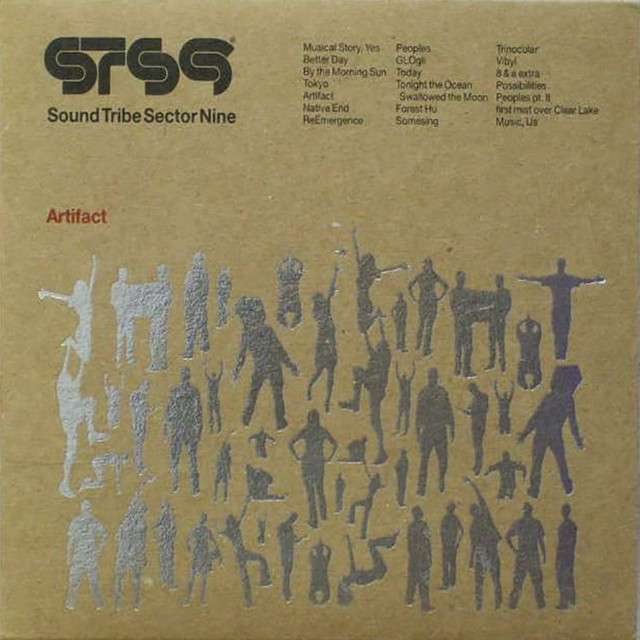
Artifact
STS9 & STS9 (2005)
Genre Usage
Based on how artists on Equipboard use this gear, it is most commonly found in the following genres.
Used With
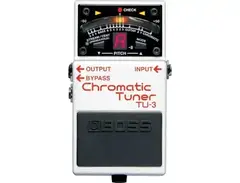
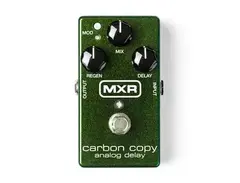
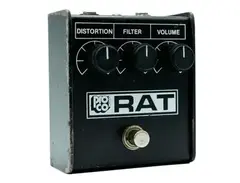
Based on how musicians on Equipboard use Electro-Harmonix POG Polyphonic Octave Generator, it is most commonly used with the following gear.


-s.webp?v=1784977369)


Community setups
Show yours


Similar
Add recommendation1 alternative for Electro-Harmonix POG Polyphonic Octave Generator, curated by the Equipboard community.

$299.00 - $400.00
More Electro-Harmonix Harmonizer & Octave Effects Pedals
-m.webp?v=1784991703)
$182.50 - $230.40


$299.00 - $400.00


$159.00 - $197.80


-m.webp?v=1784991518)
$199.00 - $244.90


-m.webp?v=1784977932)
$209.00 - $271.20


-m.webp?v=1784991517)
$439.00 - $557.00


$299.00 - $400.00


$174.26 - $246.70


$123.00 - $192.30


$149.30 - $192.30


$129.00 - $239.99


-m.webp?v=1784732274)


-m.webp?v=1784991542)
$184.05 - $319.99


-m.webp?v=1784991844)
$135.00 - $239.99


$130.00


$184.05 - $319.99


-m.webp?v=1784991600)
$229.00 - $449.99


$145.68 - $169.00


$79.00 - $119.00


$411.00 - $499.00


$133.00 - $249.99


$181.59 - $299.99

$229.00

Gear Guides



.jpg)



Most Popular Harmonizer & Octave Effects Pedals
Most Popular Brands
-
Added to Equipboard on by
 equipboard
GearIQ 4934
-


