This page about Ampeg SVT "Blue Line" is a stub. You can help improve it:


Pricing and availability




* Product prices and availability are updated by Equipboard every 24hrs and are subject to change. Equipboard may receive compensation for purchases made at participating retailers linked on this site. This compensation does not affect what products or prices are displayed, or the order of prices listed. For more information, please refer to our affiliate disclosure.
Description
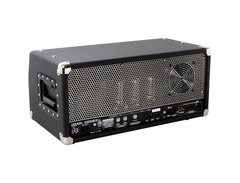
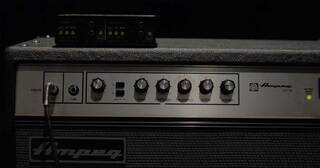
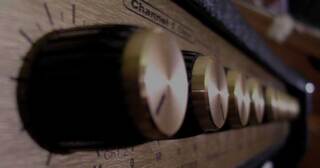
In the world of bass amplifiers, the Ampeg SVT "Blue Line" is a true legend, revered for its iconic 300-watt power output. This powerhouse is driven by six 6550 power tubes, delivering a robust and commanding tone that bassists crave. Its vintage-inspired design, featuring 1970s-style dials and rocker switches, is not just for show; it faithfully re-creates the classic preamp circuitry of its predecessors, ensuring a pure, authentic sound.
Whether you're on stage or in the studio, the SVT "Blue Line" offers unparalleled clarity and presence, allowing every note to resonate with authority. Its rugged construction ensures durability without compromising on the tonal nuances that have made it a staple in the music industry. With this amp head, you're not just investing in equipment; you're embracing a legacy of sound that has powered countless iconic performances.
Key Features:
- 300-watt power output
- Six 6550 power tubes for massive tone
- Vintage-inspired 1970s-style dials and rocker switches
- Faithfully re-created preamp circuitry
- Rugged and durable construction for stage and studio use
FAQs
-
What is the power output of the Ampeg SVT "Blue Line"?
-
The Ampeg SVT "Blue Line" delivers 300 watts of power, making it suitable for large venues and live performances where high volume and headroom are required.
-
What type of tubes does the Ampeg SVT "Blue Line" use?
-
The Ampeg SVT "Blue Line" features six 6550 power tubes, which contribute to its renowned warm and punchy bass tone.
-
Does the Ampeg SVT "Blue Line" have a direct output for recording or live sound?
-
Yes, the Ampeg SVT "Blue Line" includes an XLR output, allowing for direct connection to recording equipment or PA systems.
-
How does the Ampeg SVT "Blue Line" differ from other SVT models?
-
The Ampeg SVT "Blue Line" is distinguished by its original blue-line graphics and cosmetics, as well as its classic EQ rocker switches and authentic preamp signal path.
-
Is the Ampeg SVT "Blue Line" suitable for both live and studio use?
-
Yes, the Ampeg SVT "Blue Line" is versatile enough for both live performances, with its powerful output, and studio recording, thanks to its high-quality XLR direct output.
Videos

Justin Goodman
1970/1971 Ampeg Blueline SVT (bassicsgear)
1970/1971 Ampeg Blueline SVT (bassicsgear)
Justin Goodman
'70s Ampeg SVT | Diagnosis

Psionic Audio
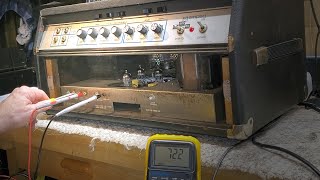
E04 - Blue-line 1973 (or so) Ampeg SVT: Quick Preamp Repair; Set the Bias, Balance, and Hum.

Wally's Wattage Cottage
Reviews
Owner Insights
We analyzed real musician discussions from forums and Reddit to find what players love, question, and tweak about Ampeg SVT "Blue Line".
Build quality
-
The SVT's heavy weight is due to its large transformers, necessary for amplifying low frequencies with high power.
Source
Setup and maintenance
Comparisons
-
The Ampeg B15 is favored for studio use over the SVT due to its superior tone, despite its lower output and weight.
Source -
Users compare the SVT's tone to Mesa amps, noting Mesas can offer both clean and distorted tones, while SVTs excel in their unique, organic sound.
Source -
The SVT Blue Line is often described as providing more mid-tone clarity compared to the Mesa 400+ which is praised for its thick, meaty tone when paired with a RAT distortion.
Source -
The SVT Blue Line is likened to a '59 Goldtop Les Paul for bass amps, suggesting its iconic status and defining tone in the bass amplifier world.
Source -
The PF-500 is noted to sound similar to an SVT at a fraction of the price and weight, suggesting it as a viable alternative for those concerned with budget and portability.
Source
Features and functionality
-
The SVT's large transformers contribute to its signature tone by delivering harmonics and dynamic response not achievable by class-D amplifiers.
Source -
The midrange on an SVT is active with an inductor-driven frequency selector, while the bass and treble are passive, offering unique EQ control not found in most tube amps.
Source -
The ultra-low switch scoops low-mids, known as the "mud button," while the ultra-high switch brightens the first gain stage, allowing for a hi-fi clank.
Source
User experience
-
Owners often resort to using wheeled cases and two-person teams to manage the SVT's heavy weight during transport and gigs.
Source
Use cases and applications
Based on 0 Reviews and 0 Ratings
Artist usage
Add artist
.jpg)
David Hartley's Instagram post reveals his use of the Ampeg SVT "Blue Line" bass amplifier head, as seen in the photo shared by nightlands.


Used for the solo on Steely Dan’s “Reelin’ in the Years”, as stated in the following sources:
Guitar World, Guitar World Presents the 100 Greatest Guitarists of All Time!: From the Pages of Guitar World Magazine (2002) edited by Jeff Kitts & Brad Tolinski, pgs. 154-155 (posted online as “100 Greatest Guitar Solos: No. 40 "Reelin' in the Years" (Elliott Randall)” on October 28, 2008)
“They were having trouble finding the right ‘flavor’ solo for ‘Reelin,’ and asked me to give it a go,” recalls Randall. “Most of the song was already complete, so I had the good fortune of having a very clear picture of what the solo was laying on top of. They played it for me without much dialogue about what I should play. It just wasn’t necessary because we did it in one take and nothing was written. Jeff Baxter played the harmony parts, but my entire lead—intro/answers/solo/end solo—was one continuous take played through a very simple setup: my old Strat, the same one I’ve been using since 1965, plugged directly into an Ampeg SVT amp, and miked with a single AKG 414. The whole solo just came to me, and I feel very fortunate to have been given the opportunity to play it.”
The Guitar Player Book: 40 Years of Interviews, Gear, and Lessons from the World's Most Celebrated Guitar Magazine (2007) edited by Michael Molenda, pg. 194 (excerpted from an interview with Darrin Fox)
"I used my 1963 Fender Stratocaster set on the front—which was a 1960s PAF humbucker,” says Randall. “I didn’t use any pedals at all, I just turned the volume on my Ampeg SVT all the way up. That was the sound and it was very, very loud. There was only one mic used—an AKG C414—and we recorded the whole performance in once take. The moment was just so right. Now and again, you just hook into the musical cosmos.”
Guitar Player, July 2007 (excerpted on Telecaster Discussion Page Reissue by Eric W
That was my '63 Fender Stratocaster with a PAF humbucker in the neck position, straight into an Ampeg SVT bass amp. The SVT wouldn't have been my first choice for an amp—or even my fifth choice—but it worked a storm on that recording!
Guitarist, June 2012, “40 years of Rocking on Reelin’” by Jamie Dickson
“When I moved to LA, the timing was really quite appropriate for Steely Dan’s first recording,” Elliott recalls. “So I was asked to come in. Apparently, Reelin’ in the Years was proving to be a problem for them because – as good as Jeff and Denny were – whatever they were doing wasn’t making Donald and Walter feel as though they had the appropriate guitar intro, solos and outro. So they called me in and asked if I would be interested in playing on it.”
Fresh to the session, Elliott cut what is arguably his most famous solo in a matter of minutes.
“They played the song for me once – the changes are not very complex. Then we took two passes. The first pass, which some of us to this day say was better, wasn’t recorded. It was a run-through and we all went, Whoah! Then we looked at the assistant engineer who had turned ghostly white, and he said, ‘Oh, sorry, I didn’t press the button’. So my second pass was what you hear on the record – it was completely unedited. It was just from top-to-bottom all the way through. And it worked – we all just laughed afterwards.”
Although the wiry, cascading licks of Elliott’s solo on Reelin’ In The Years are firmly within the domain of rock ‘n’ roll, a jazz sensibility lay at the core of his playing.
“What I find in retrospect is that – especially in the introductory measures of the solo – I was playing the equivalent of what a jazz saxophonist would play to a standard tune in that I was quoting the melody,” Elliott says. “It’s what Donald was singing but with my own twist added.”
It’s also testament to Elliott’s can-do attitude that he was able to record the guitar for Reelin’ using an amp most guitarists would find about as useful as a chocolate fireguard.
“It’s actually a beautiful lesson in what working in a studio’s all about,” he says. “The only amplifier in the entire premises was an Ampeg SVT bass amp, which would have been the last thing I ever thought of to use. It had 400 bloody watts and eight speakers!”
“Roger Nichols [sound engineer], looked at me and we were like “Mmm-hmm…” But we just shrugged our shoulders as pros would, and he said, Right, okay, start playing; I’ll keep my ears covered and find the sweet spot. And he did. The sound was basically the guitar, a cable, the amplifier, and one AKG-414 microphone placed where Roger thought it sounded the best. And hence the sound. But we had to really crank it up to 11.”
Although the Ampeg was less than ideal, the tone Elliott achieved with it is not a million miles away from that which he achieved on later Steely Dan records. What does he think are the real foundations of his sound?
“A piece of the tone I got has to be attributed to the Gibson humbucking pickup,” he says, referring to the retro-fitted neck pickup on his ’63 Stratocaster. “The reason I wound up with that pickup is that in 1969 I played the Whisky A Go Go opposite a Canadian group led by a fellow called Domenic Troiano; I’m not sure that many people know who he is but he was an absolutely beautiful player [Dominic, who died in 2005, played with The Guess Who and other bands – Ed].
“He had a Tele with two humbuckers in it,” Elliott continues. “I just went nuts over the guitar, and he and I became instant friends. I said, Where can I get a mod like that? And he said, Come with me. He took me to the Barney Kessel guitar shop in Los Angeles and we had them route out my Strat, put a humbucker in and I’ve never looked back. I’ve just been so pleased with it. It’s a beautiful sound.”
Guitarist, Issue #404 (March 2016), “On Amplifiers Part 2” by Elliott Randall
I suppose the most talked about event in my personal recording history was my solo on Reelin’ In The Years. Upon arrival at Village Recorders in Santa Monica, I discovered, much to my chagrin, that the only amp available that evening was Dennis Weinrich’s Ampeg SVT – a grossly-overpowered beast. I’ve been quoted as saying “not my first choice; not even my tenth choice”. This did not deter us. Roger Nichols and I just looked at each other, chuckled, and simply made it work!
thefretboard.co.uk, “Elliott Randall - Reelin in the years + Steely Dan by guitarsforyou (August 5, 2018) (Testimony about the August 4, 2018 “Elliott Randall” episode of Sounds of the 70s with Johnnie Walker
Happen to be in the car yesterday 4pm ish - Johnny Walker show - And he had Elliott Randall with him for a chat/interview etc
Started talking about the Reelin in the years and the recording of it - Apparently no amps in the studio, so they borrowed one from next door and the only one available was an Ampeg SVT bass rig with the 8x10 cab - so that is what they used, turned up to get some gain - 300 watt amp turned up !!!!! - along with his humbucker equipped Strat
Then later talked about his favourite amps and today it is a Marshall Valve state 80 combo

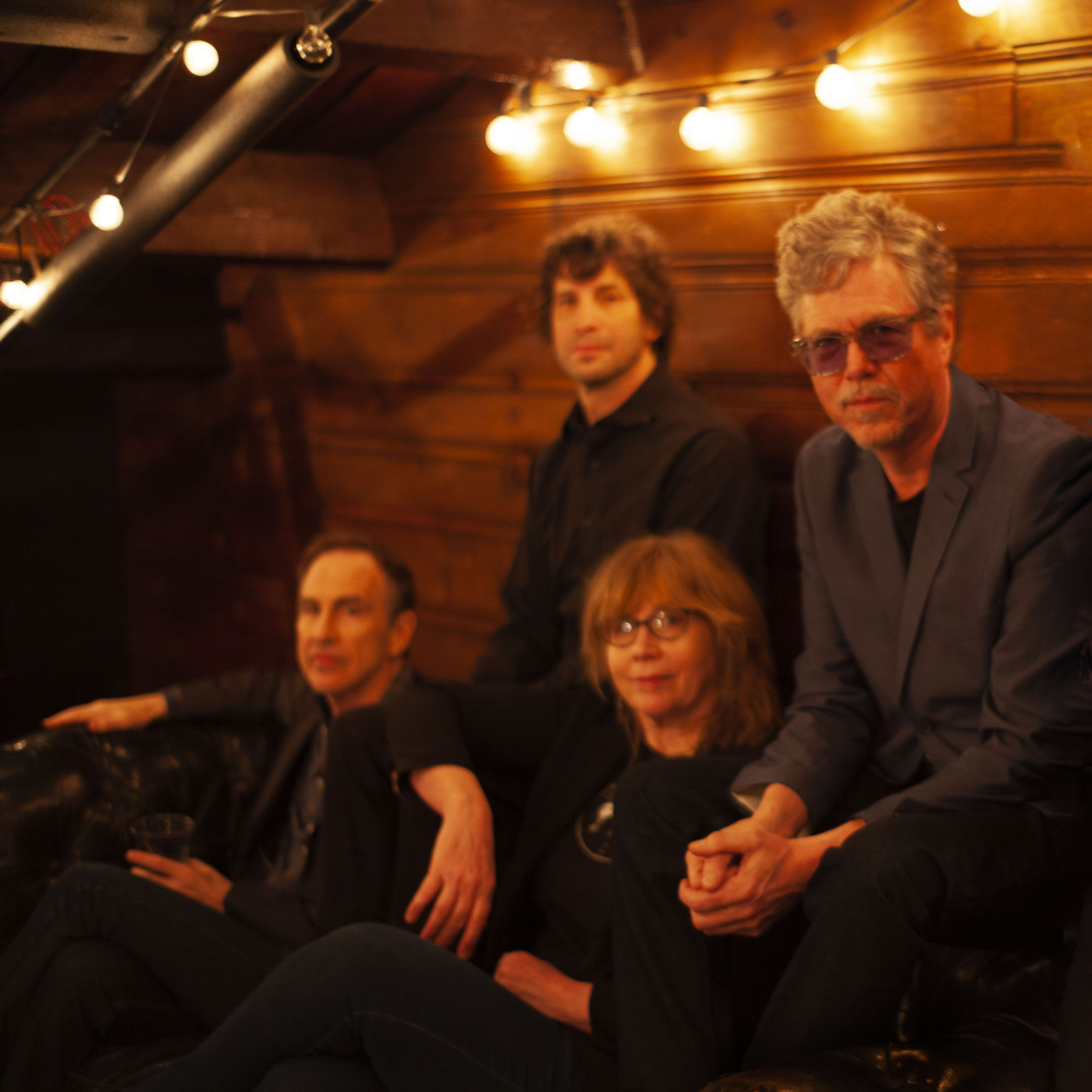
Used for the "softer tunes" on XOXO, as stated by engineer Nick Tveitbakk in this October 28, 2020 Mix Online interview.
Perlman’s bass went through an Ampeg B15 for harder-edged Americana songs and through an Ampeg SVT amp for softer tunes. “That was compressed with an LA2A. All the drums and bass went through Neve mic pres,” he explains. “We have 1064, 1081 1073, 1084—a large variety of those.”
The equipment list for Pachyderm Studios simply lists an "Ampeg SVT Vintage", without specifiying the model. However, this 2017 photo from inside the studio (from this May 31, 2017 imgur album) shows an original SVT. It notably has a replacement faceplate, ambiguating whether not it is a blue line or a black line. Yet, the blue logo on the faceplate suggests that the original color scheme was the blue line.


Album Usage
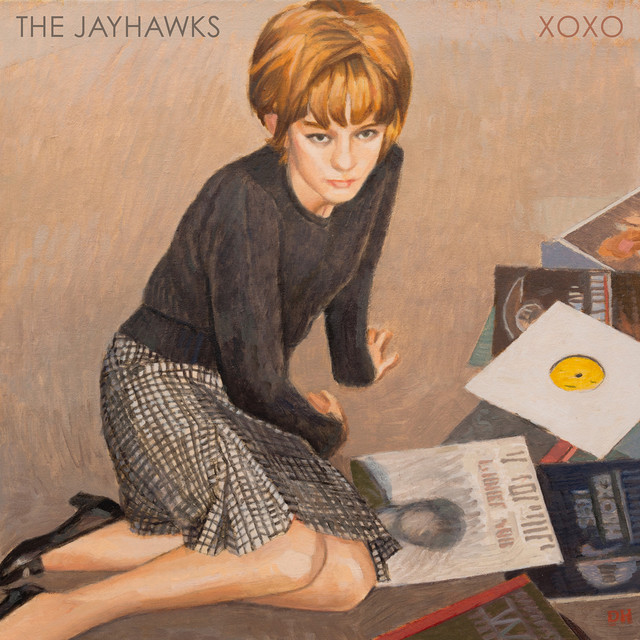
The Ampeg SVT "Blue Line" has been featured on the following albums:
Genre Usage
Based on how artists on Equipboard use this gear, it is most commonly found in the following genres.
Used With
Based on how musicians on Equipboard use Ampeg SVT "Blue Line", it is most commonly used with the following gear.



Community setups
Show yours
Similar
Add recommendation1 alternative for Ampeg SVT "Blue Line", curated by the Equipboard community.
More Ampeg Bass Amplifier Heads
-m.webp?v=1785250739)
$2,199.00 - $2,499.99
in Bass Amplifier Heads Rank


$1,699.99 - $1,999.99
in Bass Amplifier Heads Rank


.jpeg?v=1785199457)

$800.00 - $1,899.99
in Bass Amplifier Heads Rank


$1,498.49 - $1,499.99
in Bass Amplifier Heads Rank

$475.00 - $999.99
in Bass Amplifier Heads Rank


$770.06
in Bass Amplifier Heads Rank


$1,528.00
in Bass Amplifier Heads Rank


$2,199.00 - $2,499.99
in Bass Amplifier Heads Rank


-m.webp?v=1785251070)
$353.00 - $999.98
in Bass Amplifier Heads Rank


$3,199.99 - $3,364.45
in Bass Amplifier Heads Rank


$249.00 - $499.99
in Bass Amplifier Heads Rank


$1,174.00 - $1,299.99
in Bass Amplifier Heads Rank


$766.36
in Bass Amplifier Heads Rank


$1,899.99
in Bass Amplifier Heads Rank


$718.23 - $999.99
in Bass Amplifier Heads Rank


$500.00 - $1,499.99
in Bass Amplifier Heads Rank


$718.23 - $999.99
in Bass Amplifier Heads Rank


$1,528.00
in Bass Amplifier Heads Rank


$399.95
in Bass Amplifier Heads Rank


$699.99 - $999.99
in Bass Amplifier Heads Rank


$2,500.00 - $3,499.99


$3,399.00 - $3,499.99


.jpeg?v=1785070562)


$500.00 - $1,499.99


$818.94 - $1,899.99


$866.00 - $1,199.99


Gear Guides






Most Popular Bass Amplifier Heads
Most Popular Brands
-
Added to Equipboard on by
 eyeseeofficial
GearIQ 161640
-


