

Pricing and availability
We compare 600+ stores and found this item at 1 store. Prices updated .
Store
Reviews
Price




* Product prices and availability are updated by Equipboard every 24hrs and are subject to change. Equipboard may receive compensation for purchases made at participating retailers linked on this site. This compensation does not affect what products or prices are displayed, or the order of prices listed. For more information, please refer to our affiliate disclosure.
Description
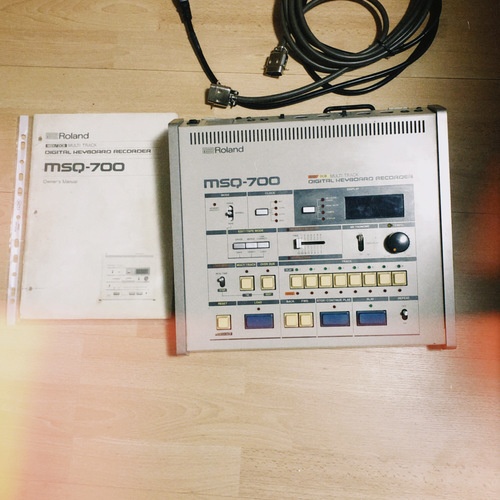
The MSQ-700 from year 1984 is an 8-track MIDI-sequencer that holds up to 6,500 notes that can be stored. Several functions of the MSQ-700 include a chain function, multi-track function, overdubbing and a merge function. Use it to control your TR-909, or Juno-60 or any other MIDI equipment. The MSQ-700 is compatible with both MIDI and Roland's proprietary DCB sync methods,although it can't do both at the same time.
Product specs
| Brand | Roland |
| Model | MSQ-700 Multitrack Digital Keyboard Recorder |
| Finish | Beige |
| Year | 1984 - 1986 |
| Made In | Japan |
| Categories | Sequencers |
| Analog / Digital | Digital |
| MIDI I/O | MIDI Input, MIDI Output |
FAQs
-
What type of sequencing capabilities does the Roland MSQ-700 offer?
-
The Roland MSQ-700 provides multitrack digital sequencing, allowing you to record and play back multiple tracks of MIDI data. It supports real-time and step-time recording modes, making it versatile for various sequencing needs.
-
Is the Roland MSQ-700 compatible with modern MIDI equipment?
-
Yes, the Roland MSQ-700 features standard MIDI input and output connections, allowing it to interface with most modern MIDI-compatible devices, despite its vintage origins.
-
How does the Roland MSQ-700 handle MIDI data storage?
-
The Roland MSQ-700 stores MIDI data internally and can back up sequences via cassette tape, which was standard for the era when it was produced.
-
Can the Roland MSQ-700 be used with other Roland instruments from the 1980s?
-
Yes, the Roland MSQ-700 can be effectively used with other Roland instruments from the 1980s, particularly those with MIDI capabilities, enhancing your vintage setup's sequencing potential.
-
What are the primary uses of the Roland MSQ-700 in a modern setup?
-
In a modern setup, the Roland MSQ-700 can be used for sequencing vintage synths or as a unique tool for creating retro-inspired music due to its distinct workflow and sound character.
Videos

SynthMania
Sequencing 1983 style with Jupiter-8, LinnDrum, and MSQ-700
Sequencing 1983 style with Jupiter-8, LinnDrum, and MSQ-700
SynthMania
Roland MSQ-700, Bit 99 and TR-505
SynthMania
Roland MSQ-700 sequencer - Fast and Fun

Espen Kraft
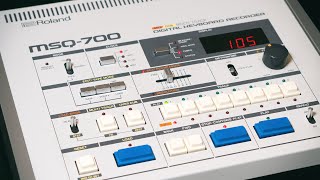
Roland MSQ-700 | Super Quirky
Espen Kraft
Roland MSQ-700 MIDI/DCB Hardware Sequencer (1984) How to record a sequence

RetroSound
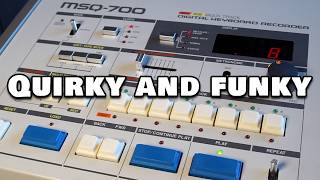
Roland MSQ-700 Quantisation | Highly unpredictable and fun - borderline bizarre
Espen Kraft

Roland MSQ-700 | The blood splattered beyond
Espen Kraft
Reviews
Owner Insights
We analyzed real musician discussions from forums and Reddit to find what players love, question, and tweak about Roland MSQ-700.
Features and functionality
-
The Roland MSQ-700 requires a MIDI keyboard controller like the Arturia Keystep Pro to switch MIDI channels for multiple synths.
Source -
The sequencer allows up to 127 MIDI devices, but practical usage often involves controlling up to 8 devices by sharing MIDI channels.
Source -
The MSQ-700 records on a single MIDI channel at a time, with limitations in handling multi-channel playback to different synths simultaneously.
Source -
Users can select different MIDI channels per track, up to 16 channels per track, allowing for some flexibility despite recording limitations.
Source
Setup and maintenance
-
Users can synchronize a drum machine with the MSQ-700 by setting the drum machine as the master clock and the MSQ as the slave.
Source -
The MSQ-700 cannot simultaneously use DCB and MIDI; it must run sequences via one connection at a time.
Source -
Tape load/save functionality can be emulated as an audio file on a computer or phone, providing a modern workaround for saving sequences.
Source -
Troubleshooting should start with basic checks: cracked solder joints, leaking capacitors, and ensuring +5v between pin 40 and pin 20 on the microprocessor.
Source -
Ensure the /RESET circuit works by checking it starts low and then goes high on power-up, using a logic probe with audio beep for easier detection.
Source -
Testing the clock signal on pins 2 or 3 of the microprocessor may require an oscilloscope, as it's often visible on just one pin.
Source -
Issues with LEDs may involve sourcing replacements; it's unclear if they are standard parts or if availability is limited.
Source -
Accidental activation of service mode can cause non-responsiveness; ensure all mainboard dip switches are set to normal mode.
Source
User experience
Critic Reviews
4.5 out of 5
Based on 0 Reviews and 5 Ratings
Artist usage
Add artist
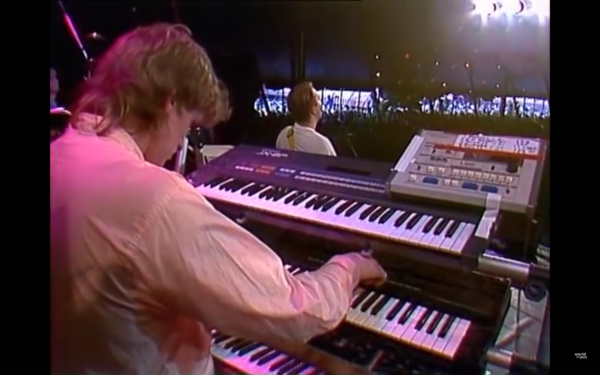
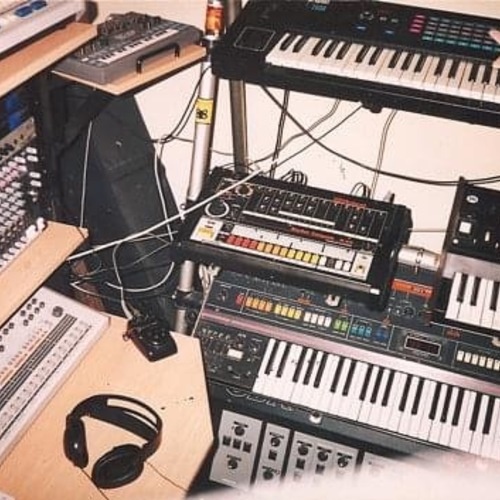
During Eythór Gunnarsson's performance on July 12, 1986, at the North Sea Jazz Festival, he used a Roland MSQ-700 audio sequencer. This is evidenced by a user-uploaded photo.


"Two other bits of MIDI gear that I've bought recently are the Roland MSQ700 and TR909 (both reviewed in E&MM April). The MSQ is really good. Its' MIDI sequencing potential is very wide, but one reason why I've been able to use it so fully so early is that I seem to be getting better at understanding Roland's manuals. Either they're writing them better or I'm just getting the hang of them."


"My normal procedure is to put a code from my MSQ700 onto my A8 through my Seck desk (they're really brilliant — only about an inch thick, and light). I have thought about getting a Fostex B16, but that would only have meant getting a mega-desk. A nice clean simple desk, simple routing, and I've got my rack system in order. I used to have two Roland SDE3000s, but I never used them to their full capacity, and they had no sampling, which is why I swapped to Korg SDD1000s, with 2 seconds of delay, and proper triggerable sampling. I always get pairs of things because I'm a stereo fanatic."


'We used our own keyboards, a Jupiter 8, Yamaha DX7 and a Juno 60, linked up to an MSQ700 using Roland's MD8 converter, which lets you use MIDI keyboards with DCB ones. Apart from that, there was nothing really special at all.'


"Take for instance the MSQ700, the Roland sequencer we used a couple of times with Level 42. It gives a different feeling to each note, depending on how long you've been holding this or that key, even if you quantise. On top of that, it takes somebody to create a part, so even if you step write, it's still human."


It turns out George now numbers amongst the growing ranks of the QX1 following, though the hi-tech Yamaha sequencer wasn't used in the recording of the LP, being a recent replacement for the Roland MSQ700 the band used on both singles. And regardless of his enthusiasm for his new toy, George has obvious reservations about it.

"We only used the Oberheim a little, and the DSX sequencer hardly at all. I usually use the CSQ600 sequencer for bass lines, but recently I've been using the Roland MSQ700 as well, and of course that's much more versatile."


"On most of the album we used the MSQ700. I haven't had time yet to get to grips with the sequencer in the Emulator. The only thing that bothers me is that there appears to be no step time programming on it. Obviously I prefer real time, but there are times when I want it to be so precise that I'll actually sit down and programme it in step time. Again, with the CZ5000, unless you have some idea of notation, you're going to be up shit creek because the display is in notation. So unless you know the difference between a semiquaver and a demi-semi-quaver you haven't even got a look in. But anyway Pat actually played most of the sequences except for really simple repetitive things. That way we got them right after about three takes instead of spending about 10 hours programming the things."


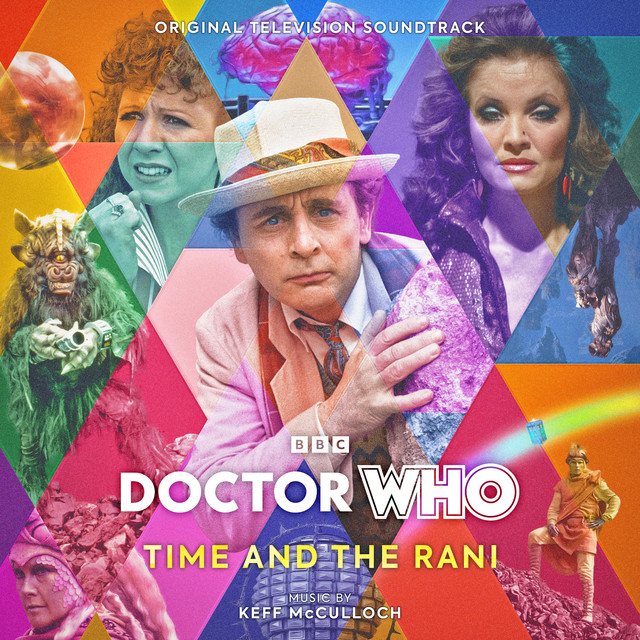
Keff showcasing and demoing his Roland MSQ 700 Sequencer on what he used to create the 1987 Doctor Who Theme.
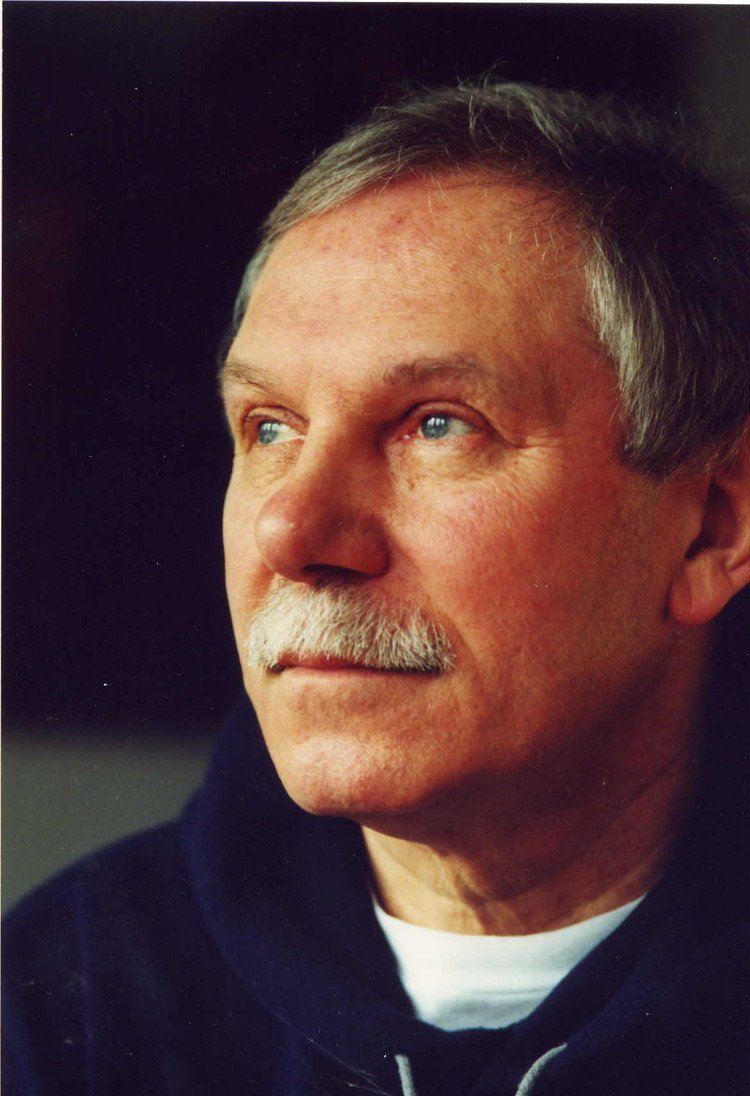
In this article Andrzej Korzyński mentions using MSQ-700 sequencer, for example to music to "Na srebrnym globie" film.

Colin Thurston's Home Studio Equipment List SOUNDCRAFT Series 1600 console. FOSTEX B16 with built-in noise reduction. ROLAND MSQ700 sequencer. YAMAHA R1000 digital reverbs (two). DBX160X limiter. LEXICON PCM41 digital processor. ROLAND 555 tape chorus/echo. ACCESSIT noise gates. REVOX A77 stereo reel-to-reel. YAMAHA NS10M speakers. SONY PCM F1 digital recorder for mixdown. SONY cassette machines. SONY compact disc player. SIMMONS electronic drum kit. LINN DRUM. E-MU Drumulator. ROLAND Juno 106 polysynth. ROLAND Jupiter 6 polysynth. SIMMONS Clap Trap. ELECTRO-HARMONIX Instant Replay ...plus upright piano and numerous guitars.


Album Usage
The Roland MSQ-700 has been featured on the following albums:
Genre Usage
Based on how artists on Equipboard use this gear, it is most commonly found in the following genres.
Used With
Based on how musicians on Equipboard use Roland MSQ-700, it is most commonly used with the following gear.


-s.webp?v=1783090753)

-s.webp?v=1783318437)


Community setups
Show yours

More Roland Audio Sequencers

$427.51 - $1,100.00
in Audio Sequencers Rank


$140.00
in Audio Sequencers Rank


$105.00
in Audio Sequencers Rank


$2,300.00
in Audio Sequencers Rank


$175.00
in Audio Sequencers Rank


$143.48
in Audio Sequencers Rank


$650.00
in Audio Sequencers Rank


$65.00
in Audio Sequencers Rank


$235.00
in Audio Sequencers Rank


$135.00
in Audio Sequencers Rank


$99.00 - $273.00
in Audio Sequencers Rank


$103.25 - $149.99
in Audio Sequencers Rank


$83.00 - $99.00
in Audio Sequencers Rank


$479.00 - $612.99
in Audio Sequencers Rank


$1,395.00
in Audio Sequencers Rank


$299.00
in Audio Sequencers Rank


$219.00 - $329.99
in Audio Sequencers Rank


$1,395.00
in Audio Sequencers Rank


$1,432.98
in Audio Sequencers Rank

-m.webp?v=1783350628)
$1,245.00 - $1,312.37
in Audio Sequencers Rank


$83.00 - $99.00
in Audio Sequencers Rank

$298.00 - $368.46
in Audio Sequencers Rank


$199.99 - $426.02
in Audio Sequencers Rank


$25.00 - $119.95
in Audio Sequencers Rank


$620.96 - $1,199.00
in Audio Sequencers Rank


$546.99
in Audio Sequencers Rank


$499.00 - $533.00
in Audio Sequencers Rank


$1,299.00
in Audio Sequencers Rank


-m.webp?v=1756884721)


$322.42
in Audio Sequencers Rank


$105.00
in Audio Sequencers Rank

Accessories & Related Items

Similar


Gear Guides



Most Popular Audio Sequencers
Most Popular Brands
-
Added to Equipboard on by
 nutritiouspig
Gear IQ 785
-


