

Pricing and availability




Average Price: $645
High-end/Boutique
$75
$251+
Price Tier
Budget
Standard
High-end
* Product prices and availability are updated by Equipboard every 24hrs and are subject to change. Equipboard may receive compensation for purchases made at participating retailers linked on this site. This compensation does not affect what products or prices are displayed, or the order of prices listed. For more information, please refer to our affiliate disclosure.
Description
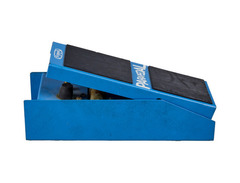
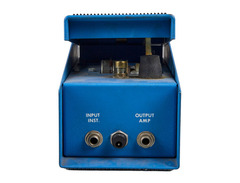
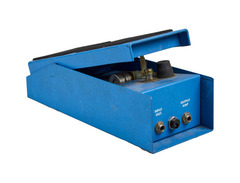
Step into the world of vintage tones with the Tycobrahe Parapedal, a legendary wah pedal that has captivated guitarists for decades. Known for its smooth and expressive sweep, the Parapedal brings a distinct character to your sound, blending seamlessly into various musical styles. Crafted with meticulous attention to detail, this pedal faithfully replicates the warm, vocal-like tones that defined an era, offering a unique sonic palette that is both rich and dynamic.
The Tycobrahe Parapedal stands out with its proprietary inductor, delivering a signature wah effect that is both versatile and reliable. Guitarists who crave authenticity and superior tone will appreciate its intuitive design and robust construction. Whether you're aiming to emulate classic rock sounds or explore new sonic territories, the Parapedal provides the perfect platform to innovate and express.
Easy to integrate into any pedalboard, this wah pedal offers a user-friendly interface that ensures seamless operation, allowing you to focus on your performance. Its true-bypass switching preserves your guitar’s natural tone, ensuring clarity and precision in every note. Whether you're on stage or in the studio, the Tycobrahe Parapedal delivers exceptional performance that guitarists can rely on.
Key Features:
- Legendary vintage-inspired wah pedal
- Proprietary inductor for distinct tonal character
- Smooth and expressive sweep for dynamic sound shaping
- True-bypass switching for signal integrity
- Durable construction for reliable use in various settings
- Seamless integration into any pedalboard setup
Product specs
| Brand | Tycobrahe |
| Model | Parapedal |
| Finish | Blue |
| Year | 1970s |
| Made In | United States |
| Categories | Filter and Wah Pedals |
FAQs
-
What makes the Tycobrahe Parapedal different from other wah pedals?
-
The Tycobrahe Parapedal is unique due to its vintage design and distinct tonal qualities, often described as more vocal-like compared to typical wah pedals. It is known for its rich, full sound that has been favored by iconic guitarists like Tony Iommi.
-
Is the Tycobrahe Parapedal suitable for modern music genres?
-
Yes, the Tycobrahe Parapedal can be used in modern music genres. Its classic wah effect adds a unique character to guitar tones, making it versatile for styles ranging from rock and blues to experimental music.
-
How does the Tycobrahe Parapedal affect my guitar's tone?
-
The Tycobrahe Parapedal enhances your guitar's tone by providing a sweeping frequency effect that can create expressive, vocal-like sounds. It is particularly effective for solos and lead parts, adding depth and dynamics to your performance.
-
Can the Tycobrahe Parapedal be used with bass guitars?
-
While primarily designed for electric guitars, the Tycobrahe Parapedal can also be used with bass guitars to achieve a unique, expressive wah effect. However, the tonal response might differ slightly due to the lower frequency range of bass guitars.
-
Is the Tycobrahe Parapedal easy to integrate into a pedalboard setup?
-
Yes, the Tycobrahe Parapedal can be easily integrated into most pedalboard setups. Its standard size and connectivity options allow it to fit seamlessly with other pedals, although its vintage design may require specific power considerations.
Videos

OCULOSS
Tycobrahe PARAPEDAL - vintage wah pedal ( effects pedal demo )

Tycobrahe PARAPEDAL - vintage wah pedal ( effects pedal demo )
OCULOSS
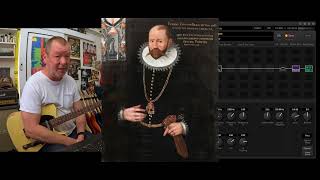
"Paragon": Fractal Audio model of Tycobrahe Parapedal (super-rare wah)

Brett Kingman
Reviews
Owner Insights
We analyzed real musician discussions from forums and Reddit to find what players love, question, and tweak about Tycobrahe Parapedal.
Setup and maintenance
Build quality
-
The pedal was built using a Vox Wah shell, which required no additional modifications for the DC jack, indicating compatibility with broken or unused shells.
Source -
The Parapedal clone required a dual gang wah pot, which is difficult to source and needed modification to fit the wah gear and housing.
Source
Features and functionality
Use cases and applications
-
Perfect for emulating Tony Iommi and Steve von Till's sound, making it essential for Sabbath and Neurosis fans.
Source
User experience
-
Owners report the pedal does not resemble any traditional wah sound, enhancing its appeal for unique tonal exploration.
Source
Comparisons
-
Compared to modern crybaby pedals, the Parapedal offers a distinct sound profile that stands out for its unconventional tonal characteristics.
Source
Based on 0 Reviews and 0 Ratings
Artist usage
Add artist
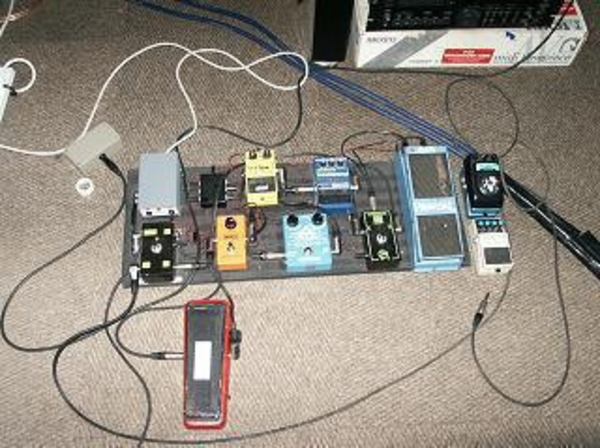
"Tony’s favourite wah pedal is an old Tychobrahe Parapedal. It was made in the early seventies. They have not been available new for many years now although I believe there is someone who has now started making clones called the Parachute." - Tony's official website.
.jpeg?v=1784792607)

Geezer Butler has been using the Tycobrahe Parapedal wah pedal since the 1970s, similar to Tony Iommi. During Black Sabbath's reunion in 1998, he switched to the Cry Baby Wah 95Q, as noted in performances like "Bassically/NIB." This is evident in the live performance of "Heaven And Hell - The Sign Of The Southern Cross" from 2007, available on YouTube.


In this November 8, 2018 Premier Guitar interview, Matt states that he used Al Cisneros’ Tycobrahe Parapedal on the song “The Botanist” from the album The Sciences.
Some songs, like “Sonic Titan” and “Antarcticans Thawed,” have been evolving onstage for years, but “The Botanist” seems like a departure. Was that a new song?
Yeah. “The Botanist” arose from those boot camp sessions. I had this weird, leftover acoustic piece and we just built off that because everyone in the room instantly liked the backbone. It was a slow-burn jam, with us methodically adding in elements and tones, but not forcing anything. That’s the key—you can’t be afraid to improvise and follow an idea, yet you gotta know when something isn’t working. It has such a weird, trippy vibe to it, and when Al and Jason come in, it reminds me of an underwater, hypnotic Pink Floyd.
Those solos definitely have some Gilmour traits, like the oily slickness at the end of “Dogs” or the emotive soaring in “Time.”
I really went after a lush, swirling David Gilmour tone. I think the key to that whole sound is Al’s pedal I used—a vintage Tycobrahe Parapedal—with an old Roland RE-201 Space Echo, and parts of it have a vintage [Ibanez Phase Tone] blue phaser. And everything is played with a Les Paul Recording guitar that has this phase-reverse switch that gives me a more filtered, out-of-phase tone.One thing that Sleep really lets me do, and it’s a testament to Jason and Al, is go off on a guitar odyssey. That song in particular, they really set it up for me to be able to show off a little bit.


Mentioned in the July 1980 issue of Guitar Player, with the details summarized in this March 13, 2009 Gibson article.
Guitar Player, July 1980, "British Rock Guitar Veteran"
From your left to right, how is your pedalboard currently set up?
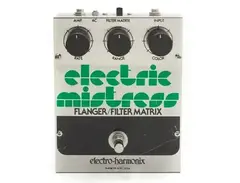
The first effect is a preamp that Mike built, which is on all the time. The second is another volume booster, a Dan Armstrong Red Ranger, which I use for even greater sustain. Third is my Tycobrahe [sic] wah-wah. The fourth is the Fender Blender. The fifth is the Univibe, and the sixth is a Mu-tron II. The seventh and eighth are Mistresses with different settings; the one on the left gives a double-tracking effect, while the one on the right provides more of a flanged sound. But I think I've come to a halt as far as effects go. I mean, I can just barely handle what I've got now. There's so much stuff going on that if you just started mixing them there would be a limitless number of combinations you could get.
From your pedalboard, where does the signal go?
Into a splitter box, then to my amps. I don't use a mixing board or anything when I'm live because I like to be very much in control of what's going on. Especially concerning dynamics, that's so much a part of my music that I wouldn't feel happy if someone else were controlling it. I like to be creating the sound.
Gibson, "How To Get That Robin Trower Sound", March 13, 2009
Trower’s hottest rig blasted his array of Strats through a pair of 100-watt Marshall JMP-100 Mark II heads feeding two 1960-B 4x12 cabs and had an impressive effects chain on the floor: custom preamp and clean booster pedals, a Dan Armstrong Red Ranger treble booster, a Tychobrahe wah-wah, an octave/fuzz Fender Blender, a Uni-Vibe chorus/vibrato, Mutron II phase shifter, and two Electro-Harmonix Electric Mistresses.
Album Usage
The Tycobrahe Parapedal has been featured on the following albums:

Genre Usage
Based on how artists on Equipboard use this gear, it is most commonly found in the following genres.
Used With
Based on how musicians on Equipboard use Tycobrahe Parapedal, it is most commonly used with the following gear.




Similar
Add recommendation1 alternative for Tycobrahe Parapedal, curated by the Equipboard community.

The Chicago Iron Works Parachute Wah is a replica of the Tycobrahe Parapedal Wah, now sold as a licensed Tycobrahe reissue.
More Wah Pedals
-m.webp?v=1784934315)
$89.00 - $99.99
in Wah Pedals Rank


$147.48 - $220.00
in Wah Pedals Rank


$209.99 - $234.93
in Wah Pedals Rank


.jpeg?v=1784855195)

$129.00 - $209.99
in Wah Pedals Rank


$93.88 - $125.99
in Wah Pedals Rank


-m.webp?v=1784934315)
$89.00 - $109.99
in Wah Pedals Rank


$169.00 - $179.99
in Wah Pedals Rank


$74.00 - $215.00
in Wah Pedals Rank


$86.93 - $149.99
in Wah Pedals Rank


$154.00 - $315.00
in Wah Pedals Rank


$81.00 - $179.99
in Wah Pedals Rank


$154.00 - $159.99
in Wah Pedals Rank
.jpeg?v=1784792607)


$266.00 - $329.00
in Wah Pedals Rank


$129.00 - $139.99
in Wah Pedals Rank


$209.99 - $258.00
in Wah Pedals Rank


$199.00 - $219.00
in Wah Pedals Rank


$112.49 - $153.99
in Wah Pedals Rank


$209.99
in Wah Pedals Rank


$59.00 - $190.00
in Wah Pedals Rank

$59.00 - $149.99
in Wah Pedals Rank


$96.00
in Wah Pedals Rank


$199.00 - $219.00
in Wah Pedals Rank


$112.75 - $185.00
in Wah Pedals Rank


$199.54 - $229.00
in Wah Pedals Rank


$150.00 - $299.99
in Wah Pedals Rank


$115.00 - $315.00
in Wah Pedals Rank

.png?v=1784922058)

$60.00
in Wah Pedals Rank


$209.99 - $257.00
in Wah Pedals Rank


$10.00 - $99.99
in Wah Pedals Rank


$115.00
in Wah Pedals Rank


$197.58 - $209.99
in Wah Pedals Rank


$164.44 - $190.00
in Wah Pedals Rank

.jpg?v=1784895999)

$50.00 - $179.99
in Wah Pedals Rank


$354.98
in Wah Pedals Rank
.jpg?v=1784895999)


$70.30
in Wah Pedals Rank


$45.00 - $199.00
in Wah Pedals Rank


$113.46 - $130.78
in Wah Pedals Rank


.jpeg?v=1784894312)

$77.44
in Wah Pedals Rank


$33.35 - $103.76
in Wah Pedals Rank


$235.00 - $277.00
in Wah Pedals Rank


Community setups


Gear Guides



.jpg)



Most Popular Wah Pedals
Most Popular Brands
-
Added to Equipboard on by
 miggityfriggity
GearIQ 5535
-


