-s.webp?v=1783349871)

-xl.webp?v=1783349871)
Pricing and availability
We compare 600+ stores and found this item at 7 stores. Prices updated .
Store
Reviews
Price








Average Price: $2,467
High-end/Boutique
$100
$501+
Price Tier
Budget
Standard
High-end
Price History
Based on price data from 5 merchants for "Universal Audio 1176LN". Prices shown reflect NEW condition. Tracking began Apr 2, 2026.
* Product prices and availability are updated by Equipboard every 24hrs and are subject to change. Equipboard may receive compensation for purchases made at participating retailers linked on this site. This compensation does not affect what products or prices are displayed, or the order of prices listed. For more information, please refer to our affiliate disclosure.
Description
The Universal Audio 1176LN Limiting Amplifier is a faithful reissue of the iconic solid-state compressor that revolutionized the music industry in 1967. Renowned for its ultra-fast attack and release times, this versatile limiting amplifier can deliver a broad range of compression effects, from subtle leveling to full-blown distortion.
Handcrafted in Scotts Valley, California, each 1176LN is meticulously assembled point-to-point, replicating Bill Putnam Sr.'s original design. This commitment to authenticity ensures that the 1176LN captures the heart and soul of the original unit that helped shape the sound of rock and roll legends like Led Zeppelin, The Rolling Stones, and Michael Jackson.
A true chameleon, the 1176LN can transform any signal it processes. Bass guitars attain immense presence, weak snares gain a distinct crack, and vocals are propelled to the front of the mix. Thanks to its Class A output transformer, renowned for its musicality, the 1176LN can morph even the most mundane tracks into sonic gems.
While modern limiters offer digital emulations and updated components, none can match the musicality and versatility of the 1176LN. Universal Audio's reissue captures all the nuances of Putnam's pioneering design, making the 1176LN a must-have for any studio.
Key Features:
- Iconic solid-state compressor/limiter, reissued to original specifications
- Ultra-fast attack time as low as 20 microseconds
- Broad range of compression effects, from subtle leveling to all-out distortion
- Class A output transformer known for its musicality
- Handcrafted in Scotts Valley, California
- Ideal for shaping dynamics on guitars, bass, drums, vocals, and more
- Custom Class A output transformers
- Record your tracks through legendary vintage-spec solid-state circuitry
- Faithful to the original in design, manufacturing, and performance
- Impart vibe, color, and character to signals without using compression
Product specs
| Type | FET |
| Number of Channels | 1 |
| Controls | Input, Output, Attack, Release, Ratio (Buttons) |
| Ratio | 4:1, 8:1, 12:1, 20:1 |
| Frequency Response | 20Hz-20kHz |
| Inputs | 1 x XLR |
| Outputs | 1 x XLR |
| Rack Spaces | 2U |
| Height | 3.5" |
| Depth | 12.25" |
| Width | 19" |
| Weight | 11 lbs. |
FAQs
-
What makes the Universal Audio 1176LN unique compared to other compressors?
-
The Universal Audio 1176LN is renowned for its lightning-fast attack and release times, offering a wide range of compression sounds from subtle to aggressive. Its Class A output stage and iconic FET design contribute to its distinct tonal character, making it a staple in professional studios.
-
Is the Universal Audio 1176LN suitable for both vocals and instruments?
-
Yes, the 1176LN is versatile and widely used for both vocal and instrumental tracks. Its fast attack and release times make it ideal for controlling dynamic range while adding a classic sonic signature to various audio sources.
-
What type of connectivity does the Universal Audio 1176LN offer?
-
The Universal Audio 1176LN features XLR inputs and outputs, providing professional-grade connectivity for studio setups. This ensures high-quality signal transfer and compatibility with other studio gear.
-
Can the Universal Audio 1176LN be used in a stereo setup?
-
The 1176LN itself is a mono unit; however, for stereo applications, two units can be linked together. Alternatively, the Universal Audio 2-1176 model offers a true stereo version of this classic compressor.
-
What are the compression ratio options available on the Universal Audio 1176LN?
-
The 1176LN offers four selectable compression ratios: 4:1, 8:1, 12:1, and 20:1. These options provide flexibility for achieving different levels of dynamic control, from gentle compression to more aggressive limiting.
Videos

Universal Audio
Chaining the 1176LN and LA2A compressors for maximum control.
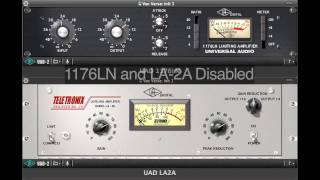
Chaining the 1176LN and LA2A compressors for maximum control.
Universal Audio
5 Minute UAD Tips: 1176 Classic Limiter Plug-In Collection
Universal Audio
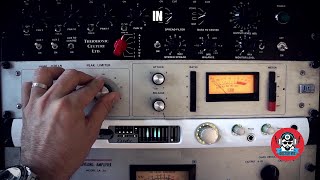
Urei 1176 Compressor In Action

Doctor Mix
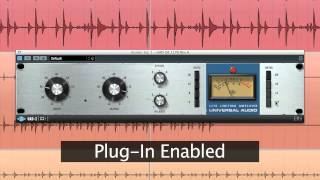
Tips & Tricks — 1176 Classic Limiter Collection Plug-Ins
Universal Audio
History of the Universal Audio 1176 Compressor/Limiter with CEO Bill Putnam Jr.

Musician's Friend
Universal Audio 1176LN Compressor Demo

BIG EGO
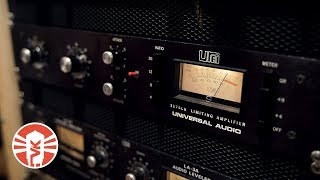
VK Shootout: Urei/Universal Audio 1176 Compressor vs. Reproductions, Plug-Ins, and Pedals

Vintage King
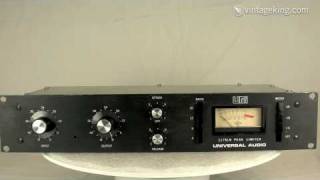
Vintage Urei 1176LN Peak Limiter | VintageKing.com
Vintage King
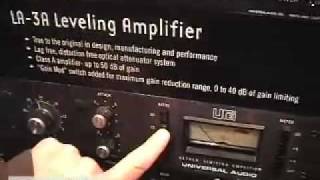
Universal Audio 1176LN

SamAshdotcom

Universal Audio 1176LN VS. UAD UA 1176ln REV E

Signature Sound Studios
Reviews
PROS
-
Essential for FET compression, especially on voice tracks and snares
-
Clean, fast compression with unique tone and character
-
Adds rich tone and weight to signals, enhancing recordings
-
Durable with robust metal enclosure and high-quality components
-
Faithful recreation of the original with classic details
-
Versatile, works great on a variety of sources like guitars and vocals
-
Adds polished and finished sound to recordings
-
Can add aggressive coloration when needed, making instruments stand out
CONS
-
One unit had quality control issues with gain reduction and output levels
-
Not all units consistently replicate the sound of original UREI 1176s
-
Modification and repair can be costly if issues arise
-
Potentially too aggressive, might not suit all tracks or styles
Owner Insights
We analyzed real musician discussions from forums and Reddit to find what players love, question, and tweak about Universal Audio 1176LN.
Features and functionality
-
The UAFX 1176 pedal's parallel mode uses the output knob as a dry/wet mix control, contrary to initial perceptions of it being a fixed 50/50 blend.
Source -
The promotional UA 1176 plugin lacks output saturation and headroom controls, differing from the full version's capabilities.
Source -
Pulsar's Smasher plugin uniquely offers individual saturation controls for input and output, a feature rare among 1176 emulations, enhancing its versatility.
Source -
The Purple Audio MC77 plugin offers a distinctive inversely linked input/output knob and a unique distortion character, making it a standout among 1176 emulations.
Source
Software and compatibility
Use cases and applications
Comparisons
-
T-Racks Black 76 behaves differently from UA's 1176 even with identical settings, highlighting distinct tonal characteristics.
Source -
The Empress MkII is highly recommended for its versatility, although it may lack the specific distortion characteristic of the UAFX 1176.
Source -
The UAD 1176 collection includes the exclusive 1176 Rev. AE model, offering a unique 2:1 ratio and a "slow" attack setting, highly praised for vocal processing.
Source -
The Cali76 Stacked is noted for achieving the "Black Dog" tone through carefully researched settings, offering a more analog experience compared to the digital UAFX 1176.
Source -
Softube FET MKII is frequently cited as a top-tier compressor, appreciated for its analog sound and noted for being potentially more aggressive than UAD models.
Source -
Arturia’s 1176 emulation is critiqued for a consistent "veil" across their plugins, though praised for its cohesive workflow with advanced options like M/S processing.
Source -
The Analog Obsession FETish plugin is noted for superior control and saturation over UAD models, providing a snappy 1176 sound highly favored for aggressive tones.
Source
User experience
-
Some owners report the Cali76 can be noisy, especially with single-coil pickups like those from a Telecaster or Strat, whereas Keeley compressors offer quieter performance.
Source -
Despite newer emulations, some users still rely on the CLA76 for its familiar compression sound, often adding saturation plugins like Decapitator for enhanced tonal character.
Source
Critic Reviews
5.0 out of 5
Based on 2 Reviews and 26 Ratings

253
Urei 1176LN Limiting Amplifier
"This is the box that I use to add agressive coloration to sources. It can be just the right thing on some sources like bass guitar to make it jump out of the mix. It can also really destroy the integrity and beauty of an instrument. Don't be running every single track through this baby unless you're making punk rock!"
Artist usage
Add artist

In this YouTube video @ 3:30, Max Martin has 2 1176s sandwiched around an LA-2A.


Used for "Last Meal", as stated anecdotally by engineer Jimmy Douglass in this transscribed March 2005 interview about Justin Timberlake's "Cry Me a River".
JUSTIN TIMBERLAKE
"Cry Me a River"
Producer: Timbaland
Engineer: Jimmy Douglass
"Justin came to me with his microphone in his case, and didn't actually take it out because he decided to see what I could do first," says Jimmy of the first session. "He was very happy, so he didn't get into that. I guess he has his mic with him just in case he runs into trouble. He works with a lot of different engineers and everybody has their secrets about their great mics. The thing about the [Neumann] U 87 - I used it because it's really kind of a neutral mic. All the other microphones have characteristics to them that don't work on everybody's voice. The U 87 seems to work on everybody."
"I look for Jimmy to tweak my vocals and make them crisp," adds Timbaland. "That's what I look for - that tone. With Justin, his vocal tone just came. Justin does his own thing."
Signal Path: Tracking
Jimmy explains: "The U 87 went to the Neve VR channel strip in mic position - I used the preamp on the board, and then inserted the [Universal Audio] 1176 across that particular path and then I sent it out to all my individual buses. I tracked Justin's vocals to Pro Tools. That's it. I've found that this is the chain of least resistance; it doesn't effect the vocal as much, and you can always do more creative things later in the mix. It's the most natural signal path I can find. I use the 1176 because it's a very fast limiter and it works well as a limiting tool as well as compressor.
"The reason I don't do anything coming in on the EQ side," he continues, "is because you can always EQ it later, but you can't take away EQ you've messed with on the way in. That gets recorded and you can never take it away."
Missy Elliott received the exact same signal treatment for her Timbaland-produced hit "Get Ur Freak On", as did Aaliyah on "Try Again," Jay-Z "Big Pimpin'," Snoop Dogg "Last Meal," Lil' Kim "The Jump Off," and Bubba Sparxxx "Deliverance," among others.


Used for the lead vocals on "Rolling in the Deep", as stated by mix engineer Tom Elmhirst in this September 2011 Sound on Sound interview.
Vocals: Waves Q6 & De‑esser, Digirack EQIII, Lo‑Fi & Trim, Pultec EQ, Urei 1176, Tube‑Tech CL1B, various spring reverbs and delays.
"I had the Q6 on the chorus vocal, notching out 930, 1634 and 3175 Hz very, very heavily: ‑18dB, ‑18dB and ‑12.1dB respectively, with very narrow Q. I also had the EQIII on the lead‑vocal sub, notching something out again. Something obviously needed to be taken out. The vocal is the most important thing in the track, and taking those frequencies out allowed me to keep it up front in the mix, particularly in the chorus. You can never account for what mic the vocals were recorded on, and whatever it is that bugs me, I can take it out. 'T' on the lead vocal bus is the [Massey] Tapehead plug‑in, which wasn't used, but I did use two Waves De‑essers, one taking out at 5449Hz and the other at 11004Hz. Rather than use one to try to cover all the sibilance I used two. I do that quite often.
"Regarding the outboard, I had the Pultec EQ, Urei 1176 and the Tube‑Tech CL1B on the lead vocal sub insert (desk channel 25). The Pultec boosted around 100Hz and 12k. It's colourful, but not drastic. There was not a lot of gain. The blackface Urei had fast attack and fast release, whereas the Tube‑Tech had slow attack and slow release, it was more evening out the level. You can use compression as an effect, but on the vocal you mainly want control. You want to set it up right so you're not constantly moving the channel fader to fit the vocal in the mix. If you're constantly moving the fader, rather than just doing the occasional ride, you know that you need to look at your compression. There's also Paul's Roland Space Echo track, which I used throughout, and which was the only lead vocal effect in the first chorus. On the backing vocals I had the Digirack Trim, again the Lo‑Fi, and the EQIII, cutting a bit around 405Hz and boosting a little around 3.17k. I used quite a few spring reverbs on the backing vocals, because I wanted them to have a lot more ambience. In the choruses I would also have added several delays. The delays make the backing vocals swing a bit, and they also fill up the space and make sure that they fit in the mix.”
Also used on the vocals for "Someone Like You", as featured in this April 18, 2013 Instagram post by recording engineer Warren Huart.
Compression! Same chain used for #adele on #someonelikeyou #urei1176 #LA2A #dbx165 #dbx175vu #compressor #recordingstudio #studio #recordingengineer #warrenhuart #warrenhuartproducer #vintagegear #gearporn #studioporn


In pictures in the October issue of Sound on Sound Magazine, an 1176LN can be seen rack mounted to the right of the desk they're sitting at.

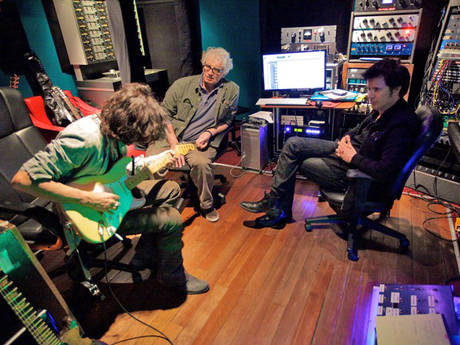
Used for the vocals on Music from Another Dimension!, as stated by engineer Warren Huart in this August 1, 2012 Mix article archived on the Endless Analog website.
Most of Steven Tyler’s keeper vocals were cut at Swing House with a Neumann U 48 that Huart had used previously on The Fray, James Blunt, Adele and others. Other pieces of the chain included a Brent Averill Enterprises 1073, 'and then I mult to two sets of compression and I parallel compress. I have two [dbx] 160 VU’s, which I set pretty lightly, like 2-to-1 or 3-to-1. I split those out of a mult and then each of those goes to an 1176 set to limit on 20:1 and they just catch the peaks. I’ve got one for verses and softer vocals, attacking it lightly, and then when he goes into that louder, crazier Steven thing I have another set of compression set at half that. They’re multed back together and that’s the vocal sound. What it does is give you huge, fat vocals all the time. I ride the 1073—I’ll click the gain settings up and down depending on where he is on the vocal. It’s pretty old school. As an engineer, you’re blessed to work with a singer of that quality, because he makes your life very easy.'"

Urei 1176 compressor is included in the list of Mark's "studio gear."


In this article Illangelo says he used the UAD 1176 on The Weeknd's vocal for his song "The Hills"

In this TikTok at 00:05, keshi shows his outboard, which includes the Universal Audio 1176LN compressor.

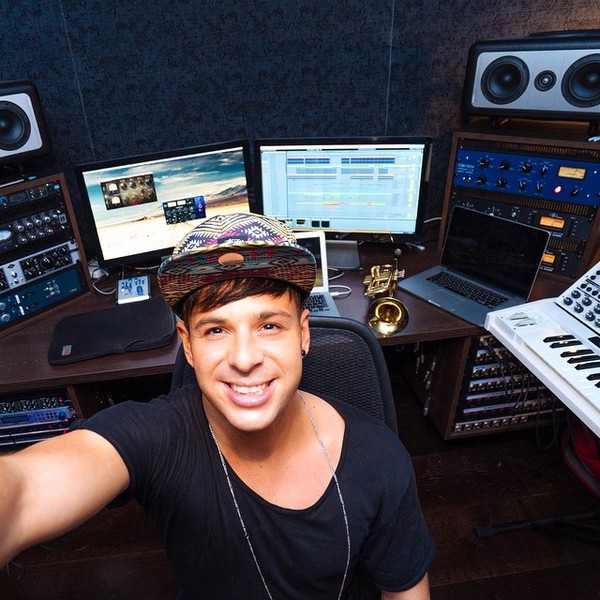

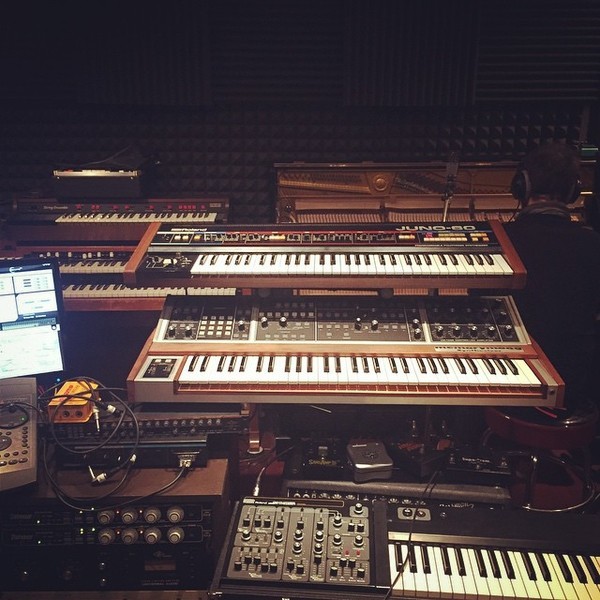
In a user-uploaded photo, Breakbot’s studio setup features a Universal Audio UREI 1176-LN Peak Limiter positioned just below a pair of Distressors.


Ian says he uses "1176" on vocals 41:28 into this video.


In this footage of Lynch in the studio during the recording of Crazy Clown Time, the camera pans past an 1176-LN at the 0:23 mark.
Album Usage
The Universal Audio 1176LN has been featured on the following albums:

Headphones On
Addison Rae (2025)
Small Rock Little Stone
Firechild (2022)

Easy On Me
Adele (2021)
Magma
Gojira (2016)

Rehab (Remixes & B Sides)
Amy Winehouse (2015)
Pet Sematary (feat. George Dalton)
Ramones (2015)
En-trance
Air (2014)
Lazaretto
Jack White & Jack White (2014)

Random Access Memories
Daft Punk & Daft Punk (2013)
Love In The Future (Expanded Edition)
John Legend (2013)

English Electric
Orchestral Manoeuvres in the Dark (2013)
Love Is a Four Letter Word
Jason Mraz (2012)

The Story of Light
Steve Vai (2012)
Music From Another Dimension!
Aerosmith (2012)
21
Adele (2011)
Crazy Clown Time
David Lynch (2011)
Rolling in the Deep
Adele (2011)

Viva La Vida or Death and All His Friends
Coldplay (2008)

Lullabies To Paralyze
Queens of the Stone Age (2005)

Is There Love In Space?
Joe Satriani (2004)

Champion Sound
Jaylib & Madlib & J Dilla (2003)
Deliverance
Bubba Sparxxx (2003)

Strange Beautiful Music
Joe Satriani (2002)

Songs For The Deaf
Queens of the Stone Age (2002)

Tha Last Meal
Snoop Dogg (2000)

Universal
Orchestral Manoeuvres in the Dark (1996)

Not Of This Earth
Joe Satriani (1986)
Reckoning - Deluxe Edition
R.E.M. (1984)

Purple Rain
Prince & Prince (1984)

Murmur
R.E.M. (1983)
Led Zeppelin IV (Remaster)
Led Zeppelin (1971)
Genre Usage
Based on how artists on Equipboard use this gear, it is most commonly found in the following genres.
Used With
Based on how musicians on Equipboard use Universal Audio 1176LN, it is most commonly used with the following gear.


-s.webp?v=1783346562)


-s.webp?v=1783349877)
Community setups
Show yours


Similar
Add recommendation9 alternative and related items for Universal Audio 1176LN, curated by the Equipboard community.

$229.00 - $279.00
A pedal version of the 1176 compressor, with traditional controls, and a retro housing inspired by the old studio units.

$152.00 - $169.00
A digital pedal version of the 1176, designed for guitar use. Features dual and parallel modes.

$1,549.00
-m.webp?v=1775900829)


$699.00 - $735.00
More Universal Audio Effects Processors

$1,999.00
in Effects Processors Rank


$749.99 - $4,999.00
in Effects Processors Rank


$1,192.00 - $1,914.49

$899.00 - $1,914.49


$1,575.00
in Effects Processors Rank


-m.webp?v=1783349882)
$600.00
in Effects Processors Rank


$146.00
in Effects Processors Rank


$1,799.00
in Effects Processors Rank


$1,549.00
in Effects Processors Rank


$749.99 - $839.00
in Effects Processors Rank


$150.00
in Effects Processors Rank


$1,100.00
in Effects Processors Rank


$3,799.00 - $5,450.00
in Effects Processors Rank


$5,699.00 - $6,999.00
in Effects Processors Rank

.jpg?v=1783082401)

$1,153.00 - $2,635.00
in Effects Processors Rank


.jpg?v=1783230697)

$680.00 - $1,799.95
in Effects Processors Rank


$4,537.78 - $4,799.00
in Effects Processors Rank


$850.00
in Effects Processors Rank


$190.00
in Effects Processors Rank


$69.95
in Effects Processors Rank


$199.99 - $299.00
in Effects Processors Rank


-m.webp?v=1783177069)
$334.36
in Effects Processors Rank


$419.99 - $1,179.99
in Effects Processors Rank


Accessories & Related Items


-s.webp?v=1783346563)


-s.webp?v=1783346694)




.jpg)
Most Popular Effects Processors
Most Popular Brands
-
Added to Equipboard on by
 equipboard
Gear IQ 4934
-


