

Pricing and availability
We compare 600+ stores and found this item at 6 stores. Prices updated .
Store
Reviews
Price






Price History
Based on price data from 5 merchants for "Waves DeEsser". Prices shown reflect NEW condition. Tracking began Apr 2, 2026.
* Product prices and availability are updated by Equipboard every 24hrs and are subject to change. Equipboard may receive compensation for purchases made at participating retailers linked on this site. This compensation does not affect what products or prices are displayed, or the order of prices listed. For more information, please refer to our affiliate disclosure.
Description
Unleash the full potential of your vocal recordings with the Waves DeEsser plugin, a precision tool designed to tackle sibilance with ease and finesse. Inspired by vintage gear, this plugin effortlessly eliminates harsh "ess" and "shh" sounds without compromising the natural warmth of your audio. Whether you're polishing vocals or taming unruly cymbals, the Waves DeEsser's intuitive interface ensures smooth and subtle de-essing, making it a must-have for any serious audio engineer.
At the heart of the Waves DeEsser is its innovative side-chain filtering technology, which allows for precise frequency targeting. This feature is complemented by the plugin's ability to switch between wide-band and split compression modes, offering flexibility to suit any audio situation. Whether you’re working in a mono or stereo setup, the Waves DeEsser operates seamlessly up to 24-bit/192kHz resolution, making it an ideal choice for both studio recordings and live performances.
Join the community of musicians and producers who trust the Waves DeEsser to deliver crystal-clear audio, free from the distractions of unwanted sibilance. With its user-friendly design and powerful features, this plugin is your go-to solution for achieving pristine vocal tracks.
Key Features:
- Classical hiss reduction inspired by vintage gear
- Sharp side-chain filters for precise processing
- Wide-band or split compression modes
- Audio or sidechain monitoring options
- Supports up to 24-bit/192kHz resolution
- Compatible with mono and stereo components
- SoundGrid license compatible with MultiRack Native, StudioRack Native, and more
Owner's manual
Waves DeEsser User ManualProduct specs
| Software Type | DeEsser |
| Platform | Mac, PC |
| Upgrade/Full | Full |
| Download/Boxed | Download |
| Bit Depth | 64-bit |
| Format | AAX Native, AudioSuite, VST, AU, SoundGrid |
| Hardware Requirements - Mac | Intel Core i7 or higher (M1 support), 8GB RAM minimum |
| Hardware Requirements - PC | Intel Core i5 / AMD Quad-core or higher (AVX required), 8GB RAM minimum |
| OS Requirements - Mac | macOS 10.15.7 or later |
| OS Requirements - PC | Windows 10 or later (21H2), 64-bit |
FAQs
-
What is the primary function of the Waves DeEsser plugin?
-
The Waves DeEsser plugin is designed to reduce excess sibilance, such as 'ess' and 'shh' sounds, from vocal tracks, providing smooth and natural-sounding de-essing.
-
Is the Waves DeEsser plugin compatible with my DAW?
-
The Waves DeEsser supports AAX Native, AudioSuite, VST, AU, and SoundGrid formats, making it compatible with most major DAWs on both Mac and PC platforms.
-
What are the system requirements for running the Waves DeEsser on a Mac?
-
To run the Waves DeEsser on a Mac, you'll need macOS 10.15.7 or later, an Intel Core i7 or higher (M1 support), and a minimum of 8GB RAM.
-
Can the Waves DeEsser be used for live sound applications?
-
Yes, the Waves DeEsser can be used in live sound environments through SoundGrid compatibility, allowing real-time processing with low latency.
-
What is the recommended frequency range to set on the Waves DeEsser for effective sibilance reduction?
-
For effective de-essing with the Waves DeEsser, it's recommended to set the filter frequency between 1800 Hz and 8000 Hz, depending on the specific vocal characteristics.
Videos

Waves Audio
Introducing Waves DeEsser
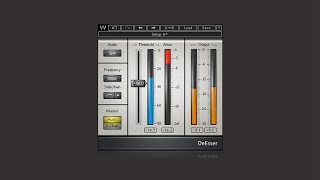
Introducing Waves DeEsser
Waves Audio
Fixing HARSH vocals with a De-Esser

Mix With Jerry
Reviews
PROS
-
Straightforward, user-friendly interface
-
Effective "S Chain" feature highlights frequency cuts
-
Works well on various vocal types
-
Intuitive presets enhance usability
-
Minimal resource consumption
-
Quick and easy integration with DAWs
-
Consistently reliable over years of use
-
Softens harsh sibilance while maintaining clarity
-
Versatile beyond vocal applications
CONS
Owner Insights
We analyzed real musician discussions from forums and Reddit to find what players love, question, and tweak about Waves DeEsser.
Comparisons
-
Some users find the Waves DeEsser more effective for live use due to its faster attack compared to Sibilance, which can struggle with quick sibilant sounds.
Source -
In some cases, when Sibilance didn't perform well, users switched to the Weiss De-Esser for a more suitable sound, although the Weiss generally isn't favored.
Source -
The Lindell 902 de-esser and Slate's FG-DS 902 both emulate the dbx 902 hardware model, providing an alternative to Waves DeEsser with a vintage touch.
Source -
Users note that the Waves R-DeEsser's "notch" shape can help with targeting sibilance effectively compared to the stock Pro Tools de-esser, which tends to darken vocals.
Source -
FabFilter's DeEsser is praised for its flexibility and the ability to avoid over-compressing vocals, making it a preferred choice over Waves for detailed control.
Source
User experience
-
The Waves DeEsser is praised for its simplicity and transparency, especially in wide mode, with multiple users preferring it over Sibilance for its sound quality.
Source -
The Waves DeEsser is favored by some professionals despite having access to more advanced and expensive options, citing its effectiveness and simplicity.
Source -
Some users find Logic's built-in DeEsser problematic, producing audible issues, whereas Waves R-DeEsser consistently delivers better results without compromising vocal quality.
Source
Features and functionality
-
Sibilance's interface is criticized by some users for not clearly displaying compression levels, making it less intuitive than the traditional DeEsser.
Source
Use cases and applications
-
For those who require moderate de-essing, some users prefer manual adjustments with clip gain in Pro Tools for remaining sibilance after using the DeEsser.
Source -
When using the Waves DeEsser, users often set it to wideband and adjust the threshold until sibilance is adequately controlled without noticeable artifacts.
Source -
Sonnox's Oxford Supresser is noted for maintaining the original audio quality while effectively controlling sibilance, making it a strong alternative to Waves.
Source
Value and pricing
-
Waves DeEsser remains functional without mandatory upgrades; however, users must pay over $100 for major OS updates after the first year.
Source
4.5 out of 5
Based on 2 Reviews and 16 Ratings

Artist usage
Add artist

Used for the vocals on "Intro", as stated by Kirk mix engineer Kevin "Black Pearl" McCloskey in this December 2019 Sound on Sound interview. An image of the settings can be found here.
"Typically, my processing on vocals here is EQ-compression, EQ-compression, EQ-compression and so on. When vocals are recorded well, I don't have to do that, but in this case, because of the hotel room sound, I had to do many corrections. Because speed was of the essence, I just added more plug-ins as I encountered issues — I did not have the time to go into settings of plug-ins already there. The plug-ins on the vocal busses, with a number of variations, start with the Waves DeEsser, and then the UAD SSL-E Channel strip, thinning things out, and the Waves CLA76 knocking off 3dB to flatten peaks, as they did not track with a compressor. I also use the Avid EQ7, and the Waves MV2 compressor, which acts more like an expander."

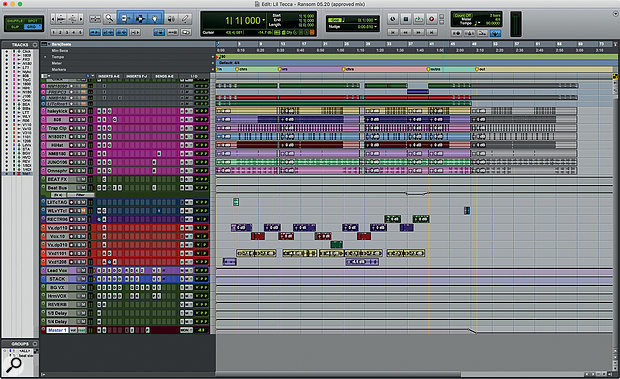
Used on vocals for "Ransom", as mentioned by mix engineer Joseph Colmenero in this November 2019 Sound on Sound interview.
"Many of the plug-ins on the vocal tracks came with the session. The vocal audio tracks all have Antares Auto-Tune Pro because the session came with Auto-Tune Live, and I didn't have my licence with me, so I put Auto-Tune Pro on. Without seeing the Live plug-in I had to use my ears to make sure that the settings were exactly right. They had recorded Tecca's vocals with Auto-Tune on, playing Auto-Tune like an instrument.
"All audio tracks go to the LeadVox bus, on which there is a stack of plug-ins. Again many of them came with the session. The chain starts with the Waves Q6 EQ, the FabFilter Pro-C2 compressor, then a Waves SSL Channel, two Waves De-Essers, a Waves RVox used as a noise gate, the SoundToys Decapitator for vibe, and a Waves C4 to bang down some peak frequencies. There's a track with distant ad-libs that goes to the Harmony Vox aux, which has some similar plug-ins, and adds a D-Verb for some extra reverb. There are sends on the vocal busses to the reverb aux, with the Waves RVerb, and delay quarter-note aux, with the Waves H-Delay. I also have the Avid EQ7 before the reverb, to take out the low end and high end. You don't want to have esses all over your reverb. The other two aux tracks that I did not use are part of the producer's template."


Used on the vocals for "When the Curtain Falls", as stated by mix engineer Al Sutton in this January 2019 Sound on Sound interview.
"The main lead vocal, track 48, has the Opticom for some compression, and I'll always have a parallel lead vocal channel next to it, called 'smash', again for parallel compression, and it'll have tons of plug-ins and I'll just crush it to pieces, almost to the point of distortion, and tuck that underneath the main vocal. The plug-ins on the 'smash' channel include the Waves SSL Channel, Waves CLA-76, Waves DeEsser, Waves H-Delay, and the Soundtoys PhaseMistress. The latter is to get the choruses to sound wider, and the track has some automated delays. For vocal reverb I use the Echoplate 2 [plate reverb] with a Delta Labs Effectron II for pre-delay, and depending on the song either a Lexicon Primetime II or Fulltone Echoplex for slap-back delay.
"Finally there are the backing vocals, on which I had again the Waves SSL-Channel, CLA-76 and DeEsser, and then the Waves SuperTap delay, for stereo delays in the choruses, also to get them to sound wider. I do the vocal blend in Pro Tools and, depending on the parts, will send the blends out on one of the two stereo outs. In this case I had two sets of stereo outs to the API and I compressed each pair lightly with the Inward Connections TSL3 and TSL1."
To glue everything together, Al Sutton once again employs parallel compression. "The API Legacy has an A bus and a B bus, and I'll put a Shadow Hills compressor on the B bus. I'll blend that back in with the A bus, and I'll print that back on as a stereo track in the session. I'll print a brickwalled track as well so we can hear the mix really loud, and get some idea of where we'll end up. But I'll send my mix uncompressed to mastering, which for this album was done by Ryan Smith at Sterling Sound. I leave loudness up to the mastering engineer, because I don't want to play that game any more. It just ruins your mixes. If you can get at a competitive volume without having all the dynamics smacked out of your mixes, I think it will resonate more with people."


When it comes to effects plug-ins, Moulder fancies Waves. “I use the L1 a lot for getting things to cut through and sit in mixes,” he says. “The Renaissance EQ I like for digital equalizing and their De-esser works well. I use the McDSP stuff a lot for filtering and their new multi-band compressors and analog channels are good, too.


At 20:38 Herobust says "Waves DeEsser helps me on my vocals for the unwanted ss and wshsh kind of sounds during vocal recordings sessions its a must have."


Used on Cardi B's vocals for "Bodak Yellow", as mentioned by mix engineer Evan LaRay in this February 2018 Sound on Sound interview. An image of the "ELR" settings can be found here.
In his mix of ‘Bodak Yellow’, Evan LaRay used almost identical vocal chains on two auxiliary busses. The ‘Vox 1’ chain includes FabFilter’s Pro-DS de-esser and Waves’ C4 multiband compressor, plus the Waves CLA Vocals plug-in and SoundToys’ Decapitator saturation processor.
The main ‘Hook’ and ‘Verse’ vocal tracks have similar plug-in chains, incorporating the EQ3 seven-band, Waves CLA-76 and Waves De-esser, though the ‘Hook’ also has FabFilter’s Timeless 2 delay. LaRay explains, “The EQ on the ‘Hook’ has a high-pass, around 100Hz, and I’m also cutting 3dB at 300Hz, because the vocal sounded a bit muddy, and again 3dB at 4kHz, because there was a piercing frequency there. The CLA keeps the peaks in check, and the de-esser again takes some higher frequencies out, at 4270Hz, and the Timeless is another favourite plug-in. I think in general the FabFilter plug-ins are extremely dope. I wanted the ‘Hook’ vocal to stand out from the ‘Verse’ vocal, so I used a stereo delay preset, and then tweaked that. The presets on the FabFilter plug-ins are pretty good: you just run through all of them and then choose the best one. In this case I lowered the width and the wet value of the stereo delay preset, and that sounded good and gave the hook its own space. The three plug-ins on the ‘Verse’ track do pretty much the same.
“The ‘Inout’ tracks that are below the ‘Hook’ and the ‘Verse’ are vocal doubles. They are words or lines we use for emphasis and additional power on these lines and words. They come from one of her original vocal takes, which I just cut and cleaned up. Both ‘Inout’ tracks have the Waves RCompressor, just containing these words and lines so they don’t overwhelm the ‘Hook’ or the ‘Verse’ vocal, and then the FabFilter Pro-Q2, taking out some high frequencies, again to make sure it doesn’t clash with the leads, and also cutting below 200Hz. And there’s a delay on these tracks to put them in a slightly different space from the lead vocal tracks.
“In addition to the two ‘Inout’ tracks, both the ‘Hook’ and the ‘Verse’ tracks are also accompanied by an ‘Ad Libs’ track, which were some ad libs Cardi had recorded with Mike over at Krematorium. Mike had also set up a separate aux track for these ad libs, which is ‘Vox2’, and I liked that and kept two of the plug-ins he had on that: the [Avid] Sansamp for some distortion and the SoundToys Panman. I then added the D-Verb and the [Waves] CLA Vocals. I adore the CLA Vocals. I use it on every track I work on. When I don’t use it, the vocals sound completely different. I’d love to know what exactly it does! Finally, the inserts have the Waves L1, just to control the peaks.
“The other tracks — ‘EXF1’, ‘EXF2’, ‘EXF3’ and ‘EXF4’, are because I prefer to create a new track if I want to have a specific effect on specific words or phrases. I prefer doing that to automating the effects on a track. Automation is great, but I tend to only do volume automation. So I copy audio to another track, and then put the effect on that, and in this case I created four different effects tracks with four different delays. ‘EFX1’ is the main one, and has the same three plug-ins as the Verse tracks — EQ3 three-band, CLA76 and Waves De-esser — just with the EQ3 cutting more of the high frequencies. Then there’s an eighth-note ping-pong delay from the Waves H-Delay, and then a D-Verb set to ‘hall’ with 7s decay and a 15ms pre-delay. ‘EFX2’ has another H-Delay delay, ‘EFX3’ the Timeless 2 delay, and ‘EFX4’ again has the H-Delay plus a D-Verb.”
All the main vocal audio tracks go to LaRay’s ‘Vox1’ aux group track. This, he explains, has “A FabFilter Pro-DS de-esser, then the Waves RCompressor controlling the peaks, the Waves C4 multiband compressor boosting the high end and containing the lows in her voice, so it doesn’t cut through too much, and Waves CLA Vocals. Again, it’s really making my vocals sound good. I push the Pitch fader to stereo, spank it on the compressor, also push up the treble to brighten it up, turn the reverb down to ‘tight’, and lower the delay by 9dB because my own quarter delay is my main vocal delay, and it sounds great. There’s also a SoundToys Decapitator, to add more harmonic distortion, and then there’s the Waves RVox. That was supposed to be the final plug-in on the insert, but then I realised the vocal was still peaking too much once she began rapping loudly, so I put on the L1 [limiter] to control that.”
The ‘special sauce’ in Evan LaRay’s mixes comes from a parallel aux channel containing a blend of compression, saturation, EQ and other processors. Key ingredients are Waves’ PuigChild compressor and PuigTech equaliser.
The ‘Vox1’ and ‘Vox2’ tracks also each have a Trim plug-in on an insert, and sends to the ‘Verb’ aux and to the ‘ELR’ (LaRay’s initials) track. “I put the Trim on all my tracks at the end of the vocals, and at the end of the beat, because the vocals actually began distorting in places. These two tracks were too hot, and I wanted to make sure they had a good level before going to the ‘Sub Print’ track. I have the ‘ELR’ aux track in every session. It’s most of all parallel compression, but I also always try out new things with distortion, exciters and things like that, and I label that ‘ELR’. In this case it really is the ‘ELR’ track that makes the vocals cut through the mix.
“The compression on the ‘ELR’ track comes from the Waves PuigChild 670, which is a great compressor, and it’s compressing a lot, so the vocal stays right there in the middle. The signal is then going to the PuigTech EQP-1A, which is boosting some low end to add some warmth to the vocals, and some 5kHz, and then the Waves Aphex Vintage Aural Exciter, set to AX Mix 6, for some added crispness and clarity, then the EQ3 seven-band to control the low mids, and another De-Esser cutting 4398Hz, to finalise the vocal sound. The L1 also helps keep the vocals in the same place. Finally, the ‘Verb’ send on the ‘Vox1’ and ‘Vox2’ tracks goes to the ‘Verb’ aux, which has the Waves RVerb, and that pretty much glues everything together.”


Used for vocals on Another Country, as stated by mix engineer Kevin Savigar in this February 2016 Sound on Sound interview. An image of the settings can be found here.
Kevin Savigar’s vocal chain for Rod Stewart began with the Universal Audio 610B Unison preamp plug-in, with brightness added by the same manufacturer’s Helios EQ, and dynamic control from the UAD 1176 emulation. Once again, the Waves CLA bundle came into effect, with a Waves De-Esser providing the final touches.
"I did very little to Rod’s lead vocals during the mix. I just had the CLA Vocals plug-in on him, with a bit of ‘spank’ compression and some reverb, and a Waves De-Esser, and that was it. I used the same plug-ins on his harmony vocal, where he sings a third above his lead vocal. I think it’s the first time he has ever done a harmony vocal with himself. It’s a great sound. The backing vocals also have the CLA Vocals plug-in, on the ‘Start Me Up’ preset, plus the Tape Delay on the ‘ohs’, and they’re all sent to an effect track with the Logic Stereo Delay and Space Designer. The latter had a ‘Vocal Delay’ preset, which adds some air and room to the backing vocals."


Used for Quavo and Offest's features on Beyoncé and Jay-Z's "Apeshit", as stated by producer Stuart White in this September 2018 Sound on Sound interview.
The first four aux tracks feature SoundToys effects, namely Little Microshift, two EchoBoy delays, and a delay from the Little PrimalTap. Next are a Hall Reverb aux and a Church Reverb aux, both using Waves’ RVerb, an EMT plate from Audio Ease’s Altiverb, four aux tracks with the Waves H-Delay and various other plug-ins on them as well, and four more reverb auxes with the Avid Revibe II, two Avid D-Verbs and another RVerb.
White: “I use the Little Microshift in pretty much every mix, with the left-right micro pitch-shift effect that’s similar to the classic effect in the Eventide H3000 shift where you pitch one side down six cents and one side up six cents to create width. It’s a good way to get your vocals wider without them being out of phase. It thickens up vocals, and is kind of like a doubler. I do quite a lot of filtering on some of the EchoBoy delays, for example with the Waves REQ, and I am adding colour with the SoundToys Devil-Loc, which is great if you want to colour the delay so it is separate from the main vocal, and compress it with the UAD LA3A and mix that in to taste.”
(...) “The Migos vocals came in as seven audio tracks, with the Avid D-Verb on each of them. Putting a D-Verb on a track before EQ is not something I normally do, but it sounded great. So I adjusted them a bit, but otherwise left them as they were. The tracks also came in with the Aux track above, and the EQ3, with a high pass at 60Hz and notches at 430Hz and 1.41kHz and a high boost, the Waves API 2500 compressor, the RComp, the Waves Q10 EQ, following a slightly similar curve to the EQ3, the Waves De-esser, the Waves Aphex Aural Exciter, and the Avid Dyn3 expander/gate. I added the EQ3, with another high-pass filter at 144Hz, and the RComp, with a ratio of 10:1.”

At 52:38 of his Producer Masterclass with Computer Music Magazine, Blame comments on using the Waves De-esser. "Nice and simple. I really like the Waves stuff..it does what it says it does".



In this video at 4:28 see Waves DeEsser Plugin


Album Usage
The Waves DeEsser has been featured on the following albums:

Ex Machina
Metrik (2020)

Sum 2 Prove
Lil Baby (2020)
Echoes
Ben Duffy & Kove (2019)

KIRK
DaBaby (2019)
How Does It Feel
M-22 (2018)
All The Stars (with SZA)
Kendrick Lamar & SZA (2018)

Bodak Yellow (feat. Kodak Black)
Cardi B & Kodak Black (2017)

Lost In You
Eddie Thoneick & Erick Morillo (2016)

Take Me Home
Thomas Gold (2015)

To Pimp A Butterfly
Kendrick Lamar (2015)

Rehab (Remixes & B Sides)
Amy Winehouse (2015)

Purpose (Deluxe)
Justin Bieber (2015)

Another Country
Rod Stewart (2015)

Hello
Adele (2015)
Morning Phase
Beck (2014)

Against All Odds
Dyro (2014)

Happy (Oktoberfest Mix)
Pharrell Williams (2014)

Happy (Live)
Pharrell Williams (2014)
Rolling in the Deep
Adele (2011)

Headlines
Drake (2011)
Genre Usage
Based on how artists on Equipboard use this gear, it is most commonly found in the following genres.
Used With
Based on how musicians on Equipboard use Waves DeEsser, it is most commonly used with the following gear.

-s.webp?v=1783173681)


-s.webp?v=1783173639)

More Waves De-Esser Plugins

$33.00 - $34.99
in De-Esser Plugins Rank


$29.99 - $34.99
in De-Esser Plugins Rank


$144.00 - $199.00
in De-Esser Plugins Rank


$57.00 - $216.00
in De-Esser Plugins Rank


$14.99 - $149.00
in De-Esser Plugins Rank

$23.90 - $40.00
in De-Esser Plugins Rank


$99.00
in De-Esser Plugins Rank


$18.30 - $89.00
in De-Esser Plugins Rank

$96.00 - $99.00
in De-Esser Plugins Rank

$79.00
in De-Esser Plugins Rank


$59.00 - $129.00
in De-Esser Plugins Rank


in De-Esser Plugins Rank

$47.00 - $100.00
in De-Esser Plugins Rank

$0.00
in De-Esser Plugins Rank


$49.00 - $89.99
in De-Esser Plugins Rank


$199.00
in De-Esser Plugins Rank


Accessories & Related Items


-s.webp?v=1783173726)
-s.webp?v=1783173736)


-s.webp?v=1783173699)


Community setups


Similar


Most Popular De-Esser Plugins
Most Popular Brands
-
Added to Equipboard on by
 equipboard
Gear IQ 4934
-