

Pricing and availability
We compare 600+ stores and found this item at 1 store. Prices updated .
Store
Reviews
Price




Average Price: $450
High-end/Boutique
$149
$350+
Price Tier
Budget
Standard
High-end
* Product prices and availability are updated by Equipboard every 24hrs and are subject to change. Equipboard may receive compensation for purchases made at participating retailers linked on this site. This compensation does not affect what products or prices are displayed, or the order of prices listed. For more information, please refer to our affiliate disclosure.
Description
The Yamaha TX816 is a powerhouse in the world of modular synthesizers, offering a unique blend of classic FM synthesis and modular flexibility. Ideal for studios and live performances alike, this iconic unit houses eight individual DX7 synthesizer modules, known as TF1s, allowing for an unparalleled level of sound design possibilities. Each module can be independently programmed and controlled, providing a vast canvas for creativity and complex layering.
The TX816 is revered for its authentic FM synthesis capabilities, delivering the crisp, bell-like tones and rich textures that defined much of the music from the 1980s and beyond. Its robust build and intuitive interface make it a reliable workhorse for both professional musicians and synth enthusiasts. Whether you’re recreating vintage sounds or forging new sonic landscapes, the TX816 offers a versatile platform to explore and innovate.
Designed with connectivity in mind, the TX816 integrates seamlessly into modern setups, featuring MIDI compatibility to interface with contemporary gear. This makes it not just a nostalgic piece of hardware, but a relevant tool in today's music production landscape.
Key Features:
- Houses eight individual DX7 synthesizer modules (TF1s)
- True FM synthesis for authentic sound creation
- MIDI compatibility for easy integration with other equipment
- Independent programming and control for each module
- Ideal for complex sound layering and design
- Renowned for its durability and classic sound quality
Product specs
| Brand | Yamaha |
| Model | TX816 8-Module FM Synthesizer |
| Finish | Black |
| Year | 1984 |
| Made In | Japan |
| Categories | Digital Synthesizers, Rackmount Synths |
| Analog / Digital | Digital |
| MIDI I/O | MIDI Input, MIDI Output, MIDI Through |
| Polyphony | 16 Voices |
FAQs
-
What is the Yamaha TX816 and what makes it unique?
-
The Yamaha TX816 is a rack-mounted digital FM synthesizer from 1984, featuring eight independent DX7 synthesizer modules. Its unique modular design allows for complex layering and rich polyphonic textures, making it ideal for sound designers and musicians seeking versatile FM synthesis.
-
How does the Yamaha TX816 connect to other MIDI equipment?
-
The Yamaha TX816 offers MIDI Input, Output, and Through connections, enabling integration with other MIDI devices and controllers for expanded control and sequencing capabilities.
-
Is the Yamaha TX816 suitable for live performances?
-
While primarily designed for studio use, the Yamaha TX816 can be used in live settings if paired with a reliable MIDI controller and sound reinforcement system, offering a powerful range of FM sounds.
-
Can the Yamaha TX816 be used with modern DAWs?
-
Yes, the Yamaha TX816 can be integrated with modern DAWs via MIDI connections, allowing users to sequence and control it from their digital audio workstations.
-
How many voices of polyphony does the Yamaha TX816 offer?
-
The Yamaha TX816 provides 16 voices of polyphony, distributed across its eight modules, allowing for complex and layered sound design.
Videos

Espen Kraft
FM Monster Duel! Yamaha TX816 vs TX802

FM Monster Duel! Yamaha TX816 vs TX802
Espen Kraft
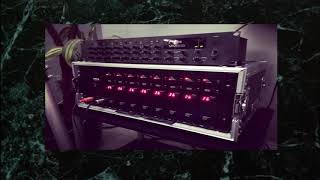
Yamaha TX816 DEMO (All 8 Modules In Unison - Part I)

Blake Foster (Funkhöuser Music)
![Video thumbnail for Yamaha TX816 audio demo [June 1985] by VCO8](https://img.youtube.com/vi/rEBbke_ls7E/mqdefault.jpg)
Yamaha TX816 audio demo [June 1985]

VCO8
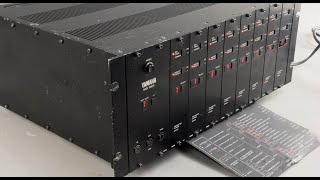
Yamaha TX816 - multiple stacked detuned DX7 voices = epic! 🎹

Vintique Sound
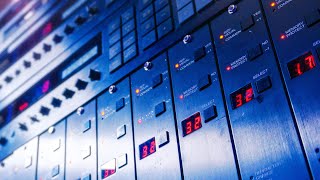
Build an epic dreamy soundtrack with Yamaha TX816 and Roland Jupiter-8
Espen Kraft
Yamaha TX816 - Testing four layers

Anders Enger Jensen
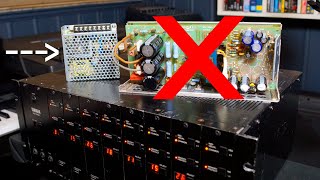
Yamaha TX816 with Mean Well PSU | Recapping is a waste of time and money, I realize that now
Espen Kraft
Reviews
PROS
-
Extensive sound library, ideal for any DX7 user
-
Compatible with DeXed VST/AU for easy patch editing
-
Houses 8 mono DX7s, offering expansive FM bank capacity
-
XLR outputs enable rich, large-scale sound production
CONS
-
Capacitors may dry out and bulge, requiring replacement
-
Necessitates battery and op-amp capacitor replacements
-
Power engine noise can be an issue
Owner Insights
We analyzed real musician discussions from forums and Reddit to find what players love, question, and tweak about Yamaha TX816.
Setup and maintenance
Features and functionality
-
The TX816 allows for +/- 63 steps of detune, offering significant creative flexibility across 8 modules.
Source
Software and compatibility
-
Switching MIDI interfaces can improve patch data loading; BorneSX performed better than MidiOX for one owner.
Source
5.0 out of 5
Based on 2 Reviews and 11 Ratings

417
FM powerhouse
I think everyone should have a lot of FM banks just in case. These units are massive as they hold 8x a mono DX7 with 32 patches. The outputs are XLR, but they often get their capacitors dried out and bulging (need replacement). Once you replaced all 8 batteries and the op-amp caps, you are good to go (unless you need to recap the PSU, which is most likely).
I keep two of those, but I wish I had more :P

41029
I've never encountered one of these fully loaded that was 100% working :-(
417
Yes me neither. They all have to be serviced. And sometimes a person might tell you it was serviced, but the job was half-ass'd ...

424
A Monster Yamaha!
I like having 8 DX7 all together in one synth. A beast that can modeling very beautiful FM sounds. The power engine sometimes is noisy now. Separate XLR outputs, can be used for create rich big sounds.
Artist usage
Add artist

In the YouTube video "David Bryan Keyboard Lesson # 1" by Petsitterincharlotte, David Bryan discusses his use of two Yamaha TX816 units during the 1980s and 1990s. Their distinctive FM synthesis can be heard in many of Bon Jovi's hits, including "Livin' On A Prayer."


Taken from an article authored by Richard Karsmakers in October of 1995.
Karl: What musical hardware do you use?
Jens: Oberheim Matrix12, matrix1000's, Matrix 6R, DPX-1. Korg PolySix (I have around 10 of those), Yamaha DX7+TX816 rack, Roland D20, DS-330, Hammond + Leslie (I have two actually), Korg CX3 as a "touring hammond", and a bunch of others. I also rent stuff a lot.
I'm not too crazy about the "new breed" of keyboards like the K2000 etc; they sound a bit thin to me. But whatever.


"Q. I noticed that during your solo albums you moved through the gamut of classic 80s keyboards including the PPG Wave, Yamaha GS-1 and Roland D-50. What are your fave synths from the 80s?
I loved the GS-1. It was big and high quality but I don’t think I used it a lot on my solo albums. I think it was originally made for the small church market in America so that they could get the sounds they needed without buying a huge church organ. I had a deal with Yamaha who stuck with us over the years and when the GS-1 came out I ended up going to Hamburg and sitting with a Yamaha programmer who created some great string sounds for me. I loved playing that instrument and I could play the vibrato with my feet. I’d stand up and rock back back to keep the sustain going and do the vibrato with my foot.
I used the PPG a lot. I got into the Rack Mounted DX-7, the TX-816. I’d got into MIDI in the early days in my own studio for the first couple of solo albums, Transportation and Stand Up and Walk and linking all these things up to get new sounds. I had a Prophet T8, the Prophet Sampler, the Roland D-50. it was like Keyboard City. The Prophet VS was used a lot. I really liked the joystick and the way you could morph between sounds."


IN ADDITION TO his work with electronic percussion devices, Erskine has jumped headfirst into the synth and MIDI fray. His home studio contains a Casio FZ1 and CZ101, a Roland Super JX, a Korg DW8000 and Poly 800, a recently MIDI'd Oberheim OBXa, a Yamaha DX100 and Yamaha RX5, PMC1 and TX816.


"We all work a bit differently though — Jim and Adrian tend to go through presets, but I always go to manual and make up my own sounds. On the DX7 we always use presets; we started to do programming but it's difficult because there are six of everything and eight-stage envelopes. We have the Syco Logic MX1 board which holds 128 memories fitted in the DX7, and that's 90% full — and we have the sounds from the TX7 Expander which we transfer into the TX816 one or two at a time."

According to a list of equipment which is used in his studio, Crowdspacer, Joakim is also a user of Yamaha TX816.

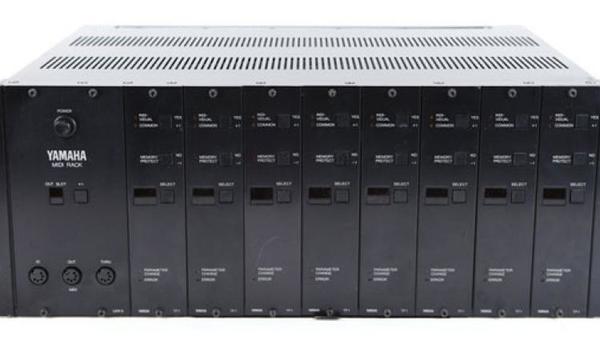
Mike Lindup utilizes the Yamaha TX816 in live performances, as evidenced by photos available on Vintagesynth.


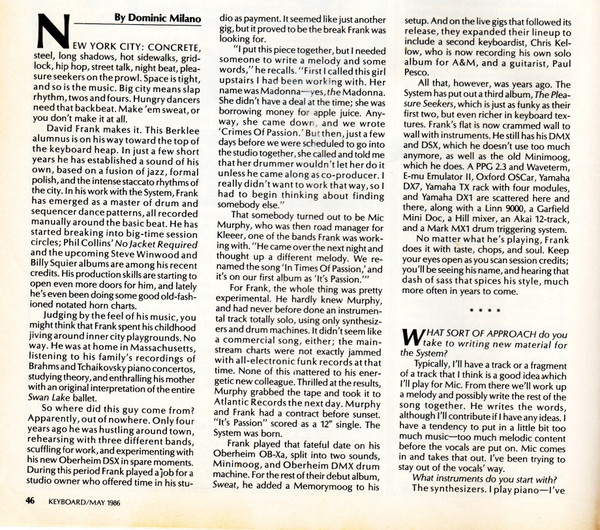
David Rosenthal's understage control center includes a Yamaha TX816, as confirmed by Keyboard Magazine.


A TX-816 can seen in the 6th image of this post made on August 12th 2022.

:format(jpeg):mode_rgb():quality(90)/discogs-images/R-3089190-1374902675-4218.jpeg.jpg)
Yamaha TX 816 is included in list of instruments played by Suzanne Ciani.


According to Google Arts & Culture, Gunnar Mathias Michaeli used a factory preset from the Yamaha TX816, layered on top of an edited "Stab Brass" preset from the Roland JX8P, in the recording of "The Final Countdown." These sounds were primarily controlled live using a Yamaha KX76 MIDI controller.

Album Usage
The Yamaha TX816 has been featured on the following albums:
Fleetwood Mac: Live 1975
Fleetwood Mac (2025)

Akon (Rhythm Is A Dancer Remix)
Snap! (2025)

Lament (2024 Steven Wilson Mix)
Ultravox & Tigerlily (2024)
Brilliant
Ultravox & Tigerlily (2012)
Flat Tire (Music for a Non-Existing Movie) (Remastered)
Allan Holdsworth (2001)
Technique
New Order (1989)
Perfect Machine (Expanded Edition)
Herbie Hancock (1988)
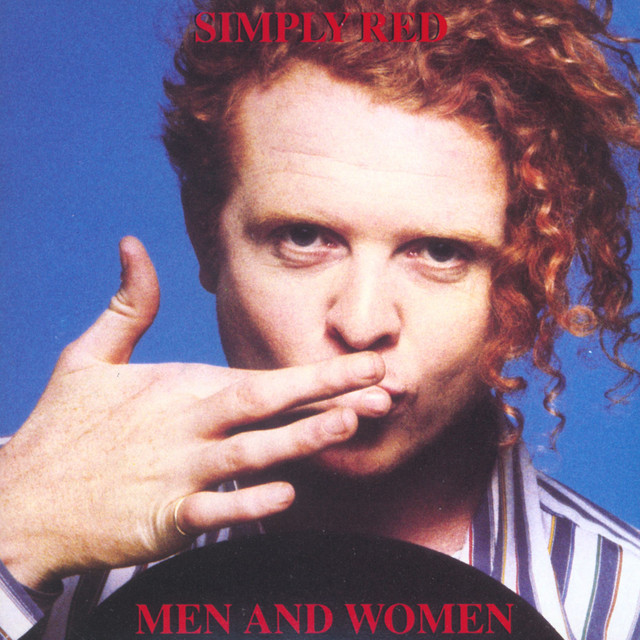
Men and Women
Simply Red (1987)
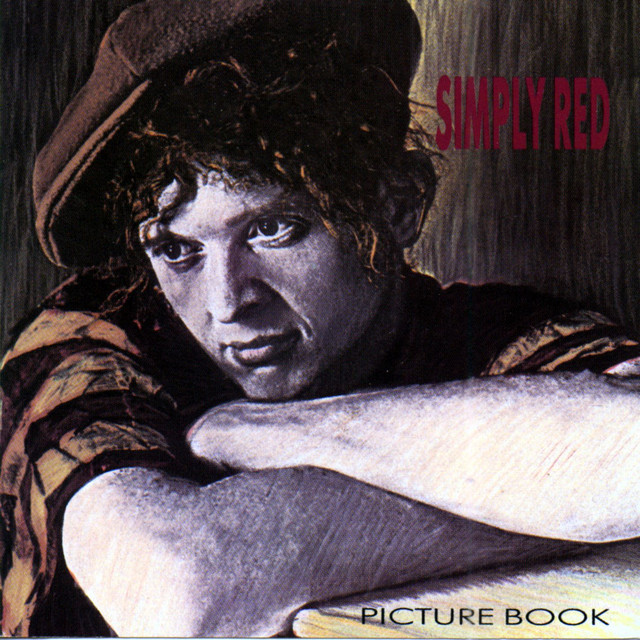
Picture Book
Simply Red (1985)
Genre Usage
Based on how artists on Equipboard use this gear, it is most commonly found in the following genres.
Used With
Based on how musicians on Equipboard use Yamaha TX816, it is most commonly used with the following gear.


More Yamaha Modular Synthesizers


$290.00 - $318.00
in Modular Synthesizers Rank


$119.00
in Modular Synthesizers Rank


$1.29 - $3,421.95
in Modular Synthesizers Rank


$599.00
in Modular Synthesizers Rank


$489.00 - $680.71
in Modular Synthesizers Rank

$85.00 - $110.00
in Modular Synthesizers Rank


$232.86
in Modular Synthesizers Rank


$63.00 - $98.00
in Modular Synthesizers Rank


$132.00 - $179.99
in Modular Synthesizers Rank


$225.00
in Modular Synthesizers Rank


$94.92 - $225.00
in Modular Synthesizers Rank


$221.69
in Modular Synthesizers Rank
.jpg?v=1783265555)


$385.00 - $399.00
in Modular Synthesizers Rank


$66.00 - $87.00
in Modular Synthesizers Rank


$94.92 - $238.00
in Modular Synthesizers Rank


$39.99 - $269.00
in Modular Synthesizers Rank

$41.83 - $179.00
in Modular Synthesizers Rank


$144.99 - $249.99
in Modular Synthesizers Rank


$320.00 - $565.00
in Modular Synthesizers Rank

$290.00
in Modular Synthesizers Rank


$114.44 - $161.00
in Modular Synthesizers Rank


$199.00 - $218.00
in Modular Synthesizers Rank

$379.00 - $399.00
in Modular Synthesizers Rank

$339.00 - $359.00
in Modular Synthesizers Rank


$66.00 - $88.00
in Modular Synthesizers Rank

$65.00 - $81.00
in Modular Synthesizers Rank


$399.00 - $435.00
in Modular Synthesizers Rank


$322.42
in Modular Synthesizers Rank


$135.00 - $3,421.95
in Modular Synthesizers Rank

$259.00 - $279.00
in Modular Synthesizers Rank

$72.00 - $98.00
in Modular Synthesizers Rank


$8.71
in Modular Synthesizers Rank

.jpg?v=1783299754)

$322.42
in Modular Synthesizers Rank


$385.00 - $530.00
in Modular Synthesizers Rank


$215.00 - $278.85
in Modular Synthesizers Rank

$250.00
in Modular Synthesizers Rank


$512.00 - $599.00
in Modular Synthesizers Rank


$279.90 - $469.00
in Modular Synthesizers Rank


Accessories & Related Items




Community setups


Similar


Most Popular Modular Synthesizers
Most Popular Brands
-
Added to Equipboard on by
federicovaonaGear IQ 424
-


