

Pricing and availability
We compare 600+ stores and found this item at 1 store. Prices updated .
Store
Reviews
Price




Average Price: $3,300
High-end/Boutique
$500
$1201+
Price Tier
Budget
Standard
High-end
* Product prices and availability are updated by Equipboard every 24hrs and are subject to change. Equipboard may receive compensation for purchases made at participating retailers linked on this site. This compensation does not affect what products or prices are displayed, or the order of prices listed. For more information, please refer to our affiliate disclosure.
Description
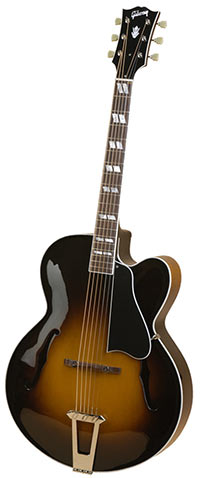
The Gibson L-7 is a masterful blend of vintage charm and modern performance, making it a must-have for guitarists seeking a versatile semi-hollowbody electric guitar. Renowned for its rich, warm tones, this guitar is perfect for a range of genres, from jazz and blues to rock and beyond. Its exquisite craftsmanship is evident in every detail, from the meticulously carved archtop to the elegantly appointed f-holes, offering both aesthetic appeal and acoustic resonance.
The L-7 features a single rounded cutaway, providing easy access to higher frets while maintaining a classic silhouette. Equipped with Gibson's humbucking pickups, it delivers a robust sound with reduced noise, ensuring clarity even at high volumes. The mahogany neck and rosewood fingerboard offer smooth playability, allowing for fast runs and expressive bends.
Whether you're performing on stage or recording in the studio, the Gibson L-7 promises a dynamic playing experience. Its semi-hollow design not only contributes to its lightweight feel but also enhances its tonal range, creating a sound that's both full-bodied and articulate.
Key Features:
- Semi-hollowbody electric guitar design
- Classic archtop with f-holes
- Gibson humbucking pickups for reduced noise and rich sound
- Mahogany neck with rosewood fingerboard
- Single rounded cutaway for easy access to higher frets
- Versatile tonal range suitable for various music genres
Product specs
| Brand | Gibson |
| Model | L-7 |
| Finish | Natural, Sunburst |
| Year | 1935 - 1956 |
| Made In | United States |
| Categories | Archtop Acoustic Guitars |
| Active Preamp | No |
| Back Material | Maple |
| Body Shape | Archtop |
| Color Family | Brown, Tan |
| Finish Pattern | Sunburst |
| Finish Style | Gloss |
| Fretboard Material | Rosewood |
| Model Family | Gibson L-7 |
| Neck Material | Mahogany |
| Number of Frets | 19 |
| Number of Strings | 6-String |
| Pickup | None |
| Right / Left Handed | Right Handed |
| Series | Gibson Kalamazoo Factory Era |
| Sides Material | Maple |
| String Type | Steel |
| Top Material | Spruce |
FAQs
-
What type of music is the Gibson L-7 best suited for?
-
The Gibson L-7 is ideal for jazz and big band music due to its archtop design, which produces a warm, resonant tone that can project well in ensemble settings.
-
What materials are used in the construction of the Gibson L-7?
-
The Gibson L-7 features a spruce top, maple back and sides, and a mahogany neck with a rosewood fretboard, contributing to its rich tonal qualities and durability.
-
Does the Gibson L-7 have any built-in electronics or pickups?
-
No, the Gibson L-7 is an acoustic archtop guitar without built-in electronics or pickups, making it a pure acoustic instrument.
-
How many frets does the Gibson L-7 have, and what is its scale length?
-
The Gibson L-7 has 19 frets, which is typical for many archtop guitars, providing a comfortable range for jazz chord voicings and solos.
-
What is the neck profile of the Gibson L-7 like?
-
The Gibson L-7 typically features a rounded neck profile, offering a smooth playing experience that complements its vintage design and feel.
-
Is the Gibson L-7 suitable for beginners?
-
The Gibson L-7 is more suited for experienced players, particularly those interested in jazz or vintage guitar sounds, due to its historical significance and specialized design.
Videos

Carter Vintage Backstage
Gibson 1936 L7 Archtop Guitar - Played By Carl Miner
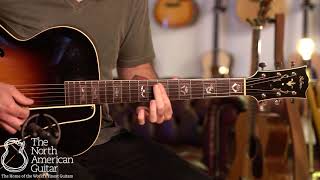
Gibson 1936 L7 Archtop Guitar - Played By Carl Miner
Carter Vintage Backstage
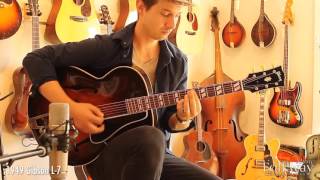
Folkway Music - 1949 Gibson L-7

Folkway Music
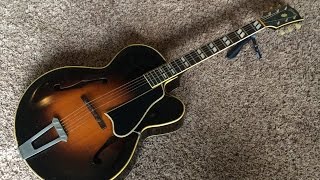
Trogly's Guitars: 1948 Gibson L7 P Sunburst

The Trogly's Guitar Show

Vintage Gibson L-7 Jazz Guitar Chords

TomoFujitaMusic
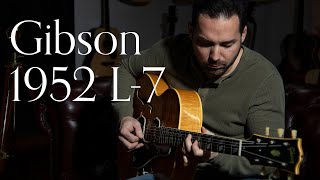
1952 Gibson L-7, Natural | Carl Miner
Carter Vintage Backstage
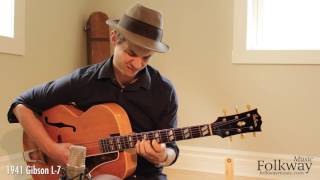
Folkway Music - 1941 Gibson L-7
Folkway Music
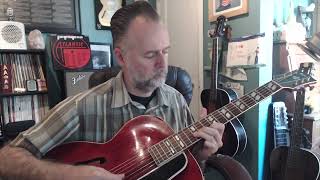
Red 1943 Gibson L-7 demo by Tommy Harkenrider

Tommy Harkenrider
Reviews
PROS
-
High unamplified volume with pure tone
-
Long sustain with sweet final decay
-
Deep, clear voice with excellent projection
-
Delightful neck shape; not too fat or skinny
-
Medium neck depth, different from typical 'V' shape
-
Sweet action for responsive bends and vibrato
CONS
-
Requires maintenance for optimal performance
-
Bridge needs proper seating
-
Frets need leveling to prevent buzzing
-
Action requires adjustment for better playability
Owner Insights
We analyzed real musician discussions from forums and Reddit to find what players love, question, and tweak about Gibson L-7.
Features and functionality
-
The 1945 Gibson L-7 often includes an added DeArmond 1000 pickup, enhancing its electric capabilities while maintaining its original acoustic charm.
Source -
The control body for the DeArmond 1000 pickup, added in the 1950s, offers unique tonal capabilities for jazz and vintage enthusiasts.
Source -
The guitar's "scrawny pickup" was highlighted, suggesting a unique, perhaps less robust appearance compared to modern pickups.
Source
Build quality
Comparisons
-
Despite its vintage status, the L-7 is priced similarly to new Gibson Les Paul Standard models, indicating a niche demand compared to more popular vintage guitars.
Source
Use cases and applications
-
Known as a jazz guitar, it's recommended to explore Wes Montgomery's music for inspiration and to fully utilize the instrument's potential.
Source -
A user describes playing the L-7 at a family member’s funeral, showing its suitability for emotional, personal performances.
Source -
Its "battle scars" were described as gorgeous, hinting at the guitar's storied history and appeal to those valuing characterful, well-used instruments.
Source
Value and pricing
-
L-7 models, especially in excellent condition, are regarded as undervalued bargains in the vintage guitar market, with their carved tops being particularly noted.
Source
User experience
-
Owners describe the guitar as being in "immaculate" condition, even comparing its preservation to a "time-capsule," highlighting the importance of proper care over the decades.
Source
Based on 0 Reviews and 0 Ratings
Artist usage
Add artist
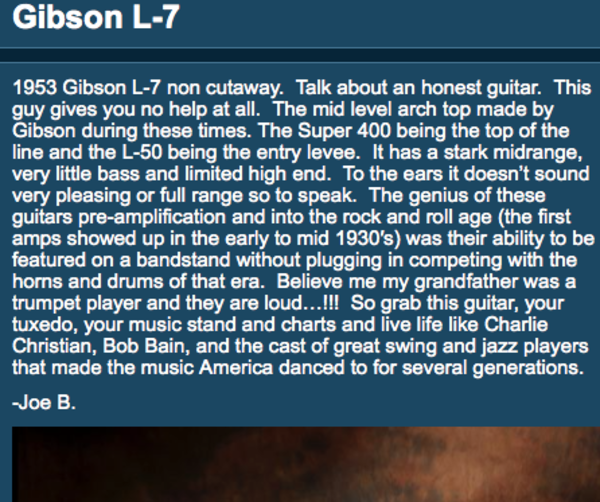
"1953 Gibson L-7 non cutaway. Talk about an honest guitar. This guy gives you no help at all. The mid level arch top made by Gibson during these times. The Super 400 being the top of the line and the L-50 being the entry levee. It has a stark midrange, very little bass and limited high end. To the ears it doesn’t sound very pleasing or full range so to speak. The genius of these guitars pre-amplification and into the rock and roll age (the first amps showed up in the early to mid 1930?s) was their ability to be featured on a bandstand without plugging in competing with the horns and drums of that era. Believe me my grandfather was a trumpet player and they are loud…!!! So grab this guitar, your tuxedo, your music stand and charts and live life like Charlie Christian, Bob Bain, and the cast of great swing and jazz players that made the music America danced to for several generations," Joe Bonamassa says, on his website.


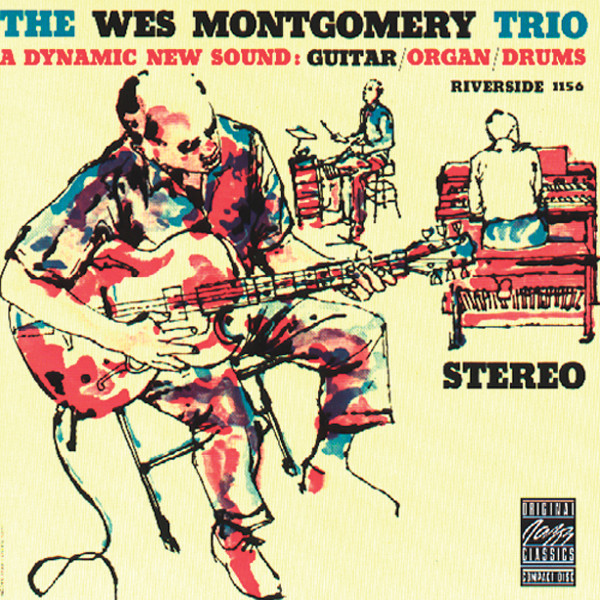
Wes Montgomery played a Gibson L-7 on the recordings of The Wes Montgomery Trio (1959).

Jazz guitarist Grant Green is known to have used a Gibson L-7, as detailed on the Jazzguitar website under "Grant Green's Guitars And Amps."


A Living Legend’s Primary “Weapons”
The Gibson Super 400 has been your trademark guitar for many years. When did you first begin playing one, and what attracted you?
It was probably in the late 1960s. I’d been using a D’Angelico New Yorker, which was the same size as a Super 400 (18? body). I like that body size – and where my elbow rests. What I like about the Super 400 (CES) is the humbucking pickup. I originally used the Charlie Christian bar pickup; that’s what I had in my L-5 and L-7 guitars [in the late ’50s/early ’60s].

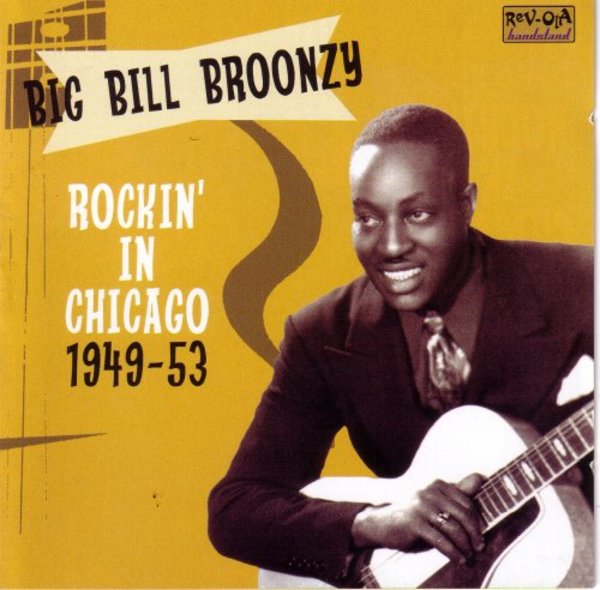
Big Bill Broonzy is listed as playing a Gibson L-7 guitar in the "Blues Singers & Their Instruments" article by Dai Thomas, published in October 2007 on EarlyBlues.com.

In the video titled "Cozy LA HOME STUDIO Setup | DAVID PETERS 2026 Studio Tour" on YouTube, at 37:38, David Peters showcases a Gibson L-7 archtop acoustic guitar as part of his guitar collection in the vocal room of his studio.


The gorgeous guitar Wagner is playing throughout is a 1940s Gibson L7, by the way, which Wagner says he's had "since about 1995."

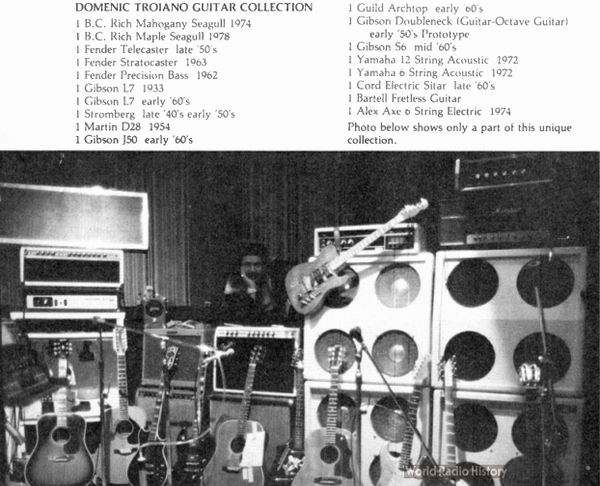
A screenshot from an article in Canadian Musician magazine lists two Gibson L-7 guitars as part of Domenic Troiano's collection, one from 1933 and another from the early 1960s.

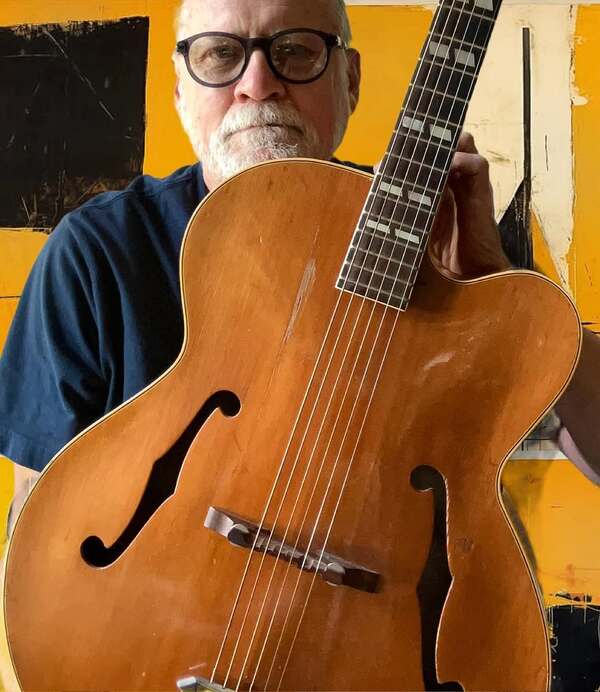
Dave Lincoln confirms his use of a 1948 Gibson L-7 in an Instagram post where he discusses the pros and cons of floating a pickup on the instrument. He writes, "My 1948 Gibson L-7: To float a pickup, or not to float a pickup. That is the question. Whether ‘tis nobler in the mind to leave it fully acoustic, or to float a DeArmond Rhythm Chief 1100, or a McCarty."
Album Usage
The Gibson L-7 has been featured on the following albums:
Genre Usage
Based on how artists on Equipboard use this gear, it is most commonly found in the following genres.
Used With
Based on how musicians on Equipboard use Gibson L-7, it is most commonly used with the following gear.


-s.webp?v=1784991614)


More Gibson Semi-Hollowbody Electric Guitars

$2,555.00 - $3,499.00
in Semi-Hollowbody Electric Guitars Rank


$1,829.49 - $2,999.00
in Semi-Hollowbody Electric Guitars Rank


$2,555.00 - $3,499.00
in Semi-Hollowbody Electric Guitars Rank


-m.webp?v=1785190663)
$2,869.00 - $3,499.00
in Semi-Hollowbody Electric Guitars Rank


$1,499.99
in Semi-Hollowbody Electric Guitars Rank

-m.webp?v=1785192770)
$2,938.00 - $3,799.00
in Semi-Hollowbody Electric Guitars Rank
.png?v=1785155776)


$4,982.59 - $6,499.00
in Semi-Hollowbody Electric Guitars Rank


$3,149.00 - $3,499.00
in Semi-Hollowbody Electric Guitars Rank
.jpg?v=1785156348)


$3,250.00
in Semi-Hollowbody Electric Guitars Rank


$3,499.00 - $7,999.00
in Semi-Hollowbody Electric Guitars Rank


$2,750.00
in Semi-Hollowbody Electric Guitars Rank


$2,149.00 - $2,999.00
in Semi-Hollowbody Electric Guitars Rank


$1,599.00
in Semi-Hollowbody Electric Guitars Rank


$2,299.00 - $4,834.20
in Semi-Hollowbody Electric Guitars Rank


$2,740.42 - $3,999.00
in Semi-Hollowbody Electric Guitars Rank


-m.webp?v=1784332934)
$2,400.00
in Semi-Hollowbody Electric Guitars Rank


$1,595.00
in Semi-Hollowbody Electric Guitars Rank


$8,550.21
in Semi-Hollowbody Electric Guitars Rank


$1,649.00
in Semi-Hollowbody Electric Guitars Rank


$2,000.00
in Semi-Hollowbody Electric Guitars Rank


$2,299.00 - $5,729.70
in Semi-Hollowbody Electric Guitars Rank


$2,299.00 - $4,834.20
in Semi-Hollowbody Electric Guitars Rank
.jpg?v=1785186269)


$1,900.00
in Semi-Hollowbody Electric Guitars Rank


$1,599.00
in Semi-Hollowbody Electric Guitars Rank


$2,583.24
in Semi-Hollowbody Electric Guitars Rank


$1,829.49 - $5,640.17


$1,595.00


$2,406.48 - $4,844.00


$2,938.00 - $4,400.00


$3,250.00


$2,687.00 - $52,000.00


Accessories & Related Items


Community setups


Similar


Gear Guides







Most Popular Semi-Hollowbody Electric Guitars
Most Popular Brands
-
Added to Equipboard on by
 austinmw
GearIQ 5227
-


