This page about Max/MSP is a stub. You can help improve it:


Pricing and availability


* Product prices and availability are updated by Equipboard every 24hrs and are subject to change. Equipboard may receive compensation for purchases made at participating retailers linked on this site. This compensation does not affect what products or prices are displayed, or the order of prices listed. For more information, please refer to our affiliate disclosure.
Description
Dive into the world of limitless sonic possibilities with Max/MSP, a powerful tool for musicians and sound designers who crave creative freedom. As a dynamic visual programming environment, Max/MSP allows you to manipulate audio, video, and data in real-time, offering an unparalleled playground for innovation. Whether you're crafting intricate soundscapes or building interactive music systems, this software empowers you to shape your musical vision with precision and flexibility.
Max/MSP is not just a music software; it's a community of creators pushing the boundaries of what's possible in audio and multimedia. Its modular approach provides both novice users and seasoned pros with the tools to develop custom patches, synthesize sounds, and even control hardware with MIDI and other protocols. Known for its versatility, Max/MSP is compatible with a wide range of third-party plugins and external controllers, making it an indispensable asset in any studio setup.
Key Features:
- Dynamic visual programming environment for real-time audio and multimedia processing
- Integration with MIDI, OSC, and other control protocols
- Extensive library of objects for sound synthesis, sampling, and processing
- Support for third-party plugins and external hardware
- Comprehensive documentation and community support
- Cross-platform compatibility (Windows and macOS)
- Ideal for creating custom audio effects, virtual instruments, and interactive installations
Videos

Andrew Robinson
Max MSP -- The Absolute Basics (Tutorial video pt 1)
Max MSP -- The Absolute Basics (Tutorial video pt 1)
Andrew Robinson
Intro to Max MSP Audio Tutorial -- pt 1
Andrew Robinson
Visualising the Audio Spectrum in 3D - Max/MSP Tutorial

Hearing Glass | Umut Eldem
An Overview of Max MSP

Kimberlee Swisher
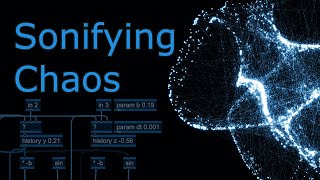
Chaotic Sounds - Max/MSP Tutorial
Hearing Glass | Umut Eldem
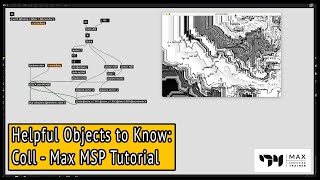
Coll - Helpful Max MSP objects to know - A Max MSP Tutorial
Andrew Robinson
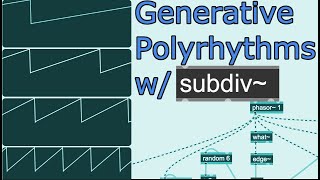
Generative Polyrhythms - Max/MSP Tutorial
Hearing Glass | Umut Eldem
Reviews
Owner Insights
We analyzed real musician discussions from forums and Reddit to find what players love, question, and tweak about Max/MSP.
Features and functionality
-
Max/MSP's programming environment is more in-depth than competitors, offering unique procedural sound generation capabilities that aren't readily available elsewhere.
Source -
Max/MSP supports advanced functions like exporting Gen patches to hardware platforms like Daisy, expanding its scope beyond software to hardware integration.
Source -
Beginners should start with fundamental objects like buffer~/groove~ for audio tasks or phasor~ for audio rate projects to build a mental map of their patches.
Source -
Understanding Max/MSP's unique data flow, such as right-to-left processing and message types, is crucial for effectively using the software's visual programming environment.
Source -
Users appreciate Max/MSP's ability to host plugins and integrate synthesis and audio processing directly for specific compositions.
Source -
Max/MSP allows for extensive MIDI customization, enabling control over external hardware like ancient Motif synths for personalized sound design.
Source
Comparisons
-
Reaktor may be more intuitive for immediate sound creation, but Max/MSP excels in flexibility, allowing users to build complex audio applications beyond simple plugins.
Source
User experience
-
Max/MSP can be a steep learning curve, often requiring significant time spent programming before achieving creative output, but rewards users with extensive customization.
Source -
Users find Max/MSP's help files invaluable, often discovering better object alternatives or realizing some patches are unnecessary after consulting the related object lists.
Source -
Max/MSP is praised for its visual, intuitive interface that simplifies complex programming tasks, making it a bridge between musicians and technical possibilities.
Source
Use cases and applications
-
Max/MSP has been effectively used for live performances, enabling musicians to control stage effects through instrument play, showcasing its versatility in live settings.
Source -
Max/MSP can serve as a powerful tool for creating generative sequencers and complex sound mangling, especially beneficial for producing glitchy or IDM-style music.
Source -
Approaching Max/MSP as a modular synthesizer can help users transition from traditional music software by focusing on building small, useful utilities rather than complex systems.
Source -
Max/MSP is used for creating unique performance packages, allowing performers to navigate cues at their own pace for ambient, free-flowing compositions.
Source -
It's used for interactive media installations and creating custom audio/visual performances by integrating Jitter with audio processing.
Source
Critic Reviews
4.5 out of 5
Based on 0 Reviews and 21 Ratings
Artist usage
Add artist
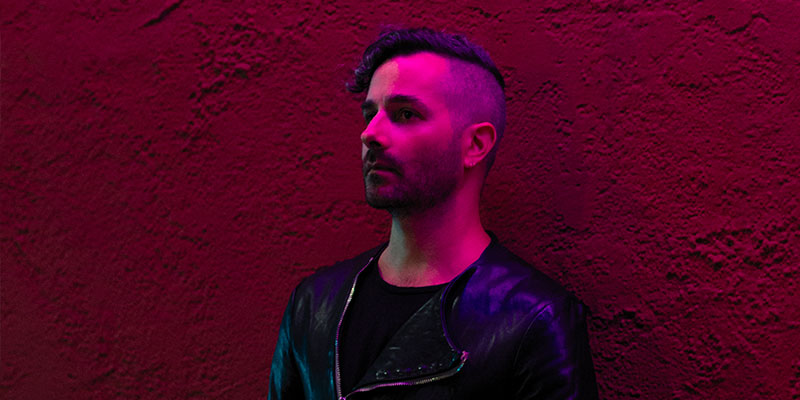
Did you strike upon an angle of approach you thought would be the right thing to do for Telefon Tel Aviv?
After five years trying to figure if I was even gonna do the damn thing in the first place, I had to figure out what the sound was gonna be. Once I got my brain around that it was like, ‘Oh, I'm not gonna be able to do this with my current skill set.’ I realised I had to dig in on Max, so I started learning Max online around 2016 and then spent two years while tinkering with little melodies and lyrics and saving them. While doing all that, I spent two and a half years building the tool kit I needed to make the record.


Q: You've previously talked about working with presets. There's a producerly orthodoxy that you should steer clear of the presets. But that doesn't seem to worry you so much.
A: Another thing I did on this record: with Ableton Live and with Max For Live there's lots of great ways to control the parameters using different types of LFOs and randomisers and envelope followers and stuff like that.


In this YouTube video at the 8:00 minute mark, Robert Henke provides a rough outline of Monolake Studio circa 1995.


"The EIS began with awareness and use of the delay that could be heard between the record and playback heads on reel to reel tape machines that is now emulated and elaborated in Max/MSP software."
Also in an interview included in the book "Pink Noises", by Tara Rodgers: "It’s a long history of how things change from analog to digital. I still work with a hybrid kind of thing. I’m using Max, I’m using the computer as a programming and processing environment, but I’m still playing the accordion, which is a nineteenth-century instrument. All the sound is derived from acoustics rather than from electronics, but I use the computer system to process the sound. There’s still plenty of places for me to go, even."


In the YouTube video "Synesthetic Sensory Stimulation with Ryoichi Kurokawa," Ryoichi Kurokawa is shown using Max/MSP, highlighting its role in his creative process.


FJO: How many different programs are you using to make this all happen simultaneously? I see you have Max/MSP open.
IM: For the music, this is all Max/MSP; the controller is Max/MSP and Jitter. And this is another effect. And I use GRM [plug-ins], and in that way I relate to physical musicians, but otherwise I’m not really physical at all. For the visuals, it’s a whole bunch of things made using FinalCut and then Flash to put together the animation.



In an interview with XLR8R, Greg Davis confirms his frequent use of Max/MSP software for music production.

So my colleague Boris Klompus and I put a contact mic on a set of Swedish spoons, and ciphened it through a Max MSP patch, and were able to doctor the attack / tone / decay to such a way that made it seem electric, and almost wrong-sounding, to make that tone ominous, gut-hitting, and wholly unignorable.

Genre Usage
Based on how artists on Equipboard use this gear, it is most commonly found in the following genres.
Used With
Based on how musicians on Equipboard use Max/MSP, it is most commonly used with the following gear.
-s.webp?v=1783169009)





More DAW Software

$225.00 - $599.00
in DAW Software Rank


$398.00
in DAW Software Rank

$270.00 - $439.00
in DAW Software Rank


-m.webp?v=1782900043)
$99.99 - $344.00
in DAW Software Rank


$99.00 - $399.99
in DAW Software Rank


$179.00
in DAW Software Rank


-m.webp?v=1782900039)
$409.00 - $499.00
in DAW Software Rank


$119.00 - $299.00
in DAW Software Rank


$209.00 - $329.99
in DAW Software Rank


$199.99
in DAW Software Rank
.jpg?v=1782758583)


$199.00
in DAW Software Rank


$524.00 - $579.99
in DAW Software Rank


$75.00
in DAW Software Rank


$449.00 - $485.00
in DAW Software Rank


$129.00 - $195.00
in DAW Software Rank


$395.00 - $499.00
in DAW Software Rank


$485.00 - $528.00
in DAW Software Rank

$136.00 - $179.00
in DAW Software Rank

$139.99 - $199.99
in DAW Software Rank


$366.00 - $579.99
in DAW Software Rank


$579.99
in DAW Software Rank


$245.00 - $289.00
in DAW Software Rank


$149.00 - $201.00
in DAW Software Rank


$375.00 - $399.95
in DAW Software Rank

$579.99
in DAW Software Rank


$149.00 - $249.00
in DAW Software Rank


$208.00
in DAW Software Rank


$47.00 - $59.99
in DAW Software Rank


$249.99 - $499.99
in DAW Software Rank
Community setups


Similar


Gear Guides








Most Popular Brands
-
Added to Equipboard on by
 windowlicker9
Gear IQ 589
-


