

Pricing and availability
We compare 600+ stores and found this item at 1 store. Prices updated .
Store
Reviews
Price




Average Price: $1,169
High-end/Boutique
$100
$501+
Price Tier
Budget
Standard
High-end
* Product prices and availability are updated by Equipboard every 24hrs and are subject to change. Equipboard may receive compensation for purchases made at participating retailers linked on this site. This compensation does not affect what products or prices are displayed, or the order of prices listed. For more information, please refer to our affiliate disclosure.
Description
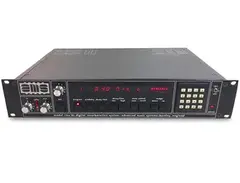
The dbx 160SL is a studio titan, seamlessly blending the revered characteristics of classic dbx compressors with the innovative features of modern signal processing. Whether you're crafting a polished vocal track or adding dimension to an instrumental, the AutoVelocity Dynamics circuit ensures precision and warmth, making it a versatile choice for any audio application. With its ultra high-drive transformer-coupled outputs, the 160SL promises pristine signal integrity even over long cable runs, while the unique dbx Type IV conversion offers a smooth analog-to-digital transition.
Designed for both the discerning audiophile and the professional sound engineer, this effects processor provides the flexibility of OverEasy® and hard-knee switchable settings. Its program-dependent auto attack and release modes can be tailored via the AutoVelocity Manual mode, or you can opt for full manual control to sculpt your sound to perfection. With a staggering 127dB dynamic range, the 160SL doesn't just handle audio; it elevates it.
Incorporating the 160SL into your studio setup means you're not just adding another piece of gear, but a tool that enhances your creative potential. From sidechain integration to its robust build, this processor is more than capable of meeting the demands of high-stakes recording environments.
Key Features:
- AutoVelocity Dynamics circuit for precision processing
- Ultra high-drive transformer-coupled outputs
- dbx Type IV conversion for smooth analog-to-digital transition
- Switchable OverEasy® and hard-knee compression settings
- Program-dependent auto attack and release with manual override
- Front panel sidechain enable switch
- 127dB dynamic range for wide audio handling
Product specs
| Brand | dbx |
| Model | 160SL Stereo Compressor / Limiter |
| Finish | Blue |
| Year | 2000s |
| Categories | Compressors and Limiters |
FAQs
-
What type of compression does the dbx 160SL offer?
-
The dbx 160SL provides stereo compression with advanced features such as auto attack and release, offering precise control over dynamics for both subtle and aggressive compression needs.
-
Is the dbx 160SL suitable for mastering applications?
-
Yes, the dbx 160SL is well-regarded for mastering due to its transparent compression and limiter capabilities, ensuring audio clarity and dynamic control without coloration.
-
Does the dbx 160SL have sidechain functionality?
-
Yes, the dbx 160SL includes sidechain functionality, allowing users to apply compression triggered by an external audio source, which is useful for applications like ducking or de-essing.
-
What are the primary controls on the dbx 160SL?
-
The dbx 160SL features easy-to-use controls including threshold, ratio, and output gain, along with auto or manual attack and release settings for comprehensive dynamic processing.
-
How does the dbx 160SL compare to the original dbx 160 in terms of sound?
-
The dbx 160SL offers a more refined and versatile sound with additional features like stereo operation and advanced control options, while maintaining the classic dbx compression character.
Videos

Urban Recording Company
The Ultimate DBX 160 Comparison UA DBX 160 VU, DBX 165, 160sl, MCDSp 6030
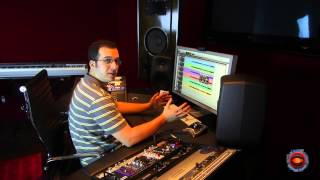
The Ultimate DBX 160 Comparison UA DBX 160 VU, DBX 165, 160sl, MCDSp 6030
Urban Recording Company
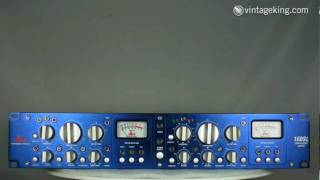
DBX 160SL Compressor/Limiter | VintageKing.com

Vintage King
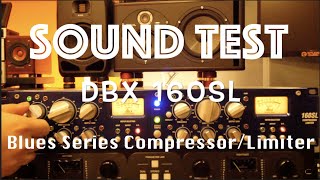
DBX160SL SOUND TEST

Hideyuki Daichi Suzuki
Reviews
Owner Insights
We analyzed real musician discussions from forums and Reddit to find what players love, question, and tweak about dbx 160SL.
Features and functionality
-
The DBX 160SL is known for its clean sound with an integrated limiter, allowing control over levels without significantly altering the timbre.
Source -
The dbx 165 is praised for its versatility across different instruments, including vocals, bass, and even niche instruments like harpsichord.
Source -
The dbx 165a is favored for its peak limiter capabilities, particularly effective on snare tones.
Source -
The 160X/XT models have an "Overeasy" mode with a wide, soft knee, making them ideal for vocals, offering LA2A-like results without heavy compression.
Source -
RMS-sensing with a ~31ms integration time ensures some transients pass through, enhancing drum punch and preventing the super-fast-attack clamping found in other compressors.
Source
Use cases and applications
-
Widely used in animation recording studios for dialogue due to its ability to level recordings without sounding overly compressed.
Source -
The original 160 excels on drum bus and parallel processing, while the 160X/XT models are specifically noted for their effectiveness on electric guitars, bass, and snare.
Source -
The fixed time constraints on the 160X/XT models are particularly suited for aggressive styles, making them ideal for "in your face" rap vocals.
Source
User experience
-
Users appreciate its ability to even out voice recordings effectively, with the limiting feature providing an additional layer of control.
Source -
Owners appreciate the separate input/output and GR meters on the 160X, which provide more immediate visual feedback than models with single VU meters.
Source
Comparisons
-
Despite recommendations for aggressive compressors like the Avalon 737 for recording, the DBX 160SL is favored for its subtler approach in various studios.
Source -
The dbx 165 offers the same functionality as the 160 but with additional controls; selecting auto mode makes it behave as a 160.
Source -
The Audioscape 260, a close of the 160VU, maintains the vintage vibe and is recommended for reliability and punchiness.
Source -
For those with a 500 rack, the dbx 560A is highlighted as a practical alternative to the 160 series.
Source
Critic Reviews
5.0 out of 5
Based on 0 Reviews and 2 Ratings
Artist usage
Add artist

A dbx 160SL unit can be seen at the bottom of the righthand rack in Kevin's home studio in this video


Used on "Did My Time", as stated by engineer Frank Filipetti in this transcribed March 2005 interview.
KORN
"I Did My Time"
Producer: Jonathan Davis of Korn
Engineer: Frank Filipetti
"It's about clarity," says Korn frontman/producer Jonathan Davis, "especially with my stuff cause there's so much low-end and sh-t going on. A lot of mixes can come out not really that clear, and that's one of the reasons I love Frank, because he records great vocals. So any vocals that I do or produce, it has to be about clarity. I have a couple mics that I really like to use; the Sanken is one of my main ones. It's all about not f--kin' with it - just a little bit of compression, that's it."
Signal Path: Tracking
"I was out on the road at the time writing the lyrics," says Jonathan. "I sang a verse in New Orleans and shipped it off to Frank on Pro Tools, so actually we used two different mics when I recorded that. The first was a [Neumann] U 47 with my chain, my preamp [Tube-Tech MP 1A], and the stuff I did at the house [ElemenTree Studios] with Frank was a different process. We used the Sanken [CMU-44]. But with Frank, he totally knows. I listen to it and I really don't have to say anything, 'cause Frank knows me."
"The vocal signal path I used for Jonathan is a Sanken CMU-44, into a TUBE-TECH MP-1A mic pre," adds Filipetti. "From there it went to a Neve 1073, then into the [Universal Audio] 1176, and from there to a GML EQ. Then I brought it into the tape monitor on the SSL 6000, then to the Euphonix R-1. We also used the DBX 160SL on the return on playback to vary the levels slightly, but we didn't record with it. That was part of the chain as well. It's about 85% of what we came up with on the last record with some slight modifications. It's a different console to begin with and a different microphone. The mic we used the last time was an M 49. We chose the Sanken because it just has the best overall combination of lows and highs.
"Jonathan has a very powerful voice," he continues, "especially when he starts to get into it. Some mics pick up the low level detail very well and some mics can hold themselves with screaming really well, but this seemed to have a good combination of both. We were able to get a nice quality between Jonathan singing softly and Jonathan screaming out full-bore. After comparing a lot of other mics, we ended up with the Sanken. In fact the top two mics were the Sanken and the [Audio-Technica] AT4060."
As for the other key components in the chain, Filipetti explains: "The Tube-Tech provides the presence. It has more presence than any other mic pre that I've used and it has an incredible midrange. The 1073 was there just to add a little bit of that Neve crunch - we ran it pretty hot. And I also used a tiny bit of the low frequency and the high frequency EQ. Then I went to the 1176; after trying out a bunch of compressors on Jonathan's voice, the 1176 worked out best. It just seemed to hit him properly. We used that real high-end stuff on the GML, which added that over-end air, which it does incredibly well, and then brought it into the console. On some tracks at the end of the chain we added a DBX 160SL. On a couple tracks that just added a punch that worked out really nicely."
Vocal Philosophy
"My objective with Jonathan is what it is with everybody," says Filipetti. "Basically, the song lives and dies with the vocal. I tend to gravitate toward and work with singers who have real personality. I'm not looking for dancers who are singers. My approach is to make sure that all of that personality comes out; I don't want anything to get lost. I'm looking for all the little quirks and the harmonic things in their voice that make them special, and I look to bring that out. Sometimes it's a matter of just putting the proper mic in front of them. Sometimes it's a matter of adding more things in the chain, but basically, like I do with everyone, I always listen in the room to the singer and then try to capture as much of that as I can through the vocal chain."


Genre Usage
Based on how artists on Equipboard use this gear, it is most commonly found in the following genres.
Used With
Based on how musicians on Equipboard use dbx 160SL, it is most commonly used with the following gear.


-s.webp?v=1784473026)



More dbx Effects Processors
-m.webp?v=1784386647)
$435.49
in Effects Processors Rank


$238.00
in Effects Processors Rank


$60.00
in Effects Processors Rank


$161.75 - $339.00
in Effects Processors Rank


$121.25 - $280.00
in Effects Processors Rank


$239.00 - $365.00
in Effects Processors Rank


-m.webp?v=1784473053)
$75.00 - $585.00
in Effects Processors Rank


$633.00
in Effects Processors Rank


-m.webp?v=1784386757)


$1,050.00


$1,169.25


$210.81 - $380.00


Accessories & Related Items


-s.webp?v=1784412551)


Community setups


Similar


Most Popular Effects Processors
Most Popular Brands
-
Added to Equipboard on by
 eyeseeofficial
GearIQ 161592
-


