This page about EMT 250 Digital Reverb is a stub. You can help improve it:


Pricing and availability




* Product prices and availability are updated by Equipboard every 24hrs and are subject to change. Equipboard may receive compensation for purchases made at participating retailers linked on this site. This compensation does not affect what products or prices are displayed, or the order of prices listed. For more information, please refer to our affiliate disclosure.
Description
The EMT 250 Digital Reverb is a legendary piece of studio gear, revered for its iconic and lush sound that has shaped countless recordings. First introduced in the late 1970s, it was the world’s first commercial digital reverb unit and remains a sought-after piece of hardware among professionals and enthusiasts alike. Its ability to create rich, warm, and expansive reverb effects sets it apart, making it an invaluable tool for any studio setup. The EMT 250 offers a wide range of reverb settings, from subtle ambiances to cavernous spaces, all while maintaining a natural and musical quality.
Designed with simplicity and functionality in mind, this effects processor features an intuitive control panel that allows for easy manipulation of its parameters. The EMT 250 is renowned for its distinctive character, thanks in part to its unique delay line and modulation system, which provides a depth and texture rarely matched by other reverb units. This makes it ideal for adding dimension to vocals, instruments, and mixes, giving them a professional and polished finish.
Whether you are a seasoned engineer or a budding producer, the EMT 250 Digital Reverb is a timeless addition to your audio arsenal, offering a classic sound that never goes out of style.
Key Features:
- First commercial digital reverb unit
- Renowned for its lush, warm reverb effects
- Intuitive control panel for easy adjustments
- Offers a range of reverb settings from subtle to expansive
- Unique delay line and modulation system for added depth
- Ideal for vocals, instruments, and mixes
Videos

Urban Sound Studio
Universal Audio UAD Reverb Shootout 🪐 AKG, AMS RMX 16, EMT 250, Pure Plate, & Lexicon 224 / 480L
Universal Audio UAD Reverb Shootout 🪐 AKG, AMS RMX 16, EMT 250, Pure Plate, & Lexicon 224 / 480L
Urban Sound Studio
The World’s FIRST Digital Reverb: EMT 250 Part 1

foleytronics fx repair
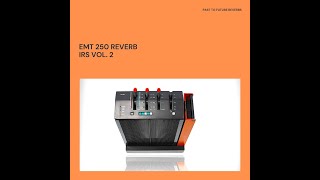
EMT 250 REVERB IRS VOL 2! Demo

PAST TO FUTURE
Reviews
Owner Insights
We analyzed real musician discussions from forums and Reddit to find what players love, question, and tweak about EMT 250 Digital Reverb.
Setup and maintenance
-
The SRAM board often causes issues due to dust and humidity buildup in its 50-year-old socketed ICs, affecting continuity and sound quality.
Source
Mods and upgrades
-
Replacing 128 old SRAM chips with 2 modern ones significantly improves reliability without changing the sound, as it only alters data storage, not processing.
Source
Features and functionality
-
The EMT 250's point-to-point wire wrap logic design includes 2,048 connections, essential for its smooth operation, making maintenance complex.
Source
Based on 0 Reviews and 0 Ratings
Artist usage
Add artist

"And I have six old 1176 compressors, a Fair-child, three Lang equalizers [a PEQ4 and two PEQ2s], two Pultec [EQP-IA3] equalizers, an EMT plate reverb, and an EMT 250 digital reverb"

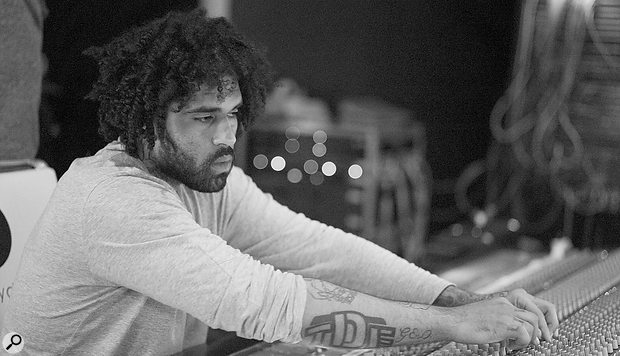
"For outboard I used the EMT 250 reverb. The first time the studio took that out, I was like: ‘What’s that? A refrigerator?’"


Bruce Swedien used one nicknamed “R2-D2” for the background choirs on Jackson’s songs. It is featured in this February 4, 2020 Facebook post by In The Studio With Michael Jackson (run by Brad Sundberg, Jackson’s technical director).
RIIIIIIIINNNNNGGGG!!! School is in session!!
Meet R2D2.
This is an EMT250 Reverb Unit, affectionally and obviously nicknamed R2D2.
First things first - what is reverb?
Reverb, or reverberation, is an effect added to a sound to replicate if you are hearing it in a large room, gym, church, etc. This gives vocals and instruments a more "live" sound. (There are endless parameters, decay times, pre-delay times, etc., but we'll keep this fairly simple for now).The EMT 250 was first released in 1976 with a hefty price tag of $20,000. For comparison, the typical American home in 1976 cost around $41,000 - $46,000, so this was nearly half the price of a house.
I can't find the exact weight of an EMT250, but it was insanely heavy, and with only two wheels you would do this penguin shuffle to drag it from one studio to another, causing great amusement to clients and engineers alike.
According the internet - which is always correct - only 250 of these units were ever manufactured. It was an essential part of any session I worked with Bruce Swedien - including every Michael session.
So what makes it special? Well, a few things.
First, it has a rich, complex sound, almost like an ocean wave of reverb. It is just 'thicker" than other devices of that era. And... I first touched one in 1984, some nine years after it was introduced. In studio/digital time, that's a lifetime. Yet it was still very popular and was used extensively on albums like "Bad", "Dangerous", "HIStory", "Blood On The Dancefloor" and "Invincible."
The EMT250 has four outputs. It was up to the user to decide how they should be used. Virtually all other reverb units only have 2 (left and right), but the EMT had four. For Bruce, we would assign them 1 left, 2 left, 3 right, 4 right. We treated 1 and 4 as a stereo pair, and 2 and 3 as stereo pair. So I would calibrate the outputs to create a perfectly balanced sound from the four outputs.
Bruce was very minimal in terms of the amount of reverb units he used - sometimes as few as four for a full mix. In other words, the drums might have one reverb (often an AMS), Michael's vocal would be fed into a Lexicon 224 or later a 480, etc. But the EMT was ready and waiting usually for just one source: Choir.
I never saw Bruce feed a lead vocal or drum into the EMT250; his favorite application was to give a choir the biggest, baddest sound imaginable.
So R2 would sit there day in a day out, waiting for something to do. Then we would finally book a choir date with the Andre Crouch Choir, perhaps for a song like "Keep The Faith".
The choir would arrive a couple hours early and warm up, singing gospel songs around the piano. It was amazing to watch and listen to. Then Michael would meet with Andre and Sandra (Andre's sister) and start building the choir parts. He might play the song from a little cassette deck so they could learn it. Then we would gather the entire choir in a circle (yes, a circle) around the microphones, and they would start to sing.
Bruce would record a couple passes, and then have them all move back a few steps and record it again for a slightly roomier sound, or he might pull them in shoulder to shoulder for a closer sound around the mics.
Finally he would feed that explosive amount of a vocal power into the EMT-250 (R2D2) and push the decay to four seconds. He would crank the monitors to 11 and I would brace myself. Michael and Andre would be in the sweet spot and the song would start. When the choir hit in the chorus, it was like someone lit a fuse. The EMT250 would create this insanely rich, thick reverb around their amazing vocals.
Michael would start to hoot and scream and dance, and I knew that Bruce had done it again.
Songs like Mirror and Faith became our "show off" songs when guests would come to the studio. Bruce would cue them up for some poor unsuspecting guest who was used to hearing music at conversational level. That didn't work in our world. Bruce would dime the knob and nod at me to start the playback. I would gulp and hit "Play" and wait for the speakers to explode. I have seen grown men almost fall out of their chairs when the first note hits at that volume.
Give "Keep The Faith" a listen. Crank it up. Listen to the choir. Listen to the reverb on the choir. Thats the EMT250 at work.
When we moved from one studio to another, R2D2 would be carefully lifted into a hefty road-case and transported with us - a very important part of the team with just one purpose: Make the choir sound like heaven just opened up and shared them with us for a few minutes.
Good work R2 - job well done.

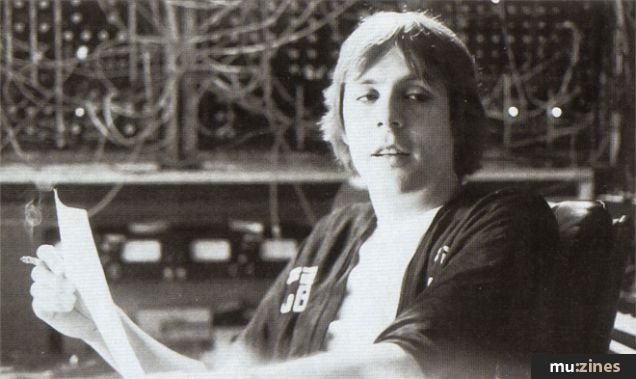
From the February 1993 issue of Sound on Sound, Klaus Schulze's equipment list includes:
EMT 250/251 reverbs AKG ADR 68K reverb + editor Yamaha SPX1000 multi-effects Roland SRV2000 reverb Korg SDD1200 Korg SDD3000 Korg DVP1 harmoniser Ibanez SDR 1000 Boss SE50 Eventide Harmonizer Moog 16-channel Vocoder

In the video "My Top 5 Favorite IK Multimedia Plugins - Into The Lair #162" on Pensado's Place, Dave Pensado can be seen with the EMT 250 Digital Reverb prominently displayed behind him at the beginning and throughout the video.


Kember, in particular, managed to coax some highly unusual sounds out of the EMT 250 digital reverb — only one example of which survives on the finished album, partway through 'Siberian Breaks'. In the album credits, it is jokingly referred to as the "first documented use of the EMT 250 reverb 'glitch'”.


In this interview with Bob Owsinski for The Mixing Engineer’s Handbook, the late Jerry Finn states that
I’m a big fan of the EMT 250 on snare. That’s probably been a standard since day one on my mixes.


@ 4:03 you get to see and hear him talk about his EMT 250 in the studio tour video.


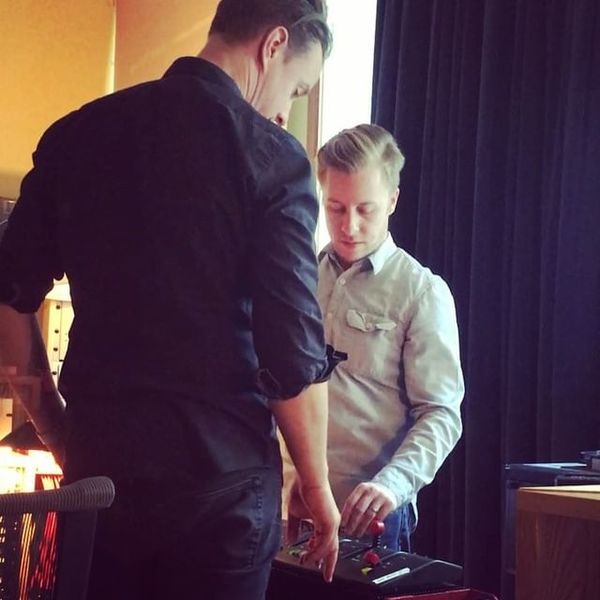
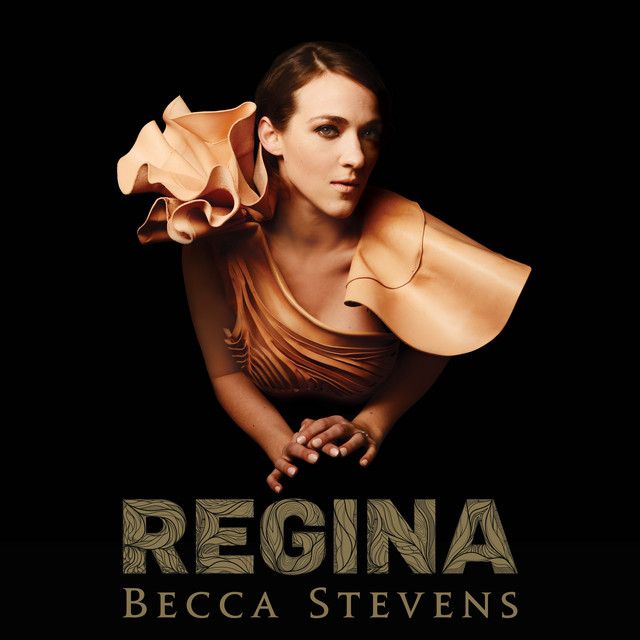
Used on Stevens' vocals during the mixing of Regina, as featured in this September 26, 2016 Instagram post.
Pacman? Nope. @troy__miller & @teddytuthill #nerdingout w/ #emt250 reverb on @lauramvula and my voice. Day 1 of mixing #Regina !!!! @figure8recording , BK.
.jpg?v=1784030063)

Neil Kernon utilized the EMT 250 Digital Reverb during the mixing of "Rage For Order" at Yamaha's studio in Glendale, CA. This is confirmed by a comment on the Gearspace forum, where Kernon details his use of various reverb units, including the EMT 250, alongside other Yamaha equipment.

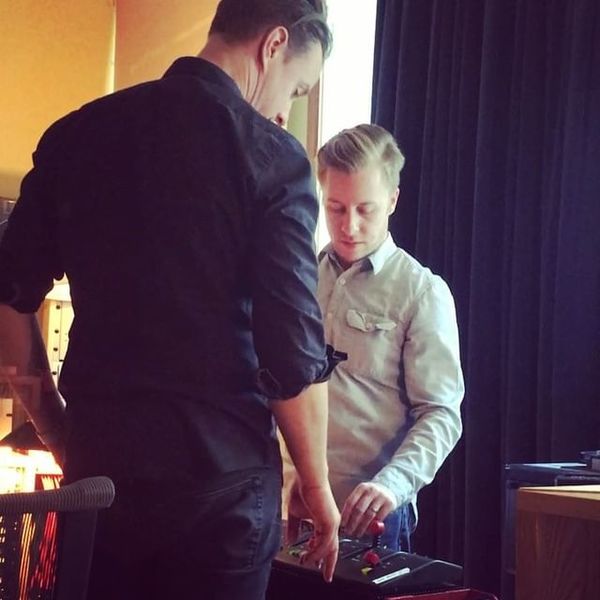
Used on Mvula' vocals for Becca Stevens' "Well Loved" during the mixing of Regina, as featured in this September 26, 2016 Instagram post by Stevens.
Pacman? Nope. @troy__miller & @teddytuthill #nerdingout w/ #emt250 reverb on @lauramvula and my voice. Day 1 of mixing #Regina !!!! @figure8recording , BK.
Album Usage
The EMT 250 Digital Reverb has been featured on the following albums:

![EMT 250 Digital Reverb as heard on Rage For Order (Remastered) [Expanded Edition] by Queensrÿche (1986)](https://images.equipboard.com/uploads/album/image/46270/rage-for-order-remastered-expanded-edition.jpg)
Genre Usage
Based on how artists on Equipboard use this gear, it is most commonly found in the following genres.
Used With
Based on how musicians on Equipboard use EMT 250 Digital Reverb, it is most commonly used with the following gear.




Similar
Add recommendation1 alternative for EMT 250 Digital Reverb, curated by the Equipboard community.

More EMT Effects Processors


.jpg?v=1784030063)

$1,500.00
in Effects Processors Rank


-m.webp?v=1784559394)
$640.00
in Effects Processors Rank


$189.00
in Effects Processors Rank


$1,799.00
in Effects Processors Rank


$1,549.00
in Effects Processors Rank


$1,999.00
in Effects Processors Rank


$749.99 - $833.00
in Effects Processors Rank


$136.00
in Effects Processors Rank


$1,450.00
in Effects Processors Rank


$3,799.00 - $4,985.00
in Effects Processors Rank


-m.webp?v=1784815383)
$40.00 - $2,999.00
in Effects Processors Rank

$5,777.00 - $6,999.00
in Effects Processors Rank
.jpg?v=1784733415)


$1,153.00 - $2,635.00
in Effects Processors Rank


.jpg?v=1784637724)

$3,568.46 - $4,750.00
in Effects Processors Rank


$892.41 - $1,799.95
in Effects Processors Rank


$220.00
in Effects Processors Rank


$850.00
in Effects Processors Rank


$69.95
in Effects Processors Rank


$199.99 - $300.00
in Effects Processors Rank


-m.webp?v=1784818739)
$320.00
in Effects Processors Rank


$419.99 - $1,179.99
in Effects Processors Rank


$749.99 - $4,999.00
in Effects Processors Rank


$1,650.00
in Effects Processors Rank

$2,999.00 - $3,250.00
in Effects Processors Rank


$629.99 - $849.00
in Effects Processors Rank


$35.70 - $199.00
in Effects Processors Rank


-m.webp?v=1784818824)
$309.37 - $936.00
in Effects Processors Rank


$2,555.00 - $3,225.00
in Effects Processors Rank


-m.webp?v=1784818777)
$450.00 - $699.00
in Effects Processors Rank


$4,999.00 - $8,037.96
in Effects Processors Rank


$999.00
in Effects Processors Rank
.jpg?v=1784681042)


$138.00
in Effects Processors Rank


Community setups


Gear Guides








Most Popular Effects Processors
Most Popular Brands
-
Added to Equipboard on by
 awentekr
GearIQ 1330
-


