
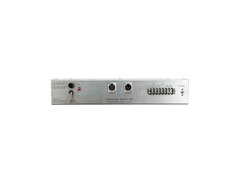


Pricing and availability
We compare 600+ stores and found this item at 6 stores. Prices updated .
Store
Reviews
Price








Average Price: $3,041
High-end/Boutique
$100
$501+
Price Tier
Budget
Standard
High-end
Price History
Based on price data from 5 merchants for "Urei Universal Audio 1176LN Rev. H Limiting Amplifier". Prices shown reflect NEW condition. Tracking began Apr 2, 2026.
* Product prices and availability are updated by Equipboard every 24hrs and are subject to change. Equipboard may receive compensation for purchases made at participating retailers linked on this site. This compensation does not affect what products or prices are displayed, or the order of prices listed. For more information, please refer to our affiliate disclosure.
Description
Renowned for its iconic sound, the Urei 1176 is a staple in the world of professional audio recording. Originally introduced in 1967 by Bill Putnam, this legendary FET compressor/limiter has shaped the sound of countless records across decades. Musicians and producers alike cherish its ability to deliver ultra-fast attack times, as swift as 20 microseconds, making it ideal for dynamic control on various instruments and vocals. The 1176 offers a unique blend of transparency and character, with four push-button-selectable ratios (4:1, 8:1, 12:1, 20:1) that allow for versatile sound shaping.
One of the most intriguing features is its "Nuke Mode," activated when all four ratio buttons are pressed simultaneously. This mode is perfect for adding dramatic flair to drum room mics or other sources, creating explosive and colorful results. Whether you're looking to add a subtle sheen or a bold, aggressive punch, the Urei 1176 ensures your tracks stand out with a sonic signature that is both warm and vibrant.
Handcrafted with precision, the Urei 1176 is built with the same dedication and quality as the original units, ensuring it remains a vital tool in any studio setup. With its distinct ability to impart tone without active compression, it's a must-have for any serious audio engineer.
Key Features:
- Legendary FET compressor/limiter design
- Ultra-fast attack time as low as 20 microseconds
- Push-button-selectable ratios: 4:1, 8:1, 12:1, 20:1
- "Nuke Mode" for dramatic, explosive effects
- Faithful reproduction of the original 1176 in design and performance
- Handcrafted in Scotts Valley, California
- Ideal for guitars, bass, drums, vocals, and more
- Custom Class A output transformers for enhanced sound quality
Product specs
| Brand | Urei |
| Model | Universal Audio 1176LN Rev. H Limiting Amplifier |
| Year | 1970s |
| Made In | United States |
| Categories | Compressors and Limiters |
| Electronics | Analog, Solid State |
| Format | 19-inch Rackmount |
| Number of Analog Inputs | 1 |
| Number of Analog Outputs | 1 |
| Number of Channels | 1 |
FAQs
-
What type of compression does the Urei 1176 use?
-
The Urei 1176 utilizes a solid-state, FET-based compression design, known for its fast attack and release times, which makes it ideal for adding punch to vocals and drums.
-
Is the Urei 1176 suitable for vocal recording?
-
Yes, the Urei 1176 is highly regarded for vocal recording, providing a distinctive punch and presence that enhances vocal tracks, making them stand out in a mix.
-
How many channels does the Urei 1176 have?
-
The Urei 1176 is a mono compressor with one analog input and one analog output, designed for processing a single channel at a time.
-
Can the Urei 1176 be used for stereo applications?
-
While the Urei 1176 is a mono unit, it can be used in stereo applications by linking two units together, allowing for consistent compression across both stereo channels.
-
What is the main advantage of using a Urei 1176 for drum processing?
-
The Urei 1176 is renowned for its ability to add punch and character to drum tracks, thanks to its fast attack and release times, which help emphasize transients and enhance the overall impact.
Videos

Doctor Mix
Urei 1176 Compressor In Action
Urei 1176 Compressor In Action
Doctor Mix
The UREI 1176 LN makes your guitar sound instantly Classic, Vintage and Amazing!!

Johan Segeborn
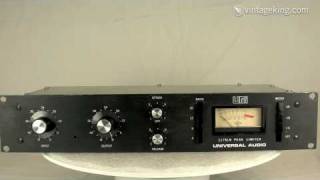
Vintage Urei 1176LN Peak Limiter | VintageKing.com

Vintage King
Reviews
Owner Insights
We analyzed real musician discussions from forums and Reddit to find what players love, question, and tweak about Urei Universal Audio 1176LN Rev. H Limiting Amplifier.
Features and functionality
-
The 1176's unique attack and release settings can make drum transients pop, enhancing brightness and punchiness in snares when set to slow attack and fast release.
Source -
A combination of 1176 and dbx160 compressors, used in parallel, is favored for its ability to provide both "smash" and "grab" compression effects on drum tracks.
Source -
The 1176's attack and release knobs operate in reverse, with 1 being slowest and 7 fastest, which is unique compared to most compressors.
Source -
The 1176 naturally biases its compression ratio against transient sustains, allowing the initial attack to remain punchy while compressing the tails more heavily.
Source -
The 1176 has a faster attack for transients/high frequencies due to a resistor and capacitor in parallel, allowing transients to pass through quickly.
Source -
The threshold of the 1176 increases with the ratio, impacting how it handles different materials, providing a distinctive compression effect.
Source
Use cases and applications
-
The "all-in mode" is praised for parallel compression, allowing for enhanced snap on drums and other instruments without overwhelming the mix.
Source -
The 1176 is celebrated for its ability to make vocals and bass tracks sit well in a mix, providing smooth dynamic control and enhancing track presence.
Source -
Engaging all ratio buttons on the 1176 can create a unique "all buttons mode," causing distorted, pumping effects, particularly effective on drum rooms.
Source
Comparisons
-
Users note that modern 1176 units can have variations in sound due to different components, but they retain the classic characteristics that are beloved in the original model.
Source -
Users find the UAD 1176 plugin to closely replicate the hardware sound, especially compared to the MC77, offering similar tonal characteristics across channels.
Source
User experience
-
Owners report that the 1176 excels in quick setup scenarios, achieving desired compression effects rapidly without the need for extensive parameter adjustments.
Source
Mods and upgrades
-
The addition of a high-pass filter in the sidechain of newer FET compressors like the Black Lion Seventeen is seen as a beneficial enhancement over the original 1176 design.
Source -
Half-pushing one of the buttons to disengage all ratios allows using the 1176 for saturation without compression, offering a unique tonal option.
Source
Critic Reviews
5.0 out of 5
Based on 0 Reviews and 3 Ratings
Artist usage
Add artist

Used on the vocals for Sleep Through the Static, as stated by mix engineer Robert Carranza in this February 1, 2008 Mix Online interview.
Vocals went through an API mic pre from the Telefunken | USA U-47 re-issue into the API 512, into an LA-2A and straight into tape. “We used the 1176 every once in a while, not too much; this is more of an LA-2A kind of record. No aggressive stuff.”


Mentioned by recording engineer Richard Dodd in this Sound on Sound interview about the recording of "Learning to Fly".
"One of the amplifiers Mike was using was an open-back Ampeg, and I had a Shure SM57 on that while, to capture some low end, I had the bright idea of also sticking one of those flat PZM microphones onto the amp. It was the Radio Shack mic, not the posh Crown version, and I just blended that in. Being omnidirectional, it gave a little of the environment, and those mics were blended together and went through a Urei 1176. Typically, the pre would be an outboard Neve 1073 or an API, and only things like percussion would use the preamps on the console.
"The same recording method was used for the other guitars, with the exception of the PZM.

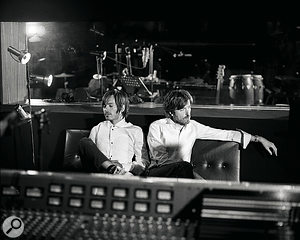
There is also 'modern' audio gear in the racks: two Avalon VT737 input channels, two Chandler Germanium compressors, a Demeter Stereo Tube Direct and two Urei 1176 compressors, along with some vintage Ibanez (AD230), Ensoniq (DP4), Korg (SDD2000) and Roland (SBF325) effects — an essential ingredient of the AIR sound from the beginning. In the studio itself, there's a Yamaha grand piano, a drum kit, a vibraphone, some kalimbas, a Neumann U47 microphone and Godin's collection of guitar and bass amps.


Used for vocals on The Heart of Saturday Night, Small Changes, Foreign Affairs, Blue Valentine and Heartattack and Vine, as stated by producer "Bones" Howe in this February 2004 Sound on Sound interview.
Tom Waits's voice itself is a unique instrument. For that, Howe went back to his old standby, the classic RCA 77 DX ribbon mic. "The 77s have three cardioid settings," he explains. "V1 and V2 were different low-end cutoffs, and 'M' was for music recording. The V1 setting had a high cutoff, which made it good for radio announcing; the V2 position left a lot more low end in there and made it a great vocal microphone." The signal ran through a UREI 1176 compressor/limiter set with what Howe swears are the best parameter settings that can be configured on it for vocals: threshold/attack at 6, release at 7, and a 12:1 compression ratio. "Tom popped and spat a lot when he sang, so the 77 was perfect, because it's very hard to pop that microphone, so you didn't need a pop filter. Plus he liked to get right on the mic, so he would sit at the piano and I hung it from a boom so it would hang down in front of him. On some tracks we'd set it up directly in front of the band and he's stand in front of the drums and sing. On 'Step Right Up' you can almost hear him flipping pages of lyrics. He was always surrounded by the music and the records sound like it. We never used headphones. Never."
A 1176 was also used for vocals on Bone Machine, as stated by engineer Biff Dawes in this February 6, 2015 Mix Online interview.
"Prairie Sun had a lot of good outboard equipment, too,” the engineer continues. “Along with the Neve mic pre’s, I would have also used an LA-2A or 1176 on his vocal.”

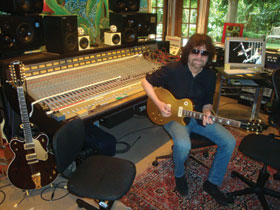
This MixOnline article states that Lynne owns a UREI1176.


Mentioned by mixing engineer Michael Brauer as being used on "Violet Hill" in this Sound on Sound interview about the production of Viva la Vida & Death and All of His Friends.
Drums: Neve 1083, Urei 1176, ADR Compex, Pye & Chandler EMI compressors
"I put some samples behind the kick and snare. I have built up a collection of a few hundred kicks and snares, so I can try many different types. This is where I spend a lot of time searching for the right sound. I may spend two hours trying to get the drum sound right. This is not to say that the original drum sounds in this track were bad, in fact they were great. So I'm building on top of them, I'm not replacing them. I can't remember the last time I actually replaced a drum sound. I just added a little bit to the kick and snare to enhance them. The snare sound is very important for a song and sometimes I vary it throughout the song, maybe downplaying one of the chorus snares in the verse, but in this particular case the snare sound doesn't change.
"The main drum sound is coming from their snare, which I had up really loud. They had a nice overhead snare sound that already had reverb and stuff on it that was also very important to the sound. The kick and snare both went through my Neve 1083 EQs. I put the room sounds through my great, very vicious, old British Compex compressors. I also put the cymbal room sound through the Compex. The Compex compression makes the sound grainier and more aggressive. The toms, which were really well recorded, went through my stereo Pye compressors to make them more explosive, and were also sent to my stereo 1176 compressors and my Chandler EMI compressors. The 1176 and the Chandler are also explosive, so basically the tom sound was f[***]ing explosive. I maybe added a bit of compression on the hi–hats, and did very little with the mono overheads."


"The Trash plug-in wasn't the only thing I used on the lead vocals. I also had an outboard MXR flanger on it. Plus there was an outboard compressor, the Urei 1176. I used the same three effects on Timbaland's vocals, just less than on Justin's. But you can hear the flanger and compressor acting in the spaces, like just before Justin sings 'dirty baby'. There's no hiding it, and it creates a whole other dimension of sound," reads this article.

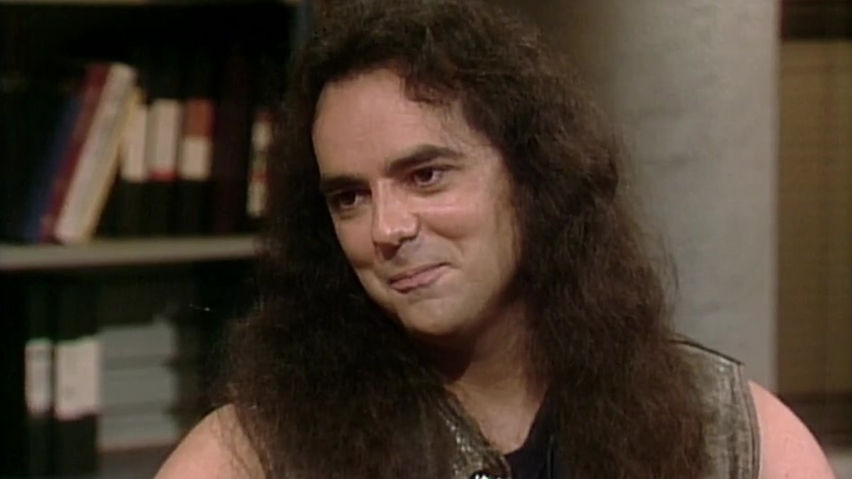
This transcribed interview from the October 1997 issue of Canadian Musician magazine, "Lanois also recommends quite a few compressors: the LA2A, the LA4A, and the 1176 Erie [sic]. 'If you open up your pre-amp quite a bit and you hit one of these compressors, that’ll be a different kind of sound than just going straight onto tape. All of those links on the chain are really important.'"

Used for the bass drum on John Mayer's Continuum, as stated by recording engineer Chad Franscoviak in this October 1, 2006 Mix Online interview. It was the same unit used for Mayer's vocals.
For Mayer's vocal chain, Franscoviak says that most of the songs were recorded with a Neumann U47. For a couple of songs, he sang into a Neumann M269c, and on “I'm Gonna Find Another You,” which was recorded at Royal Studios in Memphis, he sang into Al Green's RCA 77 ribbon mic. From there, the chain included a Neve sidecar stocked with 1073 mic pre's and then a UREI silver-face 1176. “On a couple of songs, we did experiment with splitting his vocals into two channels — one of them would be kind of a clean and one of them would be kind of a gritty — and we would take the second channel and put it through a Fairchild 670 and really crush it,” Franscoviak explains. “Then we would either blend it together or choose one or the other for the mix.
(...) Jordan's assortment of drums — which seemed to be endless, Franscoviak says with a laugh — were miked fairly conventionally: an AKG D 112, an RE20, a 421 or a Beyer M88 on the kick; snares got 57s on top and bottom; M88s on the toms; an AKG 451 on hi-hats; and on overheads, he either used a U67 or U87.
The only trick that Franscoviak used, which he fully admits stealing from Joe Ferla, was putting a Coles 4038 ribbon mic directly over the center of the kit, parallel to the ground and as close in as possible without impeding Jordan's playing. “I generally compressed the snot out of that and I would run it through a Fairchild,” he says. “That's a really interesting trick because you have all of your tight sounds, but you add that 4038 and it makes everything more exciting.”
He also put a U47 about 18 inches off the ground and four to seven feet in front of the kick drum for a very specific sound. “At some point, we were going to hit that low-end waveform just right and it was going to fill that kick drum out,” Franscoviak explains. “I would compress it a lot with an 1176, a lot harder than the overhead, because I wanted that low end to be there for every hit.”


Used on the overhead mics for Only by the Night, as stated by producer Jacques King in this December 2008 Sound on Sound interview.
"The overheads were recorded with a Telefunken Elam 251 going through a Neve 1081 preamp/EQ, then an Urei 1176, and then to tape."

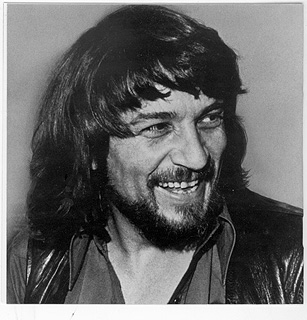
"On the whole, the Dreaming My Dreams sessions were cut live. (...) Outboard processing gear at Glaser Sound included UREI 1176 and LA-2A compression, and a Pandora digital delay that [studio engineer Kyle] Lehning says may have been used on this album ('but definitely not on vocals')."


In this article, Andy's drum micing technique is explained. "The kick drums and snare were close-miked from various angles and sent through a variety of compressors (UREI 1176, dbx 160, and a PYE model from the ’60s)."
Album Usage
The Urei Universal Audio 1176LN Rev. H Limiting Amplifier has been featured on the following albums:

Hackney Diamonds
The Rolling Stones (2023)

Superwolves
Bonnie 'Prince' Billy & Matt Sweeney (2021)

Beam Me Up Scotty
Nicki Minaj (2021)

LONER
Caroline Rose (2018)

Biophilia (Live)
Björk (2014)

Every Breath You Take (KHURSOR Remix)
Sting & Sting (2014)
Volume 3
She & Him (2013)

Havoc and Bright Lights
Alanis Morissette (2012)
Duets II
Tony Bennett (2011)

The Seldom Seen Kid (Live At Abbey Road)
Elbow (2009)
Only By The Night
Kings of Leon (2008)
Sleep Through The Static
Jack Johnson (2008)
Violet Hill
Coldplay (2008)

Viva La Vida or Death and All His Friends
Coldplay (2008)

Echoes, Silence, Patience & Grace
Foo Fighters (2007)
Icky Thump
The White Stripes & Jack White & Jack White (2007)

Volta
Björk (2007)
Continuum
John Mayer (2006)

Demon Days
Gorillaz (2005)

Gorillaz
Gorillaz (2001)
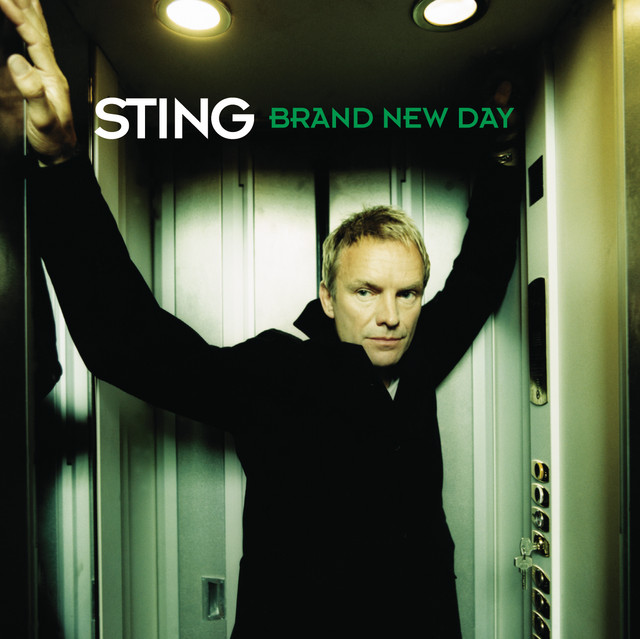
Brand New Day
Sting & Sting (1999)

OK Computer
Radiohead (1997)
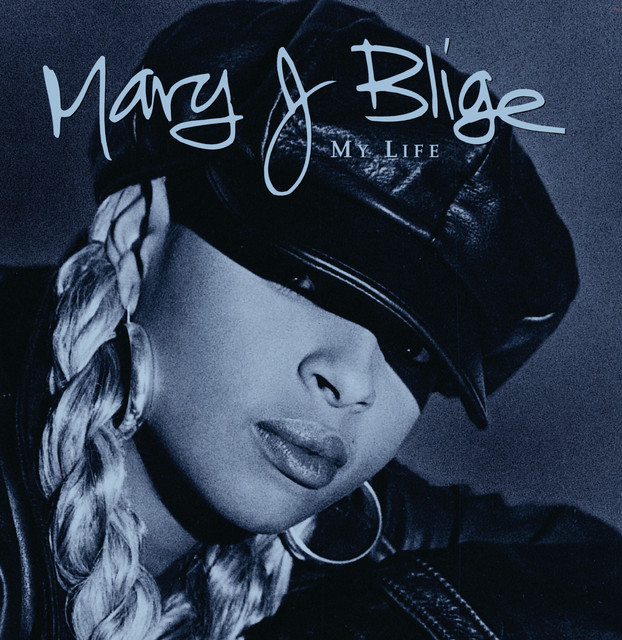
My Life
Mary J. Blige (1994)

Mosquitos
Stan Ridgway (1989)
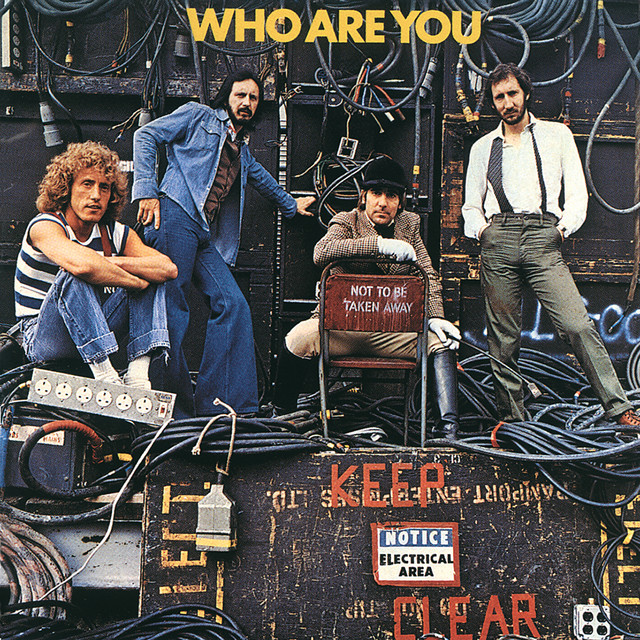
Who Are You
The Who (1978)

Dreaming My Dreams
Waylon Jennings (1975)
Genre Usage
Based on how artists on Equipboard use this gear, it is most commonly found in the following genres.
Used With
Based on how musicians on Equipboard use Urei Universal Audio 1176LN Rev. H Limiting Amplifier, it is most commonly used with the following gear.

-s.webp?v=1783316277)


Similar
Add recommendation2 alternative and related items for Urei Universal Audio 1176LN Rev. H Limiting Amplifier, curated by the Equipboard community.

$1,549.00

More Urei Effects Processors

$2,999.00
in Effects Processors Rank


$2,999.00 - $10,500.00

$2,999.00 - $9,000.00


-m.webp?v=1775900829)


.jpeg?v=1783244343)


$1,500.00
in Effects Processors Rank


-m.webp?v=1782917897)
$700.00
in Effects Processors Rank


$146.00
in Effects Processors Rank


$1,799.00 - $1,839.00
in Effects Processors Rank


$1,549.00
in Effects Processors Rank


$1,999.00
in Effects Processors Rank


$749.99 - $839.00
in Effects Processors Rank


$175.00
in Effects Processors Rank


$1,100.00
in Effects Processors Rank


$3,866.00 - $5,450.00
in Effects Processors Rank


-m.webp?v=1783316613)
$40.00 - $2,999.00
in Effects Processors Rank

$5,799.00 - $6,999.00
in Effects Processors Rank


.jpg?v=1783082401)

$1,153.00 - $2,635.00
in Effects Processors Rank


.jpg?v=1783230697)

$680.00 - $1,799.95
in Effects Processors Rank


$4,537.78 - $4,799.00
in Effects Processors Rank


$766.84
in Effects Processors Rank


$200.00
in Effects Processors Rank

Accessories & Related Items

-s.webp?v=1783317164)


-s.webp?v=1783316546)


-s.webp?v=1783317167)


-s.webp?v=1783316613)
Community setups


Most Popular Effects Processors
Most Popular Brands
-
Added to Equipboard on by
 grp0429
Gear IQ 41
-


