

Pricing and availability
We compare 600+ stores and found this item at 1 store. Prices updated .
Store
Reviews
Price




Average Price: $1,199
High-end/Boutique
$300
$701+
Price Tier
Budget
Standard
High-end
* Product prices and availability are updated by Equipboard every 24hrs and are subject to change. Equipboard may receive compensation for purchases made at participating retailers linked on this site. This compensation does not affect what products or prices are displayed, or the order of prices listed. For more information, please refer to our affiliate disclosure.
Description
Step into a sound that has shaped the landscape of modern music with the 1966 Fender Super Reverb. This iconic amplifier, renowned for its lush reverb and vibrant tremolo, offers a blend of classic tones that have backed legendary musicians across genres. With its distinctive Black Panel finish and the unmistakable warmth only a tube amp can provide, the Super Reverb is more than just an amplifier; it's a piece of music history. Whether you're chasing the clean, crisp sounds of surf rock or the deep bluesy growls synonymous with Texas blues, this amp delivers with unmatched clarity and depth. Perfect for the studio, the stage, or simply jamming at home, the 1966 Fender Super Reverb invites you to be part of a legacy of sound that continues to resonate with musicians and audiences alike.
Key Features:
- 45-watt tube combo amplifier for rich, warm sound
- Equipped with four 10" speakers for unparalleled clarity and depth
- Built-in reverb and tremolo effects for added texture and dimension
- Classic Black Panel finish, embodying the vintage Fender aesthetic
- Ideal for a wide range of musical styles, from surf rock to blues and beyond
Product specs
| Brand | Fender |
| Model | Super Reverb 2-Channel 40-Watt 4x10" Guitar Combo |
| Finish | Black Panel |
| Year | 1963 - 1967 |
| Made In | United States |
| Categories | Guitar Combo Amps |
| Built-In Effects | Built-In Effects |
| Color Family | Black |
| Direct Output | No Direct Output |
| Electronics | Tube |
| Model Family | Fender Super Amp |
| Model Sub-Family | Fender Super Reverb |
| Number of Channels | 2 Channels |
| Number of Inputs | 4 Inputs |
| Output Power (Watts) | 40 |
| Power Tube Type | 6L6 |
| Reverb | Spring Reverb |
| Series | Fender Vintage Black Panel Amps |
| Speaker Configuration | 4x10" |
FAQs
-
What are the core tonal characteristics of the 1966 Fender Super Reverb?
-
The 1966 Fender Super Reverb is known for its rich, warm tube-driven tones, featuring a lush spring reverb and a vibrant tremolo effect. It excels in delivering classic Fender clean tones with a slight breakup when pushed, making it ideal for blues and rock genres.
-
Is the 1966 Fender Super Reverb suitable for gigging with a drummer?
-
Yes, the 1966 Fender Super Reverb produces 40 watts of power, which is sufficient for gigging in medium-sized venues alongside a drummer. Its four 10" speakers provide ample volume and projection.
-
What is the speaker configuration of the 1966 Fender Super Reverb?
-
The 1966 Fender Super Reverb features a 4x10" speaker configuration, which contributes to its distinctive sound, offering a balanced mix of clarity and punch across a wide frequency range.
-
Does the 1966 Fender Super Reverb have built-in effects?
-
Yes, the 1966 Fender Super Reverb includes built-in spring reverb and a tremolo effect, both of which are key features that enhance its classic sound profile.
-
How many channels does the 1966 Fender Super Reverb have?
-
The 1966 Fender Super Reverb is a 2-channel amplifier, allowing for versatile sound shaping and easy switching between different tonal settings during performances.
Videos

Matthew Scott
The HOLY GRAIL of Super Reverbs!
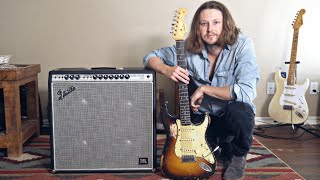
The HOLY GRAIL of Super Reverbs!
Matthew Scott
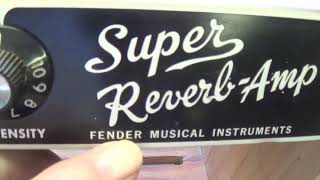
1966 Fender "Blackface" Super Reverb: In Storage for Almost 40 Years !!

Uncle Doug
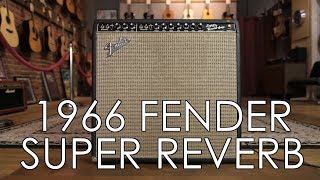
"Pick of the Day" - 1966 Fender Super Reverb

Emerald City Guitars
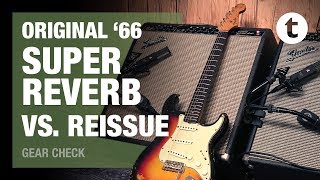
Fender 1966 Super Reverb vs Reissue | Can you hear the difference? | Thomann

Thomann's Guitars & Basses
"Pick of the Day" - 1965 Fender Stratocaster and 1966 Super Reverb
Emerald City Guitars
1966 fender super reverb vs fender twin reverb reissue

CA P
Fender Vintage 1966 Super Reverb vs Fender Twin Reverb Reissue - John Mayer tones
CA P
"Pick of the Day" - 1967 Fender Telecaster and 1966 Super Reverb
Emerald City Guitars
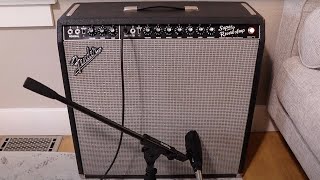
1966 Fender Blackface Super Reverb (ceramics vs alnico)

Alex Nauman
Reviews
PROS
-
Iconic vintage Fender sound with punchy bass and clear highs
-
Excellent pedal platform for versatile sound modification
-
Distinctive, ice-clean tones that cut through any mix
-
Durable performance history from the 60s to today
-
Ideal for a variety of music styles: surf, rock, pop
-
Vintage models in good condition offer unmatched sound quality
-
Naturally relic appearance appeals to vintage enthusiasts
-
Well-maintained models provide near-new performance and aesthetics
CONS
-
Requires maintenance, such as cap jobs, for optimal performance
-
Not suitable if seeking Marshall-style tones
Owner Insights
We analyzed real musician discussions from forums and Reddit to find what players love, question, and tweak about 1966 Fender Super Reverb.
Setup and maintenance
-
It's essential to replace the bias and filter caps, as original capacitors from the 1960s can leak or bulge, affecting amp performance.
Source
Mods and upgrades
Features and functionality
-
The amp begins to break up at around volume level 4, maintaining clean clarity before that point.
Source -
The "normal" inputs bypass the vibrato circuit, lacking a middle tone pot, but include a "bright" switch for tonal adjustment.
Source -
The Super Reverb has a tube rectifier, contributing to its characteristic sag when notes are played at high volumes, unlike the solid-state rectified Twin.
Source
Other
-
The original GE tubes and untouched wiring indicate the amp's preserved state, making it appealing for collectors.
Source
User experience
Use cases and applications
Comparisons
-
The Super Reverb's 4x10" setup is noted for its tighter low-end and more pronounced high-end compared to the Twin Reverb's 2x12" configuration.
Source
5.0 out of 5
Based on 1 Review and 2 Ratings

Artist usage
Add artist

This amp was loaned to and used by Derek Trucks whilst on tour as a member of Eric Clapton's band during 2006 and 2007. Trucks mostly played his Gibson SG on stage through a pair of blackface Super Reverbs side by side. This amp was set up as Trucks' main amp whilst his own amp was set next to it as the second amp.


Oz Noy lists all of his current gear, including this one on his website.


On Eric Clapton's 'One More Car, One More Rider' World Tour was this amp used by Andy Fairweather Low.


"I also use a 1966 Fender Super Reverb quite a bit for more chime. It sounds amazing with a vibrato pedal. I’ll use that amp with my ’67 Hagstrom 12-string for a very aggressive ’60s 12-string tone."


Genre Usage
Based on how artists on Equipboard use this gear, it is most commonly found in the following genres.
Used With
Based on how musicians on Equipboard use 1966 Fender Super Reverb, it is most commonly used with the following gear.


-s.webp?v=1784890997)


More Combo Guitar Amplifiers

$159.00 - $229.99
in Combo Guitar Amplifiers Rank

$699.00 - $1,025.42
in Combo Guitar Amplifiers Rank


-m.webp?v=1784934498)
$650.00 - $1,049.99
in Combo Guitar Amplifiers Rank


-m.webp?v=1784933942)
$1,669.99 - $2,199.99
in Combo Guitar Amplifiers Rank


$701.63 - $949.99
in Combo Guitar Amplifiers Rank


$325.00
in Combo Guitar Amplifiers Rank


$1,899.99 - $2,199.99
in Combo Guitar Amplifiers Rank

.png?v=1784940345)

$1,450.00 - $1,799.00
in Combo Guitar Amplifiers Rank


$670.00 - $769.99
in Combo Guitar Amplifiers Rank


-m.webp?v=1784891784)
$1,241.99 - $1,399.99
in Combo Guitar Amplifiers Rank


$600.00 - $1,999.99
in Combo Guitar Amplifiers Rank

$1,379.99 - $1,679.99
in Combo Guitar Amplifiers Rank


$348.88 - $729.99
in Combo Guitar Amplifiers Rank


$1,899.00 - $1,999.99
in Combo Guitar Amplifiers Rank
.jpeg?v=1784935806)

$949.00 - $1,799.99
in Combo Guitar Amplifiers Rank


$999.99 - $1,149.00
in Combo Guitar Amplifiers Rank


$1,439.82 - $1,649.00
in Combo Guitar Amplifiers Rank


$1,759.00 - $2,899.99
in Combo Guitar Amplifiers Rank


$210.00 - $399.99
in Combo Guitar Amplifiers Rank


$399.00 - $749.99
in Combo Guitar Amplifiers Rank


$800.00
in Combo Guitar Amplifiers Rank

-m.webp?v=1784934497)
$650.00 - $1,049.99
in Combo Guitar Amplifiers Rank


$1,199.00 - $2,299.99
in Combo Guitar Amplifiers Rank


$99.95 - $2,199.99
in Combo Guitar Amplifiers Rank


$450.00 - $1,149.00
in Combo Guitar Amplifiers Rank


-m.webp?v=1784934115)
$1,220.98 - $1,469.99
in Combo Guitar Amplifiers Rank


$350.00 - $1,259.99
in Combo Guitar Amplifiers Rank


$229.99 - $349.99
in Combo Guitar Amplifiers Rank


$1,901.59 - $2,651.58
in Combo Guitar Amplifiers Rank


$375.00 - $499.99
in Combo Guitar Amplifiers Rank


-m.webp?v=1784934492)
$90.00 - $129.99
in Combo Guitar Amplifiers Rank


$2,199.00 - $2,729.99
in Combo Guitar Amplifiers Rank


$3,599.00 - $3,989.99
in Combo Guitar Amplifiers Rank


$439.00 - $799.99
in Combo Guitar Amplifiers Rank


$399.00
in Combo Guitar Amplifiers Rank
.png?v=1784874534)


$279.10 - $1,049.99
in Combo Guitar Amplifiers Rank


-m.webp?v=1784905099)
$175.00
in Combo Guitar Amplifiers Rank

.png?v=1784889613)

$29.07 - $379.99
in Combo Guitar Amplifiers Rank


$650.00 - $1,049.99
in Combo Guitar Amplifiers Rank


Accessories & Related Items


Community setups


Similar


Gear Guides







Most Popular Brands
-
Added to Equipboard on by
 julianwolf2
GearIQ 13060
-


