-s.webp?v=1784214427)
-xl.webp?v=1784214427)
Pricing and availability
We compare 600+ stores and found this item at 1 store. Prices updated .
Store
Reviews
Price




Average Price: $2,218
High-end/Boutique
$100
$501+
Price Tier
Budget
Standard
High-end
* Product prices and availability are updated by Equipboard every 24hrs and are subject to change. Equipboard may receive compensation for purchases made at participating retailers linked on this site. This compensation does not affect what products or prices are displayed, or the order of prices listed. For more information, please refer to our affiliate disclosure.
Description
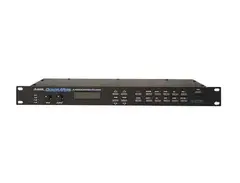
The Lexicon 300 Digital Effects System not only contains the finest sounds, as you've come to expect from Lexicon, it incorporates new functions that satisfy the needs of today's audio production.
Analog and Digital Audio Interfacing For both analog and digital use the 300 takes full advantage of recent advances in converter technology and combines them with flexible digital interfacing.The A/D and D/A converters use oversampling techniques to minimize low-level distortion and provide linear phase characteristics. 64x oversampling Delta/Sigma conversion is used in the A/Ds; 8x oversampling is used in the D/As. The result is sonic transparency without the artifacts normally encountered in conversion.
The digital I/O simplifies interfacing with both the AES/EBU professional and the EIAJ consumer format. XLR, RCA and Optical connectors are provided for both input and output. The digital inputs of the 300 will automatically accept and lock to any AES/EBU/SPDIF format; the 300's digital output format is user-selectable for feeding either professional or consumer equipment. This allows for format conversion as well as using the high quality A/D converters to feed digital recorders. Control of additional Channel Status information is provided as well.
Dual DSP Architecture The 300 utilizes two proprietary high performance DSP engines. The configuration of these engines can be determined by the end-user to suit a particular audio application. The Single Setup configuration unites both DSP engines. Two “split” configurations: Dual Mono and Cascade, allow each DSP engine to run a special program especially designed for “Split “ applications. The Single algorithms include: Random Hall, Random Ambience, Rich Plate, Stereo Pitch Shift, and Stereo Adjust. The “split" algorithms include: Dual Delays, Chamber, Mono Pitch Shift, Compressor, a special mastering dither program called PONS (Psychoacoustically Optimized Noise Shaping), and a small version of Stereo Adjust.
Comprehensive Effects Automation The 300 makes effects automation available in three different ways. If you use time code, the 300's Event List and Time Code Reader add a new twist to effects processing. Each entry in the 50-item list contains a time code value and a 300 effect preset/register number, allowing incoming time code to trigger setup and effect changes, as well as setup and effect parameter glides. For changing effects in music or changing rooms and environments for film and video, the 300's time code capability opens new avenues to all time code users. Dynamic MIDI® is included for real-time performance control and effects automation. All parameters in the 300 can be patched to most MIDI controllers, allowing full control from remote devices. For full MIDI automation all parameter changes can be recorded on any sequencer. For additional control, complete System Exclusive information is available.
Lexicon Sound Even with the best functions and features, the heart of any signal processor is its sound. The 300 contains the very best of the Lexicon Sound — with new refinements such as dynamic size parameters in the Reverb and Ambience algorithms. We have also included stereo and mono pitch shifting, delay effects, a mastering algorithm with precision level/balance controls and equalization. These sounds, combined with analog and digital audio I/O, time code based effect change, an internal LFO, and full MIDI automation result in a system that provides new creative options each time you use it. We’re confident you’ll find that the 300’s combination of state-of-the-art sound and extraordinary versatility is exactly what you’re looking for — to make sure you don’t miss out on anything, we’d like you to read this manual. It provides a thorough explanation of both front panel and MIDI operation, digital and analog interfacing, descriptions of the effects and presets, and complete MIDI Implementation data — all the information you need to access the full power of the 300.PRODUCT SPECIFICATIONSCONDITIONUsed / VintageCHANNELSDual-ChannelCHASSIS19-inch Rack-mountRACK SPACES2UDIGITAL I/OYesINPUT CONNECTORSAES/EBU XLR, Optical, S/PDIF Coaxial, Analog XLROUTPUT CONNECTORSAES/EBU XLR, Optical, S/PDIF Coaxial, Analog XLRMIDI CONNECTIONSIn, Out, Through
Product specs
| Brand | Lexicon |
| Model | 300 Digital Effects System |
| Finish | Black |
| Year | 1990s |
| Made In | United States |
| Categories | Multi-Effect |
FAQs
-
What type of effects can the Lexicon 300 produce?
-
The Lexicon 300 is known for its high-quality reverb, delay, and modulation effects, making it suitable for both studio and live sound applications.
-
Is the Lexicon 300 suitable for professional studio use?
-
Yes, the Lexicon 300 is designed for professional studio environments, offering pristine sound quality and versatile effects processing.
-
Can the Lexicon 300 be used with both analog and digital setups?
-
The Lexicon 300 features both analog and digital inputs and outputs, making it compatible with a wide range of studio configurations.
-
Does the Lexicon 300 require any special maintenance?
-
Like most rack-mounted gear, the Lexicon 300 should be kept in a clean, dust-free environment and may require occasional servicing to maintain optimal performance.
-
How does the Lexicon 300 compare to other Lexicon models?
-
The Lexicon 300 is renowned for its lush reverb algorithms, offering a more advanced and versatile effects palette compared to earlier models like the Lexicon 224.
Videos

100 Things I Do
Very Long Reverb Tails : VSC3 & Lexicon 300
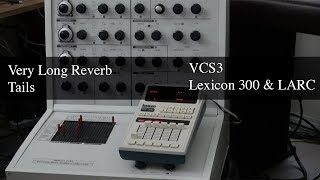
Very Long Reverb Tails : VSC3 & Lexicon 300
100 Things I Do
Reviews
Owner Insights
We analyzed real musician discussions from forums and Reddit to find what players love, question, and tweak about Lexicon 300.
Features and functionality
-
The Lexicon 300 offers AES IO and full parameter control, providing a highly configurable experience with vintage Lexicon reverb sounds across all settings.
Source -
The MX400 allows two independent processors to run up to two effects per engine, but single-engine reverbs sound superior to combined ones.
Source
Comparisons
-
Unlike the budget-focused MPX series, the Lexicon 300 offers a professional-grade experience, favored for both long lush reverbs and short, classy decays.
Source -
The TC Electronic M350 is recommended for its large hall reverb, making it a worthy alternative for live sound compared to other multi-effects processors.
Source
Build quality
-
The Lexicon 300 is noted for its robust construction, but buyers are advised to avoid the LARC model due to less physical durability.
Source
User experience
-
Owners appreciate the Lexicon 300 for its ability to deliver unique reverb effects that can't easily be replicated with modern digital alternatives or expensive pedals.
Source
Software and compatibility
-
The MX400's software editor is useful to avoid adjusting the ABC rotary encoder menu during sound checks.
Source
5.0 out of 5
Based on 2 Reviews and 3 Ratings

Realistic spaces - Musical converters - Audio fidelity all in one package!
The Lexicon 300 not only contains the finest sounds, as you’ve come to expect from Lexicon, it incorporates new functions that satisfy the needs of today’s audio production.
Analog and Digital Audio Interfacing For both analog and digital use the Lexicon 300 takes full advantage of recent advances in converter technology and combines them with flexible digital interfacing.
The A/D and D/A converters use oversampling techniques to minimize low-level distortion and provide linear phase characteristics. 64x oversampling Delta/Sigma conversion is used in the A/Ds; 8x oversampling is used in the D/As. The result is sonic transparency without the artifacts normally encountered in conversion.
The digital I/O simplifies interfacing with both the AES/EBU professional and the EIAJ consumer format. XLR, RCA and Optical connectors are provided for both input and output. The digital inputs of the Lexicon 300 will automatically accept and lock to any AES/EBU/SPDIF format; the Lexicon 300’s digital output format is user-selectable for feeding either professional or consumer equipment. This allows for format conversion as well as using the high quality A/D converters to feed digital recorders. Control of additional Channel Status information is provided as well.
Dual DSP Architecture The Lexicon 300 utilizes two proprietary high performance DSP engines. The configu- ration of these engines can be determined by the end-user to suit a particular audio application. The Single Setup configuration unites both DSP engines. Two “split” configurations: Dual Mono and Cascade, allow each DSP engine to run a special program especially designed for “Split “ applications. The Single algorithms include: Random Hall, Random Ambience, Rich Plate, Stereo Pitch Shift, and Stereo Adjust. The “split” algorithms include: Dual Delays, Chamber, Mono Pitch Shift, Compressor, a special mastering dither program called PONS (Psychoacoustically Optimized Noise Shaping), and a small version of Stereo Adjust.
Comprehensive Effects Automation The 300 makes effects automation available in three different ways. If you use time code, the 300’s Event List and Time Code Reader add a new twist to effects processing. Each entry in the 50-item list contains a time code value and a 300 effect preset/register number, allowing incoming time code to trigger setup and effect changes, as well as setup and effect parameter glides. For changing effects in music or changing rooms and environments for film and video, the Lexicon 300’s time code capability opens new avenues to all time code users.
Dynamic MIDI is included for real-time performance control and effects automation. All parameters in the Lexicon 300 can be patched to most MIDI controllers, allowing full control from remote devices. For full MIDI automation all parameter changes can be recorded on any sequencer. For additional control, complete System Exclusive information is available.
Lexicon Sound Even with the best functions and features, the heart of any signal processor is its sound. The 300 contains the very best of the Lexicon Sound – with new refinements such as dynamic size parameters in the Reverb and Ambience algorithms. We have also included stereo and mono pitch shifting, delay effects, a mastering algorithm with precision level/balance controls and equalization. These sounds, combined with analog and digital audio I/O, time code based effect change, an internal LFO, and full MIDI automation result in a system that provides new creative options each time you use it.

1277
Super Impressed!
This is a thing of beauty. The Random Hall algorithm kills me. Just beautiful. It's a character reverb, not realistic like a Bricasti. When you turn it on you feel like you're 5 years old, your mother has enveloped you in her arms and is lovingly stroking your forehead to comfort you. Everything is right in the world.
I can see where some folks would hate the menu system and using the 300L LARC version would be easier. I was able to dive in and start editing the reverbs without reading the manual so it's not a negative for me. Maybe if I find a lone LARC for sale one day I'll add it and mod the OS to be a 300L, but it's fine the way it is, just a little less immediate/hands on.

1277
I knew the main guy was a lexicon programmer, so it wouldn’t surprise me if there were more.
Artist usage
Add artist


In this video at 3:28 minutes see Lexicon 300 Digital Effects System


Taken from Arjen's website, Info tab: Studio Equipment.

In this video at 3:28 minutes see Lexicon 300 Digital Effects System


Genre Usage
Based on how artists on Equipboard use this gear, it is most commonly found in the following genres.
Used With
Based on how musicians on Equipboard use Lexicon 300, it is most commonly used with the following gear.


More Lexicon Effects Processors

$897.18 - $1,799.95
in Effects Processors Rank


$135.00
in Effects Processors Rank


$66.00
in Effects Processors Rank


in Effects Processors Rank


$3,411.45
in Effects Processors Rank


$1,799.99
in Effects Processors Rank


$227.28 - $1,016.83
in Effects Processors Rank


-m.webp?v=1784041363)


-m.webp?v=1784213935)


$1,096.55 - $4,120.00


Accessories & Related Items



Community setups


Similar


Most Popular Effects Processors
Most Popular Brands
-
Added to Equipboard on by
 clusterchord
GearIQ 220
-


