

Pricing and availability
We compare 600+ stores and found this item at 4 stores. Prices updated .
Store
Reviews
Price




Average Price: $3,650
High-end/Boutique
$100
$501+
Price Tier
Budget
Standard
High-end
Price History
Based on price data from 2 merchants for "Millennia Media STT-1 Origin". Prices shown reflect NEW condition. Tracking began Apr 2, 2026.
* Product prices and availability are updated by Equipboard every 24hrs and are subject to change. Equipboard may receive compensation for purchases made at participating retailers linked on this site. This compensation does not affect what products or prices are displayed, or the order of prices listed. For more information, please refer to our affiliate disclosure.
Description
The Millennia STT-1 Origin redefines the boundaries of studio recording with its revolutionary Twin Topology design, offering an unprecedented level of flexibility and control. This channel strip is your ticket to a world of crystal-clear audio and a playground for tone sculpting, catering to the discerning needs of both professional musicians and producers. With its dual-path architecture, the STT-1 Origin brings the best of both worlds—solid-state precision and the warm, nuanced character of tube technology.
Engineered for sonic purity, the STT-1 Origin features discrete signal paths for both tube and solid-state preamplifiers, ensuring that each retains its unique audio characteristics. This allows you to switch seamlessly between the two, adapting quickly to the demands of various sound sources. Whether you're capturing the rich bass tones or the intricate details of a vocal performance, the STT-1 Origin provides the tools to do so with finesse.
The unit is equipped with an exceptional array of processing options, including mastering-grade parametric equalizers and optical compressor/limiter paths, giving you over 130 optimized signal topologies to explore. Its bypassable input transformer and twin optical de-essers further expand your creative possibilities. Designed with meticulous attention to detail, the STT-1 Origin's robust build and premium components promise durability and reliability.
Key Features:
- Twin Topology design: Separate tube and solid-state signal paths
- Over 130 optimized signal topologies
- Twin microphone preamps: M-2B vacuum tube and HV-3 discrete solid state
- Twin NSEQ-2 mastering-grade parametric equalizers
- Three optical compressor/limiter paths
- Twin optical De-Esser paths
- Bypassable input transformer
- 1/4" vacuum tube DI input
- Hand machined aluminum knobs, illuminated IT&T pushbuttons
- True audio VU meter for output level or dynamics gain reduction
Product specs
| Preamp Type | Twin Topology: Tube and Solid State |
| Number of Channels | 1 |
| Phantom Power | +48v |
| EQ | Parametric |
| Compressor | Yes |
| Analog Inputs | 2 x XLR, 1 x 1/4" TRS (line), 1 x 1/4" (Hi-Z) |
| Analog Outputs | 3 x XLR, 1 x 1/4" |
| Frequency Response | 5Hz-300kHz |
| Rack Spaces | 2U |
| Height | 3.5" |
| Depth | 15.5" |
| Width | 19" |
| Weight | 25 lbs. |
FAQs
-
What is the benefit of the Twin Topology in the Millennia STT-1 Origin?
-
The Twin Topology allows you to switch between tube and solid-state circuits, providing versatile tonal options. This feature enables you to choose between the warmth of vacuum tubes and the clarity of solid-state paths, making it suitable for a variety of recording applications.
-
How does the parametric EQ function on the Millennia STT-1 Origin?
-
The Millennia STT-1 Origin features a parametric EQ with both tube and solid-state paths, allowing for precise tonal shaping. This flexibility is ideal for crafting the perfect sound in both live and studio settings.
-
Is the Millennia STT-1 Origin suitable for both vocals and instruments?
-
Yes, the Millennia STT-1 Origin is designed for versatility, making it suitable for recording both vocals and instruments. Its multiple input options and twin circuitry paths provide adaptability for various audio sources.
-
Does the Millennia STT-1 Origin have built-in compression?
-
Yes, the STT-1 Origin includes a twin opto-compressor with both tube and solid-state paths. This allows for dynamic control with the choice of vintage tube warmth or modern solid-state precision.
-
What connectivity options are available on the Millennia STT-1 Origin?
-
The STT-1 Origin offers extensive connectivity with 2 XLR inputs, a 1/4" TRS line input, a 1/4" Hi-Z input, 3 XLR outputs, and a 1/4" output, providing flexibility for various studio setups.
Videos

soundpurestudios
Mastering with a Pair of Millennia STT-1 Origin Channel Strips - Demo Video
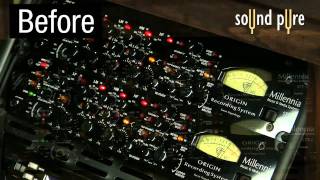
Mastering with a Pair of Millennia STT-1 Origin Channel Strips - Demo Video
soundpurestudios
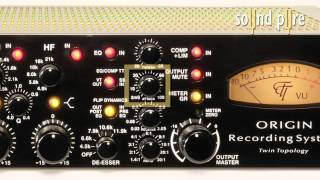
Millennia's STT-1 Origin Channel Strip Overiew Demonstration
soundpurestudios
NAMM 2024: Millennia Media STT-1 Origin

AudioTechnology Magazine
Reviews
PROS
-
Adds "mojo" to bass, vocals, and acoustic guitars
-
EQ section comparable to Pultec, enhancing musicality
-
Opto compressor delivers squishy, vibe-driven vocal compression
-
Improves vocal confidence and quality
-
Versatile: effective on full mixes and individual tracks
-
Warm, silky sound texture
-
Analog knobs provide nuanced control over sound
-
Can function without EQ for a unique sound profile
-
High-quality build with upgraded tubes
CONS
Owner Insights
We analyzed real musician discussions from forums and Reddit to find what players love, question, and tweak about Millennia Media STT-1 Origin.
Comparisons
-
The Millennia Media STT-1 Origin is recommended as an alternative to the Neve 33609 for those seeking a cleaner top end.
Source -
The Millennia Media STT-1 Origin is compared favorably against the Manley Massive Passive and the API 5500 for those seeking transparent sound without altering the natural tone.
Source -
The STT-1 Origin is frequently mentioned alongside high-end gear like the Neve 1073, indicating its strong reputation in offering desirable sound characteristics.
Source
Features and functionality
-
The STT-1 Origin is noted for its ability to provide a clean outboard signal, making it suitable for high-end clarity needs.
Source -
The Millennia Media STT-1 Origin is praised for its versatility and flexibility in different studio settings, often considered a "desert island" piece for its comprehensive capabilities.
Source -
The built-in EQ and compression options of the STT-1 Origin are valued for their transparency and precision, providing users with detailed control over their recordings.
Source
Use cases and applications
5.0 out of 5
Based on 0 Reviews and 1 Rating
Artist usage
Add artist

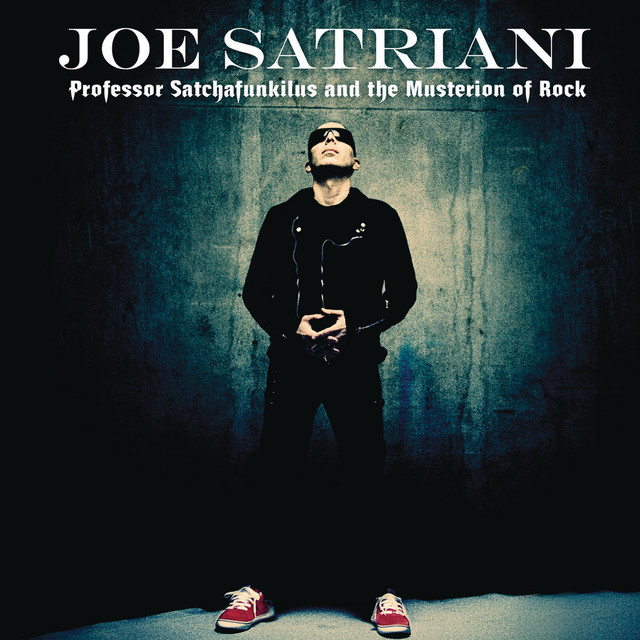
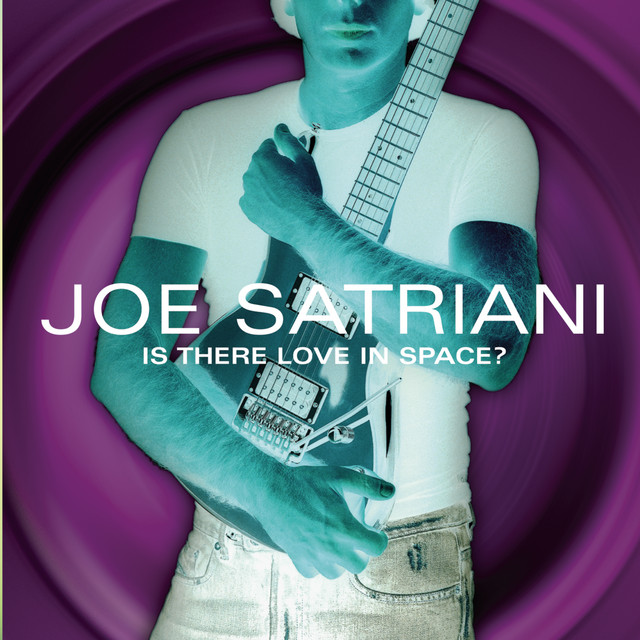
Used in Studio 21 for Is There Love in Space?, Professor Satchifunkilus and the Musterion of Rock and Black Swans and Wormhole Wizards (particularly for the intro of "Littleworth Lane"), as stated in Strange Beautiful Music: A Musical Memoir.
Is There Love in Space?
Before reuniting with John Cuniberti, Matt Bissonette, and Jeff Campitelli to record Is There Love in Space?, I started recording the new songs at Studio 21, my home studio, trying once again to break my own style down and rebuild it into something new. I was deeper into Pro Tools now and having much more success and fun with it. The new record would feature quite a bit of compositional variety, with lyrical-sounding melodies and more angular-sounding solos—and two vocal tracks!
At Studio 21, I was using a Korg Triton DAW keyboard, Universal Audio 1176 and LA-2A compressor/limiters, an Empirical Labs EL8S, old API EQs, the Millennia Media STT-1 mic pre, and Palmer speaker simulators. For guitar amps I had an interesting collection: Soldano, Mesa Boogie, Cornford, Vox, Wells, and several vintage Marshalls. Added to that group was my new Peavey JSX prototype head. Everything just started to sound better!
Professor Satchifunkilus and the Musterion of Rock
I was using an old Marshall SE100 as my main speaker simulator, which meant I was going guitar into amplifier into Marshall SE100 into Pro Tools directly, or through the STT-1 if I wanted to shape it with some EQ or optical compressor. Additionally, the SE100 has some really clever ways of simulating a microphone being right at the cone, at a slight angle, or at a big angle. I like using the 30- and 60-degree angles—off axis, they call it—and it worked pretty well. It really does sound like an amp being miked up by a 57, so that setup worked in my room. As far as guitars, I was using the Ibanez JS1200 and the JS1000 most of the time. What mattered more than the equipment by that point was that another two years had gone by where I continued getting more proficient at recording with Pro Tools in general.
Black Swans and Wormhole Wizards
With “Solitude,” I was thinking about how I often require time to be alone, much as my parents did, and I coupled that with my mother’s absence from her house once she passed. It was so profound, I couldn’t put it into words. I was working on a song called “Heartbeats” at my home studio one afternoon when the inspiration came. I was thinking “Heartbeats” needed some kind of introduction, but instead I started writing a piece that was much bigger. It was a song about my moments of solitude, and the lonely feeling in my mother’s house now that her spirit had moved on. It eventually found a home on the record right before “Littleworth Lane.” I played my JS1000 direct into my STT-1 for that recording.


Specified on the official Millennia artist page.
Neil Young, Redwood Digital (Origin, NSEQ, HV-3)


Exclusive gear from the private collection of Richard Z. Kruspe. Has been played live or in the studio with Rammstein and Emigrate. Every item comes with a certificate of authenticity, signed by Richard himself. Millennia STT-1 Origin Recording System, used by Richard Z. Kruspe of Rammstein & Emigrate in the studio. A signed document of authenticity is included.

Specified on the official Millennia artist page.
Steve Albini (Origin)

Specified on the official Millennia artist page.
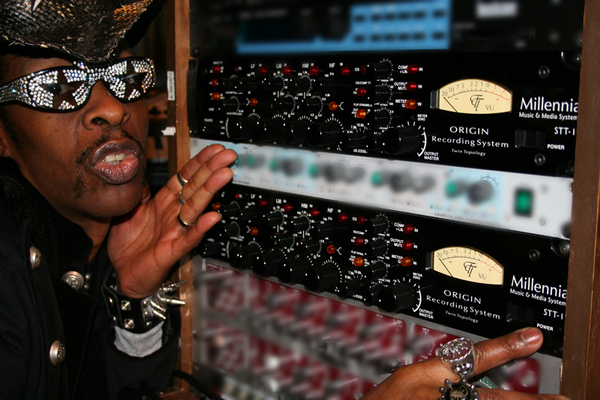
Bootsy Collins (stereo STT-1 bass rig) Pix of Bootsy Collins with Millennia STT-1s

Specified on the official Millennia artist page.
J.J. Cale (TD-1, STT-1)

Specified on the official Millennia artist page.
Christopher Walla, Death Cab for Cutie (16 ch HV-3, STT-1)

Specified on the official Millennia artist page.
The Wallflowers (Jakob Dylan, TD-1, Origins)


Timo Mass says: "We are using the SST-1 Origin Recording System for vocal recordings and also for fattening up synth sounds."

Specified on the official Millennia artist page.
Andrea Bocelli (40+ ch HV-3 & Origins, Live and Studio)

Album Usage
The Millennia Media STT-1 Origin has been featured on the following albums:

Genre Usage
Based on how artists on Equipboard use this gear, it is most commonly found in the following genres.
Used With
Based on how musicians on Equipboard use Millennia Media STT-1 Origin, it is most commonly used with the following gear.



-s.webp?v=1783894487)


More Millennia Media Effects Processors


$1,550.00
in Effects Processors Rank


-m.webp?v=1783868180)
$624.00
in Effects Processors Rank


$167.15
in Effects Processors Rank


$1,799.00
in Effects Processors Rank


$1,549.00
in Effects Processors Rank


$1,999.00
in Effects Processors Rank


$749.99 - $835.00
in Effects Processors Rank


$149.00
in Effects Processors Rank


$1,100.00
in Effects Processors Rank


$3,799.00 - $5,450.00
in Effects Processors Rank


-m.webp?v=1783894487)
$40.00 - $2,999.00
in Effects Processors Rank

$5,699.00 - $6,999.00
in Effects Processors Rank

.jpg?v=1783787052)

$1,153.00 - $2,635.00
in Effects Processors Rank


.jpg?v=1783784631)

$895.46 - $1,799.95
in Effects Processors Rank


$4,536.99 - $4,759.00
in Effects Processors Rank


$620.00
in Effects Processors Rank


$232.00
in Effects Processors Rank


$69.95
in Effects Processors Rank


$182.00 - $236.00
in Effects Processors Rank


-m.webp?v=1783782017)
$435.79
in Effects Processors Rank


$419.99 - $1,179.99
in Effects Processors Rank


$749.99 - $4,999.00
in Effects Processors Rank


-m.webp?v=1783868241)
$450.00 - $699.00
in Effects Processors Rank


$1,710.00
in Effects Processors Rank

$629.99 - $849.00
in Effects Processors Rank


$2,999.00 - $3,290.00
in Effects Processors Rank


$35.82 - $199.00
in Effects Processors Rank


$2,555.00 - $2,850.00
in Effects Processors Rank

-m.webp?v=1783868280)
$297.29 - $936.00
in Effects Processors Rank


$4,999.00 - $7,989.84
in Effects Processors Rank


$1,100.00
in Effects Processors Rank

.jpg?v=1783828863)


$125.00
in Effects Processors Rank


$1,343.19
in Effects Processors Rank


$165.00 - $599.99
in Effects Processors Rank


$363.00
in Effects Processors Rank


$66.00
in Effects Processors Rank


$225.00
in Effects Processors Rank


$499.00
in Effects Processors Rank


Accessories & Related Items


-s.webp?v=1783864828)


-s.webp?v=1783895081)






-s.webp?v=1783868157)


-s.webp?v=1783862159)


Community setups


Similar


Most Popular Effects Processors
Most Popular Brands
-
Added to Equipboard on by
 lesmaisondeux
GearIQ 3294
-


