


Pricing and availability
We compare 600+ stores and found this item at 9 stores. Prices updated .
Store
Reviews
Price









Average Price: $202
High-end/Boutique
$75
$201+
Price Tier
Budget
Standard
High-end
Price History
Based on price data from 6 merchants for "Shure Beta 52A". Prices shown reflect NEW condition. Tracking began Apr 2, 2026.
* Product prices and availability are updated by Equipboard every 24hrs and are subject to change. Equipboard may receive compensation for purchases made at participating retailers linked on this site. This compensation does not affect what products or prices are displayed, or the order of prices listed. For more information, please refer to our affiliate disclosure.
Description
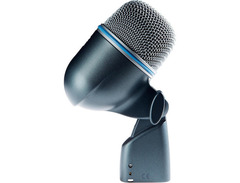
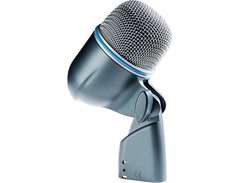
Introducing the Shure Beta 52A, a dynamic microphone designed for power and precision. Optimized for maximum bass drum punch, this microphone accommodates low-frequency instruments with ease, maintaining studio-quality sound even at extreme volumes. Its super-cardioid characteristics offer superior isolation of the sound source and high feedback, significantly reducing background noise.
The Shure Beta 52A is not only high-performance but also practical. Its adjustable stand adapter with an integrated XLR connector simplifies positioning, especially when used inside the bass drum. The adapter ensures the microphone remains secure, standing up to hard shocks and strong vibrations. Its basket, crafted from hardened steel, offers robust protection against the rigors of stage performance.
Key Features:
- Super-cardioid, maximizing sound source isolation and feedback
- Optimized frequency response for bass drum kick and low-frequency instrument pickup
- High output power with minimal background noise
- Adjustable stand adapter with integrated XLR connector for easy installation
- Hardened steel basket for enhanced durability
- Air-sprung vibration absorber for sound and vibration protection
- Neodymium magnet for high output levels
- Low sensitivity against varying connection impedances
- Transmission range: 20 - 10,000 Hz
- Maximum sound pressure: 174 dB SPL (up to 1 kHz, calculated)
- Output Impedance: 45 Ohm
- Noise Sensitivity: -64 dBV / Pa (0.63 mV)
Owner's manual
Shure Beta 52A User ManualProduct specs
| Microphone Type | Dynamic |
| Polar Pattern | Supercardioid |
| Frequency Response | 20Hz-10kHz |
| Max SPL | 174db SPL |
| Output Impedance | 150 ohms |
| Connector | XLR |
| Weight | 1.33 lbs. |
FAQs
-
What is the primary use of the Shure Beta 52A microphone?
-
The Shure Beta 52A is primarily used for kick drums and other bass instruments, offering a tailored frequency response that enhances attack and punch in low-frequency sounds.
-
Does the Shure Beta 52A require phantom power to operate?
-
No, the Shure Beta 52A is a dynamic microphone and does not require phantom power.
-
What is the polar pattern of the Shure Beta 52A, and how does it affect sound pickup?
-
The Shure Beta 52A has a supercardioid polar pattern, which provides excellent isolation from unwanted ambient sound, making it ideal for live and studio settings.
-
Is the Shure Beta 52A suitable for live performances?
-
Yes, the Shure Beta 52A is well-suited for live performances due to its high maximum SPL of 174dB and robust build, ensuring clear sound reproduction even at high volumes.
-
How does the Shure Beta 52A connect to audio equipment?
-
The Shure Beta 52A connects to audio equipment using an XLR connector, providing a secure and reliable connection for both live and studio applications.
Videos

Drummer’s Den Production
Kick Mic Shootout // Shure Beta 52a vs Shure Beta 91a vs sE V-Kick vs Audix D6 // No Talking
Kick Mic Shootout // Shure Beta 52a vs Shure Beta 91a vs sE V-Kick vs Audix D6 // No Talking
Drummer’s Den Production
Kick Mic Shootout: AKG D112 vs Shure Beta 52A

Schinbein Drum Co
Kick Mic Shootout: Shure Beta 52a vs Sennheiser e902

Andrew Rooney Drums
Shure PG52 vs Beta 52A Bass Drum Microphone comparison. Artist PREFACE 14" 16" 20" cymbal set C214

SIC MIC
Audix D6 vs Shure Beta 52A

One Drummer Drumming
Shure Beta 52A Kick Drum Mic Review - Practical Edition

Consordini
Kick Drum Mic Shootout | AKG D112, Shure Beta 52a, Audix D6

Donal Bowens
Kick Drum Mic Shootout - Shure Beta 52A vs Sennheiser e602 MKII

hachewie
AKG D112 vs Shure Beta 52a sound test

Timmy G
Shure Beta 52A Kick Drum Microphone - Review and Demo

Jack Picks
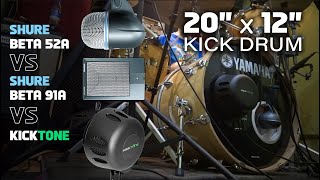
KickTone vs Shure Beta 52A vs 91A on 20" x 12" Kick Drum. Morton Microphone Systems MMS Sub Mic Bass
SIC MIC
Shure Beta 52A Overview - American Musical Supply

American Musical Supply
Reviews
PROS
-
Superior sound quality with enhanced low and high ends
-
Ideal for recording bass amps, kick drums, and electric bass cabinets
-
Durable and robust construction, built to last
-
Provides full, thick sounds without coloration for easier mixing
-
Versatile, suitable for various music styles and recording needs
-
Nearly ready for mix signal with minimal need for EQ or compression
-
Highly recommended by professionals as an industry standard
-
Offers great clean bass tones with a natural touch
-
Effectively isolates the desired sound, minimizing outside noise
-
Affordable, offering great value for a wide range of applications
CONS
-
Heavier than expected, putting more load on mic stands
-
May require heavy EQ to shape the sound to your liking
-
Some users found it initially challenging to achieve the desired punch with kick drums
-
Might need additional mics for a fuller sound in high-end frequencies depending on music style
Owner Insights
We analyzed real musician discussions from forums and Reddit to find what players love, question, and tweak about Shure Beta 52A.
Comparisons
-
The Shure Beta 52A is frequently compared to the Sennheiser E902, with some users preferring the latter for its clearer, more natural sound on kick drums.
Source -
The AKG D112 and RE20 are often favored over the Beta 52A for studio kick drum recording due to their more versatile tonal qualities.
Source -
Owners often find the Beta 52A delivers a consistent sound, described as more "punchy," in comparison to the AKG D112's need for EQ adjustments.
Source
Use cases and applications
User experience
-
It's noted that the Beta 52A requires specific placement to sound lively, such as positioning it 2/3 into the kick hole aimed at the drum shell.
Source -
Some users find the Beta 52A to be "boxy" in the 200-500 Hz range and prefer mics that naturally sound more mix-ready.
Source -
Users suspect cold joints or oxidized contacts in the signal path may cause irregularities, with phantom power possibly clearing oxidation temporarily.
Source -
Owners note that while the Beta 52A consistently delivers its signature sound, some mics like the D6 or RE20 require more EQ but offer different tonal flexibility.
Source
Features and functionality
-
The Beta 52A is praised for handling high SPL well, making it reliable for heavy bass and kick drum applications without distortion.
Source -
Applying phantom power sometimes temporarily resolves signal issues, though it's not required for Beta 52A operation, suggesting an underlying electrical contact problem.
Source -
The Beta 52A is praised for its low-end emphasis and tight sound, making it less neutral than the D112 but suitable for modern rock styles without excessive EQ.
Source
Setup and maintenance
-
It's noted that issues with low signal on the Beta 52A can stem from a malfunctioning Behringer S16 stage box, causing intermittent input problems.
Source -
A right-angle XLR cable is recommended for the AKG D112 due to its difficult positioning requirements, a consideration for users comparing it with the Beta 52A.
Source
Critic Reviews
5.0 out of 5
Based on 8 Reviews and 42 Ratings

343
Best on kick and bass heavy sources.
Unprocessed has a dull sub focus response but also picks up enough information for drastic EQ shaping. It's kind of magic on a kick. If you're gonna have one kick mic this should be it.
76
Great kick drum microphone.
I love this microphone for the bass drum. I have used it in the mic port and also putting it inside the bass drum and pointing it towards the beater head. I position it off center and pointed a little about the bass drum beater.

208
Great Microphone
I use this microphone for all drum and bass recordings that I do. Gives great clean bass tones and a natrual touch to the sound.

Great mic
I use this a lot, essential for tracking a kit and killer for picking up bass out of an amp.

works great
i love this mic. it picks up my bass perfectly and tends not to pick up outside noise


800
Artist usage
Add artist

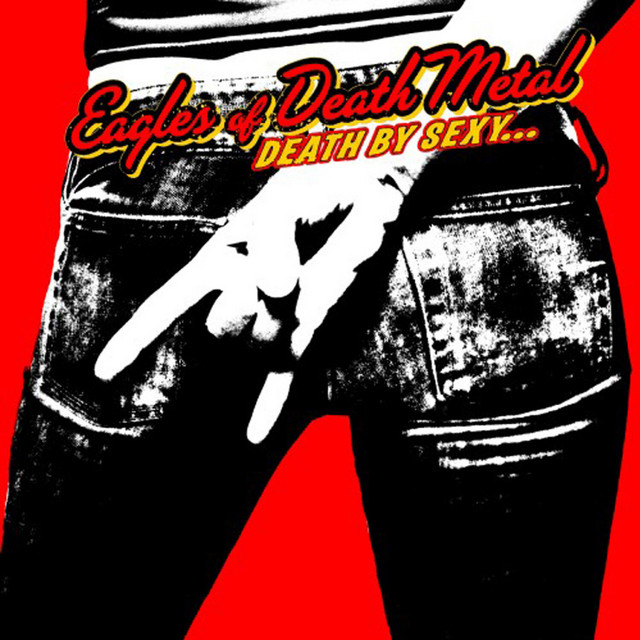
This mic was used for recording drum kicks as well as the bass cabinet on Eagles of Death Metal's album Death by Sexy, according to Shure's official website.


In an image from Timeout, Mac DeMarco is pictured by his drum kit, where a Shure Beta 52A microphone is visibly used to mic the kick drum.


Owl City uses the Beta 52A in Sky Harbor Studio.

Used for Huang's bass drum, as can be seen in this March 20, 2019 video.


Mentioned by FOH engineer Dan Green in this AudioTechnology magazine article about the Ghost Stories Tour.
AT: Are you able to borrow much from the studio mic cabinet on tour?
DG: A few bits and bobs, but the demands are very, very different on the road. In the studio, your mic choice can be all about character. But in a live context you’re after mics that reproduce transients very clearly — you need that front-end bite on most sounds to cut through. I mean, you’re not going to stick up a Neumann U67 three metres above and behind the drumkit as a ‘room’ mic, for obvious reasons. So I tend to use more dynamic microphones: SM57s on guitars and a Shure Beta52 on the bass drum. And also the Earthworks microphones which are really good for drums. They’re my close mics and from there I get a sense of depth using reverb and other plug-ins.
AT: You clearly like what the Earthworks mics are doing.
DG: They cut through really nicely and they preserve a lot of the front-end attack of the sound, which is something you really need. In stadiums and arenas you can’t really have a sound that has too much decay because the room has so much decay anyway — ‘sharp’ and ‘short’ wins every time.
Given that the original Beta 52 was discontinued at this point in history, one can assume that it is the reissue 52A.


The website presents some of the equipment used by Elton John on his magnificent live performances.
Second page, 7th paragraph states that Shure Beta 52 is used on kick.

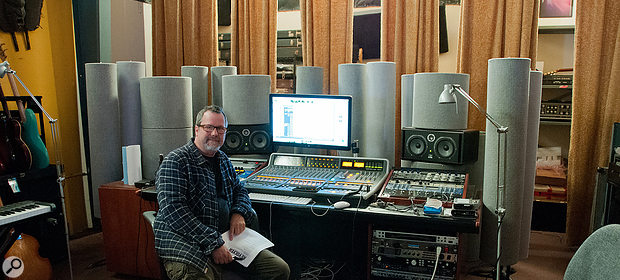
“Starting with the kick drum, I used an AKG D30, but then I sometimes used the Shure Beta 52A and I used a [Yamaha SKRM-100] Subkick too at times. On the snare drum, I had a [Shure] SM57 or sometimes the Telefunken M80. It’s a little more of an open kind of mic. With the toms, I used a [Shure] Beta 52A on the floor tom, which I really liked. It’s really got a lot of bottom and some top but it’s got a thing where it kind of glues things together with the rest of the kit when you bring it in. It worked really well with the overhead mics. I also used a [Shure] SM7 on one tom. For overhead mics, of all things, I used these [MXA] MCA SP1s. "


Used on the bass drum for some of Only by the Night, particularly on "Sex on Fire", as stated by producer Jacques King in this December 2008 Sound on Sound interview.
"The microphones on the drums changed a lot from song to song. On the kick it could be a Beta 52, sometimes it was an RE20, or a [Sennheiser] 421, or a [Neumann] FET 47, or an NS10 [i.e. the driver from a Yamaha NS10 monitor used as a mic], or a combination. It depends on what I was trying to achieve. The mics were usually in front of the kick, or just barely inside. On one song, 'Crawl', I did put a U87 on the batter side of the kick, next to the pedal, which gives a very attack-orientated sound, with a Led Zeppelin-ish quality. On 'Sex On Fire' I used the 52, FET 47 and NS10 on the kick. I had all the kick mics on a Neve BCM10 sidecar and I'd submix them and run them through a GML EQ and then to one track on the tape. I didn't want to keep them separate. It was a matter of get the sound, make the decision, and move on.
"The snare was recorded in similar fashion to the kick. I had the option of various mics that all went through a BCM10 and were submixed, through a GML 580 EQ, then a [Empirical Labs] Distressor, just to give it some control and make sure the snare hit the tape at the right level. On the track sheet a transformerless Shure SM57 is indicated. It was something I read about a couple of years ago, and it's a really good thing. It gives a nicer, more transparent, usable sound that requires less EQ. You lose a bit of level, but typically the things that you record with a 57 are so loud anyway that it doesn't matter. So I asked the people at Blackbird to take the transformer out of one of their 57s and they were gracious enough to do this. After recording I also ran the snare and kick through an Eventide DSP4000 on a Big Muff setting, and recorded that in Pro Tools during the transfer to the computer.
"The toms were recorded with three Josephson E22S mics, which are a modern type, and they're fantastic on the toms. There were a rack of toms plus two floor toms, and I also submixed the tom mics via a BCM10 to a stereo pair, panning the toms as was appropriate for the track. The overheads were recorded with a Telefunken Elam 251 going through a Neve 1081 preamp/EQ, then an Urei 1176, and then to tape. The ride cymbal and the hi-hat were recorded with RCA77 ribbon mics, the ones that David Letterman used to have on his show. When I use a mono overhead, as I did in this case, I like using ribbons, for a good stereo spread between ride and cymbal.
"I had half a dozen mics up for the room sound: a Neumann U67, M49, AKG C12, RCA 44, and/or a Royer SF12 in the echo chamber. I'd leave the door to the echo chamber open so the sound of the drums was happening in there as well, and I'd move the room mics around to get the sound that I wanted for a particular song. I would then bus different combinations to the two room tracks, depending on the song. In the case of 'Sex On Fire' I used a U67 and an RCA 44 for Room 1, and an RCA4 4 and an SF12 for Room 2. Some of these mics went through Neve preamps, some through an old RCA tube mic that Blackbird customised. The combination of room mics was bussed through a Fairchild 670."


Chris Adler of Lamb of God utilizes the Shure Beta 52A dynamic microphone, known for its optimized low-frequency bass response and high SPL handling, particularly suited for kick drums. This information is highlighted on Shure's official artist page for Lamb of God.


The Shure website states he uses these to mic up low-frequency bass punch and high-power SPL-handling.


Album Usage
The Shure Beta 52A has been featured on the following albums:
Genre Usage
Based on how artists on Equipboard use this gear, it is most commonly found in the following genres.
Used With
Based on how musicians on Equipboard use Shure Beta 52A, it is most commonly used with the following gear.


-s.webp?v=1783150223)


Community setups
Show yours






Similar
Add recommendation1 alternative for Shure Beta 52A, curated by the Equipboard community.

More Shure Dynamic Microphones

$94.98 - $219.99
in Dynamic Microphones Rank


$348.50 - $439.00
in Dynamic Microphones Rank


-m.webp?v=1783150223)
$94.98 - $111.00
in Dynamic Microphones Rank


$148.22 - $189.00
in Dynamic Microphones Rank

$132.48 - $169.00
in Dynamic Microphones Rank


$122.00 - $149.00
in Dynamic Microphones Rank


$238.00 - $279.00
in Dynamic Microphones Rank


$59.99 - $669.99
in Dynamic Microphones Rank


$162.00 - $189.00
in Dynamic Microphones Rank


$155.00 - $339.00
in Dynamic Microphones Rank

.jpeg?v=1783111363)


$100.99 - $164.00
in Dynamic Microphones Rank


$100.99 - $146.06
in Dynamic Microphones Rank


$356.50 - $439.00
in Dynamic Microphones Rank


$155.00 - $219.00
in Dynamic Microphones Rank


-m.webp?v=1783090837)
$58.00 - $69.99
in Dynamic Microphones Rank


$59.16 - $119.00
in Dynamic Microphones Rank


$100.99 - $199.00
in Dynamic Microphones Rank


$169.00 - $199.00
in Dynamic Microphones Rank


$494.00 - $549.00
in Dynamic Microphones Rank


$136.00 - $149.00
in Dynamic Microphones Rank


$100.99 - $164.00
in Dynamic Microphones Rank


$15.00 - $69.00
in Dynamic Microphones Rank


$279.00
in Dynamic Microphones Rank


$278.00 - $322.00
in Dynamic Microphones Rank


$565.00 - $769.00
in Dynamic Microphones Rank


$190.00 - $319.99
in Dynamic Microphones Rank


$65.53 - $82.00
in Dynamic Microphones Rank

$80.00
in Dynamic Microphones Rank


$47.00 - $99.99
in Dynamic Microphones Rank


$293.79 - $344.00
in Dynamic Microphones Rank


$88.00 - $115.00
in Dynamic Microphones Rank


$439.00 - $677.00


Accessories & Related Items


-s.webp?v=1783143867)


Gear Guides








Most Popular Dynamic Microphones
Most Popular Brands


