
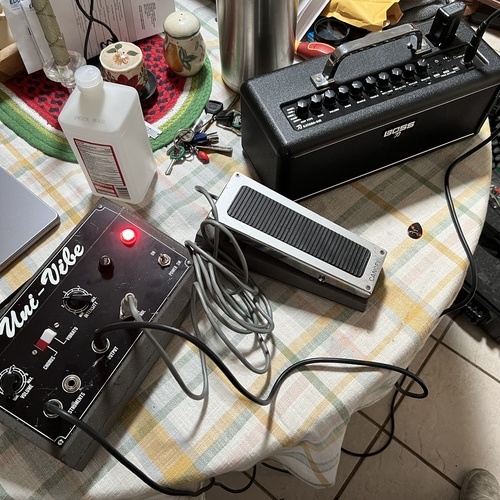

Pricing and availability
We compare 600+ stores and found this item at 1 store. Prices updated .
Store
Reviews
Price




Average Price: $1,299
High-end/Boutique
$100
$251+
Price Tier
Budget
Standard
High-end
* Product prices and availability are updated by Equipboard every 24hrs and are subject to change. Equipboard may receive compensation for purchases made at participating retailers linked on this site. This compensation does not affect what products or prices are displayed, or the order of prices listed. For more information, please refer to our affiliate disclosure.
Description
Step into the world of iconic soundscapes with the Univox U-915 Uni-Vibe, a legendary pedal known for its ability to replicate the swirling, hypnotic tones that defined the psychedelic era. Originally designed to emulate the rotating speaker effect, the U-915 has become a staple in the arsenal of musicians seeking that quintessential vintage, pulsating modulation. Its unique circuitry captures the essence of the '60s and '70s, delivering a warm, analog texture that both enriches and elevates your guitar's voice.
The Univox U-915 Uni-Vibe is lauded for its simplicity and versatility, offering a rich array of sounds from subtle shimmers to deep, throbbing waves. Its intuitive controls make it easy to dial in your preferred level of intensity, whether you're looking to add a touch of character to a clean tone or push the boundaries with more experimental sounds. The pedal's durable construction ensures it can withstand the rigors of live performance while maintaining the integrity of your sound.
Whether you're a seasoned professional or an adventurous hobbyist, the Univox U-915 Uni-Vibe promises to deliver an authentic sonic experience, making it an essential tool for creative expression.
Key Features:
- Classic rotary and vibrato effects
- Authentic analog circuitry
- Intuitive control layout for easy sound customization
- Durable construction suitable for live performance
- Renowned for its vintage modulation tones
Product specs
| Brand | Shin-Ei |
| Model | Uni-Vibe |
| Year | 1960s |
| Made In | Japan |
| Categories | Chorus and Vibrato, Phaser Pedals |
FAQs
-
What type of effects does the Univox U-915 Uni-Vibe pedal create?
-
The Univox U-915 Uni-Vibe pedal is designed to produce chorus and vibrato effects, offering a unique phase-shifting sound that emulates the classic swirling tones of a rotary speaker.
-
Is the Univox U-915 Uni-Vibe suitable for use with both guitar and organ?
-
Yes, the Univox U-915 Uni-Vibe is versatile and can be used with both electric guitars and organs, making it a popular choice for musicians seeking to add depth and modulation to their sound.
-
How does the Univox U-915 Uni-Vibe differ from a standard chorus pedal?
-
Unlike a standard chorus pedal, the Univox U-915 Uni-Vibe provides a unique phase-shifting effect that combines elements of both chorus and vibrato, creating a distinctively rich and swirling sound.
-
Can the Univox U-915 Uni-Vibe be used before or after overdrive pedals?
-
The Univox U-915 Uni-Vibe can be placed before overdrive pedals for a thick, saturated sound reminiscent of classic rock solos, or after for a more subtle modulation effect.
-
What is the origin of the Univox U-915 Uni-Vibe pedal?
-
The Univox U-915 Uni-Vibe was made in Japan during the 1960s, and it is renowned for its classic modulation effects that have been favored by iconic guitarists.
Videos

yes9310
1969 Shin-ei Uni-Vibe Demo #2
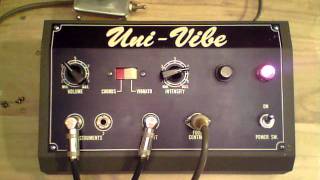
1969 Shin-ei Uni-Vibe Demo #2
yes9310
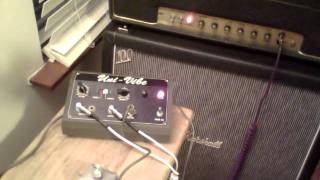
1969 Shin-ei Uni-Vibe original Trower Hendrix #1
yes9310

【English Sub】【Part 2】HONEY製とShin-ei/Companion製Uni-Vibeのサウンドを比較する【デジマート DEEPER’S VIEW 〜経験と考察〜 Vol.11】

digimartnet
Listen to Jimi Hendrix's actual Uni Vibe, The Jimi Hendrix sound, 1952 Les Paul, Strad, Schroeder Am

AVshowreports
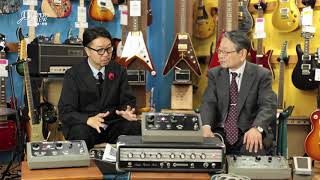
【English Sub】【前編/Part.1】開発者・三枝文夫が語るUni-Vibe【デジマート DEEPER’S VIEW 〜経験と考察〜 Vol.10】
digimartnet
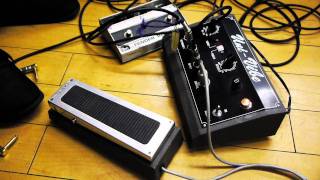
Univox Uni-Vibe

effeken
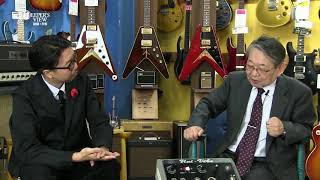
【English Sub】【後編/Part.2】開発者・三枝文夫が語るUni-Vibe【デジマート DEEPER’S VIEW 〜経験と考察〜 Vol.10】
digimartnet
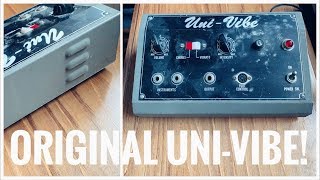
Original Uni-Vibe with Original BURST and PRE-CBS!

Johan Segeborn
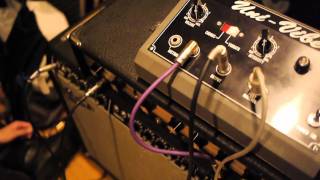
Companion Amplifier Psychedelic Machine / UNIVOX Uni-Vibe
effeken
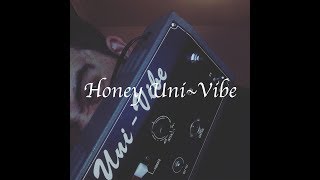
Vintage Honey Uni~Vibe (pre ShinEi)

The Riff w Nik Sevigny
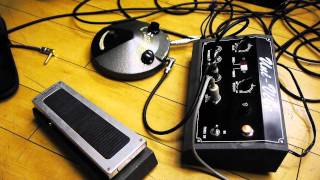
Dallas Arbiter Fuzz Face / Univox Uni-Vibe
effeken
Reviews
Owner Insights
We analyzed real musician discussions from forums and Reddit to find what players love, question, and tweak about Univox U-915 Uni-Vibe.
Comparisons
Use cases and applications
User experience
Features and functionality
-
The JHS Unicorn's tap tempo feature is highlighted as a valuable addition for achieving rhythmically synced effects.
Source
4.5 out of 5
Based on 0 Reviews and 10 Ratings
Artist usage
Add artist
Anastasio also plays through a Univox Univibe. "The Univibe, of course is made famous by Jimi Hendrix," the Phish guitarist said at (6:30). "I got it specifically because I spent 8 million hours listening to Band of Gypsies when I was growing up."


Mentioned in the July 1980 issue of Guitar Player, with the details summarized in this March 13, 2009 Gibson article.
Guitar Player, July 1980, "British Rock Guitar Veteran"
On Twice Removed From Yesterday, a song such as "I Can't Wait Much Longer" has a slow, pulsing, ethereal sound. How did you get that?
That's just a Univox Univibe [vibrato/phase unit] that does it. On the LP I also had an Arbiter Fuzz Face and a 100-watt Marshall with two 4x10s which had a very good sound until they got knocked out, and then they went very dead. Whereas with the 12s, the more you play them the better they sound.
(...) In "Victims Of The Fury," how many times do you change pickups and volumes?
I began with the Univibe on. Then when the solo begins it's just straight guitar, no effect, middle pickup full on, amp turned way up. Halfway through I switch on the wah-wah and finish off with it. You see, to me the wah-wah's a climatic thing. That's the way I use it onstage. When you want to take the song to its highest point, that's where the effect comes in. It makes the guitar sound more aggressive.
On that song, did you go direct or mike your amp?
I always mike the amps. In fact, for most of the album we had a mike about three feet away from the amp and another about five feet away, both looking down at a floor speaker. I wasn't using a stack, just one head and one cabinet. With the mikes positioned that way, we also captured ambience - using the floor as a reflective thing. But on my next album I'd like to get involved more with close miking. I've never done it before, so rather than trying to achieve an ambient sound, I want to see what I'd get from just one close mike.
What other amps and effects have you employed on your solo albums?
With exception of In City Dreams, there are only one or two tracks on all of my albums that haven't got Marshalls on them. For In City Dreams I used an amp that my electronics guy Mike built for me in the studio: a quarter amp, which would get the same sound as a Marshall. We had a lot of different effects on that album, too. For instance, that's when I started using an [Electro-Harmonix] Electric Mistress flanger. To get say, that rocket ship sound, I ran a Fender Blender [distortion/harmonics/sustain device] through the Mistress. On Caravan To Midnight I used effects in stereo. In other words, I had the output split - one to one amp, one to the other. On each split were different effects, like two or three going to one side, and two or three going to the other, so that you had the same guitar with a different sound coming from both amps. Also around this time Mike and I redid my pedalboard.
Were you having problems with it?
Well, we talked a hell of a lot about what we wanted to get out of the sounds - you know, what the problems were. The problem basically was that if you used more than a couple of pedals, you lost sound: The more pedals connected up, the more the signal died. So he invented a system whereby that wouldn't happen. Now I can have a hundred pedals in the line and there will be no difference at all. Before I got Mike, who also doctors my amps, I used to use a noise gate at the front; that didn't affect the power, but, unfortunately, I lost a lot of top end.
[Ed. Note: Robin preferred to keep the operational details of his pedalboard and amplifiers confidential.]
From your left to right, how is your pedalboard currently set up?
The first effect is a preamp that Mike built, which is on all the time. The second is another volume booster, a Dan Armstrong Red Ranger, which I use for even greater sustain. Third is my Tycobrahe wah-wah. The fourth is the Fender Blender. The fifth is the Univibe, and the sixth is a Mu-tron II. The seventh and eighth are Mistresses with different settings; the one on the left gives a double-tracking effect, while the one on the right provides more of a flanged sound. But I think I've come to a halt as far as effects go. I mean, I can just barely handle what I've got now. There's so much stuff going on that if you just started mixing them there would be a limitless number of combinations you could get.
From your pedalboard, where does the signal go?
Into a splitter box, then to my amps. I don't use a mixing board or anything when I'm live because I like to be very much in control of what's going on. Especially concerning dynamics, that's so much a part of my music that I wouldn't feel happy if someone else were controlling it. I like to be creating the sound.
Gibson, "How To Get That Robin Trower Sound", March 13, 2009
Trower’s hottest rig blasted his array of Strats through a pair of 100-watt Marshall JMP-100 Mark II heads feeding two 1960-B 4x12 cabs and had an impressive effects chain on the floor: custom preamp and clean booster pedals, a Dan Armstrong Red Ranger treble booster, a Tychobrahe wah-wah, an octave/fuzz Fender Blender, a Uni-Vibe chorus/vibrato, Mutron II phase shifter, and two Electro-Harmonix Electric Mistresses.


Gary Rossington utilized a Univox U-915 Uni-Vibe pedal on the track "Call Me the Breeze." This information is corroborated by a document titled "Lynyrd Skynyrd - Gary Rossington Equipment History," authored by Sean and available on Scribd.


Used on the LP 'Stage Fright' in 1970, as well as 'Moondog Matinee' and 'Cahoots'. Also used on 'It Makes No Difference on 'Southern Cross'
Songs he used it on include- 'Time to Kill', Life is a Carnival, Third Man Theme and the Rumor
Him and George Harrison also used the Uni-Vibe on Ringo's self-titled LP in 1973 on 'Sail Away Raymond'


Bruce Kulick has been confirmed to use the Uni-Vibe, as evidenced by his Instagram post where he lists the "Vintage Uni-Vibe" among other gear he used during a session.

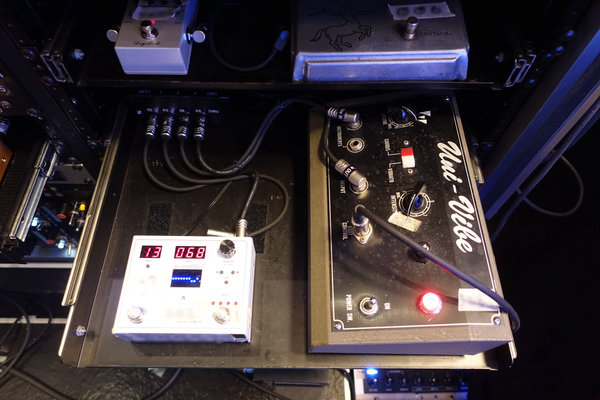
Shown within multiple rack setup designed by FREE THE TONE for 2020's MMXX Arena Tour as per photos published on FREE THE TONE's blog (2020). Also seen in use during 2016's series of concerts and 2018's L'ArChristmas concerts. Footswitch to control speed of the vibe effect is on stage.

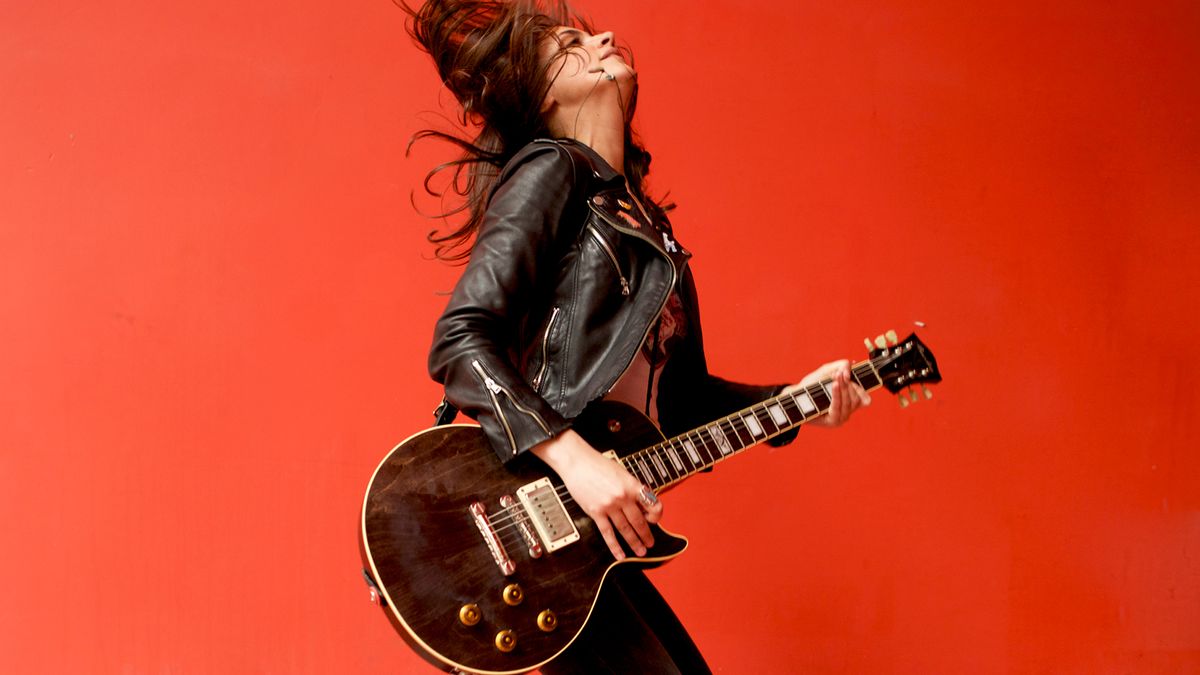
Other than that, it was my J. Rockett Archer, my SoloDallas Storm, and a delay by Anasounds, and I got to use a few vintage pedals from the studio. I don’t remember exactly the name. But I got to use a vintage Uni-Vibe and an MXR Octave Fuzz.

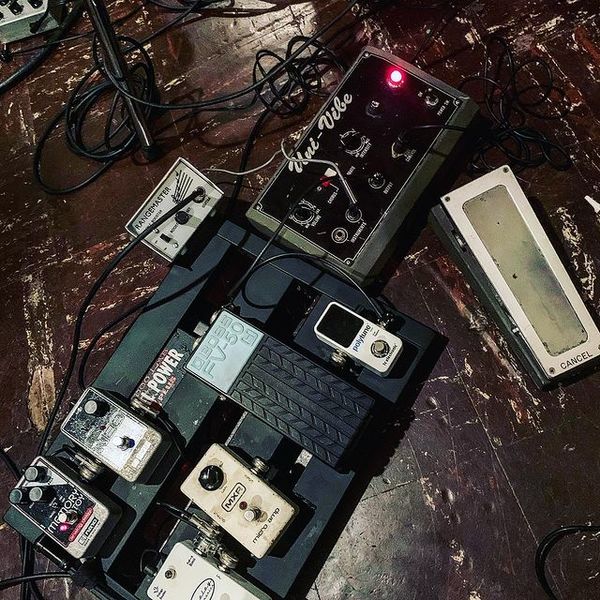
In this Instagram post, Jeramy shows his Univox Uni-Vibe.


Bill mentions he used this in the Be Bop Deluxe period in the 70s. "The modulation effect on 'Sister Seagull,' (if I remember back so many long ago years,) was a Univibe and an MXR Phase 90."

In this article it is said that Bingham got a vintage Uni-Vibe by his friend John Gries.

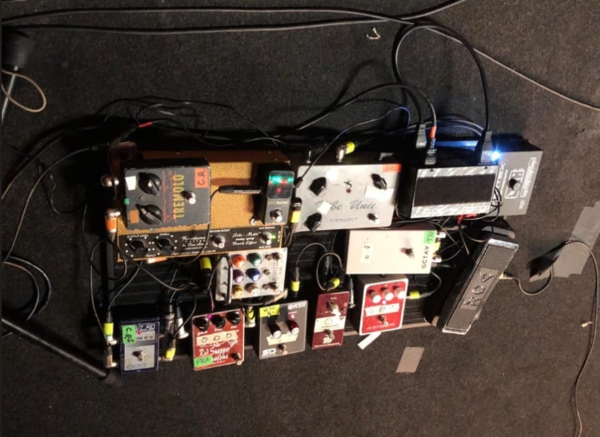
En esta foto podemos ver la pedalera de Carlos Raya en la gira con Tarque y la Asociación del Riff (2018).

Album Usage
The Univox U-915 Uni-Vibe has been featured on the following albums:
Chris King Robinson
Chris King Robinson (2021)
Band Of Gypsys (50th Anniversary / Live At Fillmore East, 1970)
Jimi Hendrix (2020)
Songs For Groovy Children: The Fillmore East Concerts
Jimi Hendrix (2019)
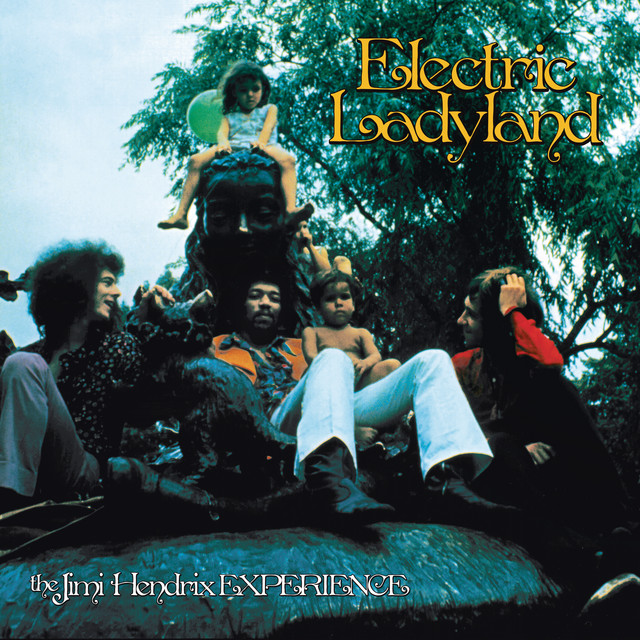
Electric Ladyland - 50th Anniversary Deluxe Edition
Jimi Hendrix (2018)
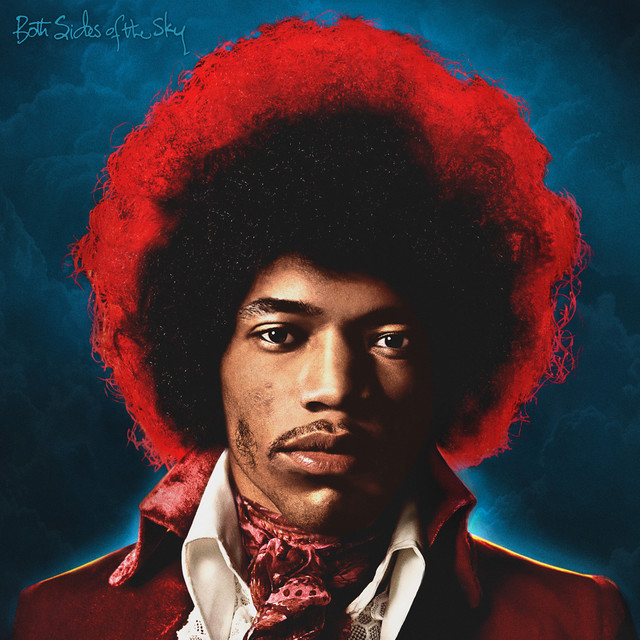
Both Sides of the Sky
Jimi Hendrix (2018)
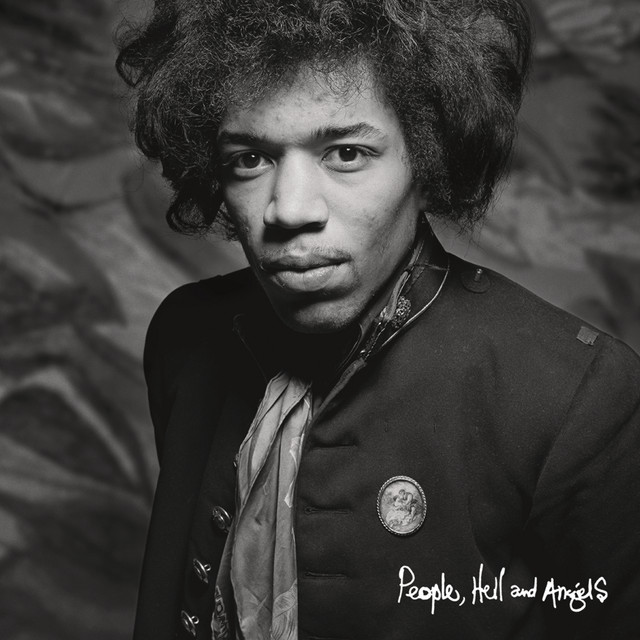
People, Hell & Angels
Jimi Hendrix (2013)
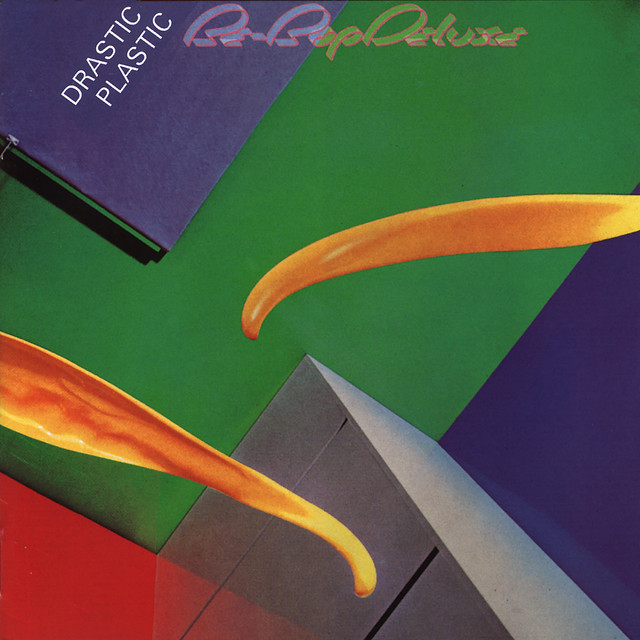
Drastic Plastic
Be Bop Deluxe (2004)
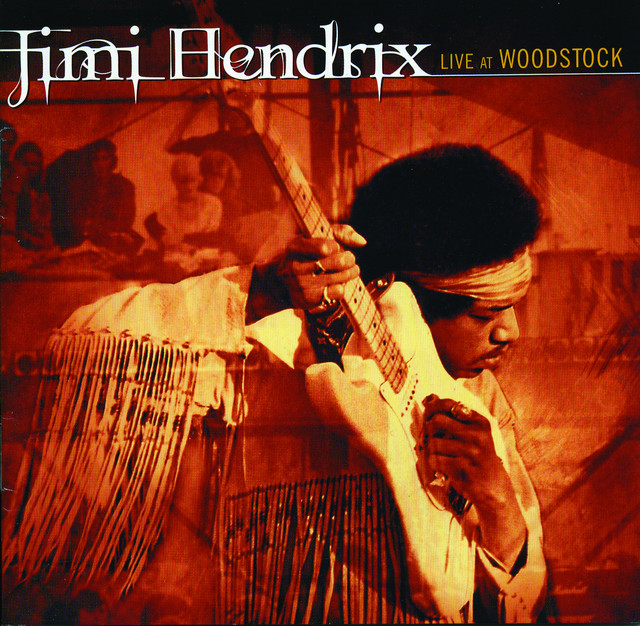
Live at Woodstock
Jimi Hendrix (1999)
There Is Nothing Left To Lose
Foo Fighters (1999)
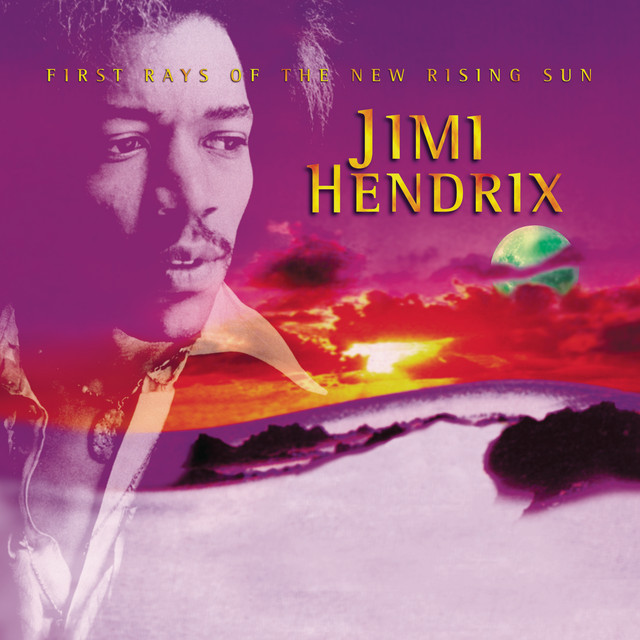
First Rays Of The New Rising Sun
Jimi Hendrix (1997)
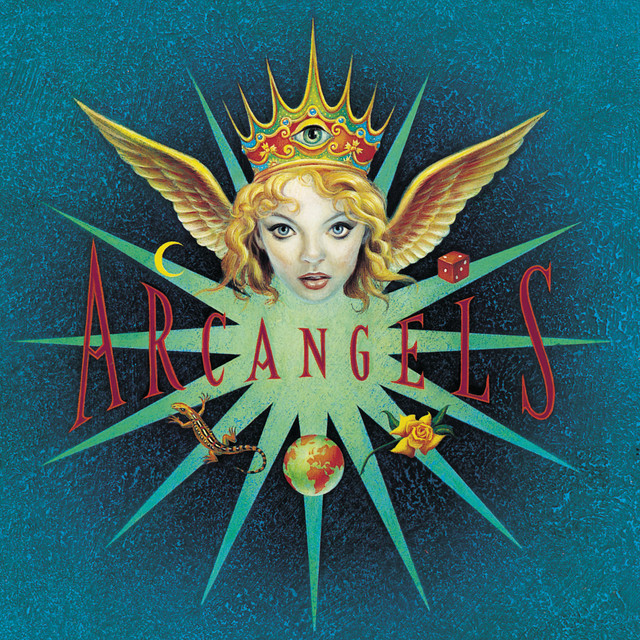
Arc Angels
Arc Angels (1992)
George Harrison
George Harrison (1979)
The Dark Side of the Moon
Pink Floyd (1973)
Obscured by Clouds
Pink Floyd (1972)
The Cry of Love
Jimi Hendrix (1971)
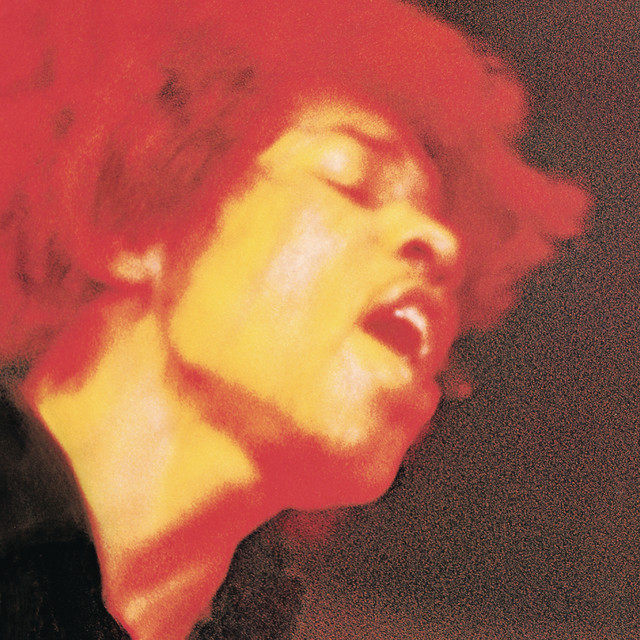
Electric Ladyland
Jimi Hendrix (1968)
Genre Usage
Based on how artists on Equipboard use this gear, it is most commonly found in the following genres.
Used With
Based on how musicians on Equipboard use Univox U-915 Uni-Vibe, it is most commonly used with the following gear.
-s.webp?v=1783402242)


-s.webp?v=1783402634)

-s.webp?v=1783407621)


Community setups
Show yours
Similar
Add recommendation39 alternative and related items for Univox U-915 Uni-Vibe, curated by the Equipboard community.

$49.00 - $228.13
An ultra affordable Uni-Vibe clone, with a true photocell circuit.


$122.00 - $165.10
One of the most affordable photo cell based Vibe pedals on the market, with both Chorus and Vibrato modes.

$220.00 - $349.00
A multi function Hendrix inspired pedal, the now discontinued Monterey includes a Uni-Vibe with expression capabilities.

$272.00 - $329.00
Modern Uni-Vibe replica, takes both the Base-unit and the Speed-controler pedal of the original, and combines them into a single, compact, Cry Baby Wah pedal housing.

$135.00 - $299.00
Josh said in his livestream titled “Making Gear for the Beach Boys” he modeled it after the original Uni-vibe from Japan.
More Univox Univibe & Rotary Effects Pedals
$272.00 - $329.00
in Univibe & Rotary Effects Pedals Rank


$299.00 - $352.00
in Univibe & Rotary Effects Pedals Rank


$139.00 - $159.99
in Univibe & Rotary Effects Pedals Rank


$183.21 - $221.00
in Univibe & Rotary Effects Pedals Rank


$239.99 - $288.00
in Univibe & Rotary Effects Pedals Rank


$81.20 - $189.98
in Univibe & Rotary Effects Pedals Rank


$127.00 - $145.00
in Univibe & Rotary Effects Pedals Rank


$209.14
in Univibe & Rotary Effects Pedals Rank


$500.35
in Univibe & Rotary Effects Pedals Rank


$110.00
in Univibe & Rotary Effects Pedals Rank


$160.00
in Univibe & Rotary Effects Pedals Rank


$364.00 - $399.00
in Univibe & Rotary Effects Pedals Rank


$477.00 - $549.00
in Univibe & Rotary Effects Pedals Rank


$199.99 - $239.99
in Univibe & Rotary Effects Pedals Rank
.png?v=1783381873)


$269.00
in Univibe & Rotary Effects Pedals Rank

.png?v=1783402367)

$328.39
in Univibe & Rotary Effects Pedals Rank


$299.00 - $333.00
in Univibe & Rotary Effects Pedals Rank


$175.00 - $219.00
in Univibe & Rotary Effects Pedals Rank
.png?v=1783270151)


$257.53 - $399.00
in Univibe & Rotary Effects Pedals Rank


$71.00
in Univibe & Rotary Effects Pedals Rank


$199.00 - $219.00
in Univibe & Rotary Effects Pedals Rank


$409.00
in Univibe & Rotary Effects Pedals Rank


$309.52
in Univibe & Rotary Effects Pedals Rank


$205.00 - $272.10
in Univibe & Rotary Effects Pedals Rank
.png?v=1783382065)


$398.29
in Univibe & Rotary Effects Pedals Rank


$122.00 - $165.10
in Univibe & Rotary Effects Pedals Rank


$249.99 - $333.00
in Univibe & Rotary Effects Pedals Rank


$299.99
in Univibe & Rotary Effects Pedals Rank


$179.99
in Univibe & Rotary Effects Pedals Rank


$49.00 - $228.13
in Univibe & Rotary Effects Pedals Rank


$109.99 - $217.70
in Univibe & Rotary Effects Pedals Rank


in Univibe & Rotary Effects Pedals Rank


$299.00 - $333.00
in Univibe & Rotary Effects Pedals Rank

$115.00
in Univibe & Rotary Effects Pedals Rank
.jpg?v=1783381777)


$99.00
in Univibe & Rotary Effects Pedals Rank


$525.82
in Univibe & Rotary Effects Pedals Rank


$656.78
in Univibe & Rotary Effects Pedals Rank


Accessories & Related Items

Gear Guides





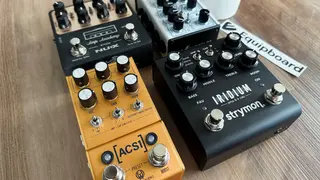
Most Popular Univibe & Rotary Effects Pedals
Most Popular Brands
-
Added to Equipboard on by
 equipboard
Gear IQ 4934
-


