


Pricing and availability
We compare 600+ stores and found this item at 1 store. Prices updated .
Store
Reviews
Price




Average Price: $238
Standard/Professional
$100
$501+
Price Tier
Budget
Standard
High-end
* Product prices and availability are updated by Equipboard every 24hrs and are subject to change. Equipboard may receive compensation for purchases made at participating retailers linked on this site. This compensation does not affect what products or prices are displayed, or the order of prices listed. For more information, please refer to our affiliate disclosure.
Description
Discover the DBX 160X, a legendary staple in the world of audio dynamics. Renowned for its seamless blend of precision and simplicity, this compressor/limiter is a must-have for any serious musician or audio engineer. The DBX 160X's robust design and intuitive controls make it an essential tool for crafting the perfect sound in both studio and live settings.
With its intelligent metering system, the DBX 160X provides real-time insight into your audio dynamics, offering a quick visual cue about gain reduction and levels. Whether you're a seasoned studio operator, a broadcast professional, or a passionate musician, this unit delivers the reliable performance you demand. Its streamlined rack-mount design ensures that it fits snugly into any setup, while its user-friendly interface invites both newcomers and veterans to experience the art of compression at its finest.
From subtle to extreme compression effects, the DBX 160X offers versatile control that enhances the sonic quality of vocals, instruments, and full mixes. Experience the clarity and power that only a tried-and-true legend can offer, and elevate your sound with this quintessential piece of gear.
Key Features:
- Classic compressor/limiter known for reliability and precision
- Intelligent metering system for real-time gain reduction and level monitoring
- Slimline rack-mount design for easy integration into any setup
- User-friendly interface suitable for both beginners and professionals
- Versatile control for a wide range of compression effects
Product specs
| Brand | dbx |
| Model | 160X Compressor / Limiter |
| Finish | Black |
| Year | 2000s |
| Categories | Compressors and Limiters |
FAQs
-
What are the primary applications of the DBX 160X compressor?
-
The DBX 160X is widely used for controlling dynamics on drums, vocals, and bass in both studio and live settings. Its ability to add punch and clarity makes it a favorite for achieving a tight, polished sound.
-
How does the DBX 160X differ from the DBX 160XT?
-
The primary difference between the DBX 160X and 160XT is the addition of XLR inputs and outputs on the 160XT, offering more connectivity options. Both models share similar compression characteristics and controls.
-
Does the DBX 160X have balanced or unbalanced inputs?
-
The DBX 160X features both balanced and unbalanced inputs, providing flexibility for various studio setups and signal paths.
-
Is the DBX 160X suitable for live sound applications?
-
Yes, the DBX 160X is highly regarded for live sound due to its robust build and reliable performance in managing dynamics for vocals and instruments on stage.
-
What type of power supply does the DBX 160X require?
-
The DBX 160X operates on standard AC power and typically features a built-in power supply, making it easy to integrate into studio racks or live sound rigs.
Videos

Sunghyun Kim
Rack compressor compare.(dbx 1066, 160a, 160x)
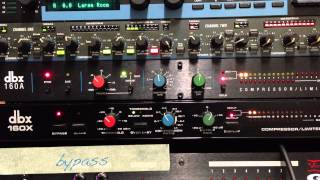
Rack compressor compare.(dbx 1066, 160a, 160x)
Sunghyun Kim
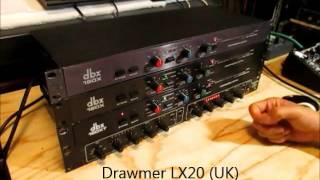
80's DBX / Drawmer Compressor Comparison Test

SUBTOKYOSHOP Music Gears
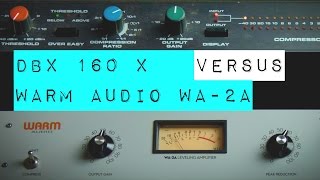
Warm Audio WA-2A VS DBX 160X Limiter Vocal Shootout

Creative Sound Lab

Why the DBX 160x Studio Compressor Is the Best Kept Secret of the Pros

The DIY Recording Studio
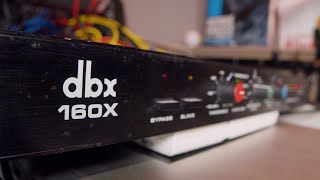
DBX 160X V SSL Channel Compressor

Make Believe Studios
Reviews
PROS
-
Sounds amazing on a variety of sources: drums, vocals, bass, acoustic guitar
-
Classic DBX 160 sound enhances percussive elements like kicks and snares
-
Versatile; great for tracking, mixing on individual channels, and parallel compression
-
Offers unique compression character not replicated by plugins
-
Features like terminal block solve ground or phase issues
-
Reliable workhorse with a long history of use in studios
-
Some models have modifications for cleaner output gain at higher levels
-
Preferred by many for vocal tracking and parallel drum bus processing
CONS
-
LED metering can be a downside for some users
-
Not ideal for "slap" bass or use on the 2-buss for certain users
-
Older units may require maintenance or repair
Owner Insights
We analyzed real musician discussions from forums and Reddit to find what players love, question, and tweak about DBX 160X.
Features and functionality
Use cases and applications
-
The 160X excels at adding punch to drums, especially inside kick and bottom snare, by highlighting transients without removing them.
Source -
The 160X is favored for parallel drum processing, enhancing clarity and impact in mixes.
Source -
It's particularly effective for rap vocals, providing an aggressive presence that suits the genre's in-your-face style.
Source -
Owners have successfully used the DBX 160X on bass and guitars, with some preferring it over drums despite its known effectiveness in that area.
Source
User experience
-
The LED meters on the 160X provide clear, comprehensive feedback, showing input, output, and gain reduction at a glance, unlike single VU meters.
Source -
Users suggest that DBX 160X capacitors can dry out after 5-10 years, affecting performance; recapping can restore functionality, though it's not guaranteed to fix all issues.
Source
Critic Reviews
5.0 out of 5
Based on 4 Reviews and 8 Ratings

41013
I took my 160a out of the main rack
I recently acquired a well loved 160x from a nearby hire company that's going under in the pandemic. I've never had an X. XT and A side by side until now.... though there have been few changes to the circuit apart from a switch to a 3rd party copy of the VCA over the in house 70s/8-0s version having tis 80s X side by side with the A I prefer the X. it actually sounds better to me in subtle ways. The time constants feel a little more music and non-linear.... the old fella is actually a more music device and I think it will see more action than my kick drums. I like this as much as my valley units and that's high praise. The reputaton of the 70s and 80s units is well founded and now i want a 160 or 165

26823
Glad you got your hands on one of these... even though I'm sorry to hear about that hire company.
The local dude I bought my S950 from had a bunch of 70s DBX in his hip hop-focused studio... like more than 6. That got me curious, started diving in, researching... but I've forgotten most of what I learned by now. What is THE vintage DBX to have for drums? The "big" 160 with the meters, the 160A? I'm so out of the loop.
41013
@pkennethk its sitting across thcraymer's kick drum in parallel today in overeasy mode with the ratio at -1:1 where it almost limits everything that's over threshold and then compresses the below threshold stuff less and less but also raises the overall vca output for those hits. The new ones can do that but it actually does a better job of it which sounds less musical then how the X does it.
The X produces a really 90s sound on drums for exampleand sounds like indy rock and hardcore punk on everything else. With an aggressive expander gate like a dynamite of aphex 610 out front it has that SSL 4k dynamics sound since those dynamics are dbx can VCAs and the fast mode time constants are the same as the 160x in overeasy. So the 90s hip hop sound is very 160x to my ears. The 160vu and 161 have a different grab that'sless level dependent, no overeasy (soft knee) mode. Peak only. Very 70s/80s to my ear with a really distinct pop at the beginning of percussive sounds like drums, bass guitar and anything plucked or struck. The 162 stereo unit is somewhere inbetween, it's meant to be a stereo 160 but it has it's own vibe that sounds more like an X and it doesn't require a kit to rack... but the 160x is the first one with overeasy. Its also predrilled for a jensen output transformer if you want balanced outs. A lot of guys swear by those 3 VU equipped models but I like the soft knee overeasy mode because I use dbx units more for transient shaping than heavy gain control. For level control the humble RNC kills it. The 163 is also cool. Its overeasy only and has instrument level ins and outs for use as a live effect or as a DI solution.
All the above mentioned are good. No other dbx sounds legitimately good on any source to me. The 1066 stereo is tolerable and can be good. Otherwise get an alesis. The 3630 and 3632 are basically the same as the 166 and 266 stereo units. The dbx versions are more consistent unit to unit than the 3630. The 3632 is about the same. On all 4 if those you need to ship the awful gate out if circuit, even when the gate is bypassed its detector circuit eats tone.
41013
@pkennethk sorry for all that. I just got typing. In VCA compressors from the golden age of hip hop I also highly recommend the valley stuff. The 410 mono unit is good, the 610 stereo is amazing and the dynamite is a swiss army knife that can do smash and grab compressing and limiting, super fast gating and ducking with a handy attenuation control not to mention the best expansion ever that can really put a point on stick and beater attacks, great for electronic drums that lack that snap. The symetrix compressors with metal power switches and blue faced ashly stuff are also killer, cheap and plentiful. Symetrix stuff uses valley VCAs and ashly uses old dbx blackmer cans. Both styles of vca have a sound and when you get one going correctly itll transport you back to that era. Early automation systems and 80s consoles with dynamics were loaded with these VCAs. You're really used to hearing them allover hiphop that was mixed on SSLs, MCIs and harrisons...
26823
@jimmarchi1 thanks for the 411. What I'm hearing is: "there are a few older models that have some merit, the rest are budget-focused trash, but as with all compressors, there is no single model that is great on everything". As for me personally, I still need a few more years of practice with dynamics processing before I could justify some vintage-item purchases. I'm currently at the "when would an LA2A be better than an 1176?" stage of dynamics-processing infancy.
41013
@pkennethk that's easy. An 1176 has very fast time constants and 5 ratios if you count 'all buttons in'. It has a lot if heft from the transformers and a lit if headroom input abs output due to high voltage discrete transistor support circuitry but the fet that does the actual gain control can become gritty. If you want fast compression or a gritty snappy medium speed reduction fir percussion it's a good choice if you want to crush something without sucking the low end out of it then its good at that. The output electronics add a nice sheen to vocals when turned up. There are a lot if bad wsts to set it up for a given source and getting it to cooperate with only desirable artifacts takes listening. I hear the 1176 and emulations abused more than i hear it applied with subtlety and care these days.
An LA2A uses what is essentially a primitive proprietary vactrol for gain reduction and is otherwise tube based. It's really glossy but the classic T4b optical circuit is really sluggish. The ratio and time constants are program dependent and governed by the lightbulb and photo receptor in the T4b. It's a classic for crooning vocals or anything legato in nature that just needs a little evening out rather than quick peak control or adjustable envelope shaping to poke through on the beat. It does what it does and that's it but one of the things it does is add richness to everything it touches. In a busy mix its typically more of a tone compressor because it's a blunt instrument that shapes sounds one way and one way only. Its utterly worthless as a peak limiter, huge transients pass right through before the gain control catches up. If I bought another clone it would be an Acme opticom which has a 3 speed version of the T4b opto-attenuator switchable from the front panel making it exponentially more useful than a stock la2a. A stock la2a is mostly goid for vocals, sometimes daisy chained in front if an la2a. It's useful for mono bowed strings too actually too. When it works it really works. Its seldom the first thing I reach for.
26823
Thanks for the full technical lowdown, Jim. That's been my impression thus far: 1176 is the prototypical FET compressor, meaning as snappy as analog electronics can provide. More broadly useful than an LA2A, which seems to really only be used for sweetening/coloration these days, especially on vocals. That said, I don't have a good sense, yet, of "oh, this is a situation in which an LA2A might improve things".

136
Mine is the "XT" version, modded by Revive Audio...
...and it rocks! Probably my favorite vocal tracking compressor, and also a real threat on the parallel drum bus. The only thing I don't like it on is "slap" bass, and maybe 2-buss. The mod basically spiffed up the sound (flatter response, less midrange hollowness) and also made the output gain noticeably cleaner, or at least better-sounding at higher levels.

141
105
A real nice vintage compressor to have
I use this compressor as a tool for my drums, to give the drumsounds a edge. I not use it on my master.
Artist usage
Add artist
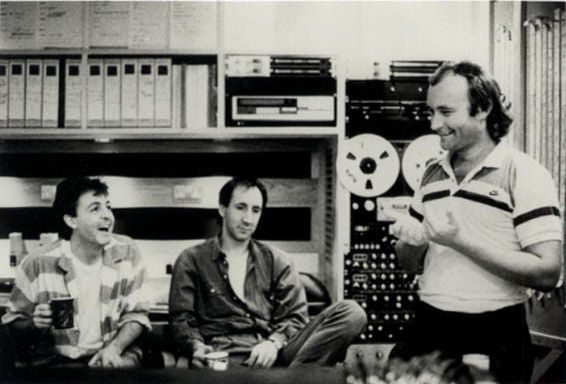
the DBX 160X/XT Compressor/Limiter is listed in this blog


Rack de Cerati en Soda (1987). Entre el Hush II-B y el SDE-1000 podemos ver al DBX 160X.


The unit is shown in the Star Licks instructional video.


In the video Kotzen shows the dbx 160X in his studio


In the "Equipment Notes" section on Robin Guthrie's official website, the DBX 160X is mentioned as part of his gear setup.


In the video titled "Inside Real World Studios, Peter Gabriel's recording sanctuary" by The Vinyl Factory, a pair of DBX 160X compressors/limiters is visibly installed in a rack in Peter Gabriel's studio at the 0:21 mark, confirming their use in his recording setup.


In the video titled "How ‘Eastside’ Accidentally Turned Benny Blanco Into a Superstar" by Daniel Wall on YouTube, Benny Blanco's effect rack is shown, which includes the DBX 160X.

.jpg)



For outboard compression, he owns an 1176, a Distressor, a pair of old dbx 160s, an ADL 1000, an old Vocal Stressor from Audio Design Recordings, a pair of 160Xs and a Joe Meek. “I take any combination there, depending upon what I'm tracking,” he says. “It gets me into Pro Tools, and then I have an Apogee as well that I use as my main head.”


This article states that Jerry's studio includes a dbx 160x.


Genre Usage
Based on how artists on Equipboard use this gear, it is most commonly found in the following genres.
Used With
Based on how musicians on Equipboard use DBX 160X, it is most commonly used with the following gear.

-s.webp?v=1782399440)


-s.webp?v=1782425139)
-s.webp?v=1782399431)

-s.webp?v=1782226803)

Community setups
Show yours.jpeg?v=1782387177)
Similar
Add recommendation8 alternative and related items for DBX 160X, curated by the Equipboard community.
-m.webp?v=1782399467)
$332.09

$170.00

$119.99

$89.99

$17.96 - $153.00
More dbx Effects Processors
$332.09
in Effects Processors Rank


$60.00
in Effects Processors Rank


$161.75 - $339.00
in Effects Processors Rank


$121.25 - $280.00
in Effects Processors Rank


$239.00 - $365.00
in Effects Processors Rank


-m.webp?v=1782140410)
$75.00 - $585.00
in Effects Processors Rank


$633.00
in Effects Processors Rank


-m.webp?v=1782399574)


$1,100.00


$1,495.00


$206.45 - $380.00


Accessories & Related Items


Most Popular Effects Processors
Most Popular Brands
-
Added to Equipboard on by
 kkolar
Gear IQ 120856
-


