


Pricing and availability
We compare 600+ stores and found this item at 1 store. Prices updated .
Store
Reviews
Price




Average Price: $839
High-end/Boutique
$300
$801+
Price Tier
Budget
Standard
High-end
* Product prices and availability are updated by Equipboard every 24hrs and are subject to change. Equipboard may receive compensation for purchases made at participating retailers linked on this site. This compensation does not affect what products or prices are displayed, or the order of prices listed. For more information, please refer to our affiliate disclosure.
Description
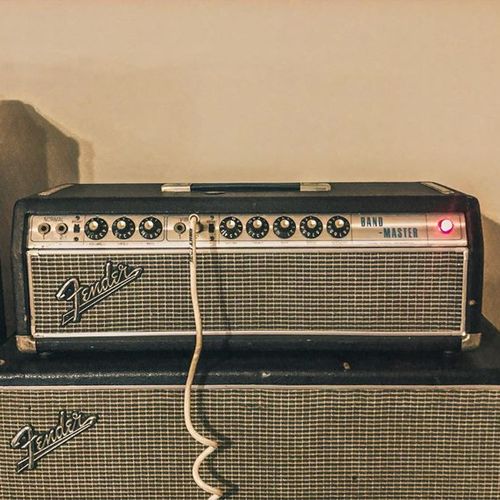
The Fender Bandmaster guitar amplifier head is a classic choice for musicians seeking vintage-inspired tone with modern reliability. Known for its distinctive all-tube circuitry, the Bandmaster delivers a warm, rich sound that has been favored by guitarists for decades. This amp head is particularly revered for its versatility, capable of producing everything from clean, shimmering highs to gritty, overdriven lows, making it suitable for a wide range of musical styles. The Fender Bandmaster is a perfect companion for both studio sessions and live performances, offering a robust and consistent output that musicians can depend on.
Equipped with both Normal and Bright channels, the Bandmaster allows you to tailor your sound to your precise needs, whether you're looking to highlight intricate picking patterns or powerful, sustained chords. The inclusion of a tube-driven spring reverb adds another layer of depth to your sound, providing a lush, ambient quality that enhances your playing. With its rugged construction and classic design, the Fender Bandmaster not only sounds great but also stands up to the demands of the road.
Key Features:
- All-tube circuitry for authentic, warm tone
- Two channels: Normal and Bright
- Tube-driven spring reverb for added depth
- Classic Fender design with robust construction
- Suitable for both studio and live performance settings
Product specs
| Brand | Fender |
| Model | Bandmaster 40-Watt 2-Channel Guitar Amp Head |
| Finish | Black Panel |
| Year | 1963 - 1967 |
| Made In | United States |
| Categories | Guitar Heads |
| Color Family | Black |
| Direct Output | No Direct Output |
| Electronics | Tube |
| Impedance | 4 ohms |
| Model Family | Fender Bandmaster |
| Model Sub-Family | Fender Bandmaster Amp |
| Number of Channels | 2 Channels |
| Number of Inputs | 4 Inputs |
| Output Power (Watts) | 40 |
| Power Tube Type | 6L6 |
| Reverb | None |
| Series | Fender Vintage Black Panel Amps |
FAQs
-
What are the tonal characteristics of the Fender 'Black Panel' Bandmaster?
-
The Fender 'Black Panel' Bandmaster is known for its clean, articulate tones with a warm midrange. It delivers a classic Fender sound, ideal for genres like blues, rock, and surf music.
-
Is the Fender 'Black Panel' Bandmaster suitable for live performances?
-
Yes, with its 40-watt output, the Fender 'Black Panel' Bandmaster is powerful enough for small to medium-sized venues, delivering clear tones that cut through a band mix.
-
Does the Fender 'Black Panel' Bandmaster have built-in reverb?
-
No, the Fender 'Black Panel' Bandmaster does not include built-in reverb, which is typical for amplifiers from this era and model.
-
What type of power tubes does the Fender 'Black Panel' Bandmaster use?
-
The Fender 'Black Panel' Bandmaster uses 6L6 power tubes, contributing to its robust and dynamic sound.
-
How many channels does the Fender 'Black Panel' Bandmaster have?
-
The Fender 'Black Panel' Bandmaster features two channels, allowing for versatile sound options and easy switching between different tonal settings.
-
Can the Fender 'Black Panel' Bandmaster handle effects pedals well?
-
Yes, the Fender 'Black Panel' Bandmaster is known for taking pedals well, making it a great choice for guitarists who use effects to shape their sound.
Videos

Vintage Tone
1968 Fender Bandmaster Drip Edge + matching cab
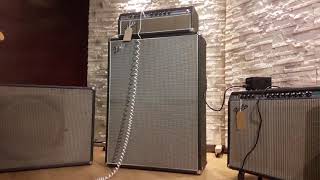
1968 Fender Bandmaster Drip Edge + matching cab
Vintage Tone
Reviews
PROS
-
Classic vintage Fender tone, versatile for various music genres
-
Exceptional pedal platform with clean tone and organic overdrive
-
Unique vibrato circuit reminiscent of vintage models
-
Lightweight and aesthetically appealing design
-
Ideal wattage and tone balance for versatile use
-
Offers a tight low-end due to solid-state rectifier
-
Two stages of pre-amplification for expanded tonal possibilities
-
Excellent for small gigs and recording sessions
-
Competitive price for its quality and performance
-
Great headroom without excessive volume
CONS
-
Lack of built-in reverb may deter some players
-
Smaller output transformer may limit headroom for some users
-
Requires careful handling to avoid speaker damage at high volumes
-
Some models may require restoration to original specifications
5.0 out of 5
Based on 2 Reviews and 8 Ratings
Seriously Underrated and the AB763 version can be jumpered which a lot of players miss out on!
The blackface Bandmaster is a really underappreciated gem. This amp uses a solid state rectifier, which means tighter low-end and no rectifier sag. For some people, tube rectifier sag is desirable and I'd agree depending on the application. I feel the effect of tube sag is really only noticeable when you really push an amp, and I think the Bandmaster sounds best as a pristine class "fender" sounding amp. So even though tube purists may disagree, I think the diode rectifier in the BF Bandmaster is an overall win.
That said, if you're insane or reckless the sound of old alnico speaker break-up is amazing for indy or hard rock tone. I don't think the glory of that tone is worth the risk to the speakers though.
BUT here's the trick that makes this amp a total sleeper (at least the versions based on the AB763 circuit): Each channel of this amp has two stages of pre-amplification, a 12ax7 for the vibrato channel and a nearly identical 7025 in the normal channel. Without getting technical, this means with your guitar plugged into normal jack 1, you can plug a short guitar cord from jack 2 of the normal channel into jack 1 of the vibrato channel. Congratulations, you've just opened up a whole slew of tonal possibilities! All tone controls are compounded and combined!
If you've got this amp but think it's a bit one dimensional in tone, jumper it as described above, just don't spread the news too much, we don't want to drive the price of this amp into the stratosphere! Hah.

41029
country crunch
I owned a mid 60s bandmaster with the matching small box 2x12 cab. This was without a doubt the best sounding piggyback fender I've owned for Americana type music. It had THAT SOUND from so many 60s recordings of every style... wonderful edge of breakup tones. You can bridge the channels on these because both channels are in-phase with the trem disengaged... the amp had what one friend called 'cowboy crunch' when bridged and pushed hard. I sadly was forced to sell this amp on short notice to sam ash because my wife needed a couple grand in emergency dental work :-( I got great money for it versus the $800 I paid for the whole rig, but I've enver seen one this clean that sounded this good since... even the beaters don't sound like mine. Last I checked it was still owned by sam ash, so if I ever have a couple grand burning a hole in my pocket I'll meet their asking price. A lot of people are down on this amp versus the bassman because the smaller output transformer gives it a weaker sound and less headroom (by their standards) but I found it to have just the right amount of grit to the tone and the tightest bass of any large fender I've played aside from the tremolux heads. No boominess at all. Very much a giant deluxe reverb without reverb... not all blackface bandmasters are created equal though. mine sounded really good.
Artist usage
Add artist

Eddie Van Halen described his use of a Fender Bandmaster amplifier in a Guitar Aficionado article quoted in Warehouse Guitar Speakers article titled "Eddie Van Halen Secret Amp: the Fender Bandmaster!"
“I used that amp for years in two ways. I already had the Marshall, but I had not stumbled onto the Variac thing yet, so I would use the Bandmaster through the Marshall cabinet when we gigged at smaller clubs like Gazzarri’s.”
“The real beauty of that amp is how many songs I wrote with it. I wrote all of the early Van Halen songs for the first three albums with that amp, playing quietly in my room. It was really quiet, so my mom couldn’t hear me, but it sounded amazing. My dog Monty would sit down next to me, and he dug it. When I wrote the intro to ‘Women in Love,’ he was sitting there with his ears perked up, like the RCA Victor dog. That Bandmaster was more important than my Marshall head, because I wrote everything with it.”


Used with late Oasis and more recent, High Flying Birds.


"I eventually got into a band with a guy who had a stack made by Lafayette, which was an electronics shop, like Radio Shack, on the East Coast. I believe his was tube. And our bass player had a Heathkit amp, where you buy the parts and build it yourself. Eventually, I wound up with a Fender Bandmaster."
.jpeg?v=1783563118)
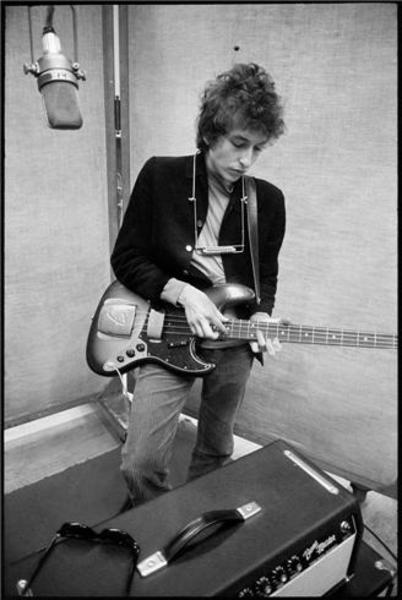
In December 1965, Dylan, his sunglasses resting atop a Fender Band Master amp, ran through some runs on a well-worn Fender bass guitar for a Don Hunstein photo-shoot at the Columbia Recording Studios.

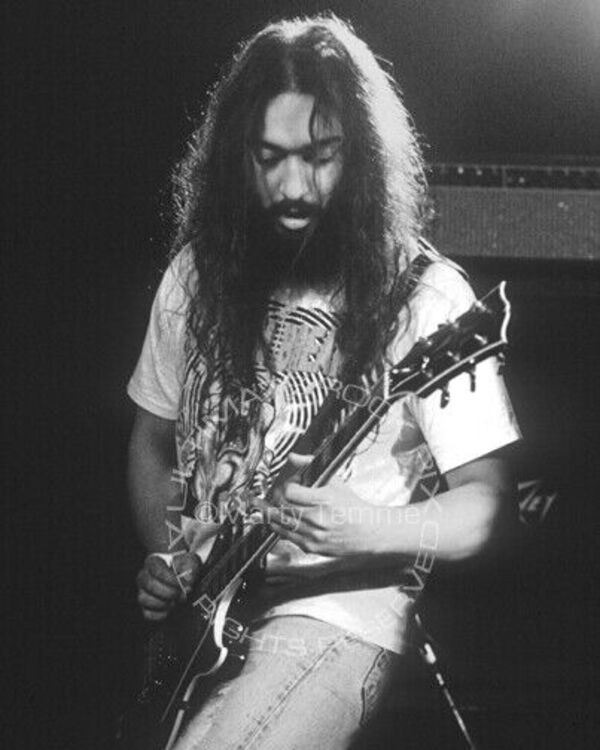
In a photograph taken in 1990 by Marty Temme Les Paul, Kim Thayil is seen using a 45W Fender Bandmaster head. The layout of the knobs and the distinctive white line separating them are characteristic of the Bandmaster model. Additionally, Thayil appears to have used the same amp head in an earlier performance, as documented in the YouTube video titled "Soundgarden - 1987-02-14 Seattle, WA," uploaded by user pjvideoguy. (Link: https://www.youtube.com/watch?v=D49lgVfy6C4)


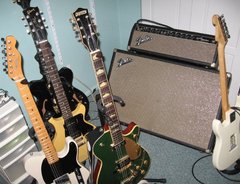
In this photo of Thomas Raggi in the studio, you can see him playing with a Fender Bandmaster. You can tell it's a Fender Bandmaster because the second channel has a 4 controls, as opposed of the three on a Fender Brownface Bassman. You can also semi-read vibrato under the two inputs rather than normal, like in a bassman

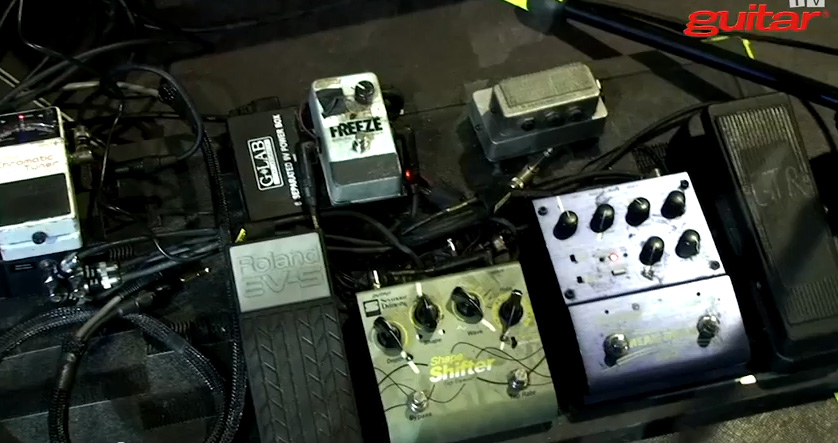
Hayes' Fender Bandmasters were present in two rig rundowns – in German guitar magazin in 2013, and in Music Radar in 2018.
In Music Radar rig rundown, Hayes said:
There’s nothing classy about how I use my amps but I really don’t know how people can get everything they need from just one. I like the mixture of cabinets with open-back combos with hollowbody guitars. The signal is split into three and comes out of four amps. The signal is split into three and comes out of four amps. The Bandmasters are amp one and two, working as left and right at the beginning I had three or four Fender Twins, but I soon discovered I preferred doing it this way. I throw in loops using the Akai Headrush for a lot of songs - chucking things in through certain amps for a chorus and playing over the top... most of the time I just let it fly!

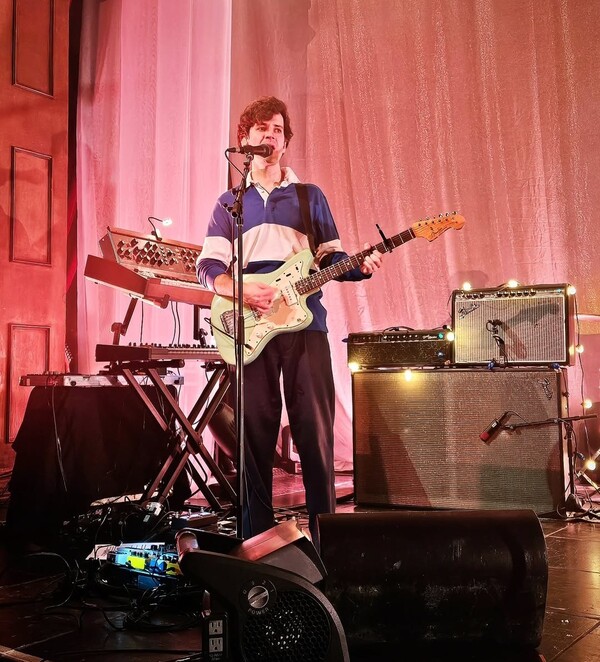
In this instagram post, we can see a Fender Band Master Blackface amp head and a Fender Bassman speaker cabinet used by Alec O'Hanley. The photo was taken at Alvvays' concert at 888yonge in Toronto on January 6, 2024.


Matt: Orange OR 120, Fender Bandmaster, Fender Twin reverb, Mesa Boogie Dual rectifier, Red Bear(used for short, allegedly hated it), Orange Cab(speakers unknown, possibly vintage 30s)
.jpg?v=1783515751)

According to Premier Guitar's article, Mason uses the 1963 Fender Bandmaster.

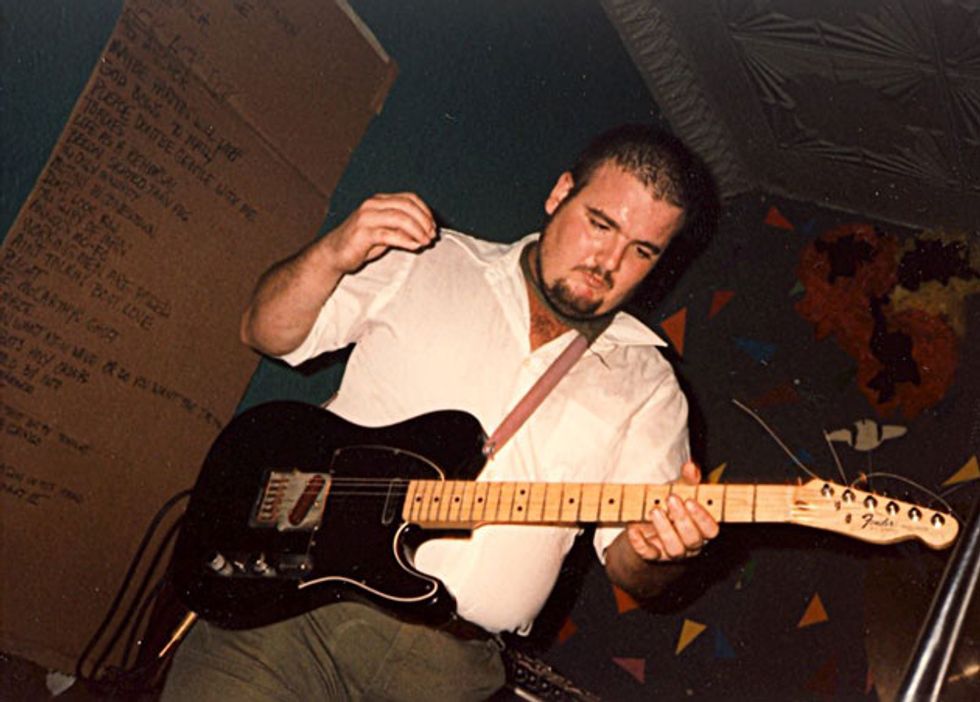
"D. Boon’s penchant for low-cost, ad-hoc gear applied to his amps as well. “He had an old blackface Fender Bandmaster head,” Spot says. “At that time, it was considered the low version of a Fender piggyback.” He also had a 2x12 cabinet with mismatched speakers, which were wired out of phase. “I recorded it in stereo. I had each speaker miked separately. When I was mixing the stuff down, I tried to see how everything sounded in mono and the guitar disappeared."


Clearly seen on this photo, this is his main and primary amp. He plays through this one, and a Fender Vibro King. 2021 Premier Guitar interview:
Keeping it all Fender, all the time, Arson plugs into both cherished time periods of Fullerton amp lore. Side A is a black-panel Bandmaster that hits a vintage Hiwatt cab outfitted with Celestion Heritage Greenback speakers. Side B is a silver-panel 1976 Fender Vibrolux. Notice Arson is plugging into the vibrato channels of both amps and each has its bright switch engaged.
Album Usage
The Fender 'Black Panel' Bandmaster (1963-1967) has been featured on the following albums:

Genre Usage
Based on how artists on Equipboard use this gear, it is most commonly found in the following genres.
Used With
Based on how musicians on Equipboard use Fender 'Black Panel' Bandmaster (1963-1967), it is most commonly used with the following gear.

-s.webp?v=1783551394)


-s.webp?v=1783522703)


Community setups
Show yours
More Fender Guitar Amplifier Heads

$1,000.00
in Guitar Amplifier Heads Rank


$649.99 - $749.99


$1,502.39 - $1,574.99


$1,502.39 - $1,574.99


$2,177.99 - $2,199.99


.jpg?v=1783522455)


$1,216.55


Accessories & Related Items


-s.webp?v=1783514902)


Similar


Gear Guides







Most Popular Guitar Amplifier Heads
Most Popular Brands
-
Added to Equipboard on by
 julianwolf2
Gear IQ 13060
-


