
Pricing and availability




Average Price: $1,200
High-end/Boutique
$60
$181+
Price Tier
Budget
Standard
High-end
* Product prices and availability are updated by Equipboard every 24hrs and are subject to change. Equipboard may receive compensation for purchases made at participating retailers linked on this site. This compensation does not affect what products or prices are displayed, or the order of prices listed. For more information, please refer to our affiliate disclosure.
Description
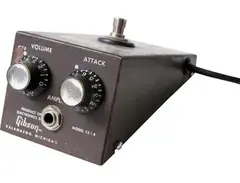
Unleash your inner rock legend with the Maestro FZ-1 Fuzz-Tone, a cornerstone of guitar effects that defined the sound of the '60s. This iconic pedal, known for its creamy, dreamy fuzz, catapulted the guitar riffs of Keith Richards and Pete Townshend into musical immortality. Compact, yet mighty, the FZ-1 offers an authentic vintage fuzz that's both raw and refined, perfect for those looking to inject their music with a touch of history's most celebrated tones. Technically, the DeArmond Trem Trol 800 is considered to be the first guitar pedal EVER created. But, Gibson was the first to make a stomp box that was suitable for commercial distribution!
Key Features:
- Iconic vintage fuzz effect that shaped the sound of the 60s.
- Original and rarest model of the Fuzz-Tone family, making it a collector's gem.
- Used by legendary guitarists including Keith Richards and Pete Townshend.
- Offers a creamy, dreamy fuzz tone ideal for classic rock and beyond.
- Evolved through the '60s with various enhancements, retaining its classic essence.
Product specs
| Brand | Maestro |
| Model | Fuzz-Tone FZ-1 |
| Finish | Black |
| Year | 1962 - 1965 |
| Made In | United States |
| Categories | Fuzz Pedals and Effects |
FAQs
-
What type of power supply does the Maestro FZ-1 Fuzz-Tone require?
-
The Maestro FZ-1 Fuzz-Tone requires a 1.5V battery for operation, as it was originally designed before standard power supplies became common for pedals.
-
Can the Maestro FZ-1 Fuzz-Tone be used with a bass guitar?
-
While the Maestro FZ-1 Fuzz-Tone is primarily designed for electric guitars, it can be used with a bass guitar to achieve unique, vintage fuzz tones, though the low-end response may vary.
-
What makes the Maestro FZ-1 Fuzz-Tone sound unique compared to other fuzz pedals?
-
The Maestro FZ-1 Fuzz-Tone is known for its distinctive, vintage fuzz sound characterized by a raw, biting tone that was popularized in the 1960s, notably used in The Rolling Stones' "(I Can't Get No) Satisfaction."
-
Is the Maestro FZ-1 Fuzz-Tone suitable for modern music genres?
-
The Maestro FZ-1 Fuzz-Tone offers a classic fuzz sound that can complement rock, blues, and garage music styles, but it may not provide the versatility required for some modern genres that demand a wider range of tones.
-
How does the Maestro FZ-1 Fuzz-Tone differ from the FZ-1A and FZ-1B models?
-
The Maestro FZ-1 Fuzz-Tone is the original model, while the FZ-1A and FZ-1B models are later versions with slight circuit modifications and different power requirements, offering variations in tone and usability.
Videos

Adrian Täckman
Maestro Fuzz-Tone FZ-1. Demonstration Record 1962.
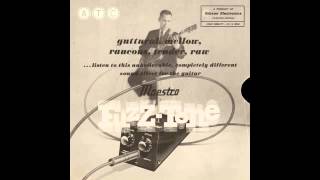
Maestro Fuzz-Tone FZ-1. Demonstration Record 1962.
Adrian Täckman
Reviews
Owner Insights
We analyzed real musician discussions from forums and Reddit to find what players love, question, and tweak about Maestro FZ-1 Fuzz-Tone.
Features and functionality
-
The reissue of the Maestro FZ-1 performs excellently in classic mode, replicating the original sound, although reactions to its modern mode vary among users.
Source -
The G2 Rhythm and Sound unit combines germanium and silicon transistors, offering a unique fuzz tone not commonly discussed in other FZ variations.
Source
Setup and maintenance
-
The DOD Carcosa fuzz is dynamic to the incoming signal and can be placed after buffers without drastically altering its sound, offering flexible setup options.
Source -
Adding an LPB-1 circuit post-G2 corrects volume dips, achieving unity gain and balancing levels between the FZ-1a and G2 circuits.
Source
Use cases and applications
-
Using a Boss AC-2 acoustic simulator post-fuzz/distortion can emulate the brash, stinging timbre of 60s garage rock, enhancing fuzz tones significantly.
Source -
The Germanium 4 Big Muff offers spitty, raspy vintage fuzz tones and handles buffers well, allowing it to be placed anywhere in the chain for versatile use.
Source -
The FZ-1a shines on garage rock single-note lead lines played on the lower neck, while the G2 can feel compressed with humbuckers but works well with a Strat.
Source
Comparisons
-
The DOD Carcosa, based on the Maestro FZ-1S circuit, offers a similar sound and can be placed flexibly in the signal chain, unlike some other fuzz pedals.
Source
Mods and upgrades
-
Subbing the 470k resistor for a lower value makes the FZ-1a sound more gated and fatter; a switch can alternate between stock and modded settings.
Source
User experience
-
The FZ-1a is preferred with humbuckers, as single coils don't produce desired results; both circuits respond well to guitar volume and tone control adjustments.
Source
3.0 out of 5
Based on 1 Review and 1 Rating

41031
great but very situational
this was one of the first effect pedals (I think the the rowe/dearmond tremelo pedal was first) and THE FIRST dirt box. The difference between this and the more common FZ1A are minimal. Mainly, this guy has better selected transistors and it runs on 2 AA batteries versus 1. These 2 differences lead to a less splitty and gated sound and a wider useable range from the 'attack' and volume knobs. Its still a pretty low output fuzz box with a limited sustain. You can see why Vic Flick took his to Gary Hurst to mod for more sustain (birthing the mk1 tonebender). At a modest 3 volts there's only so much that you can squeeze outs these old texas instruments transistors, but wheyou hit this guy right its pretty pleasing. I got rid of this because I rarely sued it and its enormously valuable... made a fortune on this when I needed some money and having acquired it 'broken' for under $100 it was a real windfall when I let her go. If yo want a balance between splitty maestro gated fuzz and like a tonebender of fuzz face, look at one of these if you can find one.
Artist usage
Add artist

Borrowed to use with Curtis Knight and the Squires for two weeks in May 1966, as is visible in this photo of Hendrix found on the "Jimi Hendrix Big Muff" page of Big Muff scholar Kit Rae's website.
Shown above - Jimmy James playing with Curtis Knight and the Squires at the Cheetah Club, New York City 1966. Note the Maestro Fuzztone pedal on the floor in front of the Fender Twin amp
Given that the FZ-1B was not released until 1968, the unit would be either the FZ-1 (the original) or the FZ-1A (released in 1965). The latter two can be told apart by the word "Amplifier" that is only above the output jack of the FZ-1A. Upon further scrutiny of the photo, Hendrix's stombox lacks the word, making it an original FZ-1. Other sources are as follows:
Mike Bloomfield
Guitar Player, September 1975, "Hendrix Remembered" [Corroborative Sources here and here]
The first time I saw Jimi play he was Jimmy James with the Blue Flames. I was performing with Paul Butterfield, and I was the hot shot guitarist on the block—I thought I was it. I'd never heard of Hendrix. Then someone said, "You got to see the guitar player with John Hammond." I was at the Cafe Au Go Go and he was at the Nite Owl or the Cafe Wha? I went right across the street and saw him. Hendrix knew who I was, and that day, in front of my eyes, he burned me to death. I didn't even get my guitar out. H bombs were going off, guided missiles were flying—I can't tell you the sounds he was getting out of his instrument. He was getting every sound I was ever to hear him get right there in that room with a Stratocaster, a Twin (amplifier), a Maestro fuzz, and that was all—he was doing it mainly through extreme volume. How he did this, I wish I understood. He just got right up in my face with that axe, and I didn't even want to pick up a guitar for the next year.
Interview with Ed Ward, excerpted in Michael Bloomfield: The Rise and Fall of an American Guitar Hero (1983, revised 2016) by Ed Ward and Crosstown Traffic: Jimi Hendrix & The Post-War Rock 'N' Roll Revolution (1989) by Charles Shaar Murray
In July 1966 the Butterfield Band was performing at the Cafe au Go Go in New York City when Michael Bloomfield first saw Jimi Hendrix play. “The first time I saw him was when he was Jimmy James, and he was with the Blue Flames at the Cafe Wha? in New York,” Bloomfield told me. “I was playing across the street and I was the local hot guitar player on the street with the Butter Band, and he was just across the street, unknown. I went over there one night, and man, he wouldn’t even shake hands. I mean, he knew how bad he was. He got up there. He had a Twin; he had a Strat, the first fuzztone that ever came out, and there were jets taking off. There were nuclear explosions and buildings collapsing! I never heard anything like it in my life. And it was an off night for him, too. I was sitting right in the front row and he was doing it right to me, like a machine gun. ‘You like this, man?’ B-bb-bbb-room! He was just mowing me down. Oh! Talk about burning!"
Quote in Guitar King: Michael Bloomfield's Life in the Blues (2019) by David Dann
A few blocks from the Cafe Au Go Go, down Bleecker Street and around the corner on McDougal, there was a basement coffeehouse called the Café Wha? Opened in 1959, the club featured a variety of entertainment throughout the daytime and evening hours. Its casual booking policy gave stage time to amateurs and accomplished performers alike, and the fare usually included an odd assortment of comedians, ventriloquists, folk singers, poets, and anyone with a modicum of talent and a desire to perform.
Since June, one of the regular evening acts was a scruffy rock-and-blues quartet fronted by a slight and soft-spoken twenty three-year-old black guitarist who called himself Jimmy James. Folksinger Richie Havens had gotten him the gig, and James was playing multiple nightly sets of rock ’n’ roll covers, pop tunes, and blues for whatever basket money the band could make. What set him apart from other performers at the café was his flamboyant stage presence—and his entirely unique sound on electric guitar. It wasn’t long before word spread that there was a band at the Café Wha? worth checking out.
"I was performing with Paul Butterfield, and I was the hotshot guitarist on the block—I thought I was it," Michael Bloomfield recalled. A friend told him he had to go see the new guitar player working over on McDougal Street. "I went right across the street and saw him . . . and that day, in front of my eyes, he burned me to death. I didn’t even get my guitar out." Michael learned that this formidable guitarist’s real name was Jimmy Hendrix and that he was from Seattle. He looked vaguely familiar, and Bloomfield soon remembered him.
"I had seen him before and not paid any attention to him,” he said. “I’d seen him play with Little Richard and the Isley Brothers." Hendrix had been a sideman for the legendary rock ’n’ roll singer in 1965, and he had briefly toured with the Isleys, but now he was on his own, playing six nights a week at the Café Wha? and tearing up the house. “He had a band called Jimmy James and the Blue Flames. They were obviously just pick-up musicians he had gotten to just learn a few tunes so he could do what he wanted."
From the stage, Hendrix immediately recognized the star of the Paul Butterfield Blues Band. With Bloomfield’s extravagant personality and his equally extravagant swarm of bushy hair, he was hard to miss. Jimmy James decided he would make an impression on the Chicagoan.
“I walked in there and I sat down with a friend of mine, another guitar player" said Bloomfield.
And Jimmy Hendrix watched me sit down—and I remember what he was playing, a Stratocaster, and he had a Twin Reverb amp, a Gibson Maestro Fuzztone, and he had a wah-wah pedal—and he got every sound on those that I was to hear on all his subsequent records . . .
Bombs exploded! Airplanes took off! Buildings collapsed! It was a holocaust! Plus, you know, endless amounts of incredible playing. He just did it with a little half-assed grin on his face. I was sitting in the front row and I was just blown away. It was no contest.
Michael described how Hendrix spent the first part of the set "just making these unbelievable sounds and noises." Using feedback, sustain, wah-wah effects, and distortion, Jimmy created an aural collage of electronic moods. "Then he started playing music," Bloomfield said, laughing. The guitarist’s mastery of amplified sound deeply impressed Michael, but he wondered if Hendrix could do anything else.
"I said, well, he can make all these sounds but, OK, can he really play?" Bloomfield said. "Then I heard him play, and he could play better than he could make sounds!"
(...) "He got right in my face with that ax, and I didn’t want to pick up a guitar for the next year," Bloomfield opined.
Custom Boards, "A detailed look at Jimi Hendrix' pedals and signal chain" (April 23, 2018)
Jimi got his first taste of fuzz in New York in May 1966. He was playing in Curtis Knight’s band, and managed to borrow a Maestro Fuzz Tone pedal off an acquaintance for two weeks. He experimented with fuzz-induced feedback, which didn’t make his bandmates happy. In those days, guitar feedback was seen purely as a technical fault. Jimi tried to harness feedback for musical purposes even back then, laying the foundation for some of his signature techniques later on.
The JHS Show, "The Technology of Jimi Hendrix" (published April 8, 2022)
In May of 1966, Jimi borrowed a pedal from his bandmate: the Maestro fuzz tone, the first fuzz pedal ever created. Hendrix couldn't afford one, but he was playing in the Chitlin Circuit with Curtis Knight and the Squires, so he got to borrow this for a couple of weeks. As a result, he got his first taste of experimenting with feedback and loud sustain. Pretty soon, he was working it into his routine. Unfortunately, the band didn't like it. You have to understand that up until this point in music history, feedback was a technical error. You didn't want feedback, and you definitely didn’t create that effect with your guitar on purpose.
Jimi didn’t care. He had created this new, live sound that was really crazy, and he liked it. There's a photo of Jimi in New York City at the Cheetah Club, and you can see the Maestro Fuzz Tone sitting at his feet. So the first fuzz ever is manufactured in ’62. It reaches Hendrix four years later, and he gets his first taste of fuzz.

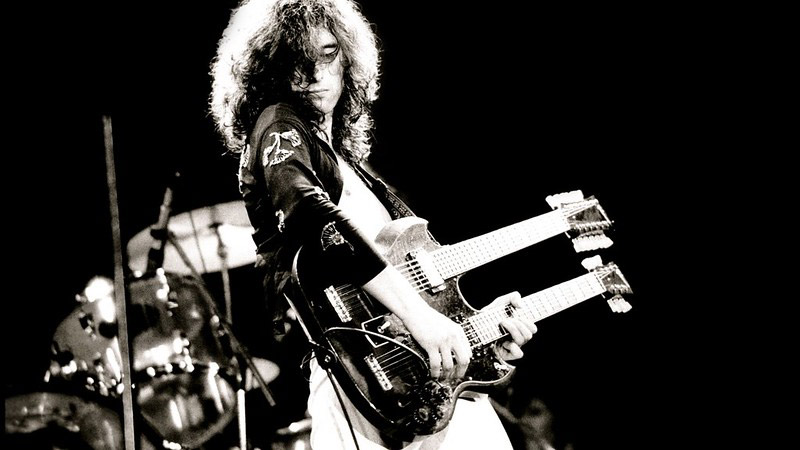

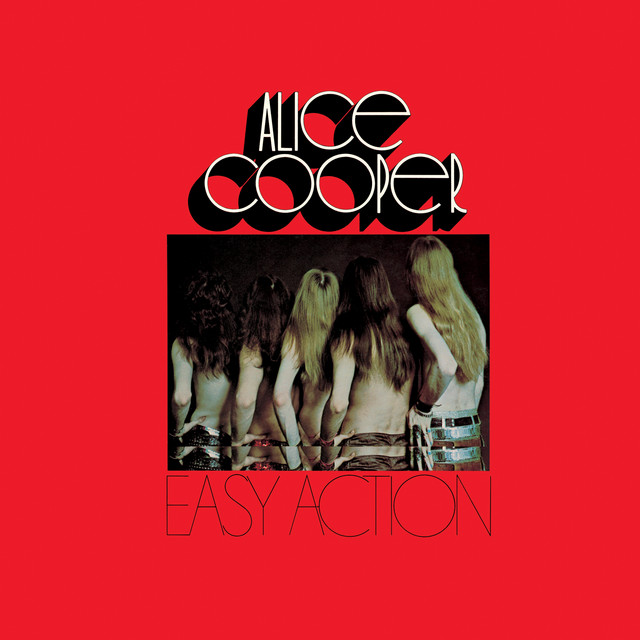
Glen Buxton used the Maestro FZ-1 Fuzz-Tone to achieve the distinctive "computer modem" sound on tracks like "Lay Down and Die, Goodbye," "Shoe Salesman," "Refrigerator Heaven," and "Below Your Means" from the "Easy Action" album. This pedal also contributed to the "crushed" sound on "Return of the Spiders" and "Still No Air." The Maestro FZ-1 Fuzz-Tone can be heard in live performances of "Eighteen" from 1971, as showcased in the ReelinInTheYears66 YouTube video. Its unique tone resembles the saxophone sound from the 1962 demo 45 for the Maestro Fuzz Tone.

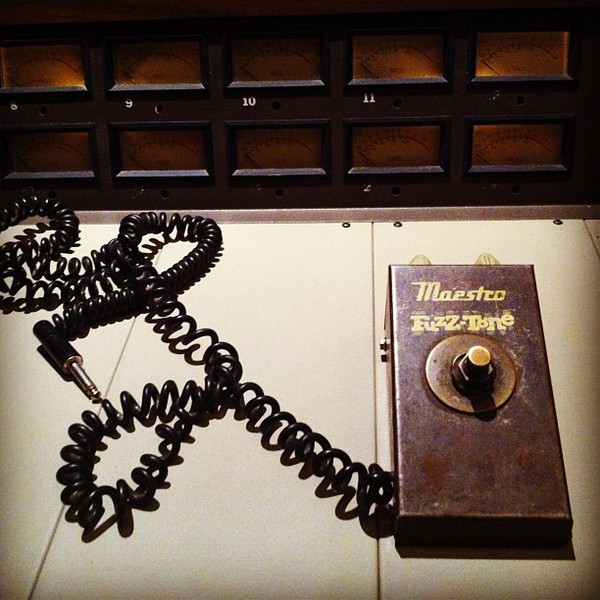
Featured in this June 8, 2013 Instagram post. This September 10, 2013 Instagram post shows that it was used with The Budos Band.
the original fuzz tone @rico_reese @homer808 @budosbat

.jpg)
Mentioned and pictured in this April 2012 Vintage Guitar interview. According to this November 2009 Guitarist interview with Gary Hurst, Flick gave his unit to Hurst for modification, becoming the basis of the Sola Sound Tone Bender.
Guitarist, November 2009, "Bend It Like Beck Can"
“Vic Flick walked into the shop with his Maestro Fuzz-Tone and said, Listen, I can’t do much with this – can you have a look at it for me?” says Hurst. “I’ve still got it actually – he never took it back! Anyway, I took it to pieces, but I couldn’t get any more sound out of it than it was already making, that is until I modified it. And then I said to him, I could build you a better one.
“I’m not trying to hide anything here, the Tone Bender was based on the Fuzz-Tone, but that’s what things were like back then.
Vintage Guitar, April 2012, "Vic Flick - 007 Guitar Man"
In the studio, I rarely changed volume, as the sound man had all his knobs adjusted for the mix. Mostly, I used a DeArmond pickup through a DeArmond pedal and then into a Fender Vibrolux amp. I purchased the Fender amp in ’62, just prior to the Bond recording that June. There’s a picture of the amp and an original Maestro Fuzz Tone pedal in my book. I did have a 15-watt Vox at the time, but it fell off a stage.


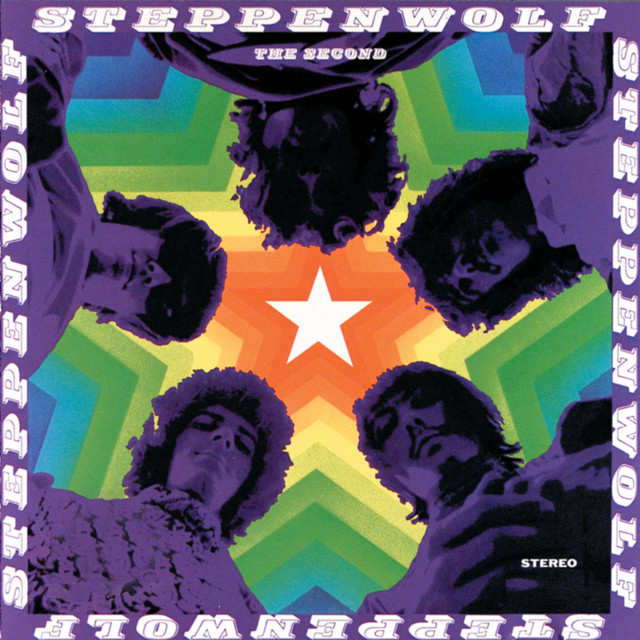
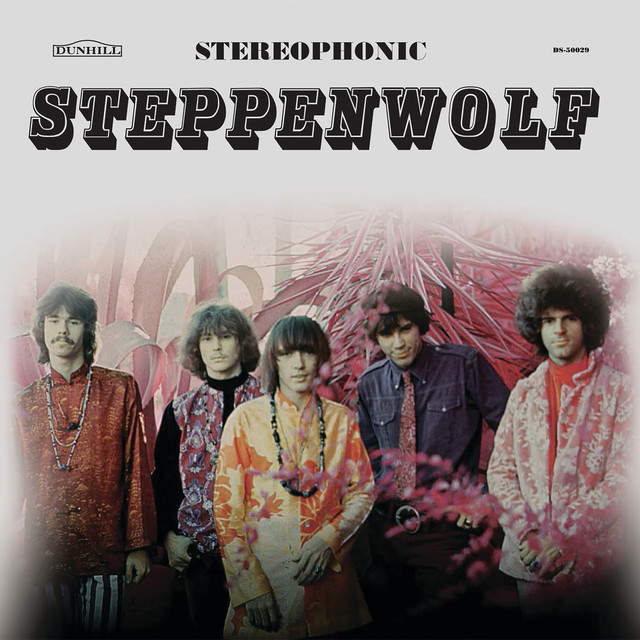
On his website, Michael Monarch stated that he used a fuzz box that had "Distorto" written across the top. This is most likely referring to the D&M Co. Distorto Fuzz pedal, which was essentially a copy of the Maestro FZ-1. This pedal was used in the first and second Steppenwolf albums.

Mentioned in this February 22, 2016 Ultimate Guitar interview.
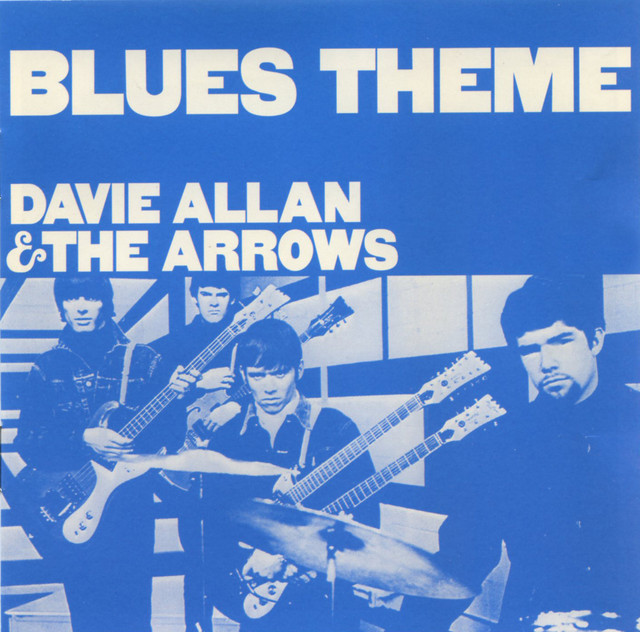
In 1966, you did the music for "The Wild Angels" film and the "Blues Theme" was written. Had you been thinking about creating a more distorted/fuzz-driven guitar sound?
I was definitely thinking along those lines because of it being a biker film.
Was it a conscious thing to get away from the clean, reverb-drenched surf guitar sound?
I wasn't a fan of the reverb and didn't think the word "surf" fit. But yes, I wanted to make a drastic change from my '63 to '65 sound.
Can you talk about those early days experimenting with fuzz sounds?
I was only using the Gibson Maestro but not doing much with distortion until the Mosrite Fuzzrite came along.
(...) In 1964, the Rolling Stones had recorded "I Can't Get No (Satisfaction)," which featured that Keith Richards fuzz guitar. Were you aware of this song? Was this the first time fuzz guitar was really used on record (Keith says it was)?
My first fuzz was the one he used: a Gibson Maestro. The first tunes I remember with distortion were "Don't Worry" in 1961 by Marty Robbins with distorted bass and "Zip A-Dee Do-Dah" in 1962 by Bob B. Soxx & the Blue Jeans.
Album Usage
The Maestro FZ-1 Fuzz-Tone has been featured on the following albums:
Genre Usage
Based on how artists on Equipboard use this gear, it is most commonly found in the following genres.
Used With
Based on how musicians on Equipboard use Maestro FZ-1 Fuzz-Tone, it is most commonly used with the following gear.






Similar
Add recommendation5 alternative and related items for Maestro FZ-1 Fuzz-Tone, curated by the Equipboard community.

$59.00 - $59.99
This all-analog pedal boasts a Mode toggle switch that provides two pedals in one functionality for increased sonic versatility with both an FZ-1 inspired fuzz sound and a thicker, more modern fuzz tone. Its 3-knob control layout gives you intuitive control. The Attack knob controls the amount of fuzz. The Tone control lets you adjust the timbre from bright and raspy to warm and wooly and anywhere in between. Use the Level control to set the output volume; it can go way beyond unity gain when desired. The true bypass footswitch triggers the LED lights in the bugles in the Maestro logo when it’s on, so you’ll always know when the effect is active.


$400.00

-m.webp?v=1784991595)
$36.30 - $72.60
More Maestro Fuzz Effects Pedals

$59.00 - $59.99
in Fuzz Effects Pedals Rank

.png?v=1784946700)
.jpg?v=1784958340)
$59.00 - $59.99


$169.00 - $188.20
in Fuzz Effects Pedals Rank
-m.webp?v=1784988045)
$179.00 - $209.00
in Fuzz Effects Pedals Rank


$189.00
in Fuzz Effects Pedals Rank


$75.00 - $96.20
in Fuzz Effects Pedals Rank


$220.00 - $249.00
in Fuzz Effects Pedals Rank

.jpeg?v=1784985816)


$179.00
in Fuzz Effects Pedals Rank


$315.00
in Fuzz Effects Pedals Rank


$83.00 - $169.00
in Fuzz Effects Pedals Rank


$199.00 - $224.42
in Fuzz Effects Pedals Rank


$159.00 - $181.00
in Fuzz Effects Pedals Rank


$83.00 - $101.60
in Fuzz Effects Pedals Rank


$178.15 - $219.00
in Fuzz Effects Pedals Rank


$85.00 - $108.90
in Fuzz Effects Pedals Rank


$79.00 - $108.90
in Fuzz Effects Pedals Rank


$356.83
in Fuzz Effects Pedals Rank

$75.00 - $87.10
in Fuzz Effects Pedals Rank


$59.00 - $83.50
in Fuzz Effects Pedals Rank


-m.webp?v=1784991579)
$169.00 - $179.99
in Fuzz Effects Pedals Rank


$249.00 - $299.00
in Fuzz Effects Pedals Rank


$95.00 - $1,995.33
in Fuzz Effects Pedals Rank

$95.00 - $99.00
in Fuzz Effects Pedals Rank
-m.webp?v=1784991563)
$88.34 - $111.00
in Fuzz Effects Pedals Rank


$220.00 - $399.00
in Fuzz Effects Pedals Rank


$175.00
in Fuzz Effects Pedals Rank


$97.98 - $129.00
in Fuzz Effects Pedals Rank


$158.36 - $209.00
in Fuzz Effects Pedals Rank


.jpeg?v=1784640199)

$167.26 - $189.00
in Fuzz Effects Pedals Rank


-m.webp?v=1784991835)
$179.00 - $485.39
in Fuzz Effects Pedals Rank


-m.webp?v=1784977867)
$269.00 - $349.00
in Fuzz Effects Pedals Rank


$269.00
in Fuzz Effects Pedals Rank


$20.90 - $105.70
in Fuzz Effects Pedals Rank


Accessories & Related Items




Community setups


Gear Guides
.jpg)






Most Popular Fuzz Effects Pedals
Most Popular Brands
-
Added to Equipboard on by
jimmarchi1GearIQ 41031
-


