

Pricing and availability
We compare 600+ stores and found this item at 1 store. Prices updated .
Store
Reviews
Price




Average Price: $1,593
High-end/Boutique
$500
$1501+
Price Tier
Budget
Standard
High-end
* Product prices and availability are updated by Equipboard every 24hrs and are subject to change. Equipboard may receive compensation for purchases made at participating retailers linked on this site. This compensation does not affect what products or prices are displayed, or the order of prices listed. For more information, please refer to our affiliate disclosure.
Description
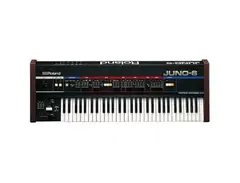
Introducing the Roland Juno-6, the progenitor of the iconic ‘80s Juno family. Deceptively simple in design, this vintage polyphonic analog synth is far from being a one-trick pony. Whether you're looking for thick, resonant string chords, delicate, oscillating notes, or spine-chilling tones reminiscent of a classic John Carpenter film, the Juno-6 delivers with aplomb. Don't be fooled by its single oscillator setup; this synthesizer is capable of producing a diverse range of powerful and captivating sounds that will elevate your music to new heights.
Key Features:
- Vintage polyphonic analog synth from the ‘80s Juno family.
- Single oscillator design capable of producing a wide range of tones.
- Ideal for creating string chords, oscillating notes, and horror film-inspired sounds.
Owner's manual
Roland Juno-6 User ManualProduct specs
| Brand | Roland |
| Model | Juno-6 61-Key Polyphonic Synthesizer |
| Finish | Black |
| Year | 1982 - 1984 |
| Made In | Japan |
| Categories | Analog Synths, Keyboard Synths |
| Analog / Digital | Analog |
| Key Size | Full Size |
| Keyboard Action | Synth Action |
| Number of Keys | 61 Keys |
| Polyphony | 6 Voices |
FAQs
-
Is the Roland Juno-6 a polyphonic synthesizer?
-
Yes, the Roland Juno-6 is a polyphonic synthesizer with 6 voices, allowing you to play six notes simultaneously.
-
What type of keys does the Roland Juno-6 have?
-
The Roland Juno-6 features 61 full-size keys with synth action, providing a responsive and dynamic playing experience.
-
What are the core sound characteristics of the Roland Juno-6?
-
The Roland Juno-6 is known for its warm, rich analog tones, particularly its lush pads and punchy bass sounds, making it a favorite among synth enthusiasts.
-
Does the Roland Juno-6 have built-in effects?
-
The Roland Juno-6 includes a built-in chorus effect, which significantly enhances its sound, adding depth and richness to the tones.
-
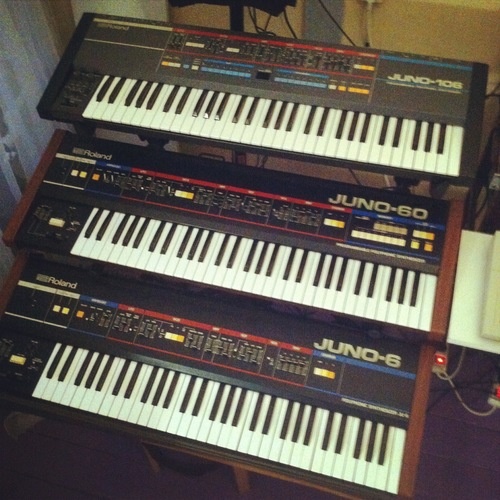
How does the Roland Juno-6 differ from the Juno-60?
-
The primary difference is that the Juno-60 includes patch memory for storing sounds, while the Juno-6 does not, requiring manual adjustment for sound changes.
Videos

Doctor Mix
Why Do I Love the Juno-6?
Why Do I Love the Juno-6?
Doctor Mix
ROLAND JUNO-6 Analog Synthesizer 1982 | HD DEMO

AnalogAudio1
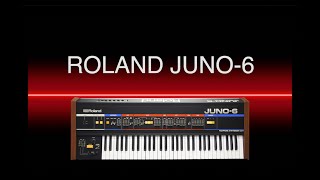
Roland Juno-6. Still worth it?

Matt Johnson Jamiroquai
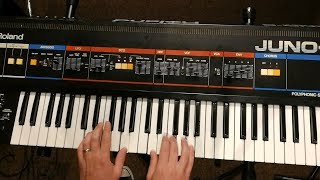
Roland Juno-6 | Get Your Love Through the Radio

Alex Ball
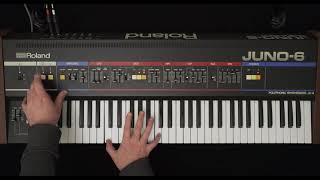
Roland Juno 6 Analog Synth Demo Noodle - No Talking!

TONELAB
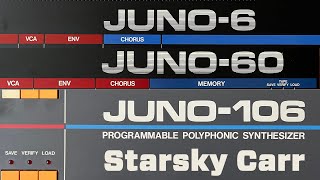
Nothing but LOVE for the JUNOs // Juno 106 vs Juno 60 vs Juno 6

Starsky Carr
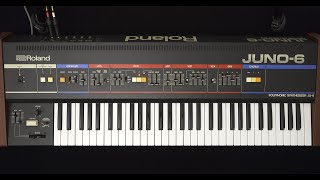
How to use a Roland Juno 6 Analog Synth Complete Tutorial
TONELAB
Roland Juno-60 vs. Roland Juno-6 | What's the Difference?

Alamo Music Sound Lab
Roland Juno-6: The 80s Signature Sound | Retro Tech #7

Vex0r
![Video thumbnail for 32. DARK MATTER - Roland Juno 6 [Retro Ambient Synth Music] by The Drone Zone](https://img.youtube.com/vi/aUn6pbNG81Y/mqdefault.jpg)
32. DARK MATTER - Roland Juno 6 [Retro Ambient Synth Music]

The Drone Zone
Reviews
PROS
-
Pure layout encourages deep learning of synthesis
-
Robust faders and build quality; built to last
-
Iconic 80s vintage sound with versatile sound creation
-
Continuous high pass filter offers nuanced sound shaping
-
Classic, warm analog poly synth sound
-
Integral arpeggiator and chorus effects enhance playability
-
Simple, immediate interface with visual feedback for live performance
-
Can be modded for expanded functionality (e.g., MIDI, extra LFOs)
-
Recognized as a valuable, historical instrument with investment potential
-
Distinctive for its inability to produce bad sounds; all killer, no filler
CONS
-
Lack of patch memory can be limiting for some users
-
No MIDI or Roland's din sync technology in its original form
-
Chorus effect can be overly pronounced and unsubtle
-
Some units may require maintenance due to age
-
Limited in creating "new" sounds due to classic design
Owner Insights
We analyzed real musician discussions from forums and Reddit to find what players love, question, and tweak about Roland Juno-6.
Value and pricing
-
Prices for the Juno-6 are unlikely to decrease soon due to collector demand and nostalgia, with some buyers paying over $3000.
Source
Comparisons
User experience
-
Owners note the Juno-6 as a studio workhorse, praised for its reliability and flexibility despite not being considered legendary.
Source -
Playing a Juno-6 in person is recommended for evaluating its unique sound, as online demos may not capture its full character.
Source -
Users report keys double-triggering, solvable by cleaning key contacts and bus bars for improved playability.
Source
Use cases and applications
-
The Juno series' chorus effect is highlighted as unmatched, with no clone or emulation perfectly replicating it, making it a sought-after feature for specific sounds.
Source -
Despite its limitations, the Juno-6 offers a unique sound experience that some owners feel modern alternatives cannot fully replicate.
Source
Features and functionality
Setup and maintenance
-
Vintage synths like the Juno-6 may require significant maintenance, which can be costly and challenging due to their age.
Source -
Crackly sliders and volume pots are common; cleaning with isopropyl alcohol spray and Deoxit Faderlube is recommended for maintenance.
Source -
H-M-L output switch on the back is a frequent failure point due to dirt; regular cleaning is advised to prevent audio issues.
Source -
Uneven output levels may stem from issues on the chorus board or master volume pot, requiring cleaning or calibration.
Source
Critic Reviews
4.5 out of 5
Based on 8 Reviews and 42 Ratings

344
Really fun synth
Juno-6 gets overlooked because it lacks patch memory. I’d argue that patch memory isn’t the most useful feature a synth can have, if you know how to use them. The juno isn’t difficult to program after all so you can easily go from patch to patch in s matter of seconds. The arpeggiator is lots of fun too. It has cv in and out so you can sync to other hardware easily. Has a vcf input too so you can modulate the filter in alternative ways to the triangle lfo that the juno has built in.

41029
Wanted one since the late 80s. Have one now.
My particular unit is a 1st year juno I bought from the original owner peak pandemic. I even have his receipt from the hollywood guitar center back when it was the only location. She probably needs some general maintenance and professional grade cleaning but worked beautifully right out of the gate apart from a slightly miscalibrated envelope on 1 voice. I almost hate to return to spec because its vibey as hell to have 1 voice drcay and release a little differently at what feels like random times. Lately the chorus has been acting a little weird for a little after power on so I guess it's time for a belltone trip.
What can you say about the juno6? It's an icon because of its twangy DCOs and snappy envelopes. Its got that classic era roland filter sound. Most importantly it's a live performance instrument with a decent keybed, simple but versatile architecture and an all slider programming interface that provides immediate visual feedback like the arp odyssey. The arpeggiator trigger is a v-trig that will work with almost any source that approaches 5v with a fast rise.
It predates midi and doesn't offer patch storage. It doesn't have Roland's din sync technology so adding midi requires hole drilling. Wouldn't a juno60 be a better buy for the storage and easy midi retrofit to the existing din jacks?
NO!
Why not? High pass filter. The 60 has a 4 position switch masquerading as a slider for the HPF due to 80s processor constraints imposed by the patch storage. The juno6 has a continuous HPF that allows for bandpass style manual sweeps not to mention the obvious benefit if getting exactly the low end response you need rather than compromising it using external eq. You don't need patch storage on something this basic and obvious. If you can't get a sound back on a juno6 manually you need to give me yours.l as a backup. Also, as great as the 60 sounds, whenever I've had a 6 and 60 side (and this was before I owned mine) the 6 just had the sonic edge to my ear when set very similarly. Just a little fuller, faster... the 6 soubds better with the chorus iff. The chorus is sweet on both but i dont absolutely require it on the 6. It's an always on thing for a 60. I dunno. Its subtle but I bought a 6.
While the juno family as a whole are not the best at anything, they CANNOT MAKE BAD SOUNDS. The limitations make this synth all killer and no filler. All Juno's have a distinct family vibe that's easy to love and the 6 is the best sonically PERIOD



1064
Best synth I ever heard/owned.
All I can add is that if you want this sound, you need to get one while they are cheap. A serviced Juno-6 will serve you for ages. Especially if you mod it with some goodies it can be very useful in any situation. Undeniable sound. One thing to point out is that the VCA is fully voltage controlled from the ADSR + analog HPF has the full range. Best Juno sound. I use it mainly for arps and ambient.


26907
Why this over Juno 60, in your opinion? Simpler = more serviceable, or do you feel it also sounds better than your Juno-60?
1064
I am finishing another beer lol. Czech... I deserve them today though. Making me wanna go do some music but I will regret it tomorrow! Anyway. When they first came out with the Juno-6 back in the day it was a fully analog machine. Juno-60 came shortly after that. In order to implement some of the "newfound" technology like preset storage (which also translates to the ability of the machine to save corresponding values of the parameters found around the synth and recall them at any time you desire), there were sacrifices being made. Like a stepped HPF analog filter that does not cover the full range. Juno-60 has HPF stepped. The VCA in Juno-6 is directly controlled by ADSR voltage signals so it is more in the alley of a modular synthesizer. Most of the implementation that went into Juno-60 to get that technology into the synth hindered the sound output.
These days. Or at least a year ago when I got mine for the first time through a reliable vendor, fully serviced at a good London venue... they were like 2x less in price. They doubled since then for a mint condition but still, you won't be paying 4x-6x the price of a Juno-6 for a Juno-60. Properly serviced then it will work for ages. Add a KIWI mod and you are all set. DCB converter for some MIDi goodness if you feel a little bit lazy. I usually play all the arps by hand... but I like playing the piano/organ... my background. Never heard an arp that plays with you with its own spirit and vibe like that before. I have also never owned a synth built like that and I own many... imagine WW2 tank engineering-grade stuff. It is my personal bias but I love OPN's work so yeah. I kind of got all he was using on the first couple of albums out of listening to it for some time. Loving the results. Still it is me, not him, but the knowledge that translated from understanding his techniques and the way he approaches sounds made me go places as well. I have a different mind, so also a different music output.
The ability to dial in any sound you want within 5 minutes with some decent synthesis knowledge is also a huge plus. Although. Juno-6/60 is a one-trick pony. You either like the sound or you do not.
26907
thanks for the detailed thoughts! The stepped output makes total sense. With early 80's tech/digital resolution, either the output it stepped, or the patch you save isn't going to be exactly the patch you were hearing when you hit save... pretend that makes sense... Anyway, I was lucky to pick up a Juno-60 for a little under $400 US many years ago... I don't think I'd spring for another or a Juno-6 at prices they now go for, but nothing else in my arsenal sounds as classy as that thing. I settled for a DCB-2-MIDI converter and left well-enough alone :)
41029
The hpf is exactly why I bought a 6 and not a 60. It's a bigger deal than people think.
66
Simple yet elegant poly synth with classic sound.
The Juno-6 was the first analog synth I ever owned. I bought it used in 1988 (I was 16) for $200. It's been the centre of my studio setup for almost 35 years and it still looks, works and sounds as good as the day I purchased it.
The sound of the Juno-6 is classic, warm analog poly synth through and through. The keyboard is high quality and the switches and sliders are all rock solid. Hipsters may bemoan the lack of midi, Eurorack connectivity, or beard wax, but the simple signal path and limitations are all part of what I like about this instrument. The arpeggiator and chorus alone are worth the price of admission.
When the house catches fire, after the kids, my Juno-6 will be the first thing I grab and carry to safety.
Preferred Settings + Usage:
Preset number......Oh, wait.

96
Classic Roland analog synth with few possibilities but always a good sound
The Juno 6 is a very simple substractive analog synthesizer. The sound is very classic which means you're not going to create anything new on it but you'll always have a "safe" good sound. A safe good bass, a safe good lush pad, a safe good arpeggio. The suboscillator give you really fat bass besides. The chorus immediately gives this 80's vibe but it should be used only on pads in my opinion. The arpeggio clock in allows you to control the steps of the arpeggio with an external trigger signal. In that time, it was a signal from TR707, 808, 909 etc but nowadays you can trigger it with a sample of anything loud enough and with a distinct attack. For synth wave, dark wave, cyberpunk music, this is a must have.
340
Genuine 80's synth sounds with proven track record.
Quite simply, part of 80's pop's DNA. Heard on hundreds of chart hits.
Sure it is old fashioned and there are modern alternatives, but then a Fender Telecaster is old fashioned, but still valid.
These boards go for a couple of grand when in good working order, they are a great studio tool, I for one will never sell mine.


Artist usage
Add artist
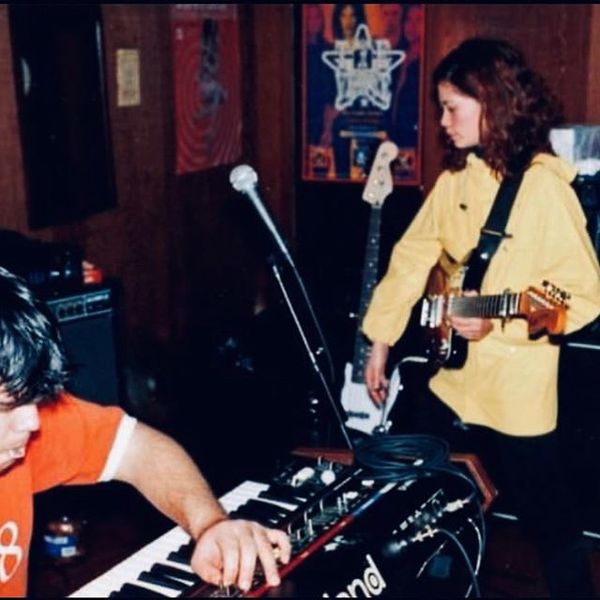
Roberto Burgos is shown using the Roland Juno-6 synthesizer in a post by vzrcooper on Instagram, captioned "sweet trip."


" I actually had two of those and a Juno 6 and an 808 drum machine. Then a Pro One"


In this Sound on Sound article it says Alt J used the Juno 6 on their album An Awesome Wave


Weval used the Roland Juno-6 to play the final note on their album, as shown in a photo shared on their official Facebook page.


Can be seen using it in this YouTube Video for Producer Masterclass - Computer Music magazine 2008.
Time - 29:15


at 0:08 & at different moments of the video : we can see members of SURVIVE using the Roland Juno-6.


Used for Shriek and The Louder I Call, The Faster It Runs, as stated in this May 12, 2014 Vox interview and this April 9, 2018 Music Radar interview, respectively.
Vox, "'I got stoned and took a shower': How Wye Oak writes its songs" by Dylan Matthews (May 12, 2014)
Dylan Matthews: You're starting to work with synths for the first time in Wye Oak in a really big way, and some people at least tend to get very passionate about their gear. Did you? How'd you go about choosing equipment?
Jenn Wasner: Honestly, I've never been the person that is very insistent about the purity of the source. I think if something sounds good and it sounds right and it sounds interesting to me, I don't care where it came from. A lot of the stuff on our record came from beautiful, pristine, gorgeous analog synthesizers but a lot of it's just weird soft synth MIDI shit, too. [...] Going back to what you were asking, as far as synthesizers themselves, I have a Juno 6 that I got a lot of the initial sounds from, but just as many of the sounds came from samples and soft synths and stuff like that. I'm not one of those picky gearheads, to answer your question.
Music Radar, "Wye Oak's Jenn Wasner: 'With a guitar you can make it into anything you want. It’s endlessly variable'" by Matt Parker (April 9, 2018)
“Right now, I have a three-bedroom house and one of the bedrooms is a mini studio, so I’ve got my drum kit, a whole array of synths… On this record, it was mainly my [Roland] Juno-6, and I was using my friend Nick’s Prophet 6 a ton. I have a whole host of drum machines, pedals, etc.


The album booklet credits for Sabrina Carpenter's "Man's Best Friend," as documented on Discogs, confirm that she used the Roland Juno-6 synthesizer on the tracks "Manchild," "My Man On Willpower," "We Almost Broke Up Again Last Night," "Nobody's Son," "When Did You Get Hot?," "Don't Worry I'll Make You Worry," "Goodbye," and "Such A Funny Way."

At 1mn 39, Tom is sitting just in front of a Roland Juno 6 !


Per Music Tech, May 1992:
Instead he ended up buying a Roland Juno 6 synth and TR707 drum machine in late '84 and recorded 'Mysteries of Love', his first track under the name Mr Fingers


Album Usage
The Roland Juno-6 has been featured on the following albums:
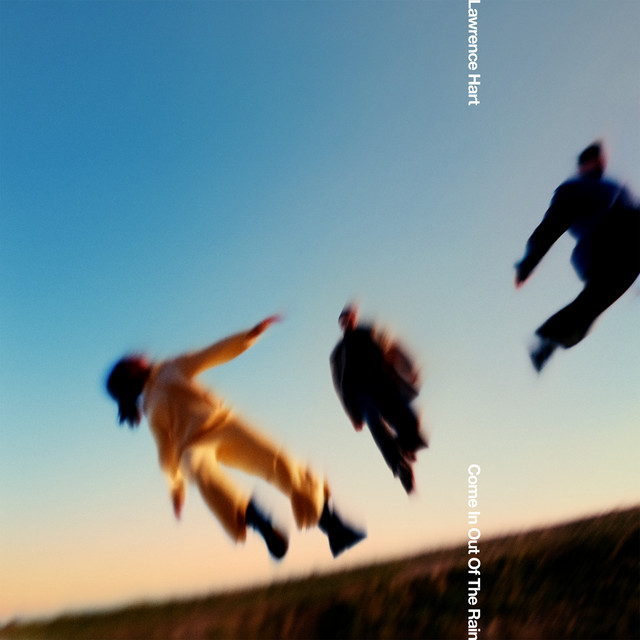
Come In Out Of The Rain
Lawrence Hart (2025)
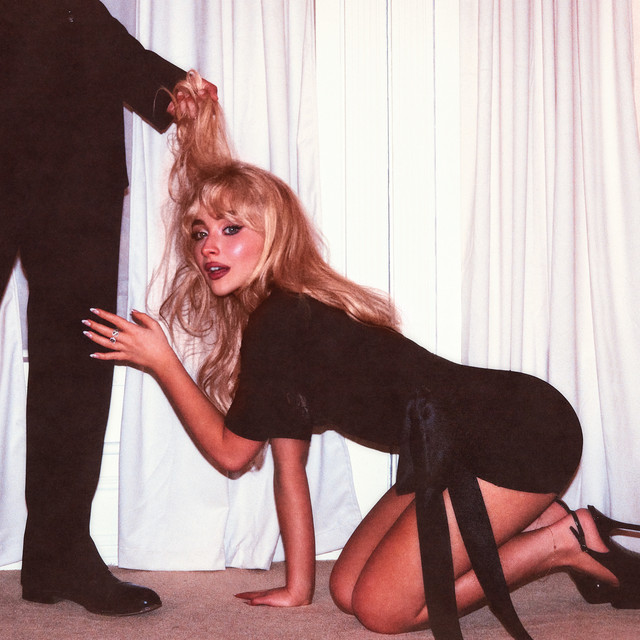
Man’s Best Friend
Sabrina Carpenter (2025)

Coast 2 Coast
Pearl & The Oysters (2023)

After Hours
The Weeknd (2020)
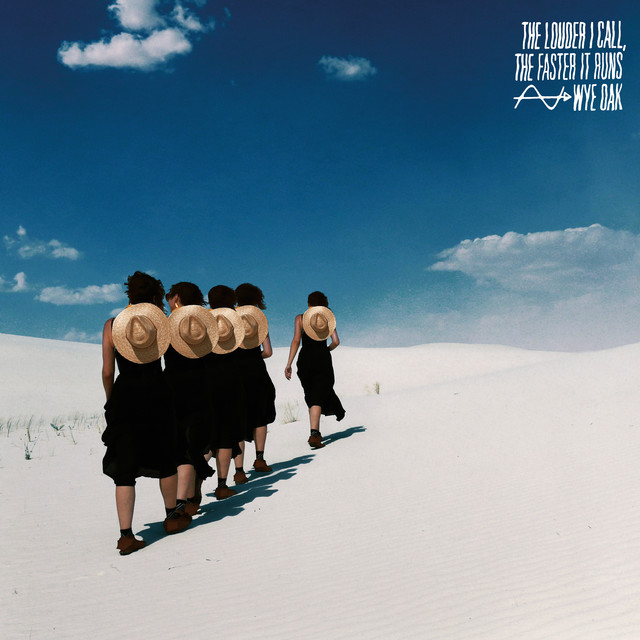
The Louder I Call, the Faster It Runs
Wye Oak (2018)

Dopamine
BØRNS (2015)

I Wanna Get Better
Bleachers & Tinashé (2014)
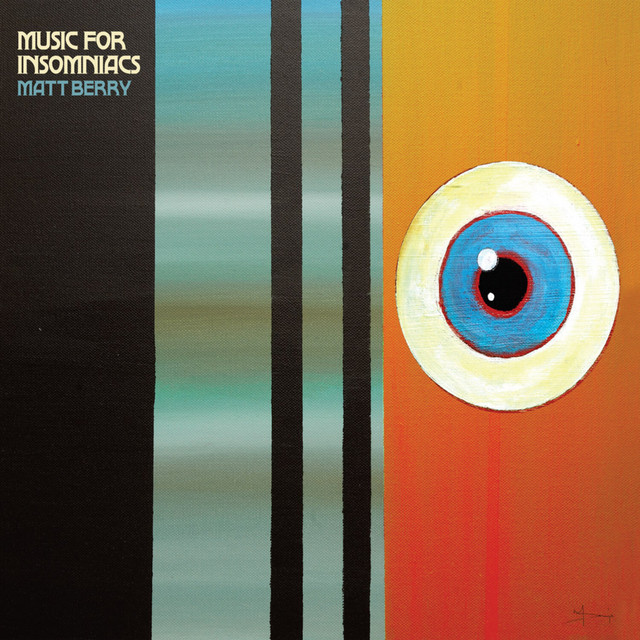
Music for Insomniacs
Matt Berry (2014)
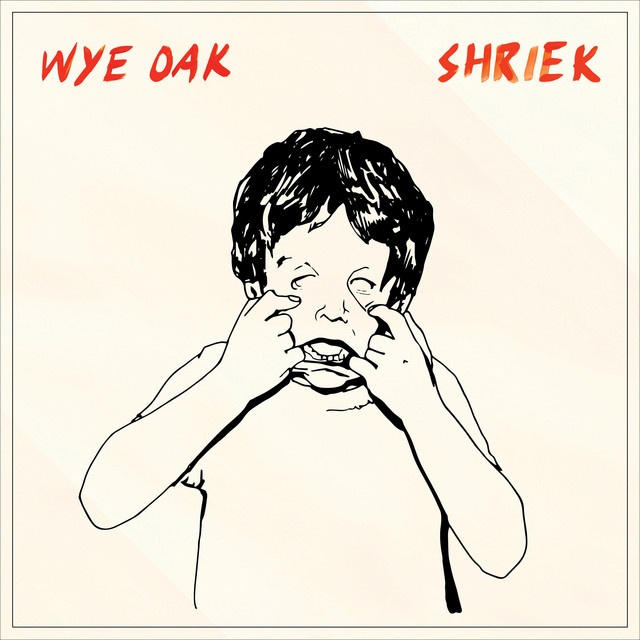
Shriek
Wye Oak (2014)

An Awesome Wave
Alt-J (2012)
Psychic Chasms
Neon Indian & Neon Indian (2009)
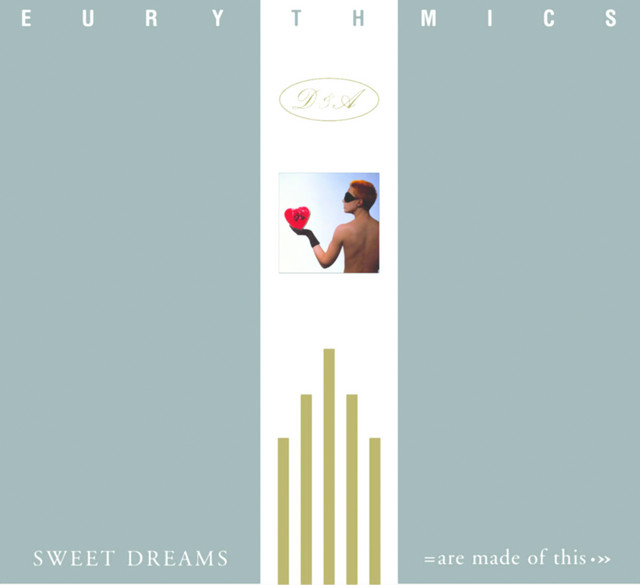
Sweet Dreams (Are Made Of This)
Eurythmics & Dave Stewart & Annie Lennox (1983)
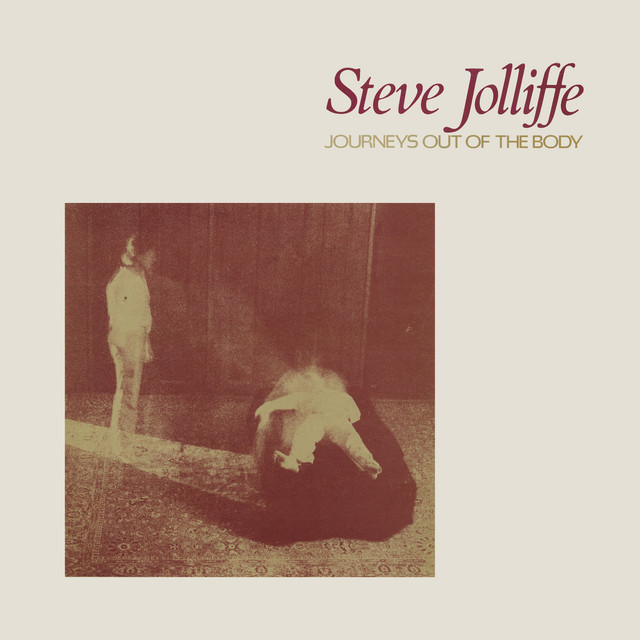
Journeys out of the Body
Steve Jolliffe (1983)
Genre Usage
Based on how artists on Equipboard use this gear, it is most commonly found in the following genres.
Used With
Based on how musicians on Equipboard use Roland Juno-6, it is most commonly used with the following gear.
-s.webp?v=1783263546)

-s.webp?v=1782917887)

-s.webp?v=1783263541)



Community setups
Show yours

Similar
Add recommendation2 alternative and related items for Roland Juno-6, curated by the Equipboard community.

$404.69
I have a Roland HS-10, the "consumer" version of the alpha JUNO-1. (Basically it's blue instead of grey.). The sound engine is similar in a lot of ways to the Juno-6 with a few additional modulation options. It also has MIDI. I recommend the HS-10 or alpha JUNO to anyone who wants the classic Juno poly synth sound but is not in a position to pay the crazy-ass 2021 prices for a 6 or 106. HS-10s and alpha Junos can still be found for a couple hundred dollars instead of a couple thousand and their sounds is beautiful and lush. Yeah, the alpha dial interface sucks but these days you can download a control surface for your iPad or buy one of the 3rd part editors.
It's well worth it.

$2,000.00
Is the same but has patch memory, some people claim that this sounds better too. Since I have not A and B’d them, I cannot say with any certainty if that is the case. I personally don’t think it justifies the extra £1500 or so…
More Roland Synthesizers

$19,535.25
in Synthesizers Rank


$2,000.00
in Synthesizers Rank


$278.85 - $1,763.18
in Synthesizers Rank


$325.00 - $1,332.49
in Synthesizers Rank


$499.99 - $719.99
in Synthesizers Rank


$309.99 - $915.00
in Synthesizers Rank


$1,469.00 - $2,159.99
in Synthesizers Rank

.jpeg?v=1783244343)

$479.99 - $1,099.00
in Synthesizers Rank


-m.webp?v=1783263541)
$956.53
in Synthesizers Rank


$735.79
in Synthesizers Rank


$350.50 - $494.99
in Synthesizers Rank


$197.04
in Synthesizers Rank


$404.99 - $819.99
in Synthesizers Rank


$4,295.00
in Synthesizers Rank


-m.webp?v=1783263546)
$1,114.01
in Synthesizers Rank


$2,239.00
in Synthesizers Rank


$2,199.99 - $2,639.99
in Synthesizers Rank


$149.00 - $368.00
in Synthesizers Rank


$799.99 - $956.52
in Synthesizers Rank


$614.00 - $1,199.00
in Synthesizers Rank


$344.00 - $479.99
in Synthesizers Rank


$588.63
in Synthesizers Rank


$940.00
in Synthesizers Rank


$918.00 - $1,249.99
in Synthesizers Rank


$888.00 - $1,199.99
in Synthesizers Rank


$1,532.28


$652.00 - $1,888.00


$1,252.00 - $1,869.99


$2,200.00 - $3,189.99
.jpg?v=1783216091)

Accessories & Related Items

-s.webp?v=1783091243)
Gear Guides









Most Popular Synthesizers
Most Popular Brands
-
Added to Equipboard on by
 michael
Gear IQ 42641
-


