

Pricing and availability
We compare 600+ stores and found this item at 4 stores. Prices updated .
Store
Reviews
Price




Average Price: $325
High-end/Boutique
$75
$151+
Price Tier
Budget
Standard
High-end
Price History
Based on price data from 1 merchant for "ISP Technologies Decimator G-String II". Prices shown reflect NEW condition. Tracking began Apr 15, 2026.
* Product prices and availability are updated by Equipboard every 24hrs and are subject to change. Equipboard may receive compensation for purchases made at participating retailers linked on this site. This compensation does not affect what products or prices are displayed, or the order of prices listed. For more information, please refer to our affiliate disclosure.
Description
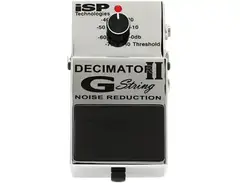
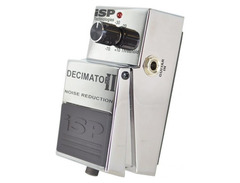
ISP Technologies Decimator G-String II is a noise reduction pedal designed for the serious guitarist. It's not just a pedal; it's a game-changer. With its innovative design, it tracks the signal directly from your guitar, allowing you to transition from clean to high gain without altering the threshold. The magic happens when you insert the processing channel into your effects loop after your high-gain pedals or preamp.
The unique feature of the Decimator G-String II is its linking function, which can be engaged using a simple 1/8" phone cord. This allows you to link two Decimators for two channels of noise reduction, or even create a stereo setup with one Decimator G-String II and one Decimator II pedal. The Decimator G-String II reproduces the same stellar tracking performance offered by ISP's professional ProRack G system, giving you the ultimate guitar noise reduction experience.
Key Features:
- Tracks the signal directly from your guitar
- Transition from clean to high gain without changing the threshold setting
- Linking function allows you to link 2 Decimators for 2 channels of noise reduction
- Can be used in a stereo setup with one Decimator G String II and one Decimator II pedal
- Matches the tracking performance of ISP's professional ProRack G system
Product specs
| Pedal Type | Guitar Noise Reduction |
| Analog/Digital | Analog |
| Inputs | 1 x 1/4" |
| Outputs | 1 x 1/4" |
| Power Source | 9V DC power supply (sold separately) |
| Power Usage | 35mA |
| Batteries | 1 x 9V |
| Height | 2.3" |
| Width | 2.7" |
| Depth | 5" |
FAQs
-
What makes the ISP Technologies Decimator G-String II different from other noise reduction pedals?
-
The ISP Technologies Decimator G-String II features a unique design that tracks the guitar signal directly, allowing seamless transition from clean to high-gain settings without adjusting the threshold, offering transparent noise reduction.
-
Is the ISP Technologies Decimator G-String II pedal analog or digital?
-
The ISP Technologies Decimator G-String II is an analog pedal, providing noise reduction without digital artifacts or aliasing, ensuring a clear and natural sound.
-
What power supply does the ISP Technologies Decimator G-String II require?
-
The ISP Technologies Decimator G-String II requires a 9V DC power supply with at least 100 milliamps capability, which is sold separately.
-
Can the ISP Technologies Decimator G-String II be powered by a battery?
-
Yes, the ISP Technologies Decimator G-String II can be powered by a single 9V battery, offering flexibility for different performance settings.
-
Does the ISP Technologies Decimator G-String II work well with high-gain amplifiers?
-
Yes, the ISP Technologies Decimator G-String II is designed to handle high-gain amplifiers effectively, maintaining clean signal integrity and reducing unwanted noise.
Videos

Music Bliss Malaysia
NOISELESS METAL TONES: Decimator G String vs Silencer vs NS2 Noise Suppressors
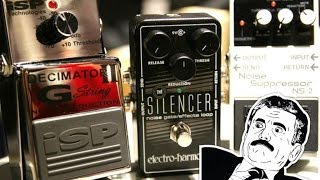
NOISELESS METAL TONES: Decimator G String vs Silencer vs NS2 Noise Suppressors
Music Bliss Malaysia

DECIMATOR II G-STRING PEDAL - BEST NOISE SUPRESSOR EVER !!!!!

Kelster Von Shredster
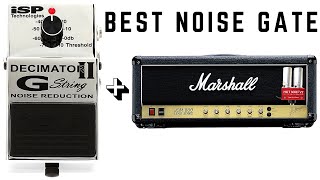
ISP Decimator II G String Noise Gate + Marshall JCM 800 2203 w/ Hot Mod V2

Hollywood Rare Guitars
Reviews
PROS
-
Superior noise suppression, especially for high-gain setups
-
Preserves the nuances and tails of mod and time-based effects
-
Simple setup with helpful online tutorials available
-
Sturdy build quality, described as "built like a tank"
-
Effectively eliminates hiss and squeal without tone suck
-
Can handle complex pedal setups, even with 14 pedals in a stereo fx loop
-
Intelligent gating that doesn't just cut off sound abruptly
-
Can be used in multiple configurations for versatility
-
Does not perceptibly alter tone
-
Some users value it as their most essential pedal
CONS
-
Some find it overhyped and lacking in adjustment options
-
Can reduce sustain if not set up correctly
-
Battery connector design is suboptimal, may damage wires
-
Reported to be heavy, potentially an issue for pedalboard real estate
-
Fingerprint magnet, requiring frequent cleaning
-
Requires careful gain staging and signal chain management in complex setups
-
Some report it makes clean tones sound harsh
Owner Insights
We analyzed real musician discussions from forums and Reddit to find what players love, question, and tweak about ISP Technologies Decimator G-String II.
Use cases and applications
-
The Decimator II G-String excels with high gain and distortion settings, but struggles with clean, ambient tones due to choppy sustain decay.
Source -
The pedal is highly effective for genres like metalcore and hardcore, designed primarily for high distortion signals.
Source -
The Decimator II G-String handles hot effects loops in amps like the JVM without needing adjustments when switching between clean and overdrive channels.
Source -
The Decimator II G-String is praised for its ability to maintain quiet operation by reducing pickup noise, significantly improving sound quality in complex setups with multiple stereo pedals.
Source
Mods and upgrades
-
Using a Boss line selector can help bypass the Decimator during clean passages to preserve tone quality.
Source
Comparisons
-
Owners compared the ISP Decimator II G-String to the Fortin Zuul, noting a preference for ISP in sustaining notes longer.
Source
Setup and maintenance
-
For cleaner tones, experimenting with a guitar's pickup selector to use an in-between position can reduce hum without sacrificing the single-coil sound.
Source
Features and functionality
-
The G-String version's side chaining ability is crucial for users running distortion pedals in front of the amp, as it effectively cuts noise introduced in the power amp section.
Source -
Linking a Decimator II G-String with a regular Decimator II allows the G-String's smart gating to adjust to different gain levels, enhancing overall noise reduction.
Source -
Unlike two regular Decimator IIs, the G-String and Decimator II combo provides automatic threshold adjustment when changing from clean to high gain tones.
Source
5.0 out of 5
Based on 2 Reviews and 10 Ratings

10741
Not as advanced as the ProRack G. Works with line level, but not for everyone.
So I got my hands on the G-String II recently to test it out in my rack guitar rig, hoping to downsize from my ProRack G rack noise gate that's been in service for over 5 years now. Rack noise gates are great, but they require a lot of work to really hone in on the perfect sweet spot, although the payoff is definitely worth it.
The G-String II is a downsized version of the ProRack G. It does take line level well at +12 dBu rated input limit, and it does handle high-gain tones well even with the signal that's hot. However, it wasn't for me. Here's why.
First off, the G-String II doesn't have a Filter Tracking knob like the ProRack G. Because of this, the G-String II will be extremely unforgiving on the gain staging of your preamp as well as the entire signal chain, meaning every single imperfections that's beyond your control within the guitar tone will be exploited by the G-String II. For example, in my case, because I was running the clean tone preamp (Synergy Friedman BE/BB) hot at line level, the compressor I'm using (a Keeley Compressor Plus) kept on popping whenever the clean tone was about to clip. Without the compressor, the clean tone just got pushed into an "unintentional overdriveland," therefore causing the Strymon Mobius to clip and glitch at times. With the ProRack G, the Filter Tracking smoothens out the unwanted pops such that the line level signal remains as consistent as possible.
Another gripe I get with the G-String is the fact that if the line level signal clips the noise gate, then the REST of the pedals following the G-String II will clip as well. This is an issue especially for people like me who use rack line mixers such as the Samson SM10 to route stereo delay and reverb effects in parallel, as the line mixer demands line level signals and it'll make controlling the overall master volume difficult in the FX loop following the noise gate. Thankfully with the Samson SM10 line mixer, there are workarounds to make instrument level work; however, I do not recommend it. I tried it, and it presents a whole new set of problems to solve.
The G-String II isn't a bad noise gate in any way - it does the intended job right, which is to keep the high-gain preamps in check for hisses and unwanted noise, probably the ONLY pedal noise gate platform that actually handles hot preamp signals well, but for me, clean tones are of utmost equal importance as well since I'm writing ballad repertoire in addition to progressive power metal, and in my case, the G-String II causes my clean tone to sound harsh.
So my final verdict? Great pedal noise gate platform, but not for everyone. If you're gonna buy one of these, make sure that everything else that follows the G-String II in the FX loop signal chain are all consistently able to handle instrument level. As soon as you start introducing line level gear, even something like a rack line mixer, go with a rackmount line level noise gate such as the ISP Decimator ProRack G.
Overall, 4 stars. It's not a bad pedal in any shape or form, but is setup-dependent.
50
Orgasmic.
I have suffered the high gain hiss/hum since purchasing my amp(s) and have attempted almost every combination of noise gates in all kinds or positions to no avail.
This. The ISP Decimator II G-String is the most orgasmic pedal I own. I actually own two of these bad boys. If I was held at gunpoint at a guitar tone contest and that I can only have one pedal it would be this, and I would have to fine tune that amp like a mad scientist.
Artist usage
Add artist
.jpg?v=1784480538)

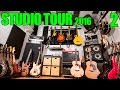
In this YouTube Video at 16:24 you Can see in Issacs pedal board there is a ISP Technologies Decimator G-String II in the middle.


Brian Gibson uses the ISP Technologies Decimator G-String II noise gate pedal, set on the 20 setting, as part of his current pedalboard to manage unwanted noise. This is evidenced by a discussion on Reddit, which provides an insight into his pedal setup.


In a post by Brandon Ellis on Instagram, an ISP Technologies Decimator G-String II pedal can be seen on his pedalboard.


In this tweet made by Syu on October 24th, his pedalboard is shown to consist of an ISP G-String Decimator II just before his Boss delay pedal.


Throughout the 2016 Taste Of Chaos Tour you can see the ISP Technologies Decimator G-String II on Chris Carrabba's board on the top left hand side next to his Fishman DI. The distinct chrome plating, 1 knob, and 2 rivets on the top casing can be seen in the tour recap photo album.


En el DVD de Sangre Fria (31:46), se ve que Arturo esta utilizando un Decimator en su pedalboard durante la grabación de "Saludos Desde Turquía". Creo que es un G-String II pero no estoy 100% seguro.


Alex posted a photo about all of his pedals and there you can find the Decimator 2 pedal



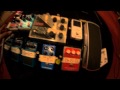
In the timestamp 1:36 of this video, AG can be seen having a ISP Technologies Decimator G-String II on his pedalboard.


Yusuke can be seen recording with an ISP Decimator in a post on Instagram.


Genre Usage
Based on how artists on Equipboard use this gear, it is most commonly found in the following genres.
Used With
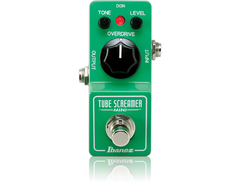
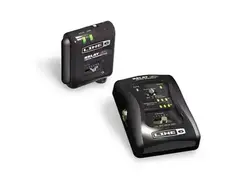
Based on how musicians on Equipboard use ISP Technologies Decimator G-String II, it is most commonly used with the following gear.
-s.webp?v=1784645906)


Community setups
Show yours

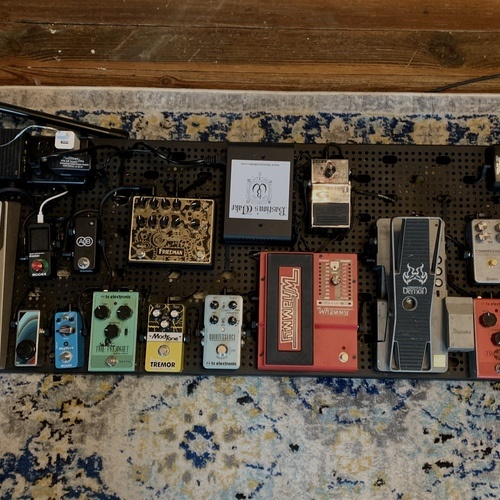
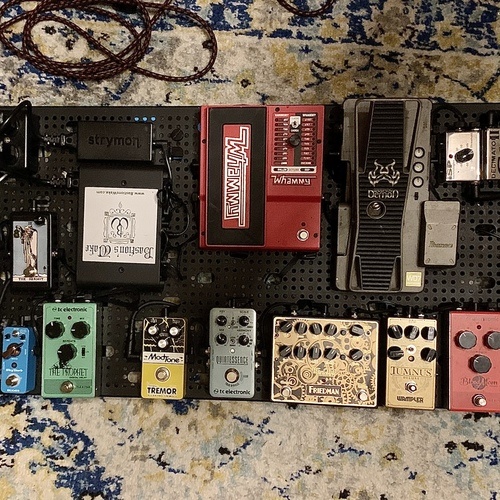
Similar
Add recommendation1 alternative for ISP Technologies Decimator G-String II, curated by the Equipboard community.

$179.99
More ISP Technologies Noise Gate Effects Pedals
-m.webp?v=1784645894)
$322.06
in Noise Gate Effects Pedals Rank


$143.36 - $322.00
in Noise Gate Effects Pedals Rank
.jpg?v=1784480538)


$446.80 - $545.00
in Noise Gate Effects Pedals Rank


$146.72
in Noise Gate Effects Pedals Rank


$122.40 - $143.00
in Noise Gate Effects Pedals Rank


$179.99
in Noise Gate Effects Pedals Rank


$145.04 - $146.72
in Noise Gate Effects Pedals Rank


$462.00 - $642.00
in Noise Gate Effects Pedals Rank


$234.32 - $236.42
in Noise Gate Effects Pedals Rank
-m.webp?v=1784645874)
$89.00 - $120.99
in Noise Gate Effects Pedals Rank


$75.00 - $169.97
in Noise Gate Effects Pedals Rank


-m.webp?v=1784645945)
$124.78 - $159.99
in Noise Gate Effects Pedals Rank


.jpeg?v=1784600206)

$139.00 - $161.50
in Noise Gate Effects Pedals Rank


$215.00
in Noise Gate Effects Pedals Rank


$70.00 - $80.70
in Noise Gate Effects Pedals Rank


$99.99 - $126.00
in Noise Gate Effects Pedals Rank


$62.74 - $79.21
in Noise Gate Effects Pedals Rank


$124.78 - $159.99
in Noise Gate Effects Pedals Rank


$29.00 - $31.99
in Noise Gate Effects Pedals Rank


$22.90 - $46.58
in Noise Gate Effects Pedals Rank


$44.00 - $83.10
in Noise Gate Effects Pedals Rank


$199.99 - $222.00
in Noise Gate Effects Pedals Rank


$95.00 - $143.00
in Noise Gate Effects Pedals Rank


$30.00 - $45.00
in Noise Gate Effects Pedals Rank


$225.00 - $239.00
in Noise Gate Effects Pedals Rank

$124.99 - $171.00
in Noise Gate Effects Pedals Rank


$199.00
in Noise Gate Effects Pedals Rank


$29.00 - $30.99
in Noise Gate Effects Pedals Rank

.jpg?v=1784320991)


$111.00 - $131.57
in Noise Gate Effects Pedals Rank


$249.00
in Noise Gate Effects Pedals Rank


$107.35
in Noise Gate Effects Pedals Rank


$65.00
in Noise Gate Effects Pedals Rank


$33.00 - $37.99
in Noise Gate Effects Pedals Rank

$28.00 - $34.96
in Noise Gate Effects Pedals Rank


$77.00 - $119.99
in Noise Gate Effects Pedals Rank


$47.71 - $51.99
in Noise Gate Effects Pedals Rank

$219.00
in Noise Gate Effects Pedals Rank


Gear Guides





.jpg)


Most Popular Noise Gate Effects Pedals
Most Popular Brands
-
Added to Equipboard on by
 michael
GearIQ 43230
-


