

Pricing and availability
We compare 600+ stores and found this item at 2 stores. Prices updated .
Store
Reviews
Price




Average Price: $1,240
High-end/Boutique
$100
$501+
Price Tier
Budget
Standard
High-end
* Product prices and availability are updated by Equipboard every 24hrs and are subject to change. Equipboard may receive compensation for purchases made at participating retailers linked on this site. This compensation does not affect what products or prices are displayed, or the order of prices listed. For more information, please refer to our affiliate disclosure.
Description
Step into the realm of professional sound design with the Lexicon PCM-70 Reverb, a staple in studios since its introduction in the mid-1980s. Renowned for its rich, lush reverb tails, this effects processor has cemented its place in music history, becoming a favored tool for producers and engineers who demand sonic excellence. Its intuitive interface, coupled with powerful algorithms, offers a wide array of reverb types, from small room ambiances to expansive halls, making it versatile for any recording scenario.
The PCM-70 Reverb is celebrated for its ability to bring a detailed, three-dimensional quality to tracks, enhancing vocals, instruments, and even full mixes. With its proprietary Lexichip, this processor delivers unparalleled depth and clarity, allowing users to sculpt their sound with precision. Musicians and producers alike appreciate its reliability and the consistency it brings to their projects, whether in the studio or live performances.
Designed for easy operation, the Lexicon PCM-70 features a straightforward control layout, ensuring that even the most complex reverbs are accessible and adjustable. The unit's presets provide a solid foundation for quick setup, while its extensive editing capabilities allow for deep customization to suit any musical style.
Key Features:
- Renowned for its rich and lush reverb tails
- Proprietary Lexichip for superior sound quality
- Wide range of reverb types, from rooms to halls
- Intuitive interface for easy operation
- Extensive editing capabilities for sound customization
- Trusted by professional producers and engineers worldwide
Product specs
| Brand | Lexicon |
| Model | PCM 70 Digital Effects Processor |
| Finish | Black |
| Year | 1980s |
| Made In | United States |
| Categories | Multi-Effect |
FAQs
-
What are the main reverb types available on the Lexicon PCM-70?
-
The Lexicon PCM-70 offers a variety of reverb types, including Hall, Plate, Room, and Concert Hall, known for their rich and lush sound quality suitable for both studio and live applications.
-
Is the Lexicon PCM-70 suitable for live performances?
-
Yes, the Lexicon PCM-70 is well-regarded for live performances due to its robust build and versatile reverb settings, providing high-quality effects that enhance live sound production.
-
How does the Lexicon PCM-70 compare to newer reverb units?
-
While newer units might offer more features, the Lexicon PCM-70 is celebrated for its classic digital reverb sound, which remains a favorite for its warmth and character in both studio and live settings.
-
Can the Lexicon PCM-70 be integrated into a modern DAW setup?
-
Yes, the Lexicon PCM-70 can be integrated into a modern DAW setup using appropriate analog-to-digital converters, allowing you to leverage its classic reverb sounds in digital productions.
-
What is the user interface like on the Lexicon PCM-70?
-
The Lexicon PCM-70 features a straightforward interface with a digital display and tactile controls, making it user-friendly for quick adjustments and parameter settings during sessions.
Videos

Michael Nielsen - Big Hairy Guitars
Reverb: What is the Lexicon sound?
Reverb: What is the Lexicon sound?
Michael Nielsen - Big Hairy Guitars
Demo :: Lexicon PCM70 Reverbs on SH101 (Aphex Riff)

SOLON Music
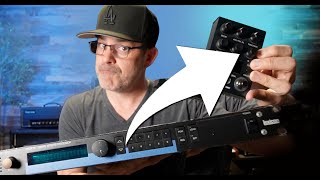
A Lexicon PCM70 in a Pedal!?! Yes.

Michael Nielsen - Big Hairy Guitars
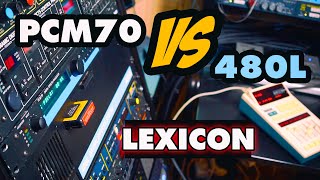
Lexicon PCM70 vs 480L

Espen Kraft
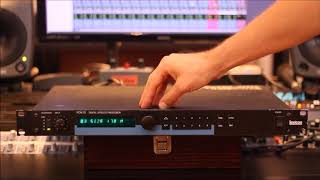
Lexicon PCM70.

Retrosonic Pro Audio
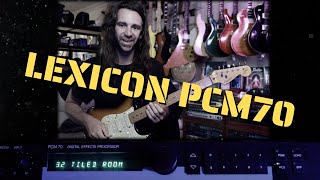
Lexicon PCM70

Leon Todd
Demo :: Lexicon PCM70 on TR8 + Reface CS (Aphex Ageispolis Riff)
SOLON Music
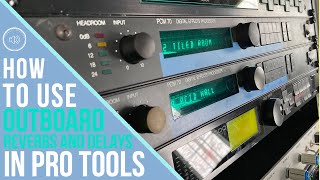
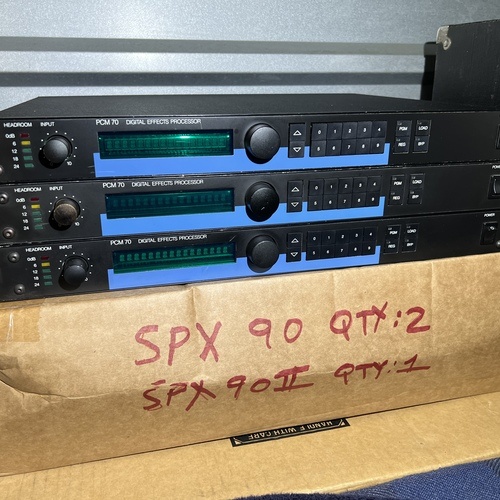
How to use outboard reverb in Pro Tools | Lexicon PCM 70 / Yamaha SPX 90

Seawell Studios
Cheap vs Expensive Reverb : Lexicon PCM70 vs Korg DRV1000

Clifton Wright
Reviews
PROS
-
Customizable patches allow for unique sound creation
-
Includes revered presets like "Tiled Room" and "Long Hall"
-
Superior sound quality, outperforms top software reverbs
-
Can produce classic 80's sound with direct instrument input
-
MIDI in/out/thru for versatile live and studio applications
-
Offers mono to stereo conversion
-
Repairable by specialists, ensuring longevity
CONS
-
Older units may be prone to failure, hard to fix
-
Does not include an FX loop
-
Editing can be cumbersome compared to older models
-
Sound may not blend well in mixes, very pronounced effect
-
Considered overpriced by some users
Owner Insights
We analyzed real musician discussions from forums and Reddit to find what players love, question, and tweak about Lexicon PCM-70 Reverb.
Comparisons
-
The PCM 70's delay quality is highly praised, often preferred over the Axe FX II's delay for its superior tone.
Source -
The SPX 90 may be seen as redundant due to alternatives like the Magicstomp, which offers similar algorithms with easier programming.
Source -
The Ensoniq DP4/DP4+ is considered the closest in sound to the Lexicon 224 due to algorithms reverse-engineered by an ex-Lexicon engineer.
Source -
The Valhalla Vintage Reverb is often compared to Lexicon hardware but is seen as too precise in pitch shifting compared to the AMS 1580.
Source -
The Lexicon PCM 70 is often preferred over plugins for its unique character, particularly when compared to ITB options like Altiverb and Valhalla.
Source
Features and functionality
-
PCM 70 is optimized for stereo use, and using it in mono might not fully utilize its algorithmic potential.
Source -
The Lexicon 224's preamps and transformer-coupled outputs significantly contribute to its unique, expansive sound profile.
Source -
The PCM 70's sound is highly valued for its distinctiveness, especially in creating three-dimensional spaces that some users feel plugins can't replicate.
Source
Use cases and applications
Value and pricing
-
Consider cheaper Lexicon models like the LXP-1 or MXP-1 for adequate delay and chorus effects without investing in a PCM 70.
Source
Setup and maintenance
-
Electrolytic capacitors in older Lexicon units need replacing every 30 years, and parts might be difficult to source.
Source
User experience
-
Owners note an intuitive interface on the Model 200 and Prime Time delay units, enhancing user interaction compared to software.
Source
Critic Reviews
4.5 out of 5
Based on 2 Reviews and 10 Ratings

41029
Still expensive, sound matches price point if you're into lexicon reverb.
A crisper sounding pcm60. Mono to stereo. No fx loop. MIDI in, out and thru. If you like the 60 you'll like the 70. Just a more modern flavor of the 60 with more of everything. Midi patch selection makes it great for live performance or FOH where you need different verbs every tune. Editing is less fun than the 60 but the screen is better. Very complex sound but as a result it doesn't tuck in a mix as well as the 60. You KNOW it's on an aux send. Kinda overpriced these days.
Preferred Settings + Usage:
Tiled room.

257
Artist usage
Add artist

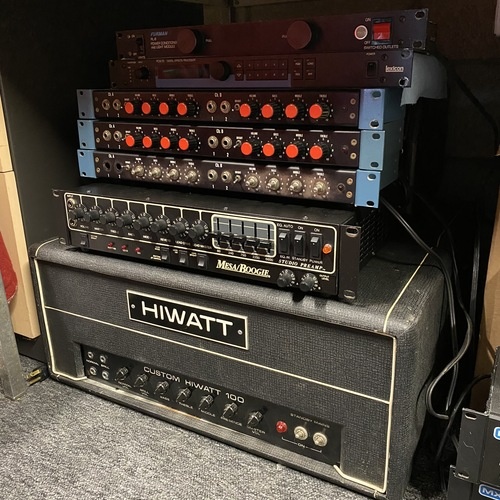
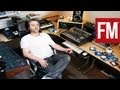
This can be seen as part of the rack-mountable equipment in the studio in this video.


According to the items he sold at auction, this processor was one of those things. It was another piece of gear he used.


Having survived John's intrepid questioning we drove over to King's home studio, which is located a few miles out of Rye, in a house overlooking the site where in a grey and distant past the Isle Of Wight Festival took place. Jimi Hendrix and Bob Dylan once played there. Now there are only hills, grass and cows. And a studio which left John breathless for a moment. He gazed in astonishment at the 48-channel SSL E-series desk and the 15 or so Alembic and Status basses on the walls surrounding it. He skimmed the walls of outboard gear, including AMS, SPX90II, Lexicon PCM70, 480L and 224X, Urei's, decided that he felt more comfortable with the view outside, and silently settled into a chair, watching the snow fall on the grass.


The rack setup used during the later Blue Murder days included a Mesa Boogie Dual Recto head, a Mesa Boogie Tri-Axis Preamp, a Mesa Boogie IIC+ head, a Mesa Boogie Strategy 500 Power Amp, a rackmounted Dunlop Crybaby, a Lexicon PCM 41, a Lexicon PCM 70, and an H&H V800 Power Amp.


"He still tends to treat his sounds heavily after programming: favourite devices for creating movement are his Roland SBF325 stereo flanger and Roland SDE3000 digital delay. Other effects come courtesy of Lexicon PCM70, Yamaha SPX90II, and Korg SRV reverbs, Sound City distortion pedals, and a stereo ring modulator which he had custom built. Again, like Sylvian, and still harking back to Tin Drum times, Barbieri prefers the sound of keyboards recorded to tape (the Fostex E16), and so, oddly for a modern keyboard player, doesn't own any sequencer or computer."


"My favorite digital reverb. I had a bunch of custom presets I made that I used all the time. 'Pelvisman' (named after a song by Knerble Knerble) was a huge, bright hall sound with a lot of pre delay, and 'Anti-Pelvis' was a super fast gated snare sound, used on a ton of sessions."

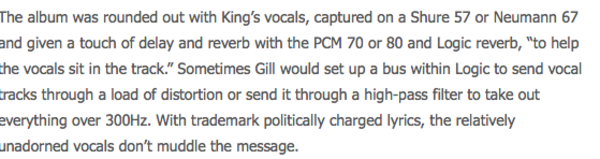
In this article, Andy's approach to recording vocals is explained. "The album was rounded out with King’s vocals, captured on a Shure 57 or Neumann 67 and given a touch of delay and reverb with the PCM 70 or 80 and Logic reverb, 'to help the vocals sit in the track.'"

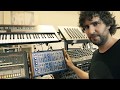
In his Studio Tour Feature for FACT Magazine, Mathew Jonson's PCM-70 can be seen at at 2:48.

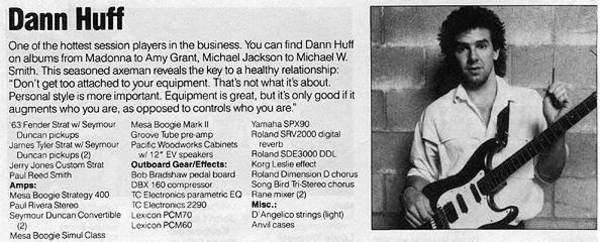
In a 1988 photograph, Dann Huff is shown using a Lexicon PCM-70 Reverb, a popular effects processor during an era when rack rigs were highly valued in professional music production.


A pair of Lexicon PCM 70s can be seen in Karl's studio (sixth photo, right side of rack, third and fourth from bottom).


"The PCM70 is also a favourite toy; it has so many lovely things to it. Its Rich Chamber setting is a real warm, beautiful sound. So I was able to do the whole movie score with just that setup and I was very happy with it." Another smile, another cigarette, another subject. Art. To call Laurie Anderson a musician is to do her an injustice. Her work to date has involved songwriting, choreography, film-making and performing, so "artist" is a more accurate term. And strangely, it's from interviewing those sculptors that this artist has drawn many of her ideas."

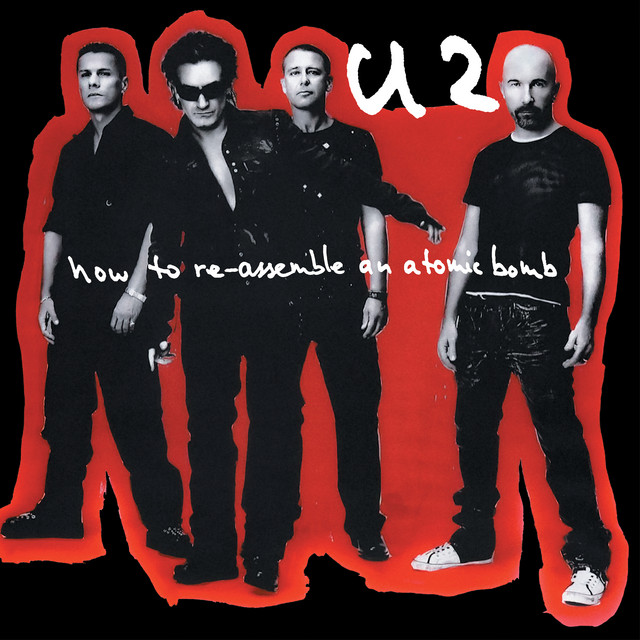
Album Usage
The Lexicon PCM-70 Reverb has been featured on the following albums:
Genre Usage
Based on how artists on Equipboard use this gear, it is most commonly found in the following genres.
Used With
Based on how musicians on Equipboard use Lexicon PCM-70 Reverb, it is most commonly used with the following gear.
-s.webp?v=1783402685)


-s.webp?v=1783349885)


Community setups
Show yours
Similar
Add recommendation1 alternative for Lexicon PCM-70 Reverb, curated by the Equipboard community.

More Lexicon Effects Processors

$125.00
in Effects Processors Rank


$66.00
in Effects Processors Rank


in Effects Processors Rank


$3,411.45
in Effects Processors Rank


$1,799.99
in Effects Processors Rank


$235.63 - $1,016.83
in Effects Processors Rank


-m.webp?v=1782227096)


-m.webp?v=1782659069)


-m.webp?v=1783177121)


$1,094.64 - $4,120.00


Most Popular Effects Processors
Most Popular Brands
-
Added to Equipboard on by
 equipboard
Gear IQ 4934
-