This page about Neumann KM-83 is a stub. You can help improve it:


Pricing and availability




* Product prices and availability are updated by Equipboard every 24hrs and are subject to change. Equipboard may receive compensation for purchases made at participating retailers linked on this site. This compensation does not affect what products or prices are displayed, or the order of prices listed. For more information, please refer to our affiliate disclosure.
Description
The Neumann KM-83 is a staple in the world of studio recording gear, revered for its precision and clarity. This small-diaphragm condenser microphone is part of Neumann's renowned KM series, known for delivering exceptional sound quality in professional studio settings. Ideal for capturing the intricate details of acoustic instruments, the KM-83 is a go-to choice for recording engineers who demand the best.
Equipped with an omnidirectional polar pattern, the KM-83 excels in recording environments where natural sound reproduction is crucial. Its ability to capture sound uniformly from all directions makes it perfect for ensembles, orchestras, and ambient recordings. The microphone's frequency response is finely tuned to handle a wide range of frequencies, ensuring that every nuance of your performance is accurately captured.
A standout feature of the KM-83 is its uncolored sound reproduction, which provides a transparent audio output without adding any coloration. This makes it highly versatile, suitable for various recording applications, and a favorite among professionals seeking authenticity in their recordings. The microphone's construction is classic Neumann—robust and durable, designed to withstand the demands of studio life.
Whether you're a seasoned professional or an aspiring musician, the Neumann KM-83 offers a reliable and high-quality recording solution that stands the test of time.
Key Features:
- Small-diaphragm condenser microphone
- Omnidirectional polar pattern
- Transparent and uncolored sound reproduction
- Exceptional frequency response for detailed sound capture
- Ideal for acoustic instruments and ambient recordings
- Renowned Neumann build quality and durability


Reviews
Owner Insights
We analyzed real musician discussions from forums and Reddit to find what players love, question, and tweak about Neumann KM-83.
Use cases and applications
-
Diffraction spheres enhance high-end directionality while maintaining omni characteristics, ideal for main mic arrays in classical music recording.
Source -
Omnidirectional KM-83 microphones can add "air" and ambience to snare drums, particularly beneficial in specific room acoustics.
Source -
A single Neumann KM-83 placed between the snare, floor tom, and kick can capture an ideal drum mix balance when positioned carefully for optimal sound ratios.
Source -
Adding stereo room mics in x/y or spaced pair configurations alongside a KM-83 can enhance stereo width while minimizing low-end phase differences by being equidistant from the kick.
Source
Features and functionality
Comparisons
-
Spheres are typically used with omnidirectional microphones like KM130/131 and KM183 for smoother off-axis response, not usually seen with cardioid models like KM84.
Source
User experience
-
Despite increased hi-hat bleed, some users prefer the KM-83's sound on snare drums over the KM-84, highlighting its unique tonal qualities.
Source -
Owners experimenting with minimal mic setups note that careful tuning and damping of drums can complement the KM-83's ability to capture clear and balanced drum sounds.
Source
Based on 0 Reviews and 0 Ratings
Artist usage
Add artist

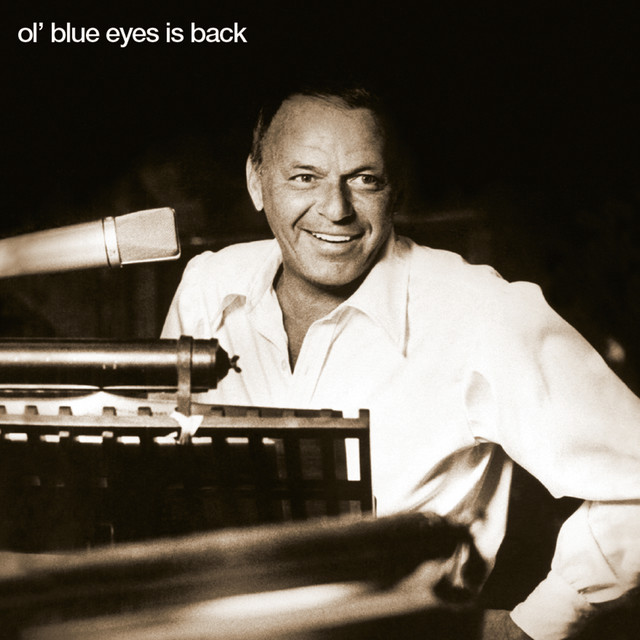
In Vol. 4, No. 5 (the September/October 1973 issue) of Recording Engineer / Producer (a.k.a. R-e/p) magazine, an interview with MGM Recording's Ed Greene mentions that Sinatra used the KM-83 for the Magnavox Presents Frank Sinatra TV special, which promoted the album Ol' Blue Eyes Is Back.
R-e/p: How about your choice of microphones?
ED GREENE: The hand microphone that we ended up with was a Neumann KM -83, believe it or not, an omni microphone. I hated to use the word "omni" around people who weren't really technically oriented because right away they said, "Omigod, that'll never work!" But, in fact, it worked very well. We must have tried 15 or 18 microphones and came down to about 5 that we tried on the show. I originally shied away myself from an "omni" just because you have to work it a little closer. But in this case, being the professional that he is, Mr. Sinatra worked it just beautifully. On the segment of the show that required a lavalier we used an electret Sony ECM-50, also an omni, because its sound closely matched the KM-83. The boom mikes, Sennheiser 415's were not used during the live show, but during the video pre-record two days before.
R-e/p: Is the KM-83 the same microphone Mr. Sinatra used on the album?
ED GREENE: No, a U-67 was used on the record, a cardioid used at some distance, about a foot and a half, so that there was really little change of perspective if he moved around a little. But the problem with using a cardioid as a hand mike is that unless you stay on axis, or keep the same angular and distance relationship to it, you're going to have a difference in sound illusion or quality. With an 'omni' you get much less of that. That's one of the reasons for the 'omni'. Also, the KM-83 has no proximity effect; that is, there is no build-up of the low end as you get close to the microphone. So with some careful level riding, it makes a pretty nice sound against the orchestra. It's not a particularly unusual microphone, although once we had chosen it we couldn't find another one in town. So, we had one flown in from New York as a backup. The director didn't like the standard black pop filter, so we used a dull chrome grill from another microphone.
Album Usage
The Neumann KM-83 has been featured on the following albums:
Genre Usage
Based on how artists on Equipboard use this gear, it is most commonly found in the following genres.
More Neumann Condenser Microphones

$519.00 - $799.00
in Condenser Microphones Rank


$899.00 - $1,295.00
in Condenser Microphones Rank


-m.webp?v=1785164357)
$2,349.00 - $3,995.00
in Condenser Microphones Rank


$508.80 - $849.00
in Condenser Microphones Rank


$2,775.83 - $3,995.00
in Condenser Microphones Rank


$1,456.37 - $1,995.00
in Condenser Microphones Rank


$748.89 - $899.00
in Condenser Microphones Rank


$3,444.31 - $4,395.00
in Condenser Microphones Rank


$4,632.01 - $8,299.00
in Condenser Microphones Rank

-m.webp?v=1785150145)
$4,999.00 - $5,995.00
in Condenser Microphones Rank


$1,281.75 - $1,750.00
in Condenser Microphones Rank


$2,224.90
in Condenser Microphones Rank


$714.56 - $849.00
in Condenser Microphones Rank


$530.57 - $849.00
in Condenser Microphones Rank


$1,439.00 - $1,695.00
in Condenser Microphones Rank


$16,111.00
in Condenser Microphones Rank


$1,167.25 - $1,595.00


$1,959.00 - $3,500.00


$3,659.00 - $4,395.00


-m.webp?v=1785164783)
$1,959.00 - $3,500.00


$2,349.00 - $3,995.00


$7,500.00 - $9,995.00


.png?v=1785156352)


$989.00 - $1,249.00


$3,421.95 - $3,995.00


$554.06 - $699.00


Community setups


Similar


Gear Guides







Most Popular Condenser Microphones
Most Popular Brands
-
Added to Equipboard on by
 eyeseeofficial
GearIQ 161640
-


