


Pricing and availability
We compare 600+ stores and found this item at 7 stores. Prices updated .
Store
Reviews
Price





Price History
Based on price data from 5 merchants for "Rotosound RS66LD Swing Bass 45-105". Prices shown reflect NEW condition. Tracking began Apr 2, 2026.
* Product prices and availability are updated by Equipboard every 24hrs and are subject to change. Equipboard may receive compensation for purchases made at participating retailers linked on this site. This compensation does not affect what products or prices are displayed, or the order of prices listed. For more information, please refer to our affiliate disclosure.
Description
Introducing the Rotosound RS66LD Swing Bass 45-105, a set of round-wound stainless steel strings that have been a top choice of prominent bassists like Billy Sheehan, John Paul Jones, and Geddy Lee. Rotosound, the iconic British brand, made history by being the first to produce these innovative strings back in 1962. The RS66LD Swing Bass Strings are renowned for their bright, punchy tone, making them the perfect fit for rock and metal genres.
These strings are not just about the sound; they offer a balanced tension which makes them comfortable to play while still maintaining a responsive feel. The balanced gauge set from 45 to 105 provides a versatile tone, suitable for various musical styles. On top of that, the long scale length has been specifically tailored for standard 34" scale basses to maximize your instrument's potential.
What sets the RS66LD Swing Bass Strings apart is the round-wound stainless steel construction. This design results in a pure, articulate tone coupled with enhanced clarity. The stainless steel alloy is incredibly resistant to corrosion and sweat, ensuring long-lasting playability and consistent tone. Plus, the textured feel under your fingers adds a familiar touch for most rock and metal bassists.
Key Features:
- First ever round-wound stainless steel bass strings from Rotosound
- Bright, punchy tone ideal for rock and metal genres
- Balanced tension for comfortable play and responsive feel
- Balanced gauge set from 45 to 105 for a versatile tone
- Specifically tailored for standard 34" scale basses
- Highly resistant to corrosion and sweat due to the stainless steel alloy construction
- Textured feel under fingers for a familiar touch
- Long-lasting playability and consistent tone
Product specs
| Guitar Type | Electric Bass |
| Number of Sets | 1 |
| Coated | No |
| Gauges | .045, .065, .080, .105 |
| Winding Type | Round Wound |
| Core Material | Steel |
| Winding Material | Stainless Steel |
| Scale Length | Long, 32"-34" |
FAQs
-
What is the tone characteristic of Rotosound RS66LD Swing Bass strings?
-
Rotosound RS66LD Swing Bass strings are known for their bright, punchy tone with excellent clarity and sustain, making them ideal for rock, funk, and jazz styles.
-
Are Rotosound RS66LD Swing Bass strings suitable for long-scale bass guitars?
-
Yes, the Rotosound RS66LD Swing Bass strings are designed for long-scale bass guitars, fitting scale lengths of 32"-34".
-
What material are Rotosound RS66LD Swing Bass strings made from?
-
These strings are made from stainless steel with a steel core, providing durability and a bright sound.
-
Do Rotosound RS66LD Swing Bass strings have a coating?
-
No, Rotosound RS66LD Swing Bass strings are not coated, which contributes to their natural feel and bright tone.
-
What gauges are included in the Rotosound RS66LD Swing Bass set?
-
The Rotosound RS66LD Swing Bass set includes gauges .045, .065, .080, and .105.
Videos

RS66LD
RS66LD ROTOSOUND

RS66LD ROTOSOUND
RS66LD
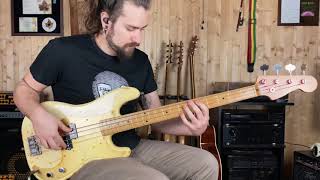
Drum & Bass Groove

Timo Orlandi
Reviews
Owner Insights
We analyzed real musician discussions from forums and Reddit to find what players love, question, and tweak about Rotosound RS66LD Swing Bass 45-105.
User experience
-
Despite their rough texture, Rotosound 66 strings are favored for their bright, aggressive tone that suits Fender basses, especially when seeking a punchy, articulate sound.
Source -
Players report that the Rotosound Swing 66s provide an exceptional bright tone when used with a pick, highlighting the strings' versatility across different playing styles.
Source -
Rotosound RS66LD strings are noted for their aggressive, punchy sound with J pickups, enhancing their growly and clear tone.
Source -
Rotosound strings are known for their distinctive "piano string growl," which is particularly noticeable on instruments like the Rickenbacker 4003.
Source -
Customer service for Rotosound is highlighted positively, with helpful support when addressing string issues.
Source -
Despite the rough feel, some users appreciate the initial attack and distinctive tone Rotosound strings provide, especially for recording purposes.
Source -
It's observed that Rotosound strings may cause faster fret wear, especially on fretless basses.
Source
Features and functionality
-
It's noted that the Rotosound Swing 66 strings can bring out a growly midrange on Jazz Basses, ideal for genres requiring prominent bass presence.
Source -
Rotosound 66 strings are available in various gauges, with the 45-65-80-105 set being a popular choice due to its balance between brightness and playability.
Source
Comparisons
-
The stainless steel Rotosound Swing 66s offer more grit and brightness than the nickel-plated version, making them a better choice for players seeking a more aggressive sound.
Source -
Users find that DR strings offer a smoother feel and longer lifespan compared to Rotosound, but Rotosound is preferred for its unique tonal qualities.
Source -
Users note that Dunlop Super Bright Stainless Steels maintain their "zing" longer than Rotosound strings, which can lose brightness after a week.
Source -
Rotosound strings are compared to DR Black Beauties, which are described as less stiff and growler, with a twang similar to Rotosounds.
Source
Use cases and applications
-
Rotosound Swing 66 strings are frequently recommended for Fender Jazz Bass due to their aggressive tone, enhancing the instrument's natural brightness and punch.
Source -
Rotosound strings are praised for maintaining a bright tone longer than Ernie Ball Slinkies, making them ideal for players seeking a consistently aggressive sound.
Source
Setup and maintenance
-
It's observed that Rotosound strings can cause significant fret wear on softer frets, especially on fretless basses, due to their coarse stainless steel construction.
Source
4.5 out of 5
Based on 12 Reviews and 46 Ratings

4869
Simply, the best bass strings ever
Bright sounding, long lasting (to me at least, I barely sweat), and when they die the don't become this dead sounding string like most nickel strings that have pretty much no definition and because they are made of Stainless Steel they keep pretty much pristine for a loooong while (just look at Joe Dart Jazz Bass that had already old Swing 66 strings when he got it and used them until he got the Music Man) also they are aren't too tense but they are a little bit stiff on the first two strings, so low action is pretty much must do for that classic Rotosound clank
Preferred Settings + Usage:
Low action!

418
Legendary tone. Unmatched durability. Nothing more to ask.
I'll be honest. This string is known for its clothesline like stiffness and sandpaper like roughness. however, its legendary tone cannot be matched by any brand. and as an Indonesian and its extreme tropical climate, plus my toxic sweats, stainless steel is indeed the most logical option. fresh or dead, still loud enough to defeat any string. trust me, I've been using Ernie Ball Cobalts, Elixir Coated, and D'Addario chromes, or Dr pure blues, and they all crumble to rust. And the Rotosounds? Well in 3 months still crisp and fresh, 6 months merely some dirty stains, then 2 years already and it hasn't rusted either. The only close second was the ErnieBall hybrid Stainless Steel Slinkies.

3670
these are bad after trying DR
I used to use these when I started out, the sound is alright. They destroy your frets and your fingers like no other rounds and also die very quickly. I replaced these with DR sunbeams on my yamaha about a year ago and they still have signs of life in them.
Preferred Settings + Usage:
Replaced with DR anything pretty much.

670

great sound, i want bigger gauge on the E string
i personally want a higher gauge on the e string. these strings instantly had a colorful sound. the A string at first was overly noisy, but that went away with use. the strings sound so natural to me, i dare say articulate. i have the string on my gretsch g5123b hollowbody bass. the string really give the bass a 50's or 60's sound, and sounds great when playing acousticly. their is some things i like about daddario strings which i'd like to have in a rotosound set. i'm definitely going to look at other rotosound models to see which is best for me. also, if your play extremely downed tune songs, this set most likely not for you.


94
they are some good strings
if you want a nice bass tone, go for those strings, they are absolute monsters! the thing i hate about them that they are kinda harsh for me (playing agressive fingersyle) and they can make your fingers hurt even doe u have callusses Edit: Now I play only Stainless Steel, I got used to them.

7287
You know, Cliff Burton played agressive fingerstyle with the same kind of strings in a lighter gauge, maybe some 45-90s would work better for you aswell.

8195
More versatile than you think
Seeing the artists generally associated with these strings might let you think they're only great for various kinds of rock. They're not. I've been slapping, thumping and picking away at these for most of my time on bass and they've never failed to deliver. The reason I first chose them was simply because they were among the cheapest on offer that day, but having tried Bass Boomers, Trace Elliotts and many more since, I must say that they don't have anything to boast about compared to the Rotosounds.

437
For me on my fretless it gives that real pastorius growl.

127
The Best
The are they best sounding string for a bright aggressive tone. I use the 50-110 set tuned to Eb Standard and Drop C#

Artist usage
Add artist

Peter Hook is confirmed to have used Rotosound RS66LD Swing Bass 45-105 strings during the Joy Division era, specifically on his Hondo Rickenbacker copy. This is evidenced in a televised performance of "She's Lost Control" on the "Something Else Show" in September 1979, where the distinct red silk ends characteristic of Rotosound strings are clearly visible on his bass. The performance was remastered and shared by Agustín Casas Solaro on YouTube.


Kim Gordon is confirmed to use Rotosound RS66LD Swing Bass 45-105 strings, as she is listed as a Rotosound artist on their website's "Players" page. This is further supported by images showing the distinctive red silk of Rotosound strings.


At 0:09 he shows the strings that he use Rotosound RS66LD Swing Bass Strings in order to record a good tone with the bass.

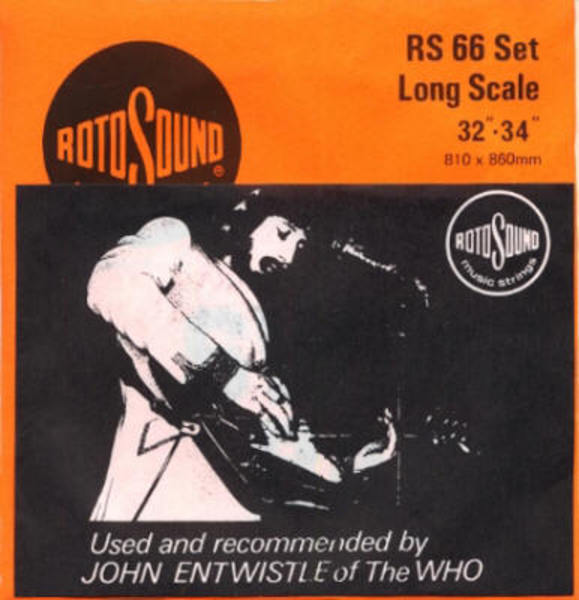
Entwistle was often noted for his place in helping to pioneer and develop Rotosound's bass string design & tonality quality with the help of Rotosound founder & chairman James How.
From November 1975, Guitar Player interview:
What type of strings do you use?
Rotosound. I have to use them — I designed the flaming things! Poor Greg Lake, Chris Squire [laughs]. I was looking for bass strings which vibrated properly, and I couldn’t find a good E and A string on any set at all, except maybe for LaBella — they weren’t too bad. But I wanted a round-wound string. I was approached by Rotosound, and they said they’d make some strings for me, exactly what I wanted. So I went to the factory, and they brought out a set of their round-wound and asked what I thought of them. The E and the A didn’t vibrate properly, and the D and the G weren’t heavy enough. So I sat there all afternoon while they made me strings with different cores, and different gauges, and different types of wire, and finally got through the E, A, D, G, and got a balanced set. And I said, “they’re fine, make me as many sets as you can.” They started making them and said, “look, we’ll put your picture in the string sets, and we’ll put these strings on the market.” So they issued them as “Swing Bass,” and they’ve been out ever since. A lot of people use them and get the same sound as me. I wanted to get a sound like a piano, which is why I wanted round-wound strings; I found that I could play chords and get a lot more sustain out of wire wound, so that’s really why I set out to get the strings done.
In a seperate interview Entwistle stated:
From April 1995 Bassist interview:
[Q]: How did the link [with Rotosound] evolve?
[JE]: “It was in 1966 and I was looking for that Danelectro sound again. I tried everybody’s strings but the E and the A’s just didn’t work. It was the same with Rotosound but there was something about them that was almost there but not quite. To solve the problem I got in touch with James Howe[sic] and told him his D and G strings were great but the E and A didn’t vibrate properly. He told me to take my bass along to Rotosound and have some strings made until they got it right. After a couple of hours, we realised that the problem wasn’t in the wire winding, but in the core of the string. You could see that the strings vibrated in a big circle and that was wrong; the core needed to be thicker. We also made the overall gauges a bit heavier and they sent me away with 12 sets to use. A couple of days later they called and asked if I objected to them putting my name to the strings and selling them commercially. I told them I didn’t mind as long as they kept me supplied with free strings! But then we had to do the same with medium and short scale strings because I had loads of different basses by then. Those strings, the RS 66 sets, were the first that vibrated properly other than the Danelectros.”
The "Danelectro Sound" to which Entwistle is refering is the tone made by the stock bass strings on Danelectro's short-scale basses, which weren't available for general purchase.


Used in the 80s with David Lee Roth, as stated in the Rotosound website, Billy Sheehan has been a long time Rotosound player and endorser
.jpg?v=1783323499)
.jpg)
In this photo Steele can be seen with a pack of Rotosounds taped to his Alembic Spoiler bass.

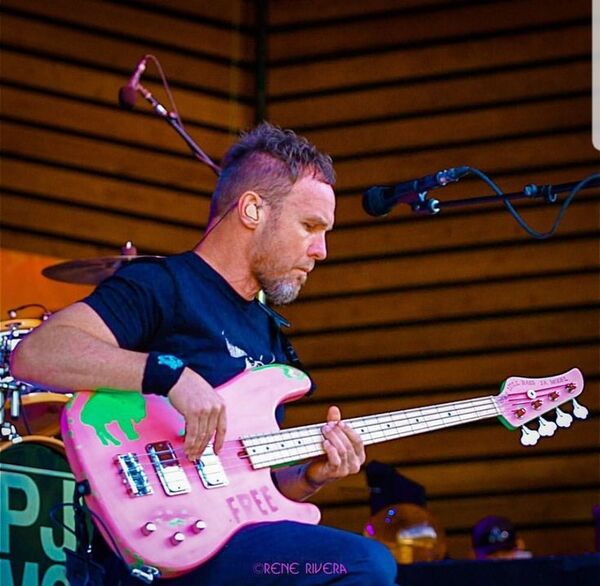
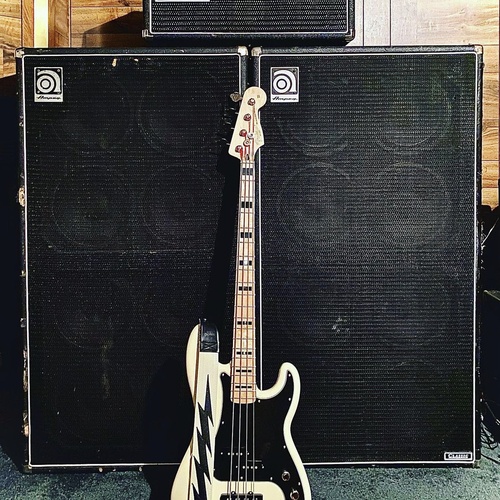
Jeff Ament, the bassist for Pearl Jam, is known to use Rotosound RS66LD Swing Bass 45-105 strings on his Mike Lull basses. This is evidenced by the distinctive red silk string ends and the UK-colored ball ends at the bridge, which are characteristic of Rotosound strings. Furthermore, Pearl Jam is listed as a Rotosound artist on the official Rotosound website.


On Rotosound's official website, they list the RS66LD Swing Bass strings as the strings Chris Squire used throughout his career. They noted "Sometimes we will make up Chris’s custom extra long scale Swing Bass strings!"


In a January 1979 issue of Guitar Player magazine Gene was asked, “What kind of strings do you use?”
Gene answered, “I use Rotosound Roundwound Extra Long strings because they’re more metallic. They wear down the frets and your bass needs a fret job done every four or five months, but the Rotosound Roundwounds have that metallic edge, and no matter how low you go you can still hear the twang—especially if you push the mids and the highs, you’re going to get a buzzsaw effect without a fuzz box.”

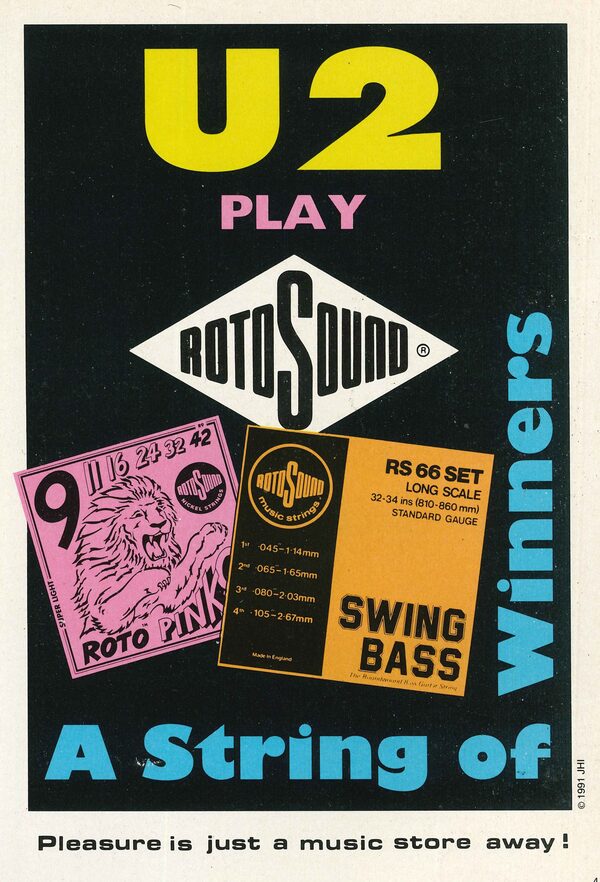
Adam Clayton used Rotosound RS66LD Swing Bass 45-105 strings in the 1980s and 1990s as evidenced by an ad from 1991 from Rotosound showing what strings U2 used. Additionally, he is listed as a Rotosound Artist on the brand's website, alongside his bandmate The Edge.


Andy Bell used Rotosound RS66LD Swing Bass 45-105 strings on his basses with Oasis, as evidenced by the distinct red silk at both string ends, a characteristic feature of Rotosound strings at the time.

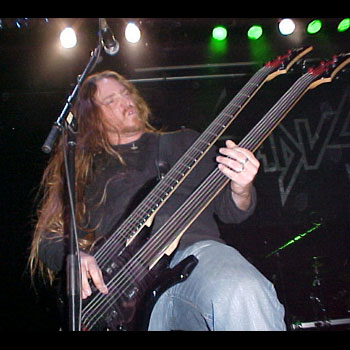
In a 2007 interview on FretlessBass.com, Steve DiGiorgio stated that he used Rotosound strings, specifically mentioning that on his four string basses and his five-string basses he added a high C, resulting in a gauge of 35 to 105. This is corroborated by photos and live performances dating back to the Death era, where the distinctive red silk at both ends of his bass strings is visible, confirming the use of Rotosound RS66LD Swing Bass 45-105 strings.
Album Usage
The Rotosound RS66LD Swing Bass 45-105 has been featured on the following albums:

Rack
The Jesus Lizard (2024)
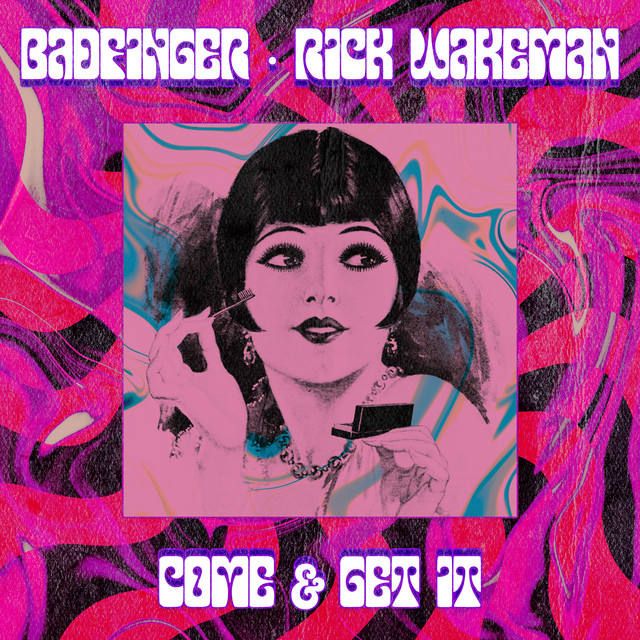
Come & Get It
Badfinger (2020)
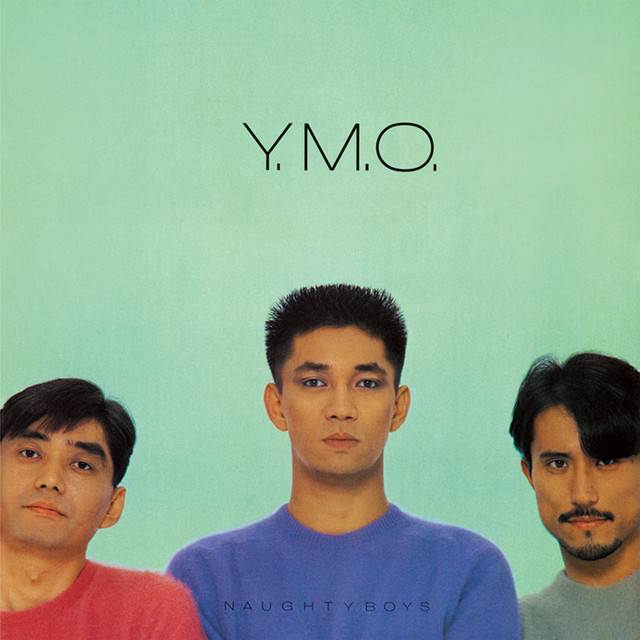
Naughty Boys (2019 Bob Ludwig Remastering)
Yellow Magic Orchestra (2019)

Gira Me Verás Volver
Soda Stereo (2008)

Operation: Mindcrime II
Queensrÿche (2006)

El Ultimo Concierto A (Remastered)
Soda Stereo (1997)
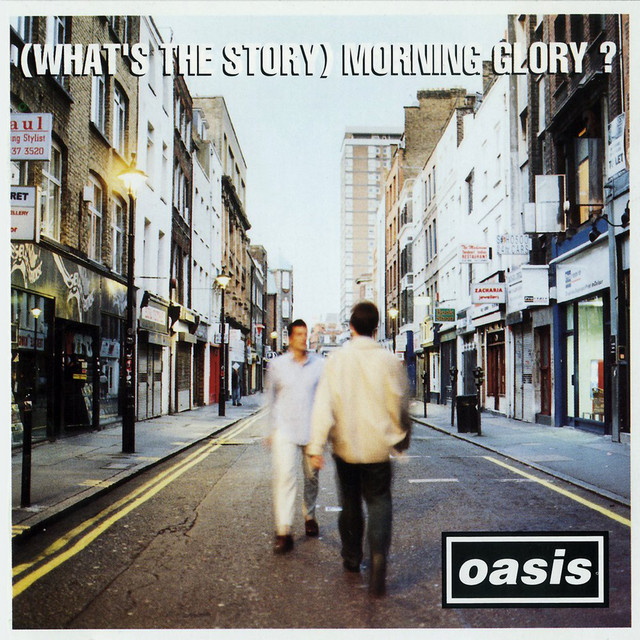
(What's The Story) Morning Glory? (Deluxe Remastered Edition)
Oasis (1995)

Insomniac
Green Day (1995)

Dookie
Green Day (1994)
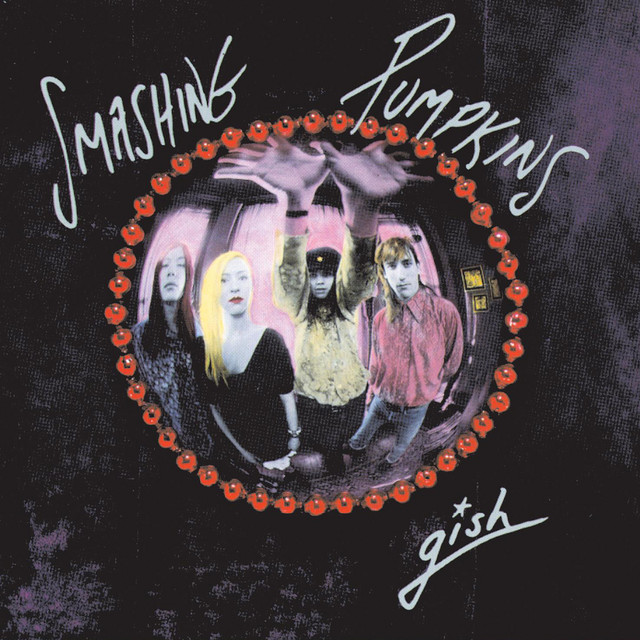
Gish (Remastered)
The Smashing Pumpkins (1991)
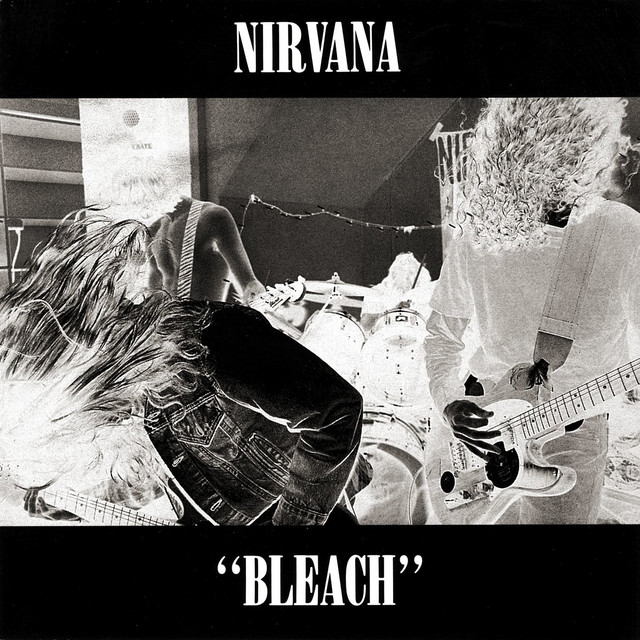
Bleach
Nirvana (1989)
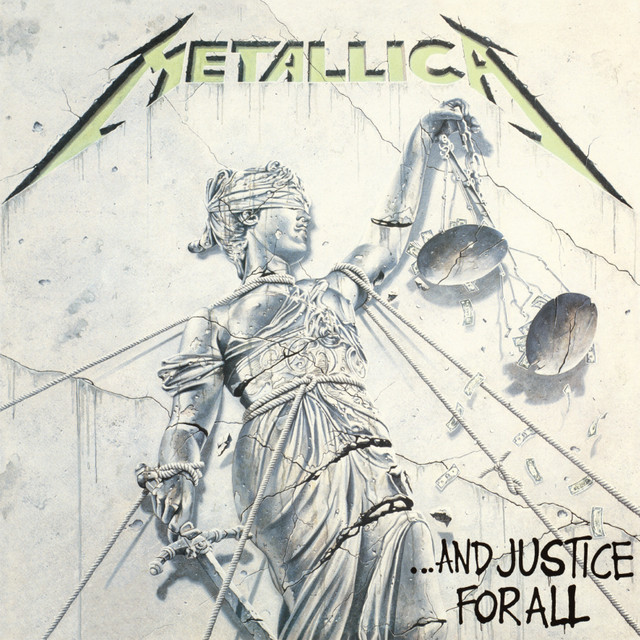
...And Justice for All (Remastered)
Metallica (1988)
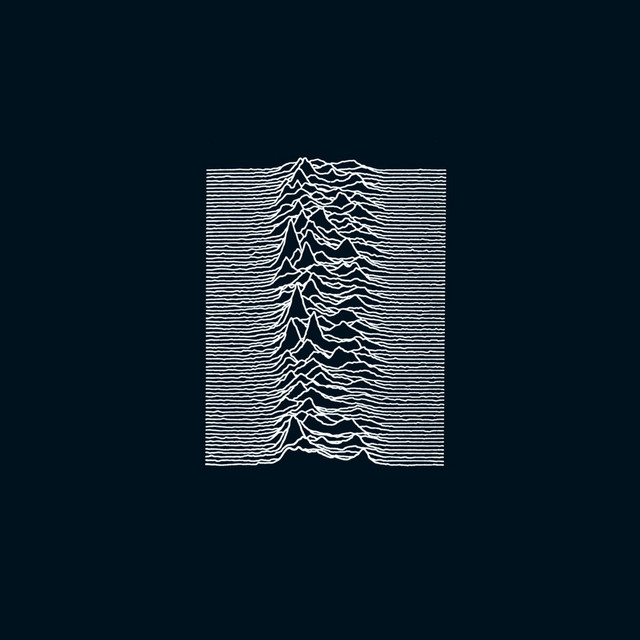
Unknown Pleasures
Joy Division (1979)
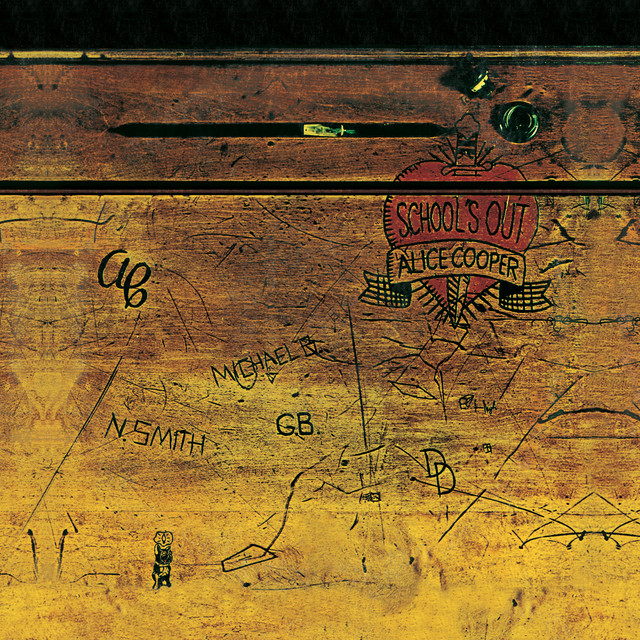
School's Out
Alice Cooper & Alice Cooper (1972)
Genre Usage
Based on how artists on Equipboard use this gear, it is most commonly found in the following genres.
Used With
Based on how musicians on Equipboard use Rotosound RS66LD Swing Bass 45-105, it is most commonly used with the following gear.

-s.webp?v=1783402677)





Community setups
Show yours


Similar
Add recommendation7 alternative and related items for Rotosound RS66LD Swing Bass 45-105, curated by the Equipboard community.

$1,158.11 - $1,599.99

$21.99
From my previous string change, the closest modern strings that sounded like rotos, albeit less stiffer and smoother. Also, it lasted very long just like rotos.

$763.00 - $894.26

$23.99 - $30.00

$25.99 - $31.00

$21.59 - $29.95
More Rotosound Strings

$43.00 - $48.95
in Strings Rank


$5.60 - $7.50
in Strings Rank


$22.60 - $26.95
in Strings Rank


$20.90 - $26.95
in Strings Rank


.jpeg?v=1783244342)

$43.00 - $49.99
in Strings Rank


$20.90 - $26.95


$21.59 - $29.95


$28.00 - $35.95


$20.90 - $26.95

$5.60 - $7.50


$5.60 - $7.50


$36.99 - $41.95

$5.70 - $6.95


$5.60 - $7.50


$7.30 - $11.35


$17.40 - $19.99


$20.00 - $26.95


$6.20 - $9.95


$7.30 - $8.99

$7.20 - $33.02

$44.99 - $48.95

$16.90 - $20.95

$32.00 - $39.99


$44.95 - $47.00

$6.70 - $10.94

$5.30 - $7.50


$7.30 - $10.95

$8.90 - $11.99

$31.00 - $35.95

$20.90 - $26.95

$56.00 - $59.95

$34.95 - $48.95


$6.30 - $9.20
![Rotosound Ultramag Alloy-52 Wound 45-105 Bass Guitar Strings, Long Scale [UM45]](https://images.equipboard.com/uploads/item/image/123698/rotosound-ultramag-alloy-52-wound-45-105-bass-guitar-strings-long-scale-um45-m.webp?v=1783402714)


Accessories & Related Items


Gear Guides








Most Popular Strings
Most Popular Brands


