




Pricing and availability
We compare 600+ stores and found this item at 1 store. Prices updated .
Store
Reviews
Price




Average Price: $280
High-end/Boutique
$60
$181+
Price Tier
Budget
Standard
High-end
* Product prices and availability are updated by Equipboard every 24hrs and are subject to change. Equipboard may receive compensation for purchases made at participating retailers linked on this site. This compensation does not affect what products or prices are displayed, or the order of prices listed. For more information, please refer to our affiliate disclosure.
Description
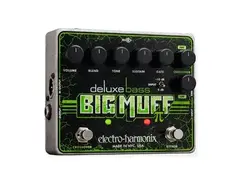
While most Big Muffs vary in their circuits, the V6 only varied in its color. Its single V3-inspired circuit marked the return of silicon transistors to the iconic distortion/sustainer.
Product specs
| Brand | Electro-Harmonix |
| Model | Big Muff Pi V6 |
| Finish | Silver |
| Year | 1979 - 1984 |
| Made In | United States |
| Categories | Fuzz Pedals and Effects |
| Pedal Format | Standard |
FAQs
-
What kind of tones can I expect from the Electro-Harmonix Big Muff Pi V6?
-
The Big Muff Pi V6 is known for its rich, creamy sustain and powerful fuzz tones. It delivers a thick, harmonically rich sound that's ideal for classic rock, alternative, and grunge genres.
-
Is the Electro-Harmonix Big Muff Pi V6 suitable for live performances?
-
Yes, the Big Muff Pi V6 is a popular choice for live performances due to its robust build and ability to cut through the mix with its distinctive fuzz tone.
-
How does the Electro-Harmonix Big Muff Pi V6 differ from earlier versions?
-
The V6 offers more gain and bottom end compared to earlier versions, with increased sensitivity to pick attack and harmonics, though it can be noisier at high gain settings.
-
Does the Electro-Harmonix Big Muff Pi V6 work well with other pedals?
-
The Big Muff Pi V6 generally integrates well with other pedals, especially overdrive and modulation effects, enhancing its versatility in a pedalboard setup.
-
What power supply does the Electro-Harmonix Big Muff Pi V6 require?
-
The Big Muff Pi V6 typically requires a standard 9V battery or a compatible 9V DC power adapter for operation.
Videos

blondegraemey
Electro Harmonix Big Muff Collection
Electro Harmonix Big Muff Collection
blondegraemey
EHX Big Muff USA v9 vs old USA v6

Fuzzville
Electro Harmonix BIG MUFF PI shootout Current Modern Version versus V.6 BigMuff Pi

gearmanndude
【デジマート Vintage Effector File Vol 15】Electro-Harmonix / BIG MUFF “3rd Version”

digimartnet
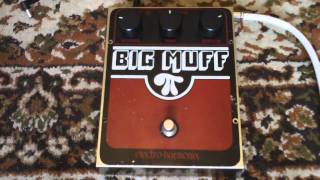
Electro Harmonix "Reverse Logo" Big Muff

Vintage Stompboxes
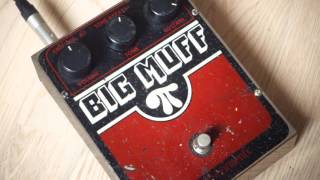
EHX Big Muff Pi V6 reverse logo vintage

Alex T
Five USA Big Muff Comparison

Kininaru Omocha
Electro Harmonix BIG MUFF

effeken
Biggest Vintage Electro Harmonix Collection Test

Nordfield Covers
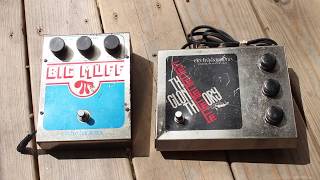
VINTAGE EHX PEDALS: Switch Repair | 424recording.com

424 Recording
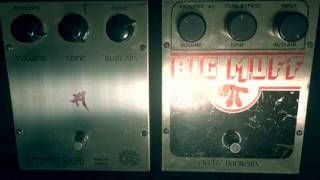
Electro-Harmonix Big Muff 3rd 1981 vs September Sound Fuzz | Sound Check【魔法の箱研究所】

魔法の箱研究所 - Stompbox Review Channel -
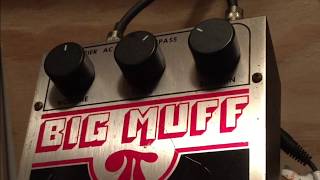
1981 Electro-Harmonix BIG MUFF "V6"

Jim Jones
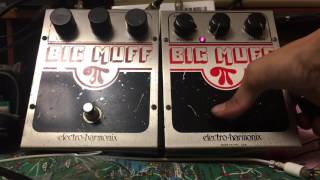
ELECTRO HARMONIX BIGMUFF(reissue) VS BIGMUFF(80's vintage EH3034)

sublow326
MARSHALL SUPERBASS EH BIG MUFF

Andy Baylor
Big Muff V6

Ghisi
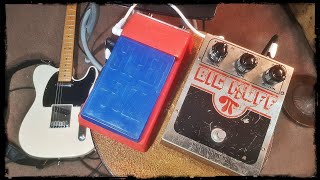
EHX BIG MUFF V.6 VS UNIVOX SUPER FUZZ #fuzzpedals

OZKÄR STALIN
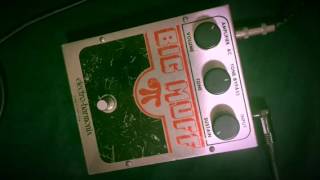
Electro-Harmonix BIG MUFF 3rd 1981's - Full Gain
魔法の箱研究所 - Stompbox Review Channel -
Late 70s/early 80s Late Version 6 Big Muff (ends on eBay May 29 2012)

jmdonovan
Big muff v6 vintage 197x demo

yvanyvan
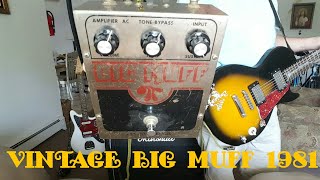
VINTAGE EHX BIG MUFF 1981 VERSION 6
OZKÄR STALIN
EHX BIG MUFF 1981 VS BIG MUFF 2010s
OZKÄR STALIN
ELECTRO HARMONIX - V6 BIG MUFF - 1981

Devil's Pedals
1983 Electro-Harmonix Big Muff (Silicon V6) | Guitar and Bass Demo

Box Of Random Things
Electro-Harmonix BIG MUFF 3rd 1981's - 12 O'clock Setting
魔法の箱研究所 - Stompbox Review Channel -
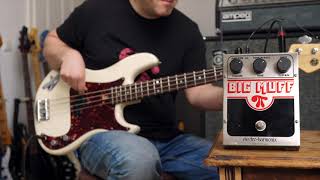
Electro-Harmonix Big Muff v6 on Bass

Gregor Fris
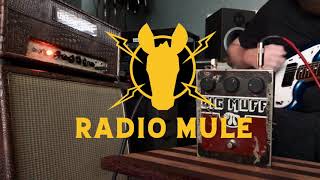
Big Muff Fuzz Friday

Radio Mule Effects
Reviews
PROS
-
Offers a unique, vintage Big Muff sound that's hard to replicate
-
Considered the last 'affordable' true vintage Big Muff
-
Versatile tone control and sustain, works great on bass
-
Quieter operation compared to other fuzz pedals
-
Saturated and wooly tones ideal for driving rhythm lines
CONS
-
Limited availability can make acquisition difficult
-
Some may find it not as good as other versions like the civil war model
Owner Insights
We analyzed real musician discussions from forums and Reddit to find what players love, question, and tweak about Electro-Harmonix Big Muff Pi V6.
Comparisons
-
The V3 model is described as the loudest and brightest, while the V8 is noted for being the quietest and darkest among the compared Big Muffs.
Source
Features and functionality
Mods and upgrades
-
Modifying the V8 with a plug receiver can resolve volume issues and reduce tone alteration caused by battery power draining.
Source -
The Creamy Dreamer mod, linked to early user modifications from the SP message boards, enhances certain Big Muff models, possibly originating from Devi Ever's modifications.
Source
User experience
-
The Op Amp model is favored for its compact size and versatility, making it ideal for a workhorse pedalboard setup despite being highly compressed compared to others.
Source -
Owners report that distinguishing an OpAmp Muff from other models is crucial due to significant circuit differences, affecting the pedal's sound and value.
Source
Build quality
-
Vintage Big Muffs without an LED indicate an older model, but differentiating between V3 to V6 requires checking for "On/Off" or "Tone-Bypass" text on the pedal.
Source
5.0 out of 5
Based on 0 Reviews and 1 Rating
Artist usage
Add artist

In addition to his NYC reissue, White used a V6 rehoused by Mike Piera of Analog Man. Kit Rae shares what Piera told him about the circuit on his Big Muff Pi Page, which includes this ca. 2005 photo of White’s pedalboard.
Shown above, left to right: Jack White's large pedal boards, circa 2005, with a red Big Muff (rehoused by Analog Man). Mike at Analog Man told me that this Muff is an old 1970's model, and it already had an LED added before he re-boxed it for Jack. Mike stated that Jack wants his Muffs reboxed in smaller, sturdier enclosures because he crushes the stock enclosures. He also refinishes the enclosures in different colors for Jack, as he wants a different look for each of his tours for his different bands. Although it has been rumored that Jack's Big Muffs are modified (the usual myth is a flat mids mod) they are actually stock circuits. The 'mod' is the different enclosure. Based on the knob type, knob positions (all at 1:00), this is a most likely a V6 Big Muff. The pots in the 1970's Big Muffs were soldered directly to the circuit board, and prior to the V5/6versions, the 1:00 position shown on Jack's red Muff (above) would have made the tone completely on the treble side, but the knob type was only intoduced with the V4 and V5 versions.

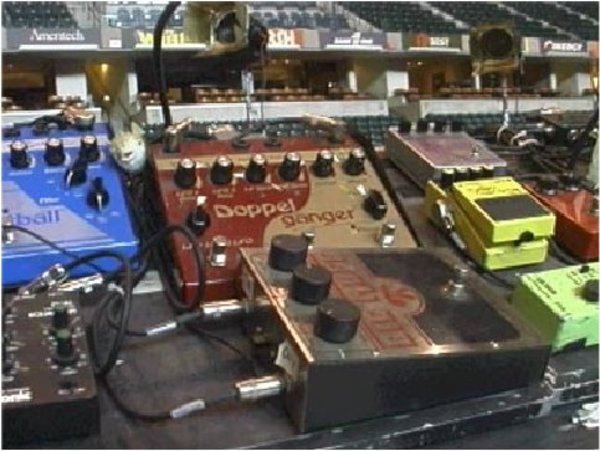
A "1970 Electro-Harmonix Big Muff silicon fuzz" is specified in an Australian Guitar interview with The Edge's guitar tech, Dallas Schoo, on page 27 of the issue. Despite the year given, various images of The Edge's Big Muff Pi show it to have the exterior of a V5 or V6 Big Muff, which were only produced as early as 1978. Given that the V5 used op-amps and the V6 used silicon transistors, it can be deduced that The Edge utilized a V6. It can be seen as early as the Joshua Tree Tour, with the earliest mention being this ca. 1986 interview with "J.B.".
Let's see, I also use the Electro-Harmonix Big Muff, and then there's the Yamaha SPX90, which I've been using alot. The yamaha REV7 is also something - I've been getting into using reverbs live.
As compiled by U2 Guitar Tutorials forum member kultschar in this forum post, photos from the Joshua Tree Tour, the Zoo TV Tour and the PopMart tour show the Big Muff being used live. It is also mentioned by Shoo in this 1997 Guitar World interview and page 179 of Live and Kicking: The Rock Concert Industry in the Nineties by Mark E. Cunningham.
U2 Guitar Tutorials
Joshua / Lovetown Rig:
- Big Muff - Big Muff - Note the Big Muff is not in the pedal tray but on the next rack with the Tape Player. Over the years its been said the Muff was used in his B signal which in those days went to the solid star Randall amps.
(...) ZooTV Rig:
Well its the same pedals as the tour before, only he added a crazy amount of rack units
This picture is from CAE during the actual building of the rig, note the pedals were put into the TC2290 loops and labelled TC1, TC2 etc If your eagle eyed you can see the Boss SD-1 and Pearl Graphic EQ labelled Infinite Sustain therefore both combined in one loop for WOWY tone. The TC2290 loops idea I believe were scrapped and they ended up in Rocktron Patch Mate switchers. Below is the rig during the early Zoo tour when they played the Achtung Baby songs pre Zooropa, note the pedals were duplicated. I believe they were duplicated for backup purposes, he did substitute the odd one e.g. Boss Graphic EQ was used instead of the Pearl EQ, TC FET Booster was used instead of another FA-1 and CS-2 was used instead of another Dynacomp. This was in the days before eBay and Internet so probably difficult back then to find another FA-1 and Pearl etc which of course we now take for granted (I remember when it was near impossible to find these pedals but now everyday on eBay!!!!)
Popmart Rig
As you can see his Zoo pedals (core sounds remain intact). Im positive the OD-2 is still his main overdrive as its still the first switch on his MIDI controller like the Zoo days labelled Turbo.
Next to his Zoo Pedals he has taken away the spare duplicates and added his new Lovetone Pedals for the new Pop songs to be played live:
On this tour he still used his ZooTV Bradshaw MIDI controller (most the same labels)
As you can see from his MIDI controller the Bottom Row appears to be his main signal path and not only has he labelled the effects from Loop 1 - 8
The top row appears to be his split signal path
I have a better labelled picture from this tour and you can see he has another controller incorporating the Lovetone FX and Amps for switching that I have labelled (anybody have the original of this picture BTW? I only have my labelled version)
Guitar World, 1997, "Close to The Edge"
One irreplaceable effect is the Edge's Korg SDD-3000 digital delay. "That's one of his favorites because it has so much warmth," says Schoo. "Most of the albums were made with that delay." Other processors in the Edge's rack include a Roland SDE-3000 digital delay and Yamaha SPX90, Korg A3, Rocktron Replifex, DigiTech 2112 and Eventide H3000 multi-effectors. He also carries a full array of pedals, including Dunlop Fuzz Face, Dunlop and Bradshaw multiple-wah systems, several Boss distortion units, an Electro-Harmonix Big Muff, and Lovetone's Big Cheese distortion Doppelganger phaser and Meatball envelope follower.
Live and Kicking: The Rock Concert Industry in the Nineties by Mark E. Cunningham (1999)
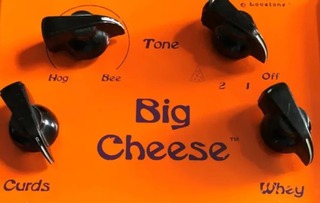
"For the new songs, Edge uses a Lovetone Big Cheese overdrive which delivers a very broken sound, but for his really big distortion he still uses the smal FET pre-amp and his Electrop-Harmonix Big Muff."
Use on the Elevation Tour is confirmed by the AudioFile feature "U2 - Wired for Sound" (pictured) and a 2001 Guitar One feature (as scanned by fansite U2 Atomic: Edge Gear). Use on the Vertigo Tour is confirmed by this Guitar World feature at 1:55, this photo and It Might Get Loud (as observed by Kit Rae here and here). Custom Audio Electronics also released a 2015 picture of The Edge's rack gear, which includes the Big Muff.


Big Muff Pi can be seen in the bottom left next to the Big Fuff Triangle Muff

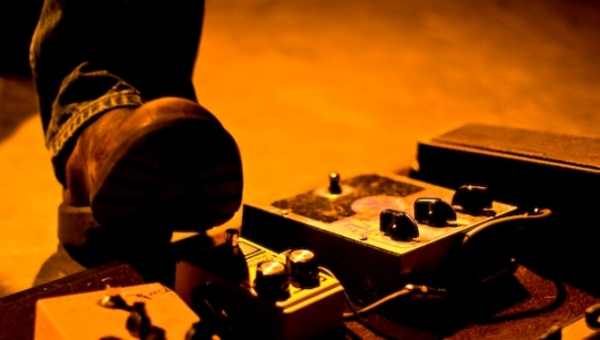
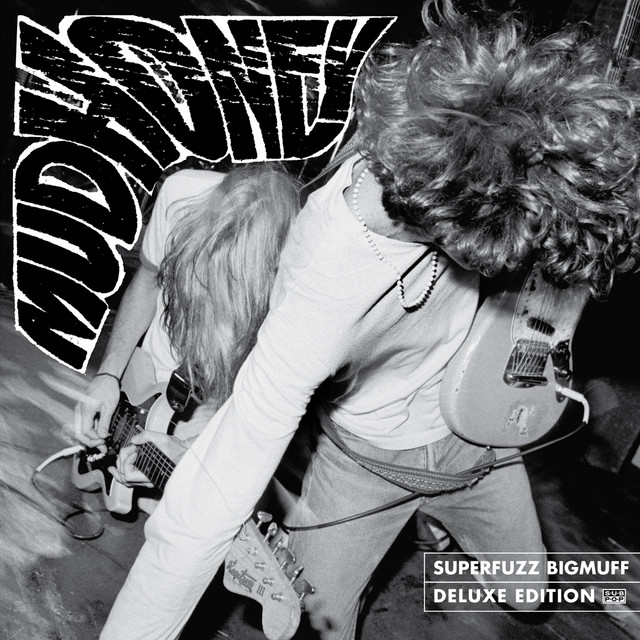
Turner's first Big Muff Pi. It is specified in Stompbox: 100 Pedals of the World's Greatest Guitarists and this November 1, 2018 Premier Guitar interview. Along with the Univox Super-Fuzz, it was the namesake of Superfuzz Bigmuff, which Turner reflects upon in this September 6, 2018 Vice interview. It is also visible in this May 2, 2007 photo and this excerpt of Live At El Sol at 5:08, which show that the original knobs were later replaced. According to this October 13, 2017 Red Bull Music Academy interview, the pedal was irreparably damaged when a van ran over it. The remains became part of the collection of the Museum of Pop Culture.
Maximumrockandroll, August 1990 (as archived on this Open Computing Facility fan page)
MRR: And you use the Big Muff.
Steve: Yeah. Fuck! I just got a Mosrite Fuzz Rite which is what Davie Allan of Davie Allan and The Arrows used.
Guitar Player, February 1992 (as archived on this Open Computing Facility fan page)
Turner and Arm don't break stylistic stride with their pedal choices either. "We use a lot of different fuzz boxes. On the road I use a Big Muff, a wah-wah pedal, and a Memphis distortion box, which looks like an MXR. I've never paid more than $15 for one - they break easily, but they're cheap."
Excerpt from I'M NOW: The Story of Mudhoney (at 0:39)
By the time that Mudhoney started, I was playin' the Big Muff 'cause it had more of that sustain, kinda like Blue Cheer, Stooges kinda thing going, and so Mark used the Super-Fuzz.
Red Bull Music Academy
“The Big Muff...has permanent status in guitar lore and gear,” says Steve Turner, guitarist of Seattle grunge trailblazers Mudhoney, who immortalized the pedal in the title of their 1988 debut EP Superfuzz Bigmuff. “It’s gonna be one of those boxes everyone has to know about if you get into guitars. You’re gonna know about the Big Muff. I mean there’s just so many clones of it...it’s everywhere.” (Turner’s original Big Muff, which was run over by a van after a show, now sits in Seattle’s Experience Music Project Museum).
Vice
How important were those two titular pedals to the sound of the record?
I think they were very important. We only named it that because it was a bad pun. But the pedals were a big deal. Me discovered the Fuzzbox was a big deal. Mark had already loved feedback and fuzz. At the time I was so into the Stooges, Blue Cheer, and some of Neil Young’s guitar sounds, not to mention the mid-80s post-hardcore stuff like ANTi-SEEN, Pussy Galore, and Drunks With Guns, which was some really ugly stuff. Those two pedals really were the basis for our sound: Mark on the Superfuzz and me on the Big Muff.
Premier Guitar
You guys are obviously huge fuzz connoisseurs—you named your debut album after the two you just mentioned, Steve—but it’s interesting that the Nano Muff remains your favorite at a time when there are so many painstaking boutique clones of vintage fuzzes fetching pretty serious money.
Turner: I’m kind of trying to get the sound of my original Big Muff. The one I used on all of the earlier records is one of the last production Big Muffs, I think. I got it new in 1984 on closeout. Going off memory and feel, to me the Nano sounds the most like that.
Stompbox: 100 Pedals of the World's Greatest Guitarists (2020)
"I bought my first one brand new in 1984, most likely at Seattle's American Music store," Mudhoney guitarist Steve Turner recalls of the latter pedal. "I'd heard it was supposed to be cool—probably from [Pearl Jam/Green River guitarist] Stone Gossard, who I was in high school with at the time. Now, Stone was a metalhead then, and I was a punk, but mostly what appealed to us, as with most of Mudhoney's gear, is that it was cheap. Hard to imagine today, but there was literally a huge pile of them for $35 each. I should've bought them all. It turned out mine was the very last of the original run, and Electro-Harmonix discontinued it shortly afterward."

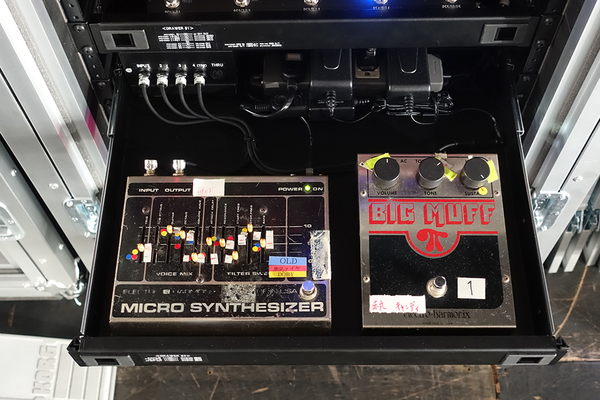
Visible this photo from this October 23, 2017 Free the Tone article.

.jpg)
Album Usage
The Electro-Harmonix Big Muff Pi V6 has been featured on the following albums:
Genre Usage
Based on how artists on Equipboard use this gear, it is most commonly found in the following genres.
Used With
Based on how musicians on Equipboard use Electro-Harmonix Big Muff Pi V6, it is most commonly used with the following gear.


-s.webp?v=1784818683)
Similar
Add recommendation7 alternative and related items for Electro-Harmonix Big Muff Pi V6, curated by the Equipboard community.


$429.00

$83.00 - $101.60

$79.00 - $108.90

$200.00
More Electro-Harmonix Fuzz Effects Pedals

$169.00 - $188.20
in Fuzz Effects Pedals Rank

$189.00
in Fuzz Effects Pedals Rank


$75.00 - $96.20
in Fuzz Effects Pedals Rank


$83.00 - $101.60
in Fuzz Effects Pedals Rank


$85.00 - $108.90
in Fuzz Effects Pedals Rank


$79.00 - $108.90
in Fuzz Effects Pedals Rank


$300.00
in Fuzz Effects Pedals Rank


$75.00 - $87.10
in Fuzz Effects Pedals Rank


$59.00 - $83.50
in Fuzz Effects Pedals Rank


$95.00 - $1,999.00
in Fuzz Effects Pedals Rank


$95.00 - $99.00
in Fuzz Effects Pedals Rank

$111.00 - $150.60
in Fuzz Effects Pedals Rank


$59.49
in Fuzz Effects Pedals Rank


$84.35 - $112.50
in Fuzz Effects Pedals Rank


$95.00 - $114.30
in Fuzz Effects Pedals Rank


$189.00
in Fuzz Effects Pedals Rank


-m.webp?v=1784818768)
$36.30 - $72.60
in Fuzz Effects Pedals Rank


$102.00 - $117.90
in Fuzz Effects Pedals Rank


$75.00 - $480.00
in Fuzz Effects Pedals Rank

-m.webp?v=1784818868)


$39.60 - $99.00


$99.00 - $131.50


$75.00 - $250.00


$69.00 - $85.30

$139.00 - $174.20


$123.59 - $136.10


$39.60 - $286.00


$81.00 - $116.10


.jpeg?v=1784660163)


Accessories & Related Items



Community setups


Gear Guides
.jpg)





Most Popular Fuzz Effects Pedals
Most Popular Brands
-
Added to Equipboard on by
 eyeseeofficial
GearIQ 161592
-


