-s.webp?v=1784732314)
-xl.webp?v=1784732314)
Pricing and availability
We compare 600+ stores and found this item at 1 store. Prices updated .
Store
Reviews
Price




Average Price: $483
Budget/Beginner
$500
$1501+
Price Tier
Budget
Standard
High-end
* Product prices and availability are updated by Equipboard every 24hrs and are subject to change. Equipboard may receive compensation for purchases made at participating retailers linked on this site. This compensation does not affect what products or prices are displayed, or the order of prices listed. For more information, please refer to our affiliate disclosure.
Description
Step into the world of analog synthesis with the Moog Prodigy, a renowned monophonic synthesizer that has stood the test of time. From the late ‘70s to the early ‘80s and beyond, its distinctive soundscapes continue to mesmerize musicians and listeners alike. With an array of waveforms at your disposal, this synth offers the ability to craft everything from the smoothest flutes to the grittiest electronic tones. Its Voltage Controlled Filter and Voltage Controlled Amplifier with a three-stage (ADR) envelope are key elements to its iconic sound.
Key Features:
- Monophonic analog synthesizer
- Two VCOs offering sawtooth, triangle, and square waves, and a pulse waveform
- Voltage Controlled Filter
- Voltage Controlled Amplifier with a three-stage (ADR) envelope
- Capable of producing a wide range of sounds from soft flutes to aggressive electronic tones.
Product specs
| Brand | Moog |
| Model | Prodigy 32-Key Monophonic Analog Synthesizer |
| Finish | Black |
| Year | 1979 - 1984 |
| Made In | United States |
| Categories | Analog Synths, Keyboard Synths |
| Analog / Digital | Analog |
| Key Size | Full Size |
| Keyboard Action | Synth Action |
| Number of Keys | 32 Keys |
| Polyphony | 1 Voice |
FAQs
-
Is the Moog Prodigy synthesizer polyphonic or monophonic?
-
The Moog Prodigy is a monophonic synthesizer, meaning it can play only one note at a time, which is ideal for bass lines and lead melodies.
-
What kind of sound can I expect from the Moog Prodigy's analog engine?
-
The Moog Prodigy's analog engine delivers classic warm and rich tones, known for its powerful bass and vibrant leads, making it suitable for a variety of musical genres.
-
How many keys does the Moog Prodigy have and what is the key size?
-
The Moog Prodigy features 32 full-size keys with a synth action, providing a responsive and expressive playing experience.
-
What are the standout features of the Moog Prodigy's sound design?
-
The Moog Prodigy is renowned for its dual oscillator design, which allows for a wide range of sound modulation and creative possibilities, including classic Moog filter sweeps.
-
Is the Moog Prodigy suitable for live performances?
-
Yes, the Moog Prodigy is well-suited for live performances due to its intuitive interface and robust build, allowing musicians to easily tweak and shape sounds on stage.
Videos

RetroSound
Moog Prodigy Analog Synthesizer (1979) sound demo
Moog Prodigy Analog Synthesizer (1979) sound demo
RetroSound
Moog Prodigy synthesizer demo

Envelope Generator
MOOG PRODIGY Analog Synthesizer 1979 | HD DEMO

AnalogAudio1
Moog Prodigy Analog Synthesizer (1979) Retro Sounds
RetroSound

Moog Prodigy // It's One Huge Sweet Spot

Starsky Carr

Why I LOVE the Moog Prodigy

Fuzz City Records

Moog Prodigy Analog Synthesizer (1979) The PURE Sound!
RetroSound
Best of Moog Prodigy Synthesizer ~ RetroSound Demo
RetroSound
Reviews
PROS
-
Excellent for learning analog synthesis basics
-
Warm, fat sound at a fraction of the MiniMoog price
-
Versatile sound palette for bass and lead
-
Maintains tune better than a MiniMoog
-
Less finicky than a MiniMoog, suitable for studio/home use
-
Rich tone for pads and leads beyond bass capabilities
-
Offers deep lows and screeching highs, including bleeps and boops
CONS
-
Finicky and temperamental, not ideal for gigging
-
Hard to tune across the whole keyboard range
-
Some find the oscillator sound thin compared to expectations
Owner Insights
We analyzed real musician discussions from forums and Reddit to find what players love, question, and tweak about Moog Prodigy.
Build quality
-
Early models lack standard CV/gate inputs, but these can be modified with mini jacks for compatibility with modern setups.
Source
Setup and maintenance
Features and functionality
-
Some models feature fragile controls and rare panel parts, making maintenance a potential challenge.
Source -
Users highlight the need for a Prodigy-like synth with modern features such as presets, arpeggiators, and MIDI, emphasizing the importance of these in live settings.
Source -
The Prodigy Mk1's 0 volts pitch is an F note rather than the typical C, which can be adjusted using a CV converter or modern sequencer settings.
Source
Comparisons
-
Despite limitations, the Prodigy's raw tone is often preferred over modern Moogs for its warmth and richness, particularly in bass and lead applications.
Source -
The Moog Matriarch is noted for having a tighter low-end than other modern Moogs, with MIDI capabilities that make it a viable alternative to the Prodigy.
Source -
The Moog Little Phatty is considered better than the Sub Phatty in terms of low-end tightness, though it still falls short of the Prodigy's performance.
Source -
Users find the Prodigy to have more character than the Moog Little Phatty Stage II, particularly for lead sounds and modulation effects.
Source
User experience
Mods and upgrades
Use cases and applications
Critic Reviews
4.5 out of 5
Based on 5 Reviews and 32 Ratings

609
A good extra add-on mono-synth, but not great
In the '80s, I was able to pick up one of these used for under $100. Multi-timbral sounds and layering hadn't seen the light of day yet, so I wanted a small monophonic synthesizer to play lead lines and other sounds that were different (a second sound) other than what I was playing on my polyphonic synth. The Prodigy ended up being that synth for me, but truthfully, it wasn't that great. It did the job, but it really lacked the fat oscillator sound (sounded thin), aside from the fact that I was never a big fan of the Moog oscillator sound anyway.

235
Really great sync
I cannot give it 5 stars since too hard to tune across whole range of keyboard. A classic, though, and so easy to use.
What can it do? Listen to this!
https://youtu.be/aL6hAgW-S4E

1798
More than a bass synth
The Moog Prodigy is usually meant as a bass synth. But I use it for more than a bass synth. It's got a great tone for Pads and Leads that no one seems to explore all that much. This synth has such a rich unique tone that you just can't help explore the beautiful, subtractive, monophonic synth that it is.

284
I am a lucky b******d
Yup. Keeps tune better than a MiniMoog. Less fussy than a MiniMoog.
1798
It's supposed to be a step above the Rogue and a step below the Model D. So I would imagine that it'd be more sonically stable than the Minimoog.

122
Amazing basses and synced sounds.
Love the sound of it. In the bass department is a monster. Also nice leads and synced sounds
Artist usage
Add artist
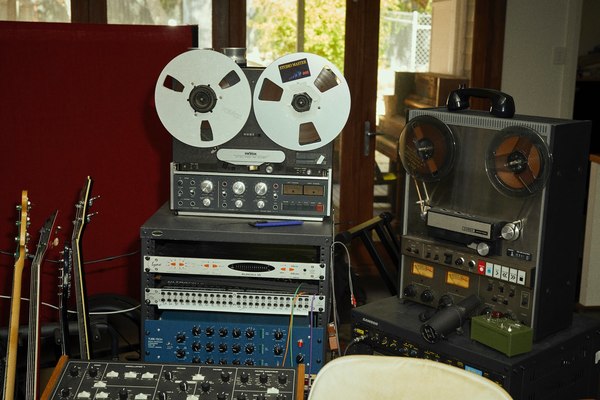
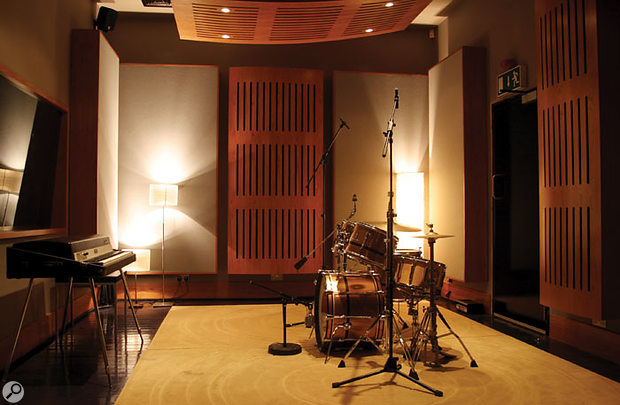
The Moog Prodigy is visible in the lower left corner of this photograph.


Trent Reznor utilized a Moog Prodigy synthesizer in the creation of Nine Inch Nails' album "Pretty Hate Machine," as detailed in various interviews compiled by Yaia.


In a user-uploaded photo from Polymathperspective, Damon Albarn's Moog Prodigy is visible next to the KX-101, indicating its use in his setup.

.jpg)


Exclusive gear from the private collection of Richard Z. Kruspe. Has been played live or in the studio with Rammstein and Emigrate. Every item comes with a certificate of authenticity, signed by Richard himself.
.jpeg?v=1784733415)
.jpeg?v=1784733415)
Photo of the synths used during the After Hours era.

"This one was one of my first also, probably the third synth I bought. It's been with us since 'She's in Control.' It did us good. 'Woman Friend' is that, and stuff on second album too. Lots of leads, lots of basses. You can instantly go from a great bass to great Minimoog sounding leads. It's simpler and it doesn't take as much room also. It's got a lot of hidden subby low-end that if you want to have that power at the bottom of your track then you have it in there. The Moog Prodigy actually cuts through more than the Minimoog."


The Prodigy derived their name from the Moog Prodigy synthesizer, which was owned by Liam Howlett. This connection is noted on TV Tropes.

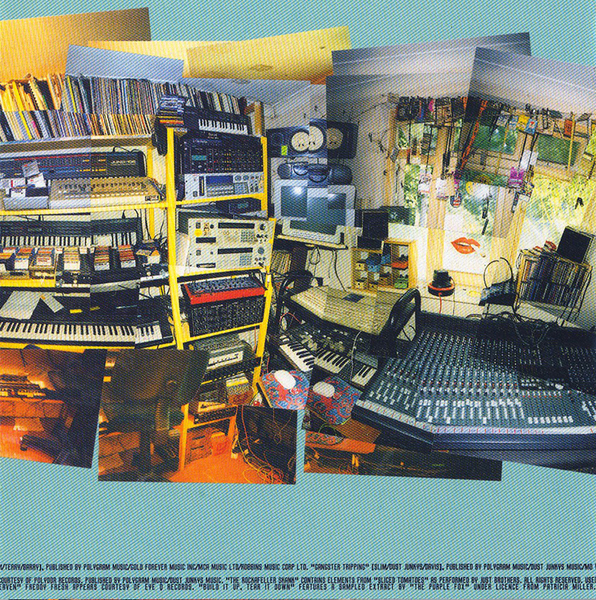
Inside the booklet of "You've Come a Long Way, Baby", next to the mixing console.


Made by: Moog Electronics (USA) from 1979-1984 Release date: 1979 Type: Monophonic Analogue synthesizer Designed by: Rich Walborn, Tony Marchese Original price: £295 Current price: £225
About:
This was the very first synth that Liam bought. He just purchased a keyboard with the intention of making a few songs for fun. It inspired the name of band whilst recording their first demo tape. Liam wrote the name "The Prodigy" to the demo tape that he gave to Keith and Leeroy. But now the Moog have now gone bust, but 11000 Prodigy's were produced from 1979-84 so you shouldn't have any problem finding one.
Used:
Liam has used this machine in all his first tracks! Nowadays you can still sometimes see this machine in live shows.
Gear info:
Probably Moog´s biggest selling synth next to Minimoog. Unlike many other Moogs that are being sold this was truly a performance keyboard not a novelty toy. If you want that fat analog sound that is becoming very popular again this is it. Dual Oscillator/Triple Waveform each Osc. Has both Filter and Loudness contour controls.
The Prodigy is a simple, dual-oscillator analogue monosynth with a single filter and two three-stage envelopes. It also has oscillator sync. As a beginner's analogue keyboard, though, it's clearly laid out and easy to use. It's used commonly in techno-electronica. Pretty handy for that 'fat' bass sound that you can't quite get from anything other than a Moog. Also great for making weird effects, leads, and percussion sounds.
This keyboard will do everything from Full Out Analog Bass Lines to Screaming Techno Synth sounds to Monster Leads. Not at all a bad synthesizer, but very limited in programming and flexibility. And the first models had no external control inputs. The Prodigy is not the best Moog ever made, but it was particularly successful in the UK.
It has been used by many other artists such as Depeche Mode, Blur, The Album Leaf, Fatboy Slim, 808 State, Trent Reznor, Astral Projection and Moloko.

Album Usage
The Moog Prodigy has been featured on the following albums:
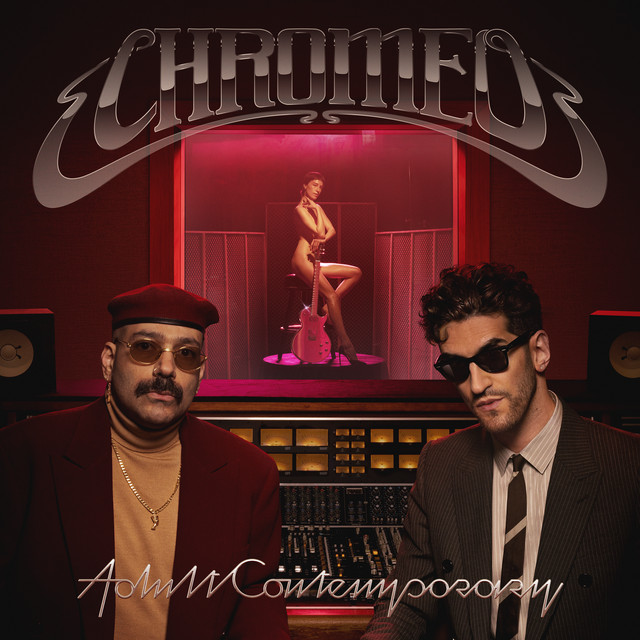
Adult Contemporary
Chromeo (2024)
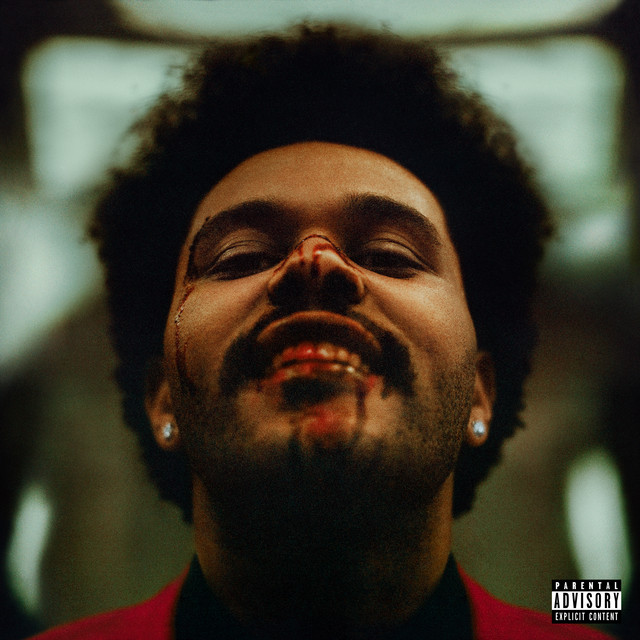
After Hours
The Weeknd (2020)
The End (Live)
Black Sabbath (2017)
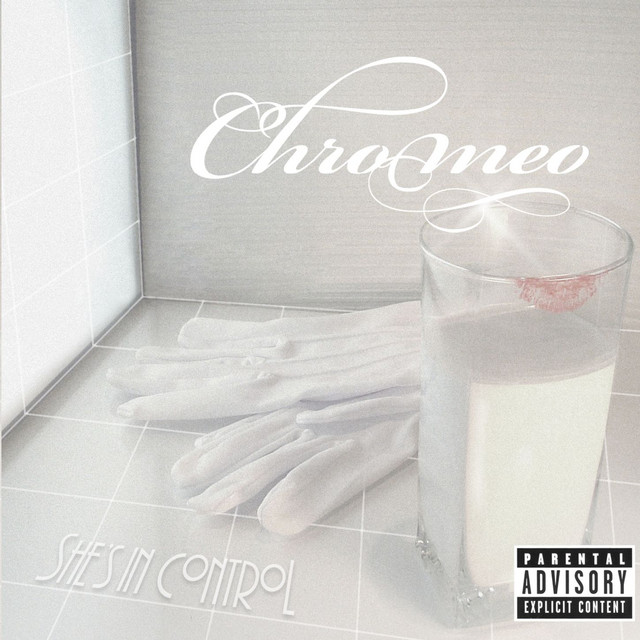
She's In Control (Explicit Content U.S. Version)
Chromeo (2004)
Live at Brixton Academy 1999
Atari Teenage Riot (2000)
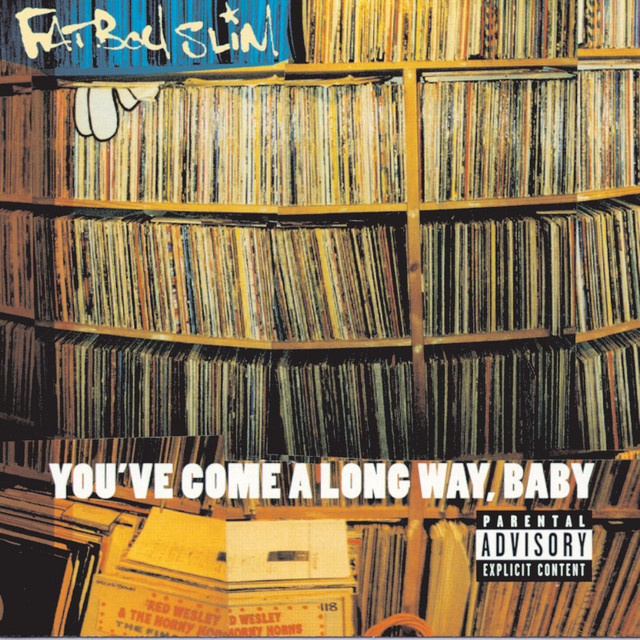
You've Come A Long Way Baby
Fatboy Slim & The BPA & Norman Cook (1998)
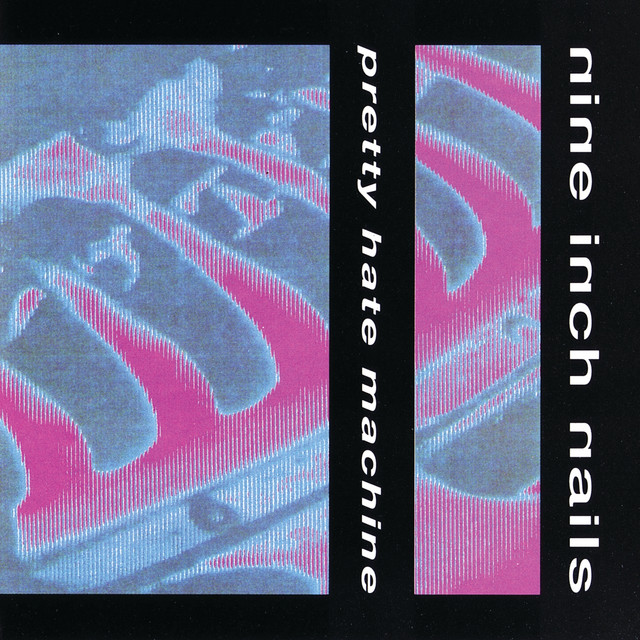
Pretty Hate Machine
Nine Inch Nails (1989)
Genre Usage
Based on how artists on Equipboard use this gear, it is most commonly found in the following genres.
Used With
Based on how musicians on Equipboard use Moog Prodigy, it is most commonly used with the following gear.


-s.webp?v=1784732303)

-s.webp?v=1784559385)
-s.webp?v=1784732310)


-s.webp?v=1784732305)
More Moog Synthesizers

$999.00 - $1,084.00
in Synthesizers Rank


-m.webp?v=1784756859)
$1,100.00
in Synthesizers Rank


$1,481.73 - $1,899.00
in Synthesizers Rank


-m.webp?v=1784733030)
$1,790.00 - $1,899.00
in Synthesizers Rank


$3,999.00 - $4,999.00
in Synthesizers Rank


$350.00
in Synthesizers Rank


$6,600.00 - $10,444.00
in Synthesizers Rank


$52.00 - $750.00
in Synthesizers Rank


-m.webp?v=1784757870)
$348.50 - $399.00
in Synthesizers Rank


$800.00
in Synthesizers Rank


$8,900.00
in Synthesizers Rank


$500.00
in Synthesizers Rank


$555.00 - $656.00
in Synthesizers Rank


$9,999.00
-m.webp?v=1784732274)


$12,999.00


-m.webp?v=1784333332)


$964.00


.jpeg?v=1784640200)


$9,999.00

$1,650.00


$1,438.99 - $1,899.00


$3,999.00 - $5,199.00


Community setups


Similar


Gear Guides






.webp)

Most Popular Synthesizers
Most Popular Brands
-
Added to Equipboard on by
 equipboard
GearIQ 4934
-


