
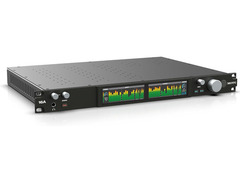
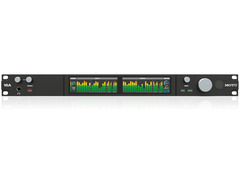
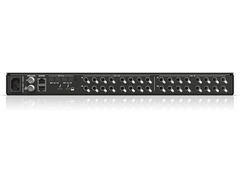

Pricing and availability
We compare 600+ stores and found this item at 8 stores. Prices updated .
Store
Reviews
Price









Average Price: $1,600
High-end/Boutique
$150
$501+
Price Tier
Budget
Standard
High-end
Price History
Based on price data from 6 merchants for "MOTU 16A AVB 16in/16 out audio interface". Prices shown reflect NEW condition. Tracking began Apr 2, 2026.
* Product prices and availability are updated by Equipboard every 24hrs and are subject to change. Equipboard may receive compensation for purchases made at participating retailers linked on this site. This compensation does not affect what products or prices are displayed, or the order of prices listed. For more information, please refer to our affiliate disclosure.
Description
The MOTU 16A AVB 16in/16out audio interface is a versatile powerhouse for both studio and live settings. With its industry-first Thunderbolt 4 connectivity, this interface offers blazing-fast data transfer rates up to 40 Gbps, ensuring seamless recording and playback even in the most demanding environments. Engineered for pristine audio quality, it features ESS Sabre32 DAC technology, providing 24-bit/192kHz conversion and a remarkable 125dB dynamic range.
Packed with 32 inputs and 34 outputs, the 16A is perfect for complex setups, offering 16 TRS line-level analog I/O, two banks of optical I/O, and word clock I/O, all with high-precision calibration. The built-in 64-channel digital mixer, complete with DSP effects like reverb and EQ, allows for zero-latency monitoring and processing, making it the ideal central hub for your studio operations.
The MOTU 16A also excels in connectivity and control. Its dual Gigabit network ports with AVB networking capabilities enable extensive audio streaming and device integration. Plus, the interface includes loopback functionality for livestreaming and podcasting, and its DC-coupled TRS outputs allow for direct DAW control of modular synthesizers. Operate the 16A as a standalone mixer or control it wirelessly via Wi-Fi with the CueMix Pro app on your Mac, PC, or iOS device.
Key Features:
- Thunderbolt 4 connectivity at 40 Gbps
- 32-in/34-out interface with 16 TRS line-level I/O
- ESS Sabre32 DAC technology for 24-bit/192kHz conversion
- 64-channel digital mixer with onboard DSP effects
- Dual Gigabit network ports with AVB networking
- Loopback functionality for livestreaming
- Wi-Fi control via CueMix Pro app
- DC-coupled TRS outputs for voltage-controlled synths
- Independent headphone output with customizable cue mix
Product specs
| Computer Connectivity | USB- C (thunderbolt 4) |
| Form Factor | Rackmount |
| Simultaneous I/O | 32 x 34 |
| A/D Resolution | 24-bit/192kHz |
| Built In DSP/FX | Yes |
| Analog Inputs | 16 x 1/4" TRS |
| Analog Outputs | 16 x 1/4" TRS |
| Digital Inputs | 2 x Optical (ADAT) |
| Digital Outputs | 2 x Optical (ADAT) |
| Headphones | 1 x 1/4" TRS |
| USB | 2 x USB-C |
| Thunderbolt | 2 x Thunderbolt 4 |
| Data I/O | 2 x Ethernet |
| Network | AVB |
| Clock I/O | In/Out/Thru |
| Rack Spaces | 1U |
| Power Supply | Standard IEC AC cable |
| Height | 1.75" |
| Width | 19" |
FAQs
-
What are the main connectivity options for the MOTU 16A AVB audio interface?
-
The MOTU 16A AVB offers USB-C, Thunderbolt 4, and AVB Ethernet connectivity, making it highly versatile for different studio setups and networked audio environments.
-
Is the MOTU 16A AVB suitable for high-resolution audio recording?
-
Yes, the MOTU 16A AVB supports a 24-bit/192kHz A/D resolution, ensuring high-quality, high-resolution audio recording.
-
Does the MOTU 16A AVB have built-in DSP effects?
-
Yes, the MOTU 16A AVB features built-in DSP effects, allowing for real-time processing without additional latency.
-
How many analog inputs and outputs does the MOTU 16A AVB offer?
-
The MOTU 16A AVB provides 16 analog inputs and 16 analog outputs, all using 1/4" TRS connections.
-
Can the MOTU 16A AVB be integrated into a networked audio setup?
-
Yes, the MOTU 16A AVB is equipped with AVB networking capabilities, enabling seamless integration into networked audio environments.


Reviews
Owner Insights
We analyzed real musician discussions from forums and Reddit to find what players love, question, and tweak about MOTU 16A AVB 16in/16 out audio interface.
Features and functionality
-
The MOTU 16A offers 16 analog ins and outs, plus two ADAT sets for a total of 32 channels when expanded.
Source -
Users highlight the MOTU 16A's built-in DSP mixer, offering latency-free processing with reverb, compression, and EQ, and the ability to send mixes to individual outputs.
Source -
The MOTU 16A's newer NIC supports up to 16 AVB input streams, accommodating 128 channels in and out, enhancing its networking capabilities compared to older AVB models.
Source -
The MOTU 16A requires feeding line level, allowing users to choose external preamps for a customized sound, avoiding internal preamp coloration.
Source
Software and compatibility
-
It's noted that the MOTU 16A is part of the AVB series, allowing expansion via AVB protocol to network multiple devices over Ethernet.
Source -
Some users experienced challenges configuring AVB, noting that MOTU's software requires detailed channel-specific assignments beyond the basic matrix setup.
Source
Build quality
-
The 16A uses 1/4" TRS inputs and outputs, avoiding the need for costly DSUB or DB25 connectors, which can add substantial cost.
Source
Value and pricing
-
The MOTU 16A is considered reasonably priced for its capabilities and converter chipset, reportedly similar to the Apogee Symphony.
Source -
Despite being described as affordable compared to high-end models, the MOTU 16A's need for additional equipment like a monitor controller can increase initial setup costs.
Source
Setup and maintenance
-
When setting up AVB networks, it's crucial to select a master AVB clock source, often the Mac, to avoid clock contention issues.
Source -
AVB networking requires a compatible switch, which can be costly and complex to configure, but the MOTU-branded switch offers a simpler, albeit limited, solution.
Source
User experience
Use cases and applications
-
The 16A is ideal for integrating a synth rack into a DAW setup, providing seamless AVB integration and eliminating the need for complex patchbay setups.
Source -
The MOTU 16A is highly recommended for studios integrating multiple external preamps and seeking flexibility without internal preamp interference.
Source
5.0 out of 5
Based on 1 Review and 2 Ratings

179
With signal to noise of Plus 128db's one of the best devices on the market
32-input Thunderbolt audio interface with 48-channel mixing and AVB networking capability.
MOTU interfaces can be found in studios around the world because of their superb performance record and trusted reliability. The 16A is one of several next-generation, high-performance audio interfaces, combining incredible audio, large console style mixing, and state-of-the-art features.
64 Audio channels - A feast of analog and digital I/O 16 balanced/unbalanced TRS analog inputs and outputs, plus 2 x 8-channel ADAT optical ports, deliver a total of 32 inputs and 32 outputs. Use the 16A for expanding analog I/O for your computer, or as a flexible, capable patchbay and mixer. Or both!
Superb audio quality - Pure sound, without compromise The 16A employs latest-generation ESS Sabre32 Ultra converters, known for their industry-leading performance, together with expertly engineered analog circuits that reflect more than three decades of pro audio engineering expertise. The result? The 16A achieves actual, measured performance of 123dB dynamic range (A-weighted, 20Hz to 20kHz) on its balanced TRS analog outputs.
Ultra-low I/O latency - State-of-the-art latency performance Every digital audio workflow has some latency. The only question is, how much? In the case of the 16A, the answer is, not much at all. In the 16A, latency is measured in a handful of samples, from the time an audio signal first goes digital to its arrival somewhere else (to an output the mixer, or the computer). By keeping latency this low in the hardware, the 16A helps minimize latency introduced by your host software.
Thunderbolt technology - Plug-and-play ease with massive bandwidth Thunderbolt lets you connect displays, hard drives, and other peripherals to your computer, along with the 16A, and the Thunderbolt bus won't even break a sweat. But more importantly, Thunderbolt gives you an astonishing 256 channels of computer I/O (128 in and out). You can use them to route audio to the physical inputs and outputs on the 16A, plus the 48-channel mixer inside the 16A, plus audio network streams. The 16A is one of the first and only interfaces to combine Thunderbolt I/O connectivity with AVB audio networking.
Audio class compliant USB 2.0 - Broad compatibility with future-proof connectivity Don't have a Thunderbolt-equipped computer yet? Hi-speed USB 2.0 provides across -the-board compatibility with pretty much all laptops and desktop computers. The 16A is USB audio class compliant, which means you enjoy OS-level USB compatibility and support, including iPad support (works with camera connection kit, sold separately). Since USB 2.0 devices are compatible with USB 3.0-equipped hosts, your 16A interface is a future-proof investment in your studio.
48-channel digital mixing - Control up to 12 separate stereo mixes The 16A is equipped with a 48-channel digital mixer designed just like a large format mixing console. The 48 inputs can take signal from anywhere; the physical inputs on the 16A interface itself, audio channels from host software on your computer, audio network streams, or even mixer outputs. The mixer provides 7 stereo aux busses, 3 groups, a reverb bus that can alternately serve as a 4th group, a Main Mix bus and a separate Monitor bus that can serve as a solo bus. In essence: capable and transparent mixing.
Modeled analog EQ and compression - Vintage processing with 32-bit floating point precision British analog mixing consoles are renowned for their musical EQ profiles. The 16A meticulously models these classic EQs to give you the very same, magical EQ response found on these coveted desks. Each input channel also provides a classic compressor module with optional peak/RMS operation. Groups and the Main Mix bus are equipped with MOTU's Leveler, an accurate model of the legendary Teletronix LA-2A optical leveling amplifier, known for its unique and highly sought-after Automatic-Gain Control (AGC) characteristics.
Matrix routing and splitting - Put the ultimate patch-bay at your fingertips With one click on the 16A's routing grid, you can route any source signal to any destination. Sources can be analog or digital inputs on the interface, computer channels, mixer bus outputs, or audio network streams from other devices on the network. Destinations include interface outputs, host software inputs, mixer inputs, or any other device (or computer) on the AVB network. You can even split any single input (or stereo pair) to unlimited multiple output destinations.
System expansion and audio networking - Expand your system with more I/O and Wi-Fi control The 16A network port introduces AVB Ethernet, the new industry standard developed by the IEEE for professional audio networking. Add a second MOTU AVB interface (1248, 8M or 16A) with a simple Cat-5e or CAT-6 Ethernet cable.
Connect up to five MOTU interfaces using a MOTU AVB Switch (sold separately)
Build a network with multiple interfaces, computers, and AVB switches using standard network cabling, with ultra-low network latency, even over long cable runs (hundreds of meters). Stream hundreds of audio channels among devices and computers on the network.
Web app control - Control everything from your laptop, tablet, and smart phone The software that you use to control the 16A doesn't' reside on your hard drive. It's a web app served from the hardware itself. This means you can control the 16A's on-board DSP, mixing, device settings, and network audio routing from the web app software running on your favorite web browser on a laptop, tablet or smart phone connected by wire or Wi-Fi to your local area network. Use any web client on any platform - Mac, Windows, Linux, iOS, Android - as long as it shares the same network.
Comprehensive metering - View all I/O activity at a glance The large backlit 324 x 24 LCD lets you view all signal activity at a glance with detailed metering for all analog and digital I/O. Access hardware settings from a simple and convenient menu.
Quick setup presets - Completely transform your MOTU interface with one click The 16A is so flexible, it can serve many roles - in the studio, on stage, and throughout an installation. The Quick Setup menu lets you instantly reconfigure the 16A for many common situations, from operation as a standard audio interface to serving as a network "snake" from one location to another. Once a preset is chosen, you can easily customize the routing grid and mixer settings to further suit your specific needs - and then save your own custom presets. FEATURES Audio Quality Max bit depth: 24-bit Max sampling rate: 192kHz Inputs Total inputs: 32 Mic preamps: 0 XLR/TRS combo jacks: 0 XLR only jacks: 0 1/4" only jacks: 16 (TRS balanced) S/PDIF in: 0 ADAT/optical in: 16 RCA in: 0 Outputs Total outputs: 32 XLR out: 0 1/4" out: 16 (TRS balanced) S/PDIF out: 0 ADAT/optical out: 16 RCA out: 0 Other Connectivity Computer connection: Thunderbolt & USB 2.0 MIDI I/O: No Headphone output(s): 1 Word-clock I/O: Yes Onboard Features Platform compatibility: Mac & Windows Phantom power: Yes Direct monitoring: Yes Onboard DSP: Yes Metering: LED meters Display: Yes Latency control: Yes Monitor control: Yes Headphone control: Yes Other Width: Info not available Height: Info not available Depth: Info not available Weight: Info not available Construction: Brushed aluminum Rack-mountable: Yes Included software: Info not available
Genre Usage
Based on how artists on Equipboard use this gear, it is most commonly found in the following genres.
Used With
Based on how musicians on Equipboard use MOTU 16A AVB 16in/16 out audio interface, it is most commonly used with the following gear.





-s.webp?v=1784991534)
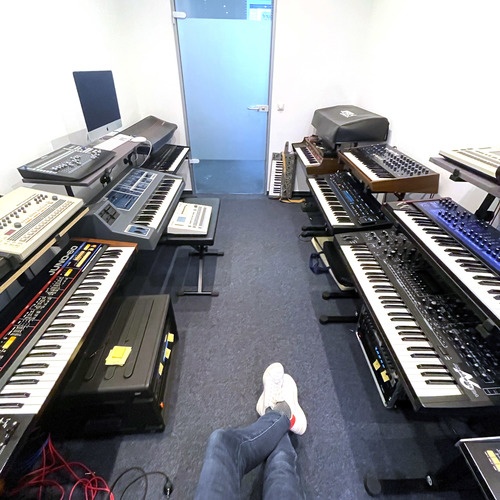
Community setups
Show yours
More MOTU Audio Interfaces

$130.00 - $819.00
in Audio Interfaces Rank


$40.00 - $695.00
in Audio Interfaces Rank


$40.00 - $695.00
in Audio Interfaces Rank


$199.95 - $569.99
in Audio Interfaces Rank


$261.50 - $279.95
in Audio Interfaces Rank


$40.00 - $695.00
in Audio Interfaces Rank


$1,095.00
in Audio Interfaces Rank


$599.00 - $1,060.50


$199.95 - $569.99


$498.04 - $849.00


$1,390.00 - $2,589.00


$395.00 - $499.00

$373.00 - $649.00


.png?v=1784984897)


$820.00 - $1,495.00


$995.00 - $1,451.96


$1,095.00 - $1,124.00


$729.00 - $1,101.00


-m.webp?v=1784819172)


$995.00 - $1,145.00


Accessories & Related Items


Artist usage


Similar


Gear Guides






.webp)
Most Popular Audio Interfaces
Most Popular Brands
-
Added to Equipboard on by
2tecGearIQ 179
-


