-s.webp?v=1784386808)


-xl.webp?v=1784386808)
Pricing and availability
We compare 600+ stores and found this item at 1 store. Prices updated .
Store
Reviews
Price




Average Price: $422
Budget/Beginner
$500
$1501+
Price Tier
Budget
Standard
High-end
* Product prices and availability are updated by Equipboard every 24hrs and are subject to change. Equipboard may receive compensation for purchases made at participating retailers linked on this site. This compensation does not affect what products or prices are displayed, or the order of prices listed. For more information, please refer to our affiliate disclosure.
Description
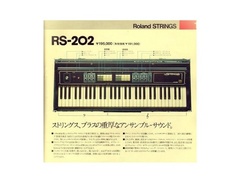
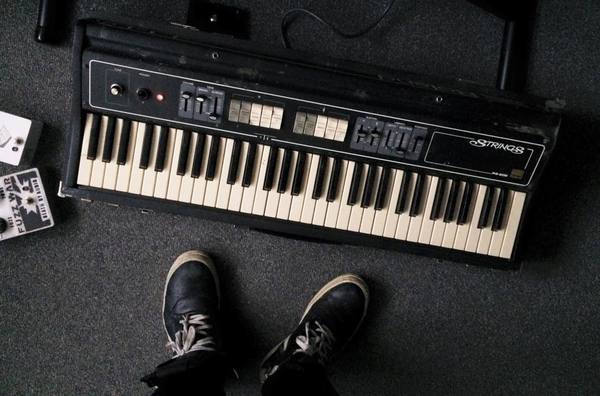
The RS-202 is a string and brass synthesizer released in 1976 that followed the lackluster RS-101. Oddly the RS-202 wasn't much different than its 101 predecessor. The RS-202 had two new features: a user-controlled delay for the vibrato, and an Ensemble/Chorus effect (that would be seen on dozens of future Roland analog synths for years, including the Junos and Jupiters). It makes the ultimate "disco" string sound.
The RS-202 is fully polyphonic (all 61 keys can play simultaneously). Basically three sound presets are in the RS-202: Strings I, Strings II and Brass. Forget the brass, however, because this machine is all about the strings, and for a time it was considered Roland's finest string machine. Strings I covers low cello & bass type sounds and Strings II is thinner and in the higher registers for Viola and Violin type sounds.
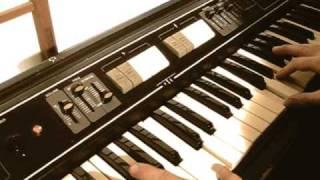
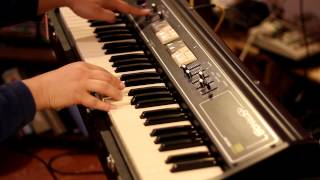
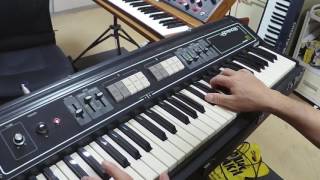
The keyboard is permanently split into two separate sections, the lower 2 octaves and the upper 3 octaves. Each section has it's own set of identical controls. These include three white On/Off buttons for each of the three sound presets. This means you can assign any sound to each section, and any combination; For example, set the lower section to Strings II and set the upper section to Strings I+II+Brass if you like. There are also two grey buttons in each section for "Slow Attack" and "Volume Soft". Each section also has its own sustain slider and there are global brilliance sliders for the brass and string sections independently.
Basic effects included the Ensemble (chorus) effect and Vibrato. A switching-slider is used to select Ensemble I, Ensemble II or Off. The Vibrato effect section had just two sliders: Delay and Speed (depth could not be changed). The Ensemble section did wonders for the sound of this machine; the 'Ensemble II' setting introduced a rich chorus, whereas the 'Ensemble I' produced the faster, deeper ensemble effect that became an instant classic. Sadly, like most vintage synthesizers the RS-202 is mono (high/low output jacks on back) and provides only a trigger output for an external synthesizer. It's built-in to a suit-case style housing which made it easily portable.
The RS-202 is a truly vintage and classic machine. Historically, it launched Roland's signature Ensemble effect. It also sounded fantastic - with or without the ensemble effect engaged. It easily stood up against many competing synths of its time such as the Arp Solina. It's been used by Tony Banks, Rod Argent, Tomita, Nick Magnus, Jethro Tull, Camel, and Magnum.
https://www.vintagesynth.com/roland/rs202.php
Product specs
| Brand | Roland |
| Model | RS-202 61-Key String Synthesizer |
| Finish | Black |
| Year | 1976 - 1979 |
| Categories | Analog Synths, Keyboard Synths |
| Analog / Digital | Analog |
| Key Size | Full Size |
| Keyboard Action | Synth Action |
| Number of Keys | 61 Keys |
| Polyphony | 61 Voices |
FAQs
-
What type of synthesis does the Roland RS-202 use?
-
The Roland RS-202 is an analog synthesizer, known for its rich, warm string sounds that are characteristic of vintage analog synthesis.
-
How many keys does the Roland RS-202 have, and what is their action type?
-
The Roland RS-202 features 61 full-size keys with a synth action, providing a smooth and responsive playing experience.
-
Is the Roland RS-202 polyphonic, and if so, how many voices does it support?
-
Yes, the Roland RS-202 is polyphonic and supports 61 voices, allowing for full chordal playing without voice stealing.
-
What are the standout sound characteristics of the Roland RS-202?
-
The RS-202 is renowned for its lush and expansive string sounds, which are ideal for creating orchestral textures and atmospheric pads.
-
What era is the Roland RS-202 from, and how might that influence its sound?
-
The Roland RS-202 was produced between 1976 and 1979, and its sound reflects the classic analog warmth and character typical of synthesizers from that era.
Videos

abertronic
Roland rs202 String Synthesizer
Roland rs202 String Synthesizer
abertronic
Roland RS-202 demo

SynthMania
【Machine】YMO TONG POO Backing with Roland RS-202 Strings Synthesizer

nicolai maruhama
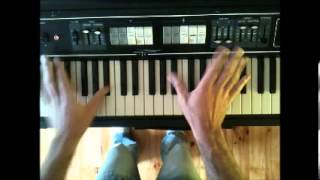
IZERA : ROLAND RS-202 : DEMO

Izera Stephen
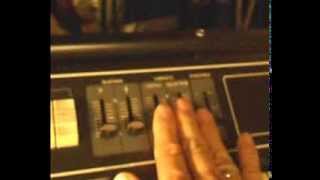
ROLAND RS-202 STRINGS SYNTHESIZER

Jason Basson
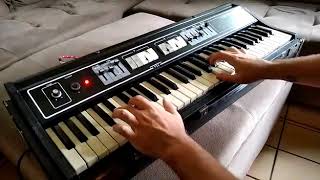
String Machine Roland Rs-202 (1976)

Alex Mac'Arthur ♪
Reviews
PROS
-
Features the first example of the famous Juno chorus
-
Fully polyphonic with divide-down circuitry
-
Includes classic Ensemble/Chorus effect for a rich sound
-
Independently adjustable presets for each keyboard half
-
Offers three distinct presets: Strings I, Strings II, and Brass
-
Solid build quality, originally constructed into flight cases
-
Versatile with simple envelope controls and tone adjustments
-
Ideal for recording due to its unique sound profile
CONS
-
Large and heavy, requires significant space and effort to move
-
Fixed split-point on the keyboard may limit some playing styles
-
Limited LFO options with only adjustable depth and delay
Owner Insights
We analyzed real musician discussions from forums and Reddit to find what players love, question, and tweak about Roland RS-202 Strings.
Comparisons
-
The Behringer Solina is awaited for its potential to replicate the RS-202's softer sounds but may not fully capture its tonal qualities based on current video reviews.
Source -
The Elka Rhapsody range is considered a viable alternative within the same budget as the RS-202, offering a vintage sound appeal.
Source
Value and pricing
-
Used Roland RS-09 models are sometimes available around the $600 range, presenting a budget-friendly alternative to the RS-202.
Source
4.5 out of 5
Based on 2 Reviews and 7 Ratings

1255
Classic 70s string machine, pleasantly versatile.
Released in the mid 1970s, this was the first string synth from Roland to feature what was to become their much-loved Ensemble/Chorus. One might not expect much from a single sawtooth oscillator, but with the divide-down circuitry, it is fully polyphonic.
There are three presets - Strings I, Strings II, and Brass - each on switchable rocker tabs. There are also some simple envelope controls (a tab switch for soft or hard attack, and sliders for release time which they've labelled "Decay"), two basic Low-Pass Filters ("Tone" - one for Strings I & II, the other for the Brass), and LFO ("Vibrato" - which has a fixed rate, but sliders for adjustable depth and delay).
The keyboard has a fixed split-point dividing the bottom 2 octaves and the top 3. All presets are independently adjustable for each half as are the soft/hard attack switches and the release controls. There's also an attenuation tab switch for each half so that one half can play softer or louder than the other.
All of this topped off with that sumptuous Ensemble effect, and it makes for a refreshingly versatile stringer.



Artist usage
Add artist

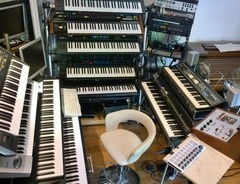
In this article from SOS, it says he has Roland RS-202 in his studio


The stringsounds in the beginning and near the end of the song are from the RS-202.


:format(jpeg):mode_rgb():quality(90)/discogs-images/R-2786893-1301600377.jpeg.jpg)
Catwalk Drum Programming [Simmons SDS5, Roland TR808, Drum Kit], Sequencer [Sequencer Programming: Moog Modular], Synthesizer [Synthesizers: ARP Omni, Roland RS202], Electronics [Treatments: Paia Phlanger, EMT Plate, Roland Space Echo] – Benge Vocals [Reslo Preamp, DBX Compressor, Digitech Vocalist], Synthesizer [Synthesizers: Yamaha CS80, Roland VP330 Vxocoder] – John Foxx


"Strings RS-202" is included in the list of instruments used.


(Quote from the text in the article)"As a result, the RS202 was soon adopted by luminaries such as Tony Banks, Rod Argent, Tomita and Nick Magnus, as well as by the keyboard players in Jethro Tull and Magnum. "


In a YouTube video, Aeroplane refers to the Roland RS-202 Strings as the "Roland String Machine," indicating its use in their setup.


Jonathan is standing by one at 23:29

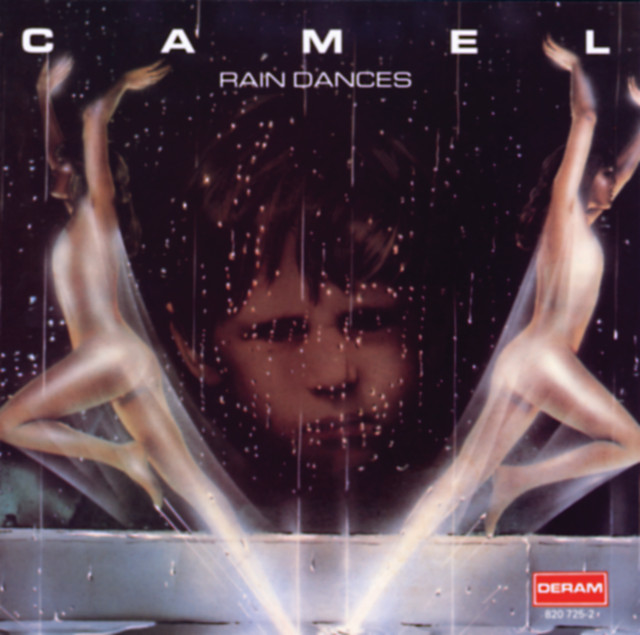
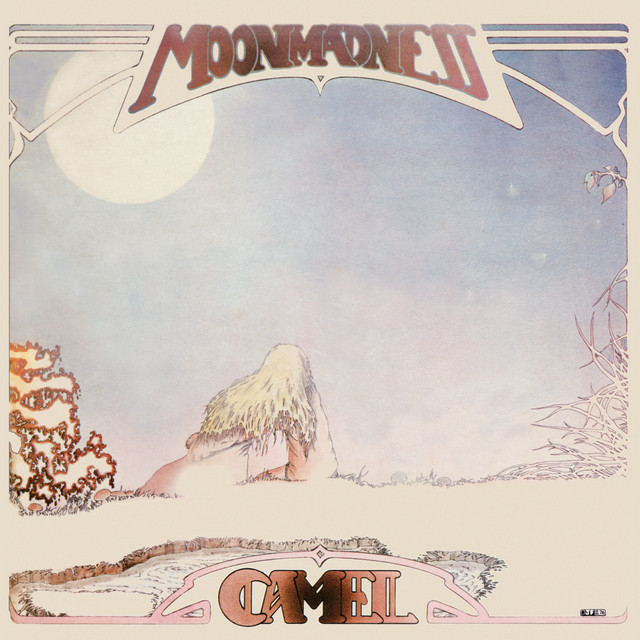
Pete Bardens can be seen using the Roland RS-202 Strings synthesizer during Camel's 1977 BBC concert performance, as captured in the YouTube video. This aligns with the string sounds present on Camel's albums "Moonmadness" (1976) and "Rain Dances" (1977).

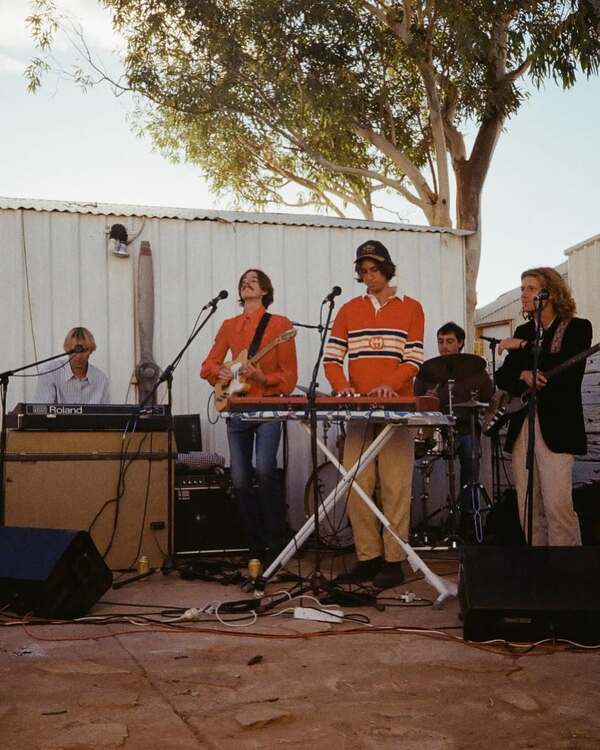
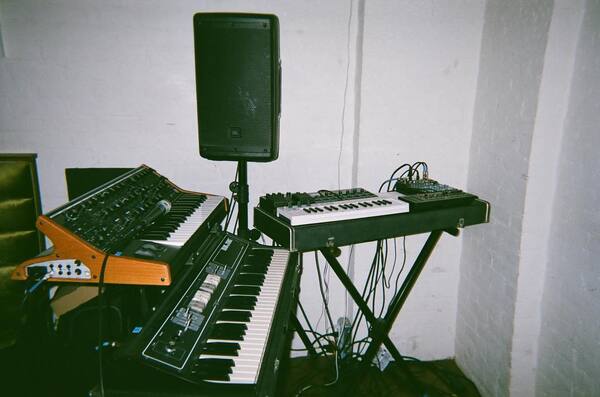
Louie Swain is confirmed to use the Roland RS-202 Strings, as evidenced by a photo shared on the Parcels' Instagram account on July 19, 2021, which shows the instrument. In this post, only the back of the synthesizer is shown, making it difficult to distinguish it from the RS-101, but if you check the studio in the post below, you will see the same synthesizer, and based on the number of control knobs, you can determine that it is the 202. https://www.instagram.com/p/DA5ZAlxyYg7/?img_index=1&igsh=MWxhM2I0M25lMGdnaw==



Album Usage
The Roland RS-202 Strings has been featured on the following albums:
Genre Usage
Based on how artists on Equipboard use this gear, it is most commonly found in the following genres.
Used With
Based on how musicians on Equipboard use Roland RS-202 Strings, it is most commonly used with the following gear.

-s.webp?v=1784559382)


Community setups
Show yours
Similar
Add recommendation3 alternative and related items for Roland RS-202 Strings, curated by the Equipboard community.

$239.00 - $1,789.67
More musician used ARP Solina as Strings back in 70s.

$999.95

$600.00
This is other string synthesizer by Roland in 80s.
More Roland Synthesizers

$20,000.00
in Synthesizers Rank


$2,000.00
in Synthesizers Rank


$281.08 - $1,763.18
in Synthesizers Rank


$325.00 - $1,332.49
in Synthesizers Rank

.jpeg?v=1784574735)


$499.99 - $719.99
in Synthesizers Rank


$307.08 - $915.00
in Synthesizers Rank


$1,372.08 - $2,159.99
in Synthesizers Rank


$479.99 - $1,099.00
in Synthesizers Rank


-m.webp?v=1784473034)
$967.05
in Synthesizers Rank


$740.00
in Synthesizers Rank


$350.50 - $494.99
in Synthesizers Rank


$196.86
in Synthesizers Rank


$404.99 - $819.99
in Synthesizers Rank


-m.webp?v=1784559397)
$1,124.32
in Synthesizers Rank


$3,995.00
in Synthesizers Rank


$2,099.00
in Synthesizers Rank


$2,199.99 - $2,639.99
in Synthesizers Rank


$799.99 - $837.73
in Synthesizers Rank


$614.00 - $1,199.00
in Synthesizers Rank


$149.00 - $368.00
in Synthesizers Rank


$344.00 - $479.99
in Synthesizers Rank


$499.00
in Synthesizers Rank


$892.66
in Synthesizers Rank


$1,229.72
in Synthesizers Rank


$888.00 - $1,199.99
in Synthesizers Rank


$918.00 - $1,249.99
in Synthesizers Rank


$1,544.53


$652.00 - $1,888.00


$1,252.00 - $1,869.99


Accessories & Related Items
-s.webp?v=1784473034)
Gear Guides









Most Popular Synthesizers
Most Popular Brands
-
Added to Equipboard on by
 alijamieson
GearIQ 119
-


