-s.webp?v=1783349876)


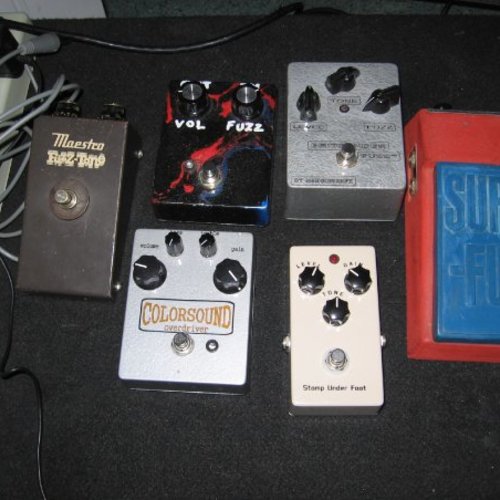
-xl.webp?v=1783349876)
Pricing and availability
We compare 600+ stores and found this item at 1 store. Prices updated .
Store
Reviews
Price




Average Price: $630
High-end/Boutique
$60
$181+
Price Tier
Budget
Standard
High-end
* Product prices and availability are updated by Equipboard every 24hrs and are subject to change. Equipboard may receive compensation for purchases made at participating retailers linked on this site. This compensation does not affect what products or prices are displayed, or the order of prices listed. For more information, please refer to our affiliate disclosure.
Description
The Univox U-1095 Super-Fuzz is a legendary piece of gear that has carved its place in the annals of rock history. With its distinct dual germanium diodes and square wave clipping, this pedal offers a raw, gritty texture that has defined countless iconic tracks. Whether you're looking to recreate the roaring fuzz of the '60s and '70s or carve out your own sonic space, the Super-Fuzz is your tool of choice.
Its simple yet effective controls—Balance (volume) and Expander (fuzz)—allow for intuitive manipulation of your sound, while the two-position tone switch provides versatility, letting you toggle between mid-scooped and full-bodied fuzz tones. This pedal is not just a relic from the past but a timeless tool for today's musicians who want to explore the boundaries of fuzz.
Perfect for both live performance and studio recording, the Univox U-1095 ensures your sound remains bold and unmistakable. From the roaring riffs of Hendrix to the modern crunch of the Black Keys, this pedal has been the secret weapon behind some of the most memorable tones in music history.
Key Features:
- Dual germanium diodes with square wave clipping
- Balance (volume) and Expander (fuzz) controls
- Two-position tone switch for versatile sound shaping
- Renowned for its use in classic and contemporary music
- Ideal for both collectors and active musicians seeking authentic fuzz tones
Product specs
| Brand | Univox |
| Model | Super Fuzz |
| Finish | Metal |
| Year | 1970s |
| Made In | Japan |
| Categories | Fuzz Pedals and Effects |
FAQs
-
What are the tonal characteristics of the Univox U-1095 Super-Fuzz?
-
The Univox U-1095 Super-Fuzz is known for its aggressive, "buzz saw" tone, delivering a thick and saturated fuzz sound that cuts through mixes, making it ideal for heavy rock and psychedelic music.
-
Is the Univox U-1095 Super-Fuzz suitable for bass guitar?
-
Yes, the Univox U-1095 Super-Fuzz works well with bass guitars, providing a rich, full-bodied fuzz that retains low-end clarity, making it a popular choice among bassists seeking a vintage fuzz sound.
-
What kind of power supply does the Univox U-1095 Super-Fuzz require?
-
The Univox U-1095 Super-Fuzz typically requires a 9V battery for operation, as it was designed before the widespread use of external power supplies. Some modifications may allow for external power use.
-
How does the Univox U-1095 Super-Fuzz compare to modern fuzz pedals?
-
The Univox U-1095 Super-Fuzz offers a unique vintage tone that is often described as more raw and aggressive compared to many modern fuzz pedals, which might have smoother or more refined sounds.
-
What are the main controls on the Univox U-1095 Super-Fuzz?
-
The Univox U-1095 Super-Fuzz typically features basic controls such as a volume knob and a tone switch, allowing users to adjust the output level and toggle between different tonal modes for varied fuzz textures.
Videos

gearmanndude
Univox SUPER FUZZ red and blue version pedal demo with Kingbee Strat & Mojo Amp
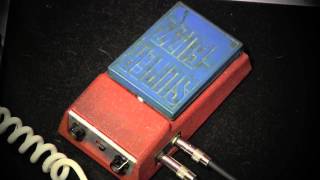
Univox SUPER FUZZ red and blue version pedal demo with Kingbee Strat & Mojo Amp
gearmanndude

A Brief History of The Legendary Univox Super-Fuzz | Tone Report

Reverb
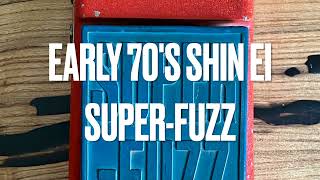
Getting Gross with Gear - Shin Ei/Univox Super-Fuzz

Getting Gross With Gear
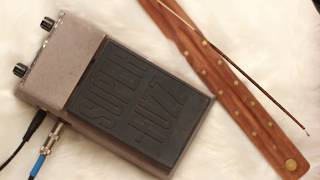
Univox Superfuzz - Quick Demo

Joby
Reviews
PROS
-
Produces brutally intense fuzz, not for the timid
-
Unique sound, evokes a distinct, vintage vibe
-
Offers a special "Aleister Crowley ritual" tone
-
Durable, with units from the 70s still in use
-
Capable of mild upper-octave sounds for versatility
-
Two EQ settings: retro flat and scooped mids
-
Loved for its non-conformity to traditional guitar tones
CONS
-
Not versatile; struggles outside its specific fuzz/distortion sound
-
Octave effect can be challenging to dial in accurately
-
High price point compared to its original cost in the 70s
-
Some find it musically unusable, describing it as the worst sounding fuzz
Owner Insights
We analyzed real musician discussions from forums and Reddit to find what players love, question, and tweak about Univox U-1095 Super-Fuzz.
Features and functionality
-
The Behringer SF300 is noted for its brutal doom fuzz sound, closely resembling the Boss Hyper Fuzz, itself a modified Univox Super Fuzz.
Source -
The Idiotbox Ron Swanson Super Fuzz offers a knob for EQ adjustment instead of a switch, providing more nuanced control over sound.
Source -
The Fuzzvenger by Occvlt Pedals is noted for its unique branding and offers a distinct alternative in the Super Fuzz market.
Source
Mods and upgrades
-
The Schenkenstein Boogie Van allows for easy transistor swaps, enhancing the fuzz with Soviet era germanium MP37B and metal can Motorola 2N2222 transistors.
Source -
The General Guitar Gadgets kit includes built-in mods on the board, requiring careful adherence to documentation for optimal results.
Source
User experience
-
Owners praise the Tru-Fi Super Fuzz for its ability to disengage the octave and blend between two mid circuits, offering versatility close to the original.
Source -
Owners frequently use the Basic Audio recreation due to its consistent performance at gigs, making it a reliable choice even when fuzz isn't the primary sound.
Source -
Owners highlight the scarcity of the Wattson FY-6, which, despite being highly regarded, is difficult to find since the company ceased operations.
Source
Comparisons
-
PigeonFX FY-6 Superfuzz is favored over others for its unique sound, often compared alongside its sister, the FY-2 Companion Fuzz, as top choices for fuzz enthusiasts.
Source -
The Creepy Fingers Harakiri Fuzz is crafted by Brad Davis of Fu Manchu, presenting a legitimate option for authentic Fu Manchu tones.
Source -
The Fredric Effects Super Unpleasant Companion combines Superfuzz (FY-6) and Companion Fuzz (FY-2) circuits for versatile fuzz options in one pedal.
Source
Use cases and applications
-
The Behringer Super Fuzz is favored for stoner rock and classic hard rock styles, making it ideal for emulating riffs from bands like The Who and Kyuss.
Source -
The Wattson FY2 clone delivers a "disgusting" fuzz tone preferred for specific musical styles, though many gravitate towards Basic Audio for broader versatility.
Source -
The EQ of the Boss version is favored by some for its unique sound, but others prefer a circuit without the prominent EQ feature.
Source
Critic Reviews
5.0 out of 5
Based on 4 Reviews and 22 Ratings

124
Simply the best Fuzz tone ever.
The Univox Super-Fuzz is pefect for power chords en cutting lead lines.

41029
2 trick pony!
I had a red and blue (more like pinkish orange on mine) version that was given to me by a close friend and collaborator. She had it for years after finding it at a yard sale for 5 bucks. It didn't work right, but it was easy stuff to fix. I used it on some unfinished recordings and enjoyed it thoroughly at the time, however its not a versatile pedal and the octave is hard to dial in right. Without getting the octave up effect its really a mediocre fuzz/distortion sound in either EQ setting. I forgot to mention there's a fuzz knob, an output knob and a tone switch that goes from flat to scooped mids.Flat its very retro and 60s, scooped its like smashing pumpkins' Rocket. This guy got sold in MD last year to my boys at Atomic Music (check 'em out on the web). Maybe I'll build a clone one day if I miss it.
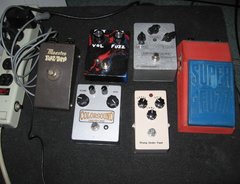

10
I disagree with the statement it’s a two trick pony. SuperFuzz is multiple ponies. (I just need to add that I’m using the clone made by Analog Fox, but it’s the closest one (maybe together with Wattson), you can check Youtube side-by-side comparsions). Pots on the pedal do not provide a very wide range of sounds, but this fuzz is very sensitive on the dynamics of you playing, and especially on where do you play. Playing riff/melody lower on the neck - you get a thinner, very nasty and aggressive fuzz. Playing the same above 10-12th fret - tone gets rounder, upper octave and musical ring modulation begins to appear (but only when you play "dirty" intervals like min6 or b5). And you can get an entirely new palette by backing down volume on your guitar. It’s a pedal for patient experimentators and feinschmeckers, but you can definitely find a lot in it.
41029
do you have any idea how many vintage fuzzes I had at one point? I've owned at least one of everything but the unicorn of fuzzes, the sola tonebender mk1. For an octave fuzz the univox is very sensitive.... for a fuzz in genreal the sensitivity to playing dynamics is middling. Next to an original tonebender mk2 or mk3? Sorry. As far thick, high gain fuzz goes, those two circuits are the kings of touch sensitivity and volume clean up. And yeah, I know the ring mod trick, its like a faint version of the Octavia neck pickup sound.... but on an original it only comes off right when you have the internal trimmer dialed in just right for that guitar. The early silver oens with no trimmer are even more finicky. I think they address this in clones by ear testing each pedal and carefully mathcing transistors and the diodes used to create the octaving. But in vintage ones? Just trust me on this one. The superfuzz is an wesome pedal, don't get me wrong but in a dense band mix it has 2 basic sounds the audience will hear. Its nto worth the price of originals and for some reason the clones are pretty expensive... which is weird given that something as borring as a boss hyperfuzz is pretty much a superfuzz with some clever features added into the make up gain section. I'm not trying toa rgue with me, but I'm pretty old and I owned the pedal for like 10 to 15 years. Probably longer. I used it plenty. I knew all of tis secrets (had to fix it many times). When is at its a 2 trick pony I mean it broadly. You can fiddle with the pedal, your guitar controls and your playing a lot and tickle your fancy in a bedroom or the studio control room. In the end what cuts a mix is Pete or Billy (or Beasties on bass). I'm not telling you not to love your clone, just calling it as I see it. And if you really wan the upper octave good, roll your tone control on the guitar to 5 and then you can use anywhere above the 5th fret ;-) Then play the devil's interval to your heart's content. I also don't appreciate the implication that I have no patience. There's no need to insult me for my opinion. I'm just giving an honest review of a pedal I kept for a long, long time until the vintage resale value got so high I couldn't justify keeping it anymore for the 1 or 2 recordings per year. And reviewing the ORIGINAL unit that I had I'm really putting in light of the extreme cost of originals like mine. I don't know anything about the price performance ratio of clones. This is just one man's opinion but you're not talking me around it, not even by condescending me.

great classic fuzz that can give mild octave fuzz sounds.
Please note that im reviewing a pedal I built to the same spec as the original superfuzz...I really love this fuzz for the mild upper octave sounds the circuit can archive. I also like the more standred fuzz tones on offer here thanks to six 2n3904 npn silicon transistors.its a truly great fuzz that has much in common with the old shin ei fuzzes from the past, if you love fuzz this pedal is a absolute must!!
41029
I had the exact fuzz pictured and mine was anything but subtle when the internal trim pot was calibrated correctly to produce the octaving effect. The vintage ones produce a blitzkrieg of squealing octave.... in a good way. Kudos on your build, man!
41029
I saw on your 'want list' that you are looking for a companion fuzz.... its not as cool as you think it will be... you used to be able to get these all day for 10 to 20 bucks and I owned one during the period where I had the superfuzzz, both acquired as gifts from friends who scored them at yard sales for change... of course, my super showed up in need of repairs, some solder joints had come loose from the board, but still, I can't believe how valuable this stuff is now, ANYWAY, the superfuzz is a much better circuit, infinitely more musical, but if you are in a noise band or just want an effect to add color to a few notes in the studio the companion fuzz is worth seeking out or building... when the value shot up I sold mine during my great fuzz box purge of 2014
I know the prices of some of these pedals are really off the wall,especially when you think about whats actually inside them,but I know sometimes it just has to be done when the money's right and someones willing to pay money,although when I think about whats actually in some of these fuzzes and how cheaply some vintage fuzzes where made,(green russain big muffs for example,$400!!),it really does makes you think,..yes thats right, I am looking for an fy2 as I only play and record with just a drummer (I knew it probably wouldnt cut through very well in a band context) and I really do like the sound of them.I do make my own pcbs though,so I think ill probably just end up making clone and see how i get on with that,but I think i would have to argree with you about the fy6 being better fuzz all round then the shin e fy2,the shin ei isnt ever going to be a always on kind of pedal is It,its an acquired taste kind of thing. Well the fy6 clone was made to the original schematic,although I did forget to mention that the one I made has a diode mod I can use to rain the thing back in a bit,("blitzkrieg is a great word for it":-). .so I used two germanium diodes for the two original didoes as found on the original pcb for a bit of mojo,plues two 1n914s pairs that I can swich in and out of the original fy6 circuit,..that basically clips some of the voltage and rains the fuzz and octave in a bit.i also set the trimmer pot for the octave to taste... its actually good little mod,I really like to use it on the the overdrive channal of a tube amp,with the gain on the amp set just when it starts to dirty up when you hit the strings,. . .thank you,ill have to see if I can post a vid here so you can have a listen to it,it would be cool to know what you think.
“Mild?” Are you joking??

Artist usage
Add artist
Gifted to Arm by bandmate Steve Turner, as recalled by Turner in this excerpt from I'M NOW: The Story of Mudhoney. Along with the Electro-Harmonix Big Muff Pi, it was the namesake of Superfuzz Bigmuff. This Super-Fuzz broke soon after, however, as recalled in this March 16, 2006 Portland Mercury interview. One can see that it had already lost its blue footswitch in this excerpt of Live: Berlin 1988 at 1:13 and in this photo from Touch Me I'm Sick by Charles Peterson.
Maximumrocknroll, August 1990 (as archived on this Open Computing Facility fan page)
Steve: The singer was afraid to sing at practice because he had never sung before and was embarrassed. So all we did was instrumental versions of "Louie Louie" and "Dr. Love," (laughs) and check this out I didn't even have a distortion box. This is my roots: the guy that I was working in a restaurant with used to be in bands up in Vancouver and he started telling me about punk rock history. He asked me what kind of equipment I used and I said, "Peavy guitar, Sub amp," and he said, "Do you have a distortion box?" and I said "What's that?" I was going like "clink-clink-clink (to the tune of 'Dr. Love')." I couldn't tell the difference. So he gave me a Super Fuzz. So that's where the Super Fuzz comes from.
MRR: And you still have the same Super Fuzz to this day?
Steve: No, that one broke and I bought another one and that's the one Mark uses now.
Portland Mercury
Are you and Steve [Turner] still rocking the legendary Superfuzz and Bigmuff stomp boxes?
He still uses a Bigmuff. The Superfuzz died probably in, like, '90.
Steve Turner in I'M NOW: The Story of Mudhoney (2012)
I was working at a Japanese restaurant and this chef there seemed like he'd already been through the punk wars and, you know, had gone, you know, pop, sort of and was into kind of synthpop stuff. I was talkin' about guitar and I was like "Yeah, I just can't really get it to sound the way I want it to, you know?" and he asked me what distortion box I was using. And I didn't know what that was. It was like "Huh?" He just kinda smiled and the next day, he handed me a Super-Fuzz. Said "Here, try this." It was a serious revelation 'cause it's not just a distortion box, it's fuzz, you know? It's like really, really deep thick fuzz and, so that just, you know, blew my mind.
By the time that Mudhoney started, I was playin' the Big Muff 'cause it had more of that sustain, kinda like Blue Cheer, Stooges kinda thing going, and so Mark used the Super-Fuzz.


In this article talking about the gear King uses on his "El Dorado album, under the "Marcus King's Gear" side panel, a Super Fuzz is listed as one of his effects pedals.


"A gnarly box I have is the Super-Fuzz, that I got from a friend." (Mistakenly listed as a "Morley Super-Fuzz" in the video)

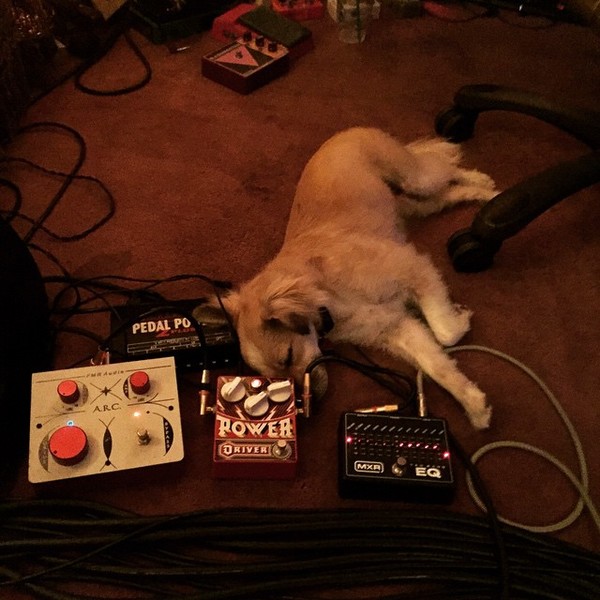
In the background of the image published by Alain you can see the Super-Fuzz pedal


I also use a Univox Super Fuzz pedal and a Maxon delay for slapback.


'I just got a Univox Super-Fuzz because we’re going to be playing an older Iggy track, too.'

He gave it to Mark Arm when he got the big muff but Steve did use it a few times in the studio for example the solo for touch me I'm sick

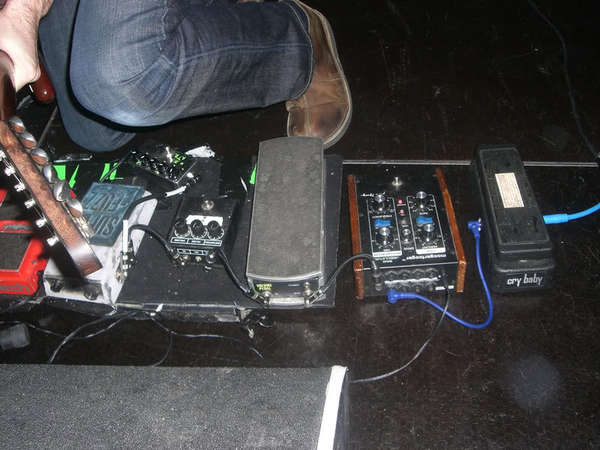
In the Tumblr photo, Ratatat's Univox U-1095 Super-Fuzz pedal is visible beneath the headstock of the guitar, with its distinctive red paint chipped off.


Pedal 52 in Stompbox: 100 Pedals of the World's Greatest Guitarists, as can be seen in the quick browse video at 0:22.

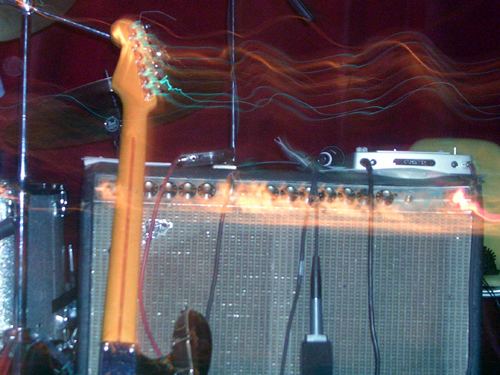
"And in The Cramps I used a Univox Superfuzz – very classic and very great. I wouldn’t mind getting another one."


The Univox Super-Fuzz has for a long-time been the staple of the Fu Manchu sound. Hill has used this pedal extensively in live performances & studio work for most of his time with the band. The "Gear" page on the official Fu Manchu website clearly shows all the equipment of Scott Hill including the Super Fuzz
Album Usage
The Univox U-1095 Super-Fuzz has been featured on the following albums:





Genre Usage
Based on how artists on Equipboard use this gear, it is most commonly found in the following genres.
Used With
Based on how musicians on Equipboard use Univox U-1095 Super-Fuzz, it is most commonly used with the following gear.
-s.webp?v=1783402242)


-s.webp?v=1783004193)
-s.webp?v=1783403618)


Community setups
Show yoursSimilar
Add recommendation24 alternative and related items for Univox U-1095 Super-Fuzz, curated by the Equipboard community.

$20.90 - $105.70
An ultra affordable of the now discontinued, Super-Fuzz derived Boss FZ-2.

$125.95 - $206.39
A vintage accurate circuit recreation of the Super-Fuzz, with an additional mode and tone switch.

According to Nerdvana;
Yung Mann Fuzz is an exact clone of the vintage Univox Superfuzz with the tone bypass switch removed as built for Kurt Cobain by his guitar tech Ernie Bailey.

A limited run, 4 knob take on the Super-Fuzz, using NOS transistors.

A painstaking replica of the Shin-Ei variant of the Super Fuzz, down to the enclosure. Now discontinued.

$121.40 - $149.00
A newer fuzz based on the Univox Super Fuzz, with an added two band EQ.
More Univox Fuzz Effects Pedals


-m.webp?v=1783423185)
$179.00 - $209.00
in Fuzz Effects Pedals Rank


$160.00
in Fuzz Effects Pedals Rank


$220.00 - $249.00
in Fuzz Effects Pedals Rank

.jpeg?v=1783381986)


$75.00 - $96.20
in Fuzz Effects Pedals Rank


$179.00
in Fuzz Effects Pedals Rank


$310.00
in Fuzz Effects Pedals Rank


$89.00 - $169.00
in Fuzz Effects Pedals Rank


$199.00 - $229.00
in Fuzz Effects Pedals Rank


$159.00 - $181.00
in Fuzz Effects Pedals Rank


$83.00 - $101.60
in Fuzz Effects Pedals Rank


$110.33 - $219.00
in Fuzz Effects Pedals Rank


$79.00 - $108.90
in Fuzz Effects Pedals Rank


$340.00
in Fuzz Effects Pedals Rank

$85.00 - $108.90
in Fuzz Effects Pedals Rank


$75.00 - $87.10
in Fuzz Effects Pedals Rank


$59.00 - $83.50
in Fuzz Effects Pedals Rank


-m.webp?v=1783422546)
$169.00 - $179.99
in Fuzz Effects Pedals Rank


$95.00 - $2,006.18
in Fuzz Effects Pedals Rank

$249.00 - $299.00
in Fuzz Effects Pedals Rank


-m.webp?v=1783422405)
$88.82 - $111.00
in Fuzz Effects Pedals Rank


$219.00 - $399.00
in Fuzz Effects Pedals Rank


$199.99
in Fuzz Effects Pedals Rank


$159.22 - $209.00
in Fuzz Effects Pedals Rank


.jpeg?v=1783313150)

$179.00 - $189.00
in Fuzz Effects Pedals Rank


$98.52 - $129.00
in Fuzz Effects Pedals Rank


-m.webp?v=1783422658)
$269.00 - $349.00
in Fuzz Effects Pedals Rank


$269.00
in Fuzz Effects Pedals Rank

$20.90 - $105.70
in Fuzz Effects Pedals Rank


$299.99
in Fuzz Effects Pedals Rank


$182.11 - $199.99
in Fuzz Effects Pedals Rank


$111.54 - $149.99
in Fuzz Effects Pedals Rank


$160.00 - $299.99
in Fuzz Effects Pedals Rank


$270.00 - $311.00
in Fuzz Effects Pedals Rank


$215.99 - $290.00
in Fuzz Effects Pedals Rank


$149.00 - $169.00
in Fuzz Effects Pedals Rank
.jpg?v=1783267404)


$149.00 - $179.99
in Fuzz Effects Pedals Rank


in Fuzz Effects Pedals Rank


Accessories & Related Items


Gear Guides



.jpg)



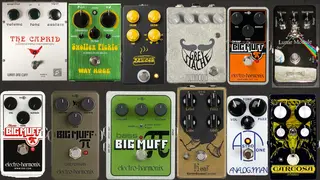
Most Popular Fuzz Effects Pedals
Most Popular Brands
-
Added to Equipboard on by
 equipboard
Gear IQ 4934
-


