-s.webp?v=1783260059)
-xl.webp?v=1783260059)
Pricing and availability
We compare 600+ stores and found this item at 5 stores. Prices updated .
Store
Reviews
Price


Price History
Based on price data from 4 merchants for "Waves CLA-76 Compressor / Limiter". Prices shown reflect NEW condition. Tracking began Apr 2, 2026.
* Product prices and availability are updated by Equipboard every 24hrs and are subject to change. Equipboard may receive compensation for purchases made at participating retailers linked on this site. This compensation does not affect what products or prices are displayed, or the order of prices listed. For more information, please refer to our affiliate disclosure.
Description
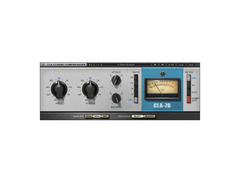
Dive into the rich, sonic tapestry of the past with the Waves CLA-76 Compressor / Limiter, a meticulously engineered emulation of not one, but two iconic studio classics from the 1960s. This plugin brings the authentic warmth and punch of the legendary hardware units to your digital workstation, offering you a seamless way to infuse your tracks with vintage character.
Designed in collaboration with renowned mix engineer Chris Lord-Alge, the CLA-76 captures the essence of both the "blue" and "black" revision units, renowned for their distinctive tonal qualities and revered in studios worldwide. Whether you're looking to add subtle dynamic control or push your tracks with aggressive compression, this plugin has you covered. Its intuitive interface is ideal for both beginners and seasoned professionals, offering a user-friendly experience without compromising on the depth of sound.
Key Features:
- Faithful emulation of two legendary 1960s studio compressors
- Includes both the "blue" and "black" revision models
- Developed in collaboration with Chris Lord-Alge
- Ideal for a wide range of musical genres and applications
- Intuitive interface for easy and effective use
- Compatible with major DAWs and operating systems
Product specs
| Available since | October 2016 |
| Los artikel / bundelartikel | Los artikel |
| Delay | No |
| Dynamics | Yes |
| Effect Filter | No |
| Encoder/Decoder | No |
| Equalizer | No |
| Guitar amps/-effects | No |
| Channel Strip | No |
| Metering / Analysis / Correction | No |
| Modulation Effects | No |
| Multieffect / Plugin-Host | No |
| Overdrive/Distortion | No |
| Preamp / Saturation | No |
| Psychoacoustic tool / Enhancer / Exciter | No |
| Restauration | No |
| Reverb | No |
| Special FX | No |
| Summer / Mixing Consoles | No |
| Tape Simulation | No |
| Pitch Shifter / Harmonizer / Timestretching | No |
| Transient Processing | No |
| Vocoder / Vocal effect | No |
| Mastering Tools | No |
| Hardware Controller | No |
| Download | 1 |
FAQs
-
What is the difference between the blue and black versions of the Waves CLA-76 Compressor / Limiter?
-
The blue version, often referred to as "Bluey," has a more aggressive sound with slightly faster release times compared to the "Blacky" version. Both versions offer distinct tonal characteristics, making them suitable for different mixing needs.
-
Is the Waves CLA-76 Compressor / Limiter suitable for vocal processing?
-
Yes, the Waves CLA-76 is highly regarded for its ability to add character and presence to vocal tracks, making it a popular choice among producers for vocal processing.
-
Does the Waves CLA-76 Compressor / Limiter plugin work with all major DAWs?
-
The Waves CLA-76 is compatible with all major DAWs, including Ableton Live, Pro Tools, Logic Pro, and Cubase, as long as they support VST, AU, or AAX plugin formats.
-
What are the main features of the Waves CLA-76 Compressor / Limiter?
-
The Waves CLA-76 features fast attack and release times, offering a classic analog sound. It includes both "Bluey" and "Blacky" models, providing versatility in compression styles.
-
How does the Waves CLA-76 Compressor / Limiter handle dynamics?
-
The CLA-76 is designed to manage dynamics effectively, offering precise control over gain reduction while adding a distinctive analog warmth to the audio signal.
Videos

White Sea Studio
Waves CLA-76 (Comparison with ANALOG!)
Waves CLA-76 (Comparison with ANALOG!)
White Sea Studio
Warm Audio WA76 vs Klark Teknik KT76 vs Waves CLA76 vs Brainworx MC-77 vs Slate Audio FG-116

Barry Johns Studio Talk
Universal Audio 1176 vs Waves CLA-76 vs NI VC76 Compressor Shootout

Sean Daniel
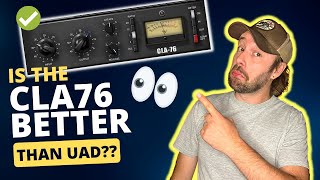
CLA76 is BETTER than UAD?? 😱 - Waves vs Universal Audio 1176

@mixwithjacob
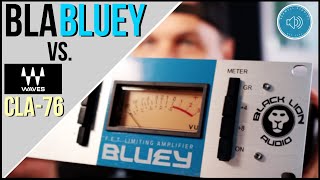
Black Lion Audio Bluey vs. Waves CLA-76 Shootout | Hardware vs. Plug In

Seawell Studios
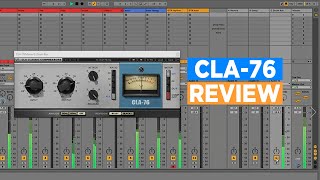
Waves CLA-76 Plugin - Review & Demo

CJ Whaley
Reviews
PROS
-
Excels on vocals, guitars, and drums
-
Offers a unique tone distinct from stock DAW compressors
-
Particularly effective in rock and metal production
-
Useful for achieving a warm 90's R&B vocal sound
-
Highly regarded for its aggressive compression style
-
Versatile across various music applications
-
Great substitute when real 1176 hardware is unavailable
-
Known for adding punch to tracks, especially in parallel compression
CONS
-
Does not perfectly emulate the natural compression of hardware 1176
-
Takes time to learn and fine-tune settings
Owner Insights
We analyzed real musician discussions from forums and Reddit to find what players love, question, and tweak about Waves CLA-76 Compressor / Limiter.
Comparisons
-
Klanghelm's DC8C is praised for offering a versatile 1176-style compression with a "weight" that some find lacking in Waves' CLA-76.
Source -
IK Multimedia's emulations are preferred by some for sounding closer to analogue counterparts compared to Waves' offerings.
Source -
The CLA-76 is considered more versatile than the CLA-2A due to its greater control and parameter options, making it suitable for a wider range of applications.
Source
Features and functionality
-
The CLA-76's ALL mode is noted for effectively "destroying" drums, providing a unique sound when blended with a clean signal.
Source -
Serial use of CLA-76 followed by CLA-2A can effectively catch peaks and provide smoother leveling for vocal tracks.
Source -
The CLA-76 is noted for its very fast attack times, ranging from 50 milliseconds to 1.1 seconds, suitable for catching fast transients.
Source -
It's noted for being a versatile compressor, likened to a "hot sauce" for audio tracks, indicating its widespread application across different instruments.
Source
Use cases and applications
-
The Bluey version of the CLA-76 is favored for vocals, attributed to its distinct mid bite that enhances vocal presence.
Source -
CLA-76 is used lightly on snare buses to add "beef" to the snare's crack, with adjustable attack and release times enhancing the hit and ring-out.
Source -
The CLA-76 is favored for making transients pop in hip hop/trap vocals, ideal for aggressive and up-front vocal mixes.
Source -
CLA-76 is often used as the primary compressor for lead vocals, with CLA-2A used for parallel compression or background vocal smoothing.
Source -
Owners highlight its effectiveness on electric guitar tracks, offering a more saturated tone ideal for aggressive, expressive compression.
Source -
The CLA-76 is rarely used as a bus compressor, but some find it useful for compressing multiple snare tracks simultaneously.
Source
User experience
-
Some users prefer CLA-76 for its low-latency operation in digital audio workstations like Logic, especially when multiple instances are needed in a session.
Source
Critic Reviews
5.0 out of 5
Based on 4 Reviews and 33 Ratings

129
Close to the Real Unit But Still Unique
As an owner of a real 1176LN I can attest to how close these waves plugins get to the real thing. It is really a great substitute when I'm already using the 1176. However this plugin has it's own sound as well. Which is part of the reason why I really like it.

161
drums
This thing sounds so damn good on drums. Put it on a parallel bus and slam the piss out of it. Thank me later


Artist usage
Add artist

In the video "Recording vocals with Clairo | Sneak Peek" by Mix with the Masters, Rostam Batmanglij and Clairo analyze the vocal recording for Clairo’s music, where the Waves CLA-76 Compressor / Limiter plugin is used in one of the stems.


Used on "A Lot", as mentioned by producer Maddmix in this March 2019 Sound on Sound interview and as visible in a downloadable photo of the "A Lot" Pro Tools session (available in this .zip file).
Although there are relatively few plug-ins on the drums and hardly any on the music, Maddox uses dozens on the vocals. 21 Savage's five vocal aux tracks, for example, all pass through a signal chain comprising Antares Auto-Tune, UAD 1176LN E, Waves Renaissance Vox, FabFilter Pro-DS, Waves C6, another Pro-DS, FabFilter Pro-Q2 and another C6, with only the latter one or two plug-ins dropping out on a couple of tracks.
All these tracks go the '21 Lead' aux (42), which has nine plug-ins, including compressors, de-essers, and four(!) more instances of Pro-Q2, as well as four sends. Both 21 Savage and J Cole's aux group vocal tracks then go to a vocal aux called 'MadVoxComp', and from there to the 'All Vocals' aux, each of which hosts two plug-ins; so in total, every 21 Savage vocal track passes through 19 to 21 insert plug-ins, as well as being sent to up to seven auxes. The situation with J Cole is even more elaborate, though complicated by the fact that some of the sends came with the vocal session that Maddox received from Cole's engineer.
"I guess my thought process behind my mixing is kind of messy!" laughs Maddox. "The thing is that I will start with adding compression and EQ on a vocal, and then if I hear something else that needs correcting, I will just add another compressor or EQ. I never go back and take plug-ins off or reset them, because I don't want to go back on what I already have, because I might mess it up. So I just keep going forward and adding plug-ins until I get the sound I want. That works for me. Some people like mixing with very few plug-ins, but I will mix with whatever I need to get what I want.
"The plug-ins I have on these inserts I use frequently. I guess you could call them my clean-up plug-ins. The 1176LN worked on 21's vocals in this session. I may also use the UAD Tube-Tech CL 1B or the Waves RCompressor. In this session the 1176 made 21's vocals really full and in your face. Next is the RVox, which is also is a good plug-in for bringing the vocals up front and making them really full. It is very subtle, but it makes a big difference. If I feel like the vocal does not sit up front enough I put that on, compress it a little bit, and it usually fixes the problem for me. The 1176 has a similar function, but I use it more for actual compression and the RVox more for tone and to make it sound bigger.
"Next is the Pro-DS, which as a de-esser obviously helps with the sibilance. Some vocals have more sibilance than others, and sometimes I use just one, but in this case I felt I needed two. I love using multiband compressors, and the C6 is here for some general compression, but there always are some frequencies that need adjusting, but that I don't want to take out with an EQ, because you need those frequencies. When I use a multiband, I find the frequency that bugs me, and set a threshold, so the frequency is only dipped when it needs to be dipped. If you look at my C6 plug-ins, they often address harsh frequencies that a de-esser can't take out. I'll have a really tight notch on the C6, and then just compress that frequency a couple of dB."
Of the '21 Lead' aux, Maddox says: "There are four instances of the Pro-Q2 on the signal chain, which is again an example of me working cumulatively. I now use the Pro-Q3 a lot, which is a dynamic EQ, which can do pretty much the same thing as the C6. Then insert 4 is the McDSP MC404 multiband compressor, which I use pretty often, and then I have the Eiosis Air EQ, the C6, the Kush Clariphonic EQ and the SSL G EQ. I use different EQs for different purposes. The Q2 has unlimited bands, so I use that to search and dip frequencies I don't like. I really like the high end on the Air, which opens up the vocal and makes it sound really good. I also often do some scooping in the lower mid-range with the Air, because it does a really good job of that. I use the Clariphonic mainly for the Clarity knob, which widens the vocal just by having that on. I really like that on vocals and use that in almost every session.
"The sends go to several aux effect tracks with delays and reverbs, but for this project they told me that they wanted the keep the vocals pretty dry, so I didn't use much reverb. Mostly just a small room reverb really subtly in the background to give it some space. The main reverbs that I have in my template are the Slate Digital VerbSuite Classics. They have great emulations of popular reverbs like the Bricasti and so on, that sound really good. I also use the UAD Lexicon 480 a lot. Those are my go-to reverbs. I occasionally use the Waves RVerb and TrueVerb. My main delays are the Soundtoys EchoBoy and the Waves H-Delay. For distortion I use the Soundtoys Decapitator and Devil-Loc, sometimes the Dada Life Sausage Fattener, which is fun, and the distortion pedal in the Waves GTR3 Stomps plug-in.
(...) Finally, both '21 Leads' and 'Leads' go to the 'Lead All' [40] and parallel 'MadVoxComp' [41] tracks, and the latter has the Waves CLA-76 and L1, both for more presence and volume."


At 3:51 in this video, Buster uses Waves CLA-76 in the “Bluey” revision to maintain the volume of pitch shifted parts in the direct guitar input track.

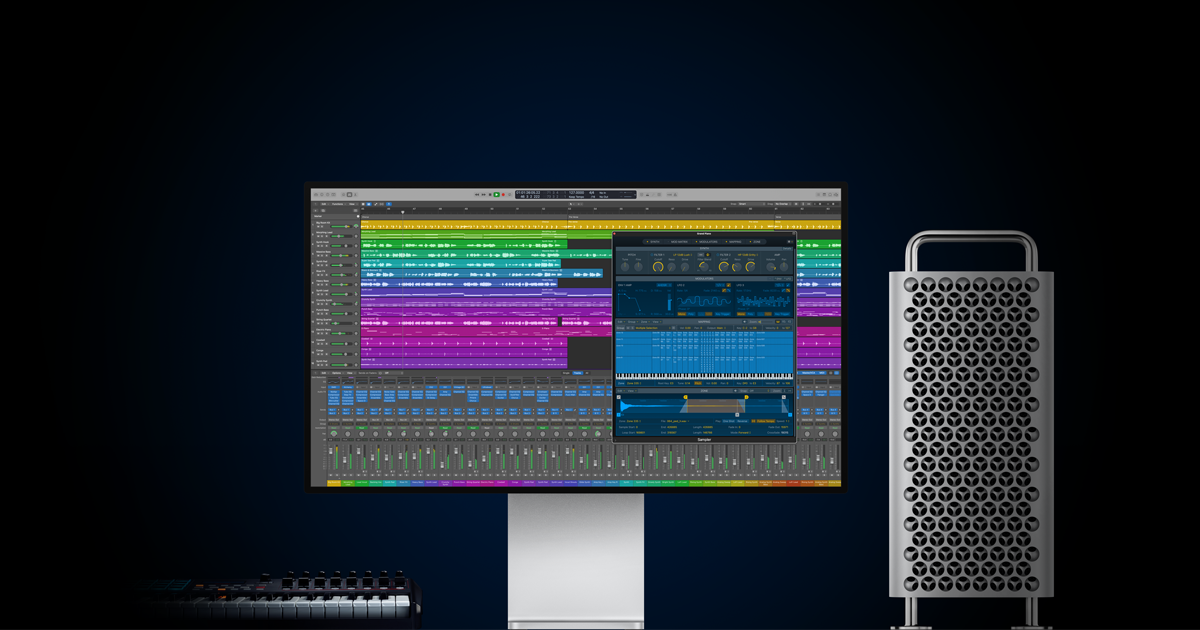
Waves CLA-76 Compressor / Limiter is listed under third-party plugins that Greg Kurstin uses in his interview with Apple on Logic Pro X.


In this video at 13:10 we an see Waves CLA-76 Compressor / Limiter


The "Bluey" mode was used for the vocals on "Intro", as stated by Kirk mix engineer Kevin "Black Pearl" McCloskey in this December 2019 Sound on Sound interview. An image of the settings can be found here.
"Typically, my processing on vocals here is EQ-compression, EQ-compression, EQ-compression and so on. When vocals are recorded well, I don't have to do that, but in this case, because of the hotel room sound, I had to do many corrections. Because speed was of the essence, I just added more plug-ins as I encountered issues — I did not have the time to go into settings of plug-ins already there. The plug-ins on the vocal busses, with a number of variations, start with the Waves DeEsser, and then the UAD SSL-E Channel strip, thinning things out, and the Waves CLA76 knocking off 3dB to flatten peaks, as they did not track with a compressor. I also use the Avid EQ7, and the Waves MV2 compressor, which acts more like an expander."


Approaching Nirvana utilizes the Waves CLA-76 Compressor/Limiter to enhance their sound dynamics, as demonstrated during their Twitch stream.


"I always try to make all the different parts audible. Sometime this is done with EQ to give the part its own space in the mix. For guitars, I love the Eddie Kramer Guitar Channel plugin. It has just the right EQ and compression, and if I want some reverb or delay, it’s there too. Sometimes I will add the CLA-76 to give it a bit more ‘spit.’"


Used on the vocals for "When the Curtain Falls", as stated by mix engineer Al Sutton in this January 2019 Sound on Sound interview.
"The main lead vocal, track 48, has the Opticom for some compression, and I'll always have a parallel lead vocal channel next to it, called 'smash', again for parallel compression, and it'll have tons of plug-ins and I'll just crush it to pieces, almost to the point of distortion, and tuck that underneath the main vocal. The plug-ins on the 'smash' channel include the Waves SSL Channel, Waves CLA-76, Waves DeEsser, Waves H-Delay, and the Soundtoys PhaseMistress. The latter is to get the choruses to sound wider, and the track has some automated delays. For vocal reverb I use the Echoplate 2 [plate reverb] with a Delta Labs Effectron II for pre-delay, and depending on the song either a Lexicon Primetime II or Fulltone Echoplex for slap-back delay.
"Finally there are the backing vocals, on which I had again the Waves SSL-Channel, CLA-76 and DeEsser, and then the Waves SuperTap delay, for stereo delays in the choruses, also to get them to sound wider. I do the vocal blend in Pro Tools and, depending on the parts, will send the blends out on one of the two stereo outs. In this case I had two sets of stereo outs to the API and I compressed each pair lightly with the Inward Connections TSL3 and TSL1."
To glue everything together, Al Sutton once again employs parallel compression. "The API Legacy has an A bus and a B bus, and I'll put a Shadow Hills compressor on the B bus. I'll blend that back in with the A bus, and I'll print that back on as a stereo track in the session. I'll print a brickwalled track as well so we can hear the mix really loud, and get some idea of where we'll end up. But I'll send my mix uncompressed to mastering, which for this album was done by Ryan Smith at Sterling Sound. I leave loudness up to the mastering engineer, because I don't want to play that game any more. It just ruins your mixes. If you can get at a competitive volume without having all the dynamics smacked out of your mixes, I think it will resonate more with people."


Used on Cardi B's vocals for "Bodak Yellow", as mentioned by mix engineer Evan LaRay in this February 2018 Sound on Sound interview.
In his mix of ‘Bodak Yellow’, Evan LaRay used almost identical vocal chains on two auxiliary busses. The ‘Vox 1’ chain includes FabFilter’s Pro-DS de-esser and Waves’ C4 multiband compressor, plus the Waves CLA Vocals plug-in and SoundToys’ Decapitator saturation processor.
The main ‘Hook’ and ‘Verse’ vocal tracks have similar plug-in chains, incorporating the EQ3 seven-band, Waves CLA-76 and Waves De-esser, though the ‘Hook’ also has FabFilter’s Timeless 2 delay. LaRay explains, “The EQ on the ‘Hook’ has a high-pass, around 100Hz, and I’m also cutting 3dB at 300Hz, because the vocal sounded a bit muddy, and again 3dB at 4kHz, because there was a piercing frequency there. The CLA keeps the peaks in check, and the de-esser again takes some higher frequencies out, at 4270Hz, and the Timeless is another favourite plug-in. I think in general the FabFilter plug-ins are extremely dope. I wanted the ‘Hook’ vocal to stand out from the ‘Verse’ vocal, so I used a stereo delay preset, and then tweaked that. The presets on the FabFilter plug-ins are pretty good: you just run through all of them and then choose the best one. In this case I lowered the width and the wet value of the stereo delay preset, and that sounded good and gave the hook its own space. The three plug-ins on the ‘Verse’ track do pretty much the same.
“The ‘Inout’ tracks that are below the ‘Hook’ and the ‘Verse’ are vocal doubles. They are words or lines we use for emphasis and additional power on these lines and words. They come from one of her original vocal takes, which I just cut and cleaned up. Both ‘Inout’ tracks have the Waves RCompressor, just containing these words and lines so they don’t overwhelm the ‘Hook’ or the ‘Verse’ vocal, and then the FabFilter Pro-Q2, taking out some high frequencies, again to make sure it doesn’t clash with the leads, and also cutting below 200Hz. And there’s a delay on these tracks to put them in a slightly different space from the lead vocal tracks.
“In addition to the two ‘Inout’ tracks, both the ‘Hook’ and the ‘Verse’ tracks are also accompanied by an ‘Ad Libs’ track, which were some ad libs Cardi had recorded with Mike over at Krematorium. Mike had also set up a separate aux track for these ad libs, which is ‘Vox2’, and I liked that and kept two of the plug-ins he had on that: the [Avid] Sansamp for some distortion and the SoundToys Panman. I then added the D-Verb and the [Waves] CLA Vocals. I adore the CLA Vocals. I use it on every track I work on. When I don’t use it, the vocals sound completely different. I’d love to know what exactly it does! Finally, the inserts have the Waves L1, just to control the peaks.
“The other tracks — ‘EXF1’, ‘EXF2’, ‘EXF3’ and ‘EXF4’, are because I prefer to create a new track if I want to have a specific effect on specific words or phrases. I prefer doing that to automating the effects on a track. Automation is great, but I tend to only do volume automation. So I copy audio to another track, and then put the effect on that, and in this case I created four different effects tracks with four different delays. ‘EFX1’ is the main one, and has the same three plug-ins as the Verse tracks — EQ3 three-band, CLA76 and Waves De-esser — just with the EQ3 cutting more of the high frequencies. Then there’s an eighth-note ping-pong delay from the Waves H-Delay, and then a D-Verb set to ‘hall’ with 7s decay and a 15ms pre-delay. ‘EFX2’ has another H-Delay delay, ‘EFX3’ the Timeless 2 delay, and ‘EFX4’ again has the H-Delay plus a D-Verb.”
All the main vocal audio tracks go to LaRay’s ‘Vox1’ aux group track. This, he explains, has “A FabFilter Pro-DS de-esser, then the Waves RCompressor controlling the peaks, the Waves C4 multiband compressor boosting the high end and containing the lows in her voice, so it doesn’t cut through too much, and Waves CLA Vocals. Again, it’s really making my vocals sound good. I push the Pitch fader to stereo, spank it on the compressor, also push up the treble to brighten it up, turn the reverb down to ‘tight’, and lower the delay by 9dB because my own quarter delay is my main vocal delay, and it sounds great. There’s also a SoundToys Decapitator, to add more harmonic distortion, and then there’s the Waves RVox. That was supposed to be the final plug-in on the insert, but then I realised the vocal was still peaking too much once she began rapping loudly, so I put on the L1 [limiter] to control that.”
The ‘special sauce’ in Evan LaRay’s mixes comes from a parallel aux channel containing a blend of compression, saturation, EQ and other processors. Key ingredients are Waves’ PuigChild compressor and PuigTech equaliser.
The ‘Vox1’ and ‘Vox2’ tracks also each have a Trim plug-in on an insert, and sends to the ‘Verb’ aux and to the ‘ELR’ (LaRay’s initials) track. “I put the Trim on all my tracks at the end of the vocals, and at the end of the beat, because the vocals actually began distorting in places. These two tracks were too hot, and I wanted to make sure they had a good level before going to the ‘Sub Print’ track. I have the ‘ELR’ aux track in every session. It’s most of all parallel compression, but I also always try out new things with distortion, exciters and things like that, and I label that ‘ELR’. In this case it really is the ‘ELR’ track that makes the vocals cut through the mix.
“The compression on the ‘ELR’ track comes from the Waves PuigChild 670, which is a great compressor, and it’s compressing a lot, so the vocal stays right there in the middle. The signal is then going to the PuigTech EQP-1A, which is boosting some low end to add some warmth to the vocals, and some 5kHz, and then the Waves Aphex Vintage Aural Exciter, set to AX Mix 6, for some added crispness and clarity, then the EQ3 seven-band to control the low mids, and another De-Esser cutting 4398Hz, to finalise the vocal sound. The L1 also helps keep the vocals in the same place. Finally, the ‘Verb’ send on the ‘Vox1’ and ‘Vox2’ tracks goes to the ‘Verb’ aux, which has the Waves RVerb, and that pretty much glues everything together.”
Album Usage
The Waves CLA-76 Compressor / Limiter has been featured on the following albums:

BREAK MY SOUL
Beyoncé (2022)
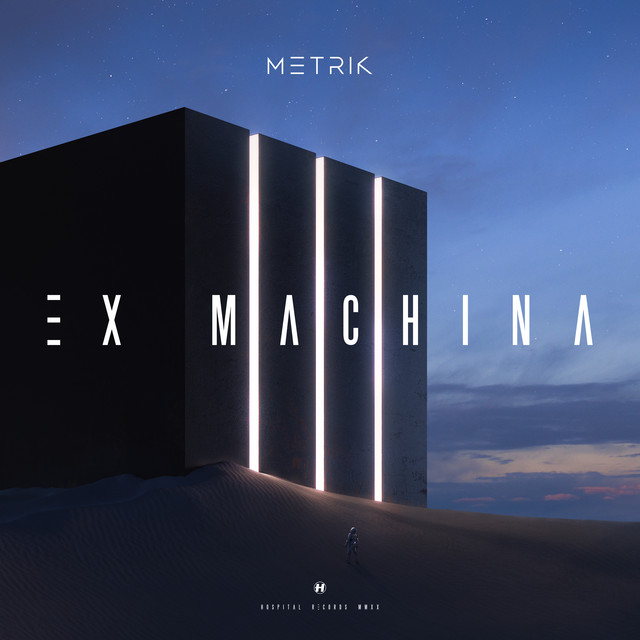
Ex Machina
Metrik (2020)
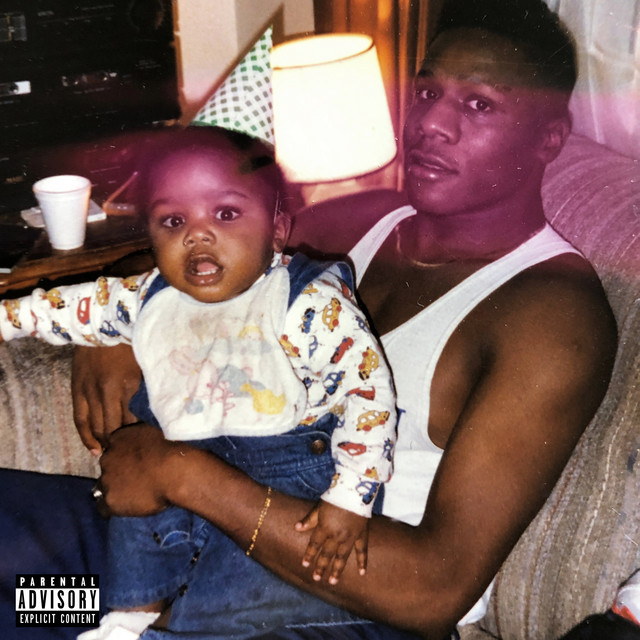
KIRK
DaBaby (2019)

Old Town Road (Remix)
Billy Ray Cyrus & Lil Nas X & Mason Ramsey (2019)

Gravity
Metrik (2019)

Be Honest (feat. Burna Boy)
Jorja Smith (2019)
![Waves CLA-76 Compressor / Limiter as heard on Be Honest (feat. Burna Boy) [Acoustic] by Jorja Smith (2019)](https://images.equipboard.com/uploads/album/image/735295/be-honest-feat-burna-boy-acoustic.jpg)
Be Honest (feat. Burna Boy) [Acoustic]
Jorja Smith (2019)
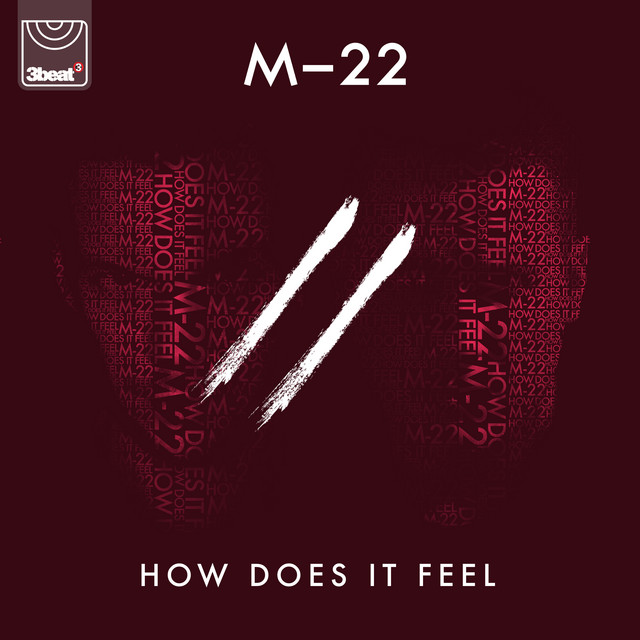
How Does It Feel
M-22 (2018)
![Waves CLA-76 Compressor / Limiter as heard on Bodak Yellow (feat. Messiah) [Latin Trap Remix] by Cardi B (2017)](https://images.equipboard.com/uploads/album/image/658146/bodak-yellow-feat-messiah-latin-trap-remix.jpg)
Bodak Yellow (feat. Messiah) [Latin Trap Remix]
Cardi B (2017)

Bodak Yellow (feat. Kodak Black)
Cardi B & Kodak Black (2017)

Half-Light
Rostam Batmanglij (2017)

Alone
Alan Walker (2016)
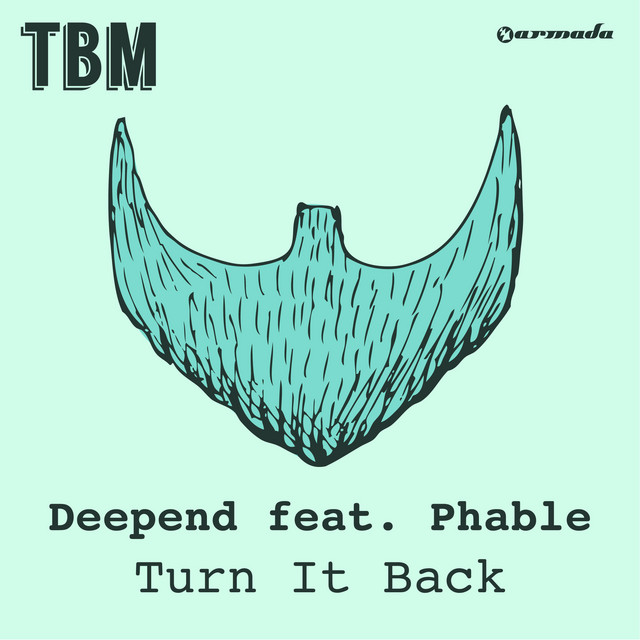
Turn It Back
Deepend (2014)
Genre Usage
Based on how artists on Equipboard use this gear, it is most commonly found in the following genres.
Used With
Based on how musicians on Equipboard use Waves CLA-76 Compressor / Limiter, it is most commonly used with the following gear.


-s.webp?v=1783260085)

-s.webp?v=1770452516)


Similar
Add recommendation1 alternative for Waves CLA-76 Compressor / Limiter, curated by the Equipboard community.

More Waves Compressor Plugins
-m.webp?v=1783260153)
$33.00 - $39.99
in Compressor Plugins Rank


$33.00 - $39.99
in Compressor Plugins Rank


$38.00 - $39.99
in Compressor Plugins Rank


$33.00 - $39.99
in Compressor Plugins Rank


$33.00 - $34.99
in Compressor Plugins Rank


$33.00 - $99.00
in Compressor Plugins Rank


$33.00 - $34.99
in Compressor Plugins Rank

.jpg?v=1783082401)


$33.00 - $39.99
in Compressor Plugins Rank


$33.00 - $34.99
in Compressor Plugins Rank


$33.00 - $39.99
in Compressor Plugins Rank

-m.webp?v=1783260116)
$33.00 - $39.99
in Compressor Plugins Rank


-m.webp?v=1783260147)
$34.99 - $39.99
in Compressor Plugins Rank


$33.00 - $34.99
in Compressor Plugins Rank


$33.00 - $34.99
in Compressor Plugins Rank


$33.00 - $34.99
in Compressor Plugins Rank


$29.99
in Compressor Plugins Rank


$33.00 - $39.99
in Compressor Plugins Rank


$33.00 - $82.50
in Compressor Plugins Rank


$33.00 - $34.99
in Compressor Plugins Rank


$39.99 - $149.00
in Compressor Plugins Rank


$29.00 - $29.99
in Compressor Plugins Rank


$29.99 - $34.99
in Compressor Plugins Rank


$33.00 - $35.99


$39.99 - $199.00


$144.00 - $199.00
in Compressor Plugins Rank


$134.00 - $149.00
in Compressor Plugins Rank

$144.00 - $199.00
in Compressor Plugins Rank

-m.webp?v=1783260045)
$141.00 - $149.00
in Compressor Plugins Rank


$45.00 - $49.00
in Compressor Plugins Rank
.jpeg?v=1783244343)


$39.00 - $1,549.00
in Compressor Plugins Rank


$49.00 - $149.00
in Compressor Plugins Rank


$26.00 - $49.00
in Compressor Plugins Rank


Accessories & Related Items


-s.webp?v=1783260153)
-s.webp?v=1783260147)
-s.webp?v=1783260164)


-s.webp?v=1783231392)
-s.webp?v=1783260116)


-s.webp?v=1783231220)

Community setups


Gear Guides






Most Popular Compressor Plugins
Most Popular Brands
-
Added to Equipboard on by
.jpg?v=1782968794) gchiaren
gchiarenGear IQ 37552
-