
Pricing and availability
We compare 600+ stores and found this item at 1 store. Prices updated .
Store
Reviews
Price




Average Price: $1,650
High-end/Boutique
$500
$1501+
Price Tier
Budget
Standard
High-end
* Product prices and availability are updated by Equipboard every 24hrs and are subject to change. Equipboard may receive compensation for purchases made at participating retailers linked on this site. This compensation does not affect what products or prices are displayed, or the order of prices listed. For more information, please refer to our affiliate disclosure.
Description
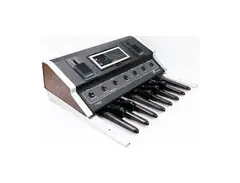
Introducing the Moog Taurus I, a foot pedal-controlled analog synth that is a game-changer in the music world. With its 13 foot keys and a five-octave range, it's primarily used for bass work. Originally designed to complement the Apollo and Lyra keyboard synths in an ensemble set-up, the Taurus I has left its mark on the industry. This synth is the first version in the Taurus series, which later saw an unpopular Taurus II and a limited edition Taurus III. The Moog Taurus I, however, remains a classic favorite, offering a unique sound and playing experience that sets it apart from its successors.
Key Features:
- Foot pedal-controlled analog synth
- 13 foot keys
- Five octave range
- Primarily used for bass work
- Part of the Taurus series
- Produced from around 1974 - 1981
- Originally designed to complement the Apollo and Lyra keyboard synths in an ensemble set-up
Product specs
| Brand | Moog |
| Model | Taurus I |
| Finish | Black |
| Year | 1974 - 1981 |
| Made In | United States |
| Categories | Analog Synths |
| Analog / Digital | Analog |
| Number of Keys | 13 Keys |
| Polyphony | 1 Voice |
FAQs
-
What type of sound is the Moog Taurus I best known for?
-
The Moog Taurus I is best known for its powerful and deep bass sounds, making it a favored choice for bass lines in various music genres, particularly progressive rock and electronic music.
-
How many keys does the Moog Taurus I have and what is its polyphony?
-
The Moog Taurus I features 13 foot-operated keys and is monophonic, meaning it can play one note at a time, which is ideal for creating strong, singular bass lines.
-
Is the Moog Taurus I suitable for live performances?
-
Yes, the Moog Taurus I is designed for live performances with its robust construction and intuitive foot pedal controls, allowing musicians to play bass lines hands-free while performing on other instruments.
-
What is the primary use of the Moog Taurus I in music production?
-
The primary use of the Moog Taurus I in music production is to deliver rich, analog bass sounds that can add depth and power to a musical arrangement, especially in genres like rock and electronic music.
-
Does the Moog Taurus I require any special maintenance due to its analog nature?
-
Like many vintage analog synthesizers, the Moog Taurus I may require periodic calibration and maintenance to ensure optimal performance, especially as components age. Regular care can help maintain its iconic sound quality.
Videos

RetroSound
Moog Taurus 3 vs. Taurus 1 bass pedal synthesizer sound battle
Moog Taurus 3 vs. Taurus 1 bass pedal synthesizer sound battle
RetroSound
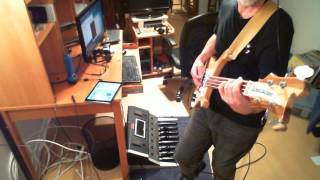
Moog Taurus 1 Bass pedals & Rickenbacker 4001V63 on a Genesis excerpt track Eleventh earl of mar

Bernard Nicoll
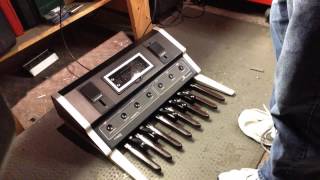
Moog Taurus pedal synthesizer function demonstration

Granville Guitars
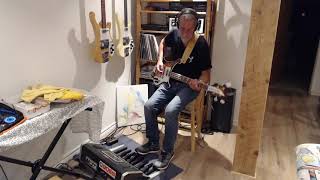
Moog Taurus 1 Bass pedals & Rickenbacker 4003 Bass Genesis After Glow
Bernard Nicoll
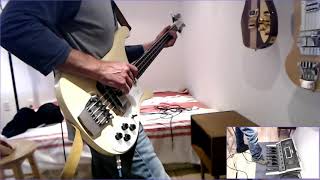
Moog Taurus 1 Bass pedals & Rickenbacker 4001CS on a YES excerpt from track And You and I
Bernard Nicoll
Reviews
PROS
-
Unmatched bass synth sounds, superior to Minitaur and Sirin
-
Every setting delivers impressive sound quality
-
Renowned for its ability to produce powerful, deep bass
-
Iconic use by famous bands enhances its legacy
-
Versatile for live performances across multiple bands
CONS
-
Limited to mono-synth capabilities, may not suit all musical styles
Owner Insights
We analyzed real musician discussions from forums and Reddit to find what players love, question, and tweak about Moog Taurus I Bass Pedals (1974-1981).
Features and functionality
-
Owners appreciate the pedal form factor, noting it allows for playing with hands and a foot, similar to a drummer using a kick pedal.
Source -
Users suggest that the Moog Taurus I can output at line level, which may require reamping for compatibility with most effects pedals designed for instrument level.
Source
User experience
-
Some users find the Moog Taurus I reminiscent of iconic bass sounds, describing it as the ultimate for Moog basses.
Source
Use cases and applications
-
It's been noted that using MIDI organ pedals with synths like the Minitaur enhances usability, though can be clunky for band practices without dedicated space.
Source -
Flanger and tape delay effects are frequently paired with the Moog Taurus I for users seeking to add depth and dimension to their soundscapes.
Source
Other
-
Enthusiasts recall the need for special shoes to play organ pedals effectively, emphasizing the physical technique required for optimal performance.
Source
Mods and upgrades
-
The Arion SCH-1 stereo chorus is recommended for enhancing the raw analog sound of the Moog Taurus I without overwhelming its natural bass tones.
Source
Critic Reviews
4.5 out of 5
Based on 2 Reviews and 7 Ratings

1256
Appropriately named because there are some times you just don't want to get in its way!
The first of the serious synth bass pedals. Naturally, if anyone was going to make a mono-synth that could kick some serious arse, it was going to be Moog. Used to brilliantly thunderous effect (especially live) by the likes of Genesis, Yes, Rush, Steve Hackett and the like, this otherwise "simple" 2-osc, filter, envelope synth was capable of rattling anything from ancient building foundations, to the teeth and bones of rockers long departed.

1963
Moog Taurus I
I have two sets of these and I use them live with pretty much all of my bands. Classic great sound.

Artist usage
Add artist

Jones is also a glutten for effects. On the intro to “Reflection” and “The Grudge,” both from Lateralus, he employs a vintage Moog Taurus bass pedal system. But aside from the Heil Talk Box on 10,000 Days, run through a Roland JC-120 and juiced up by a dynamic compressor, Jones’ choices of effects is less esoteric. His wah-wah pedal is a dependable Cry Baby, and his stable of other sound generators includes Boss DD3 and DD5 digital delays, a BF-2 flanger, a Line 6 Delay modeler (which also samples on the fly), a Strobostomp tuner, a tremolo pedal, chorus, and an array of distortion boxes. During experimental phases, Jones has taken the stage with multiple pedal boards at his feet. The irony of this rundown is that Jones has gone on record saying he doesn’t like to use pedals.

He used it in the OOS tour for Unintended

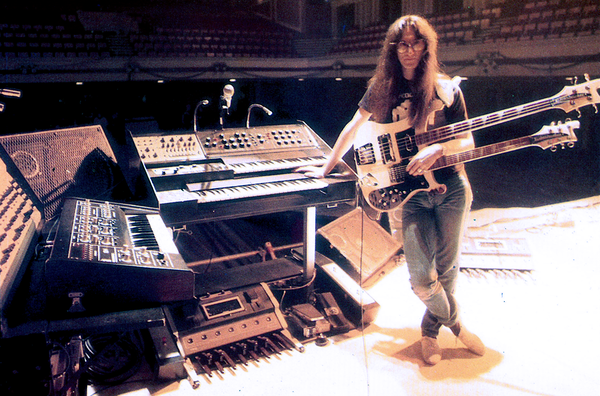
In this photo of the late seventies, Geddy Lee stands next to his keyboard rig. It's possible to see a Moog Taurus I under the Oberheim Eight Voice.

This picture shows Jones playing the Moog Taurus pedals in 1977.

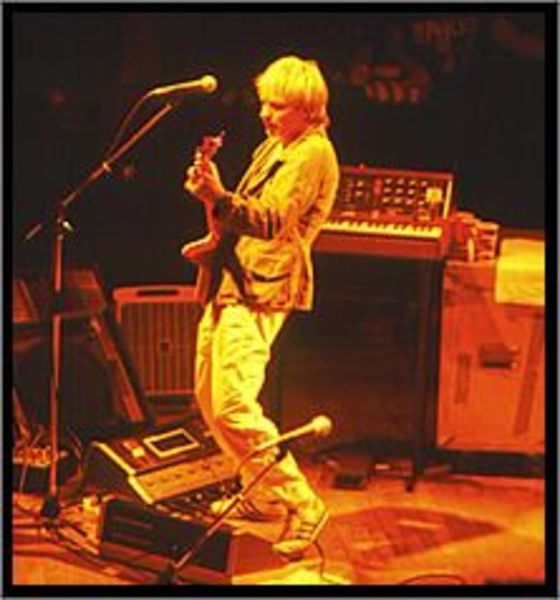
Sting utilizes one or two Moog Taurus I bass pedals to enhance the sound of The Police, particularly allowing him to play bass lines or fill notes with his feet. This setup is evident in performances of "Don't Stand So Close to Me." The source photo from Retrosound shows the gear in use. Andy Summers is also noted to use the Moog Taurus II.


In a Getty Images photo, Alex Lifeson of Rush is seen with a Moog Taurus I bass pedal positioned to the right of his pedalboard.

.jpg)
In this instagram post you can spot the Taurus 1


Ritchie Blackmore can be seen playing guitar next to a set of Moog Taurus I pedals on this Instagram post.


At 21:29, Alfie shows an interview from bass player magazine where Rex explains that an old 70s Moog Taurus which was bought by Dime and was used by Rex for the recording of all Pantera albums. Just so there wasn't any "Low-end drop-out".


PJ Harvey plays the Moog Taurus I pedal on live performances of 'Grow Grow Grow'. It is set up for a flute-like sound.


Instagram post showing a picture of Chris playing a Moog Taurus 1 with his feet.


Album Usage
The Moog Taurus I Bass Pedals (1974-1981) has been featured on the following albums:
Genre Usage
Based on how artists on Equipboard use this gear, it is most commonly found in the following genres.
Used With
Based on how musicians on Equipboard use Moog Taurus I Bass Pedals (1974-1981), it is most commonly used with the following gear.


-s.webp?v=1782744970)


Community setups
Show yours
Similar
Add recommendation1 alternative for Moog Taurus I Bass Pedals (1974-1981), curated by the Equipboard community.

$199.00 - $219.00
More Moog Synthesizers

$999.00 - $1,084.00
in Synthesizers Rank


-m.webp?v=1782831553)
$1,200.00
in Synthesizers Rank


$1,469.19 - $1,899.00
in Synthesizers Rank


-m.webp?v=1782832154)
$1,709.10 - $1,944.00
in Synthesizers Rank


$3,999.00 - $4,999.00
in Synthesizers Rank


$621.84
in Synthesizers Rank


$6,600.00 - $10,444.00
in Synthesizers Rank


$52.00 - $799.99
in Synthesizers Rank


-m.webp?v=1782831616)
$348.50 - $399.00
in Synthesizers Rank


$8,900.00
in Synthesizers Rank


$850.00
in Synthesizers Rank


$550.00
in Synthesizers Rank


-m.webp?v=1782817474)


$9,999.00


-m.webp?v=1782831442)


$12,999.00


-m.webp?v=1782831531)


$964.00


$9,999.00


$1,438.99 - $1,899.00


$3,999.00 - $5,199.00


-m.webp?v=1773990669)

Accessories & Related Items


-s.webp?v=1782745042)


-s.webp?v=1782731049)


Gear Guides









Most Popular Synthesizers
Most Popular Brands
-
Added to Equipboard on by
mach4Gear IQ 1256
-


