
Pricing and availability
We compare 600+ stores and found this item at 1 store. Prices updated .
Store
Reviews
Price




Average Price: $976
High-end/Boutique
$300
$701+
Price Tier
Budget
Standard
High-end
* Product prices and availability are updated by Equipboard every 24hrs and are subject to change. Equipboard may receive compensation for purchases made at participating retailers linked on this site. This compensation does not affect what products or prices are displayed, or the order of prices listed. For more information, please refer to our affiliate disclosure.
Description
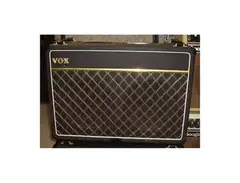
Discover the power and versatility of the Vox V15, a combo guitar amplifier designed to bring your sound to life. Perfect for both practice and performance, this amp offers a rich tonal palette that caters to a wide array of music styles. The V15 is known for its iconic British tone, making it a favorite among guitarists who crave that classic sound. Whether you’re jamming in your garage or performing on stage, this amp delivers a dynamic range that suits any setting.
The Vox V15 features a custom Celestion speaker, ensuring clarity and depth in every note you play. With its intuitive controls, you can easily shape your sound to match your musical vision. The amp's compact design doesn’t compromise on power, and its lightweight build makes it easy to transport. With an emphasis on quality and performance, the Vox V15 is a reliable choice for musicians seeking both nostalgia and modern innovation in their gear.
Key Features:
- 15-watt combo amplifier
- Custom Celestion speaker for enhanced audio clarity
- Iconic British tone with a modern twist
- Intuitive control panel for sound shaping
- Compact and portable design suitable for gigs and practice
- Built-in reverb for added depth and atmosphere
- Durable construction with a classic aesthetic
Product specs
| Brand | Vox |
| Model | V15 15-Watt 2x10" Guitar Combo |
| Finish | Black |
| Year | 1981 - 1983 |
| Made In | United Kingdom |
| Categories | Guitar Combo Amps |
| Color Family | Black |
| Electronics | Tube |
| Number of Channels | 1 Channel |
| Number of Inputs | 1 Input |
| Output Power (Watts) | 15 |
| Power Tube Type | EL84 |
| Reverb | None |
| Speaker Configuration | 2x10" |
FAQs
-
What type of tubes does the Vox V15 use?
-
The Vox V15 uses EL84 power tubes, which contribute to its classic British tone and warm, rich sound.
-
How many channels does the Vox V15 amplifier have?
-
The Vox V15 is a single-channel amplifier, offering straightforward operation with its classic tube-driven sound.
-
Is the Vox V15 suitable for live performances?
-
With its 15-watt output and 2x10" speaker configuration, the Vox V15 is powerful enough for small to medium-sized venues, making it suitable for live performances.
-
Does the Vox V15 combo amp include reverb?
-
No, the Vox V15 does not include built-in reverb, focusing instead on delivering pure tube-driven tone.
-
What is the speaker configuration of the Vox V15?
-
The Vox V15 features a 2x10" speaker configuration, which enhances its ability to project sound effectively in various settings.
Videos

Harpsucker
Harmonica Amps Vol.35 VOX V15 (1980)

Harmonica Amps Vol.35 VOX V15 (1980)
Harpsucker

1980s Vox V15

SteveWalsh730
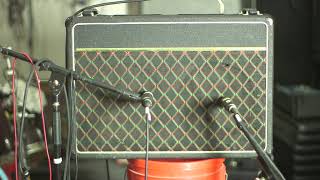
Vox V15 Demo #1

IplayMusic2
Reviews
Owner Insights
We analyzed real musician discussions from forums and Reddit to find what players love, question, and tweak about Vox V15.
Features and functionality
-
Vox AC-15's master volume knob enhances usability at bedroom levels without sacrificing tone, allowing natural tube breakup even at lower volumes.
Source -
The Vox AC-15 is noted for its ability to achieve a pleasant natural breakup at higher volumes, making it suitable for classic rock and blues styles.
Source -
The AC15's lighter bass contributes to its ability to sit well in a mix, making it suitable for band performances.
Source
Comparisons
-
Vox AC-15's natural breakup is often preferred over the Vox AC-10 due to the master volume, which helps manage volume levels better in small spaces.
Source -
The Vox AC15 is described as more jangly and bright compared to the Fender Hot Rod Deluxe, with better overdrive capability for indie/alt sounds.
Source
User experience
-
Some users find that real tube distortion is accessible at home levels with the Vox AC-15, particularly when using the master volume control effectively.
Source
Use cases and applications
-
The AC15 is noted for its excellent performance at drummer volumes, but also maintains good sound quality at lower volumes due to its master volume control.
Source
3.5 out of 5
Based on 2 Reviews and 3 Ratings

Thank you for your hellpful indsight, regarding my good old eighties V 15`teens. I did not entirely cut the brown lead. Instead i drilled a switch into the alu chassis, so I could turn the negative feedback on again if needed. An so I have with the one of
Thank you for your hellpful indsight, regarding my good old eighties V 15`teens. I did not entirely cut the brown lead. Instead i drilled a switch into the alu chassis, so I could turn the negative feedback on again if needed. An so I have with the one of them, that suffered from microfony. Regarding my Vox ccx1....I found it too harsh and sharp in treble to my ears, and have done a modification on it. These new amps all have a bright capacitor sitting in parallel....mine at position C26 on the Pcb board. By cutting the one leg, pushing the cap back a little, I have got quite a different beast now. Much more creamy and warm, and still with all the chime and power when needed. The old AC fifteens did not have this capacitor. This is a newer invention in order to add treble at lower volume, But actually the treble follows up to a degree of volume, that makes it a bit annoying when playing minor venues. So I do consider this rather mod for being very successful, and I am very pleased with the result

41013
actually the old amps have the bright cap, tis actually the coupling caps that are lower values making the rest of the am brighter, but the bright cap mod is popular. You could also check the cathode resistors on the power tubes against vintage, I bet they are a non-vintage value making the amp colder and more brittle in the treble frequencies. Vox has actually been running the cathode bias cooler and cooler since always. My 62? you can fry an egg on it. It once caught fire and needed extensive restoration.
There is extensive info online about measuring the voltage drop off the cathode resistor and finding a safe but musical value for an ac30. Or if you wanna play it real safe and still sound killer look at the matchless schematic or the schematic for the fawn handwired AC30HW2, both have a sweet balance of reliability versus unfatiguing treble and I think are both rpetty close to a alte 60s ac30. I would tell you to look a old schematics but they often don't match what's in the amps. Vox was tweaking the bias all the time.
41013
instead of a switch for the V15 why not install a pot to vary the amount of feedback, I am not sure how to implement this but I know I've seen it done on 6V6 fenders with NFB like the tweed tremolux and the non-tweed princetons... I think its called the "soul knob' mod.
41013
the soul knob is kinda like a full bandwidth presence control in practice, where a presence takes NFB off the high frequencies only
Hello Jimmarchi1 Good news according to the bad microphonic auxillary valve noise I was having in one of my V15`eens. In the V1 position, i exchanged the sitting ECC81 with a ECC82, which has a much lower gain factor, and puff - away is the noise...completely ! I am very happy with the result, and it even sounds a little more creamy when turning up the power, So I am a very happy Dane these days :O)
41013
almost awesome
This 80s vox combo is very much in the marshall 18 watt camp rather than the ac15 camp. She features a JCM800ish preamp stapled to a dual el84 power section that incorporates negative feedback.... stock it sounds okay, not terribly voxy and a little stiff. If you adjust some component values you can get it to sound a bit like a Marshall 18 or 20 watter or if you lift the negative feedback loop completely it will get more ac15 character, though due to its marshally preamp topology it will still do its own thing. I really want to pick one of these up and perform some surgery. They are very affordable vox combos that fly way udner the radar.
I have been lucky by purchasing 2 Vox v15. I played them for just a few month before cutting the brown negative feedback lead, going to the 820 Ohm resistor. The result was quite astonishing, as the Amp suddenly started to play at least twice as loud as before, and next that especially one of the amps started to sound very microphonic when turning up the volume. I managed one of them to play all way up volumw wise, by dampening the baltic birch chassic with divided cloth pins, for leaving out unwanted resonance, which immediatly would start the tubes to go microphonic, and it really helped on the one of them, but I am almost giving up on the other one - at least for now. As already being mentioned ... they do sound very much like Marshall, and perhaps not that weird, as the Marshal factory did build the Vox amps in a period, where Rose Morris were the owner of the brand. Still the V15 sounds terrific, aand I am truly happy about having them, though they do not have quite the chime as my Vox Ac15 ccx1.
41013
I know, if you look at the circuit it needs a reduction in the amount of NFB to be more like a high gain marshall 18 or 20 watt in my opinion, taking the NFB out may not be the best thing for an amp with extra gain that's not laid out internally to prevent oscilaltions and microphonics without feedback to surpress it... its interesting to know that you had this problem cutting the feedback loop everyone like everyone talks about because I always suspected it would be a potential problem, especially if any parts have drifted over the years. But anyway I suspect you should just retube and then add the feedback back but in a smaller dose so change that resistor value before running the NFB elad. You will probably be very pleased with what you get then. Surpressed squealing, nice tight bass, amrshally midrange.... go take a look at the values in marshall's 18 watt and 20 watt treble/bass amps, the so-called miniplexis that were the hot homebrew amps 10 years ago.
just a heads up, I own a couple vintage ac30s (JMI, arbiter) and the custom classics are chimier than them.... they are chimier than the current handwired fawn ones.... they are chimier than my matchless, they are chimier than the marhsall-made 90s reissues... and all those amps chime it up. Vox got carried away revoicing the custom classic to sound like a Beatles recording forgetting that the Beatles mainly sued other amps. AC50s, AC100s, those vox hybrid amps, vox solid state amps, blonde and blackface fenders, selmers... ac30s and 15s are only on the earliest recordings and I think they traded their fawn ones in for a couple of factory top-boosted 30s in black by the time they did meet the beatles. I would have to dig up Babiuk's book to be sure. But seriously, the CC1X is going to outchime any amp so its not a great reference. Its got some really screwy value caps shaping the abss and treble on both channels to be extra bright. Its not bad, I think they sound rather good, but they don't have the mids of the old voxes to be sure, nor do they have the bass.
You are so absolutely right about the brightness of the ccx1, and as a result of annoyance by this screaming treble, I did cut the capacitor on the pcb board - placed at position c26. And it has become a very different beast by now...more sweet sounding, more bass...I had to re position the treble and bass chicken knobs to more normal positions, and I am so delighted by the result. To go back to my troubled v15...I will try buy some tubes/valves less agressive to what I have now, and try damp the vibration of the chassis with yet more split clothespins, and also perhaps take up your fine idea about a pot, instead of the nfb switch I have at present....or else I dont know what to do...the other v15 I have do not make any trouble anymore...but gawd how I love the sound of them - a mix between Marshall and chimey Vox
Artist usage
Add artist

Genre Usage
Based on how artists on Equipboard use this gear, it is most commonly found in the following genres.
Used With
Based on how musicians on Equipboard use Vox V15, it is most commonly used with the following gear.
-s.webp?v=1783868242)
-s.webp?v=1783781994)
-s.webp?v=1783928172)
More Vox Combo Guitar Amplifiers

$699.00 - $1,027.57
in Combo Guitar Amplifiers Rank


-m.webp?v=1783941741)
$650.00 - $1,049.99
in Combo Guitar Amplifiers Rank


$949.00 - $1,799.99
in Combo Guitar Amplifiers Rank


-m.webp?v=1783940593)
$650.00 - $1,049.99
in Combo Guitar Amplifiers Rank


$1,887.78 - $2,651.58
in Combo Guitar Amplifiers Rank


-m.webp?v=1783940855)
$90.00 - $129.99
in Combo Guitar Amplifiers Rank


-m.webp?v=1783781970)
$208.00
in Combo Guitar Amplifiers Rank

.png?v=1783885803)

$439.00 - $799.99
in Combo Guitar Amplifiers Rank


$650.00 - $1,049.99
in Combo Guitar Amplifiers Rank


$392.43 - $1,799.99
in Combo Guitar Amplifiers Rank


$392.43 - $1,799.99
in Combo Guitar Amplifiers Rank


$1,642.00 - $2,499.99
in Combo Guitar Amplifiers Rank


-m.webp?v=1783941556)
$332.00 - $1,049.99
in Combo Guitar Amplifiers Rank


$439.00 - $799.99
in Combo Guitar Amplifiers Rank


$946.00 - $1,699.99
in Combo Guitar Amplifiers Rank


$1,699.99
in Combo Guitar Amplifiers Rank
.jpg?v=1783815290)


$799.99 - $1,049.99
in Combo Guitar Amplifiers Rank


.jpeg?v=1783873076)


$810.00 - $1,099.99


$1,642.00 - $2,499.99


$185.00 - $279.99


$650.00 - $899.99

$1,949.00


$946.00 - $1,699.99


$1,799.99 - $1,931.48


.jpg?v=1783775911)


$209.63 - $399.99

$699.00 - $999.99

.png?v=1783894899)


Accessories & Related Items


-s.webp?v=1783941556)
Community setups


Similar


Gear Guides








Most Popular Combo Guitar Amplifiers
Most Popular Brands
-
Added to Equipboard on by
 kkolar
GearIQ 121306
-


