

Pricing and availability
We compare 600+ stores and found this item at 9 stores. Prices updated .
Store
Reviews
Price









Average Price: $136
Standard/Professional
$50
$176+
Price Tier
Budget
Standard
High-end
Price History
Based on price data from 5 merchants for "Boss AC-3 Acoustic Simulator". Prices shown reflect NEW condition. Tracking began Apr 2, 2026.
* Product prices and availability are updated by Equipboard every 24hrs and are subject to change. Equipboard may receive compensation for purchases made at participating retailers linked on this site. This compensation does not affect what products or prices are displayed, or the order of prices listed. For more information, please refer to our affiliate disclosure.
Description
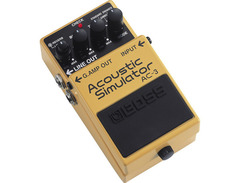
Introducing the Boss AC-3 Acoustic Simulator, a compact pedal designed to transform the tone of your electric guitar into a variety of rich and authentic acoustic sounds. This lightweight and powerful device is an ideal solution for musicians who prefer to travel light without compromising on the quality of their sound.
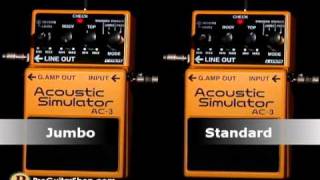
One of the standout features of the AC-3 is the COSM Acoustic-Modeling technology. This innovative tech allows the pedal to simulate acoustic guitar sounds with exceptional precision and realism. The AC-3 comes with four simulation modes – Standard, Jumbo, Enhanced, and Piezo-equipped, each offering a unique sonic character.
The Piezo-equipped mode, in particular, provides that much-desired "cut through the mix" direct piezo sound. The AC-3 also includes top and body controls, allowing you to shape the characteristics of your acoustic sound quickly and easily with a simple twist of a knob.
Additionally, this pedal is equipped with a built-in digital reverb, adding depth and warmth to your sound. It offers versatile output paths, making it easy to connect to a standard guitar amp, a direct input device such as a PA, or a recorder.
Key Features:
- COSM Acoustic-Modeling technology for precise and realistic acoustic simulations
- Four simulation modes: Standard, Jumbo, Enhanced, and Piezo-equipped
- Top and Body controls for shaping your acoustic sound
- Built-in digital reverb for added depth and warmth
- Versatile output paths for easy connection to various devices
- Compact and lightweight design, ideal for musicians on the go
Owner's manual
Boss AC-3 Acoustic Simulator User ManualProduct specs
| Pedal Type | Acoustic Simulator |
| Analog/Digital | Digital |
| Effects | Reverb |
| Presets | Standard, Jumbo, Enhanced, and Piezo |
| Inputs | 1 x 1/4" (instrument) |
| Outputs | 2 x 1/4" (amp out, line out) |
| Power Source | 9V DC power supply (sold separately) |
| Batteries | 1 x 9V |
| Height | 2.4" |
| Width | 2.9" |
| Depth | 5.1" |
| Weight | 0.9 lbs. |
FAQs
-
What does the Boss AC-3 Acoustic Simulator do?
-
The Boss AC-3 Acoustic Simulator transforms the sound of an electric guitar into an acoustic-like tone, offering four modes: Standard, Jumbo, Enhanced, and Piezo, each simulating different acoustic guitar body types.
-
Can the Boss AC-3 be used with an acoustic-electric guitar?
-
Yes, the Boss AC-3 can be used with an acoustic-electric guitar to enhance its natural acoustic sound with additional reverb effects.
-
Does the Boss AC-3 require a power supply?
-
The Boss AC-3 requires a 9V DC power supply, which is sold separately, or can be powered by a single 9V battery.
-
What are the output options on the Boss AC-3 Acoustic Simulator?
-
The Boss AC-3 features two 1/4" output options: one for connecting to an amplifier and another for direct line out, allowing versatile connection setups.
-
Is the Boss AC-3 suitable for live performances?
-
Yes, the Boss AC-3 is well-suited for live performances, providing a range of acoustic tones and reverb effects to enhance your electric guitar sound on stage.
Videos

ProGuitarShopDemos
Boss AC-3 Acoustic Simulator
Boss AC-3 Acoustic Simulator
ProGuitarShopDemos
![Video thumbnail for BOSS AC-3 Acoustic Simulator [BOSS Sound Check] by BOSSchannel](https://img.youtube.com/vi/QVGgt3JQLcw/mqdefault.jpg)
BOSS AC-3 Acoustic Simulator [BOSS Sound Check]

BOSSchannel

Boss AC-3 Acoustic Simulator Demo

ShuLorMakesMusic

♫ Boss AC3 Acoustic Simulator Demo ► (HD Audio)

TheRevelegendEMG
Boss AC-3 Acoustic Simulator

Chuck's Guitar Geekery
Boss AC-3 Acoustic Simulator Test

Andrew Step
Boss AC-3 ACOUSTIC SIMULATOR Demo Review USB Interface Recording.

Direct Recording Guitar
BOSS AC-3 Acoustic Simulator

Cryptic Mask Guitar
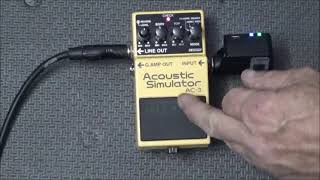
Boss AC-3 Acoustic Simulator Demo And Review

Kevys RC & Music
Reviews
PROS
-
Versatile for live performances, especially in bands
-
Durable, withstands regular gigging
-
Both outputs offer AB box functionality
-
Can convincingly simulate an acoustic sound
-
Preset modes and tone knobs provide customization
-
Effective through PA or acoustic amplifier
-
Can reduce the number of guitars needed for gigs
-
Reverb feature adds depth to sound
-
Encourages creative setups and solutions
CONS
-
Requires direct connection to PA for best sound, limiting use with guitar amps
-
Notable hiss/background noise, especially at high frequencies
-
Sound can feel "processed" or digital
-
Tone knobs and settings require fine-tuning to avoid hiss
-
May not fully replicate the feel of an acoustic guitar
-
Some users experience issues with digital fizz
-
High-end sounds can be overly metallic or unrealistic
-
Stereo inputs and better control options desired by some users
-
Not universally suitable, especially for certain guitar types and music genres
-
Battery consumption is high
Owner Insights
We analyzed real musician discussions from forums and Reddit to find what players love, question, and tweak about Boss AC-3 Acoustic Simulator.
Features and functionality
-
The REVERB control on the Boss AC-3 is subtle when placed later in the chain but can add significant reverb and volume boost when placed first.
Source -
The AC-3 algorithm is included in Boss's GX-10/100, which can be optimized with preamp and EQ adjustments for better acoustic emulation.
Source -
Running the AC-3's acoustic output to a mixer while maintaining a separate "normal" guitar chain allows seamless switching and enhanced FX integration.
Source -
The AC-3 can output a very "hot" or "spikey" signal, which might not pair well with certain pedals like the Boss DC-2 or MXR phasers.
Source
Setup and maintenance
-
Placing the AC-3 first in the signal chain, before the tuner and wah, improves functionality and reduces noise, acting more like an envelope filter.
Source
Comparisons
-
Users find the AC-3's sounds better than Amplitube's Acoustic Sim pedal, preferring it with Mesa MKIII settings for virtual setups.
Source -
Some users find the AC-2 to be more effective than the AC-3 in delivering desired acoustic tones.
Source -
Alternatives like the Joyo Wooden Sound and Hotone's acoustic pedals are considered by some as decent low-cost options.
Source -
For a Strat-like single coil sound, users recommend using an HSH guitar configuration in position 2 (middle single + bridge humbucker).
Source
Use cases and applications
-
Works best with humbuckers using the bridge pickup and tone knob rolled back for a closer acoustic simulation.
Source -
The AC-3 is effective for live performances where carrying an acoustic guitar for a few songs isn't practical.
Source -
Enhance mode on the AC-3 closely replicates Alex Lifeson's late 80s Rush clean tones, especially when used with EMG active single coil pickups.
Source
Software and compatibility
-
Running the AC-3 through a clean amp channel or directly into an audio interface is recommended for optimal sound and minimal noise.
Source
4.0 out of 5
Based on 7 Reviews and 74 Ratings

295
Why is this still the best option?
When Apple released the "trashcan" Mac Pro, it was an impressive machine. By the time of its long overdue retirement, it was an embarrassment. The Boss AC-3 is of a piece. It was, on its release, an amazing accomplishment—but how can it be that after literally twenty years, this is still the best we can do? Look, it gets the job done; no doubt. It's adequate. But I refuse to believe that Boss can't do better in 2026, and I resent that Boss hasn't done better with an AC-4. When they do, I'll hate-buy it. Until then, I'll make do with this pedal, that was once impressive and is now just okay.
721
useful pedal to have but has some imperfections
look - its never going to sound like a Martin, but can get some decent acoustic emulation out of an electric. Get some glitches on some modes and high volumes can be a problem - but if you work within the limitations it does a job

388
Buy an acoustic guitar
It's not that bad at all. But if we are honest... if you like the sound of an acoustic guitar, buy yourself an acoustic guitar.

192
Amazing
Im strictly Boss pedals with some exceptions like whammy pedals. This along with every Boss pedal I've ever bought has been amazing.


257
Acoustic
It's exactly the sound of an acoustic guitar but it can be very helpful in some situations.
Artist usage
Add artist

Jim Root uses the Boss AC-3 Acoustic Simulator pedal "for the middle of Dead Memories," he says in this interview at (1:45).

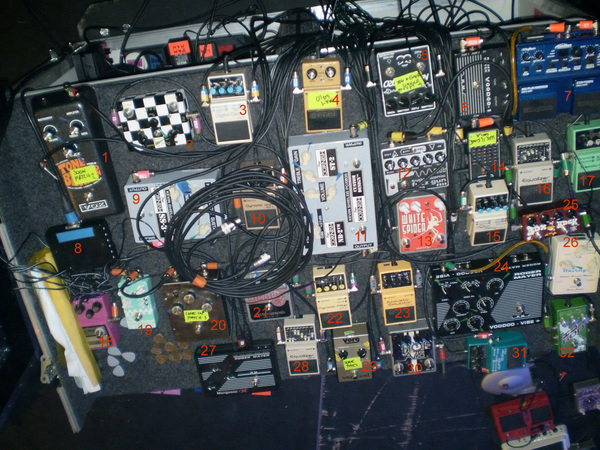
In a photo from an effects bay article, is a Boss AC-3 Acoustic Simulator Guitar Effects Pedal, on the pedal board of Kevin Shields from My Bloody Valentine.


Producer Tom Dalgety, who worked on Royal Blood's first and second albums, confirmed that Mike Kerr uses the Boss AC-3 Acoustic Simulator in his live setup. Dalgety explained that Kerr runs his bass through the AC-3 into an overdriven amp, which gives it a unique crunch. This information was provided in an article by Rod Brakes for BOSS Articles titled "Behind the Board: Tom Dalgety with Ghost, Pixies, Royal Blood, and The Cult."
.jpg?v=1783299754)
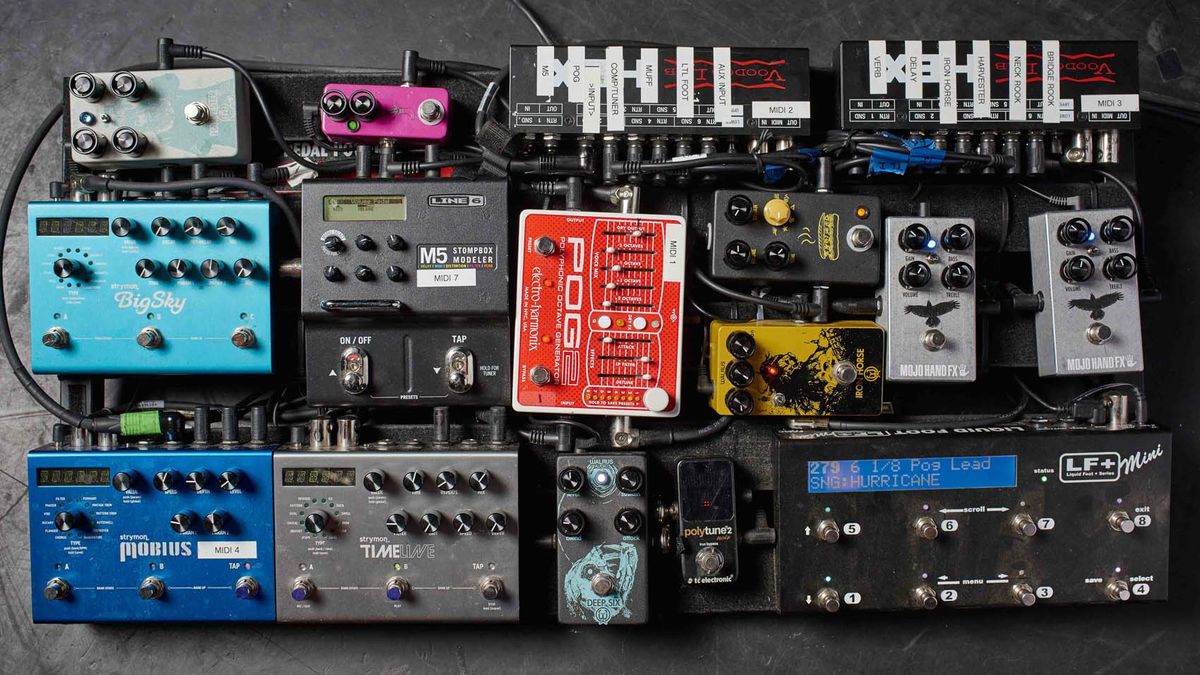
“This is the best pedal there is! I cannot believe it’s taken this long to figure out this box is all you need to make electric guitars sound like acoustics, which usually sound like garbage on stage.
“This box nails the idea of an acoustic - it has that timbre, that percussive sound. In other situations, you’d want the real deal. If you ever went to see Tom Petty or Neil Young, you’d want the big jumbo and everything all mic’d up. It’s kinda funny because I’m up there playing this mirrored Explorer on My Name Is Jonas and it comes out sounding like the most beautiful acoustic.”

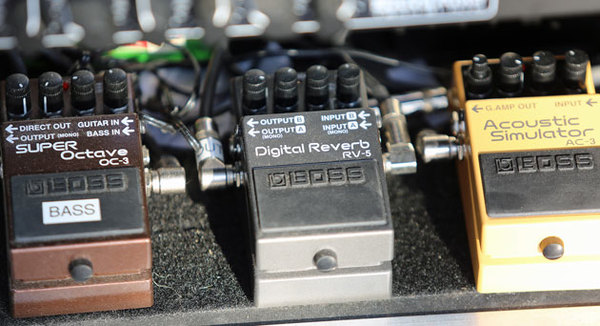
this pedal was one of three used on fall out boy's 2014 monumentour the image taken from premier guitar's website shows the three peddles used on the tour.


Seen at 7:00 in his rig rundown.


In a MusicRadar interview, Brian Bell's pedalboard from 2018 is featured, though initially labeled as Rivers Cuomo's. The article clarifies it belongs to Brian, as Rivers mentions using a Kemper and a Boss TU-3. Among the pedals, Brian discusses the Boss AC-3 Acoustic Simulator, praising its ability to transform electric guitar sounds into acoustic-like tones on stage. He describes it as essential for achieving the acoustic timbre and percussive sound, especially when playing songs like "My Name Is Jonas" with his mirrored Explorer.

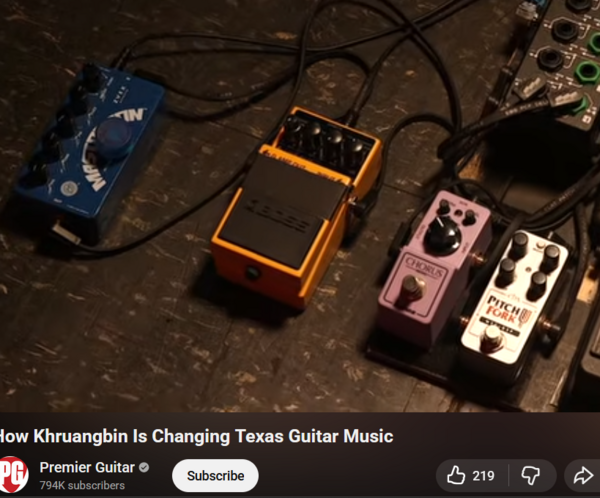
He uses this pedal for acoustic parts . Only this model (in this color) has that kind of two-option potentiometer on the left which in this case helps to adjust reverb and the level of acoustic simulation .

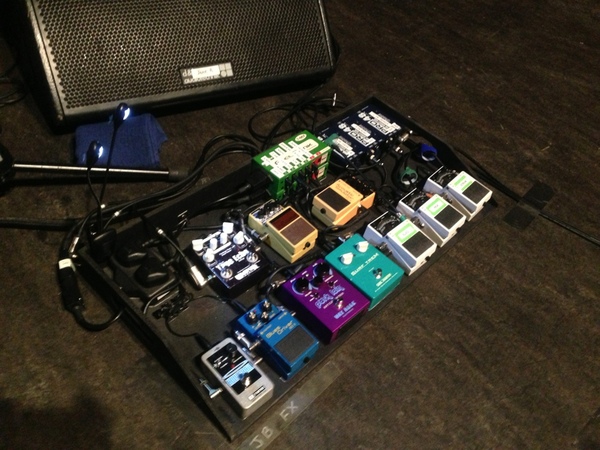
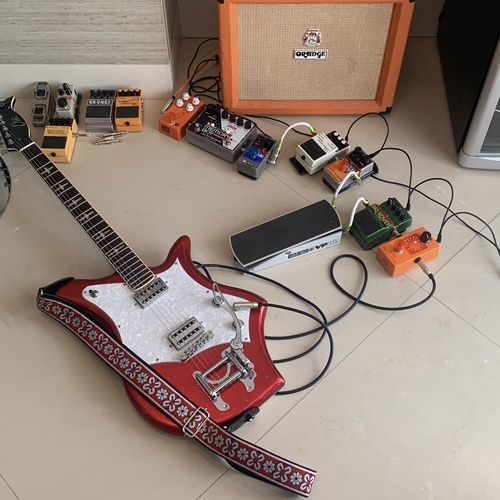
In this image of Jake Bugg's pedalboard, we can see he is using a Boss AC-3 Acoustic Simulator pedal.
.jpg?v=1783267262)

In a video by Gear Gods, Michael Romeo is shown using the Boss AC-3 Acoustic Simulator during live performances.

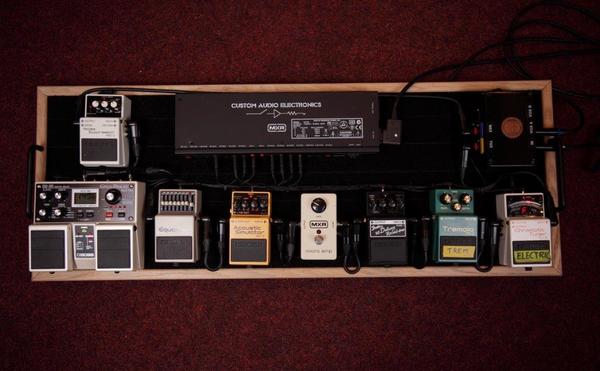
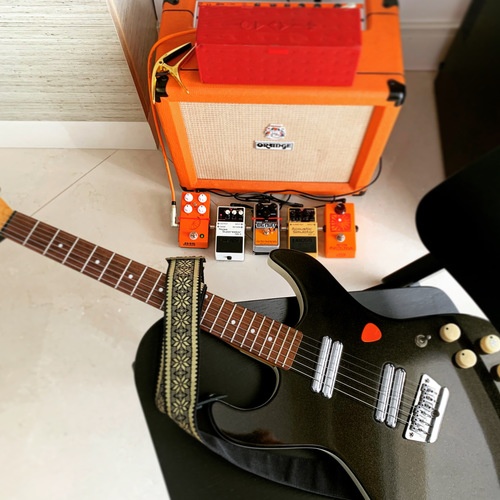
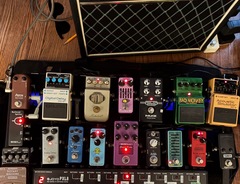
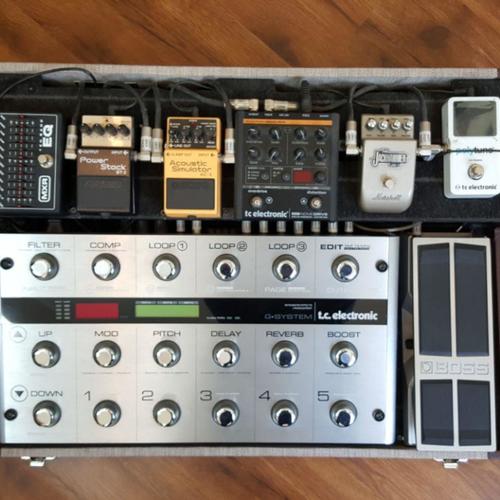
"we used a Vox amp for tremolo effects and now we get those from pedals. We also use the acoustic simulator pedal, which really helps." - Gwil Sainsbury. This image is of Joe's pedalboard where said simulator can be seen.


Album Usage
The Boss AC-3 Acoustic Simulator has been featured on the following albums:

Genre Usage
Based on how artists on Equipboard use this gear, it is most commonly found in the following genres.
Used With
Based on how musicians on Equipboard use Boss AC-3 Acoustic Simulator, it is most commonly used with the following gear.
-s.webp?v=1783335610)



Community setups
Show yours



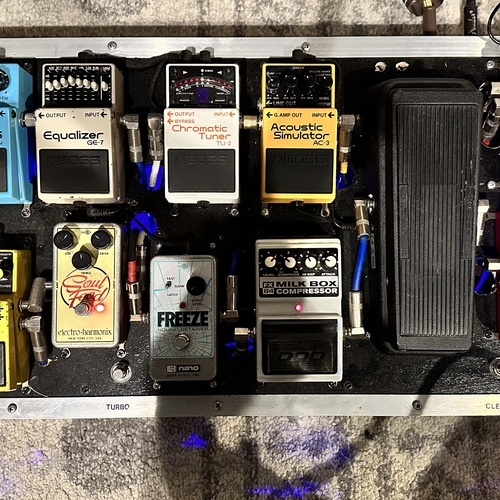

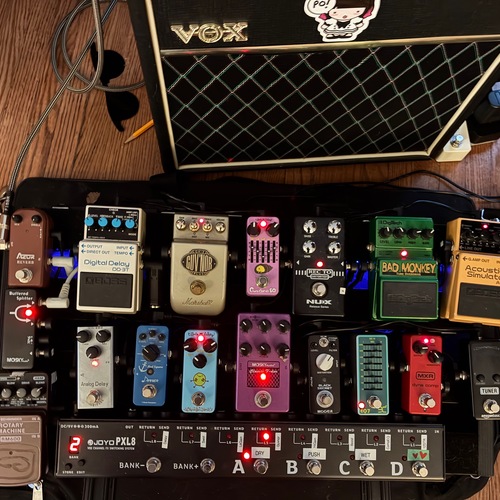

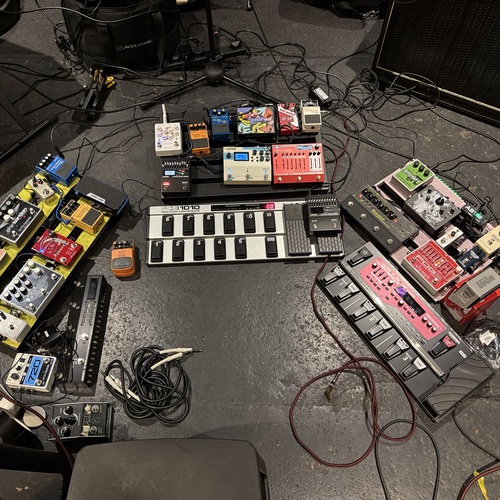
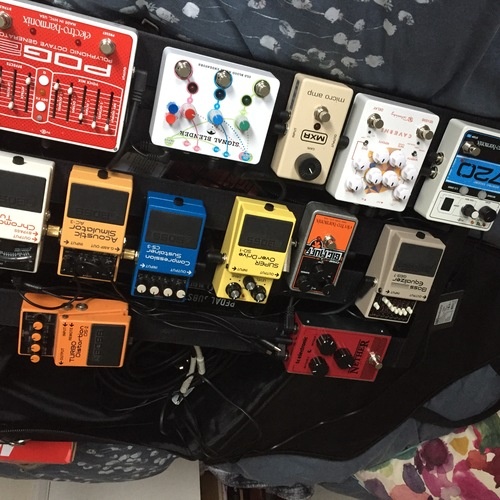

Similar
Add recommendation2 alternative and related items for Boss AC-3 Acoustic Simulator, curated by the Equipboard community.


$38.82
More Boss Equalizer Effects Pedals

$100.50 - $131.99
in Equalizer Effects Pedals Rank


$218.50 - $252.99
in Equalizer Effects Pedals Rank


$38.82
in Equalizer Effects Pedals Rank


$159.99
in Equalizer Effects Pedals Rank


$133.00
in Equalizer Effects Pedals Rank


$95.00
in Equalizer Effects Pedals Rank


$120.00
in Equalizer Effects Pedals Rank


-m.webp?v=1783177437)
$450.00
in Equalizer Effects Pedals Rank




$10.00 - $159.99
in Equalizer Effects Pedals Rank
.jpeg?v=1783313150)


$85.00
in Equalizer Effects Pedals Rank


$125.99
in Equalizer Effects Pedals Rank


$59.99
in Equalizer Effects Pedals Rank
.jpg?v=1783214872)


$179.00
in Equalizer Effects Pedals Rank


$137.08 - $216.00
in Equalizer Effects Pedals Rank


$125.48
in Equalizer Effects Pedals Rank


$110.00 - $125.99
in Equalizer Effects Pedals Rank


$117.72
in Equalizer Effects Pedals Rank


$49.00 - $55.00
in Equalizer Effects Pedals Rank


$275.00 - $289.00
in Equalizer Effects Pedals Rank


$18.17 - $31.90
in Equalizer Effects Pedals Rank


-m.webp?v=1783346549)
$319.00 - $349.00
in Equalizer Effects Pedals Rank


$102.56 - $125.99
in Equalizer Effects Pedals Rank


$136.00 - $149.00
in Equalizer Effects Pedals Rank
.jpg?v=1783265553)

-m.webp?v=1783337662)
$55.00 - $83.90
in Equalizer Effects Pedals Rank


$85.00 - $159.99
in Equalizer Effects Pedals Rank


$85.00 - $159.99
in Equalizer Effects Pedals Rank


$250.97
in Equalizer Effects Pedals Rank


.jpg?v=1783267404)

$50.20 - $247.00
in Equalizer Effects Pedals Rank


$74.00
in Equalizer Effects Pedals Rank


$177.00 - $199.97
in Equalizer Effects Pedals Rank
.png?v=1783270193)


$199.00 - $229.00
in Equalizer Effects Pedals Rank
.webp?v=1782327089)


$118.24 - $139.99
in Equalizer Effects Pedals Rank

$95.83
in Equalizer Effects Pedals Rank


$600.00
in Equalizer Effects Pedals Rank


$39.99 - $52.40
in Equalizer Effects Pedals Rank


$37.52 - $37.99
in Equalizer Effects Pedals Rank
Accessories & Related Items


-s.webp?v=1783337282)






Gear Guides





Most Popular Equalizer Effects Pedals
Most Popular Brands
-
Added to Equipboard on by
 equipboard
Gear IQ 4934
-


