

Pricing and availability
We compare 600+ stores and found this item at 1 store. Prices updated .
Store
Reviews
Price




Average Price: $8,900
High-end/Boutique
$500
$1501+
Price Tier
Budget
Standard
High-end
* Product prices and availability are updated by Equipboard every 24hrs and are subject to change. Equipboard may receive compensation for purchases made at participating retailers linked on this site. This compensation does not affect what products or prices are displayed, or the order of prices listed. For more information, please refer to our affiliate disclosure.
Description
Introducing the Moog Memorymoog, a true gem in the world of synths. This marvel is the final synth to roll off the production line of the original Moog company in 1982, before they closed doors. The Memorymoog uniquely combines a 100 patch memory slot system with a six-voice polyphony, offering an unparalleled polysynth experience with the distinct triple VCO Moog flavor. Available in two models, the basic and the Plus, the latter is especially sought after for its rudimentary MIDI implementation. However, it's common to find both models retrofitted with updated MIDI setups, enhanced oscillator stability, and more, bringing a modern touch to this classic instrument.
Key Features:
- Six-voice polyphony for rich and layered soundscapes
- Triple VCO for that distinctive Moog sound
- 100 patch memory slots for extensive sound customization
- Available in two models: basic and Plus with MIDI implementation
- Commonly retrofitted with improved MIDI setups and oscillator stability
- Produced by the original Moog company, adding to its vintage value.
Product specs
| Brand | Moog |
| Model | Memorymoog |
| Finish | Wood |
| Year | 1982 - 1985 |
| Made In | United States |
| Categories | Analog Synths, Keyboard Synths |
| Analog / Digital | Analog |
| Key Size | Full Size |
| Keyboard Action | Synth Action |
| MIDI I/O | MIDI Input, MIDI Output, MIDI Through |
| Number of Keys | 61 Keys |
| Polyphony | 6 Voices |
FAQs
-
Is the Moog Memorymoog suitable for live performances?
-
Yes, the Moog Memorymoog is highly regarded for live performances due to its robust build, full-size keys, and rich analog sound. Its polyphony of 6 voices allows for complex and layered soundscapes, making it a favorite among live musicians.
-
How does the Moog Memorymoog's polyphony compare to other synthesizers?
-
The Moog Memorymoog offers 6-voice polyphony, which is substantial for an analog synthesizer from its era. This allows users to play chords and complex sequences, distinguishing it from monophonic synths like the Minimoog.
-
What kind of sound can I expect from the Moog Memorymoog?
-
The Moog Memorymoog is known for its rich, warm, and powerful analog sound. It excels in creating lush pads, thick basses, and soaring leads, making it versatile for various music genres.
-
Does the Moog Memorymoog have MIDI capabilities?
-
Yes, the Moog Memorymoog includes MIDI Input, Output, and Through, allowing it to integrate with modern digital setups for enhanced control and sequencing.
-
What are the key features of the Moog Memorymoog's sound engine?
-
The Moog Memorymoog features a robust analog sound engine with three oscillators per voice, offering a wide range of sonic possibilities. Its comprehensive modulation options and signature Moog filters contribute to its legendary sound.
Videos

SynthMania
''Via Marconi'' - '80s Italo with Memorymoog
''Via Marconi'' - '80s Italo with Memorymoog
SynthMania
The Vintage Memorymoog In Action

Doctor Mix
Moog Memorymoog - beauty
SynthMania
Moog Memorymoog Vintage Analog Synthesizer Overview

Perfect Circuit
MOOG MEMORYMOOG | Presets, Sounds & Patches 【SYNTH DEMO】

synth4ever
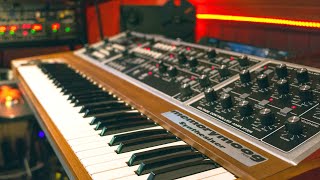
MemoryMoog | Fat Fragile Fabulous Vintage Analog

Espen Kraft
Moog Memorymoog - Rosen Sound Demo

Rosen Sound
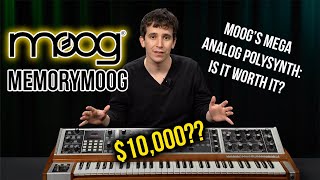
Moog MemoryMoog: Is It Worth It?

Alamo Music Sound Lab
The Venerable Moog Memorymoog - Inspiration for the Moog Muse?

Vintage Synthesizer Solutions
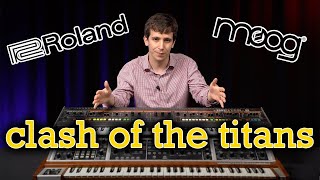
Clash of The Titans: Roland Jupiter-8 vs. Moog MemoryMoog
Alamo Music Sound Lab
Reviews
PROS
-
Incredible versatility in sound and functionality
-
Distinct, raw Moog sound that stands out
-
Capable of producing timeless vintage tones with clarity and character
-
Exceptional musicality; elevates performances and recordings
-
Can serve as a highly effective main synth for sessions
-
Durable; proven to withstand heavy touring
-
Offers unique collectible value due to rare components
CONS
-
Maintenance can be very expensive
-
Contains rare, no longer manufactured chips, posing a risk of eventual failure
-
May be considered more of a collector's item than a necessity for modern musicians
-
Without LAMM (Lintronics Advanced Memorymoog Modification), reliability is questionable
Owner Insights
We analyzed real musician discussions from forums and Reddit to find what players love, question, and tweak about Moog Memorymoog.
Build quality
-
The Memorymoog is considered the most fragile mass-produced polysynth, compared to the OB-Xa, suggesting it feels like a prototype in terms of durability.
Source -
The Memorymoog has a peculiar mix of premium components but suffers from sloppy construction, evidenced by messy handwritten serial numbers.
Source
Features and functionality
-
The Memorymoog lacks split/dual mode, limiting its versatility compared to the Jupiter-8, which is noted for its intuitive design and modern functionality.
Source -
The unison mode produces a massive sound with its 18 VCOs, while the glide feature is appreciated by users.
Source -
The arpeggiator is considered subpar by some users, though the auto-tune function is found to work decently.
Source
Comparisons
-
Owners find the Jupiter-8 to be a better all-around synth, describing the Memorymoog as more of a "character piece" suitable for someone with multiple synths.
Source
Value and pricing
-
Despite high used prices for the Memorymoog, some buyers prefer the new Moog One for its additional features and less nostalgic appeal.
Source
User experience
Critic Reviews
5.0 out of 5
Based on 0 Reviews and 10 Ratings
Artist usage
Add artist

"Memory moog finally up and cranking-- voice modulation is the key to the kingdom"


S.O.S interview of Air members on how they built their own studio. Air give up the names of their synths plus photo of them


Used on "Future Shock", as specified in Herbie Hancock’s Electronic Instrument Glossary from September 14, 2016.
Memorymoog – This polyphonic synthesizer was first made in 1982 and offered greater preset storage capacity and better sound than its competitors. This instrument was used by Herbie on the tune “Future Shock” for the album of the same name.


at 4:05 Scott talks about the Memorymoog


Used on Eliminator, as stated by engineer Terry Manning in this February 15, 2005 ProSoundWeb forum reply.
[Tue, 15 February 2005 09:20]
tenaciousJay wrote on Mon, 14 February 2005 12:05
Terry I wonder if you could comment on the guitar sound in Eliminator. What I always heard it was all Rockman - but was there an amp mixed in as well? And thoughts on the direction of that album as a whole - it certainly was a huge change in sound, even if there were hints of it on earlier albums.
The full story of the making of Eliminator (the politics, the chicannery, the technical aberrations, the high social drama, the exodus, the payback) is one that I cannot tell. Even if I could, there certainly wouldn't be room for it here! It probably won't even make it into "the book" (or the movie). Just don't forget that truth is often stranger than fiction!
However, I will address certain specific musical or technical issues, and I'll begin with your guitar amp question.
THERE WAS ABSOLUTELY NO ROCKMAN USED ON THIS RECORDING!
Not a little bit, not a tiny bit; NOT ANY. I don't know how these stories get started. Billy may indeed have used Rockman at a later date, after I left the situation, but I did not allow it when I was working with him. He did bring one in to try, but I was not satisfied with the sound, compared to an amplifier.
The amp used, almost exclusively, on Eliminator was a Legend. This was about a 50 watt hybrid unit, employing a tube/valve preamp, and a transistor power amp. This is the amp which has a finished wood case, and a rattan-type cane grill. It has one 12" Celestion speaker. Legend were later bought by, or at least distributed by, Gibson, but they were independent when we started using them. I still have this amp; it is almost new. A couple of years ago I plugged one of the Eliminator guitars into it, just to see...there was the sound!
The guitars were custom built by Dean. Dean were out of Chicago, and were trying to break into the high end (a la Jackson, PRS) market. They were very nice, albeit different, instruments. Subsequently however, they got a contract with Sears to make guitars, so they opted for the big bucks, Korean manufactured, low end market instead. But the ones we used were very nicely made. There were two which we employed. One was somewhat like a cross between a Flying-V and a Moderne shape, very long "ears," and the other was a sort of a warped, pointy Stratocaster-y shape. Both guitars had a single DiMarzio Super Distortion high output pickup, and almost no controls. I don't think there is even a tone control...what would you need one for? They have big, heavy, brass bridge/tail pieces bolted into the body. These guitars were very live, very resonant, and would verge on resonant feedback at all times; they were also very hard to keep in tune because of this. But they were always alive. Billy has the first one mentioned, and he gave me the latter, which I still have.
The guitar was recorded with basically only one setup; one amp (Legend), one speaker (12"), one guitar (Deans, the two were almost exactly the same), one mic (AKG 414B-ULS, I still have it) in one position (about 5" from the cone, placed at a slight angle off axis), one mic pre (the SpectraSonics console). 98% of ALL guitar on this album, whether lead or rhythm was done this way. Any variations were from the player himself, who, remember, did not even have a tone control. That's how good Billy was back then. We did use very briefly a small amp by Ross, but we didn't like it much, and I think only a tiny part or two was kept from this, if any.
The rhythm guitars were done in a precursor-to-Protools style. Short phrases were played, and then double tracked, onto one set of tracks, and then the chord change/next phrase was played on a second set of tracks. This allowed a seamless transition between changes; since the Deans were so close to feedback at all times (acoustically, through the fairly loud JBL monitors), we couldn't even lift the fingers to change chords! Then I would trim the edges of each section by punching in and out to silence at the beginnings and ends of the phrases (somewhat analogous to "trimming the region" today). This method also "eliminated" to a degree the loud harmonic squeaks between chord changes. The punch in/out points, if done exactly perfectly, made for a primitive cross fade of probably 10-20 ms, and ended up sounding very different as rhythm guitar, sort of like a big train rolling down a track, almost out of control; without knowing how it was done, one wouldn't really realise why it was different.
For the leads, as always, there was a lot of punching done.
The bass was mostly played either by Billy or by me, and was either a bass instrument, or a Moog Source (the Source was a Mini Moog [rhymes with 'Vouge'] analogue synth with digitally controlled parameters...I still have this, too). Synth chords were played on a Memory Moog (polyphonic Mini).
Billy sang great, different vocals, as usual, and the harmonies were done either by Jimmy Jamison or by me.
There are a MILLION more things which could be told about this distinctive album, but as mentioned, most of it is probably better left unsaid. But one interesting thing, at least to me, was the recording of "Legs." We had tried it a couple of ways unsuccessfully at Ardent, so I decided to try a new approach. I had a 24 track studio in my attic at home, so I took Billy's lead guitar and vocal home on a 1/2" two track L/R ("samples"). I recut the entire track myself, and then hand flew in Billy's parts onto the track. This meant careful timing of the play button on my MCI 1/2", for each and every phrase, as after a few seconds, they would drift out of sync. I mixed it there through my Soundcraft 1200 console (these were also the mic pre's) onto the MCI 1/2". The multitrack was also the Soundcraft 2" machine, which I really loved. Then I did a totally different version, which became the long "dance mix" later released to clubs, and it is now included in the new box set. Later, I saw a review of this dance version credited, to Jellybean Benitez ...go figure!
Anyway, that's a lot about Eliminator for now. Thanks for your interest!
Terry


Memory Moog (Midi-Lintronics)


On Night School, he credits a Korg PS-3100 (which appears on the album cover), an Emulator II, and a finicky MemoryMoog for helping him capture many of the sounds that appear on the record.


Mentioned in a "studio gear" list in a 2001 interview with Rocket Baby.


In this tweet from July 2014, Derek Sherinian shows off two of his synths. The one on the left in the photo is a Moog Memorymoog. He says, "Say hello to my little friends!!!!"

At 2'45'' Nick talks about using the item during the recording sessions for the "All You Need Is Now" album.


Album Usage
The Moog Memorymoog has been featured on the following albums:
God Blessed Video (Grand Theft Audio)
Alcatrazz (2025)

Hurry Up Tomorrow
The Weeknd (2025)
Child's Play
Alice Phoebe Lou (2021)
All Melody
Nils Frahm (2018)
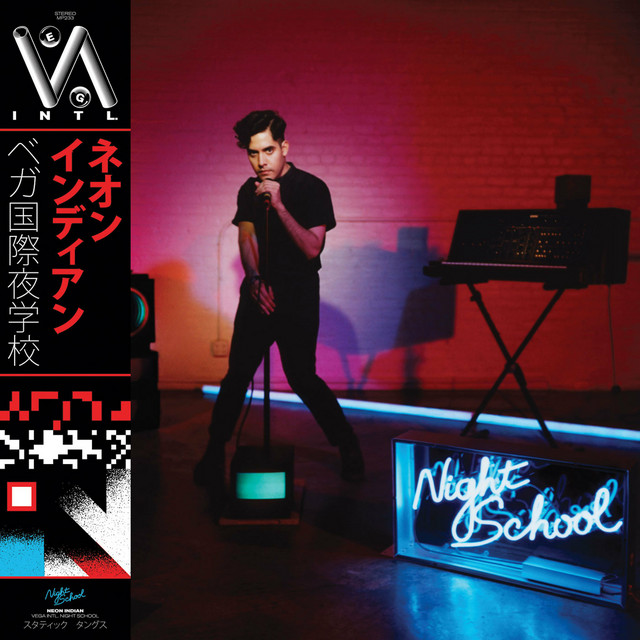
VEGA INTL. Night School
Neon Indian & Neon Indian (2015)

All You Need Is Now
Duran Duran (2011)
Free So Free
J Mascis + The Fog (2002)
More Light
J Mascis + The Fog (2000)
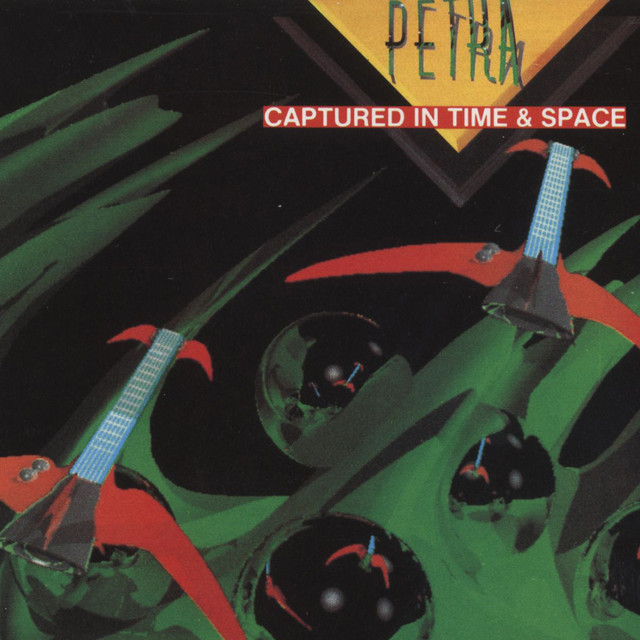
Captured In Time And Space (Live)
Petra (1986)
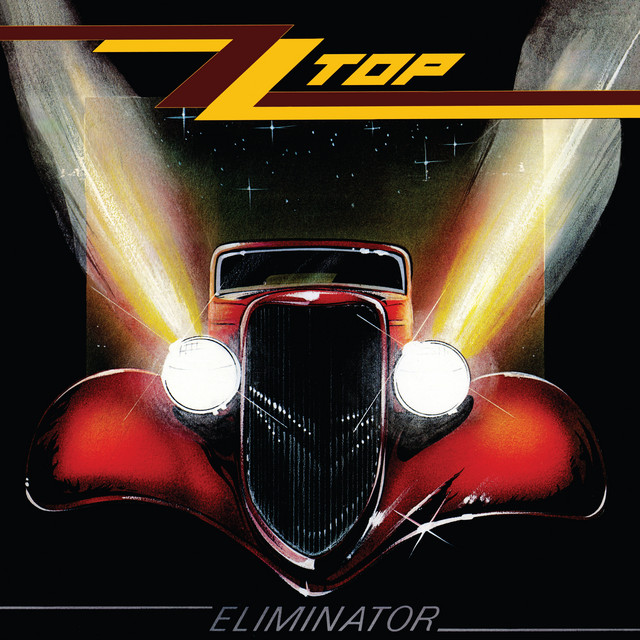
Eliminator
ZZ Top (1983)
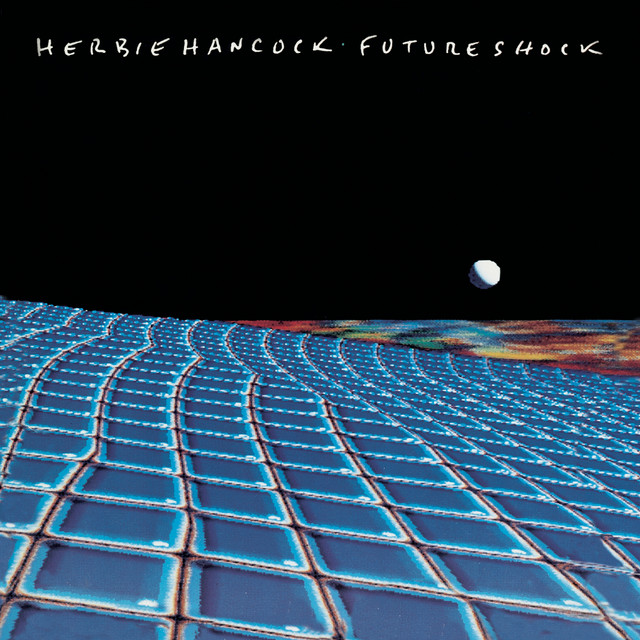
Future Shock
Herbie Hancock (1983)
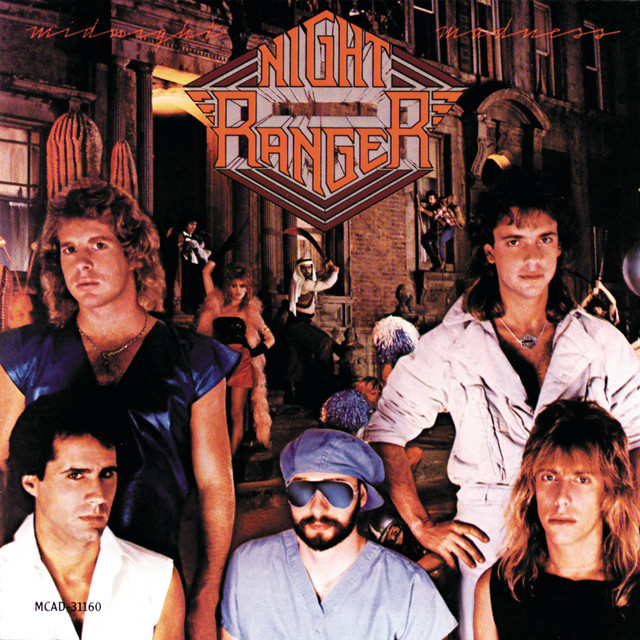
Midnight Madness
Night Ranger (1983)
Genre Usage
Based on how artists on Equipboard use this gear, it is most commonly found in the following genres.
Used With
Based on how musicians on Equipboard use Moog Memorymoog, it is most commonly used with the following gear.


-s.webp?v=1783263546)


-s.webp?v=1783263541)

Community setups
Show yours

More Moog Synthesizers

$999.00 - $1,084.00
in Synthesizers Rank


-m.webp?v=1783177119)
$1,200.00
in Synthesizers Rank


$1,470.85 - $1,899.00
in Synthesizers Rank


-m.webp?v=1783255096)
$1,709.10 - $1,944.00
in Synthesizers Rank


$3,999.00 - $4,999.00
in Synthesizers Rank


$627.41
in Synthesizers Rank


$6,600.00 - $10,444.00
in Synthesizers Rank


$52.00 - $799.99
in Synthesizers Rank


-m.webp?v=1783290040)
$348.50 - $399.00
in Synthesizers Rank


$800.00
in Synthesizers Rank


$600.00
in Synthesizers Rank


-m.webp?v=1783163039)


$9,999.00


-m.webp?v=1783176995)


$12,999.00


-m.webp?v=1783065198)


$964.00


$9,999.00


$1,650.00


$1,438.99 - $1,899.00


$3,999.00 - $5,199.00


-m.webp?v=1773990669)

Accessories & Related Items



-s.webp?v=1783255096)


-s.webp?v=1783065198)
Similar


Gear Guides









Most Popular Synthesizers
Most Popular Brands
-
Added to Equipboard on by
.jpg?v=1782968794) gchiaren
gchiarenGear IQ 37552
-


