

Pricing and availability
We compare 600+ stores and found this item at 1 store. Prices updated .
Store
Reviews
Price




Average Price: $19,995
High-end/Boutique
$100
$401+
Price Tier
Budget
Standard
High-end
* Product prices and availability are updated by Equipboard every 24hrs and are subject to change. Equipboard may receive compensation for purchases made at participating retailers linked on this site. This compensation does not affect what products or prices are displayed, or the order of prices listed. For more information, please refer to our affiliate disclosure.
Description
The U 48 was a special variant of Neumann’s flagship studio microphone, the U 47. Instead of cardiod and omni patterns the U 48 offered cardioid and figure-8.
Product specs
| Brand | Neumann |
| Model | U 48 |
| Finish | Nickel |
| Year | 1950s |
| Made In | Germany |
| Categories | Microphones |
| Electronics | Analog, Tube |
| Microphone Type | Large-Diaphragm Condenser |
| Polar Pattern | Multipattern |
| Wired/Wireless | Wired |
FAQs
-
What polar patterns does the Neumann U48 offer?
-
The Neumann U48 provides cardioid and figure-eight polar patterns, making it versatile for various recording applications, including mid-side stereo recording.
-
Is the Neumann U48 suitable for vocal recordings?
-
Yes, the Neumann U48 is highly regarded for vocal recordings due to its warm, classic sound and ability to capture rich detail, making it a favorite in professional studios.
-
What type of electronics does the Neumann U48 use?
-
The Neumann U48 features analog tube electronics, contributing to its distinctive vintage sound character and warmth.
-
How does the Neumann U48 differ from the U47?
-
The main difference between the U48 and the U47 is the polar patterns; the U48 offers cardioid and figure-eight patterns, while the U47 provides cardioid and omnidirectional modes.
-
What is the primary application for the Neumann U48 microphone?
-
The Neumann U48 is primarily used in studio settings for recording vocals, but its versatility also makes it suitable for instruments and ensemble recordings.


Reviews
Owner Insights
We analyzed real musician discussions from forums and Reddit to find what players love, question, and tweak about Neumann U48.
Comparisons
-
The Neumann U48, noted for its use in "Blackbird" by the Beatles, is compared to the WA47 for a similar but more affordable sound at around $800.
Source -
Users suggest that for a darker, smoother vocal tone, the Aston Origin and WA47jr are good alternatives to the Neumann U48 for those on a budget.
Source
Use cases and applications
-
The Neumann U48 is highlighted for its magical vocal quality, making it a preferred choice for intimate and soft vocal recordings.
Source
Features and functionality
-
The U48 is essentially a U47 with a figure-8 pattern instead of omni, offering a unique sound profile that is appreciated in high-end studio recordings.
Source
Based on 0 Reviews and 0 Ratings
Artist usage
Add artist

video shot in Electrical Audio, Steve Albini's studio, mic shown at 0:40

(This article)[https://www.mixonline.com/recording/daniel-lanois-shines-alone-365055], describing Lanois' studio setup. "For microphones, he’s fairly set in his ways: He says he hasn’t seen any improvement in the technology over the years. He listed these time-tested models as favorites: Sony C37A, Neumann U47 and U48, RCA 77 and 44 ribbons, and the more modern Sony 800-T. He also likes dynamic mics such as the Shure Beta 57 and 58, and the Sennheiser 409 and 421"
.jpeg?v=1784817615)

Used for lead vocals on The Weirdness, as stated by recording engineer Steve Albini in this October 1, 2008 Electronic Musician interview.
Does the approach ever differ from that?
Sure. For example, when I did the Stooges sessions [The Weirdness, Virgin, 2007]. The Stooges have always recorded with Iggy singing live along with the band, so that's the way we did the record. Iggy was set up in an isolation room, he had an [Shure] SM58 and a [Neumann] U48, and he could either go for the classy U48 sound or the onstage SM58 sound. He had a monitor playing his vocals back at him in the room. There were vocal speakers scattered around the rest of the band. So everyone could hear Iggy through the P.A., like always. That's not as common as overdubbing the vocals later, but I'm perfectly comfortable doing that if people want to do that.


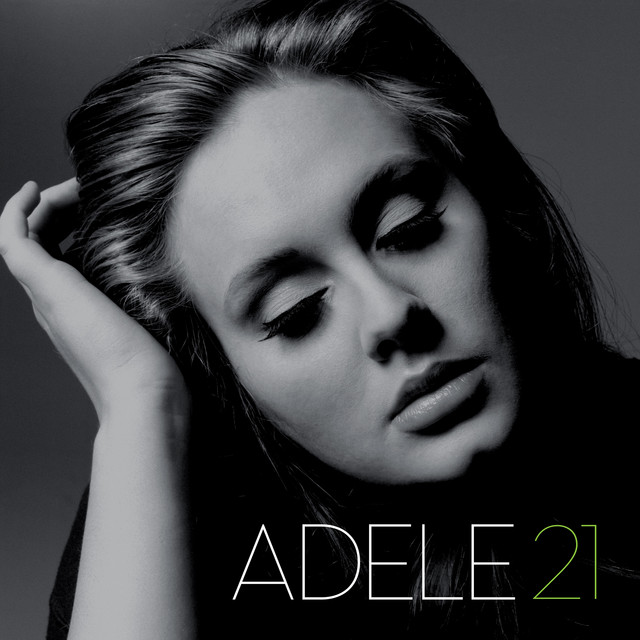
Used for the vocals on "Someone Like You", as mentioned anecdotally by recording engineer Warren Huart in this August 1, 2012 Mix interview, archived on the Endless Analog website.
Warren Huart on Steven’s vocals: Most of Steven Tyler’s keeper vocals were cut at Swing House with a Neumann U 48 that Huart had used previously on The Fray, James Blunt, Adele and others.

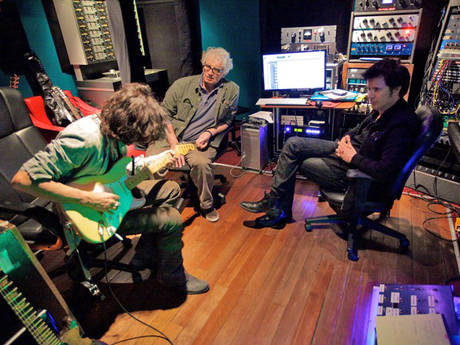
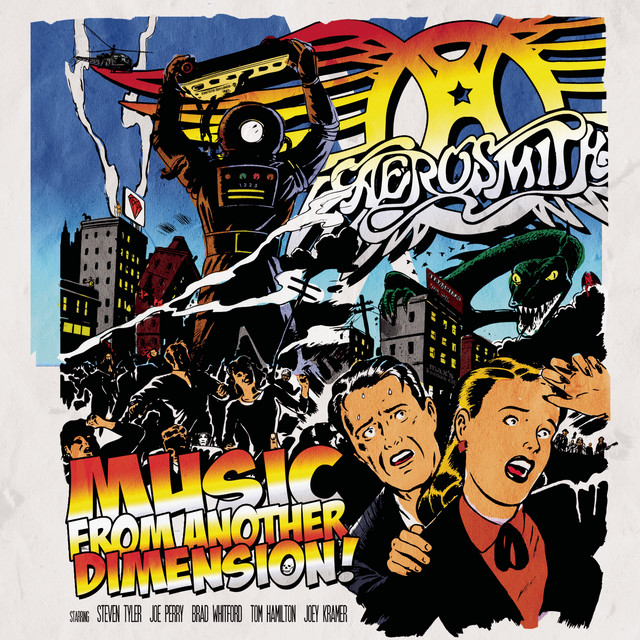
Used for "most" of the vocals on Music from Another Dimension!, as stated by engineer Warren Huart in this August 1, 2012 Mix article archived on the Endless Analog website.
Most of Steven Tyler’s keeper vocals were cut at Swing House with a Neumann U 48 that Huart had used previously on The Fray, James Blunt, Adele and others.

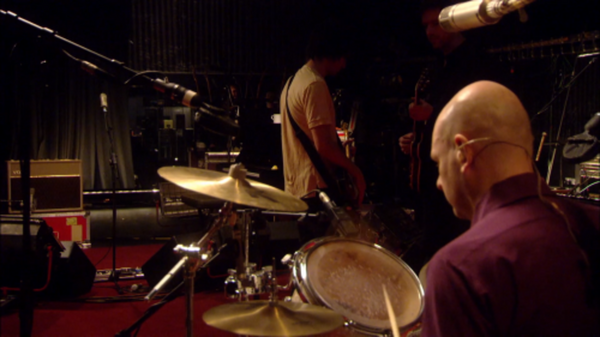
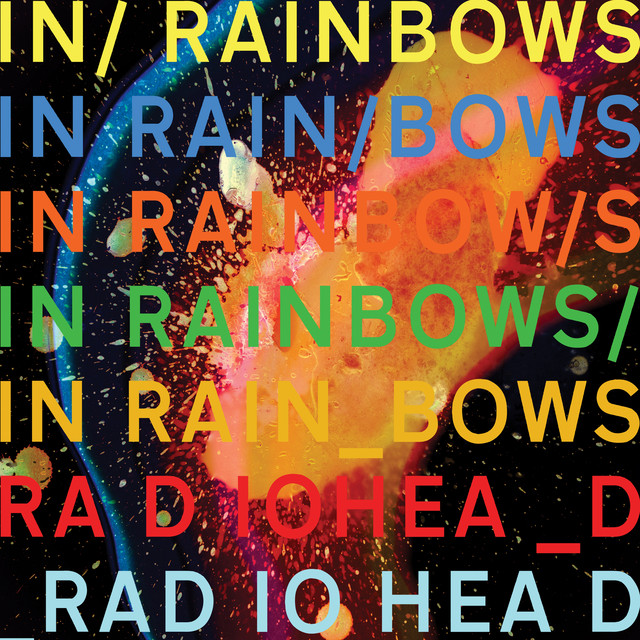
During Radiohead’s "From The Basement" performance of "Weird Fishes" on April 2, 2008, a screenshot reveals that music producer Nigel Godrich utilized a Neumann U48 as an overhead microphone.

Used for vocals on Some Kind of Trouble, as mentioned anecdotally by recording engineer and "I'll Be Your Man" guitarist Warren Huart in this August 1, 2012 Mix interview, archived on the Endless Analog website.
Warren Huart on Steven’s vocals: Most of Steven Tyler’s keeper vocals were cut at Swing House with a Neumann U 48 that Huart had used previously on The Fray, James Blunt, Adele and others.

Mentioned anecdotally by recording engineer Warren Huart in this August 1, 2012 Mix interview, archived on the Endless Analog website.
Warren Huart on Steven’s vocals: Most of Steven Tyler’s keeper vocals were cut at Swing House with a Neumann U 48 that Huart had used previously on The Fray, James Blunt, Adele and others.

Bertrand Poncet has a Neumann U48 microphone in his studio, as noted on the Alias Studio website.


In an April 2014 interview with Sound On Sound, Frozen Music Producer David Boucher recalls "The singers would have Bobby's piano in their headphones, and I recorded Idina with a vintage Telefunken ELAM 251 and Kristen Bell [who voiced and sang Anna's parts] with a Neumann U48, while I used a [Neumann] U67 or a U47 for the male vocals. The female singers' mics went into my Little Labs Lmnopres mic pres and vintage Urei LA3A compressors, and for the guys I used Sunset Sound's API mic pres and the LA2A or LA3A. Whenever possible the vocals went into Pro Tools via the Apogee Symphony I/O, and if that wasn't there, the Avid I/Os clocked to an Apogee Big Ben."


Used for lead vocals on Why'd I Try, as stated by bandmate Michael Kirsch in this self-written October 5, 2010 SonicScoop article.
Vocal (Kentucky facing Center Field)
Main: Neumann U48 -> John Hardy M2 Preamp -> 1176 Fast Release 20:1
Vocal Ambience: Crown PCC -> Expander Keyed to Vocal Mic
Kirsch describes the vocal recording process in depth in "Part III" of the article series.
During our live shows Josh sings while drumming. Nevertheless, we decided to overdub the vocals in the studio. This was primarily for technical reasons: we wanted to have more control of the vocal in the mix, separate from the drums.
Albini’s approach to recording vocals was organic. Using two microphones and an actual metal plate reverb, he set up a vocal chain that would respond to Josh’s voice dynamically and in real-time.
Ordinarily in a lively, reverberating acoustic chamber, the depth and quality of reverb would be directly related to the volume of the voice. A quiet vocal would have minimal reflections whereas a loud, belting vocal would resonate more. In order to capture this on tape, a Crown PCC microphone was setup on the floor of Center Field.
Josh stood in Kentucky, facing Center Field with the door open. The Crown mic was keyed to an expander set to only turn on when he sang loudly. This technique can be heard clearly on our song “You’re Strange.” (Download here — at approximately 3:53, and 4:07 you can hear the Crown mic turn on.)
A Neumann U48 was used as a close mic, capturing all the delicate detail and nuance of Josh’s voice. The vocal was chain was also bussed out to an original Echoplate reverb, built in 1969.
The Echoplate is a large mechanical unit that uses a large sheet of steel, a transducer and contact microphones to create and record reverberation. The voice is sent through a transducer, which vibrates the steel sheet. The resonance is then recorded by the contact mics. The Echoplate provided a rich yet realistic sonic space for the vocal in the mix.
Album Usage
The Neumann U48 has been featured on the following albums:



Genre Usage
Based on how artists on Equipboard use this gear, it is most commonly found in the following genres.
Used With
Based on how musicians on Equipboard use Neumann U48, it is most commonly used with the following gear.

-s.webp?v=1784815383)


-s.webp?v=1784818708)


Similar
Add recommendation1 alternative for Neumann U48, curated by the Equipboard community.
More Neumann Condenser Microphones

$519.00 - $799.00
in Condenser Microphones Rank


$899.00 - $1,295.00
in Condenser Microphones Rank


-m.webp?v=1784818695)
$2,349.00 - $3,995.00
in Condenser Microphones Rank


$508.80 - $849.00
in Condenser Microphones Rank


$2,785.39 - $3,995.00
in Condenser Microphones Rank


$1,456.37 - $1,995.00
in Condenser Microphones Rank


$748.89 - $899.00
in Condenser Microphones Rank


$3,450.66 - $4,395.00
in Condenser Microphones Rank


$4,640.54 - $8,299.00
in Condenser Microphones Rank

-m.webp?v=1784815345)
$4,999.00 - $5,995.00
in Condenser Microphones Rank


$1,281.75 - $1,750.00
in Condenser Microphones Rank


$2,200.00
in Condenser Microphones Rank


$714.56 - $849.00
in Condenser Microphones Rank


$531.54 - $849.00
in Condenser Microphones Rank


$1,439.00 - $1,695.00
in Condenser Microphones Rank


$16,111.00
in Condenser Microphones Rank


$1,169.40 - $1,595.00


$1,960.00 - $3,500.00


$3,666.00 - $4,395.00


-m.webp?v=1784844477)
$1,960.00 - $3,500.00


$2,349.00 - $3,995.00


$7,500.00 - $9,995.00


.png?v=1784782055)


$989.00 - $1,249.00


$3,421.95 - $3,995.00


$554.06 - $699.00


Accessories & Related Items

-s.webp?v=1784818695)


Community setups


Gear Guides







Most Popular Condenser Microphones
Most Popular Brands
-
Added to Equipboard on by
 eyeseeofficial
GearIQ 161592
-


