
Pricing and availability
We compare 600+ stores and found this item at 1 store. Prices updated .
Store
Reviews
Price




Average Price: $2,199
High-end/Boutique
$500
$1501+
Price Tier
Budget
Standard
High-end
* Product prices and availability are updated by Equipboard every 24hrs and are subject to change. Equipboard may receive compensation for purchases made at participating retailers linked on this site. This compensation does not affect what products or prices are displayed, or the order of prices listed. For more information, please refer to our affiliate disclosure.
Description
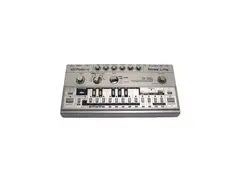
Experience the unique charm of the Roland TB-303, a classic analog bass synthesizer that was born in the 80s and still thrives today. Initially designed as a substitute for studio bassists, this musical marvel unexpectedly became the backbone of acid house music with its distinctive, squelchy bass lines. Its signature sound, largely attributed to its transistor-based resonant low-pass filter, is a testament to its enduring popularity among music enthusiasts and professionals alike. The TB-303 is equipped with a DIN Sync24 input and CV/Gate functionality, offering a seamless blend of vintage character and modern convenience. The built-in step sequencer, complete with slide, swing, and accent features, ensures an engaging and dynamic user experience.
Key Features:
- Analog bass synthesizer with a unique, vintage sound
- Transistor-based resonant low-pass filter for distinctive bass lines
- DIN Sync24 input and CV/Gate functionality for versatile connectivity
- Step sequencer with slide, swing, and accent functions for dynamic sound creation
Product specs
| Brand | Roland |
| Model | TB-303 Bassline Synthesizer Module |
| Finish | Silver |
| Year | 1981 - 1984 |
| Made In | Japan |
| Categories | Analog Synths |
| Analog / Digital | Analog |
| Polyphony | 1 Voice |
FAQs
-
What type of sound is the Roland TB-303 known for?
-
The Roland TB-303 is renowned for its distinctive squelchy basslines and acid sounds, which are iconic in genres like acid house and techno.
-
Is the Roland TB-303 polyphonic or monophonic?
-
The Roland TB-303 is a monophonic synthesizer, meaning it can only play one note at a time.
-
What are the main controls on the Roland TB-303?
-
The Roland TB-303 features controls for tuning, cutoff frequency, resonance, envelope modulation, decay, and accent, allowing for detailed sound shaping.
-
Can the Roland TB-303 be used with modern DAWs?
-
While the original TB-303 does not have MIDI, it can be used with modern DAWs through CV/Gate interfaces or by using a TB-303 clone with MIDI capabilities.
-
What is the historical significance of the Roland TB-303 in music production?
-
The Roland TB-303 played a crucial role in the development of acid house music in the late 1980s, influencing electronic music production with its unique sound.
Videos

Doctor Mix
The Bass Line Of “I Feel Love” On A TB-303
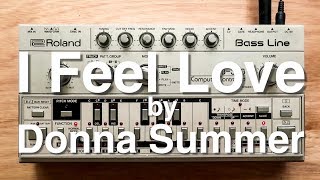
The Bass Line Of “I Feel Love” On A TB-303
Doctor Mix
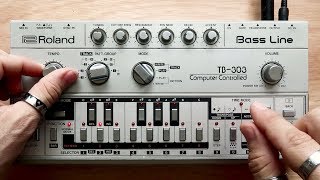
Roland TB-303 Bass Line In Action
Doctor Mix

Joris Voorn Studio Jam | Melodic Acid Live Session (Roland TB-303, TR-909, MC-202, JD-990 + FX)

Joris Voorn
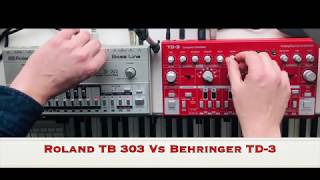
ROLAND TB 303 vs BEHRINGER TD3

Riktenstein
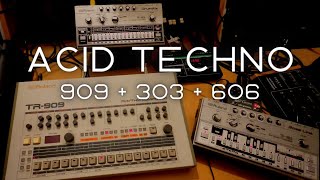
Roland TB-303 and TR-909 making Acid Techno

funkyberlin303
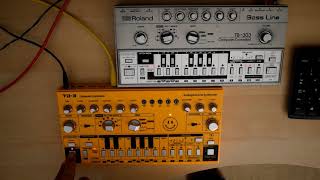
Behringer TD3 vs Roland TB303

egowaves
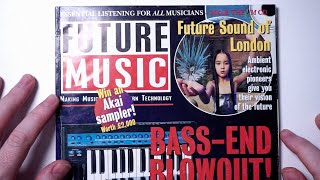
Roland TB-303, Excellent. £499 ono. Ring Martin after 6pm.

Expect Resistance
Reviews
PROS
-
Unique sound that can't be replicated by clones or VSTs
-
Iconic in dance music history, especially acid house
-
Each unit has slight sound variances, adding to its uniqueness
-
Built-in sequencer with distinctive slide and accent programming
-
Holds its value well, considered a good investment
-
Can be powered with a DC adapter for flexibility
-
Durable and reliable over many years of use
CONS
-
Expensive, with prices often in the thousands
-
Pre-MIDI, limiting connectivity with modern gear
-
Preset patterns can be hit or miss
-
The fear of wear or damage due to its collector's item status
-
Software options offer more flexibility
Owner Insights
We analyzed real musician discussions from forums and Reddit to find what players love, question, and tweak about Roland TB-303.
Comparisons
-
The Cyclone TT-303 V2 is preferred by some for its form and function similar to the original TB-303, offering MIDI and additional features.
Source -
The saw wave on the TB-03 is considered overly harsh, especially at higher pitches, contrasting with the smoother tones that other synths may offer.
Source
Features and functionality
-
The TB-03 includes MIDI, distortion, reverb/delay effects, and two programming methods, providing a more versatile experience compared to the original TB-303.
Source -
The TB-03's rnd2 function has a "bug" that allows notes outside the usual sequencer range, creating unique textures with high resonance and long decay.
Source
Mods and upgrades
-
The Behringer TD-3 can be significantly enhanced with mods, improving its performance beyond the standard model for more intense acid sounds.
Source
Use cases and applications
-
The MAM MB33 lacks a sequencer but integrates well with other gear like the MPC One, making it suitable for modular setups.
Source -
The TB-03 is noted for ambient music when slowed down and paired with reverb or delay, using its sequencer and effects for texture.
Source -
It can be used for non-acid applications like minimal ambient tracks, as exemplified by artist TM404, who uses multiple 303s for nuanced ambient soundscapes.
Source -
The TB-03 can effectively serve as a bassline tool in various genres, demonstrated by its use in tracks like Orange Juice's "Rip It Up" and Heaven 17's "Let Me Go."
Source
5.0 out of 5
Based on 10 Reviews and 73 Ratings

172
Acieed !
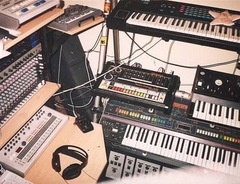
This silver box is badass ! I bought it 15 years ago and this bassline and I are totaly in symbiosis. I bought and tried many clones but noone of them equals its acid feel. My dream is to get another one. It's the most loved machine of all my collection. I'm using it in 99% of all my tracks. It's value will keep rising.


165
Outstanding cult !
Acrid Abeyance, Pergon, Unknown Structure were made with original TB's. I bought them very cheap (haha) in the late 80's, early 90's. And I made a lot of records and live gigs with it. Pure or with stompboxes or other fx. It always sounds just phatt. For me it has also the best sequencer with the acc / slide programming.

195
analog bassline
pre midi, din-sync, great sequencer, can link pateras to build songs

111
The Original!
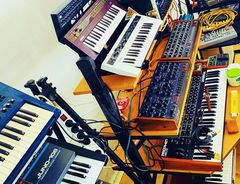
What else is to be said here? It`s the original, nothing less, nothing more :)

41029
hahahaha.... its an instrument, use it or its just a paper weight

128
Classic
Used it on my first record: AUM-Morph - software is more flexible now...

424
Organic great bass sounds
Little but a devil! Still working with a DC adaptor, sounds aggressive. I have his TR606 companion too.
339
TB#3 303
just picked this up a few months ago it has good vibe real powerful great for layering passes..

Artist usage
Add artist

"By the mid-90s, big beat artists like the Chemical Brothers and Fatboy Slim blended sampled breakbeats with TB-303s."


"Basically from my first trip to Japan I bought myself a 303, 909 and 808."

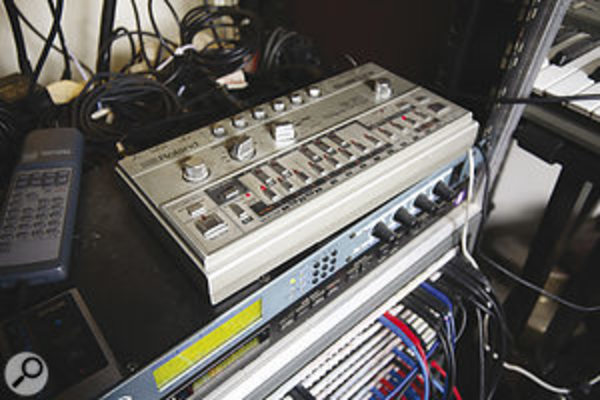
"As well as unusual and custom?built gear, Tom Jenkinson retains some of the staple instruments of '90s dance music, among them a Roland TB303," reads the caption to this photo, in this article.


Play It Again
For Moby, selecting a piano sound is also an intuitive process, and he is reluctant to offer any reasons why he might have chosen one sound source rather than any other. "Sometimes I use acoustic piano
Everything Is Right
As I browsed through the sleeve notes on Moby's albums I noticed that the gear lists documented in the 1995 release Everything Is Wrong are almost identical to his current setup. Could it really be possible that this successful musician had no spare cash to spend on new studio gear during the last four years?
"From Everything Is Wrong until now I've bought a vocoder and a new sampler and that's about it. On the one hand I'd love to get a bunch of new equipment, but on the other hand there's something to be said for working with equipment with which I'm comfortable. I'm thinking that at some point I will actually switch over and get a full Pro Tools setup and start doing things more in the computer, but for this record I didn't feel compelled to do that."
MOBY GEAR Apple Mac running Steinberg Cubase sequencer. Soundcraft Spirit 24:8:2 desk. Alesis ADAT digital multitracks.
SAMPLERS Akai S950. Akai S1000. Akai S3000. Akai S3200.
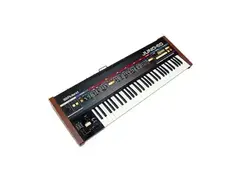
SYNTHS/KEYBOARDS Casio CZ101. Emu Proformance piano module. Oberheim Matrix 1000. Roland Juno 106. Roland Jupiter 6. Serge Modular Synth. Waldorf Pulse Plus. Yamaha SY22. Yamaha SY35. Yamaha SY85.
PROCESSORS Dbx 160XT Compressor. Eventide DSP4000. Soundlab Vocoder. Yamaha SPX900.
SEQUENCERS & DRUM MACHINES Roland TB303. Roland TR606. Roland TR909. Roland TR808.
OTHER EQUIPMENT Hafler Pro 5000 Power Amp. Technics 1200 turntables. Ibanez Electric Guitar. Fender Precision Bass.
, sometimes I use the Pro Piano -- it doesn't really matter to me where I get the sounds from. The main piano on this song I think was the Emu Proformance piano module, but there are two pianos on there and the other one, I think, is off an old Yamaha synth." Following the piano chords, Moby introduced the main drum part, programmed on a Roland TR909. To complement the drums a sampled breakbeat taken from a hip-hop record was laid on top, with its tempo adjusted to suit the song's rhythm. Moby: "I never time-stretch really. I don't care about changing the pitch. If I have a drum sample and want it to be a little bit faster, I just speed it up and sacrifice the original pitch. I've never understood why people worry so much about maintaining the original pitch. If you slow it down the pitch gets lower, if you speed it up the pitch gets higher -- big deal!"
Surprisingly, all the string pad parts of 'Why Does My Heart Feel So Bad?', which can be heard washing into the first verse behind the vocal, were played on Moby's ageing Yamaha SY22 and SY85 synths. Moby's basic, yet effective approach to his string arrangement is mirrored by his minimal use of effects on the track. "The only effects I use are an SPX900 reverb on the piano and the vocals, and a little bit of delay when the verse comes back in and after the first chorus."
A second vocal line used in a 'question and answer' style (repeating 'Why does my heart...' after the main line) is introduced after the first chorus, with a grungy sound achieved by resampling the main line at a lower bandwidth before passing it through a high-pass filter. This work was done when Moby made the original sample several years before. The part was finally treated to some delay and heavy EQ during the mix. The last main element to be added to the composition was the simple sub-bass line which underpins the track. This part was also played by Moby, this time using a Roland Juno 106 synth.
Arrangement
Having assembled the basic elements of 'Why Does My Heart Feel So Bad?', Moby's next move was to concentrate on the song's arrangement. "Compositionally it's quite a simple song. The verses are four chords -- A minor, E minor, G major, D major -- then the chorus is C major to A minor and then F major to C major, and that's pretty much the whole song. So once I had the basics written it was just a matter of arranging it and adding little elements, like in the second verse a ride cymbal is introduced and there's the second call-and-response vocal."
Through the process of working by himself in just one location, Moby could switch back and forth between writing, arranging and mixing without worrying about studio time or the schedules of producers, musicians and engineers. Moby explains the method. "The subtle arrangement stuff tends to take me a long time until I'm really happy with it. In most cases on this record I would work on something and develop it as an idea and then work on it over the next couple of months -- just fine-tuning it. The difference between the finished version of a song and the original version of the song can be really marginal. 'Natural Blues' took me about a year to work on but the finished version sounds almost identical to the original."
It may seem strange that songs which have so few basic elements and a minimal production require such a long period of arrangement time, but Moby's reasons for taking his time have developed from 15 years of working almost exclusively by himself. "I recognise that my perspective on a piece of music will change drastically over time. Sometimes I'll work on a piece and think it's the greatest thing I've ever done then go back to it a week later and think it's terrible -- and vice versa. In terms of evaluating my work, I have to build in quite a lot of time, because my objectivity can be compromised quite easily. If I give myself a couple of months after everything's done that's enough to figure out whether things are as good or as bad as I imagined them to be."

17:48 into the video. see liam adjusting cutoff and resonance while playing it like a keyboard?! wild.


"On the last tour, along with the keyboards, and modulars, I had an [Elektron] Octatrack, a TB303, a Nagra tape machine, an old four track… it was fucking crazy [laughs]."

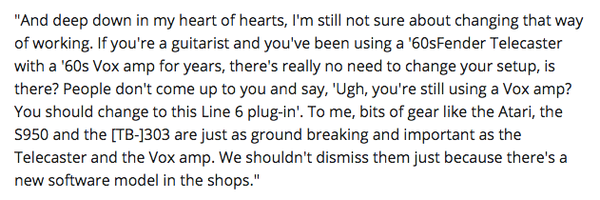
"To me, bits of gear like the Atari, the S950 and the (TB-)303 are just as ground breaking and important as the Telecaster and the Vox amp." - Fat Boy Slim.

3:39 into his YouTube video, Ferry pulls out his TB-303 in the twenty-seventh episode of his WKNDR series. He refers to it as an "Acid Bass-liner".


You can clearly see a TB-303 in Orbital's live setup in this 2019 interview.

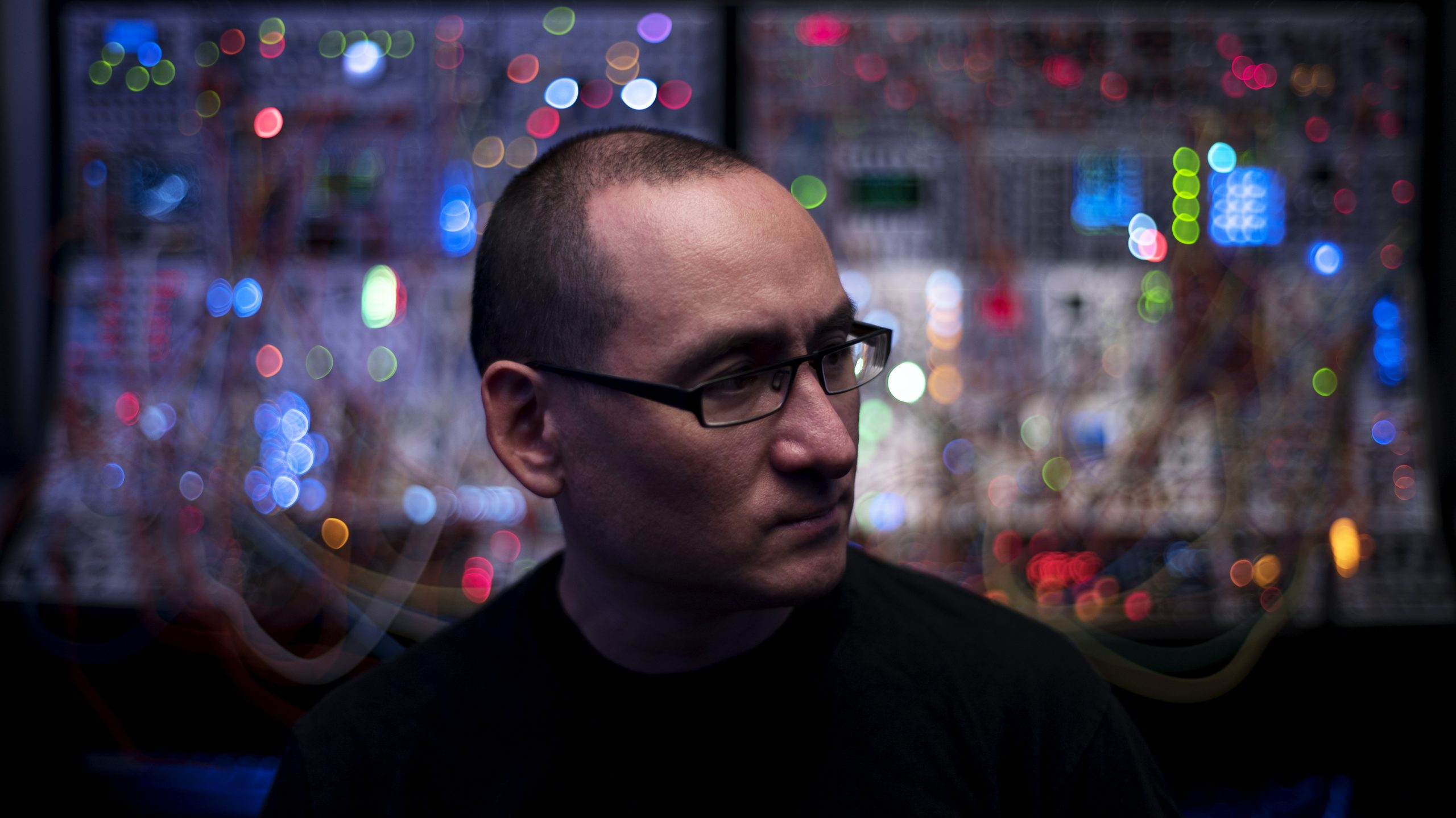
"My first 303 I bought in 1993. I got it through a friend that was selling a TR-606 and 303 together."


According to the liner notes of his first, self-titled album, Panda Bear is credited with playing the Roland TB-303.


Album Usage
The Roland TB-303 has been featured on the following albums:

Sinister Grift
Panda Bear (2025)
The Slow Rush
Tame Impala & Kevin Parker (2020)
Small Moon
Chris Carter (2018)
Strange Directions
DMX Krew (2017)
Turn off Your Mind
Ellen Allien (2016)
4th Dimension
Danny Byrd (2013)
Music Components
Arnaud Rebotini (2013)

That Hug
Dusty Kid (2013)
Not Coming Down
Ferry Corsten (2012)

Need In Me
Flashmob (2012)

WKND
Ferry Corsten (2012)
Someone Gave Me Religion
Arnaud Rebotini (2011)
Alive 1997
Daft Punk & Daft Punk (2001)

Why Does My Heart Feel So Bad?
Moby (1999)
Homework
Daft Punk & Daft Punk (1997)
Everything Is Wrong
Moby (1995)
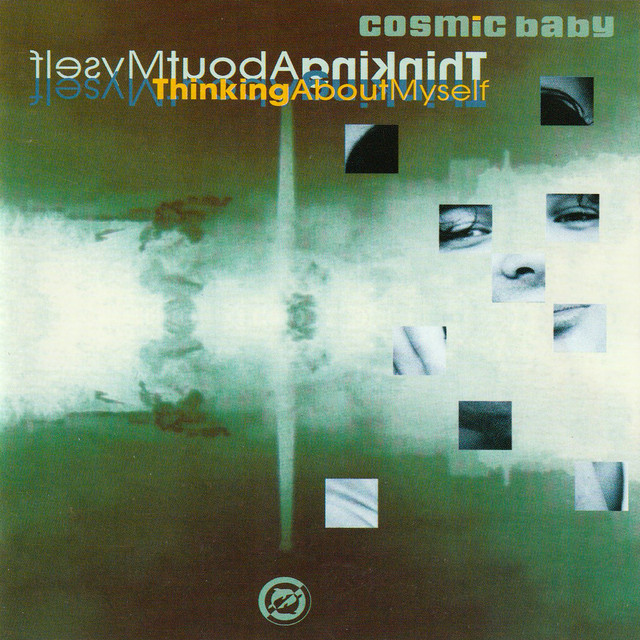
Thinking About Myself
Cosmic Baby (1994)
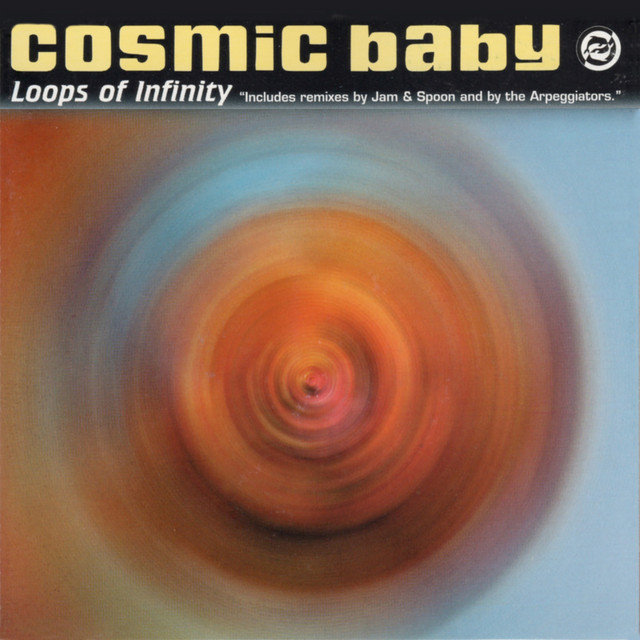
Loops of Infinity
Cosmic Baby (1994)
Genre Usage
Based on how artists on Equipboard use this gear, it is most commonly found in the following genres.
Used With
Based on how musicians on Equipboard use Roland TB-303, it is most commonly used with the following gear.
-s.webp?v=1783318437)
-s.webp?v=1783349885)
-s.webp?v=1783349877)


-s.webp?v=1783349880)


Community setups
Show yours

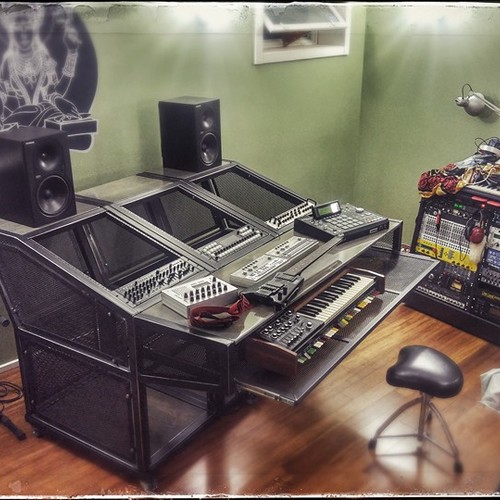
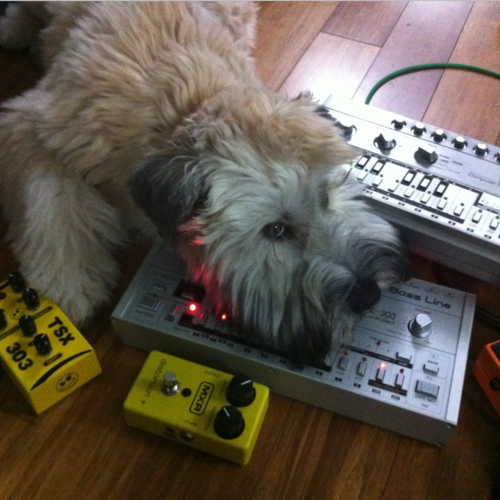
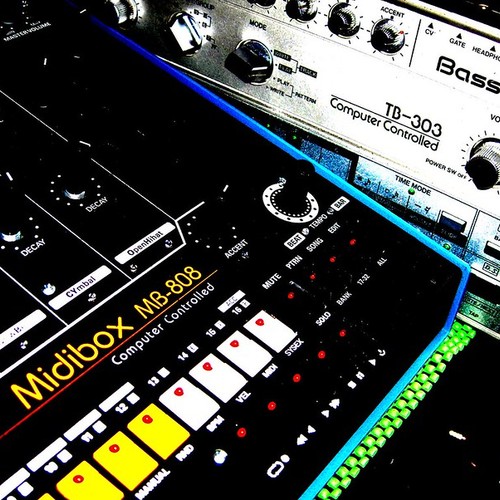
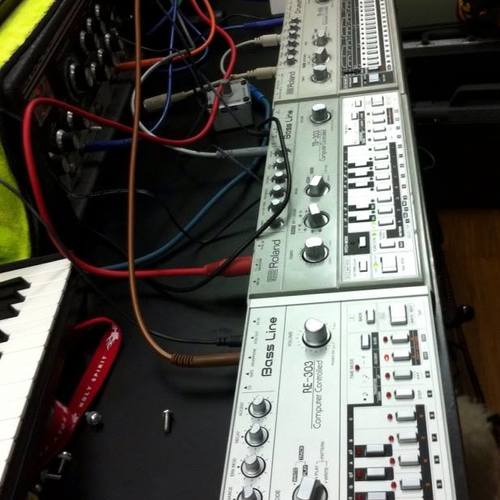
Similar
Add recommendation6 alternative and related items for Roland TB-303, curated by the Equipboard community.

Audio Realism ABL3 is a long-established and very detailed software emulation of the Roland TB-303.

$90.50 - $149.00
The Behringer TD-3 is an analog clone of the original TB-303, utilizing modern manufacturing techniques to hit a very reasonable price-point.

$345.50 - $479.99

The TT-303 is an analog clone of the TB-303, with some modern improvements.

$267.00
The original Cyclone Analogic TT-303 looked almost identical to the TB-303. The v2 looks quite different but still sounds the same, and adds some more sequencer features.

$90.60 - $149.00
More Roland Synthesizers

$19,535.25
in Synthesizers Rank


$2,000.00
in Synthesizers Rank


$289.66 - $1,763.18
in Synthesizers Rank


$325.00 - $1,332.49
in Synthesizers Rank


$499.99 - $719.99
in Synthesizers Rank


$309.99 - $915.00
in Synthesizers Rank


$1,469.00 - $2,159.99
in Synthesizers Rank

.jpeg?v=1783346559)

$479.99 - $1,099.00
in Synthesizers Rank


-m.webp?v=1783349880)
$956.53
in Synthesizers Rank


$735.79
in Synthesizers Rank


$350.50 - $494.99
in Synthesizers Rank


$197.04
in Synthesizers Rank


$404.99 - $819.99
in Synthesizers Rank


$4,295.00
in Synthesizers Rank


-m.webp?v=1783349885)
$1,114.01
in Synthesizers Rank


$2,199.99 - $2,639.99
in Synthesizers Rank
.jpeg?v=1783323499)


$149.00 - $368.00
in Synthesizers Rank


$799.99 - $956.52
in Synthesizers Rank


$614.00 - $1,199.00
in Synthesizers Rank


$344.00 - $479.99
in Synthesizers Rank


$495.00
in Synthesizers Rank


$940.00
in Synthesizers Rank


$1,219.97
in Synthesizers Rank


$918.00 - $1,249.99
in Synthesizers Rank


$888.00 - $1,199.99
in Synthesizers Rank


$1,532.28


$652.00 - $1,888.00


$1,252.00 - $1,869.99


$2,200.00 - $3,189.99

.jpg?v=1783216091)

Accessories & Related Items




Gear Guides









Most Popular Synthesizers
Most Popular Brands
-
Added to Equipboard on by
 equipboard
Gear IQ 4934
-


