

Pricing and availability
We compare 600+ stores and found this item at 6 stores. Prices updated .
Store
Reviews
Price




Average Price: $2,142
High-end/Boutique
$300
$701+
Price Tier
Budget
Standard
High-end
Price History
Based on price data from 5 merchants for "Fender 1965 Super Reverb". Prices shown reflect NEW condition. Tracking began Apr 2, 2026.
* Product prices and availability are updated by Equipboard every 24hrs and are subject to change. Equipboard may receive compensation for purchases made at participating retailers linked on this site. This compensation does not affect what products or prices are displayed, or the order of prices listed. For more information, please refer to our affiliate disclosure.
Description
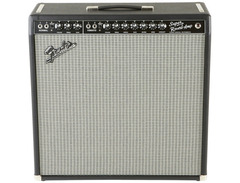
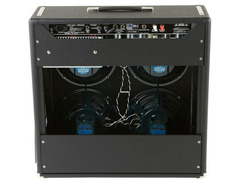
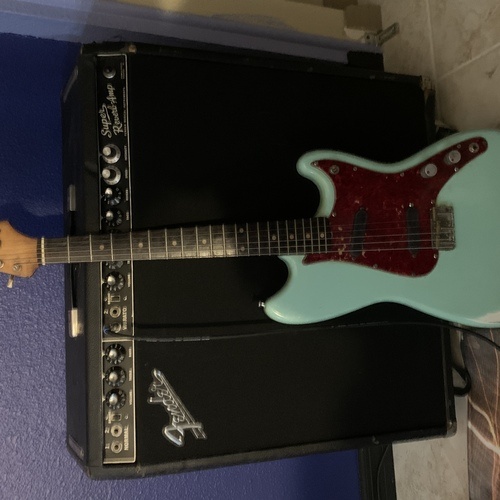
Embrace the spirit of the 1960s with the 1965 Fender Super Reverb, a faithful restoration of the iconic, all-tube, 45W combo amplifier that shaped the sound of a generation. Crafted with the same circuitry and components as the original, this amplifier delivers the classic Blackface tone that defined the era. Equipped with four 10" Jensen P10R speakers, the Super Reverb fills the air with a commanding sound that maintains clarity even at stage volume.
The Super Reverb is not just about retro aesthetics; it also offers modern reliability with improved components under the hood. A heavy-duty frame and high-quality hardware ensure durability, standing up to the rigors of frequent gigging and transport.
The dual-channel preamp feeds into a pair of 6L6 power tubes, providing a rich harmonic complexity and touch sensitivity. Crank up the volume to push the power tubes into saturation for sweet overdrive with endless sustain. The multiple speaker design offers enhanced power handling, broader frequency response, and a wider stereo image compared to single or dual-speaker designs.
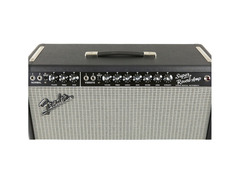
Key Features: - All-tube, 45W combo amplifier - Four 10" Jensen P10R speakers - Vintage-correct circuitry for the classic Blackface tone - Dual-channel preamp with 6L6 power tubes - Heavy-duty frame and high-quality hardware for durability - Classic blackface control panel, brown textured vinyl covering, and silver sparkle grille cloth - Provides rich harmonic complexity and touch sensitivity - Broad frequency response and a wider stereo image with multiple speakers - Meticulous recreation of the legendary 1960s Fender Super Reverb.
Product specs
| Type | Tube |
| Number of Channels | 2 |
| Total Power | 45W |
| Speaker Size | 4 x 10" Jensen P10R speakers |
| Preamp Tubes | 4 x 12AX7, 2 x 12AT7 |
| Power Tubes | 2 x 6L6, 1 x 5AR4 (Rectifier) |
| Reverb | Spring Reverb |
| Effects | Tremolo |
| EQ | 2-band (Channel 1), 3-band (Channel 2) |
| Inputs | 2 x 1/4" (Channel 1), 2 x 1/4" (Channel 2) |
| Outputs | 2 x Speaker |
| Footswitch I/O | 1 x 1/4" (reverb, vibrato) |
| Footswitch Included | Yes, 2-button footswitch |
| Bias Type | Adjustable Fixed |
| Construction Material | Birch Plywood with Black Tolex |
| Power Source | Standard IEC AC cable |
| Height | 24.88" |
| Width | 25.13" |
| Depth | 10.5" |
| Weight | 65 lbs. |
FAQs
-
What type of tubes does the 1965 Super Reverb use?
-
The 1965 Super Reverb features 4 x 12AX7 and 2 x 12AT7 preamp tubes, along with 2 x 6L6 power tubes and a 5AR4 rectifier tube, providing its classic tube-driven sound.
-
Is the Fender '65 Super Reverb suitable for live performances?
-
Yes, with 45 watts of power and 4 x 10" Jensen P10R speakers, the Fender '65 Super Reverb is well-suited for live performances, offering ample volume and a rich, full sound.
-
Does the '65 Super Reverb come with a footswitch?
-
Yes, the '65 Super Reverb includes a 2-button footswitch for controlling the reverb and vibrato effects, making it convenient for live performance adjustments.
-
What are the main tonal characteristics of the Fender '65 Super Reverb?
-
The Fender '65 Super Reverb is known for its bright, clean tones with a pronounced midrange, making it ideal for genres like blues, rock, and country.
-
How does the spring reverb on the 1965 Super Reverb sound?
-
The spring reverb on the 1965 Super Reverb provides a lush, ambient sound characteristic of classic Fender amplifiers, adding depth and dimension to your tone.
Videos

Pete Thorn
AMPS IN THE ZONE #2 Blackface Fender Super Reverb
AMPS IN THE ZONE #2 Blackface Fender Super Reverb
Pete Thorn
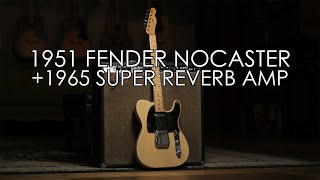
"Pick of the Day" - 1951 Fender Nocaster and 1965 Fender Super Reverb Amp

Emerald City Guitars
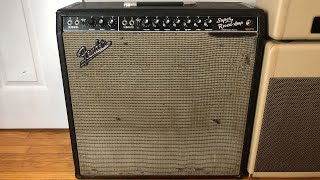
1965 Fender Super Reverb Amp Demo

Joby
1965 Fender Super Reverb - Fuchs Audio overhaul

Fuchs Audio
Reviews
PROS
-
Exceptional clean sound quality, even at high volumes
-
Reverb circuit is high quality, superior to other Fender amps
-
Lighter than the Twin Reverb, despite its size
-
Four 10" speakers offer loud output and nice breakup
-
Original tube circuitry, including rectifier tube, enhances tone
-
Sensitive tone controls allow detailed tone tweaking
-
Durable and reliable, even after rough handling
-
Works well with effect pedals for versatile sound
-
Suitable for various music styles and professional use
-
Iconic Fender heritage and aesthetic appeal
CONS
-
Might be too loud for home or studio use without attenuation
-
Heavy and bulky, challenging to transport
-
Lacks built-in overdrive, requiring external pedals for distortion
-
Stock 12AX7 tubes may need replacing due to reliability issues
-
More expensive than other models, including the Twin and Hot Rod series
Owner Insights
We analyzed real musician discussions from forums and Reddit to find what players love, question, and tweak about Fender 1965 Super Reverb.
Value and pricing
Setup and maintenance
-
Replacing the tremolo "roach" can resolve ticking issues, as these components slowly fail over decades.
Source -
Hissing noise linked to reverb volume may be resolved by checking tubes or putting the amp in standby, which can temporarily stop dynamic hiss/static.
Source -
It's crucial to keep original tubes even if replaced, as vintage ones often outperform new ones.
Source -
Owners recommend replacing the power cable with a three-prong plug for safety, which is an easy and inexpensive modification.
Source -
Vintage tubes may still perform well if the amp wasn't heavily used; replacing only as they fail can reduce repair costs.
Source -
It's important to know if the vintage Super Reverb has its original transformers and if it has undergone essential maintenance like replacing electrolytic capacitors.
Source
Use cases and applications
Mods and upgrades
-
Adding resistors to the tremolo circuit can reduce ticking; moving wires away from the tremolo "roach" also helps minimize cross talk.
Source
User experience
-
A Super Reverb is highly regarded as a "lifer" amp, potentially negating the need for future amplifier purchases.
Source -
This amp, with simple regular maintenance, can last several lifetimes, unlike many modern amplifiers.
Source -
Owners report that the Super Reverb can be cumbersome to transport due to its large cabinet, despite the Twin being slightly heavier.
Source
Comparisons
-
The Super Reverb's tube rectifier causes a slight sag in note attack at high volumes, unlike the Twin's solid-state rectification which offers immediate response.
Source
Critic Reviews
5.0 out of 5
Based on 0 Reviews and 12 Ratings
Artist usage
Add artist

In this article you can see that Johnny states he uses a Fender Super Reverb. Artist quotes "I've got a Fender Super Reverb"

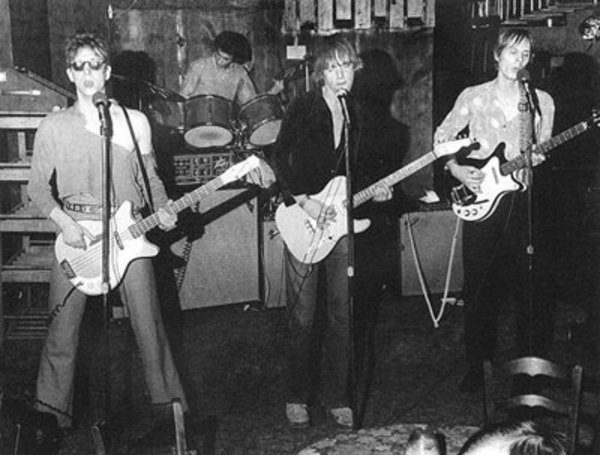
On the picture, Verlaine can be seen playing with his band Television, in their early days, back when Richard Hell was still in the band. Also, Richard Lloyd said in a quote from his website: "We used to use Fender Super Reverbs. Black face with 4 ten inch Jensens. We both had those for years. Then for some reason we switched to the Music Man equivalent".


The amp, though modified, was used on songs like "Holiday in Cambodia". A 2022 Premier Guitar rig rundown explains the process of Ray's Super Reverb conversion:
Ray’s guitar for the DK’s first singles, “Holiday in Cambodia” and “California Über Alles,” was recorded through a Fender Super Reverb (with an Electro-Harmonix LPB-1 Linear Power Booster in front of it). Shortly after those recordings, the self-admitted “science geek” tracked down schematics for Marshalls and Boogie amps and hot-rodded his Fender Super Reverb to have an extra tube channel, overhauling it to, essentially, a master-volume Marshall.


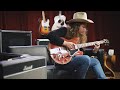
It was Allen’s amp that he acquired in 1965 and they used it together for early gigs.


“I’ve always liked 4×10 inch speakers. I used to use [Fender] Super Reverbs and I still have those, but I use the Matchless with 4×10’s. I also use the Fender Vibroking with 3×10’s.”

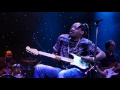
At 1:18, Marcus says "I always play through a Super Reverb - that's what my granddad always played through."


Allen got this amp mid-1965 and him, Gary, and Ronnie used it for early gigs.
.jpg?v=1783083476)

FAQ 17
Q. What instrument/amp did you use in the 60s recording sessions and how often would you change strings?
A. I used the Fender Precision bass, with the Fender Super Reverb open-back 4-10" speakers amp for a long time. Then about 1966-67 or so, I started using the enclosed cabinet double-amped Versatone amp (3-4 amps carted around by my cartage company, Van Cartage). You always wiped your strings after each date, and I would carry a chamois for this purpose plus would wipe the strings off with jewelry cleaner once in awhile to keep the strings sounding live, being careful not to get any on the instrument.


In this video, you can see to Alain Johannes talking about his gear and how he has the Fender Super Reverb and the Fender Twin Reverb


In this article from Premier Guitar we can see that he uses a fender super reverb amp.

Album Usage
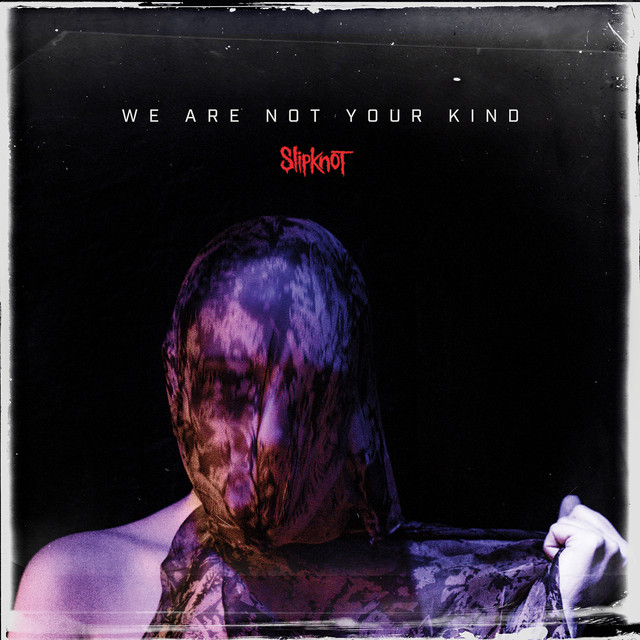
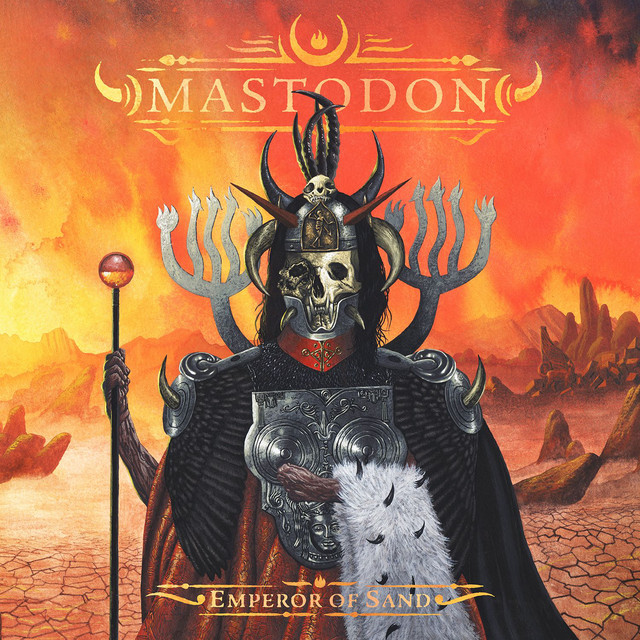
The Fender 1965 Super Reverb has been featured on the following albums:

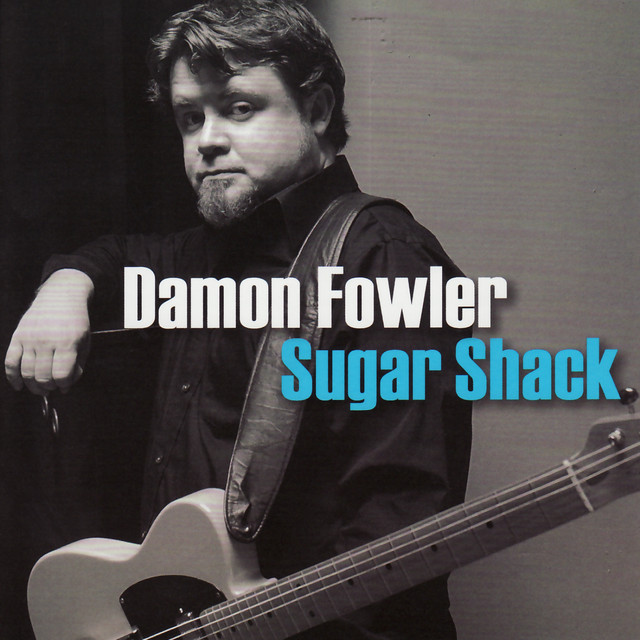
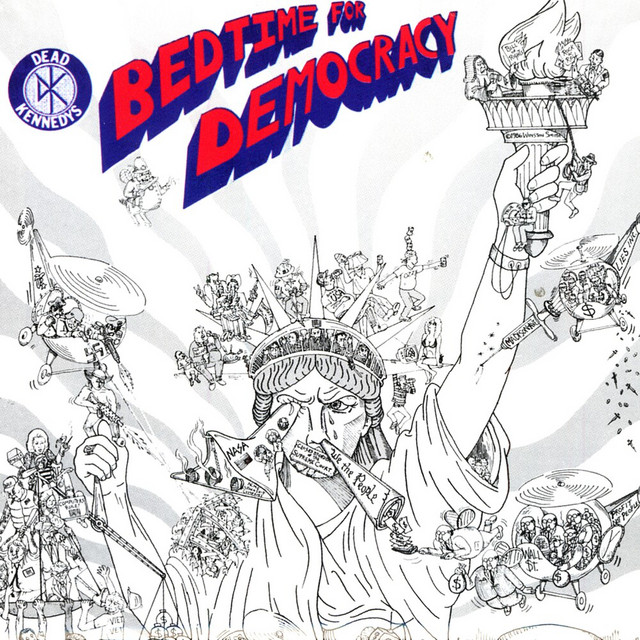
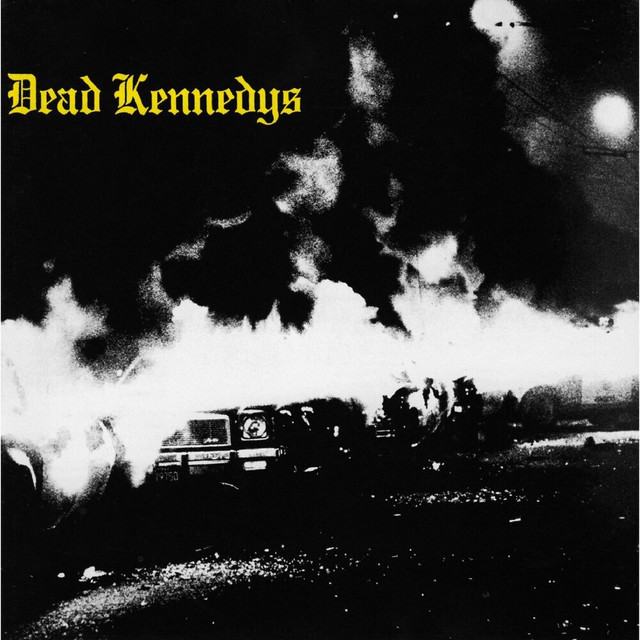
Genre Usage
Based on how artists on Equipboard use this gear, it is most commonly found in the following genres.
Used With
Based on how musicians on Equipboard use Fender 1965 Super Reverb, it is most commonly used with the following gear.


Community setups
Show yours
More Fender Combo Guitar Amplifiers
-m.webp?v=1783422023)
$1,889.99 - $2,199.99
in Combo Guitar Amplifiers Rank


$701.63 - $949.99
in Combo Guitar Amplifiers Rank


$325.00
in Combo Guitar Amplifiers Rank


$1,899.99 - $2,199.99
in Combo Guitar Amplifiers Rank

.png?v=1783382065)

$1,450.00 - $1,825.00
in Combo Guitar Amplifiers Rank


$1,379.99 - $1,679.99
in Combo Guitar Amplifiers Rank


$649.00 - $1,999.99
in Combo Guitar Amplifiers Rank

$348.56 - $729.99
in Combo Guitar Amplifiers Rank


$1,899.00 - $1,999.99
in Combo Guitar Amplifiers Rank
.jpeg?v=1783323499)

$967.40 - $1,149.00
in Combo Guitar Amplifiers Rank


$1,439.82 - $1,649.00
in Combo Guitar Amplifiers Rank


$210.00 - $399.99
in Combo Guitar Amplifiers Rank


$749.00
in Combo Guitar Amplifiers Rank

-m.webp?v=1783422881)
$1,223.76 - $1,469.99
in Combo Guitar Amplifiers Rank


$99.95 - $2,199.99
in Combo Guitar Amplifiers Rank


$450.00 - $1,149.00
in Combo Guitar Amplifiers Rank


$350.00 - $1,259.99
in Combo Guitar Amplifiers Rank


$2,199.00 - $2,729.99
in Combo Guitar Amplifiers Rank


$3,599.00 - $3,989.99
in Combo Guitar Amplifiers Rank


$634.00
in Combo Guitar Amplifiers Rank


$275.00 - $1,049.99
in Combo Guitar Amplifiers Rank


$50.00
in Combo Guitar Amplifiers Rank


-m.webp?v=1783409412)
$1,199.00 - $2,299.00
in Combo Guitar Amplifiers Rank


$191.15
in Combo Guitar Amplifiers Rank


$696.37 - $1,199.99
in Combo Guitar Amplifiers Rank


$799.99 - $1,099.00
in Combo Guitar Amplifiers Rank


$199.49 - $229.99
in Combo Guitar Amplifiers Rank


$1,099.99 - $2,875.00
in Combo Guitar Amplifiers Rank
.jpg?v=1783339405)


$1,450.00
in Combo Guitar Amplifiers Rank


-m.webp?v=1783004456)
$449.00
in Combo Guitar Amplifiers Rank


-m.webp?v=1783426974)
$719.00 - $789.99
in Combo Guitar Amplifiers Rank


$250.97
in Combo Guitar Amplifiers Rank

$697.13
in Combo Guitar Amplifiers Rank


$1,099.00 - $1,399.99
in Combo Guitar Amplifiers Rank


.png?v=1783381873)


$1,889.99 - $2,199.99
in Combo Guitar Amplifiers Rank


$1,525.00
in Combo Guitar Amplifiers Rank


$2,729.99 - $4,046.85
in Combo Guitar Amplifiers Rank


$1,632.01 - $1,784.99
in Combo Guitar Amplifiers Rank


Accessories & Related Items


-s.webp?v=1783422023)


Similar


Gear Guides







Most Popular Combo Guitar Amplifiers
Most Popular Brands
-
Added to Equipboard on by
 miggityfriggity
Gear IQ 5535
-


