jimmarchi1

Jim Marchi1

Moderator
GearIQ 41028 Joined Jun 2015 Contributed to 65 artists

I have owned so many guitars, effects, synths and amps. Most good, some really great. I keep the best stuff. I finally bothered to put up a soundcloud so go there to hear all this junk in action

Every rig tells a story. Start yours.

Catalog your gear, wishlist what's next, and share the setups behind your sound — free.

Create your Equipboard

Studio Equipment 109

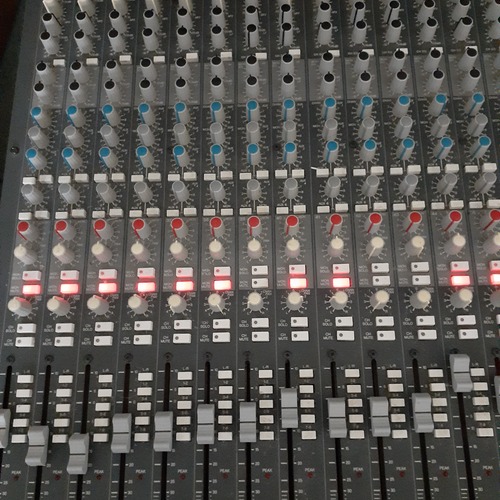
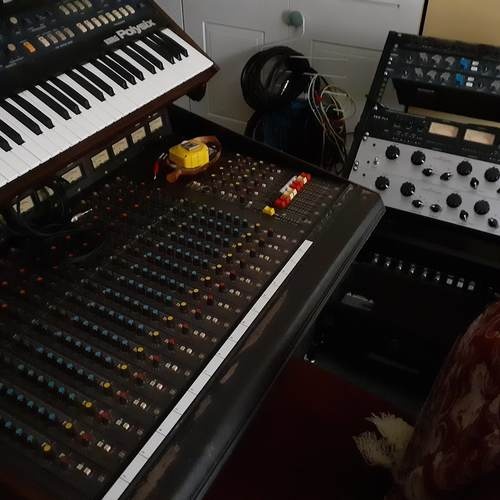
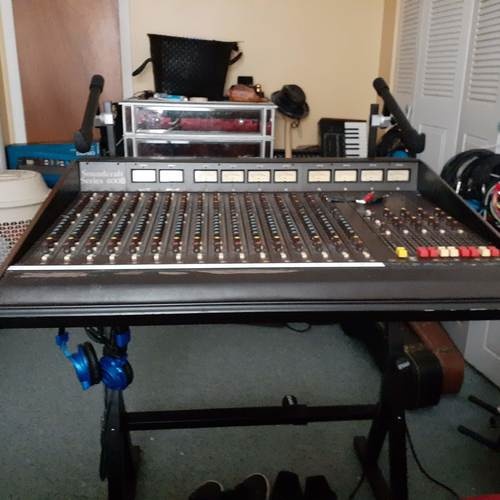
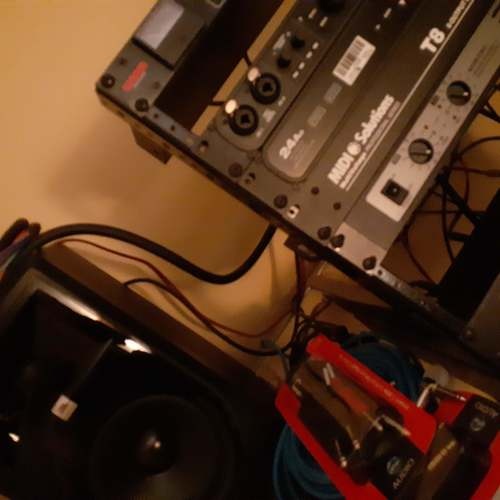
I purchased a 32 channel Topaz project8 for under $1k a few years back when my home studio outgrew my soundcraft 400b 16:8. I wanted to go to an in-line format with 8 sub groups and a full meter bridge but my room is a shoebox. I have just enough space for a mackie 8 bus or soundcraft spirit with 32 channels, neither of which have pleased me sonically when I've used them previously. A souncraft ghost would fit the bill but the depth is a little bigger than I could deal with. This left the Soundtracs Topaz and Solo Midi desks or the A&H GS3000 which are basically the same other than the preamps which are discrete in the solo, analog devices IC based on the Topaz and a discrete/IC hybrid in the late 90s Allen & Heath stuff. None are really great, just different and I don't track through my desk often unless I'm submixing synths, so not a real issue. The topaz was by far the smallest option at 46"×27" and I was able to pick one up from a nice synth player in Princeton NJ who bought his new in the 90s and was going over to a cont rye ol surface in his home studio. A few days of haggling later the topaz was in my SUV. Overall the topaz is a very good sounding mixer with most of the features of a large format in-line desk. It sounds much like a toft ATB and has an identical feature set. I mostly like it. Given my space requirements I doubt I could do better and certainly not for under a grand. The console gas been completely reliable so far but will probably need a recap soon as its pushing 30. Not being modular service is a scary prospect but when I finally need to do a tear down I'm considering some small modifications. One of the coolest features is a 2 band shelving EQ on each monitor path in addition to the 4 band wein type sweepable mids eq on the main path. So here's what I DON'T like about the topaz: No small fader for monitor, just a knob like on a toft or ghost, but an extra fader woulda made it bigger and then I wouldn't have room for it. No stereo aux sends. Only 4 of the 6 mono auxes can be used per channel at one time and aux 1 and 2 are fixed pre fader internally. You have to disassemble the whole desk and desolder 64 jumpers to set them post. A switch woulda been nice so i could choose. Monitor ins, direct outs and the 2 stere recorder feeds are set to -10 stock. If you want +4 pro level you have to open the whole desk and guess what? That's right, desolder jumpers... 68 of them. Unbalanced trs inserts are post eq only and are set for about 0dbu so care is needed gain staging your ourboard. Non-modular design means you can't acquire spare channels to swap if one goes down. All of the outs are unbalanced. In my small space this isn't a deal breaker. I don't have noise issues but the rest of my gear is balanced so I have a lot of Art T8s and some radial stuff around for gear that doesn't like interfacing directly with the topaz. The fx returns are also unbalanced on goofy stereo 1/4" connectors. If you want a mono return you have to use a channel line input or monitor input. The monitor path can only be merged to the 2bus via the center section. If you want to merge to a stereo sub group you have to physically patch the monitor outs into an fx return and route that to the bus adding another tl072 stage or you could go to a pair of panned channels but thud adds even more circuitry. The 4 stereo aux retutns can only be routed to the 2bus or to 1 stereo subgroup... so aux return 1 can only route to group 1/2 and only if 1/2 is assigned left right... return 2 goes to 3/4 etc. If you want your r er turns routed to the same group to say compress 3 reverbs together it has to be the main stereo bus. Or you have to return to open channels or use an additional line mixer or something wacky. The externsl PSU is mainly a large transformer and a good portion of the circuitry the +/- 18 and +48v rails is jammed inside the desk. Because it's a classic linear supply (as it should be) this means good ventilation of the mixer is a must to avoid burning the regulators up. The supply is also on the weak side. The desk can be pushed pretty hard but I suspect a beefier PSU with a lot moe current on demand would open the sound up further and provide more punch. Upgrading the filter caps would involve ripping the whole desk apart though. Otherwise I really like this desk. It cost a lot more than a mackie new and you can hear the difference. Could I have maybe done better for the money? Maybe but I would need a larger control room and that ain't happening right now. If I move the studio out of my house I'll probably look around for a more professional desk but I might stick to an old soundtracs like maybe an il32 or jade. Being a lesser known, defunct brand the resale is on the low side compared to the better soundcrafts. Good value for dollar and the topaz is a really impressive desk for its size.
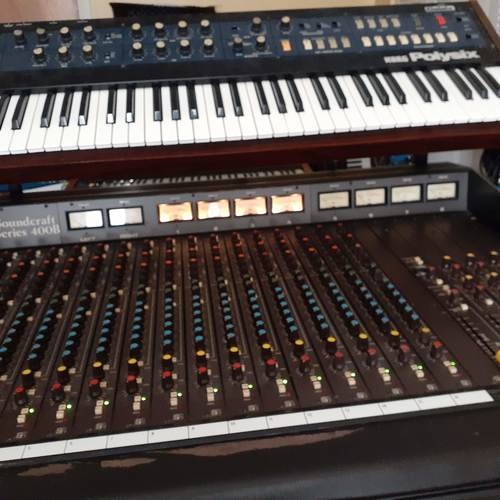
I think a lot of solid dudes will back me that soundcraft boards of the 80s nd 90s make great mix room consoles. Mine was meant as a 16:8:2 monitor mixer for live. It has full submix in stereo on 8 sub masters but no aux/fx return card n mine so my timebased effects kinda route a weird stupid way, but I knew that going in. I use a lot of stuff ITB for verbs as well as my outbaord so its fine. The submixes. Yes. My submaster setup is hella developed and I need at least 3 of those busses going all the time to be truly happy. I do this kinda not-so-brauer, post-NY compression thing a lot. I keep refining my personal methods for my mediocre little home post-room. Mine is all serviced, upgraded in a few places. Sounds very tridenty. 80 series. EQ is wonderful, if you get silly the opamps in it add a little hiss, just a twinge. THhe balancing on this board stock sucks because they didn't bother but I never have issues. There are mods to that effect plus I have a slew of radial and jensen ISO transformer boxes. ISO transformers of good quality like this tend to improve your lows. A lot of guy put tweaky burr brown opamps in these and open them up but for a lot of what I do working with the people I work with an imperfectly defined sum with some haze and smoke can be really helpful. The board is well defined and musical but forgiving and flattering. Man-sized stereo width. Preamps aren't bad. Line amps are just the preamps padded down and you're thinking 'ow, shut' but its fine. They bring some vibe back to all the digital stuff that goes into them. I just wish I ahd room for a larger frame ebcause I would do it or buy a later model. Any 2 digit numbered soundcraft sounds similar. A lot of the 4 digit ones do too. And they're all very pleasant to work with and have a nice 70s british sound. Early Bowie all day....
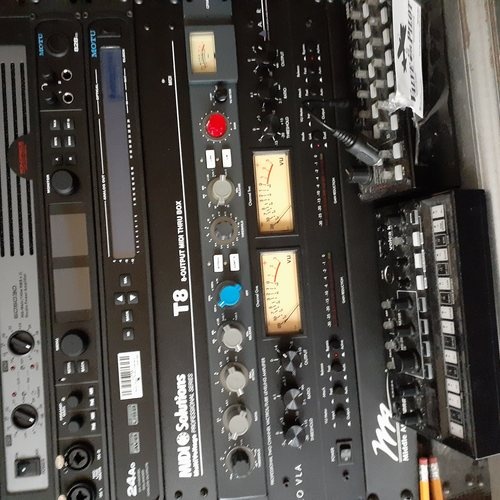
Setup was a bit of a hassle and having to update firmware via ethernet is a pain having gone laptop now but overall a great interface. This has a little bit of everything as the centerpiece of your home studio. Lightning fast thunderbolt, decently fast USB, a couple really transparent mic/instrument preamps, 8 line ins and outs for synths.... stereo FX send (you have to use line ins to record and monitor the return though)... dual headphone amps. MIDI. Onboard DSP which I haven't fiddled with too much yet. Expandable with other motu products over AVB or with anybody's preamps and converters over spdif, ADAT/smux or AES/EBU. Paired with a good rack of focusrites over SMUX this thing can do a lot... I'll probably be getting a new one to use as my gateway to the computer with this slaved over AVB when MOTU gets around to making a thudnerbolt3 version. I highly recommend this interface to anyone who doesn't want to get caught up in the apollo plugin racket. If your PC is fast enough to run all your plugins native in real time and you're using a lot of hardware synths like I am at home? Get a MOTU.
If you already have an AVB equipped centerpiece unit that will run to your computer via thunderbolt, this and the sister 24Ai input unit is a great addition to your studio. Fantastic converters.AVB allows you to send a huge channel count along with word clock data at ridiculously low latency. The AVB connection will occassionally fail at power on and you'll need to fiddle around for 5 minutes to get the network running. That's the only issue I've ever had. UPDATE: the networking issues disappeared a few years ago with a really solid firmware update on all of the motu avb gear, still happy with these converters, you need to spend a lot more to get better sound... also, whenever I've had an issue, even though its invariably the host computer's fault, motu tech support is right there 9 to 5 eastern time and they ALWAYS help me solve the problem or at least bandaid it well enough to meet my deadlines
This takes off where the old platinum octopre left off. This might be the best sounding 8 pre under a grand. Sometimes used the clarett can be found for 500usd! For that money its unbeatable. Nothing else delivers analog circuitry and DA converters of this caliber for $700 or less. The unit is fairly sturdy and very easy to use with dedicated gain controls and 2 function per channel buttons... inserts... these are just specs. My 1 big complaint is that you can't get all 8 preamps out digitally over SMUX at 192k. It would be nice to have something like an AVB output but focusrite is tied to dante and only for their expensive pro studio-grade stuff. The 'air' is neat sounding but isn't exactly the same as changing the impedance on an ISA range. Like a lot of affordable discrete focusrite designs over the years you can hear the soundcraft lineage as much or as the neve lineage and that's okay. I dock it 1 point because it foolishly has 2 preamp inputs out front and all the other connectors on the back where they belong... and for the digital connectivity. I don't think anything in this class and form factor can do better but its focusrite and they've set the bar really high since getting into the home/project studio market. I really think a piece of this caliber should be designed for normal rack use with patch bays, snakes or breakout panels etc. The only comparable stuff is by audient... which is interesting because Dave Dearden wound up at soundcraft for awhile after DDA was bought up. I've not tried the audient stuff but I suspect the clarett and ASP preamps will perform similarly... although on their desks the audient preamps are actually transformer balanced but I don't think they are on the 1u 8 channel preamps. And the focusrite just clicks in cheaper and is of very high quality sporting very nice converters that keep up with anything from avid, apogee or MOTU.
I have 2 small gripes. only 1 gain reduction meter that only shows reduction and can't monitor input and output. I would like to see what's going in and out in stereo sometimes. Gripe 2, its always linked. This is mostly good but sometimes I want unlinked stereo bus compression. I know this isn't very SSL and this is a budget SSL copy mainly, but as they've tweaked the feature set why not give me unlink, 2 meters and make them assignable? For all that whinging I love this compressor. It sounds pretty SSLish and has that glue everyone (myself included) has a h@rd on for. It has all the attack and release constants I could ask for. It has a very responsive threshold control allowing me to just tickle the meter in 1.5:1 ratio as I like to, no plugin jackassery where subtle settings produce SLAM for the meathead market. Slam if you must, but it does so much more in capable hands. Finally it has all the ratios one might need as well as a very well implemented sidechain high pass for those club pounders that just pump the thing way too hard. I know this was built to a price point but it outperforms the G bus in many ways thanks to the augmented feature set while maintaining those non-linear feeling envelope curves and the mysterious knee that never does ya dirty. Knobs are mainly detented, other pots are smooth and of good quality. The meter they DID give you is super fast and accurate. XLR and TRS connectors feel solid. Heres the real jam on this guy though. Its switchable from an electronically balanced IC outut stage in true SSL spirit OR a discrete transistor transformer balanced stage with cinemags. They're heavy, use all 4 rack screws, okay? I gave this thing a bit of a workout day 1 with the IC stage and was dead pleased. Then I took a mix I finished with ITB compression and looped it through. I tried it with the VST buscomp with Warm comp in bypass with the transformers off, then the transformers on, then bypassed the VST and did comp with IC output and then switched to transformers. In both transformer use cases the cinemags added an audible sheen to the top, weight to the bottom and a depth to reverbs and delays as well as pushing the stereo field outside the speakers a bit. Headphone width was really noticeable as was kick punch wether the comp was in or out.... without the transformers the mix of DI synths and chopped samples with a bit of guitar became less interesting and the song's balls shrunk from elephantitis size to "I just took a dip in freezing water". To be sure I wasn't having a honeymoon reaction I also recorded a pass of every combination I mentioned and waited a few days, then sat down and lipped between them on my favorite tannoys. No change in my perception! I didn't label the tracks and when I looked at the file names, lo and behold the compressor-in, transformer-in tracks were my hands down favorite. Its not science exactly, but its rock n roll science, which is good enough for Uncle Jim. You have to look at the equally wonderful API 2500 or their JDK audio budget version to touch this performance. This is one of my 3 favorite API designs of all time the others being the 512 and the 560 (the only graphic I know fit for use by humans) so I'm shooting high here. On sale on amazon of all places this compressor was very affordable at $600 and tax.... a used JDK is $800 all day. Its also 2u and I have rack woes all the time. Every big gadget I get could overturn the balance and force me to disconnect a 1u or two for space or buy yet another rack and that makes a 2u even more expensive. Especially if I get another rack and then get depressed at how empty it looks and wanna fill it. OH THE HUMANITY! Hardware is a cruel mistress, ain't it? This has not come off my master bus. It moved from one console to the next this week. It is not in the patch bay, its just hardwired as I don't want to be tempted to experiment. I think it would be a waste of time. Nothing I own will outperform this unit in this roll. For weeks I've been tempted to pull it from the rack and give it a big hug. This has made my desert island island list. I give this 5 stars as my complaints are far outweighed by the responsive controls, familiar interface, predictable performance and superlative sound quality. The metering and unlink will not be a problem for most folks, only serious compression connoisseurs and control freaks. Buy one. If you can mess up your music with this thing you should stop mixing and just hire me. I'm home all the time these days and I'll fix you up right. **EDIT: be sure to read ALL my compressor reviews**
If you need an excellent analog stereo EQ with dual ganged controls that are detented this thing sounds excellent and is perfectly matched. Utterly phenomenal value for dollar. Very british sound in the trident/soundcraft/midas style but almost fully parametric! Sounds good broad and van get surgical, incredibly versatile, highly musical filters. Just passing stereo through it adds a little something to it. It of course can be used mono if needed but not dual mono, so what? For just under a grand its hard to deny the 1974....
Is this a pultec? I s there any chance a behringer product will be a vintage pultec? And that at under $300 new it'll have magic inductors?If it was, who would know but me and dudes like me who have had the privilege of using some old cool shit like this.What you get here is a passive EQ that acts a lot like a pultec. The amplifiers should be retubed right outta the damn box. The knobs are kinda detented, you know? So in a pair you could be fooled into thinking they match but use your ears. Use your ears ANYWAY. What sounds good is good. They have that open high end thing you want once some GE 12ax7s and mullard 12AT7s go in. These are a PITA to open by the way. How much mileage you get depends on your application. For my uses which are very specific and light handed they do the business. Big thumbs up. Its not apultec but find me another EQ that soudns this good for this kidna coin. Really, try me. Maybe a used Orban or Ashley but they don't sound this good. They work. They do a lot more. This DOES add something extra when you boost, maybe not what a real one does but it doesn't suck. Don't stop saving for a real pultec if you want one but remember this is an option and you can get piles of them if you have the space. I might buy 2 more. If you wanna get fancy you can mod a pair for better caps, mybe inductors and transformers but there's nothing WRONG with this unit stock. My story is that I mentioned to my best friend Uli did these guys and since I'm the defacto mixer for everything he ever records he just called me one day and said "get anything from UPS?" I was like no, but they came the next day! Surprise present! In this context they're really outstanding.
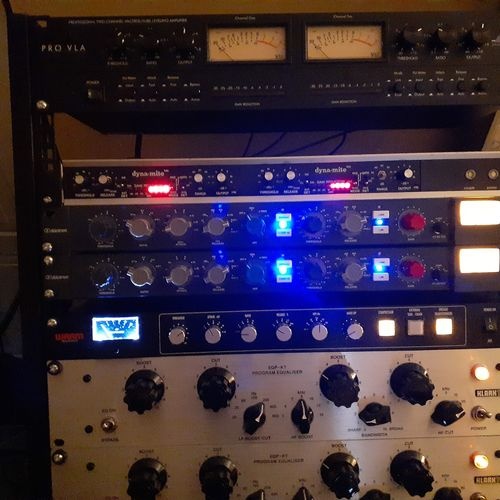
I have 2 of these and a valley people, these sound and behave exactly like the earlier dynamite in a sturdier rack case, see that review.... excellent VCA unit, versatile and extreme if you want it.... not for the timid or uninitiated
This is a great sounding fet compressor for hard rock vocals. As one would expect, the self noise is a little higher than an 1176LN. It's still within acceptable levels under same operating condions and the revision A output electronics are definitely vibey. The build quality is exemplary. Don't discount the bluey on other sources though, if it's not right on a vocal it way just the thing for a kick, snare or boring campfire acoustic where the fast 1176 time constants and a less than pristine and clean sound is desired over VCA dynamics control. Even when not providing gain reduction audio run thru bluey acquires additional weight and harmonic content within input and make up set to unity. Due to some CLA mods on the ins and outs to mimic his SSL insert buffers I find I prefer to run it as an external effect in a daw rather than on console inserts. It definitely sounds best that way even with the reconversion while mixing. Its subtle though. I might even be imagining it or it could just be that my desk has tlo72s post eq buffering the inserts and whatever is driving my converters is probably more modern. The other additional feature is a blend knob. This seems to take the dry signal from after the input amp/knob which makes this control utterly worthless to me most of the time. If you set your makeup properly to match unity gain when the bluey's insert is bypassed the dry signal will always be way too loud. In order to get a true 50/50 wet dry at 12 o'clock you need to gun your makeup gain to ridiculous levels which usually requires a pad on the return while upping the noise floor and THD from the output amplifier in ways that aren't always tolerable to me. Otherwise it's a great vintage style compressor with a double serving of 1176 character. After spending a few LPs and singles with the bluey floating around the studio I'm ready to commit rack space and wire it into the patchbay. I'm not sure how they pulled this off at the price point. Not for those new to the 1176 and its quirks, buy a distressor if you want familiar vca behavior that can reach back in time to the 60s in some of its many modes. This is not a swiss army knife, it's a very specific type of tool that can do many jobs, but it doesn't have a corkscrew or a toothpick.
My dear friend Dave Lesage once said "I love the gain brain, its the only compressor you can't hear it breathing." I'm not sure if I agree with this all the time, but ti CAN be true in a lot of use case scenarios. This is a FET circuit like the 1176 but there the similarity ends. Its cleaner when used reasonably and dirtier when used as an effect. You wll want one for every drum track but kick, but you can do kick with this and get a real frank zappa sound... You'll need an Alison or Valley People lunchbox for this guy so you might as well fill all 10 slots. I really think when urei was making those 1u fet compressors after the 76 they were trying to keep up with Paul Buff's gain brains even though Buff was moving on to VCA with the dynamite, 610 etc etc. Paul's designs aren't hit or miss. Until he passed every Allison/Valley unit was huge bang for buck and still is although some of these thigns are getting scarce. Its those thigns that came out under the blackface valley international brand you need to steer clear of, they're not BAD, they're not as useful though... but lunchboxes, gain brains, kepexes, gatexes, dynamites. Yeah, good stuff. Not fancy, not glamorous, just does its job and sounds great. No magic line amps or whatever, although the amps are capable of some nice dirt, but its not the mystical magical 1176 make up circuit. And it doesn't need to be. Sometimes you just need lots of gear that works well and these do exactly that. I do slightly prefer the 1 to the 2 for some reason, maybe its just that the allison version is prettier than the valley people version? I dunno. I never have them side by side. I've used a lot of GB2s and own GB1s because I don't like 500 series anymore and like these dedicated old rack systems by dbx and valley because it limits your options to just what they made for it.... the problem wth 500 is everyone is making stuff for it, so what do you get? It becomes distracting. A different comrpessor in every slot? Why?
I recently acquired a well loved 160x from a nearby hire company that's going under in the pandemic. I've never had an X. XT and A side by side until now.... though there have been few changes to the circuit apart from a switch to a 3rd party copy of the VCA over the in house 70s/8-0s version having tis 80s X side by side with the A I prefer the X. it actually sounds better to me in subtle ways. The time constants feel a little more music and non-linear.... the old fella is actually a more music device and I think it will see more action than my kick drums. I like this as much as my valley units and that's high praise. The reputaton of the 70s and 80s units is well founded and now i want a 160 or 165
I have kepex IIs. As gates they are slightly better than kepex Is. The I was used to make the 'trem' sound on Floyd's Money by keying the expander from a metronome and these do that trick, but the gate is faster and more transparent for actual gating. These have been reissued in 500 series recently if you don't want to have to deal with an old 800 series rack with terminals on the back... the gatex is also very close as are the expanders/gates on the dynamite and 610 by VA. Cracking great stuff.
you want an old toggle switch version with the valley people VCA.... its not quite a dynamite but its got that hard knee sound.... fucks up overheads and room mics, reverb busses in pairs but also is perfect for taming bass guitar! use gently while tracking or hit harder while mixing, the lows will prevail.... not as cheap as they used to be but a lot of compressor for the coin... very sophisticated detection and time constant circuitry that is unrivaled in the rest of the 5xx line although other compressors from this series provide similar compression but with gating or ducking in stereo but less control.... did I mention the limiter, its NAAAAZZZTY a lot of VCA gain reduction on the cheap that goes from utilitarian to rude easily.... don't expect distressor coloration but it has a character when overused that's ow on bad artifacts and big on helpful ones as well as lending some grit; or if used with subtlety it does the job and gets the hell out of the way. The later ones are great too but they are really characterless being even cleaner, even when slamming.... they probably went from VA VCAs to THAT VCAS or something. I've had these in my live racks and though they were sold at one point they came back and live in my bedroom mix space now...
dbx's most underrated compressor... minimal control sets tickle me pink. I use this a lot when mixing to grab stuff that I want to sit in the background. When you print this guy on a mono source it pulls back in the mix in a magic way. Overeasy compression might not be as cool as vari-mu or opto stuff when it comes to 2 knob interfaces, but it has a place. Try one of these in parallel when the dbx attack and release constants are too grabby
I think this will suit a lot of people for alot of sources because their only exposure to an 1176 is a plugin. This is easier to use and sounds at least as good until you start really flattening bassy sources. I have heard talk about these guys being noisy, I have had the output up really loud on a heavily compressed snare track with lots of bleed in the mic and it was fine. Didn't add any noise and it really didn't amplify the bleed in a way that caused more problems and the added snap on my snare was well worth it. This guy's output amp is a bit less colored than an old one, but then again you don't know which revision you have at someone else's studio unless it has a blue stripe or is plain silver... you can pay a lot more and get a UA reissue or pay double for a purple audio and probably not be that much happier. Those units are better at smashing things to death, but the time constants and general flavor are there with the warm. It dials in fast if you know what you're doing. I also have a black lion bluey but they're different revisions and the bluey clones CLA's personal blue stripe so tis not a valid comparison. Lets say they are different in timbre but can be used for the same applications generally and get closer the more conservative your settings are. I kinda wanna do a shoot out of all the clones on the market right now... get behring--errr--a klark teknik, pick up some other options like the revive clone, a purple and just round 'em up. try to shoot them out on their own merits as fet compressors, not even include a vintage 76 or a UA reissue. My verdict is that this is a useful addition to any studio at a bargain basement price, not as cheap as the Klark, but still a heckuva deal.... there's been a lot of comparison between the klark and this guy and I gotta say i don't expect to hear a lot of difference when I get around to buying a klark. The used market on Warm stuff isn't huge but you can get a good 200 dollar discount if you scan around patiently making it just about the price of the behringer klak teknik version. I really might get another one of these soon. It only falls down when using higher ratio settings on bass heavy content. It definitely sucks more bass than an actual 1176 in good working order. All compressors WILL do this to some extent and the warm is tolerable, but if you're expecting a real 1176 level of bottom when you brutalize a bass guitar or kick then be prepared for a bit of a elt down. I suggest not brutalizing those sources, you don't need to. A word about ratios for the uninitiated. Yes, you can do all buttons in. That's not to say you should. You can also combine 4 and 8 to make a 12:1 ratio that sounds different than using the 12:1 button... and using 4 and 12 gives you a 16:1 ratio in theory but it has a whole different feel than you expect based on the 12 and 20 settings... the 16:1 in between setting is a great way to catch overs while tracking vocals set so its only tickling the loud bits. The time constants have a different slope to my ear when you combine 2 or more buttons so experiment and learn your 76. The warm has all of these quirky behaviors. for day to day tasks my WA76 is serving me really well. Out of my recent acquisitions its making me the most happy because it can pretty much do anything I throw at it and its not tweaky or difficult to set.
the eureka is an affordable, well designed channel strip in that transformer balanced, all discrete, class A preamp style (ahem neve). The Eq is musical and hard to screw up although if you need surgical look elsewhere. The compressor is a FET style that's not slavishly devoted to the 1176 (for better or worse). You can swap the EQ and comp order and you can sue the different components individually. I use the preamp and EQ pretty regularly with an RNC in place of the channel comp set to peak limit transparently into the DAW whereas I use the compressor separately or the comp with the EQ while mixing. Sometimes I overload the preamp although it doesn't overload as nicely as higher end designs. Still, a fine piece and highly undervalued on the used market. At the very least it gives me a nice clean transformer balanced preamp with filters and a flavor of hardware compression not covered by my VCA units or the RNLA (although the LA and the eureka comp have some common ground at extreme settings).Real value for dollar here. My little stereo home rig gets a third channel if I use the A/d card into the optical in on my soundcard... I rarely need more than 1 channel at home though. More of an electronic music and mix studio in the rec room here.
sonically in the LA3/LA4 camp... way more fine control available. Just a great stereo comp/limiter. Real winner for live electronic music... maybe a bit heavy handed for buss duties when mixing rock n roll or pop, but worth a shot in parallel on sub groups. I love the guys at FMR

DAWs 10

I'm mixing hours of live material for my bst friend. He records into cubase sx2 on a win xp svc pack3 machine. Shit you not. Its stable. My copy of cubase 8 or whatever that I never updated wound up migrating to my new machine and then wouldn't see my motu gear. So he offered to buy me 11 after a friend made sure the SX files still basically opened, edits and time signatures etc, in 11 pro. It took my a full day, like 12 hours of fiddling to figure out that my usual MOTU internal routing isn't to cubase's liking.... so I made a cubase template for my routing and now I just kick that shit on to work on Mike's stuff. I dock 1 star for being unlike every other DAW I have in how it deals with my MOTU's multiple monitors routing... and also for the dreary stock, gray look.... but all my outboard cheers me up fine. It also can't import basic mixer settings from older versions, so i have to reebuild any routing on this stuff,however I was ererouting to my console anyway. Otherwise this the best cubase ever. A real contender to this day. SX was my jam for 3 versions so this is like going home. The latency compensation allows me to use stuff in loops in real time like protools HD systems I think Harrison and Steinberg need to team up and build the world beating DAW with the sonics, perfect latency compensaton track by track.... and workkflow both in mixing and midi.... it could be called Innuendo LOL or Mixbase 32C OH YEAH! USB dongles are bullshit.
I was an early adopter of Fruity Loops. I tried version 1 as a highschool senior and fell in love with its ability to load up and edit an unlimited number of my homemade samples and then sequence them with an easy to understand TR808/909 type grid layout. I've been with Image Line ever since. This gets five stars because of how innovative it was at the time. Compared to rebirth it was harder to get useable stuff out of, but it was way more versatile and it sounded as good as what you put in. THis was such a chameleon and combined with hardware synths and something like acid for loop manipulation you really were at the cutting edge of computer music. The toughest thing was syncing it all up back then. Everything had to be done in little bite sized pieces and the workflow was tedious at best!
This is a really simple, bare bones, FREE multitracking program with solid editing features... I have it, sometimes its nice to do simple work in a simple environment. Its also not much of a CPU or RAM hog for slow systems.
I give this 5 stars out of affection and nostalgia.... this little piece of software takes me back.

Keyboards and Synthesizers 37

I'm over the moon for my prophet 600 right now. My unit has seen some serious road time and has been hacked into at least twice, but one of the hacks was for the GliGli mod which corrects the knob resolution to eliminate stepping, makes the envelopes a lot snappier and adds some prophet5 modulation features via the multi encoder and embrane buttons. Its a great upgrade and it made me open to buying a synth that has always gotten mixed reviews. What the prophet lacks (noise gen, what?) it makes up for in sound quality. The midrange is superlative on this board and the cranked resonance on the filter is the stuff of legend. Its a little more nasal than a prophet 5, but can cop the whole prophet thing better than a the new prophet 6. Its more lush and sits in the mix better. Cuts where it should, never where it shouldn't.
I got this well below retail as a black Friday deal. I don't always use sweetwater, but my sweetwater rep really looked out for me this holiday season. Shoutout to Jim Black! First off, I wish I had gotten the bigger 16 voice. The couple extra features like the compressor I don't miss, however, voice stacking is kinda weak when you go down to 4 voices. For the jump in price though I really wish Korg had added a fully variable high pass and that burned me on sending the $400 extra for the big one. On to the synth. The main engine is a bread and butter early 80s poly. It falls a bit short of the Jupiter8 having only 1 fitler mode (12db/oct) and 1 LFO. it schools it with wave shaping on each VCO and a nice ring mod in addition to the hard sync option. To my ear the fitler character is Japanese at lower resonance settings, very Yamaha-ish (does a good cs80 impersonation) and as resonance creepy toward 50% it gets oberheimy. This synth has very primitive routing capabilities. Its backward looking in a cool way (most of the time). The analo engine architecture makes me think OBX. Not the OBXA with extra features, but the original OBX. The sound is right there in OB/CS turf. Preset 1 is blade runner brass and its actually really good. Most Vangelis based presets suck. This does not. The synth has THAT sound. This thing wouldn't have been worth the asking price to me if it weren't for the array of digital options. The user oscillator is genius, although the limited modulation routings mean that each oscillator type is only as good as the internal modulation capabilities programmed by the developer be that Korg or a third party like Mutable Instruments. All that said, the ability to load wavetables (!), various TX81Z like FM oscillators of varying complexity, additive modules and physically modeled plucks etc eally expands the versatility. And you always have that ebating analog heart of the VCOs, filter and VCA to reinforce all that. This is a true hybrid. The stock waveshapes are really analog and the digital oscillator is as versatile as all get out assuming you're willing to drop a few bucks for add-ons that go beyond the freeware options. I have got a lot of cool stuff in my user oscillator right now. Of course, if you need a plain old saw so you can tune one VCO as a sub and detune the other an octave up? The user oscillator can do that. Its a digital saw, but surrounded by all that VCO goodness? Its okay! The digital effects sound stunning overall and if you want a more analog sound there are 3rd party addons that can provide that. There'ssoem good choruses out there as well as a fixed frequency rng mod, comb filters, you name it. Of course, any digital effect without a mic control is fully digitizing your analog synth, but the conversion is great to my ear and we're all digitizing our stuff when we record into a computer anyway, right? This synth needs another LFO. Period. It also needs a few more routings for the envelopes. This could be achieved with the shift key. Hopefuly now that all the bugs are worked out in firmware 2.0 korg will see fit to add these features. I'm still docking it a star for the limiting architecture. Limits are good, but a little more deep editing would help me a lot in patch creation. Sorry Prologue, you have a great sound, but when I'm trying to realize a sound I'm imagining using your more modern features I'm wishing the whole time I was using a Peak. Maybe if I buy a Summit I'll be happier with this synth as-is. Its not an apples to apples comparison so I shouldn't make it. The other reason I dock it a star is because I like windows at home and the midi drivers and patch librarian (which controls transfer of oscillator and effects as well as patches) is very wn10 unfriendly at this time. Its a frustrating process getting it to work and every other time you try to use the USB you wind up having to start from scratch and reinstall, reassign midi ports. I'm sure its better on mac. I'll try it eventually. Then again, macs aren't so USB friendly these days LOL Korg needs to get their shit together in this regard because we all know Microsoft won't. Work AROUND win10 guys... they won't work with you. The prologue also has a really fast and comfortable keyboard with modern sharp edges to the black keys. You really know what key you're hitting when you perform live on this thing. Like my DSI Mopho, this synth has the modern placement for its pitch and mod wheels and that annoys me, but now that I'm using 2 synths with this arrangement I'm getting used to the wheels being up by the synth engine editing knobbies. It'll cease to bother me in by summer '20 I'm sure. Al in all I'm really fond of this synthesizer. Out of my current production synths its totally unique. Even used only as an analog poly it really has a totally different voice than my DCO based DSI. Is it a Prophet6 or OB6 killer? No, but neither do those synths beat on this one. They're all nice. Up against the Mopho its softer and more lush, darker, mysterious.... capable of very Japanese sounds from Yamaha to roland that my Mopho struggles with because it has so much presence and punch. Patch creation is a breeze compared to the mopho that ahs layers deep editing if you want it. I would recommend this synth to anyone. Even a beginner can easily start with an init patch and build a great sound with no hassle and minimal shift/menu use. Its a fast synth in every way that is geared towards playing. I would not sell it unless it was to get a 16 voice one.
I was never impressed with the polysix until I got one home, but I didn't spend a lot of time with them and mainly did bass sounds. WHOA WRONG. This is like John Carpenter city.... I don't think he used one but everything it does is like a carpenter flick. Real horrorshow. The chorus is cool, the ensemble is wooly and lush.... the phaser is pure horror movie. Okay back this up. Architechture is a juno 6 basically. But it ahs VCOs.... but no high pass... but the modulation is chorus, phaser or string machine ensemble, OTA and BBD stuff, wicked. Dark and moody Also, no simultaneous waveforms, just Saw, Square (adjustable PW) andPWN with its own LFO dedicated. Yup. But no ADSR modulation. Bummer. But still. The SSM oscillators and fitler are midrangey and not upper midrange prophet turn, lower midrange nastiness. And there's this wicked sub oscillator. Divide down 1 or 2 octaves. And and and.... Its simple but capable of snappy plucky, huge strings, pads of weirdness and you name it. anyway. Good synth. I have the kiwi6 mod on mine. I find it to be less abrasive and far more ush than a juno, though less punchy. Don't let anyone say the envelop is less snappy. Its fast and tight. Its deceptive because of the swirly free running VCOs versus retriggering DCOs. On day 3 I'm giving this another star. Damn does it sound good.
see my review of the peak.... this guy addresses most of my gripes with peak by stacking 2 up with a lot more filter options.... and now you can make your own wavetables. Desert Island jack of all trades... won't replace your prophet or juno, but can do a decent job at bread and butter patches. Warm and nasty or cold and digital, it leans more towards an analog sound than the argon8 but but is thoroughly capable.
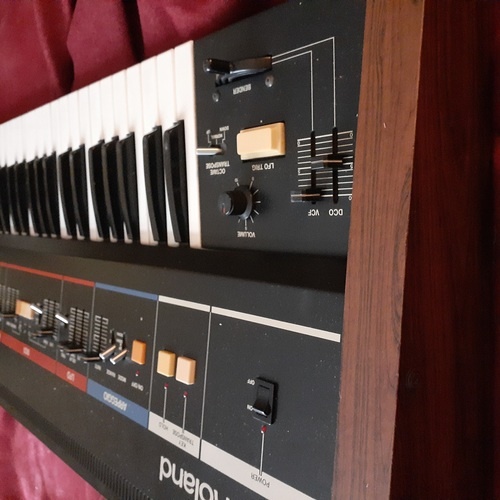
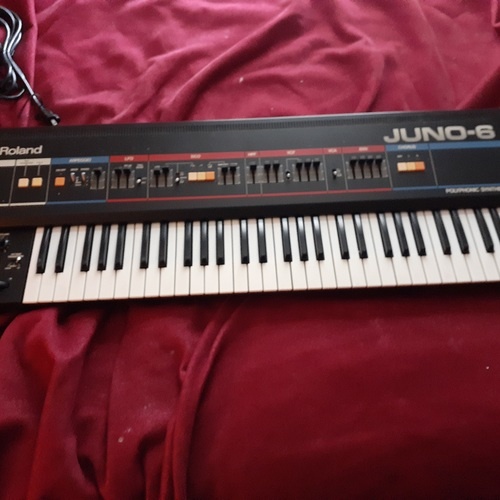
My particular unit is a 1st year juno I bought from the original owner peak pandemic. I even have his receipt from the hollywood guitar center back when it was the only location. She probably needs some general maintenance and professional grade cleaning but worked beautifully right out of the gate apart from a slightly miscalibrated envelope on 1 voice. I almost hate to return to spec because its vibey as hell to have 1 voice drcay and release a little differently at what feels like random times. Lately the chorus has been acting a little weird for a little after power on so I guess it's time for a belltone trip. What can you say about the juno6? It's an icon because of its twangy DCOs and snappy envelopes. Its got that classic era roland filter sound. Most importantly it's a live performance instrument with a decent keybed, simple but versatile architecture and an all slider programming interface that provides immediate visual feedback like the arp odyssey. The arpeggiator trigger is a v-trig that will work with almost any source that approaches 5v with a fast rise. It predates midi and doesn't offer patch storage. It doesn't have Roland's din sync technology so adding midi requires hole drilling. Wouldn't a juno60 be a better buy for the storage and easy midi retrofit to the existing din jacks? **NO!** Why not? High pass filter. The 60 has a 4 position switch masquerading as a slider for the HPF due to 80s processor constraints imposed by the patch storage. The juno6 has a continuous HPF that allows for bandpass style manual sweeps not to mention the obvious benefit if getting exactly the low end response you need rather than compromising it using external eq. You don't need patch storage on something this basic and obvious. If you can't get a sound back on a juno6 manually you need to give me yours.l as a backup. Also, as great as the 60 sounds, whenever I've had a 6 and 60 side (and this was before I owned mine) the 6 just had the sonic edge to my ear when set very similarly. Just a little fuller, faster... the 6 soubds better with the chorus iff. The chorus is sweet on both but i dont absolutely require it on the 6. It's an always on thing for a 60. I dunno. Its subtle but I bought a 6. While the juno family as a whole are not the best at anything, they CANNOT MAKE BAD SOUNDS. The limitations make this synth all killer and no filler. All Juno's have a distinct family vibe that's easy to love and the 6 is the best sonically **PERIOD**
imagine a a sophisticated softsynth like serum that has hands on control and better sound quality.... and then some. Big learning curve but worth it. Update.... I've had it for a week as of tomorrow and every day I like it more.
this is a slightly stripped down late model odyssey, the darker one.... it has some differences in response in some routings and the ring mod is different but if you select the type III filter from the korg RI it's pretty damned close in sound. External audio can be modded by vco1. Its whacky and cool. No S&H gen, but how often do you really use that? Has the knob for pitch bend, blech. No high gain XLR output. It's very heavy compared to the RI due to the case but not too heavy. Eminently giggable, heavy but sturdy, it's a suitcase, yo. Great addition to modular or semi modular rigs needing some Odyssizing.
traded my like-new Odyssey RI in for a floor sample reissue with a Korg analog sequencer.... way more useful to me than those unplayable little keys! I am giving the Odyssey module an extra star for not bothering with those dumb little keys. The module and sequencer take up pretty much the same amount of space as they keyboard version and the module sits nicely on top of my Digital piano when I want a quality keyboard attached to her for performing.
The SE-1 is the evolution of Studio Electronics' famed MIDI Moog. At its heart the SE-1 is very much a rackmounted, Mini Moog with full MIDI implementation, but there are a few useful additions to the Moog package that make this synth way more versatile. It features a ring mod, dedicated LFOs (so you don't have to sacrifice an oscillator to LFO duty like on a real model D) and a multimode filter. The filter of course has the classic Moog 4 pole 24db/oct low pass ladder and its wet and thick as can be, but it also can be set to an oberheim 2 pole 12db/oct low pass or band pass and the oberheim filter coupled with the moog oscillators and snappy envelopes provide a really distinctive sound for pads and leads. Using the ring mod and/or frequency mod features you can get some Xpanderish sounds on the less complex end of the oberheim spectrum. She's not terribly attractive, but she's built like a tank (weighs a ton, but its not a synth you move once its plugged into your set-up). At $400 used this synth is a no brainer as Moog doesn't offer a comparable product in this price range. Also, this synth sounds very different from my Sub Phatty. Setting the 3rd oscillator to sub provides a much different sub bass response and the oscillators in general sound a little more hifi. In Moog mode thefilter is wet ans sloshylike the Phatty, but cleaner even hen the Phatty's drive control is off. The filters on these 2 synths also respond differently when self-oscillating (cranked resonance). All in all this was a great buy. While it covers some of the same ground as Moog's current offerings it does a lot of stuff the Moog gear doesn't and the Moog synths can get textures that the SE-1 can only approximate with external processing (and a few that it will enver do thanks to the Phatty's infinitely variable oscillator shape control versus the fixed shapes the SE-1 inherited from the original Model D). I highly recommend everyone get an SE-1 or SE-1X. My only wish is that each oscillator had an additional sine mode. I understand there are some limited edition 1Xes that replace the triangle on osc 3 with a sine, but the synth would be a perfect 3 oscillator analog giant if all the oscillators had a sine shape as well as all the other included shapes. But this is a lot of synth for the money and a joy to program and play. I can't dock it a point anywhere, the MIDI implementation is fabulous, the knobs are inviting and easy to turn without sacrificing precision. Patch storage is a breeze. This is one of the absolute best monosynths on the market. I wish they would make a poly version.
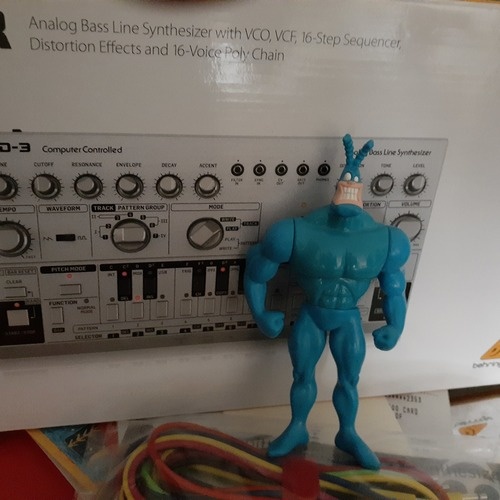
I really love it. I don't miss the extra sequencer functionality of the bass bot and the sound to my ear is good if not spot on. TB303s vary anyway. It distorts better than the bassbot with the inbuilt ds1 or a stomp or even a plugin. Knobs are not too stiff or too loose. Slide and accent feel good to my ears. Clock sync is easy to set and works great from all 3 sources. Even takes start/stop messages well over USB from a DAW. I really see myself selling my bassbot and xoxbox and getting a few more of these. the form factor is traditional like the bassbot mk1 I have so I'll actually be saving space as well as money. I don't think I'll sell my freebass as it fits in a rack and has blendable saw and square... and has shit resale. I'll do a little more comparison, but my son and I made a cool little acid loop last night layering 2 tracks of TD3 (I did the 1st pass, he did the 2nd) and its working for me. My unit's distortion is not terribly noisy at full gain, although the whole unit has a smidge of self-noise. If I recall that's true of originals though.... the self noise is a smidge higher than the bassbot and xox, but you have to really listen for it. More apparent on headphones with the td3 soloed. At less than the price of a traditional 'dinner and a movie' date? Uli's 303 clone is a no-brainer. If you just want the classic in the traditional form factor with no bells and whistles apart from MIDI, CV/gate outs, analog clock in and a DS1 then this is for you. Roland won't make another one so hats of to Behringer for making a cheap little 303 that does the business well enough for most people's needs. Nothing against the TB3 and TB03 roland, but you went digital and added features, inflated the price beyond plugin pricing.... meh. Is it dead on? I dunno, I don't have access to a 303 anymore, but its great in its own right and versus the xox/bassbot/roland buy in its a no-brainer if you wanna do some acid. And yes, I'm sure the Avalon is spot on, but its more than 10 times the cost and in the mix you'll never care. My only concern is build quality, but its not like cyclone didn't resort to SMDs and cheap pots so in the affordable clone game this is still the clear winner. If it dies I can afford another one noproblem.
I've borrowed a legit 303, 101 and 202 from mystudio/synth mentor back when iw as still at art school, so with that frame of reference? just wow on this one... modern convenience (midi input for sequqences or just the clock as you manually swap patterns, tweak knobs and fuck with external effects and your channel strip) with all the sound I remember from the 90s and early part of the new millennium... I am using this HELL out of this gadget already! It was so cheap used I had to.... slap guitar stomps in front and its a flashback to the best years of my life! sounds great direct or into a guitar amp with a condenser out front. I can't get enough of this gadget! This is best enjoyed as a live performance tool and in my tracks I am working it live and just doing a little editing cleanup during mix-down, at least in my opinion that's where it shines. One caveat is I have had some clock drift doing LONG tracks with sparse patterns. Easily fixed with some careful editing to pull the recorded track back in time. Its funny, when I am performing with it I am hearing it in time, but the recording will have a slow drift.... not sure if tis MIDI clock or my interface.... so I give her 5 stars. all the knobs are fun to tweak to acidize a dance piece, I just wish I had more arms, but I am getting good at doing drastic moves with index finger and thumb while doing some slight tweaks to adjacent controls with my other fingers so I am tweaking up to 4 knobs at once! awwwwww fun, my guitar-control tweaking skills are paying off in techno at last! BUY THIS! WARNING, the knobs are super stiff from the factory and after a month are just breaking in for me. I have read new 303s were stiff too (the knobs were meant to be set and forget, after all), but you will find yourself struggling to make flowing acid sweeps at first, don't be discouraged. Let your toddler twiddle the knobs for a few hours and the stiffness gets manageable... when you want to be subtle the stiff potentiometers are actually quite helpful as its hard to get carried away.
I just got this silver box of squawk for about $300 off of ebay and impressed with its timbre compared to my Bassbot, particularly thru distortion pedals... it just sounds less 'new'? for want of a better word. Tthe midi sync is great, though the Bassbot schools the x0x on the pattern fluidity even via midi... dunno, the slide on the Bassbot is just right to my ear. Anyway, very cool gadget, not sure if I need two 303s, but for now I am keeping both as well as the volca bass. I have been using them a lot and all 3 have unique sounds in them or can be used to sound reasonably similar for interweaking acid twitterings...
The freebass sounds like a 303.... as long as you already have a 303 sequencer to drive it (or a lot of patience with your DAW's sequencer, FLstudio works best). If you just play it or run it from a different sequencer without the unique glide/accent its just a very limited monosynth... which is why resale on these is so darn low these days. But they're worth getting for various reasons. For me the idea is to be able to double a 303 clone with the sequencer and pan them out and then tweak different on each side playing the same pattern... plus when I got this it was WAY cheaper than a x0x or bassbot. Now with Behringer's TD3 (assuming the one I ordered has that sound and sequencer feel, more on that when it arrives) it seems silly. But Its rackmountable making it handy and very studio friendly versus the traditional module that requires a decent amount of desk space... I forgot I owned this for awhile but now that I'm moved into a studio space with my best friend and (some of) my synthesizers are permanently set up for live performance I'm thinking of adding this guy to my big rack along with the BassStation Rack and Behri Neutron. But if you don't have the sequencer I would recommend the bass station rack or super bass station any day in 1ru, knob/function monos on the cheap for your studio. The fitler on this is generally more pleasing and rubbery, but in every other conceivable way its less useful and the bass station ash that wasp filter which is a sound all its own. You're looking at similar pricing for BSR and this and more BSRs are common, this is not.... and if you want elgit 303 there's cyclone, x0x and Uli's clone.... which have solid 303 style sequencers, which you're going to want because that's at least half the sound.
I think I got the last one of these from Novation last night. Thanks to the good folks at their artist relation program, by the way. I was able to create sequences, longer patterns of multiple sequences and easily get the sounds I wanted from the synthesizer and mod matrix within about 30 minutes. The manual felt rather arcane before it arrived but with the machine running the learning curve got easier. Its very easy to interface with other gear. I need to ask the Novation team if this guy is discontinued. I took my sweet time getting one from them to review and they may have just dropped the whole product since them. Such a shame. My only gripe is that so far it seems that if you want to use the 2nd note sequencer for another synth then you have to be caution with the use of oscillator 2 because the 2nd sequencer's note data is permanently locked to that sequencer in both modes even though the gate can be triggered strictly from sequencer 1 in mode 1... but maybe I'm not totally figuring the machine out yet. Detailed review coming soon to the equipboard articles section... and Novation needs to make a sequel to this guy if they discontinued it, because this is a wonderful machine. Intuitive and fun with the great sounds of the bass station right on board. I think this is going to be the heart of my live rig, clocking everything and providing Depeche mode basslines when needed. I like this more than the peak for mono and it contends sonically with a lot of my other monos. With the sub engaged its pretty well just as thick as the moog sub phatty if not as wet sounding, and it schools an odyssey for low end. I had a bass station 1 back in the day and they've really stepped up their game, and that synth was no slouch. When I'm enjoying the bass from your unit as much as a minimoog? you done good. CORRECTION: you can still buy a monostation, novation just ran out of them for a while in 2019 because they're that sweet
the original 1LFO/2env bass station in a convenient knob-per-function rack. MIDI and CV/gate connectivity.... I ahd one of these when it came out. Now it can be had for about $200 on ebay so I got another one. Sure there's a similar engine in my Monostation, sure I had a BSII. But those are bulky and take up a lot of space so I gave BS2 to a worthy young musician in my family, kept the circuit and got this 1ru monstuh for dueling Chris Hugget, wasp filter goodness. Which leaves me with 3 more rack units in my table top rack in the studio.... Oberkorn 3 sequencer? Modal Argon rack? But seriously, do yourself a favor and embrace the minimal feature set of the original bass station, get a rack unit. You'll use the hell out of it and it'll pay for itself in no time at all.
This is a cool little bassline monosynth in the TB303 tradition. I think she is actually fueled by analog oscillators. I am not sure if the filters are analog or some sorta digital thing, but theya re okay in a mono-poly way, not the same as the Roland 80s LPF though.... The layout will feel familiar to anyone who ahs used rebirth though you cannot program in accents when using the built in loop sequencer, you have to use midi through yer DAW which feels weird and wrong for a gasget like this. This synth is fun to play with and sounds as good as a lot of 303 plugins, but having puttered with a friend's 303 and SH101 extensively back in the day I have to say that you are probably better off investing in the popular x0x b0x tabletop synth. It apparently does a much better squawky acid thing.... I did really like this synth, when I puttered with her, especially through guitar distortion pedals but I just never power her up and I've owned her for months! SO I put her for sale and hopefully will break even (I bought her from a store on reverb at a deep discount because mine was their floor sample). UPDATE: rebought this guy, not as 303ish next to the TT303 TB-clone... but great in its own right! When I am thinking 2 or 3 303 lines one needs to be this, maybe 2 of them if I hit up some mixdwon ringmod or other timbre warping effects to expand the sonic palette. Now that I have a Cyclone Bassbot 303 clone I am able to appreciate this bass machine on its own merits and its very cool and well worth the tiny buy in. BUY THIS! fun-per-dollar (pound, euro) rating is 11 out of 10!
bang for buck... and this has THE sound... its gritty and cutting... Its highly playable... deeper features (and even a few standard features) can be a bitch to access which makes live tweaking patches a pain. Still, it sounds great. My favorite CEM synth on a chip synth hands down, sorry prophet 08 and rev2.
These little 1RU beasties are a total PITA to program but are capable of generating some cool 80s analog sounds like the Juno series. Not great for acid-house tweakin', but nice for when you want to get all Depeche Mode and throw down some thick subtractive leads but only have a DX7 and a midi controller. I've never had any reliability issues with this synthesizer and its been dropped a few times. If you can score one for under $200 its a great investment to integrate a little real analog into a software based turnkey setup like Fruity Loops...
This is like a jx3p if korg made it. Same filter and sweet but hissy chorus as the later DW6000. Same fun joystick for switling through pitch bend and LFO mod. If you like that sound and can deal with the amateur grade keybed (even by 80s standards), 2 digit parameter selection and data slider interface but want regular DCOs with regular shapes? Bingo. Highly recommended. Get an M with MIDI if possible. Limited implementation but usually the upcharge for an M is less than a MIDI retrofit and how many features do you need anyway? This is not anything to do with the polysix.... just 6 voices and a similar name. DCOs, no SSM filter chip (I think the korg filter has more character anyway, SSs were ubiquitous in the 70s like CEMs in the 80s anyway)... 2 oscillators, more robust architecture. Its really a DCO DW6000. The enxt evolution was wave memory oscillators and the the DW8000 with digital delay and 2 more voices.

Guitars 16

I fell in love with this SG from the first note and had to own it. It has a big chunky neck and the body really resonates when its set-up with a rod straight neck and the action on the high side. The stock 490r neck pickup is warm and sparkly, however I was underwhelmed by the 498t at the bridge. It didn't jive with my favored amplifier, the Vox AC30. At a guitar show I swapped a pedal for an ld Gibson T-top Humbucker with pretty low DCR and installed it at the bridge. It completed the package making my SG into my favorite rock axe. I have named this guitar El Superbeasto, but she will answer Beasto for short.
My tele is a mutt I made from a lacquered alder fender body of some sort or other and a 60s RI neck. I kitted her out to 59 specs more or less with custom made angeltone early-stagger pickups and a Hovland Musicap on the tone control wired 50s style. I deviated by flipping the control panel to allow easy volume adjustment and by installing a Rutters bridge with his late 50s steel compensated saddles. She absolutely sings. though I love this telecaster and would NEVER EVER part with her, I haven't named her. She's pretty much a studio guitar, so we're not on a first name basis. You know, cats you tour with are always better buddies than guys you work a session with. Maybe one day she'll reveal her name to me.
Okay, I got this guitar off the interweb based on its looks. I had played one and really dug one in a store but wouldn't pay the asking price. Features an unbound ebony fretboard without position markers, mahogany back and neck, unbound maple top, brushed nickel hardware, 490R and 490T pickups and grover rotamatics. Finished in a satiny metallic pewter lacquer all over the damn guitar and even the pickup rings have some silver going. First off, what a glam rock looker. 100 points for style. Okay, moving on. She has a nice rounded 50s neck profile. Points there. She's not particularly heavy for an LP, more points. Played great out of the case? Check. More points. Phenomenal sustain and a balanced tone unplugged? WOW this is on uncharacteristically great stock Gibby! Wrong. While I have nothing against the 490 alnico humbuckers (I hate the 498T, but the 490R is pretty okay and the 490T can sound cool, if modern), they sound awful in this guitar. Sterile, boring, all wrong for a Gibson geared towards a strong upper midrange. The Neck pickup is a bit boomy and masks the best frequencies this guitar projects acoustically and the bridge lacks any bass response and is a mess of upper mid snarl without any genuine sparkle clean or dirty. You could sue this guitar stock to be in an Nickelback tribute band assuming you had a stock mesa triple-rec. UGH! Not me at all. Fortunately I have A couple different humbuckers sitting around. I am thinking a Burstbucker 2 in the neck and a Duncan 59 custom hybrid to start. Keep things hotter-than-vintage to match her hot looks, but get some seriously mismatched coils going to reveal the guitar's voice. The finish is thin and well executed, the guitar resonates wonderfully... I may need to put some bourns 500k pots in too. we'll go lazy to start.... Overall I recommend this particular les paul as a unique spin on the tired, old formula that is dazzling to behold in the right lighting.... not for stodgy, conservative types though. Sadly for those of you shopping, the good version (this all silver one) was only made for a year or two and is apparently quite rare. Go figure. Guess I was being a dick when I lowballed the dealer. I have named mine Silver Bullet and will probably keep her after I perform a 'lil surgery.
mine is a 78 or 79 made by tokai.... long tennon, feels like nitro finish, subtle flame but more or less a plaintop. Pickus are gotoh PAF style that sound like T-tops to me... does a solid zep in bridge position, Medium beck, bigger than my Greco and smaller than my LP Platinum. A great les paul for the buck (about $1k SD)... wide nut unlike my greco mr which has a 60s thin nut on a 50s style guitar.
This is a Mexi-made Esquire. Swamp-ash body, maple neck, etc. Pretty much a classic 50s telecaster with 1 pickup and the esquire's wonky wiring. But the wiring scheme is part of the charm of an esquire as is the reduced string pull from just 1 pickup that makes these guitars just a touch meaner than their big brothers. This guitar has a well-applied Polyurethane white-blonde finish that is too glossy for my taste. Feels weird under my forearm. The neck is finished in vintage tinted poly and is fairly glossy, but in a good way. I never seem to stick to it even when I get sweaty. My 3 star review is based on how I got this esquire stock. Its really a 4.5 star after some tweaking. An Angeltone 1950B pickup went in the bridge and I switched the stock steel barrels for a set of Hipshot compensated brass saddles. That seemed to bring the guitar to life plugged in. I didn't feel that the stock parts put forward its midrangey voice unplugged. She doesn't have an official name but I often refer to her as Mary (as in Mary Kaye cosmetics, even though she is not truly Mary Kaye) or the Deathsquire (mine has a black bakelite pickguard installed by the previous owner) because she wears more black than any of my other guitars. Tré funereal, Baron Samedi!
This an 80s pre-custom-shop 59 copy, pretty early ttempt at recreating a golden age 335. It has Tim Shaw humbuckers that are thick and syrupy with a complex tone. The neck is medium fat as it should be, very similar to the shape of my Yamaha 335, but the Yamaha has a mid-60s thin nut and this has the wide 50s nut that encourages bends but is a bit less fast on flatpicked jazz runs. Mine is black, not my preferred color but it was a great deal for a 335 having been re-fretted at least once. Obviously there is n fret edge binding left after the refret. Great rosewood fingerboard with a wide, streaky grain you don't see on a lot of modern guitars due to old growth woods being virtually non-existent now. Its also on the light side for a 335 and has a brightness on the bridge pickup that's almost gretschy. Its even louder unplugged than any of the other semis I've owned right up there with the starfire I used to play in highschool jazz band which was fully hollow but thing. This guitar sounds and plays great. Didn't even need to tweak the setup from the store. If you can get an 80s dot go for it, they are far better than most 80s les pauls if my 335 and the 88 LP I used to own are any indication. Love it. So stoked to finally have a Gibson 335, my favorite guitar ever.
this is by far the best hard tail strat in this price range, even the stock pickups are pretty decent. And it comes in Inca Silver.
The story goes that Jimmy Vaughan wanted a signature strat based on his 50s model that was cheaply made so he wouldn't be afraid to wreck them on tour with the Fabulous Thunderbirds. Enter Fender Mexico. This stratomicastro-thingy has a 50s style soft V neck with a maple board and skunk stripe but a convenient headstock-adjusting truss rod. The 1 ply pickguard is period correct. the texmex pickups sound pretty good stock. The guitar sports an AVRI bridge and cold rolled steel sustain block. The pots are good quality CTS 250Ks and the tone cap is a good quality chicklet type. The wiring incorporates JV's own simple mod of putting the 2nd tone control on the bridge rather than the middle pickup. I much prefer this wiring scheme and since getting this guitar always make this switch on strats. These guitars are slathered in thick layers of polyester paint which probably masks some tone, but what do you want for the kinda scratch these go for? Mine has been modded and hacked up so many times over the 10+ years since I bought her used for 250-odd bucks at Dadddy's Junky Music in New Britain CT. I also had a real tendency to throw this guitar off the stage if I broke a string and it survived admirably apart from 2 small heel cracks that were easy to manage. The finish has seen better days. Currently mine is taken apart. I have a custom celluloid tort shell pickguard sitting around that's based on the GFS brian may pickguard kit. Mine has a straight bridge pickup. Its half-wired right now as I keep losing interest in doing the soldering required to put it all together. When done it will have my own proprietary hum-cancelling system (I love inventing shit, go science!), 2 Angeltone prototype pickups (A2 stagger poles neck, A5 flat poles bridge) and 1 GFS Brighton Rock bridge pickup, a brass sustain block (just to try out, I may switch back), 3 on-off switches, 3 phase switches and 2 push-push pots to switch the mid and bridge pickups between series and parallel wiring. its a cool scheme, but I am a bum sometimes. Instead of working on the wiring I am typing this review and listening to records. I did up a prototype of this wiring that was great but I also had left spots with alligator clips and stuff to work on fine tuning my noise cancelling design... so I have to rebuild the thing on the new pickguard to accommodate my finished hum-canceller circuit. I also have a pair of really awesome looking black bakelite knobs w/aluminum metal top inserts for the master volume and tone. Its going to be a very retro guitar with its peeling Olympic white finish and Queen-meets-JackWhite appointments. This guitar is usually referred to as Strato-Castro. Just because it sounds funny... Cuba libre, bendejos!
As anyone on equipboard who follows me will know, I love double-cutaway set-necks of all kinds. I've always been partial to the old Hamer Sunburst model, but it’s a big buy in for a flat-top-set-neck electric guitar that doesn't say Gibson on it. Players who are wise know they rip and will pay a premium for a nice old one... when you can find one that hasn't been fucked with too badly. Now without further adieu, here’s another rambling off-model vintage guitar CSI: So I saw this Washburn Falcon (billed as an '84) on Reverb. All the wing series Washburns of the 70s and 80s I knew about were bolt ons or neck thru… which is cool. I still want a 70s vintage white Eagle like Nancy Wilson from Heart used to play. But apparently in the 80s Washburn switched manufacturing to Matsumoku (wing series guitars were Japanese made during the height of MIJ greatness but with original designs they were meant to give Gibson and Hamer a run for their money, literally, as they were cheaper, but really well made at a number of small Japanese shops). At the time of the Matsumoku change the Falcon model became a glue in 3 piece mahogany neck with a mahogany body, rosewood board and flat maple top as opposed to a 5 piece mahogany and maple neck thru with swamp ash wings. Mine has a lovely reddish tobacco burst over some beautifully flamed maple. They stuck with their Hamer sustain-block bridge copy that they were using in the 70s. Its a huge chunk of brass in the fender hardtail/string-thru-body style with heavy duty brass saddles and a G&L-ish set screws to lock the saddles together side-to-side. The pickups don't appear to be original on mine (the originals woulda been nothing special) and may be 80s Dimarzio super distortions. We shall see when I open her up. Otherwise she is stock. Right out of the case this guitar sounds awesome for hard rock leads (though it fails to clean up well with my volume knobs... its not muddy, just SOOOO much output compared to my other humbucker axes). She is in need of a neck adjust and new strings, but even with a little too much relief and worn out 9 gauges she is a joy to play. I will probably change strings, raise the plain string action and tweak the neck back a hair later today. Did I mention this guitar is light like an SG or Jr? Well it is, but its still has that maple top, snappy attack thing going, though to a lesser extent than my 2 carve tops. Medium to Large C shaped neck. Comfortable nut width (though it doesn't feel as wide as a 50s/modern Gibson or as thin as a 60s one, must be a wonky Japanese metric thing). The sustain on this guitar is just fabulous. You get under a note and the top of your bend just hangs for days even bone clean. Mine has 5 ply binding around the top and fretboard that is really well done. I expected this guitar to be a polyester finish, but after feeling her in my hands I did the lacquer test... as it turns out the thing is sprayed in glossy nitro and its a really well done spray job at that. My 335 copy is a Matsumoku guitar from this era too and those guys were just killin' it with their lutherie skills. I am thinking of putting a Duncan pearly gates in the neck (I DO NOT like the enck pickup, mushy and boomy) and then trying out another Duncan 59/custom hybrid at the bridge to split the difference between 80s hotrod humbucker and vintage complexity. My 2 gripes are the lack of fret nibs on the neck binding and the fact that it has a recessed tele style jack and I really like to use L-ends on my Gibsony guitars. Oh well. I could change it to an LP or football plate if the jack cup ever works its way loose. If I had designed this guitar I woulda done a top-mounted SG style jack but I am partial to those. These are a deal and mine is just as good as any Hamer Sunburst I have considered buying and the top is flamier and the binding is nicer. Hell, having neck binding at all is a plus... a basic sunburst had no binding anywhere, each layer of binding was an upcharge. If you can find one of these rare old Washburns, snap it up at the lowest price you can negotiate and treasure her always.
I just picked this up... its in a rare silver 'pewter' lacquer that matches my LP platinum, has a fat neck like my standard... haven't spent a lot of time with her yet, but I am pleased to have another silver Gibson. I am sure a 70s t-top at the bridge will have her making 'jim' sounds. I will get to her when I have a sec.... UPDATE: good guitar, needs pickup surgery... not playing her much yet, but I am sure I will
This was my uncle's guitar in the 60s, then my dad's classical up until the 2000s when he gave it to me after purchasing a serious classical for himself. Its got a cedar top, rosewood sides, back, neck and finger board. Typical classical guitar trestle bracing. Super wide classical guitar nut/string spread with a comfortable oval profile that really makes proper classical left hand position a snap to master. Lacquered all over or maybe shellac and French polish, not sure. Made in Finland, of all places. Mine has a crack in the top that was inexpertly repaired by my father in the 80s. He liked to sit me on this guitar as a baby and the cedar got sick of supporting my weight. I began my musical journey as a toddler futzing around with this guitar while my dad explained the basics to me. Then I learned my 1st chords on it around the time I was picking up the viola and violin in school and learning to read. I learned my guitar scales/modes and lots of chord theory on this guitar in Jr High after giving up bowed instruments (I stink at bowing) and had to join the junior high jazz band in order to get my dad to front me the money for my 1st strat. The man was right about the jazz band. 6+ years of big band experience was incredibly helpful. This guitar has a nice round sound and medium projection. I prefer her strung with Savarez High Tensions... I still play this guitar a lot (especially for my son before bed) and I am gad to be the 3rd Marchione to cherish her. One day I will hand this heirloom off to my boy to begin his own musical journey. Wow, I'm getting misty eyed just thinking about it. Anyway, if you ever see one of these its an amazing student guitar that is both challenging and inspiring to play. The nylons keep it easy for newbies, but the huge neck and nut also are a challenge and will help beginners develop flexibility, dexterity, and a variety of proper left hand positions for various styles. And good left hand position for a given style is the basis of good touch as your student advances to an intermediate level. There is nothing that struggling with this model of guitar will teach you that won't translate to electric. If you know better than Segovia, speak up now so I can set you straight.
My dad gave me this guitar when I graduated highschool. I've had it ever since. Its the only steel stringed acoustic I've ever owned. It has a solid, unfinished Sitka Spruce top that has aged in nicely. Laminate rosewood sides, martin-style x-bracing, bound rosewood fingerboard in what feels like 24.75" scale (but I'm not sure really). I think it was made in japan. It plays very well and continues to sound nicer every year despite my neglect and abuse. Coated strings were the best thing that ever happened to this poor little acoustic because I never feel like changing them. Every couple years I deign to clean her and condition the fingerboard under duress when one of my friends sees the state she's in. I figure when my son's old enough I'll break down and buy myself a fancy Taylor or a player-grade prewar Gibson and give him the epi. Acoustics are not a priority to me. This one has done its job well for years and I think it deserves heirloom status despite the reasonable buy in at the music store way back when.
This is the last Hofner-made Carvin model I am aware of. The SH225 is an 80s Hofner verithin model with a Carvin headstock that was hand crafted in Germany out of European tone woods usually reserved for orchestral instruments. All of the inlay work is beautiful and the unbound ebony fretboard is a really lovely piece of wood. The sort of ebony usually reserved for Steinway keys.These guitars are only 2/3s the depth of a 335 or less and they are really light and resonant. Now the bad news. Hofner would ship these bad boy over to LA raw, unfinished. Carvin then routed for their crappy 80s humbuckers, added lots of questionable electronics, and set them up for weird bridges and things. Worse still they glopped on thick layers of polyesther resin. It must not have been self-leveling because the finish work has some real sketchy spots. Now, everywhere I've accidentally chipped this finish I find another thick layer of some kind of white primer that reminds me of the stuff I roll onto new drywall! Mine is a solid black one and for years I assumed some of these had unbound bodies as well as the common ubound fretboard... but time reveals all wounds (or something) and as this thing has aged I have noticed that Carvin just sprayed over the multi-ply body binding that a hand-worker in West Germany (this was made while the Berlin Wall was still standing, kids) probably spent days getting just right. After 30-odd years the finish over the binding is cracking and coming away revealing the utter barbarity of the spray booth employees at Carvin in the 80s. The pots in this guitar are crap. Also, I guess to make up for the intolerable muddiness of their shallow-coil ceramic buckers (the routs are not deep enough as stock to accommodate any legit bucker in Gibson, Gretsch, Guild or whoever else's format), carvin (henceforth lower-cased for spite) added 2 coil taps and a phase switch using these awful mini-switches that have failed over and over on me since the late 90s. The guitar is also wired with a dual output control plate with switching jacks for stereo operation. These jacks are also utter junk and have given me nothing but grief. The Schaller M1 tuners are great, but for reasons defying logic, carvin decided to eqip this model with a 1 piece Schaller bridge/fine-tuning-tailpiece combo. The bridge is really heavy, but the fine tuning assembly and 2 bolt attachment prevent the strings from transmitting much bass into the block and wings making this guitar terribly thin in tone acoustically as well as plugged in. This was my 2nd 'good' guitar. Right now she is retired pending major surgery that I just keep putting off. I miss my Guild Starfire 1 even though she only had a neck pickup. Bad trade. You live and learn. I give the carvin SH-225S 3 stars, but only because the German craftsmanship and quality of wood is so spectacular.
for about $500 I think this is the finest Gibson scale guitar you can buy.... the low-cut control doesn't exactly simulate a single coil but its a useful feature if you're like me and you use old, no tone control amps a lot. The stock hardware and electronics are great. Fit and finish flawless. Yamaha can still make a great set-neck. Anyone looking for an affordable double cut should try one of these out. Pretty much all the different range revs are good, but this one's the best balance of cost versus quality. If you're an intermediate player looking for a new #1 or an experienced player looking for something versatile to add to your recording stable you should make sure to try one of these out. I wasn't even shopping for a guitar when I got this, we just found eachother.
I really warmed up to 'ugly' guitar shapes in my 30s. This guild S300 is the less common one with the lower output Guild HB1s rather than the 300D that ahs super distrtions. After a short flirtation via my washburns I decided I actually hate super distortions so if you prefer woody PAF-meets-fitlertron tones then keep your eyes peeled for the non-D version or be prepared to change pickups to something else if all you can find is a D version. Ironically the non-D S300 seems to sell for less, I dunno why. The guild buckers were always great pickups. This guitar has the best tailpiece ever. Sits between an SG and Explorer in weight. Nice chunky neck on mine but not SUPER fat... Has the 'fast' Guild nut width, so the string spacing is a bit tight like a late 60s Gibson. If you have fat fingers Guilds are not for you, but I like them. A real rocker.
this was my bassists 1st Gibson and I used it when my special wasin the shop sometimes and HATED it.... but now that I have it on a trade? I like it. I wanna mod the bridge to a PAF style with a coil tap for humbucking coil tapped middle position and then it will kill it. Might try brass saddles and block too. Truth be told I have had this for ages but haven't touched it much for 6 months. I am sure I will joanjett her and be into it. She has a great feel with 10s and 11s. Strat whammy on a Jr?! YEAH

Amplifiers 17

As a die-hard Vox amplifier enthusiast I feel compelled to answer d_foster14's question, "Is the Price justified?" Yes. Yes the price is justified for the right model from the right year. While there are a variety of AC30 variants vintage and modern that do different spins on the vox tone (and I really dig some of the variants I've played more than the amps people view as quintessential Voxes), the AC30s to have to get 'THE top-boost sound' are (in order of tastiness) the following: 1) coppertop (AKA candy panel) JMI, early 60s (I plan to be buried with mine if my son doesn't take up the guitar) 2) grey panel JMI, mid-to-late 60s (if you are looking at a coppertop with the treb and bass controls on the faceplate then its pretty much the same amp as a grey panel so save a few beans and scout out a grey panel because only crazy collectors will care about what color the control plate is... even the grey painted speakers are pretty much the same as the blue painted ones from the coppertop period (some will argue) and even the RI blue alnicos sound fab once they break in... if the tone controls were added to the back of the amp, then your coppertop will be a little different and I have a definite preference in this regard) 3) black panel AC30HW2x Korg, current production (I would not sell mine to you, you would have to trade me something better and I already have a coppertop and don't really need a grey panel) 4) candy panel AC30/6TBx Korg, 90s (this is really a tie for 3, I only give the HW2x the edge for its reliably repairable turret contruction and spiffy 'hot mode', but if a PCB doesn't worry you and you want closer accuracy to a JMI for features and voicing get a 90s RI) 5) grey panel Dallas Arbiter, 70s (no tube rectifier, but that's why Brian May likes them, can Brian May be wrong? that's its own forum topic, right there)... I recently acquired one of these but it needs some love as it appears to have been on the road continuously since it was made without being serviced at all. To its credit it still works, its just beat to shit and sounds a bit unhealthy. Defintiely a 'firmer' sound than y other 2 voxes, but a different feel than the matchless. Once I work on her I'll be able to really get a sense of what sets her apart from a JMI and a reissue. 6) grey panel Rose Morris, 80s (multiple PCB facsimile of the Arbiter version... these AC30s can sound quite good and seem to be pretty reliable) https://equipboard.com/jimmarchi1/photos in 4th and 5th gear porn photos you can see my 2 favorite ac30s, the HW2 and the recently serviced 1962 bass model (not good for abss guitar, just a fatter voicing, it came in treble and normal until about '65.... all front panel top boost models are normal though).... you will also see a photo of the 'JMI product' logo on the control panel. if you see an affordable ac30 with this logo then snatch it up, even if its in bad shape it will be worth your while to restore it. If it has a similar logo with the word vox instead of JMI then it's a crap shoot and you could be looking at 1 of 3 or 4 newer models raging in quality. If it has a VSEL logo then its pretty much made by vox employees with leftover JMI parts and its a winner... if it has no logo under the mains switch then it could be an arbiter, rose morris etc and you'd better do more investigating.
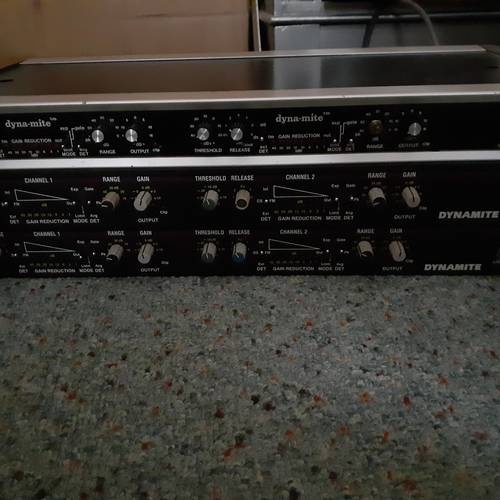
JMI ac30/36B with dealer rear top-boost module (currently removed, might not repair it and return it). She can be finicky and unreliable, but she has quite a sound. Mine's pretty similar to Brad Paisley's from what I understand. Got her around 2001 or 2. The pine cab is rebuilt and recovered and the previous owner loaded her with a pair of 16ohm pre-rola g12s speakers wired in parallel for 8 ohms, but all those little things coupled with her being the unusual bass voiced model just contribute to this particular ac30's unique voice. Unmistakably JMI, yet thicker and, dare I say it? YES! Gooier than your average grey panel. This amp gets HOT and has caught fire at times when in need of service. However, the danger is part of her charm. Did I mention she has the best sounding vib/trem channel ever? I'll put my ac30B against any other 6 input ac30 of any era any day of the week. This vox really rocks. UPDATE Currently loaded with vintage Blue and H30/55, fully serviced by yours truly and working as well as a new amp. Still 90+% original.
I like everything about this amp. I don't miss the vib/trem channel, the bright switch on the normal channel brings the non-top-boost JMI brilliant channel sounds and the 'hot switch on the top boost channel is to die for. The master volume is pretty useable and the half-power switch is a huge help in these days of stage volume restrictions. What a well-though-out take on the classic design. Did I mention the gorgeous fawn Nubtex? Even the stock greenbacks sounded pretty solid, but she really came alive when I installed a G12 blue and an H30 55hz clone. That pair of speakers really makes for a larger than life vox tone, clean or dirty.
this amp was an impulse buy but is growing on me. Its really a great tele amp clean or dirty, but the 15" can add a new flavor to any guitar with the right EQ settings. Presence control is kinda worthless. Usually I don't give a shit about a mid control, but a mid would be useful on this amp over the presence. Sounds great paired with an ac30. Or 2 ac30s as the dry amp in a wet/dry/wet type setup.
I can't afford a real HC30 (without parting with my vintage AC30 that is), wish I could. Nik at Ceriatone does an outstanding job with his copies. Despite being built on a turret and having inferior iron this amp really goes toe to toe with Samson era matchless and badcat amps. My 1 caveat is that some of the hardware isn't of great quality (a friend broke the stock fuse holder somehow, that shouldn't be possible) AND the aluminum chassis is not welded properly and is prone to bending if jostled in a van or in a trailer. Not a great road amp. Also, good luck getting a spare in Spokane if she goes down. Of course, at this price you can afford a backup. On to the gist... this is my favorite circuit ever for teles. The EF86 'click' channel is the jam. So much bandwidth. Lately I keep her loaded with 1 or 2 5y3 rectifiers (depending on whether I'm running full power) to brown the old girl out a bit, but with the stock 5ar4 in 30 watt she does the punchiest, tightest ac30 sound ever and with the small rectifiers she's skronky and mean even played clean. Maybe its apples and apples, but I like having this other take on the vox sound at my fingertips. I can hear it and feel it, so who cares if no one else does?
even in an era when people had hi-Z mics on unbalanced quarter inches and no stage monitoring for the signer this amp was an AWFUL design for a PA. Though its a loud and stout 50 watts it is not a very clean 50 watts. Mine is the 1st gen circuit from 68 or 69. It utilizes the not-so-hifi concertina phase inverter and has not-so-hifi grid leak bias V1 and V2, the 4 triode stages that serve as the 4 individual mic/line inputs. It has a hi Z effects loop after the 'master volume control'. Pretty much goes 4 channels with 1 stage each, individual volumes, master volume, send and return, then a driver stage for the 2 band EQ followed by a driver stage for the pahse inverter and then the pahse inverter driving the EL34 woer section. Solid state diode bridge rectification and a wide ranging presence control that's very british ind esign round out this amp. Awful PA design but if you made it a 1 channel it would look an awful lot like an Orange/Matamp. Scarily like it actually, just without the FAC control. For guitar this amp sounds like an early Orange ehad. Drive it into dirt and its just osntrous. The clean sound is complex and punchy. Hifi yet smokey. British but unmarhsally. Cops some hiwatty tones too due to the fast response of the wonderful old Hammond transformers which are WAY oversized. I got this and I thought it would eb really hiwatty like the 4 input Pete Hiwatts due to some bad internet info but its more like a 4 input orange and that's okay. More than okay actually. These can be had for peanuts. They only made this circuit for a year before changing the EQ to be more fender than baxandall, switching to a fendery long tailed pair inverter and dropping the psot EQ recovery stage. With these changes it probably made a slightly better PA by the standards of the time and I'll bet it made a MUCH better bass amp (its secondary role) but probably is an anemic and wimpy guitar amp for rock n roll. The original baxandall/james type tonestack is awesome by the way. there's like 1 perfect setting for each guitar. it took me awhile to get used to since its not quite an ampeg bax EQ and tis not precisely like a 2 band vox EQ either, total mutt that's highly interactive but not in a way that's immediately intuitive.... lots of control of the mid content from those 2 knobs though! the presence sounds the most rocking all the way up but good tones can be had throughout its range if you dial in enough trble. If you want something like this look for a '69 or earlier. Talk to the guy about the transformer date codes and ask for gut shots and analyze them with the help of a tech if needed. Mine is a rock monster that conjures up powerful 70s muscle car tones, but YMMV. if you get the right one it will SLAY! I have JJ 34s in mine right now but at one point I had it biased up for JJ's very robust 6V6 and the sucker gave up the pwoeramp distortion like immediately and put out maybe 25 watts RMS .... great for recording but it didn't have the stout clean tone I like from this amp so I switched back to 34s. Came stock with either 6CA7s or those 7027A mil spec 6L6es that ampeg liked to sue. As those dried up in Canada where it was made traynor switched to the CA7es which are just a beam tretrode, USA made EL34 more or les.... basically the American KT77. With those tubes or a 6L6 the amp will have less midrange and more thumpy lows/glassy top. I think tis best with EL34s, though I might try 77s too sicne they're kinless and will deliver the mids. I generally find the 77s to be too clean though. Interestingly there is an unused gainstage on V3... to use it without introducing nosie you would have to heavily modify the power supply making a separate line for that stage, but you couldalso run it off the same line as V3a with minimal supply noise as long as you weren't trying to make an over-the-top gain banger outta her, justa dd little more gain. All I did to mine was to disconnect the old amster volume and set it aside and then wire an Orange Overdrive model post phase ivnerter master in tis place with a dual ganged 1m pot hooked up between the 2 outputs from the splitter and the 2 output tubes. This is an effectice little control that's been utilized on long tailed inverter amps by matchless and more recently vox and its nice here though I typically leave the control wide open and dial in a loud, edge of breakup tone and then use a dirt box out front if iw ant more hair. anyway, love this amp... hard rock beast and secret weapon
though it doesn't exactly emulate any particular amp's response you will not believe clean and dirty tones of this caliber can come from a solid state amplifier in an MXR sized enclosure. The microblock eschews the fancy tone shaping features of the larger quilters in favor of a streamlined no-nonsense amp that fits on your pedalboard. It won't replace my vintage vox, but its definitely the finest backup amp money can buy.... and its not a lot of money! I'll always have this on my board at a show along with a super long speaker cable just in case. Get one.
The baby brute head is relatively light for a traditional SS amp with ehat syncs and old style power transformers, its pretty loud at 4 ohms, less so at my preferred 16... it stays clean all the way up though... concentric knob for bass and mid and the treble knob doubles as a voicing control for the useless distortion circuit. Bright switch available but dark mode is more traditionally jazzy especially paired with JBL, EV or Fane speakers. Bright switch is good with an 80s chorus out front or in the loop for recording some very stout new-wave sounds through celestion speakers. FX loop is great, featuring a trim for send and return! Also features a mediocre headphone out and dual speaker outs in case you wanna drive 2 cabs. You mroe commonly see these in an 8" equipped combo, but I think this amp shines with 12 and 15 inch drivers. I got this for free from my highschool around '97 or 8. No diea what eyar its from. It was not working at all and they said if I wanted to fix it I could have it (along with a quadraverb, some symmetrix modules and other assorted junk I found in the band room and stage crew closets). My friend helped me get her up and running but we never got the reverb working. Used a few times for jazz jams, but I usually prefer tube amps even for jazz. I like a Grant Green sound. I forgot I had this amp until recently. Still works except the verb. Sounds clean. Very low noise. Much better clean tone then other 70s and 80s SS amps. Capable of jazz tones but also some more rock n roll clean sounds that might surprise you. Love the little handle on the side. Small and cute. more hifi then my tiny quilter but that amp is meant to cover distorted rock and the polytone just added a dirt effect as ana fterthought like the JC120. Makes a great keyboard amp and a decent, if low powered, bass amp too. If your benchmark SS tones are all 80s soudns from Roland, Yamaha, Fender and Peavy then try a polytone. it schools them. I still prefer tubes 99% of the time but I don't think I will sell this ever. Its not worth a lot and you don't see many Poly heads, mainly the combos. The ehad is convenient. Stores in a drawer.
I have a sealed back avatar with fender blackface cosmetics (and silver piping to match my HC30). Got it used and empty for very cheap locally. Currently loaded with a chinese m25 greenback and an 80s Fane both about 98dB sensitivity for a medium loud cab. Wired up with one of those stereo plates so I can do 4 ohms parallel, 16 ohms series (vox style) or dual 8 ohm single speakers but since they're mismatched I don't do stereo with it. But series and parallel sound different, especially the top and bottom end.
I am unsure i anyone will ever run into one of these. Its an off brand sealed 2x12 with diagonal speakers. Got it unloaded on ebay as a local pickup. Its a powerful, punchy cab made of super thick plywood. Front liading in the 80s style.. I ttok thw dampening fiberfill out so she has some resonances now. Can get boomy with 55hz bass cone speakers. But she sounds great right now loaded with a cts alnico and celestion greenback. Truly a rock n roll cab. Gets some 4x12 punch! Kinda heavy though. Bad tolex and grill cloth work though. I still will never part with this cab. She records really well.
this is my 1st solid state student amp purchased 25+ years after I started playing.... I got a beat up one on a larkfrom my local GC for like 10 or 15 bucks when I was buying strings.... I've been padding down the speaker out into a DI and suing it as a super nasty distortion unit. I might mod it some too to make it less polite when turned up. Its actually a pretty cool fuzz box for non-traditional guitar sounds. I got the idea when I was listening to smashing pumpkins with my toddler and remembered that Corgan had said that the weird guitar tone for the riff in Everlasting Gaze was a little crate student amp. I figured what the heck, lemmee get a pre-modelling junk toy amp for my own vile uses. And next thing you know I was recording my own snakey riff and went off to the races on a garbage-inspired song, although I skipped the crap speaker and went right into the board LOL I actually have this thing out of the pressboard cab right now and threw the cab in the attic.... I will probably mod it and then try to rack it so i can throw it in a true bypass loop for use in front of an amp using the line out jack. Or maybe I'll rack it and just throw it in a spare amp switcher loop on my egnater head switcher so it can drive good speakers. At 15 solid state watts I can do my 'turn it to 11' fuzz trick for a gimmick tone live but easily revert back to my fancy amps for most sounds. We'll see. I am prettys ure the shit speaker is going to et used for target practive if I ever get out to paintball again!
I love battery powered mini amps in the studio. When I was collecting vintage Marshalls before I got into Vox my dad got me a Marshall mini-stack as a gag gift for xmas. thing is I loved the skronky tones it created thru that tiny speaker. I actually recorded it with a cheap radioshack reporter's microphone from the 70s or 80s a bunch of times for lofi parts in the studio. Mostly other people's music,but that mini-stack and cheap microphone are a recipe for perfect lofi goodness with a little noise-gating and high/low rolloff! Get a mini-stack, its fun to have around. Try putting a wah into it... WOW! Total nastiness!
this is the speaker that should e in your fender Pro.... the reissue is brighter and louder then an original but that suits me fine. If you want one that sounds like a vintage Jensen when it was new, get yourself the Weber copy. I think the original jensens are a bit muddy at higher volumes though.
along with the G1265, the G12S50 graced many a JCM800 cabinet and combo! These share a magnet with the old greenback S speakers I like but have more than twice the power handling and a more modern sound, but still very good. One should always have a few of these in the closet, they have a distinctly early 80s trash rock flavor in pairs or quads. Efficiency is about the same as a 'pre-rola' G12M greenback. So not too loud.
This amp is similar to a tweed tremolux or brownface deluxe... and yet very different. I have the diamond tolex, 7591 version with octal 6sl7 preamps and it has more headroom and a bolder tone than the 6v6 version or the later version with noval 12ax7 preamp tubes and 7591 power tubes. The 2 channels are truly independent unlike a 5e3. The second channel is voiced for accordion. It has mire gain and us prettyflat into the low bass, the tone control is more of midrange gain boost on the accordion channel. Very grungey. The tremelo is power tube bias vary with a wider range of speed and depth than fender trem. It uses 2 full triodes as the oscillator and it's the lushest trem you've ever heard. The stock CTS alnuco 12" is a little underrated for the 7591s and breaks up before the power amp. It's a cool sound when the speaker gives up the cowboy crunch but the amp might sound better overall with a celestion gold alnico or h30 ceramic. The amp takes fx pedals really well. The 7591 power amp has a hint of el34s tone to it and just a hint of rectifier sag from the 5y3... a 5v4 would probably make the tone even firmer if you needed it. The feel sits squarely between practice amps and stage amps. The ampeg jet j20 reissue is closer to this amp than it is to a vintage jet... but the mercury takes it to school. This is the best tele amp I've ever heard. It has the authority of an ac30 or tweed pro/super and the edge of breakup tone of a 5e3. Not your typically jazzy ampeg. At about 20 watts its loud enough to stay pretty clean at modern stage levels but it can still give up the dirt at home studio levels.

Effects Pedals 67

traynor made a fine outboard spring reverb in the fender outboard style back in the 60s... very similar all tube design. A little noisy. Some people ont eh web have claimed that this is because its meant to run at line level in and out, low impedance studio levels, but I don't see any schematic evidence of that. it looks like a fender reverb to me. Its just a slightly noisier unit then a fender. Sounds great in the 'fx' loop of my traynor amp.
She doesn't tune very well but only costs 5 to 10 bucks new and I've had the same little CA-1 since always. I think I got it in like 1992 or something. The plastic case isn't even exactly the same as the current ones. I also have the little blue metronome and it served me well in the 90s for locking my time in and also as an impromptu click track for years when I was recording analog and he band found the DR55 too intrusive. The metronome is way more precise than the tuner, but I'll give the tuner 2 stars because I still have it and it still works as well (or as poorly) as the day I got it. When all else fails this guy always turns on and never seems to eat battieries....
This ABY box does its job perfectly. The Radial 'drag' control really lets you tune the buffer circuit (used to not halve your volume between amps) to sound just like your guitar straight in. The switches are sturdy and roadworthy. The boost/mid-boost function sounds awesome in any of the settings. In mute mode the boost button is hand for putting your tone-sucking Boss TU-2 (or 3 or whatever) on the tuner out and still having silent tuning. The only problem with this bad boy is the odd-voltage/current power supply! The Radial wall wart is not sturdy. I have destroyed 3 of them. No one else makes a power supply that will sub in. You cannot hook the Tonebone pedals to your multi-pedal power supply either, they need too much current. If I toured with the Radial again I would make sure to travel with at least 2 radial wall warts.
in the USA line votlages have gone up, up up.... not only is this hard on your vintage amp, it also is causing it to run incorrectly. You're not hearing it the way it was designed to sound. Youc an pull a van halen and run a variac, but theyc an be costly, they're heavy as hell and if someone accidentally bumps the voltage up while you're playing you'll fry your amp for good... the BrownBox handles the job of slight line voltage reduction. it has a few settigns getting all the way down into EVH 'sponge out' turf. This device works rally well. I would endorse it. Set and forget. Not too heavy. Well built. Reliable. Safe.
This will break the bank but if you must switch between more than 2 tube amps and you wanna control them via your existing MIDI rig then this is it. Nothing else touches this shit.
this is my intonation tuner when I'm doing set ups.... always ahs been. I prefer it to strobe tuners unlike a lot of techs. Worth seeking out.
I have owned many TC products and their proprietary digital delays like the 2290 are great while their models of analog gear usually left a bit to be desired having what I can only describe as a "plastic and artificial" quality that hurt my ears. The Line 6 models have this quality too, but at elast they model some of the other quirks of the real gear very closely. That said, I prefer TC for their pure analog dry signal path in all their higher end effects. So I bought an X4 on a whim, total impulse but thru ebay.... and now I have changed my tune. From personal experience I can assure you the Flashback delay series CLOSELY replicates the following pieces of gear (at least to my ear, which is pretty discerning): WEM Copicat 60s version (tube mode), Roland Space or CHorus Echo (Space mode), Boss DM2 & 3 as well as Ibanez's AD80 & 9 (Analog mode), EHX DMM (Analog Mod mode), MXR and Roland's grainy 8 bit rack delays from the late 70s and the crunchy sounding digital delay from the Yamaha SPX90 (LoFi mode)... the tap tempo s super responsive to quick, light toe touches even with my shoes off. The pedal is built like a tank too. Knobs are huge and easily tweakable with a J toed cowboy boot. Reverse mode sounds better than the line 6 DL4 reverse. Bypass sounds transparent at factory setting (supposedly true bypass, must be true) and with the buffer engaged for trails there is very minimal tone coloration (I used a true bypass looper to test, I always do this with new gear to be sure its not stealing from or adding to my signal in undesireable ways and I built this small looper box from some spare jacks and a big toddle switch back when I first got my Radial Switchbone ABY so I could dial in the drag control to sound just like my bypass signal, but I digress). If you want complete transparency in trails mode make sure you hit a tube stage or reactive input like the Radial Dragster first. Running my ABY box out front of the X4 made the highs sound right to me again (not that the buffered top end is bad, just not the same as plugging straight in). I have 2 complaints with this pedal, 1 it needs to be able to receive MIDI program changes to switch to ANY delay model, not just the 3 saved on your footswitches AND it needs to accept MIDI program changes to go into bypass. Its kinda annoying that in order to integrate this pedal with mthe MIDI setup I am working on I will have to leave her on ALL the darn time. Fuck me. Overall? nice job TC! UPDATE: I am so fond of this as a bread and butter delay swiss army knife that I got another one...
digitally controlled overdrive and distortion.... preset storage thanks to the digital encoders in place of pots... responds to MIDI program and CC changes! OD side is a TS9 circuit with a clean blend, very much sounds like a Voodoo Lab Sparkle Drive. The Distortion side is a Rat like on the full Nova system but with a 2 band baxandall tonestack instead of just a modified rat single tone control. It sounds damned good and can easily be dialed in to match your amp's frequency response ina way a stock rat can't be. What makes this unit really special though is the way you can combine the TS and Rat sections. Of course you can go 'either or', TS into Rat or Rat into TS, but you can also use them in Parallel and this is how the vast majority of my stored patches use these 2 effects. You can blend in clean tone to create dirty boost effects where the rat and TS bits are only adding distortion in certai frequency ranges and then slam that into a tube amp on the edge of rebak up to accentuate its natural distortion character or fill it out... so amny options with this gadget. It can do 2 very fmailair sounds but it can also do a lot more by blending them. And when you have something you like you can just store it and never have to fiddle with the knobs again! Responds well to MIDI control as aprt of a larger system... any knob can be assigned to an expression pedal allowing for some pretty awesome effects like treble swells, volume swells or variable dirt from subtle to blitzkrieg all within the same phrase. Its such a shame TC discontinued this unit, tis a real gem of an analog/digital hybrid.
I traded this thoughtful riff on the venerable Boss SD1 overdrive to a friend along with all my drive pedals. This here is the one I missed. Not the amp in a box pedals and not the clones of klons.... I found myself digging through my stuff looking for my 80s sd1 to scratch my itch for assymetrical clipping in the feedback loop of a 4558 opamp! Fortunately my buddy didn't care fot his one (hes a TS9 man when it comes to this style of OD) and he returned my MXR with the stupid name. I am glad to have her back. She really combines well with an AC30 and the 100hz knob allows you to directly match the bass response of your clean or 'cleaner' dry amp setting and juidicious use of the toen control can prevent a jangly dry sound from being harsh when driven. It gives a lot of extra compression that maybe an ac30 does not need, but hey, its part of the whole SD1 thing and I for one have re-embraced it! It sounds like a pedal and sometimes that's okay. This pedal is great at being itself -- an SD1 with true bypass, better components, and the ability o work with any amp and any setting easily transitioning from clean to crunch or crunch to soaring LA strip solo without changing where you sit in the mix too much viz-a-viz bass and treble response! If you play a fender thru a fender or just plain prefer a TS9 or 808, the symmetrical version with the midhump centered in that Ibanez range is the Way Huge Green Rhino mk2 or later. George Tripps designed both of these pedals. The Way Huge versions are TS inspired with the bass ut/boost and adjustable mid-hump level. This takes some fo the same ideas and applies them to the SD1 for those of us who mostly play Gibson style guitars thru Marshalls and Voxes.
I got this guy with a B-stock G-Sharp processor many years ago when iw anted something specifically guitar oriented for my wet/dry/wet rig on the road..... my studio processors weren't doing it for me for some reason, I dunno. I was dodging MIDI back then so I got the G switch and it worked great for me tapping tempo and turning my delay and reverb on and off. I sold the G-Sharp many years ago and somehow still had the switch when I got a Nova System recently. Worked great with that for expanding preset access etc. But I didn't like the Nova as much as standalone TC pedals for the 3 rolls I employed Nova in so out she went and I STILL HAVE THIS SWITCH! HAHAHAHA But its works great with TC's gear... just nothing else.
Strum your guitar and the polytune will tell you what strings are sharp or flat so you don't waste time tuning strings that are in. Pluck a single string and it automatically goes into classic tuner mode. Its pretty acurate and responds quickly. My one gripe is that the display could be bolder and brighter for dark stages. I think the brightness was addressed in v2. And this tuner is true bypass. Sweet.
From rubber soul to sgt peppers and even yardbirds and early zep, the vox tonebender is a bright, nasty fuzz tone that has surprisingly smooth sustain. It does 1 thing really well and that is to split the difference between a fuzz face and a maestro fz1 (I have owned the latter and made clones of the former in both Ge and Si). These are readily available and regularly cloned. Highly recommend this circuit for guys who want mean fuzz tones as opposed to smooth hendrixy or gilmoury sounds. Its got lots of vintage fuzz quirks, but that's the fun of vintage fuzzes. This is the only fuzz pedal I have owned I would never get rid of. I ditched a 60s maestro, a script logo mxr blue box, a univox superfuzz, a tonebender mk3, a mosrite fuzzrite, many big muffs and variants thereof. The 4 star rating is because this is a one trick pony and that trick is so retro as to be cliché sometimes.
I don't usually use effects pedals, but when I do... ANYWAY! This looks like a 90s Russian big muff, right? WRONG DUDE. Inside is a J-Fet boost of my own devising. The 3 way switch voices it from bass boost to flat or my fave... TREBLE BOOST. The pedal is always on. The footswitch toggles between 2 different volume pots so you can set up a rhythm and lead sound. Volume 1 has a treble bleed network so it is brighter than volume 2 even at low settings. The internal gain is always max so that the J-Fet imparts lots of compression and is right on the edge of overdrive. Even in bass voicing this boost adds an enhanced sheen to your high end reminiscent of plugging your guitar straight into an 1176 compressor in the studio. Its a different flavor than a rangemaster or Brian May booster. No, you can't buy one, but if you're nice I'll tell you how to make one.
This pedal is ALWAYS on the EL34/closedback side of my dual amp rig set 100% wet and for a subtle, single double. It sounds really good. After getting rid of my nova system I missed the doubling. I flirted with strymon and keely but I wanted HIFI shit (not purposely distorted, compressed and retro -- I don't need that in front of my amp). This is it. Tiny and effective. AND cheaper than the other 2 doublers I was checking out. The processed sound still sounds like my core tone. Any artifacts are completely hidden through my dark EL34 amps (traynor and selmer).... my voxes and matchless are less forgiving in that department, but this doesn't feed the vox side. I don't use this with 1 amp. That'd just be silly, right? This is r eally cool with the amps spaced wide and some ping ponging slap delay later. In the effect chain it sitsright after the Radial Tonebone ABY (always in Y mode). After this tehre's a Nove drive, the elft side of an M5 that's usually off but is there for modulation, the odd echo, maybe reverb, then the left side of the flashback which is always on 1 of the 3 presets with the effect level and feedback assigned to my 2 expression pedals. The great thing about this is I didn't need to change my presets on the FB to incorporate it whereas now that I dumped the analog chorus and went with the M5 I have to start over on presets. I mean, I am using my same 3 delays and the same nova drive rpesets, but I ened to create patches for choruses, flanges, phasers, compression, whatever I find I like on the M5 utilizing my core gear. And on the vox side I am still puttering with amps, deciding what can go in my spare 2 loops. Anything 30 watts or less will work well into a stock ac30 cab but right now tis aj ust a matchless at 30 and a half-powered handwired ac30. But this little guy was a great addition to the rig, for real. Easy to incorporate and just totally gave me that modern studio doubling vibe I wanted. They've improved their algorithm compared to the double/detune on the Nova/G systems. This little thing is outstanding.
this is worth the money just for the preamp and the 1 to 1 port of that classic U2 delay from unforgettable fire and Joshua tree... but it does way more. This unit overs everything the the TC Flashbacks don't. I wouldn't pit the TC stuff against a strymon for tape delay or anything but I feel confident that the SDD's digital delay will own on the Strymon DIG. Its got MIDI, so I;m happy. My live rig just uses this and the TC. Between them they get close enough to every delay I would w ant to use and they're all built into my presets library.
I recently bumped into my block logo, 90s dynacomp while cleaning up my gear closet. I was looking for my SD1 and BF2 (not sure if I sold them) and found this gem instead. I was really into this pedal at a couple periods of my playing career. Great lead boost into a slightly dirty amp, the extra sustain allows you to play with a little less gain when using a strat and the midrange presence lift really helps cut a mic. Great into a clean fender for chiken pickin' Dare I add this to my board again? Maybe with analog chorus? How 80s of me! But yeah, if you want classic guitar compression that's not studio grade and just does its thing? this is a great place to start. It colors your tone, but that's the point. Great in a dense band mix. They say the script logo is better but I could never hear a substantial difference. A grey Ross definitely sounds better without adding a bunch of features like booooo-teek versions. Set and forget squash that used to be one of the few pedals I couldn't do without in the recording studio. I am really inspired to plug this in again after replying to a compressor thread in the guitar forum! Everyone should have this or a boss compressor around. They are cheap enough.
this eliminates hum but it also eliminates dynamics, high treble and low bass.... use at your own risk. I suspect cheap isolation transofrmers are to blame. Perhaps if I opened it up and replaced the stock ones with jesnens.
Drives an ac30 normal channel 'Stone Cold Crazy'.... sorry, I had to.
Sometimes I really miss my Boss BF-2 Flanger pedal. I bought it for $20 in highschool from a kid named Frank who was really into the Red Hot Chilli Peppers. I think we made the deal on a school bus.... so it must have been about 18 years ago! I used it sparingly, but devotedly for a decade and now I can't remember what I did with it. I wonder if its in a box somewhere with my Boss SD-1 overdrive.... update, found it Anyway, the boss has a passable buffer and their usually sturdy build quality. Featuring controls for Manual (LFO sweep center point), rate, depth and resonance (regeneration), this little analog flanger sounds exactly like you would expect. At low resonance and depth settings it can do cool chorus sounds like the Cure's use of flanging. Get extreme and slow the rate down to achieve some cheesey Heart sounds for covering "Baracuda". Lots of great sounds inbetween. This pedal will not get as extreme and filtery as an electric mistress, nor does it sound as smooth and good as an A/DA or Mutron Flanger (oh to have that rare Mutron foot-flanger back from the junky who loaned it to me... I hope he didn't sell it for less than a grand). The BF-2 is capable of pretty solid Ibanez Jet Flanger tones with the Res knob cranked. My biggest caveat with the BF-2 is the fact that if you want to run a distortion effect like a TS9 or Tonebender Fuzz into it (instead of after it, 2 VERY different sounds), it is very easy to clip the input stage of Boss's internal buffer wether the flanger is engaged or not. Also, this flanger is NOT stereo, but frankly none of the best sounding flangers ever were as I recall from my youth when they were hella popular. This is a good meat and potatoes modulation effect that does a good job of well, everything flange!

Software Plugins and VSTs 418

This is a VSTi emulation of the venerable Juno 6 and Juno 60 (they are pretty much the same synth). It is very thick and fat sounding, all the features are laid out and work as expected. It has all the limits of a real Juno. This plugin sounds thicker than my MKS 50 rack (which is basically a rackmount juno 106). It sounds just as good as my hardware Korg Poly800. It really nails the Roland 80s PWM thing. Its best feature is the lush Roland chorus emulation that really nails the original. TOGU also has a free standalone chorus plugin that sounds just as awesome, like the chorus that was on my Roland Chorus Echo rack. Even the GUI on this emulation looks perfect. Nice work all around. The version I use is freeware, you can DL it for nuttin'. There's a pay version, but a real Juno lacks an impressive feature set and so this is an ideal emulation with all the benefits and limits of the original. Its nice having a 106 in a rack and a really solid emulation of a 60 for doubling and such.
These eastern European dudes make great VSTi's. Way to go Elektrostudio. And thanks for giving them away free. WOW! Obviously Tapeotronic is a mellotron simulator. It has 3 sounds, voice, flute and strings and they are blendable. You can open the virtual cover and adjust the bias of the virtual tape loops and detune shit. Its amazing. I've heard slightly better Mellotron sims, but not ones that are as tweakable... and not FOR FREE! If you put this thru a guitar amp plugin or re-amp thru one of your old tube amps you can really throw down some amazing "Strawberry Fields" sounds. But its useful for a lot more. Go to my sound cloud and check out the electronic song titled "September 1985?" I used Tapeotronic for most of the strings and all of the choir parts: https://soundcloud.com/james-marchione-1/sets/electronic
This is the only software synth I truly love because its not emulating ANYTHING. Oh the amazing sounds I've learned to dial up with this monster. The filters are otherworldly, the wavetable abilities are beyond imagining (or they were in the 90s) and she, well, umm, just WOW man. It took me a sleepless week to be able to start with a blank canvas and create cool sounds and another month to imagine a sound and figure out how to make it happen in Absynth, but hell if it wasn't worth overcoming the learning curve. You can wrap your head around this monster if you really understand how to program patches from scratch on a dx7 or an esq1. Look, this synth is basically a ROMpler for people who don't have a professional studio recording background and thoroughly understand synthesis, general audio electronics and acoustics. If you can't program an FM synth, adjust an EMT plate (delay and gate that plate in time with your groove too), route surround through an SSLG or a million other tasks that require knowledge and attention to detail? DON'T WASTE YOUR TIME. Absynth is not for you. Even if you managed to learn it passably well you will not like it. PS: the manual and online literature is utterly worthless because huge chunks of this synth's feature set are indescribable via technical jargon and have to be experienced to be properly learned. But, as I said, If you have a really well-rounded music electronics background you will "get it" in no time and start making really ethereal (or nasty) sounds rich with harmonic info that will sound to many ears like samples you made while sneaking around a DARPA facility!
If I don't want my bassline to be FM-based, wavetabley or a super Depeche-Modey ARP2600 sound I go for Elektro. TAL knocked it out of the park. The FM knob, roland-type PWM, great assignable LFOs, multiple filter types and filter contour knob with a wide sweep add to the goodness. Think of this as a 2 oscillator SH101/TB303 with the super-fatness of a Moog (courtesy a sub oscillator that is just outstanding) and some extra features. It doesn't simulate any particular synth I can think of, but it is one of the few 80s-inspired bass VSTi plugins that can go toe to toe with good hardware. It might not take on a real moog, but it'll stomp on a lot of 70s and 80s analog synths. It sits in the mix so well. You can do a lot of other stuff with it, and I do, but its a great bass machine for better-than-vintage patches. I use this plugin more and ore for bass sounds that harken back to my childhood but have a little something extra going on. All that said, I must remind you all what a previous review pointed out: this synth will not replace a more modern synth if you need modern bass on your track. Don't bother unless you intend to Do some multiband or side-chain compression, EQ and maybe add some bass-enhancement. And it wills till be a vintage texture, though a complex one if you are using all the features wisely.
Harmor and Harmless have been growing on me a lot to reinforce the lows on my hardware generated basslines.... these plugins sound REALLY good in the mix and have great modulation and routing capabilities as well as th ability to create really complex oscillator shapes. I think they're supposed to contend with NI's Massive, but the character is different and I prefer them for two reasons: 1) Massive is so ubiquitous that I just never want to hear it again and 2) Harmor and Harmless were included with FL producer
Elektrostudio did a pretty good job with Sixth Month June. Its laid out to look like a Roland Juno of some sort. It sounds like a Juno 106 or my MKS50 to me. Not super thick or punchy, but nice. The built-in chorus effect on this VSTi is not particularly lush, but it gets the job done well enough. Easy to program just like a real Juno, but very limited in its capabilities due to a stripped down feature set and fixed architecture. But when you just need some cool PWM sounds that are totally 80s, this softsynth will do the job. Its really enjoyable detuned a few cents and delayed a few miliseconds doubling an actual 80s Roland or another Roland soft-synth. Its freeware, go download it.
Elekrostudio made this awesome looking emulation of an ARP Oddysey. Looks just like it and has all the features of a real one. Its freeware, how good could it sound? AWESOME! in the mix it sounds legit enough to satisfy my ARP lust, which is good because I cannot feed my guitar collection and buy famous vintage synths on my budget. One must be selective with their gear budget and you can't simulate a great guitar. I recommend this plugin to anyone who loves 70s and 80s analog sounds. Its great for making crazy pitch-bend pads and FX and all sorts of other think nasty patches. Sounds really great thru distortion plugins of all kinds. Worth a download.
DEXED simulates the mighty Yamaha DX7 FM synthesizers of my youth. I still have one. Basically this thing is 98% a real DX7 sound but what you lose in sound quality DEXED makes up for with ease of programmability. While maintining the vintage Yamaha look in their GUI, Digital Suburban have incorporated the best virtual-knob and graphical controls from various popular DX7 midi-patch-creation freeware. This is much easier to program than your DX7, can load up actual DX7 saved patches and is just a joy to screw around with. I still use my DX7 when I want to grunge up an FM sound through a guitar amp or something, but if I want crisp, DI Yamaha sounds I go for DEXED.
Years after getting it, I am still scratching the surface of the capabilities of this FM/subtractive/matrix synth. It does things we only dreamed possible as kids. The user interface is simple and intuitive. I can't say enough good things about Image Line's Sytrus. Its biggest fault is that it is so powerful you can get sidetracked fiddling with it. If you just need a DX7 sound or something else basic its better to reach for something less versatile so you don't waste a bunch of time over-refining things. But if you aren't 100% sure what sort of FM sound you wanna make, then Sytrus is the jam. It will inspire you to better the vague notions already in your fevered musician brain.
The Poly6, Monopoly and MS20 are above average virtual analog synths with the features of the hardware they emulate and a taste of the old Korg filters (the MP and P6 are closer than the MS20), but this pack is worth it to get the 2 Korg digital classics which really bring the post-DX7 goodness. The wavestation is whatsup being one of the few vector synthesizers in the VST format that sounds really musical (and really easy to program compared with a hardware wavestation thanks to the multi-screen GUI).
The wave soft synth is a really cool wavetable synthesizer capable of creating some unique timbres.. It can be a little hard to learn but is really worth the effort. When i have a cool part programmed but can't seem to get it going on I try the wave. There's some other stuff in this plugin suite that I don't use a lot.
this VSTi sounds amazing, period. I think its geared towards leads, pads and pseudo-sequences, but the matrix-like routing is so flexible it can really do anything. Sound quality is top shelf. I have actually been using it for basses doubling my hardware synths a lot. You can really get your bass sound to evolve with each note using the FM and various other modulation options via the 2 envelope generators and LFOs. Maybe not great on its own, but over a solid moog or arp line punching up all the accent notes?
This is a reasonable simulation of an ARP at least if your goal is to create deep, depeche mode basslines. I pretty much dial up a similar patch on this guy for the bottom end of every synthpop tone I write that doesn't want a harder FM bass. Good vsti. Get it.
you can use this for background analog style twittering when you don't have a real synthesizer and you wanna sound generic.... it really sits in a mix in the background and is a good choice when you want your real synths out front but want more layering.
This is just a fabulous emulation. I own an ESQ1 which came before the SQ-80. Both are basic wavetable synths with analog Curtis filters and fantastic midi implementation but the SQ80 is more fully featured and that's what this plugin emulates. Tonally this sits in the PPG wave and Korg wavestation camp though the wavetables are very simple and the 4 envelopes and LFOs aren't complex enough to make insane evolving patches like those synths are known for. I think this type of synth shines on post-FM keys patches and strange mono sync-leads. The filter emulation gets pretty close to my ESQ1 and if you set the saturation control to 'ensoniq' mode it certainly gets the whole thing in the gritty ballpark of the hardware I own. I find this guy a lot easier to program than my ESQ1 because its really easy to read the virtual display. Its pretty intuitive just like the hardware and if you've owned an ESQ1 or SQ80 you'll be right at home and dialing up killer patches right away. It maintains the ensoniq menu diving though, so not a tweak fest, but just like the ESQ1 this guy shines as a performance synth assigning parameters to wheels, velocity and aftertouch. Often I cannot be bothered to take my ESQ1 out of a closet and I roll with this plugin. Its great. Its also a lower CPU hit and easier to program than the legacy collection wavestation plugin, so if you don't need long, evolving pads from the wavestation try this guy. it can get grittier too. Its free so you owe it to yourself to try it if your DAW hosts VSTs.
the deeper I dig in, the more I enjoy the endless possibilities.... I've taken to running the standalone version on a separate laptop so I can play it with a controller recording the reults as an overdub onto my main machine, often through a miced guitar amp or tube PA.... its most fun whacking keys down and letting all the modules turn your performance into whack.... fun to drive it with a modern analog sequencer via USB into my 'Reaktor' laptop too I didn't reallyg et into this software until recently... I think I got turned off by the early versins, but after getting the player to try Prism I decided to go ahead and buy version 6 and I am so happy with the purchase
It doesn't do much but what it does do sounds really good. A very believable analog modeler with a voice that's still uniquely its own. And its free.... I went through a period where I was fucking with this a lot while I was arranging songs. Its a low CPU hit so I would have a million instances of this or synth1 as place holders while I was drafting sequences to assign to other instruments later. I haven't been using this one so much lately, dunno why.
I followed the crowd and bought it and unlike a lot of the hot plugins that everyone uses Ia ctually really love this reverb and use it a lot.
Its a classic convultion reverb with the ability to laod up any IR that's been put into wav format. it hosts with a low CPU hit in FL. It has dry and wet levels, as well as stereo width for each and some basic controls like a pre-delay, stretch and self-convolve (which I don't understand but it can sound cool).... you also get a blendable graphical EQ where you just draw in the envelope with unlimited bands and continuously variable curves so you can go to town if you want shaping an impulse. Also, the screen that loads the impulses is a fully featured editor based around image line's Edison and you can dicker with an IR endlessly to create strange timbres. I actually really like this guy for hosting plate IRs and also use it 100% wet to run guitar cabinet impulses when I record my heads on a load box. This is a very good IR player all in all and is much easier on my CPU in FL than Altiverb, though man do I love Altiverb.
what can I say? I dodged synth1 for years but finallyinstalled it because I needed some versatile VST power with a low CPU hit for dozens of instances doing draft seuqences for songs that are getting really dense arrangements.... between this and sforzando for Emu soundfonts I can build up a really good, really dense arrangement with a close approximation of what all the sounds will be apart from bass.... from there the good plugins and hardware synths can come out and I can really sculpt sounds and mix.... but Synth1 has been staying in place for some sounds that belong more 'in the background' -- Synth1 sounds very 'flat' and as a result fulfills this role well and is also great for densely layered, unison or harmonized parts against real analog synths like a moog.... anyway, this is just a no-brainer for me and I'm sorry I ignored it for so long

Microphones 23

I've owned and used a ton of ribbons.... there are better ones than the fat head but not for this kinda scratch. If you have a little more money find an old Naked Eye or the Shure equivalent. Or pony up for a Royer LOL. They're great if you can afford them. But the fat head gets the job done. Very neutral in the vintage to modern spectrum of ribbon tone. A good all arounder though in my world it mostly gets use on guitar speakers. So far its held up well too, even with some serious close micing it hasn't needed a retension in years.
I have an original Beta 57. I keep it for 1 purpose... TOP OF SNARE. It has an sm57ish voice on snare with a Hypercard response that rejects the hihats well. I usually like to throw a sennheiser E609 side address dynamic gitar amp mic udner the snare to get some extra strainer crack/rattle (that nasal sennheiser really helps the Beta get the job done). You can use this on other sources where great side and back rejection is needed, but it won't give you precisely what a 57 does. Its a little more hifi, but not in the same way as an Audix i5. These are cheap so its worth having one around.
"like a 57 if a 57 was a microphone" -steve albini I am with albini 100%.
I got mine from a friend because I remembered seeing Bowie holding one when he sang 'little drummer boy' with Bing Crosby.... a passable little handheld dynamic suitable for lots of applications where you don't need or want wide bandwidth and dynamics... but not spectacular on guitar speakers.
these are some of the best SDC mics out there... they have won shootouts on many isntruments versus vintage AKG 451s and Neumann KSMs etc... their extended low frequency response make them a cool choice for room mics too, especially if you have omni and figure 8 capsules for them. If you're looking at a pair of these buy them. I also had a par of matched Rode NT5s but I kept the Oktavas. Even if money's no object for you I still recommend a pair of these great microphones.
This is a solid handheld cardioid dynamic. It handles high spl and has a pretty flat response between 100hz and 15k. It makes a nice snare mic for a vintage box of wheaties sound. It wouldn't be my first choice for anything else but I definitely prefer it to a 57 in all of the 57 roles although not to a 59. Sadly these were omnipresent at EMI studios and can be seen at Twickenham and apple in Let it Be so the prices tend to be quite high now. It's not that special. I'm thinking of selling mine.
This mic sounds a lot like Sennheiser's very similar looking MD409. It might have the same capsule. I don't know for sure. Where it differs is the touches for stage use; an on/off switch and a hi/lo impedance switch marked aus/ein. This is definitely meant to be a stage microphone but performs well in the studio. You can't go wrong with a D14 on mid range focused sources, pretty much any place you would use a modern sennheiser e609.
The sm81 is a superb small diaphragm electret condenser. It has a really natural response and beautiful transient capture. Being an electret there is no frequency rise caused by the polarization voltage and being an LDC the pickup pattern is uniform across the frequency spectrum. On hihat and other cymbals it seems to pick up all of the attack and tone and none of the clang. It's a great spot mic and not too shabby on drum overheads. I also like to use it on snare drum if possible. It can sound good on guitars of all sorts and even some vocals. It's not a km84 or c451 and it's not trying to be. It has a 70s America sound that is instantly recognizable on a hat or large bodied acoustic guitar. The only flaw with this mic is physical. With such a long body it should be a side address for drum kit use. The body is really hard to position well to reject other drums when used as a spot mic, particularly for hihat. If they made a side address variant I would buy one.
The R-10 is hands down the finest passive ribbon microphone under 1000 usd. It excels at everything. This microphone has an extended top compared to more vintage designs and exhibits very strong rejection at the sides making it a superb choice for instruments in open room scenarios and also a good choice as a spot mic for cymbals, particularly pointed at the space between hats with the bulls angled at your snare (just don'tlet the drummer hit it). If I had a matched pair I wouldn't hesitate to use it as a drum overhead. It is, of course, a go to choice for guitar amplifiers though I have been more if an LDC fan in this application the past decade. This mic reminds me a lot of the naked eye ribbon that is now produced by shure and sold under their brand for over 1k usd. The R-10 is half that price and every bit as enjoyable. It's not quite as euphonic as a 121, but this is the little ribbon that could. I've had this microphone awhile and it's just so reliably good i never reviewed it until now.

Studio Monitors 7

These speakers are what the NS10 aspires to be. Notthat I don't like NS10s, but you can muxa whole record on these tannoys and you will need some less midrangey speakers if you primarly use tha yamahas.
I'm just so sued to these, I can't live without them.
These speakers really surprised me. First off they weigh quite a bit for something so tiny and despite their consumery cosmetics are a sturdy professional product. Good bass response for something this size. No great. Sealed design provides excellent transient response. Dual woofers probably help there too. Phase coherent mids. Clarity across the frequency spectrum. Subdued treble. They look like fancy gaming speakers but don't be fooled. Think budget genelec when you look at the plastic ovoid enclosures. They also are pretty darn flat outta thebox in a properly treated room. Least crossover notch of any powered 2 way speaker I've used at this price point. It can take a few tries to get the mems mic setup just right to calibrate the room correction dsp for your mix position in an untreated room but if you're patient it works well. I got these to take to unfamiliar budget studios in my engineering work in the cheap seats if the music biz. I've dealt with some sketchy environments that can yield fine recordings if you can actually hear your mics properly... but my home studio is untreated and these have now taken over as mu primary mix monitors. I actually recommend the MTMs highly for anyone who doesn'twork regularly in a purpose built room with high end sofitmounts the room wss designed around. The iLoud MTMs punch well above their $800/pair asking price. They replaced a pair of those JBLs with room correction from the early aughts which I foolishly sold during a period where I gave up music production st even a hobbyist level. If you owned and enjoyed the old JBLs these are a similar concept only better implemented with modern technology... and nor a JBL sound signature, neutral and honest! Only caveat is that the bass, while surprisingly deep and very accurate viz a viz transient response cannot be completely trusted in extreme sub frequencies. Depending on the style if music you're working on you need to keep that in mind like with any small speakers... and I'm not sure how the dsp would real with a sub woofer. I'm not a sub guy anyway. Given my druthers I like sofit mounted bi or tri amped 3 ways for hearing lows... but the sub frequencies have not been a major issue for me so far. Not important while tracking and no one has complained about the mixes I've been doing since setting these above my meter bridge. Oh yeah! They're mic stand mountable and also have really great desk stands for vertical mounting and isolation bass for horizontal. Both sound great. Excellent product at a great sub 1k price from an unexpected source.

Strings 12

I was shocked and pleased to find Ernie's coated nickel-wounds sound and feel 99% the same as the classic nickel wound slinkies I grew up with and always return to. I have corrosive fingers and the coated strings are great for me when I'm not gigging/rehearsing regularly. A little wipe down when I'm done playing and all is well for 6 months or longer. Now with gigging, recording and rehearsing I wear the coating right off and prefer the traditional strings, but usually I find the extra dollar per pack on coated EBs ore than pays for itself now that I am a weekend warrior at best.
I grew up on the old papery neon yellow pack of ernies with non-sealed envelopes filled with wonderful rock 'n roll gauge strings. I always used these bad boys from day one and I always return to them. I am used to the sound and feel, for better or worse... and they're still damned cheap by the case!
These are pure nickel strings that GHS puts through part of the flat wound smoothing process, which they call burnishing. I find they have the smooth feel of a flat wound with the bright, grindy tone of a roundwound. They wear out fast! I like to record with these sometimes if one of my guitars is sounding a bit harsh on tape. Its like a subtle EQ adjust. They're also great for parts with lots of fatiguing sliding about on E, A and D.
I occasionally get the urge to show my badassery to other guitarists. When that happens I like to equip a strat with 11 or 12 gauge fender 150 strings, preferably with bullet ends. These already have an interesting tension on a strat that differs fro a set of regular slinkies, so upping gauge makes for some thick twang like y'all ain't never hoid.
When you want more tension on Gibson scale or just a stonger fundamental, Ernie's Power Skinlies get the job done. I am also really fond of doing a heavy top, light bottom set with Regular Slinkies for wound strings and these for plain strings. Ernie does heavy bottom with light top, for loads of chunk but easy bending, don't know why they don't sell a set that ahs the opposite. It'd be easier on your guitar neck and on a Gibson scale the extra tension doesn't bother me on the plain strings and the tone is so good up top. anyway. I like Ernies in any gauge. They're 'just okay' in a consistent way.
my new favorite in coated strings... see my review here: https://equipboard.com/posts/elixir-optiweb-strings-review
I've tried the la bellas and pretty much everything under the sun and I always come back to Savarez.... they're what my dad always used and they just sound and feel right to me. The 500 ARs are their most recent formulation and they take everything that was great about their strings and refine it with greater consistency.

Headphones 5

These are my favorite cans for my own listening pleasure and ALWAYS will be. They are the classic semi-open backed option. The drivers sound great and thanks to the open backs they have fantastic, speaker-like fidelity and are less fatiguing than cans typically are. Their drawbacks are strictly a lack of isolation from loud sources like guitar amps when you are tracking next to them and a little bit of spill out their open backs into sensitive microphones when you laying down takes on an acoustic instrument. Often the spill is so negligible you can use them over a closed-back headphone anyway... buy some.
studio standard for overdubs (though you see drummers use them elss and less favoring heavy duty over-ears)... decent sound quality that all o us who go abck to real recording studios will find inviting and familiar. But they are delicate and so many parts can break easily. They also fall off my head if I get excited and start dancing around. I doc them 2 points for shit construction. theya ren't exactly cheap though they are cheaper than a lot of fancy stuff used by DJs.
These cans do not sound particularly good, but they do not sound bad. The isolation is more than adequate for most applications. I original bought my 1st pair to DJ after blowing out a set of Stantons with bad isolation. My buddy recommended them for DJ sets so I went for it and they are ideal for that purpose because they are VERY comfortable to wear for hours on end. For studio work there are better options. I also wore out my 1st pair after a few years ut I ahd a backup pair. If those die on me I will not buy these again as I no longer DJ and would prefer isolation cans that sound better and isolate more effectively.

Drumsticks 3

these are my drums tocks of choice... I've sued them since highschool... they aren't super durable but the weight and diameter feel right to me and I don't drum that much. I keep a pair at my day job desk whether its at home or in an office and I also have a few pairs at home to pound on things and to trigger samples via the d-drum triggers using roto toms with dampners on them. I will never change sticks.
the classic bundles, hot rods last a long time and sound great when brushes are too jazzy and sticks rock too hard.... theya re also useful in S&M situations.

Drum Hardware 1

I always keep some tama cymbal and drum stands around just in case I want to add to someone's kit. The ones I have are super sturdy and easy to adjust. I think mine were made in the 90s. If there are better drum stands for this kind of money I am unaware of what they are.

Music Accessories 49

I found an opened pack of these while I was cleaning the other day and I have really been enjoying the happy medium width, sweet.... just enough flex when I choke back on the pick and plenty of stiffness if I choke up and grip it with more authority! Great material as always from tortex and a really good width for both hybrid and flatpicking styles.
Everyone is into the Pearly Gates bridge PUP and the PG plus.... I decided to try the neck pickup in my Washburn.... wow. What a great vocal quality to this PAF-style neck. I would bet this would excel as a vintage output bridge with an even weaker PAF clone or T-Top at the neck. The more time I spend with this pickup the more I like it.
This is Gibson's current standard in pickups. They are wound a little hotter than vintage with some change in the 50s-70s formula that gives them a little extra upper mid. The coils are potted, so are the covers if your guitar comes with covered 490s. The neck pickup has an Alnico 2 magnet. I am not a huge fan of the 490T and I loathe the 498T (soooooo nasal), however the 490R neck pickup sounds good as a hot neck with good articulation as well as doing a passable job in the bridge position with a low-side-of-vintage-output bucker at the neck. All in all these are nothing to write home about, but they do provide serviceable sounds for most genres of music. Considering they are a stock Gibson option on a lot of affordable models they are impressive and can sound better than a Gibson 57 classic in some instruments for certain applications. That said, there are some pretty affordable aftermarket humbuckers that own the 490 pickups...
For those unaware, the Duncan 59 custom hybrid is a bridge pickup with 4 conductors and 2 seriously mismatched coils. The slug coil is from a Duncan 59 wound with 42awg lain enamel wire and its about 4k DCR. The screw coil is actually from a Duncan 'custom' wound to about 7k with 43awg wire. With a total DCR of about 11k I expected this to be a really hot bucker that would overpower the burstbucker pro neck that was installed in my LP Platinum which is under 8k. Surprisingly the 2 pickups paired really well for output. I ahd a Burstbucker 2 ready to pop in if the pro didn't mate well with the Duncan outputwise (also I ahd been unhappy with the neck bucker I received the guitar with, but swapping the bridge pickup and adjusting the height and polepieces on both pickups to get them working well together made me really warm up to the burstbucker pro rhythm pickup). These pickups work really well in the middle position using the dual volumes to balance a really pretty clean tone that can really cover any music you want to play that doesn't need to rip. The Duncan hybrid really knocked my socks off. Best humbuggy bridge clean tone I've heard in a while. Or ever. It has extended, chimey top, creamy mids and a really well defined low end that's almost fender. But it still has the PAF thing too. There's a little p90 to the mids as you push your amp into overdrive. This is seriously a great bridge pickup for any Gibson. I had 2 of these sitting around unused and I am so happy I decided to try it in the Silver Bullet. She brought the guitar to life. This is a cool vintage/modern tone that really is a best of both worlds scenario. I highly recommend this pickup to anyone who likes sounding good all the time no matter what genre of music they're performing.
I have an early 70s T-Top in my SG's bridge position. Its a pretty typical double black with a short, rough cast A5 magnet that reads around 7.7k DCR. She has a lot more apparent output than that DCR measurement might indicate. Tight and full lows, open mids and highs that really cut through in a single-coil way with the pickup cover removed. Zero harsh. This pickup really takes my SG to Angus-land. It doesn't have the vocal quality of good PAF copies (or real PAFs for that matter, but who can afford them or even a guitar equipped with them), but that's okay because it does a different classic rock sound that is just as viable. I would not recommend this pickup in a les paul standard or any other heavy carve top with the traditional mahogany/maple/rosewood combination. Maybe in the neck, but not in the bridge. Still one of my favorite pickups.
This is my favorite mass market strat bridge right now. Its supposed to sound like a burns trisonic. Maybe it does a bit, but its made like a mutant strat pickup. It has giant A5 slugs and a metal surround that seems like a tele pickup cover with the top lopped off, but in this case its made of steel. I added a fralin steel base plate to mine to add to the already expanded magnet field. This pickup sounds thick and meaty on its own, like a chimier P90. Defintiely capable of queen tones when combined in series with the middle pickup or series/out-of-phase with the neck. Did I mention these are cheap? But they don't sound cheap.
This is a replica of a broadcaster or an early esquire pickup. I have it in my esquire. Its got A3 polepieces and is wound with 43awg wire - made from the finest old school flatwork, zinc plated extra thick baseplate and black colored wax and I assume 'vintage spec' cotton string to protect the coil. My buddy Ken makes these to order outta his house... check him out. He's a fender maestro. True to many vintage examples and the very similar champion lap steel pickups of the era this thing is flaming hot, like P90 output. This is my favorite rock n roll bridge pickup in a tele. I dock it 1 star because its a bit of a 1 trick pony and delivers more snarl and bark than twang. More GE Smith than James Burton. Really great tone though, buy one. Check out my soundcloud to hear this pickup in action as the main rhythm guitar on the unfinished track "Bitchslap"... then you'll get what its about and you'll want to buy one.
The red tortex picks were my favorites when I was in highschool. I played in Jazz Band and I must have gone with really light, floppy picks to be contrary. Its very un-jazz to use a pick less than 1mm. The thin tortexes last a long time and have good flex for certain kinds of speedy runs. They sound very good on acoustic. I am not picky anymore, I use whatever is handy (often my hands are handiest), but I used to give a shit and I liked these. I do not know why. They're not special nor are they especially awful... I know I still have a bunch in one of my cases.
A friend of my family (for reasons I cannot begin to comprehend) gave me a couple of these gold coins when I was about 27. I wasn't sure what purpose they could serve since they are (to the best of my knowledge) no longer legal tender. I filed one edge on each into point and use them as guitar picks. The gold is easy on your strings because its so soft for a metal. It has a thick midrange and chimey attack. You can also use the ridged edges on the non-filed side to create some cool effects like Brian May and his English pence. I later branched out into older gold pieces that are purer (as in a higher or even unadulterated gold content), but I still prefer the original 2 gold coin picks I made. I don't use these a lot, but there are certain parts where nothing else will do. The weight of these things really effects the way you play. Makes you more aware of your touch and dynamics.
My uncle makes these for me sometimes and I usually have a handful of different widths and species around for recording. My favorites are blood wood and snake wood. They sound as cool as they look.
These old 10 dollar pieces are really pure gold. They also have more rounded edges to the serration around the rim so they don't need to be filed or modified in anyway to use as a guitar pick. They are also softer and wear out faster than later 10 dollar gold pieces. They lack the top end luster of debased gold currency when used with a humbucker, but they feel better in your hand and are just a joy to play 1 line lead parts with. Please see my other review of vintage USA gold pieces as picks for more info.
I don't always play with a pick, but when I do I will usually drink dos equis. Wait, that's a lie, I don't care for XX that much. Nor do I care for Fender Heavies, but I got a free bag of them from Fender so I typically grab them when I need a pick, just to use them up. So I wound up getting used to the slippery little buggers. If I can't use one of these I grab one of the crappy picks guitar center or sam ash have out with their logo on them. Those are 'free' too. I always walk out with some and throw them in the bag of Fender Heavies.
These were my pick of choice in my early 20s. I gauged up from the red tortexes on everything but acoustic. I still like these and use them sometimes. I'm not as fussy as I used to be though and use whatever is to hand. For awhile I played fignerstyle almost exclusively and stopped caring about picks. Now that I've gotten pick oriented again I just have a little bit of everything and find myself using these picks with my les pauls for some reason.
Someone in a band gave me this strap. I use it with my SG and strat a lot. The locking mechanism is very effective. The reason I use it with my SG and strat is that, like all nylon straps, its a complete POS that digs into your shoulder and my SG and strat are both really light. I need a leather strap to play a full set with a 335 or lester. I wish Planet Waves would get a clue and put these locky doohickies on a leather strap that's nice and wide at the shoulder. Like I said, they work really well, require no mods to your favorite axe and therefore I give this crappy nylon guitar strap 4 stars for innovation.
When I break down and use a capo the Dunlop trigger works fine. I mostly just use it on acoustic when I sing my kid bedtime songs. It also is great for doing setups. Capo at fret 1 to check neck relief...

Bass Guitars 2

my best friend gave this bass to me as a gift, I need to get it set up but its quite alright
acquired another used P-Bass awhile ago. mexican, late 90s I think based onthe serial... totally fine instrument stock. Great compliment to my candy apple red squier j bass which is really not such a bad j bass for having been a present from a client. I've played better basses but you can't beat low end fenders fr off the shelf, cost effective performance. Only a legit bassist needs more. Me? I'm guitar and keys and just need some stuff around to record. This works a treat.

Other Gear 17

I still have a long, green specraflex around from the 90s... it has never broken. Cable sound quality is pretty good though there is better stuff available these days with lower capacitance etc. Nice switchcraft straight 1/4" jacks. If you don't like coily cables still recommend a spectraflex to go from your guitar to your pedal board (or in my case, tuner). THey don't break when stepped on and they tangle less than cables without the fabric coating.
This is supposed to be some fancy cable. Sounds like anything else. It has a real tendency to tangle. Also, the jacks are a little larger than a standard 1/4" and if you use it enough you will want to retension your ins and outs periodically so switchcraft and neutriks will make good contact.
My buddy is always buying big spools of this low capacitance, shielded 2 conductor cable and I trade him pickups and stuff for smaller spools. Its meant for Pro Video purposes, but has great audio specs for transmitting high impedance, low voltage signals like, say, a guitar signal. Its very light cable and has a tendency to tangle and is easy to break. I typically do not use one of these coming out of my guitar for that reason, but all my patches from tuner-out to amplifier input are this stuff with whatever jacks I have laying around. I usually do L ends. I like them for amp ins. Apart from the awesome treble response, dynamics and signal-to-noise I make these cables myself because I can cut each one to be precisely the length I need. The cable pictured is meant to daisy chain 2 ac30s together (for when I want to get an old school 2 amp sound bridging 2 different pres). Plus its cheaper than purchasing cables. They're free really. I get the wire in exchange for stuff I'm not using anyway and I tend to use jacks I have laying around from cheap broken cables I am always scooping up when guys discard them. "You're just throwing that cable away? I'll take it!"
I have had the same 2 ProCo midi cables since the late 90s. Never broken, no worries. I love ProCo.
I have a couple of these ProCo XLRs laying around that were the 1st XLRs I bought in the 90s. They work. You can literally hear better sound quality from an AKG or Mogami. Nice connectors.
I have had and made a lot of triggers for drums but I heard good things about the D-drums and bought them and find them to be the most rock solid triggers ever. I use these on my triple roto toms to record 3 MIDI channels to trigger drum samples to create human fills in my electronic music. I have also attached them to hub caps, baking sheets, 2x4s.... each object you hit with a VF 2B stick creates different MIDI data that will affect your samples or drum synthesizer so experiment. Every drummer or drum savvy producer into electronic music should own some ddrums.
this was a gift from the owner of the 1st studio I worked at. It syncs timecode to MIDI (if you are a baby, timecode is a track on a tape that gives timing info to other devices, invented to sync 4 tracks in the 60s before 8 track). This was how we synced our MIDI gear to the tape machine for sequenced overdubs. It worked solidly most of the time. Probably the best box of this type ever made, I've used it to sync tape to protools, tape to synths and drum machines, you name it. it collects dust in the modern age but I will never get rid of her. NEVER
If a modest click or beep won't cut it make up a little beat on this guy and print it in mono to the last track of your tape, adat or hard disk....you know, if its 2000. Still have this. Got it as a drum machine, very cheap used. Hated it, broke it out for bands who wanted a click to tape (adat, whatever non DAW format) but disliked the trusty korg beeping metronome. We would make a loop that they liked and ahve at it. Interestingly my friend Phil who has a frickin' grammy has one of these on his ridiculous vintage Neve desk so I'm not crazy.
I repeat my 1620i review: Sounds like a mackie with passable mic and line amps and watered down soundcraft EQ This was a cheap solution when I needed more than my rane and ashly line mixers could provide me like stereo returns for aux sends etc.... it mixes my live keybaord rig and FX. The Eq is tolerably okay and sounds vaguelly british in the toft/soundcraft/A&H vein, but not as good. Its not good or bad but tis harder to screw up your sound than with any other mackie. I've tried the mic preamps, they're not actually awful. The board imparts zero coloration unless you use the EQ and it ahs lots and lots of headroom like an old 8 bus or CR series, better than a vlz in that regard. DO NOT OVERLOAD A MACKIE. Worst clipping ever. They specialize in cheap and clean because you can't make 'em this cheap and get pleasant and gradual harmonic distortion from your busses. Totally serviceable stage mixer. Could do monitors.... wouldn't try FOH with it unless it was essential to be portable. This mixer is light for what it is... You can't kill a mackie unless you sledgehammer it or immerse it in a pool for a week. Mine was dropped by the 1st owner, works fine. Its just dented. Does its job and nothing else.
I've switched over to kirlin cables for my long cable runs in the home studio. i think these may even replace my trusty 90s spectraflexes for guitar. On synths I use red and green 20' premium plus.... red for right, green for left.... mono outputs get black or yellow. So far the durability and sound quality strikes the right balance. These are even more tangle-resistant than other cloth covered cables and they also wrap up much more neatly, they really want to wind up perfectly with little effort. The cloth braid is just better for this than any other braided cable I've used and I've used a lot.

Had 370

it doesn't sound good, it doesn't sound bad.... it always powers up and amplifies what you throw at it.
this is marshall's finest solid state amp... the other lead series solid states don't sound this good. They hit on something. You sued to be able to get these for like 50 bucks at pawn shops. Not sure why I bought one and I don't know what I did with it.
if marhsall made a brownfaced bassman with british tubes and iron instead of making a tweed bassman that way ti woudla sounded like the selmer treble 'n bass model. A might british beast thatsplits the difference between plexi and fender with some hints of hiwatt to boot. Muscley clean and righteous EL34 grind. LOUD LOUD LOUD. Grounding is not superb, a problem common to many 60s brit amps. Nosiefloor isn't great but the whole amp likely needs to be gone over by a better tech than myself. love this guy. Its got a stout and manly sound. These can still be had for under $1kUSD if you're patient and don't care about good cosmetics.
Digitech's bad money is literally a tubescreamer variant with treble and bass controls. I acquired one of these for like $20 when I was fiddling with TS9 alternatives many years ago. I quite liked it through a fender amp although the tone controls never worked the way I imagined they would... but I spent much more on pedals by xotic in this style and had a similar experience. In the end I really like the SD1 and MXR Custom Badass... I prefer the clipping and voicing and I definitely find the 100hz knob on the MXR to be the most useful additional tone control ever on a soft-clip overdrive. If I wanted extra knobs on a symmetrical clipping TS type pedal I would get a green rhino mk2. But for the price you may have a love affair with the bad monkey. Its a really fine pedal.
the CS-2 gives you an attack control on the front and it is probably the first comp pedal to do that... but I still prefer the sound of the dynacomp. If I played more country back when I owned both I probably would have kept the CS-2 though because it really did great country chickin' pickin' sounds through a fender amp... it could get a Gibson to sound country. Defintiely has more bass reduction going on than the dynacomp and all of its cousins.
I wound up with this in a trade or something in the 90s. I never figured out what I should do with it. A compressor for guitar? SURE! Sign me up. I love country. A limiter though? That's peetty extreme. I'm giving this 3 stars because it wasn't a bad brickwall limiter at all. It did what you expected and gave you adequate front panel control. I did use it from time to time on synths or in the studio to make a clean infinite sustain guitar sound for someone but generally it was pretty sueless and it went off with someone I was recording for who wanted it. Its not a bad pedal, really it isn't... but it does happen to be a WTF pedal. Why the fuck do you need this when boss's compressor will do most of what it does in front of an amp.
very similar to the boss GE7 in all its shitty glory but with a few extra dB of cut/boost... if you can tolerate the junk switch, look at one of these over the boss because it'll be a helluva lot cheaper. This was the first EQ I owned in the 90s and I really didn't know what I was doing with it, but it didn't matter because its a worthless pedal. Noise floor is way too high making the extra gain on the bands worthless due to the hiss.
the mxr 10 band is vastly superior to the boss GE7 just because it has 10 bands... but that's all I can say for it... I find the shape of the EQ to be harsh and unmusical when boosting and the frequencies, while apparently selected to be guitar-centric, are still the wrong ones. If your choice is between the GE7 and this and you just have to EQ your tone before the amp? get this I guess... but really look at a more studio/sound reinforcement oriented graphic. This one has a bad noise floor and fucked up frequencies selected. Guys need to look at the mid frequencies Neve gave you on the mid band of his EQs and go from there when designing a graphic for guitar. They're the right bands during mix downa nd they're going to be the right ones in front of an amplifier too.
I really don't like the Boss GE7. Unless you're just going to use it very subtley its just way to noisy. I know a lot of guys use these as a treble or mid boost for solos and stuff but I swear there are better ways to do that folks. Much better. The GE7 is hissy and it has just enough bands to elt you screw up your tone if you don't know what you're doing. I'll be honest I am not a big fan of graphic EQ for gutar, even during mix-down. Pretty much graphic EQs are for notching out feedback on floor wedges... as far as ones with limited bands like this? they mostly sound bad to me apart from the classic API 560. There are some other ones out there that aren't bad, but none of them come in a pedal. Boss made a half-rack unit in the 80s that anyone thinking of using a GE7 should go investigate! Frannkly, for my purposes I found the Ibanez 3 band EQs with the semi parametric midrange to be a lot more useful. They're the only pedal EQ I ever liked... even then, quite noisy.
This fuzz is like a bee-baa with no octave or a 2-tone superfuzz with the octave trim pot turned down.... can cop some solid live at leeds solos since the octave was really mellow from the superfuzz on that record. Feedback is a howl, not the higher harmonic scream of a superfuzz or standard fuzz. Still a real winner if you can find one.
this is a mean sounding fuzz with a mellow octaving effect and upper mid-bump on a separate switch marked treble boost... it definitely adds a buzzy bee quality to the tone and I assume that's why they named it the bee-baa. The layout makes you think Foxx Tone Machine, but tonally its more like the univox superfuzz and Ibanez standard fuzz. Its an excellent pedal and if you run into one you should try it.
This was my favorite tuner for my acoustic guitars and violin. Just stellar... build quality not bulletproof though...mine eventually broke. Once I gave up the violin I decided not to replace this since the snark had just come out and worked just fine for acoustic guitar. Once in awhile I need to record some horns and if one of the players didn't bring something like this I really miss it.
These older Korg pedal tuenrs were more accurate than the TU2 and were always dead on with the Korg rack tuners of the time... this pedal ahs an excellent buffer compared with Boss' pedal tuner too. But you can't see it on a dark stage AT ALL. You can't read it at an outdoor gig with the sun at certain angles either. This tuner is probably why they invented the pitchblack. I used to always take my korg to studios before I got a pitchblack because the fairly transparent buffer will drive long cables and the tuner is super accurate. Joey B turned me on to this tuner. Its obsolete now, but if you want a tuner with a buffer and you don't mind squinting? this is a good option.
For years I would tune with a boss needle tuner and then go by ear between songs, but my most professional band demanded silent tuning so the signer could attempt to banter with the audience once in a while... so I bought the ubiquitous TU2. It worked fine I guess. Didn't like the buffer in it (which soudned brittle and played hell with fuzzfaces and tonebenders), but since I was using a radial switchbone to fuel my multi-amp rig I just used the tuner out and assigned my 3rd footwitch on the switchbone to mute. I guess I could've hooked the needle tuner to the board but it woulda been impossible to see on a lot of stages. The TU2 is a but hard to see as well. I later added a rack into my rig and ran the tuner out to my korg rack tuner which was very visible although it required an extra 20' cable rune very night. When I was doing sideman work alter I went to a 1 amp rig with no rack for most gigs and dumped the TU2 in favor of a pitch black because it was true bypass and SUPER bright. I never looked back. The boss pedal tuners are dinosaurs. They were at one time a must have, but these days they're pointless. Frankly I don't know why anyone would sue this when Peterson makes the strobostomp, korg has the pitchblacks and TC offers the mighty polytune. All 3 have different pros and cons but one is bound to suit you whereas the TU2 and 3 are a joke comparatively.
a Friend of mine got one of these for peanuts at a guitar show and we couldn't get it to make a fuzz sound. It was laid out just like a fuzz face but it was wired up wrong so it just passed a clean boost LOL. I figured they were all this way and that's why no one had heard of this Fuzz Face copy. I alter scored one that DID make fuzz. It very much sounded like a the Fuzz Face it was copied from. Pretty much an early Arbiter with Japanese parts. I alter found out from Analog Man that these were made by Guyatone... wow! Guyatone's first pedal as far as I know. These can give you a nice vintage fuzz face sound on the cheap, but beware getting on that's wired wrong. Try before you buy if the asking price is more than $50
this was a kit you could order and build your own fuzz box... like the first fuzz, the FZ1, it runs on a pair of AAs. The effect sounds really great but it has a massive volume drop even with both knobs dimed. I've encountered more than one of these so I am positive that the one I owned was built correctly. In tone it will remind you a lot of the Sam Ash Fuzz Box (if you know that one) but it has even lower output (and the sam ash one is pretty wimpy, barely reaching unity at 10). Someone with a mind to modify one of these could probably get it to sound amazing. I had so many fuzzes when I owned this that it felt silly keeping it and it went to another enthusiast... I always had the policy that I sold stuff that didn't get used.

Wishlist 277

Gear Photos 51

jimmarchi1

jimmarchi1

GearIQ 41028

jimmarchi1

jimmarchi1

GearIQ 41028

jimmarchi1

jimmarchi1

GearIQ 41028

jimmarchi1

jimmarchi1

GearIQ 41028

jimmarchi1

jimmarchi1

GearIQ 41028

jimmarchi1

jimmarchi1

GearIQ 41028

jimmarchi1

jimmarchi1

GearIQ 41028

jimmarchi1

jimmarchi1

GearIQ 41028

jimmarchi1

jimmarchi1

GearIQ 41028

jimmarchi1

jimmarchi1

GearIQ 41028

jimmarchi1

jimmarchi1

GearIQ 41028

jimmarchi1

jimmarchi1

GearIQ 41028

jimmarchi1

jimmarchi1

GearIQ 41028

jimmarchi1

jimmarchi1

GearIQ 41028

jimmarchi1

jimmarchi1

GearIQ 41028

jimmarchi1

jimmarchi1

GearIQ 41028

jimmarchi1

jimmarchi1

GearIQ 41028

jimmarchi1

jimmarchi1

GearIQ 41028

jimmarchi1

jimmarchi1

GearIQ 41028

jimmarchi1

jimmarchi1

GearIQ 41028

jimmarchi1

jimmarchi1

GearIQ 41028

jimmarchi1

jimmarchi1

GearIQ 41028

jimmarchi1

jimmarchi1

GearIQ 41028

jimmarchi1

jimmarchi1

GearIQ 41028

jimmarchi1

jimmarchi1

GearIQ 41028

jimmarchi1

jimmarchi1

GearIQ 41028

jimmarchi1

jimmarchi1

GearIQ 41028

jimmarchi1

jimmarchi1

GearIQ 41028

jimmarchi1

jimmarchi1

GearIQ 41028

jimmarchi1

jimmarchi1

GearIQ 41028

jimmarchi1

jimmarchi1

GearIQ 41028

jimmarchi1

jimmarchi1

GearIQ 41028

jimmarchi1

jimmarchi1

GearIQ 41028

jimmarchi1

jimmarchi1

GearIQ 41028

jimmarchi1

jimmarchi1

GearIQ 41028

jimmarchi1

jimmarchi1

GearIQ 41028

jimmarchi1

jimmarchi1

GearIQ 41028

jimmarchi1

jimmarchi1

GearIQ 41028

jimmarchi1

jimmarchi1

GearIQ 41028

jimmarchi1

jimmarchi1

GearIQ 41028

jimmarchi1

jimmarchi1

GearIQ 41028

jimmarchi1

jimmarchi1

GearIQ 41028

jimmarchi1

jimmarchi1

GearIQ 41028

jimmarchi1

jimmarchi1

GearIQ 41028

jimmarchi1

jimmarchi1

GearIQ 41028

jimmarchi1

jimmarchi1

GearIQ 41028

jimmarchi1

jimmarchi1

GearIQ 41028

jimmarchi1

jimmarchi1

GearIQ 41028

jimmarchi1

jimmarchi1

GearIQ 41028

jimmarchi1

jimmarchi1

GearIQ 41028

jimmarchi1

jimmarchi1

GearIQ 41028

Top artists 65

The artists Jim Marchi1 has added the most gear to.

Showing the top 12 of 65 artists.