
Pricing and availability
We compare 600+ stores and found this item at 9 stores. Prices updated .
Store
Reviews
Price









Average Price: $93
Standard/Professional
$60
$181+
Price Tier
Budget
Standard
High-end
Price History
Based on price data from 6 merchants for "Electro-Harmonix Big Muff Pi". Prices shown reflect NEW condition. Tracking began Apr 2, 2026.
* Product prices and availability are updated by Equipboard every 24hrs and are subject to change. Equipboard may receive compensation for purchases made at participating retailers linked on this site. This compensation does not affect what products or prices are displayed, or the order of prices listed. For more information, please refer to our affiliate disclosure.
Description
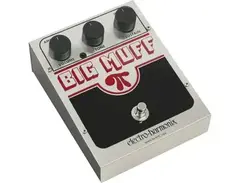
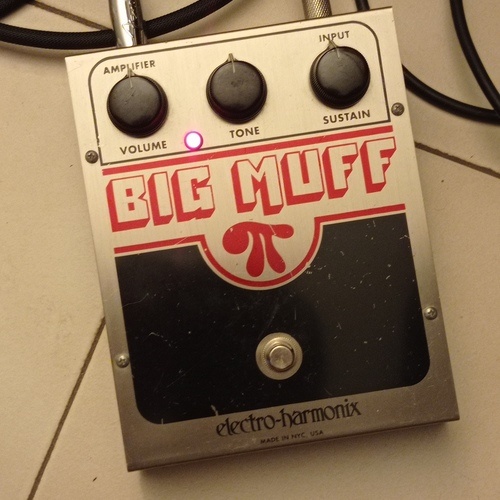
The Electro-Harmonix Big Muff Pi is more than just a guitar pedal, it's a piece of music history. This classic fuzz effects pedal has been the secret weapon of legends like Jimi Hendrix and Santana, as well as contemporary artists from Jack White to Muse. Its rich, creamy distortion and violin-like sustain have been shaping the sound of rock music for the better part of 30 years.
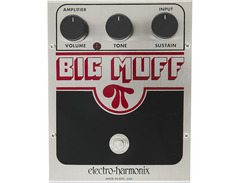
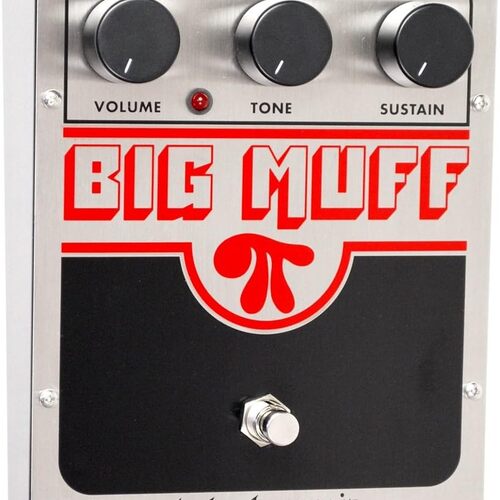
Just like the original '70s Big Muff Pi, this reissue features three intuitive controls—Volume, Tone, and Sustain—that let you dial in a wide range of distortion styles. Crank the Volume for a boost to cut through the mix, increase the Sustain for endless sustain and harmonics, and sweep the Tone from a warm, bassy purr to a sharp, trebly bite. With just a few tweaks, you can achieve the signature Big Muff Pi sound or forge your own.
Despite its roots in rock's golden age, the Big Muff Pi is not just a relic. It's a workhorse pedal built for today's players. Its compact, rugged enclosure can withstand the rigors of the road, and it can be powered with a 9V battery or any standard 9V DC power adapter.
Key Features:
- Volume, Tone, and Sustain controls for a wide range of distortion styles
- Rich, creamy distortion and violin-like sustain
- Compact, rugged enclosure suitable for touring
- Can be powered with a 9V battery or any standard 9V DC power adapter
- Used by legendary and contemporary artists alike
- Made in the USA
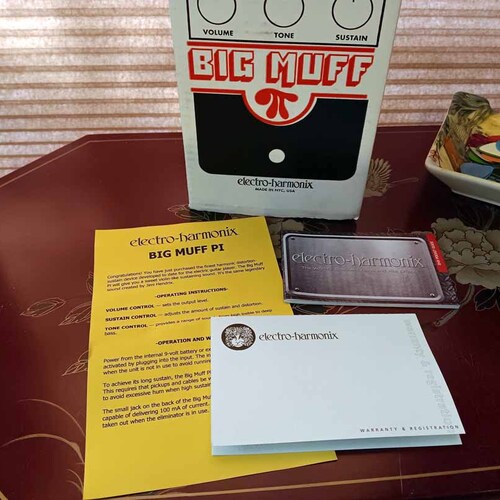
Owner's manual
Electro-Harmonix Big Muff Pi User ManualProduct specs
| Pedal Type | Fuzz |
| Analog/Digital | Analog |
| Inputs | 1 x 1/4" |
| Outputs | 1 x 1/4" |
| Bypass Switching | True Bypass |
| EQ | Tone Control |
| Controls | Sustain, Volume |
| Power Source | 9V DC power supply (sold separately) |
| Batteries | 1 x 9V |
| Height | 2.95" |
| Width | 5.5" |
| Depth | 6.875" |
| Weight | 1.55 lbs. |
FAQs
-
What kind of sound can I expect from the Electro-Harmonix Big Muff Pi?
-
The Electro-Harmonix Big Muff Pi delivers a classic fuzz tone characterized by its rich, creamy sustain and harmonic distortion, making it ideal for rock, alternative, and grunge music.
-
Does the Electro-Harmonix Big Muff Pi work well with both guitar and bass?
-
Yes, the Big Muff Pi is versatile and works well with both electric guitars and bass guitars, providing a thick, powerful fuzz sound for both instruments.
-
What type of power supply does the Electro-Harmonix Big Muff Pi require?
-
The Big Muff Pi requires a 9V DC power supply, which is sold separately, and can also be powered by a 9V battery.
-
Is the Electro-Harmonix Big Muff Pi suitable for beginners?
-
Yes, the Big Muff Pi is beginner-friendly due to its simple control layout with sustain, tone, and volume knobs, allowing easy adjustment of your fuzz sound.
-
Does the Electro-Harmonix Big Muff Pi have true bypass switching?
-
Yes, the Big Muff Pi features true bypass switching, ensuring your signal remains unaffected when the pedal is turned off.
Equipboard's Expert Review

Equipboard tested this
The Fuzz Legend Lives OnIconic tone, simple yet effective
In our tests, we found that the Electro-Harmonix Big Muff Pi lives up to its legendary status. This classic fuzz pedal has been a staple in countless pedalboards for decades, and it's easy to see why.
Upon unboxing, we were immediately struck by its iconic design and sturdy construction. The large enclosure may not be ideal for cramped pedalboards, but it certainly feels built to last. The simple three-knob layout is intuitive and inviting, allowing us to dial in our desired tone quickly.
We were impressed by the Big Muff's versatility across different genres. From searing lead tones to thick, woolly rhythm sounds, this pedal delivers the goods. The sustain is phenomenal, and the distortion control offers a wide range of fuzz textures. We particularly enjoyed how well it paired with both clean and dirty amp channels.
However, it's not without its quirks. In our experience, the Big Muff can sometimes sound a bit too bassy or muddy, especially in a band mix. We found ourselves wishing for more midrange presence to help cut through. Additionally, we noticed some noise issues when using certain power supplies, so it's worth experimenting to find the right setup.
For us, the Big Muff Pi remains a must-have for any guitarist seeking that classic "wall of sound" fuzz tone. It's perfect for players who prioritize raw, powerful sound over intricate tweakability. However, those with limited pedalboard space or those seeking a more modern, precise fuzz might want to look elsewhere. Nonetheless, at its price point, it's hard to beat the Big Muff's combination of iconic tone and rugged reliability.
Videos

ProGuitarShopDemos
Electro Harmonix Big Muff Pi USA
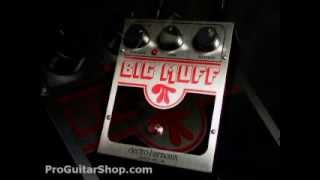
Electro Harmonix Big Muff Pi USA
ProGuitarShopDemos
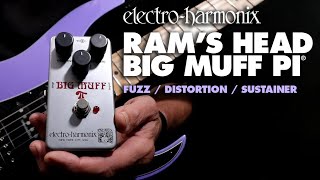
Electro-Harmonix Ram's Head Big Muff Pi Fuzz / Distortion / Sustainer Pedal (Demo by Bill Ruppert)

EHX
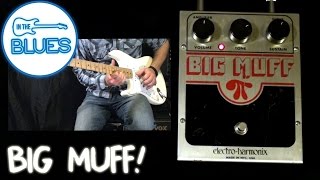
Electro-Harmonix Big Muff Pedal

intheblues
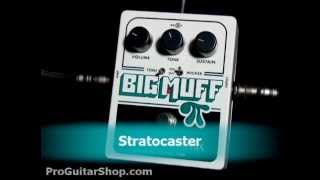
Electro Harmonix Big Muff Pi w/ Tone Wicker
ProGuitarShopDemos

Electro-Harmonix Big Muff Pi Distortion / Sustainer Pedal (Demo by Peter Stroud)
EHX
Electro Harmonix Big Muff Pi USA - sound test - demo - Grunge/Nirvana type settings

nomakills
EHX Big Muff USA vs Russian Black

Fuzzville
Electro Harmonix Big Muff Fuzz Pedal Demo

TheToneShack
Electro Harmonix Big Muff Pi USA VS Deep Trip Muffassaur

Lucas Reis
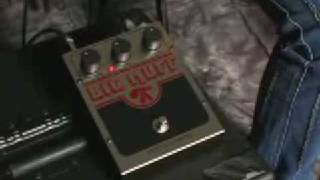
Electro Harmonix Big Muff Pi USA Pedal

Gear4music Guitars
Reviews
PROS
-
Iconic, unmistakable fuzz sound used by famous artists
-
Offers incredible sustain for solos
-
Versatile tone, from smooth distortion to intense fuzz
-
Can cut through the mix well, even in dense arrangements
-
Works well with various instruments, including synths
-
Durable and reliable, even with regular use
-
Provides a thick, creamy tone ideal for certain music genres
-
Relatively affordable for its category and capabilities
-
Easy to mod for those looking for a custom sound
-
Some models come with a built-in buffer, enhancing compatibility with wah pedals
CONS
-
Large size can take up significant pedalboard space
-
Can be noisy, especially with "dirty" power supplies
-
Some find it too bass-heavy, affecting clarity on lower strings
-
The lack of mid-range control can make it hard to cut through in live settings
-
Tone can be overly specific, not as versatile as other pedals
-
Enclosure's square corners and bulky design can be cumbersome
-
Circuit design sensitive, may not pair well with all amps
-
May require modifications for optimal performance with certain setups
-
AC adapter not standard, making power supply challenging
Owner Insights
We analyzed real musician discussions from forums and Reddit to find what players love, question, and tweak about Electro-Harmonix Big Muff Pi.
Use cases and applications
-
The Big Muff Pi is praised for its sustain and melodic lead tones but isn't ideal for fast rhythm in metal genres like Megadeth or Metallica.
Source -
Overdrives can enhance the Big Muff's EQ control, helping to refine the pedal's fuzz-heavy output for different musical genres.
Source -
For those interested in clear chord articulation, the Violet Ram’s Head variant is suggested for its aggressive and clearer sound profile.
Source
Comparisons
-
For achieving thrash metal tones on a budget, consider the Joyo "Pocket Metal," designed for a sharp, tight sound akin to "Rust in Peace."
Source -
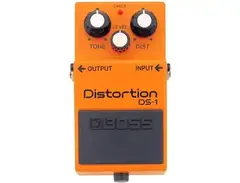
The Boss DS-2 is noted for having excessive fuzz for metal, whereas the DS-1 combined with an EQ provides better results.
Source -
The OpAmp Nano Muff offers a more modern, scooped, and saturated sound compared to the standard Nano, which could appeal to those seeking a contemporary Muff tone.
Source -
The Ram's Head is frequently recommended for achieving a Gilmour-like tone, while the Russian variant is noted for its uniquely bass-heavy, smooth sound.
Source
Features and functionality
-
The Big Muff tends to get "flumpy" with speed picking, requiring careful manipulation of its sound settings.
Source -
The Nano version tends to sound boxier with less top-end than the USA big box, making it less vibrant for some users.
Source -
The Sovtek Deluxe Big Muff Pi includes a midrange footswitch, critical for enhancing mids that can be lacking in typical Muff pedals.
Source -
The Way Huge Swollen Pickle Fuzz MkII, inspired by the Green Russian Muff, offers five external knobs and two hidden mini knobs for precise tonal control.
Source
Build quality
-
The original Big Muff Pi's circuit occupies a small space in its large enclosure, allowing for a much more compact design in the Nano version.
Source
Setup and maintenance
-
Older big-box Muffs require a 3.5mm adapter for power, but newer models come with a standard Boss power jack, simplifying integration into modern pedalboards.
Source
4.5 out of 5
Based on 119 Reviews and 852 Ratings

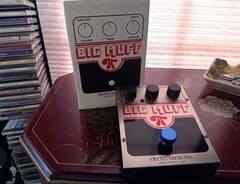
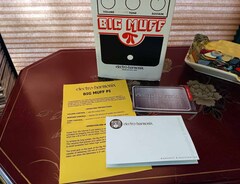
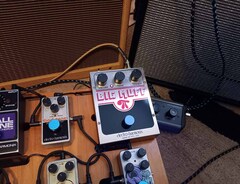


922

115
Nothing quite like it!
This is one of my favorite pedals and for good reason, this is the thickest mix cutting pedal I have heard. As someone who grew up listening to Smashing Pumpkins I always strived for that sound and when I found the Big Muff I couldn't go back. I use this in my recordings usually for when I need a thick wall of noise or a screaming guitar lead/solo. This thing is HARD to control but I love it for that, it has a niche but it fills it the best way possible I feel. Worth the money go get it!

194

145
classic, built like a tank
is that sound, everyone knows, the big muff, that ol´ mid scooped fuzz sound.
practically impossibe to break, a good pedal, does it well on so many genres, huge fuzz.
but being honest, the size dont make sense anymore, the circuit board is a half of the size of the box, not so practical for pedalboards and gigging (plus it is hard to have it cutting in the mix due to the lack of mids).
that was my first pedal but im getting rid of it because i dont like the lack of mids for live sound and the impossibility to generate it with the tone or sustain knob. plus it can get very fizzy if you crank some knobs. and i need more sonic destruction.
i love the pedal, probably muff styled fuzz´s are my favorite pedal ever, but they need mods to make it work.
Preferred Settings + Usage:
pretty low sustain and dark tone (about 10). for getting that doomy cracked up shoegaze sound. always neck pickup

903
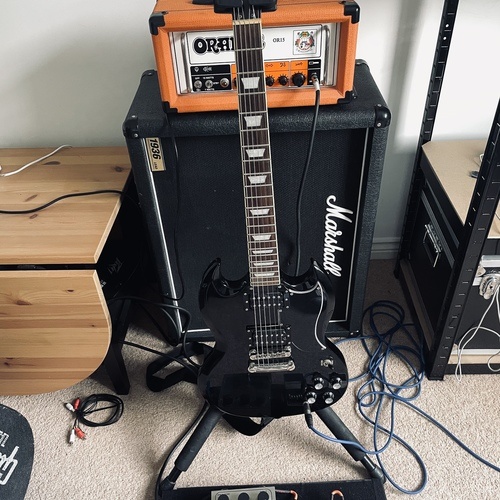
Same for me on the 'sustain' setting, I keep mine dialed in pretty low as well. I wanted a "real fuzz" sound so I dumped the tone down pretty low, turned the 'volume' up, and run it through an Orange OR15 with a fair amount of gain dialed in. The sound is pretty much what I was looking for, and surprisingly it still plays really reactive and fast on the higher strings, but gives me that nice fuzzy, smooth sound on the lower strings. Especially with the neck pickup of a guitar engaged. Classic pedal, sustain for days.

147

Classic and fantastic
The basic NYC big muff its great because its original sounds can still sound incredible on todays music. I would recommend that every musician (and person if you ask me twice) try one out as it can be used on almost anything. Especially if you want to try new sounds in your productions, drums bus distortion is a must. There are thousands of muffs but the og is still one of the greatest
Preferred Settings + Usage:
Tone low its the stoner express
.jpeg?v=1783310480)
Artist usage
Add artist

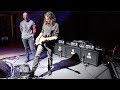
Starting at about 3:33, a Big Muff can be seen at Ty's feet


In the video "Arctic Monkeys - Balaclava + Fake Tales Of San Francisco (Live Rock Am Ring 2007)" on YouTube, it is visible that Nick O'Malley uses the Electro-Harmonix Big Muff Pi during the band's 2007 tour performances. This can be seen 13 seconds in.

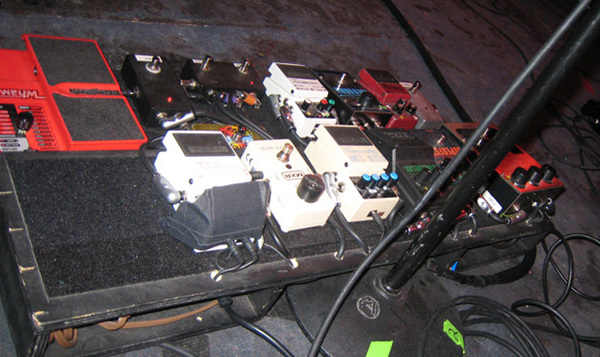
Visible in a couple of photos featured on Kit Rae's Big Muff Pi Page. The other one, a still from Beck's From The Basement performance, can be seen here.
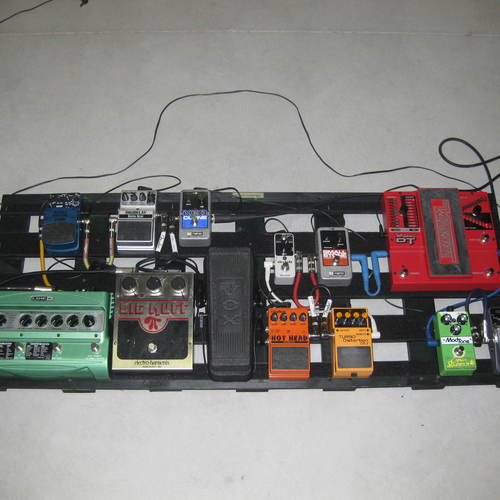
Shown above, left to right: Flea's (Red Hot Chili Peppers) pedal board with V9 Muff, Mudhoney's Big Muff, and two shots of Beck's Big Muff .

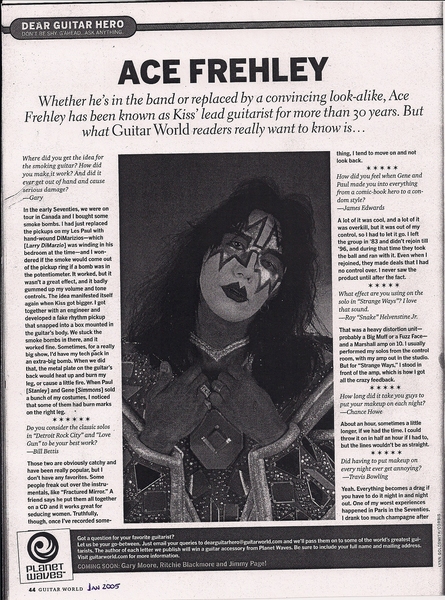
Mentioned in this January 2005 Guitar World interview and two Premier Guitar interviews.
Guitar World, January 2005, pgs. 45-46 "Ace Frehley" (a Russian translation can be found here)
What effect are you using on the solo in "Strange Ways"? I love that sound.
—Roy "Snake" Helvenstine Jr.
That was a heavy distortion unit–probably a Big Muff or a Fuzz Face–and a Marshall amp on 10. I usually performed my solos from the control room, with my amp out in the studio. But for "Strange Ways," I stood in front of the amp, which is how I got all the crazy feedback.
(...) You have a great sound. What pickups do you use, and what is in your pedalboard?
—Vince Applegate
I don't have a pedalboard because I trip over them with my boots on. I have a rack under the stage that my roadie controls. It has different gear in it at different times, although it always has an MXR graphic equalizer, a Big Muff and a power booster. The last few tours I also had a Line 6 Pod. But the real key to my sound is that I always blend three sounds: usually my rackmount, my Marshall and another Marshall with a sealed cab and a Celestion 12-inch speaker with a mic inside. On the last leg of the most recent tour, I started using a Peavey 5150. I use DiMarzio Super Distortion custom-made pickups.
Premier Guitar, "Ace Frehley: Navigating with the Spaceman", March 11, 2010
According to the man himself, Ace’s rig both onstage and in the studio has always been relatively straightforward:
“On the early Kiss records, I used my tobacco sunburst Gibson Les Paul Standard with a rewound hot pickup, through a Marshall stack or old Fender tweed amp, on most of the studio recordings. I used an Electro-Harmonix Big Muff to overdrive them sometimes. Later, I got a cherry sunburst Les Paul Custom and an old ’59 Les Paul Standard, which dominated my studio recordings in the late ‘70s. My 1978 solo album, Ace Frehley, really shows off what a Les Paul guitar can do in the studio. I recorded almost the whole album exclusively with my 1959 vintage sunburst Les Paul. I use Gibson Les Paul Customs live because they’re simply the best guitars for loud rock ‘n’ roll. I’ve always said, ‘Just plug a Les Paul into a Marshall amp and turn it up to 10!’ It’s a no-brainer.”
Premier Guitar, "Ace Frehley: Cosmic Space Invasion", September 2, 2014
What sounds are you using from the G3?
I like the tape delay effect and the Big Muff sound, because I used a Big Muff years ago. In general though, I try to stay away from effects as much as I can.


Used by Head on "Blind" and "Shoots and Ladders".


In this YouTube short, Hozier shares some gear he uses making demos and writing songs, and shows off his pedalboard. He shows his Big Muff pedal and adds an open caption saying "Big Muffs and Tube Screamers"


Used on Garlands, as specified in the Equipment Notes section of Guthrie's official website (now hosted on the Cocteau Twins website). It is also mentioned in this September 3, 2010 Harmony Central forum post by user OrangeLazarus.
Equipment Notes
“The recording of ‘Blind Dumb Deaf’ was a little different to most of the later Cocteau Twins songs as it was our first album, we were studio newbies and didn't have the time or experience to experiment at all during the recording process. I wasn't really the producer (I didn't even know what a producer was at that point) so all the work on guitar sounds as such was done before the band entered the studio from playing gigs and gathering what equipment we could. Garlands, the album, was essentially recorded live in the studio with myself and Will playing together and Elizabeth over-dubbing a few vocals later, very much the way most bands record. My guitar setup was this: a Kawai KS-11-XL electric guitar followed by an Electro-Harmonix Big Muff Pi, a Watkins Copicat tape echo (3 button model), an Electro-Harmonix Clone Theory and then into another Watkins Copicat tape echo (4 button model) - this went into my amp, a Maine combo (60w 2x10 never seen one since). The bass was a Rickenbacker 4001 played through a Ibanez UE-400 Multi-Effects unit into a Carlsbro Stingray bass combo. There was one disappointment at the time which was the drum machines that we used, a Boss Dr Rhythm and a Soundmaster SR88 played through the distortion channel of a HH IC100 combo were deemed unsuitable by the engineers and Ivo (the grown-ups) and were replaced with the ‘more professional’ (at the time as it had just been invented) Roland TR808. This made the drums sound very clean but weak, lacking the power that we were used to in concert. I mean the stuff we used sounded way more like (what became) hip-hop than electronic. But in spite of the lack of distortion on the drums the ‘Garlands’ sessions were a pretty accurate recording of how we sounded at the time when we played live.”
Harmony Central, "Chorus pedal for cocteau twins sound", OrangeLazarus, September 3, 2010
i have nothing to contribute to this thread other than the fact that I played with a guitarist yesterday that used Robin Guthrie's Big Muff.


Ryan Adams shared a photo on his official Instagram account featuring the Electro-Harmonix Big Muff Pi as part of his new pedal board setup.

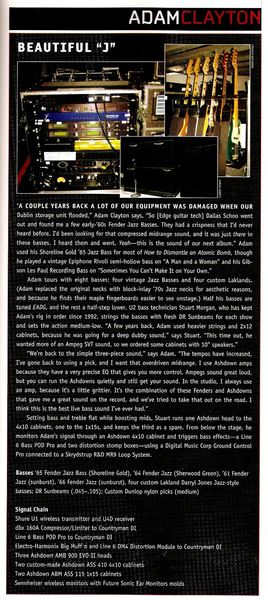
In this scan of an article from the January 2006 issue of Bass Player magazine, the "Signal Chain" section lists the Big Muff Pi among Adam's gear.

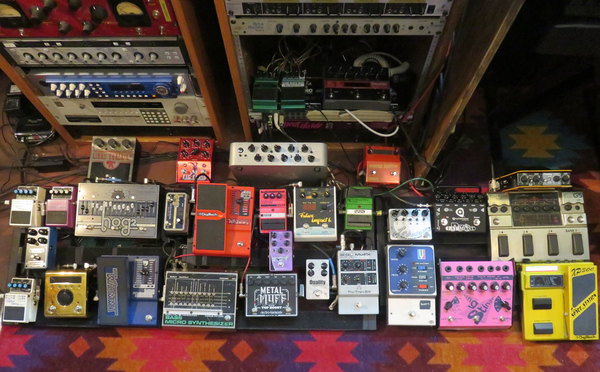
An NYC reissue is featured in this November 23, 2017 Premier Guitar interview.

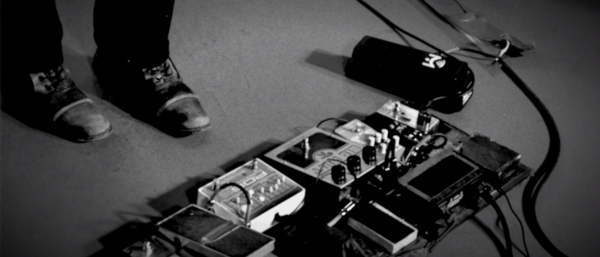
As shown on his pedalboard

Album Usage
The Electro-Harmonix Big Muff Pi has been featured on the following albums:

party's over
Aziya (2024)

Weezer 30 (Anniversary Super Deluxe)
Weezer (2024)

STONE (Deluxe)
Baroness (2023)
Devoured
Kanadia (2021)

Samsara
Venom Prison & Venom Prison (2019)

Two Parts Together
Big Ups (2018)

Simulation Theory (Super Deluxe)
Muse (2018)
Horse Jumper of Love
Horse Jumper of Love (2017)
Chroma
Mt. Eddy (2017)

Drones
Muse (2015)

Subsume
Cloudkicker (2013)

Howl
Beware of Darkness (2012)

Kairos
Sepultura (2011)

Whatever People Say I Am, That's What I'm Not
Arctic Monkeys (2006)

Here Comes The Fuzz
Mark Ronson (2003)

Strange Beautiful Music
Joe Satriani (2002)
The Fragile
Nine Inch Nails (1999)

Boggy Depot
Jerry Cantrell (1998)

Pinkerton - Deluxe Edition
Weezer (1996)

Pinkerton
Weezer (1996)
Black Love
The Afghan Whigs (1996)

Korn
Korn (1994)
Pork Soda
Primus (1993)

Nevermind
Nirvana (1991)

Dreaming #11
Joe Satriani (1988)

Kill 'Em All (Remastered)
Metallica (1983)
Garlands
Cocteau Twins (1982)
Rock Until You Drop
Raven (1981)
The North
R. Stevie Moore (1978)
Kiss: Ace Frehley
Ace Frehley (1978)
Montrose
Montrose (1973)
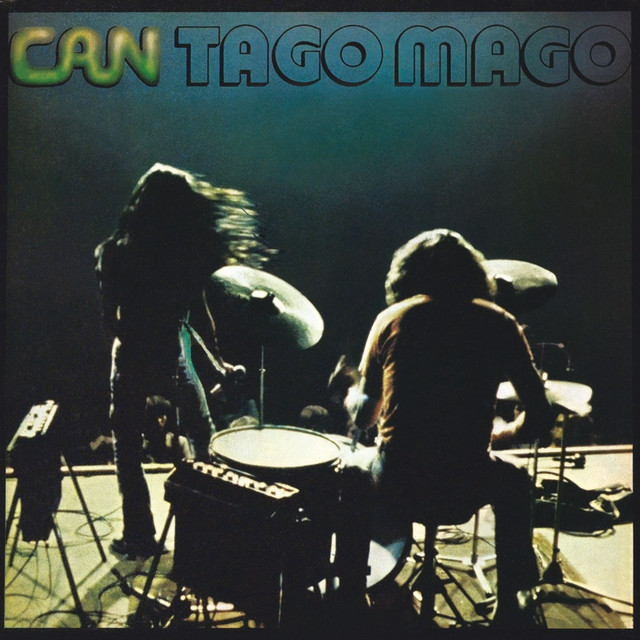
Tago Mago (40th Anniversary Edition)
Can & Can (1971)
Genre Usage
Based on how artists on Equipboard use this gear, it is most commonly found in the following genres.
Used With
Based on how musicians on Equipboard use Electro-Harmonix Big Muff Pi, it is most commonly used with the following gear.


-s.webp?v=1783321224)

-s.webp?v=1783321237)
-s.webp?v=1783321218)


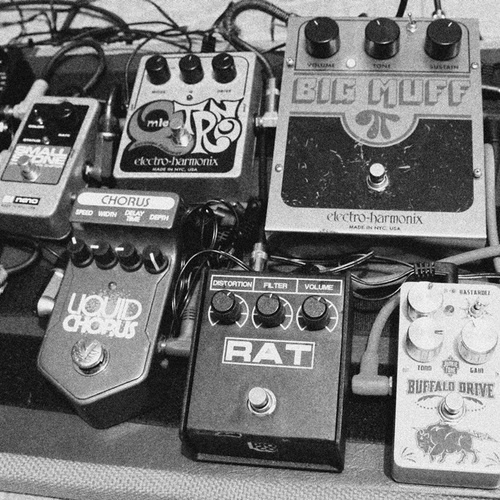
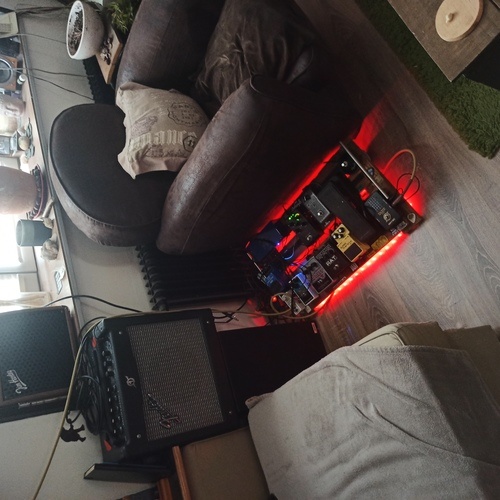
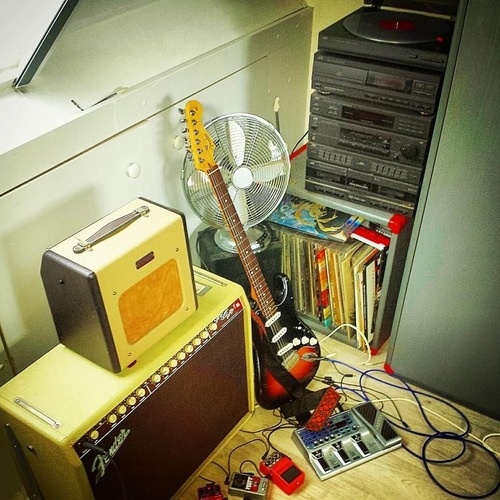
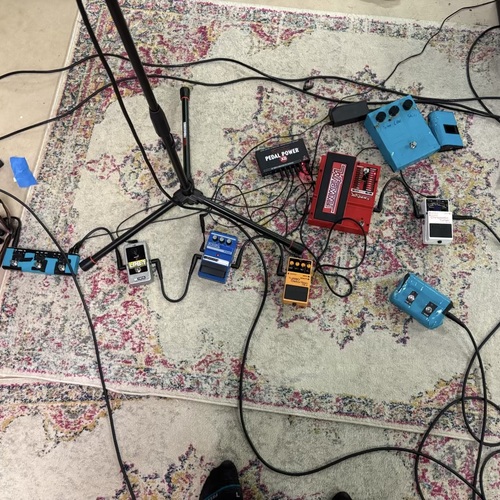
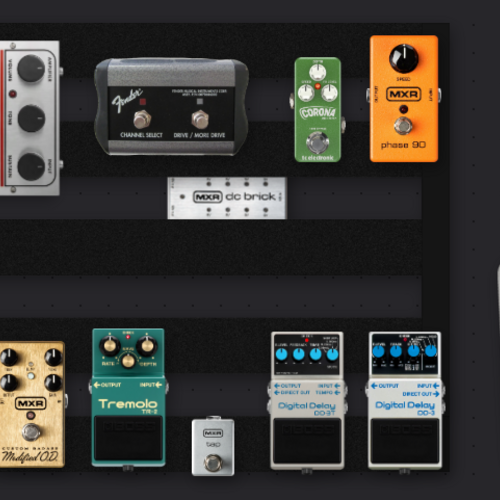
Community setups
Show yours



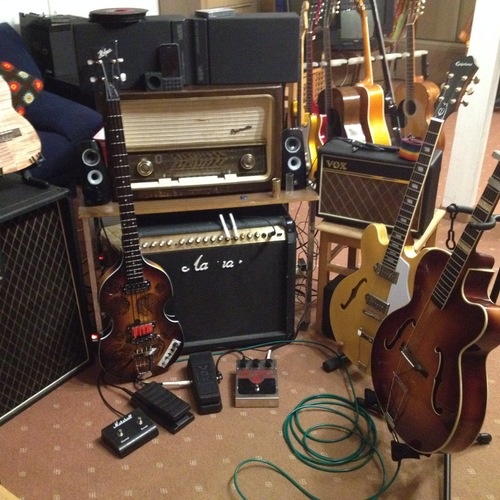
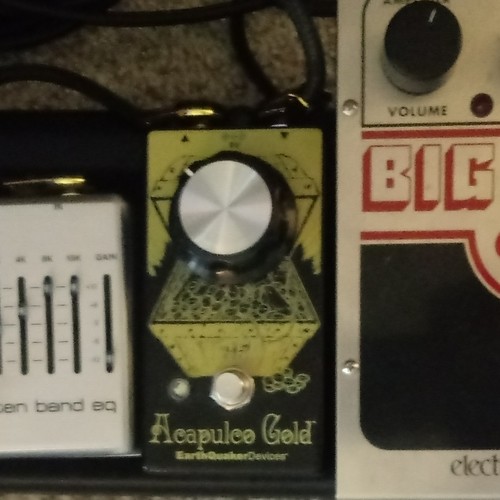


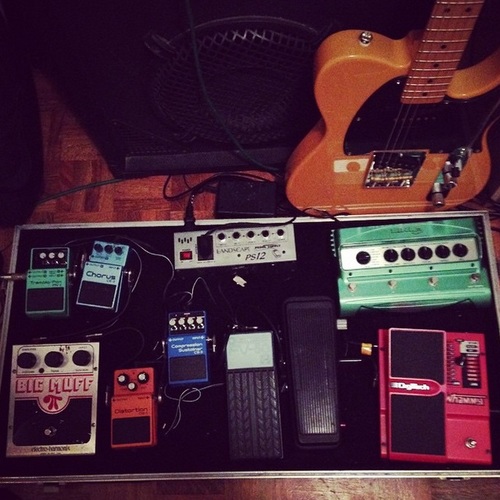

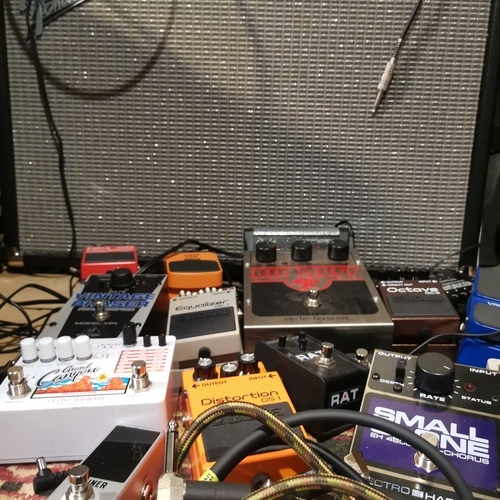
.jpg?v=1774320425)


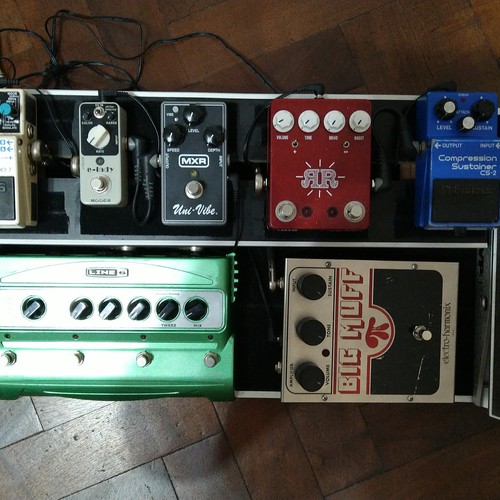
.jpeg?v=1783306247)
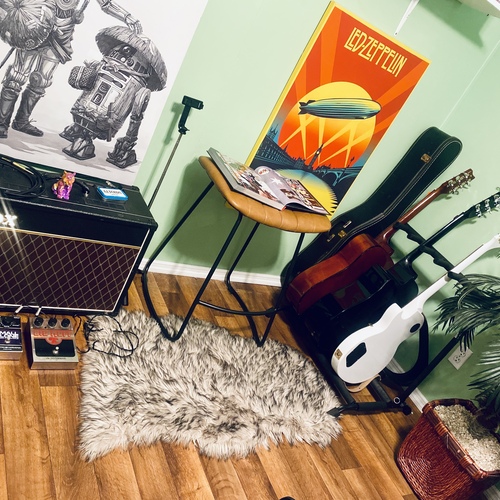


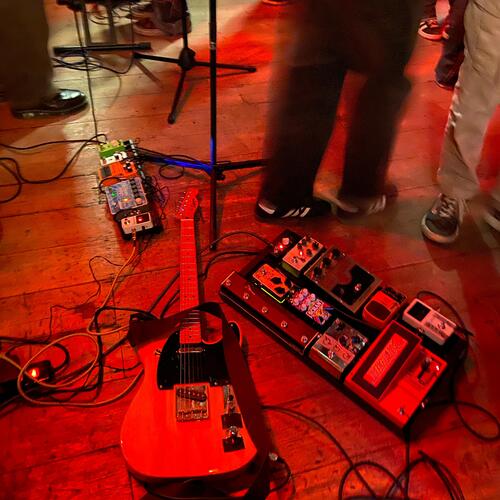


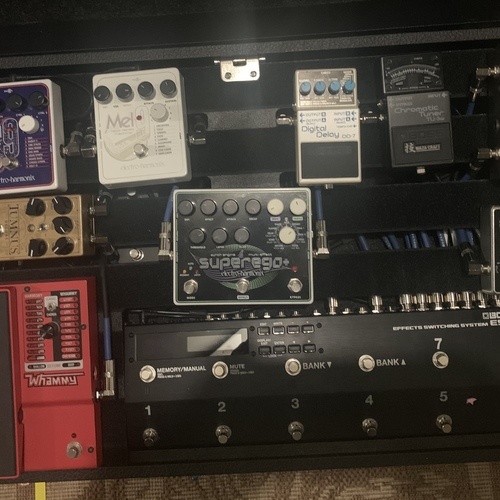
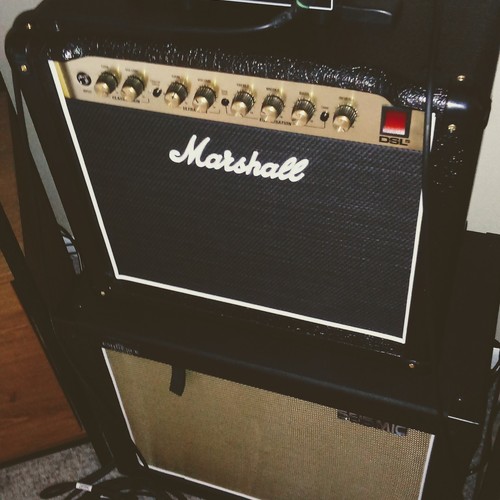
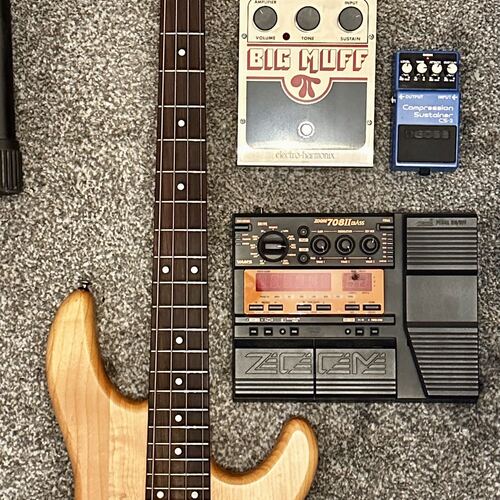


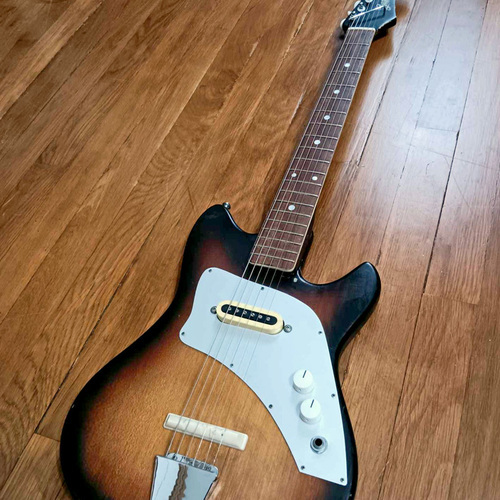



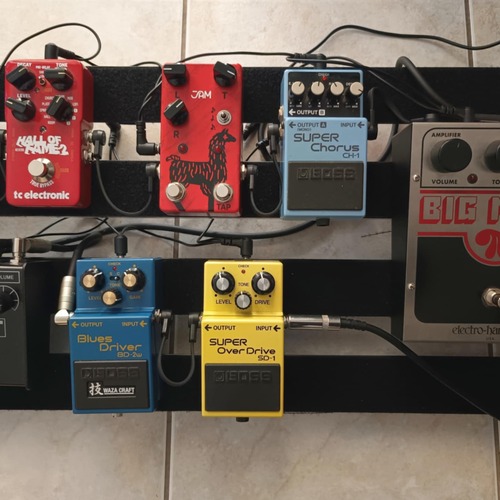

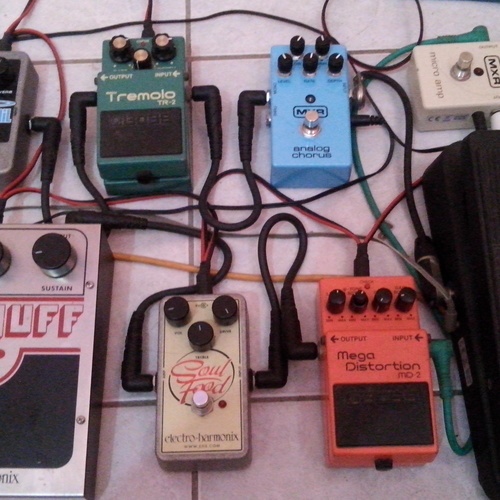

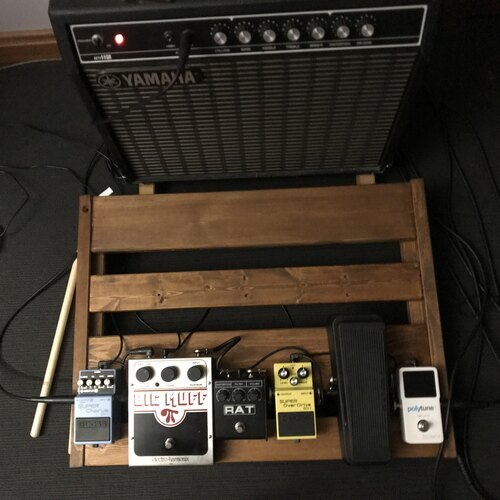
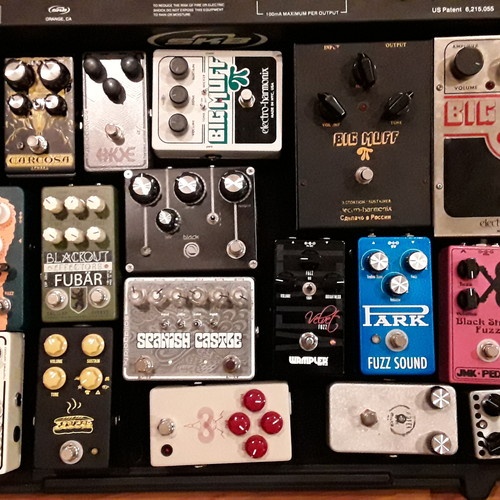


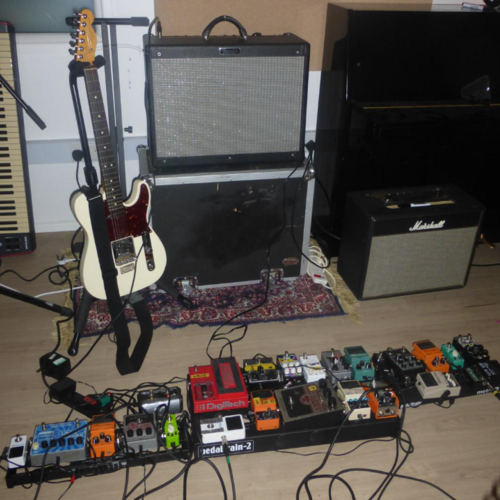

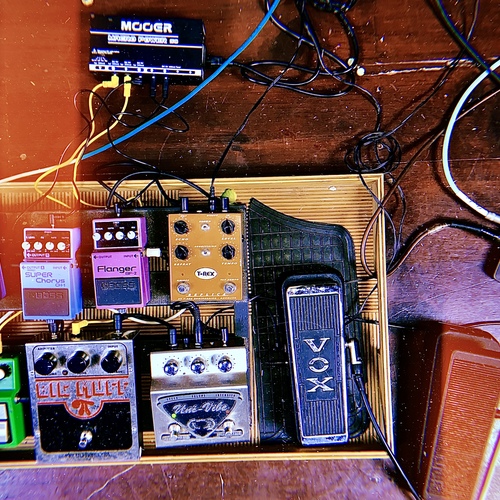

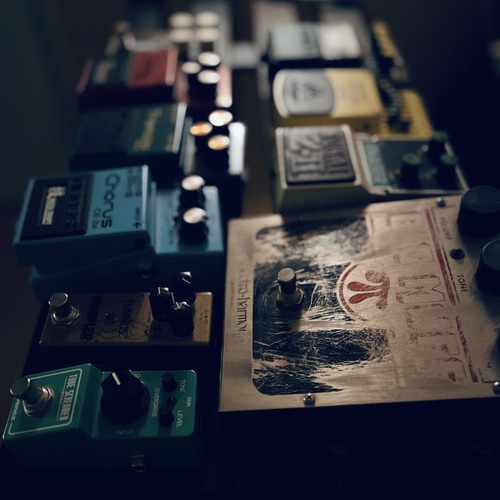


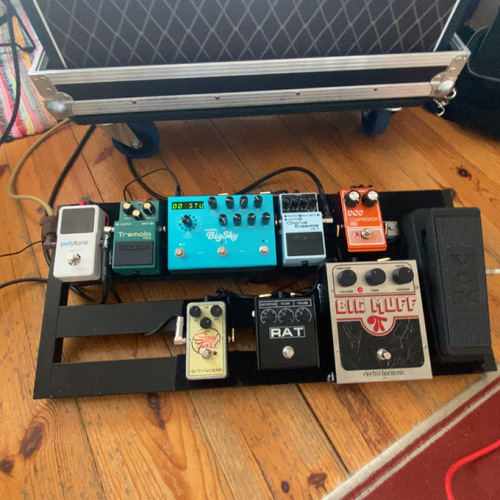

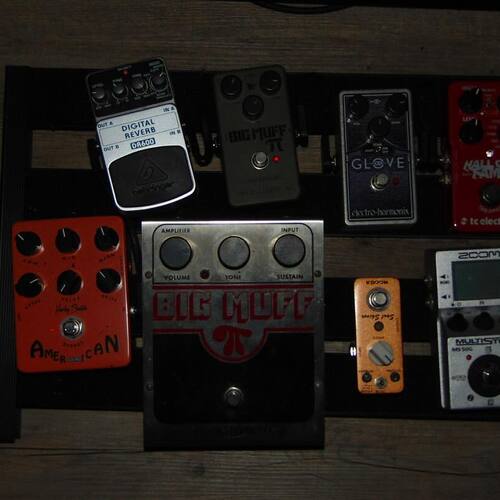
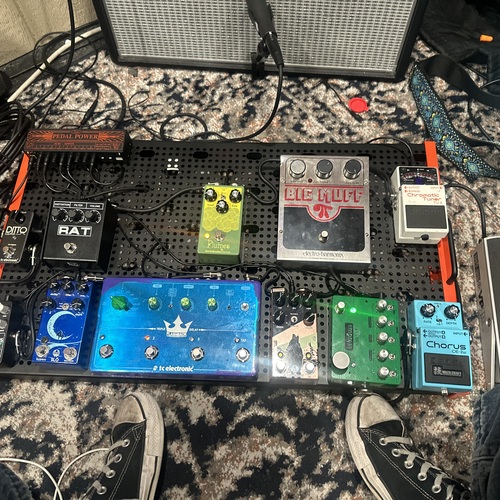
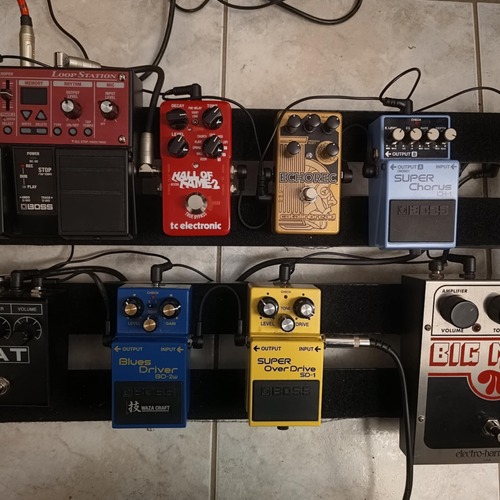

.jpg?v=1783112765)

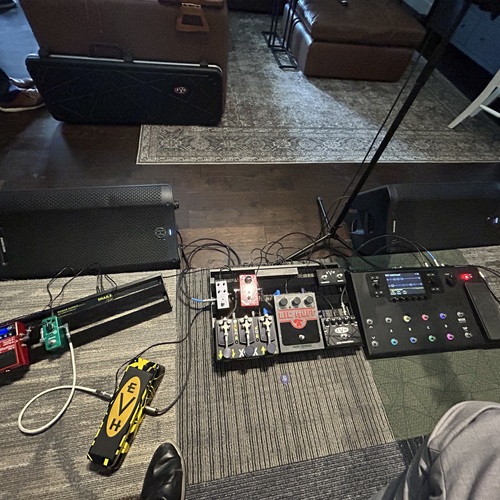
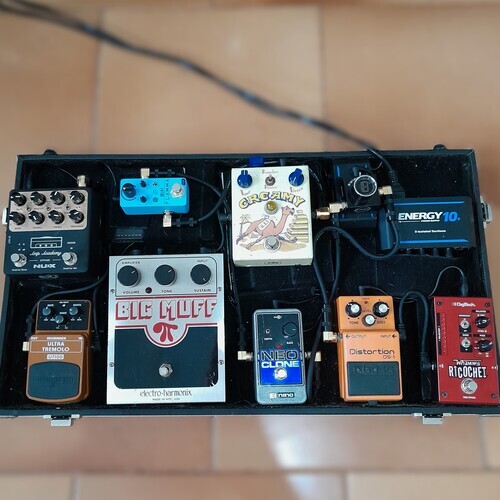
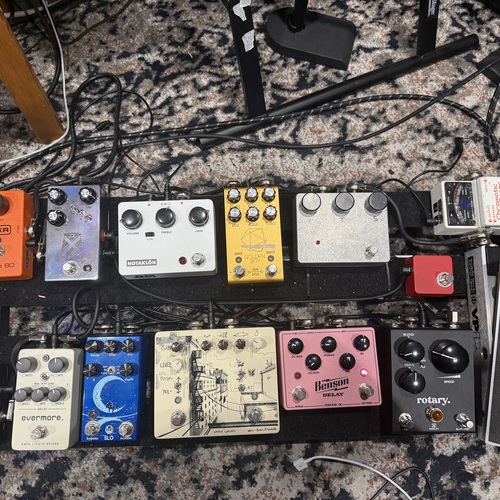

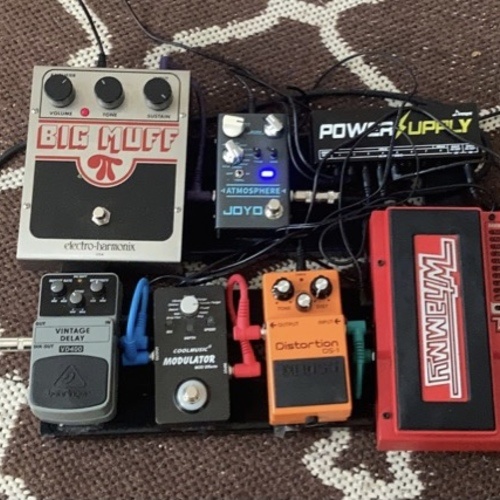






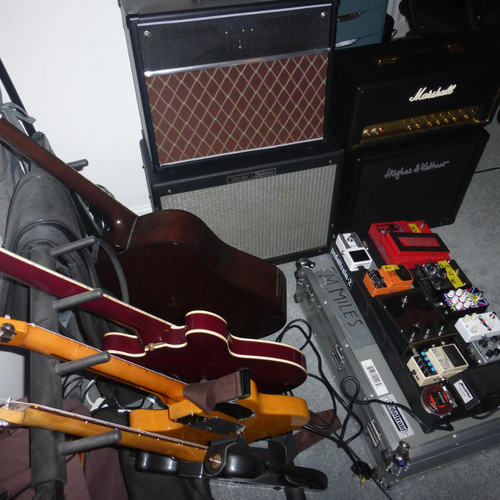


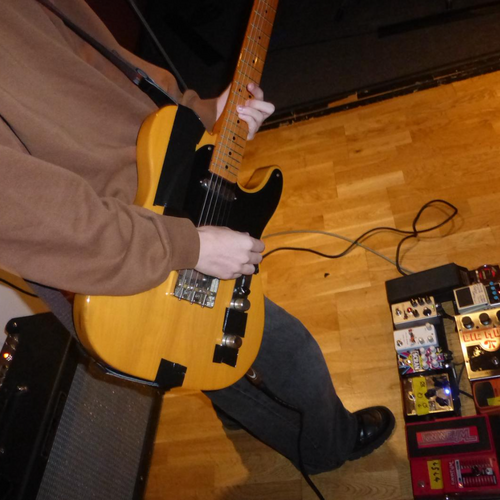

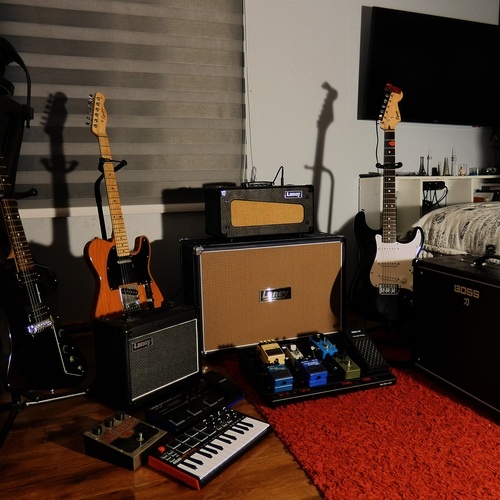
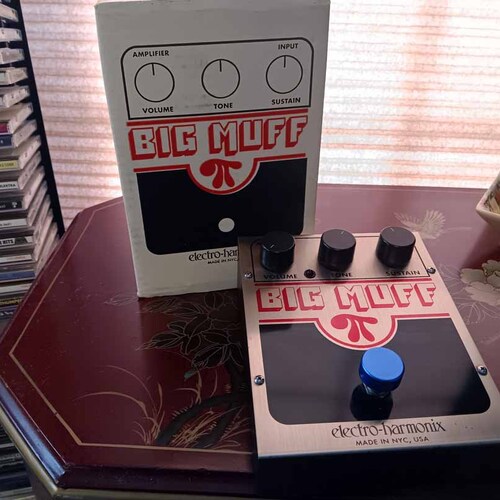
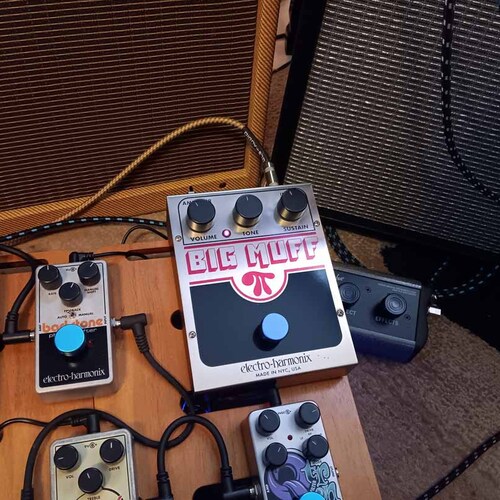
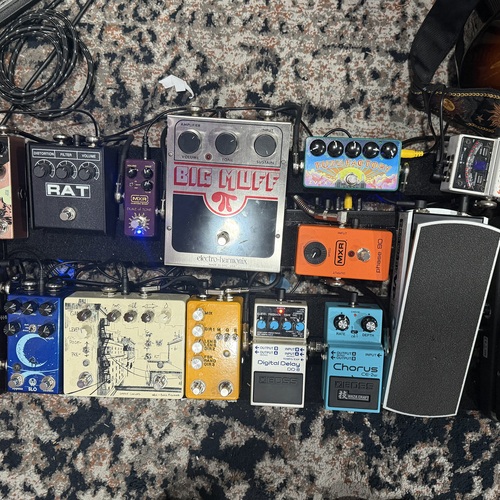
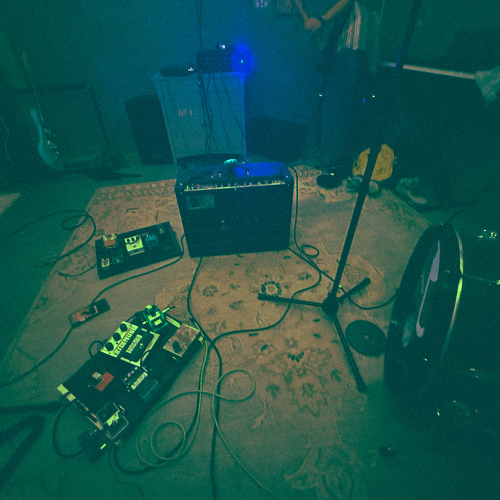

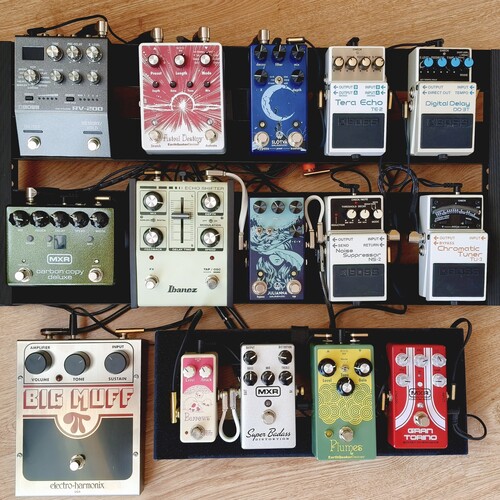

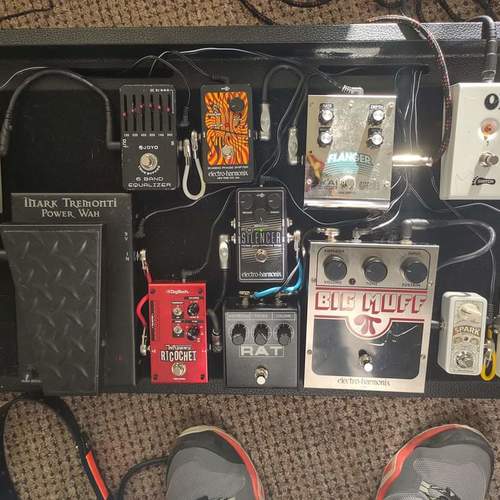

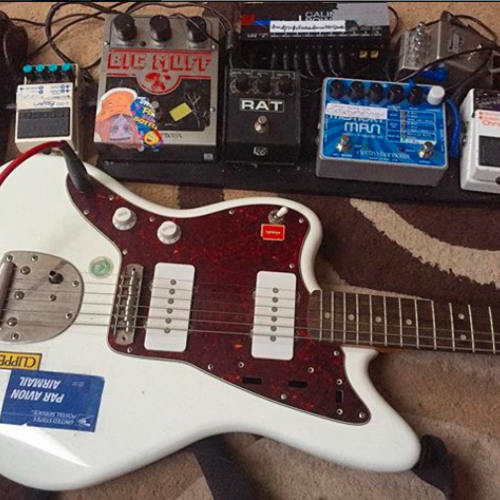

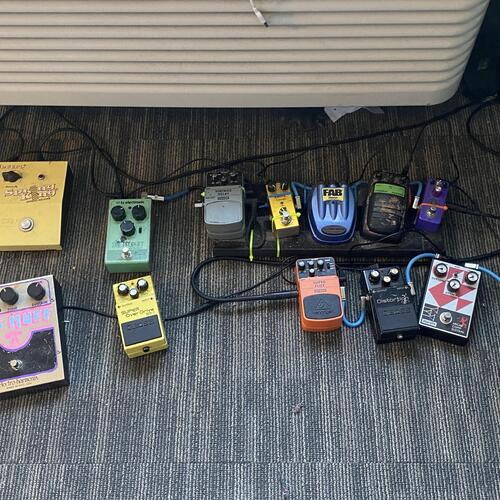
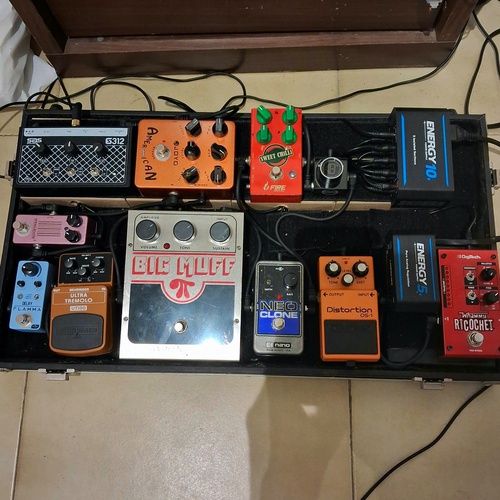
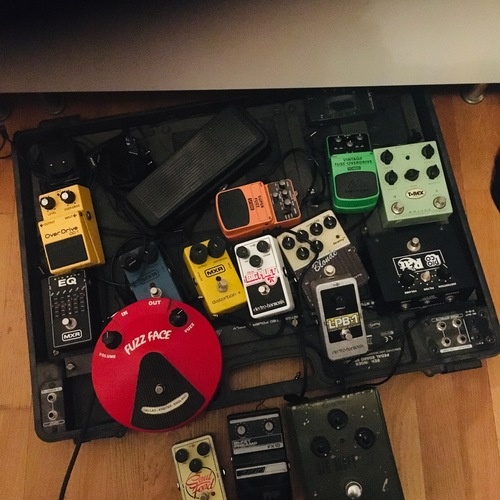
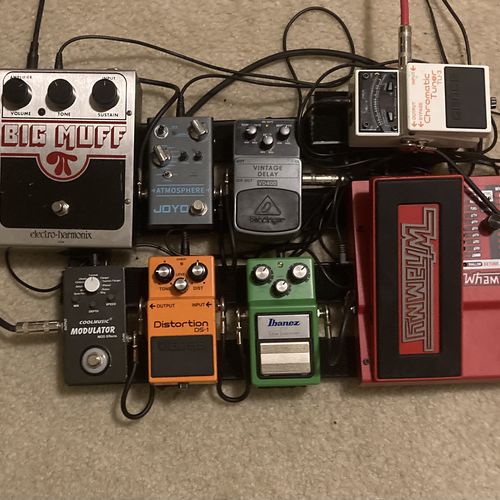

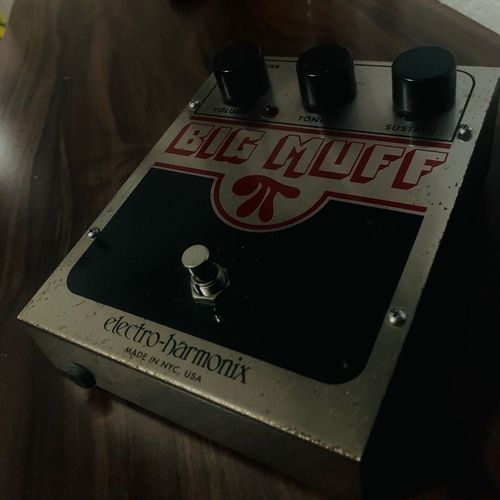
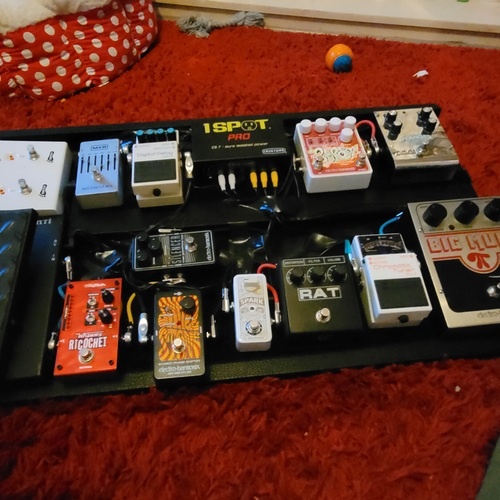
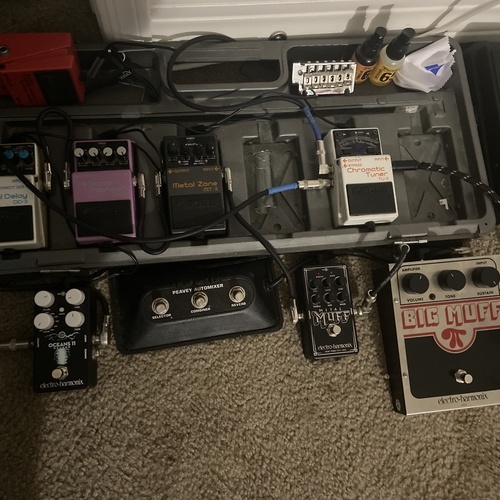



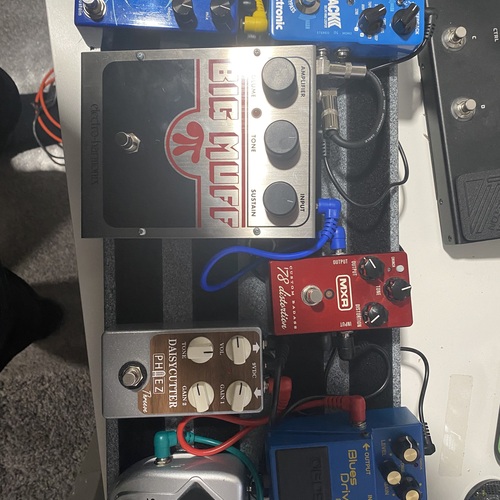
.jpg?v=1769701570)





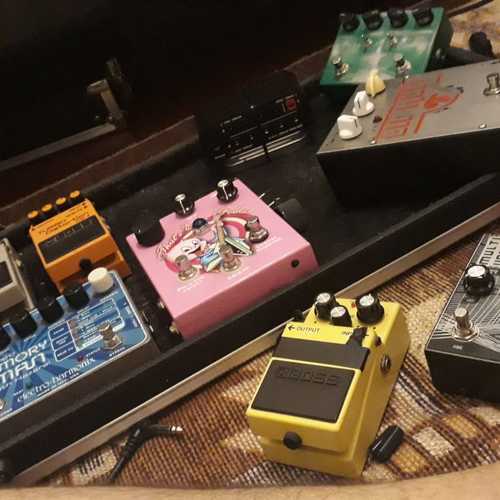

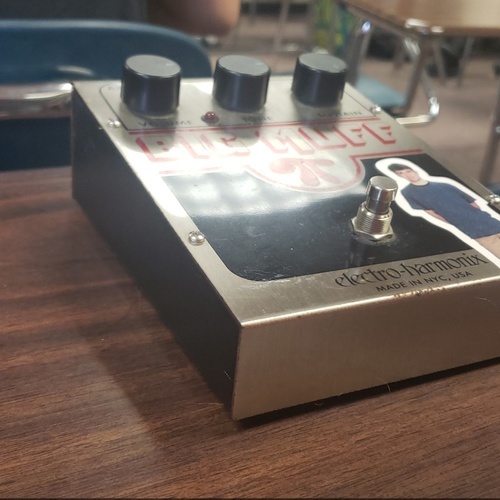
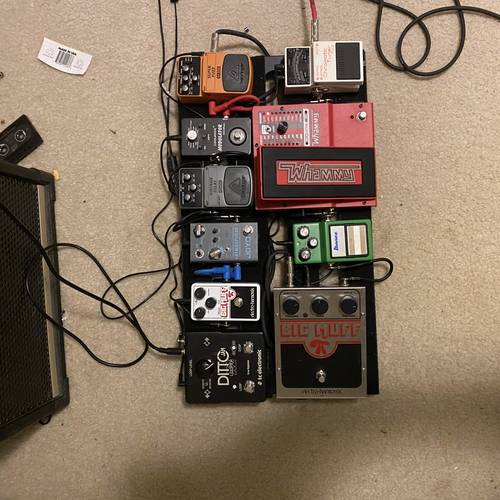

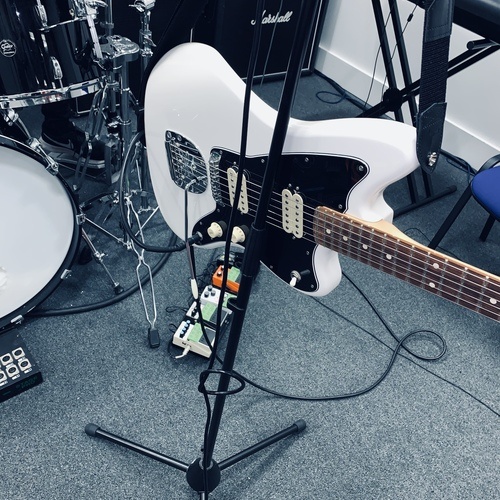





Similar
Add recommendation21 alternative and related items for Electro-Harmonix Big Muff Pi, curated by the Equipboard community.

$194.73
Boss' short lived take on a Big Muff style circuit, with bass and mid range EQ controls.

$77.00 - $149.00
The Gas Giant Fuzz is Pigtronix take on the Big Muff Pi, with a FET driven gate and an extra EQ toggle.

$53.00 - $59.80
The Matcha Cream is a much smaller pedal based on the iconic EHX Big Muff circuit. While its resale value is much lower than a genuine Big Muff, it offers a great fuzz tone at a much lower price (varying on the retailer).
-m.webp?v=1783292154)
$179.00 - $211.00
It’s a similar fuzz sound we’re all familiar with but at a higher end

$25.00 - $59.95

$85.00 - $108.90
A russian flavored muff. Follows the tonal qualities that the russian version of the pedals have
More Electro-Harmonix Fuzz Effects Pedals

$160.00
in Fuzz Effects Pedals Rank


$75.00 - $96.20
in Fuzz Effects Pedals Rank


$80.00 - $108.90
in Fuzz Effects Pedals Rank


$340.00
in Fuzz Effects Pedals Rank


$85.00 - $108.90
in Fuzz Effects Pedals Rank


$77.00 - $87.10
in Fuzz Effects Pedals Rank


$59.00 - $83.50
in Fuzz Effects Pedals Rank


$95.00 - $2,006.18
in Fuzz Effects Pedals Rank


$113.00 - $150.60
in Fuzz Effects Pedals Rank


$59.71
in Fuzz Effects Pedals Rank


$84.35 - $112.50
in Fuzz Effects Pedals Rank


$95.00 - $114.30
in Fuzz Effects Pedals Rank


$160.00
in Fuzz Effects Pedals Rank


-m.webp?v=1783249909)
$36.30 - $72.60
in Fuzz Effects Pedals Rank


$102.00 - $117.90
in Fuzz Effects Pedals Rank


$75.00 - $417.95
in Fuzz Effects Pedals Rank


-m.webp?v=1783177217)


$39.60 - $99.00


$99.00 - $131.50


$75.00 - $347.17


$70.00 - $85.30

$140.00 - $174.20


$122.87 - $136.10


$39.60 - $286.00


$87.67 - $116.10


.jpeg?v=1783265544)


Accessories & Related Items


-s.webp?v=1783315849)
-s.webp?v=1783316068)
-s.webp?v=1783316168)


Gear Guides



.jpg)



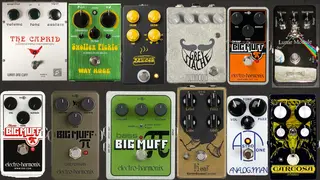
Most Popular Fuzz Effects Pedals
Most Popular Brands
-
Added to Equipboard on by
equipboardGear IQ 4934
-


